
The Complete Story & Where to Find It Today
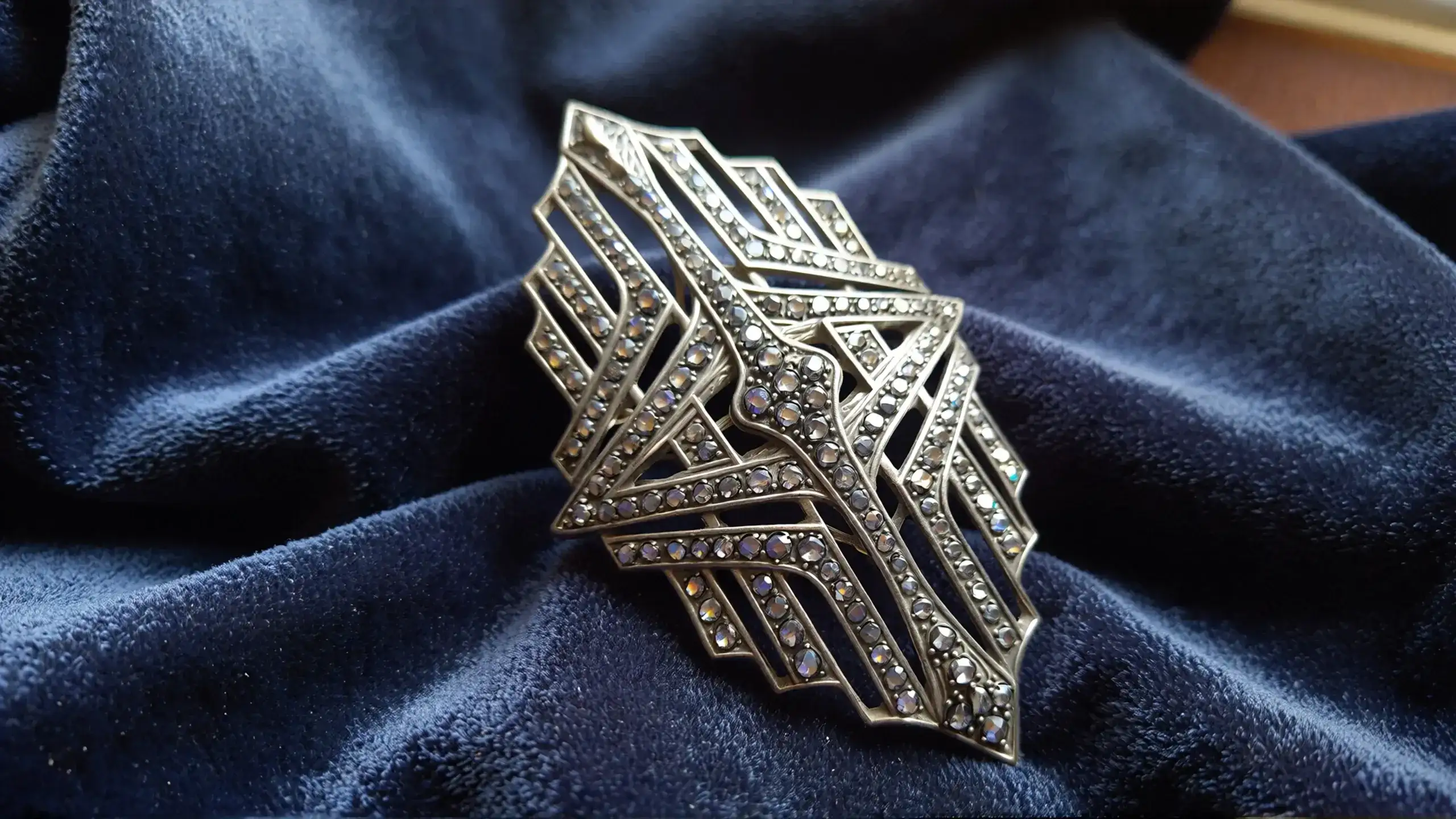
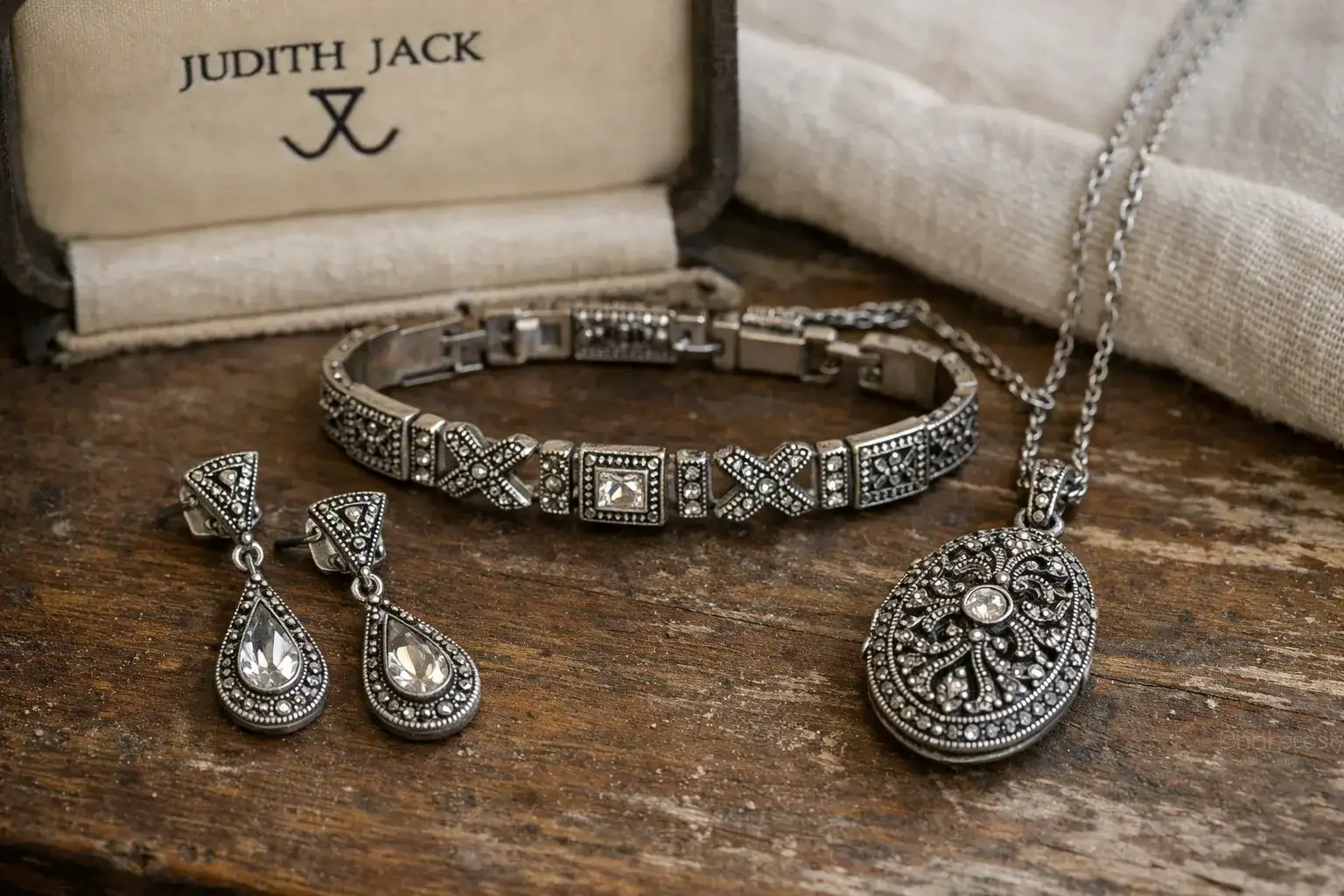
If you’ve stumbled upon a beautiful piece of vintage marcasite jewelry marked with “JJ” in a triangle, you’ve discovered Judith Jack—one of America’s most beloved jewelry brands from the late 20th century. For decades, Judith Jack was synonymous with elegant, affordable sterling silver jewelry that brought Art Deco glamour to everyday wear. But if you’ve searched for new Judith Jack pieces recently, you’ve probably noticed the brand has largely disappeared from major retailers.
What happened to Judith Jack jewelry? The short answer: the brand underwent multiple ownership changes, faced financial challenges, and effectively ceased new production after 2008, though the trademark lives on. But the full story is far more interesting—and there’s good news for collectors and enthusiasts. Vintage Judith Jack pieces remain highly sought-after, values are holding steady, and knowing where to look can help you build a beautiful collection of these timeless designs.
This comprehensive guide reveals the complete timeline of Judith Jack, explains what makes these pieces valuable, shows you how to authenticate them, and tells you exactly where to find authentic Judith Jack jewelry today.
The Judith Jack Story: From Flea Market to Bloomingdale’s
The Humble Beginning (1969)
The Judith Jack story began in 1969 when Judith and Jack Rosenberg, a husband-and-wife team in New York, identified a gap in the jewelry market. They had been selling antique marcasite jewelry at the famous Englishtown Auction and Flea Market in New Jersey and couldn’t keep up with customer demand for Victorian-inspired marcasite pieces. Authentic antique marcasite jewelry was scarce, expensive, and often in poor condition.
Judith started creating jewelry at home as a side business, using her knowledge of antique designs to craft modern pieces that captured vintage charm. When Jack quit his day job to join the venture full-time, they knew they had something special. Their timing was perfect—the 1970s saw a surge of interest in vintage and Art Deco aesthetics, and Judith Jack filled that niche beautifully.
Building the Brand (1970s-1980s)
Throughout the 1970s, Judith Jack refined their signature style: sterling silver bases adorned with marcasite stones cut to shimmer like diamonds, often accented with faux pearls, sunray crystals, and semi-precious gemstones. The company was formally incorporated in 1976, marking its transition from a flea market operation to a legitimate jewelry manufacturer.
The craftsmanship was exceptional. Each piece featured hand-set stones, meticulous polishing, and attention to detail that rivaled much more expensive jewelry. Judith’s designs drew inspiration from multiple eras—Victorian filigree, Edwardian elegance, Art Nouveau curves, and Art Deco geometry—creating a distinctive aesthetic that appealed to women seeking sophisticated jewelry at accessible prices.
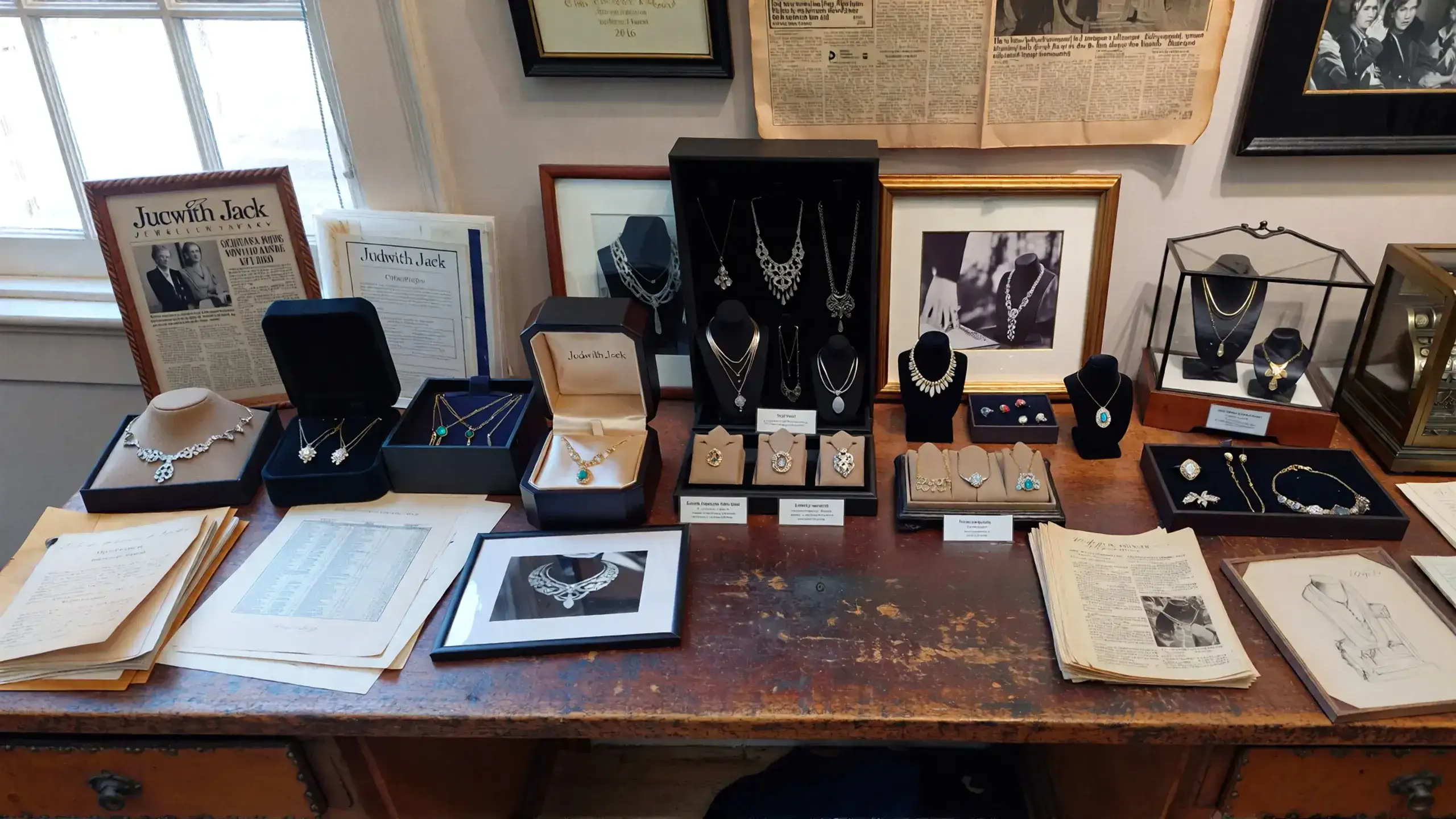
By the early 1980s, Judith Jack had earned the title “Queen of Marcasite” in the United States. The brand’s reputation for quality and design excellence opened doors to major department stores. Soon, Judith Jack jewelry appeared at Nordstrom, Marshall Field’s, Von Maur, Lord & Taylor, and Bloomingdale’s nationwide, as well as specialty jewelry stores across the country and internationally.
Peak Success (1980s-1990s)
The 1980s and 1990s represented Judith Jack’s golden era. The brand launched the “Reflection” line, a more affordable collection sold on QVC, the television shopping network, bringing Judith Jack designs to an even wider audience. Production expanded to include complete jewelry wardrobes: earrings, rings, necklaces, pendants, bracelets, brooches, charms, and even watches.
Collectors particularly prized limited-quantity pieces, which commanded premium prices even when new. The consistent quality—every piece stamped with the signature “double JJ in a triangle” mark—built trust with consumers. Judith Jack became a go-to brand for women seeking jewelry that looked expensive but remained affordable, perfect for both special occasions and daily wear.
The Decline: What Really Happened to Judith Jack
The Jones Group Acquisition (2001)
In 2001, Judith Jack Inc. was sold to the Jones Group, a large fashion conglomerate that owned numerous apparel and accessory brands. This marked a major turning point. While the Jones Group had experience managing fashion brands, jewelry required different expertise, particularly handcrafted marcasite jewelry that depended on specialized artisans and techniques.
According to industry sources and verified by 1stDibs authentication experts, Judith Jack “hasn’t been an active brand” since the Jones Group acquisition. This suggests that while the brand may have continued limited production for a time, the creative direction and manufacturing commitment that made Judith Jack special began declining immediately after the sale.
Financial Troubles and Bankruptcy (2004)
By 2004, the company encountered serious financial difficulties and filed for bankruptcy. The exact reasons remain somewhat unclear, but several factors likely contributed:
- Changing fashion trends: The early 2000s saw a shift toward minimalist, contemporary jewelry styles. The vintage-inspired marcasite aesthetic that defined Judith Jack fell out of mainstream fashion favor.
- Import competition: Mass-produced jewelry imports from Asia undercut prices, making it harder to justify the cost of hand-set marcasite pieces.
- Distribution challenges: Department stores were consolidating and reducing inventory breadth, limiting shelf space for specialized brands like Judith Jack.
- Loss of brand identity: Corporate ownership may have diluted the personal touch and design philosophy that made Judith Jack distinctive.
After bankruptcy, the company was acquired by a new owner and continued operating in a limited capacity through 2008.
Final Closure (2008-2015)
The exact timeline of Judith Jack’s final years varies depending on the source, reflecting the gradual nature of the brand’s disappearance. The 2008 financial crisis likely delivered the final blow—luxury and semi-luxury goods sales plummeted during the recession, and a niche brand like Judith Jack couldn’t weather the storm.
Some sources cite 2008 as the operational end, when new jewelry production effectively ceased. Others mention 2015 as the “official” closure date, possibly referring to when remaining inventory was liquidated or corporate entities were formally dissolved. The discrepancy likely reflects that Judith Jack didn’t “close its doors” in a single moment but rather faded gradually as inventory depleted and production wound down.
The Trademark Today (1992-Present)
Here’s where the story gets interesting: according to jewelry historians, the original Judith Jack Inc. was incorporated in 1976 and “ceased to exist in 1991.” However, “since 1992 the renewed Judith Jack trademark belongs to Premier Brands IP LLC.”
This explains why you might occasionally see “Judith Jack” jewelry for sale even today—the trademark ownership allows limited production or licensing, though nothing approaching the brand’s heyday. Some websites claiming to sell “new” Judith Jack pieces may be selling remaining vintage stock, licensed reproductions, or products that simply use the trademark without the original craftsmanship standards.
Understanding Judith Jack Jewelry: Materials and Design
Signature Materials
Sterling Silver: The base metal for virtually all Judith Jack pieces is .925 sterling silver, often with an oxidized or darkened finish to enhance the vintage aesthetic and provide contrast for the marcasite stones.
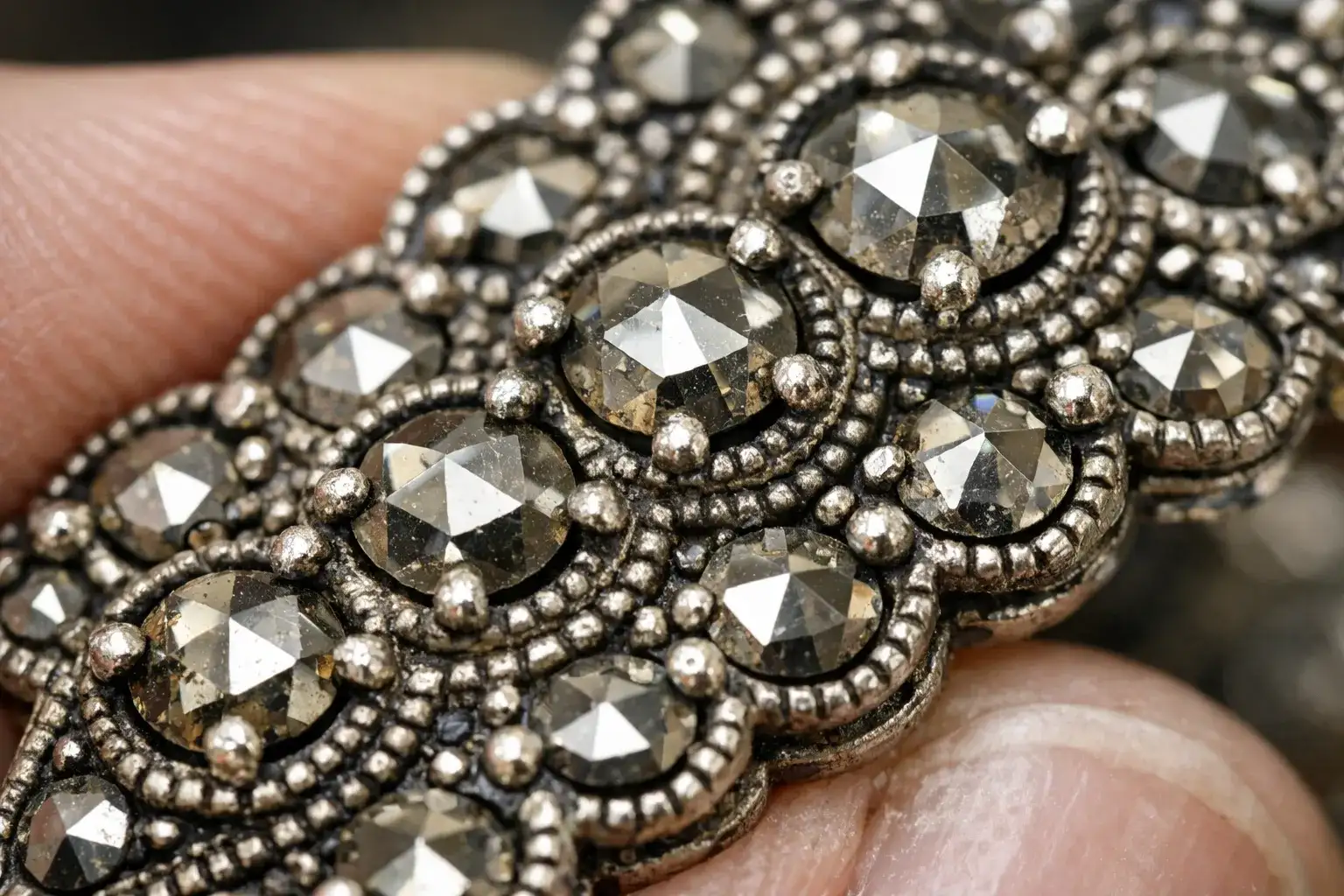
Marcasite: The star of every Judith Jack design. Marcasite is iron sulfide mineral that, when cut with a flat bottom and multiple facets, reflects light brilliantly—shimmering like tiny diamonds. This cutting technique is crucial; improperly cut marcasite looks dull. Judith Jack’s artisans mastered this craft, hand-setting each small stone to maximize sparkle.
Accent Stones and Materials: Beyond marcasite, Judith Jack incorporated faux pearls (cultured and imitation), sunray crystals, semi-precious gemstones (garnet, amethyst, citrine, blue topaz, onyx, turquoise), and occasionally enamel detailing. Higher-end pieces might include genuine pearls or higher-quality gemstones.
Design Aesthetics
Judith Jack drew heavily from four major design periods:
- Victorian (1837-1901): Intricate filigree work, romantic motifs, delicate details
- Edwardian (1901-1915): Lace-like patterns, lightweight constructions, refined elegance
- Art Nouveau (1890-1910): Flowing organic lines, nature-inspired designs, asymmetrical compositions
- Art Deco (1920s-1930s): Geometric patterns, bold symmetry, streamlined sophistication
This eclectic mix allowed Judith Jack to appeal to diverse tastes while maintaining a cohesive brand identity rooted in vintage glamour.
How to Identify Authentic Judith Jack Jewelry
Hallmarks and Maker’s Marks
Authentic Judith Jack pieces feature specific markings:
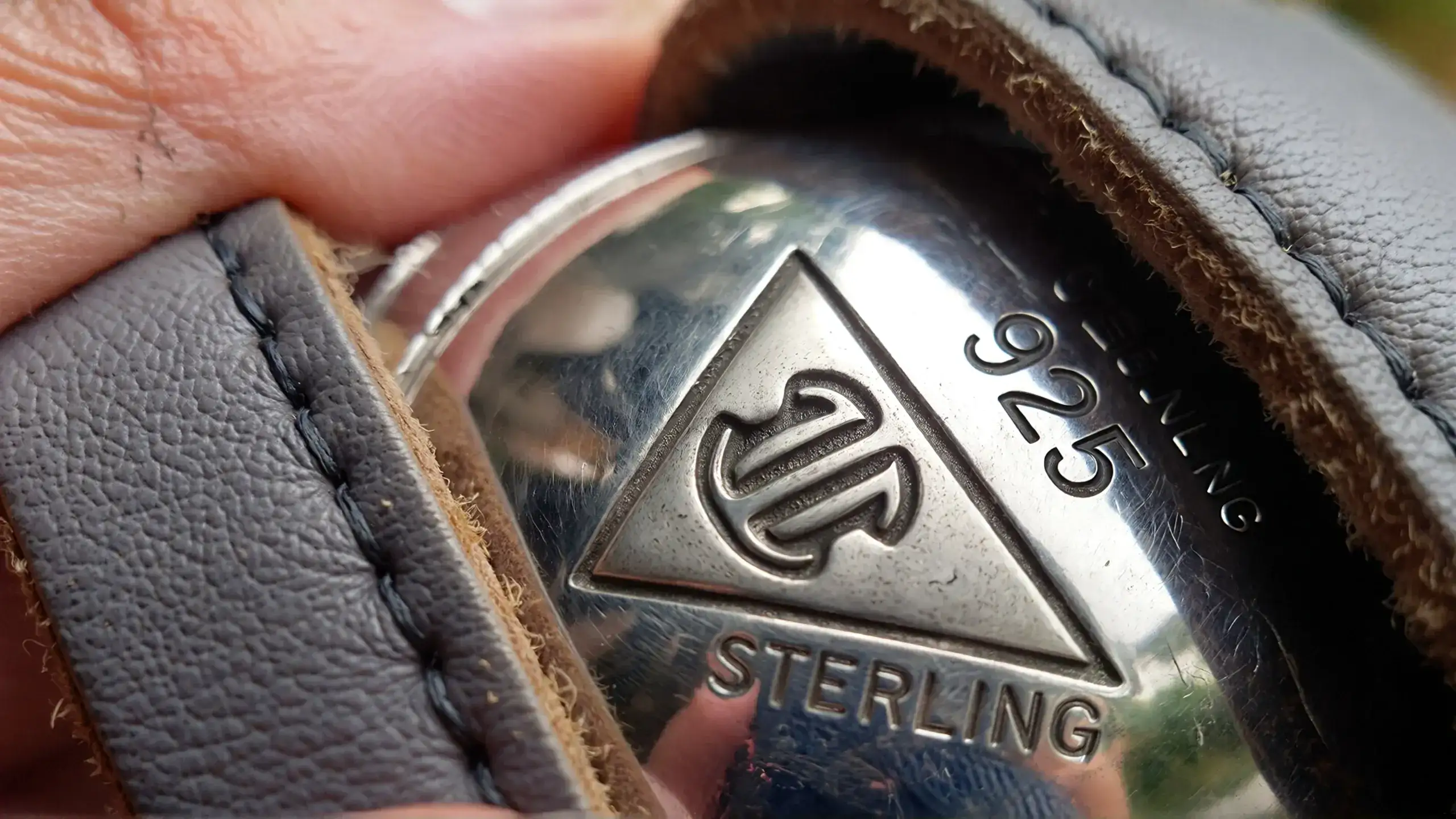
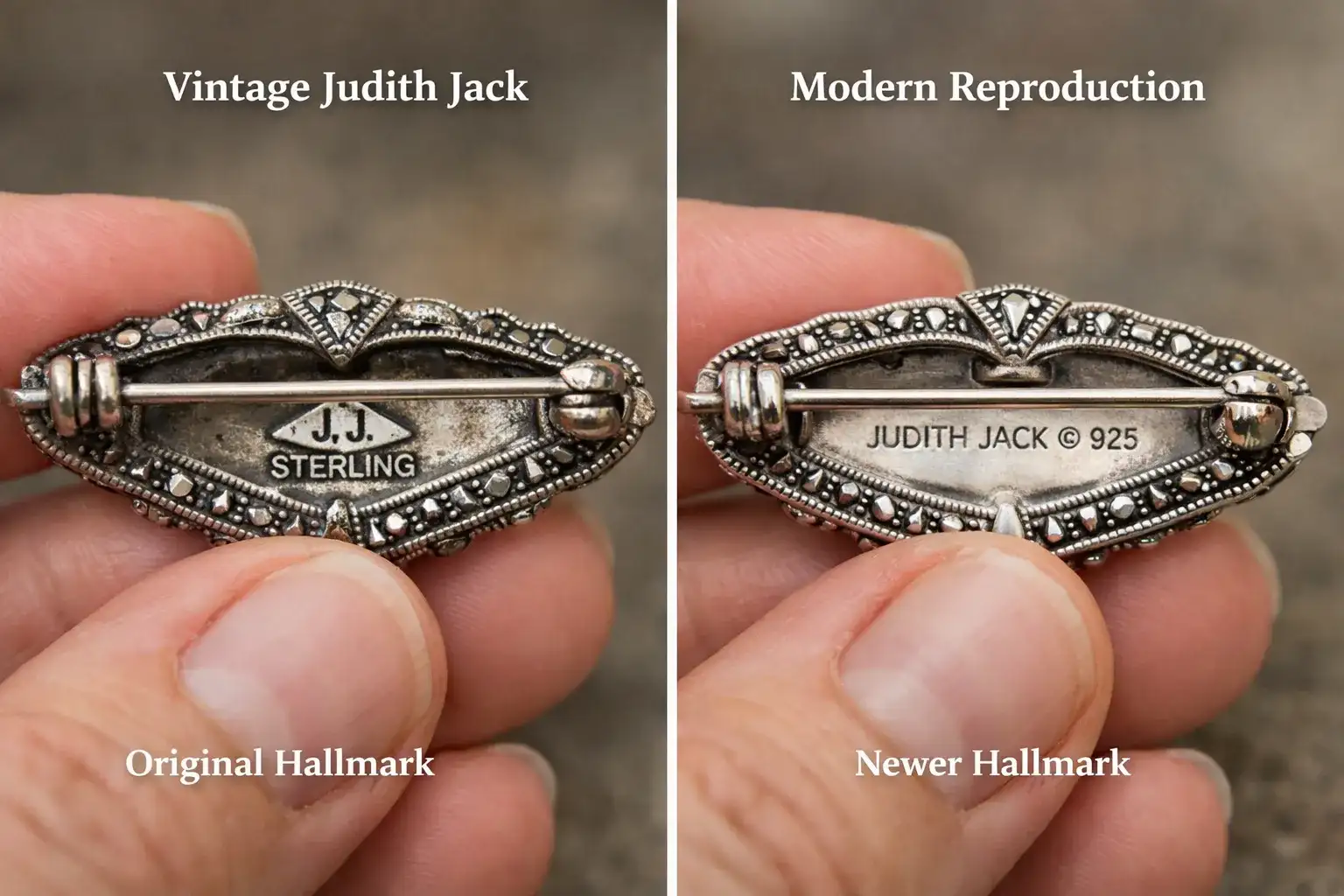
The “JJ in Triangle” Mark: The most recognizable Judith Jack signature is a stylized double “JJ” enclosed in a triangle. This appears on virtually all pieces produced from the mid-1970s onward, typically stamped on the back of brooches, the inside of ring bands, bracelet clasps, or earring posts.
Sterling Silver Marks: Look for “.925,” “925,” or “STERLING” stamps, often appearing near the JJ mark. Some pieces also include “SILVER” or the full word “STERLING SILVER.”
Additional Marks: Earlier pieces or special collections might include “JUDITH JACK” spelled out, patent numbers, or designer initials. The absence of proper hallmarks is a red flag for counterfeits.
Quality Indicators
Hand-Set Stones: Examine the marcasite settings closely. Authentic Judith Jack features tight, secure stone settings with minimal gaps. Each marcasite should be individually set in its own tiny prong or bezel—not glued.
Weight and Heft: Genuine sterling silver has substantial weight. If a piece feels too light or flimsy, it may be silver-plated base metal or a reproduction. A small digital scale can help—sterling silver density is approximately 10.5 g/cm³.
Craftsmanship Details: Look for clean solder joints, smooth bezels without rough edges, secure clasps, and uniform oxidation. Judith Jack maintained high manufacturing standards; sloppy work indicates a fake or damaged piece.
Patina and Wear: Vintage Judith Jack will show appropriate age—slight patina on silver, possible minor stone loss, gentle wear on high-contact areas. Be suspicious of pieces claiming to be “vintage” but looking factory-fresh, as this might indicate modern reproductions.
Common Authentication Challenges
The popularity of Judith Jack has spawned reproductions and outright fakes. Contemporary manufacturers sometimes create “marcasite jewelry” with similar styling but lacking the JJ mark and quality. Other pieces might have fraudulent hallmarks added.
When purchasing high-value Judith Jack items, consider professional authentication services. Companies like Entrupy offer authentication for vintage jewelry, or consult with experienced vintage jewelry dealers who specialize in designer costume jewelry.
Judith Jack Jewelry Value Guide
Current Market Values
According to data from 1stDibs, authenticated Judith Jack pieces currently sell between $103 and $400, with an average price around $171. However, several factors influence specific piece values:
Earrings: $40-$150, depending on size and stone variety. Simple studs or small hoops command lower prices; elaborate chandelier or drop earrings with multiple gemstones reach higher values.
Rings: $50-$200. Cocktail rings with large center stones or intricate marcasite work are most valuable. Simple bands with minimal decoration sell for less.
Bracelets: $80-$350. Link bracelets with gemstone accents, elaborate charm bracelets, and wide cuff styles are premium items. Simple chain bracelets with a single charm are more affordable.
Necklaces and Pendants: $75-$300. Large statement pieces, multi-strand designs, and necklaces featuring substantial pendants command top prices.
Brooches and Pins: $60-$250. Art Deco geometric designs and figural brooches (animals, flowers, etc.) are particularly collectible.
Watches: $150-$400+. Judith Jack watches are relatively rare and highly collectible, especially complete with original bands in working condition.
Factors Affecting Value
Condition: The single biggest value factor. Pieces with all original stones intact, no damage, minimal tarnish, and functioning clasps command premium prices. Missing marcasites, bent prongs, or broken parts significantly reduce value—sometimes by 50% or more.
Rarity: Limited production pieces, unusual color combinations, or discontinued designs are worth more. QVC “Reflection” line items are generally less valuable than mainline department store pieces.
Era: Earlier pieces (1970s-1980s) often feature better craftsmanship than later production (1990s-2000s). Pre-Jones Group acquisition pieces (before 2001) are particularly desirable to serious collectors.
Complexity: More elaborate designs with extensive marcasite work, multiple gemstone varieties, or intricate metalwork are more valuable than simpler pieces.
Completeness: Sets (matching earrings and necklace, for example) command higher prices than individual pieces when sold together.
Where Values Are Heading
Judith Jack values appear stable to slightly increasing. As fewer pieces remain in excellent condition and vintage jewelry enthusiasts discover the brand, demand continues. The brand’s definitive “closed” status means no new competition from modern production, helping maintain value.
Investment potential exists for exceptional pieces, but most collectors buy Judith Jack to wear and enjoy rather than as financial investments. The sweet spot for collecting: purchasing well-maintained pieces at fair market prices from reputable sellers, then properly caring for them to preserve value.
Where to Buy Judith Jack Jewelry Today
Online Marketplaces
Etsy: One of the best sources for vintage Judith Jack. Thousands of listings from individual sellers, typically ranging $40-$250. Benefits include buyer protection, detailed photos, and seller reviews. Search “vintage Judith Jack” and filter by verified sellers with high ratings.
eBay: The largest selection anywhere, from bargain lots to premium collector pieces. The Stuff4Uand4U eBay store specializes in Judith Jack and maintains excellent inventory. Prices range widely ($25-$300+); watch for auction deals but verify authenticity carefully.
Ruby Lane: A curated vintage marketplace with higher-quality sellers and typically higher prices ($60-$350). Excellent for serious collectors seeking guaranteed authentic, well-preserved pieces. Sellers on Ruby Lane generally provide detailed descriptions and authenticity guarantees.
1stDibs: The premium marketplace for authenticated vintage jewelry. Judith Jack pieces are professionally verified, comprehensively photographed, and typically range $103-$400. Higher prices reflect authentication and seller vetting, making this a safe choice for expensive purchases.
Poshmark: Growing selection of Judith Jack, particularly appealing to younger vintage enthusiasts. Prices are moderate ($35-$200), and the platform’s buyer protection provides security. Search functionality isn’t as robust as other platforms, requiring patience to find specific pieces.
Specialized Vintage Retailers
Alla Moda Vintage: This online vintage jewelry specialist maintains a curated Judith Jack collection with pieces authenticated by Entrupy Luxury Authentication Specialists. All items are professionally cleaned before sale. Prices reflect the authentication service but provide confidence in purchases.
Purple Creek: A jewelry retailer offering vintage Judith Jack among other estate pieces. Their items are inspected by metalsmiths and gemologists, ensuring quality. Good for collectors seeking investment-grade pieces with professional evaluation.
Department Stores and Retail
Contrary to some online claims, Judith Jack is NOT currently sold new at Bloomingdale’s, Nordstrom, or other major department stores. Any existing store inventory would be old stock, and availability is extremely limited to nonexistent. Some jewelry store websites may show Judith Jack in their systems but cannot actually source new pieces.
The occasional appearance of “new” Judith Jack pieces likely represents either very old remaining inventory, licensed productions that may not match original quality standards, or misrepresented vintage items.
Estate Sales and Antique Shops
Local estate sales, antique malls, and consignment shops can yield excellent Judith Jack finds, often at below-market prices. The challenge is inconsistent availability—you might search for months without seeing a piece, then find a treasure trove.
Tips for estate sale shopping: Arrive early for best selection, bring a jeweler’s loupe to verify hallmarks, know current market values to recognize good deals, and build relationships with shop owners who can alert you to new inventory.
Buying Smart: What to Ask Sellers
Before purchasing any Judith Jack piece, especially online, ask sellers:
- Can you verify the JJ hallmark in a clear close-up photo?
- Are all marcasites intact, or are any missing?
- What is the exact condition of clasps, pins, or closures?
- Can you provide measurements and weight?
- What is your return policy if authentication is questioned?
- Do you guarantee the piece is authentic Judith Jack?
Reputable sellers welcome these questions and provide detailed responses. Evasive or incomplete answers are red flags.
Caring for Your Judith Jack Collection
Cleaning Marcasite Jewelry
Marcasite requires special care. The stones are relatively fragile, and harsh chemicals or rough handling can damage them. Never use ultrasonic cleaners or steam cleaners on marcasite—the vibrations and heat can loosen settings and crack stones.
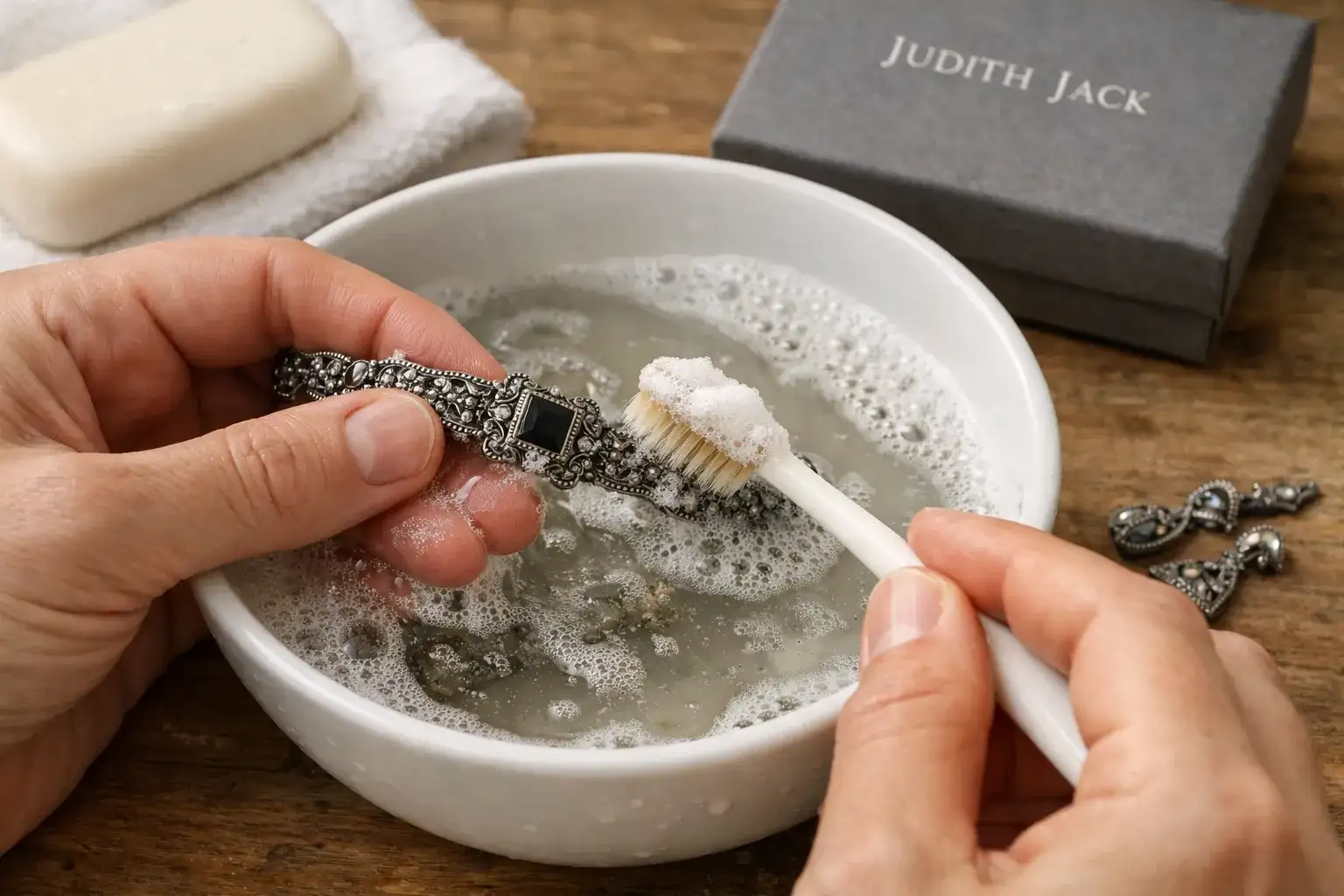
Proper Cleaning Method:
- Mix lukewarm water with a few drops of mild dish soap (Dawn Original works well)
- Dip a soft-bristled brush (baby toothbrush is perfect) in the solution
- Gently brush around marcasite settings, removing dirt and oils
- Rinse under lukewarm running water
- Pat dry immediately with a soft, lint-free cloth
- Air dry completely before storing
For Sterling Silver Tarnish: Use a quality silver polishing cloth to gently buff the metal, avoiding direct pressure on marcasite stones. Never use silver dip solutions, as chemicals can damage marcasite and loosen adhesives.
Storage and Maintenance
Store Judith Jack pieces individually in soft pouches or lined jewelry boxes to prevent scratching. Marcasite can scratch other jewelry, and conversely can be scratched by harder stones.
Keep jewelry away from:
- Direct sunlight (can fade certain stones)
- High humidity (accelerates tarnish)
- Household chemicals (cleaners, perfumes, hairspray)
- Swimming pools and hot tubs (chlorine damages silver and marcasite)
Apply perfume, lotion, and hairspray before putting on Judith Jack jewelry, allowing products to dry completely first.
Professional Restoration
For pieces with missing marcasites or damaged components, professional jewelry repair is available. Specialized vintage jewelry restorers can source replacement marcasite stones and repair settings. However, restoration costs can exceed the piece’s value for less expensive items, so weigh costs carefully.
Simple repairs like replacing lost marcasites might cost $50-$100, while complex reconstructions can run $200+. For valuable or sentimental pieces, professional restoration preserves both function and value.
Alternative Brands with Similar Aesthetics
While nothing perfectly replicates Judith Jack’s combination of quality, style, and price point, several brands offer comparable marcasite jewelry:
Contemporary Options:
- Esse Marcasite: Modern marcasite jewelry with vintage-inspired designs, available through various online retailers
- Lavish by TJM: Sterling silver marcasite pieces with Art Deco influences
- Aemilia Jewellery: UK-based brand creating Victorian and Art Deco style marcasite jewelry
Vintage Alternatives:
- Theodore Fahrner: German Art Nouveau and Art Deco jewelry from the early 20th century, featuring marcasite and semi-precious stones (typically more expensive than Judith Jack)
- Uncas: American costume jewelry manufacturer from a similar era, occasionally incorporating marcasite
- Sarah Coventry: Mid-century costume jewelry brand with some marcasite designs (generally less elaborate than Judith Jack)
None of these brands perfectly captures Judith Jack’s particular magic—the combination of accessible pricing, consistent quality, and romantic vintage styling—which partly explains why Judith Jack vintage pieces remain so desirable.
Frequently Asked Questions About Judith Jack Jewelry
When was Judith Jack jewelry founded, and when did it close?
Judith Jack was founded in 1969 by Judith and Jack Rosenberg, who started selling vintage-inspired marcasite jewelry at New Jersey’s Englishtown Flea Market. The company was formally incorporated in 1976. After being sold to the Jones Group in 2001, the brand faced financial difficulties and filed for bankruptcy in 2004. New production effectively ceased around 2008, though some sources cite 2015 as the final closure. The Judith Jack trademark has been owned by Premier Brands IP LLC since 1992, allowing limited licensed production, but the brand no longer operates as it did during its 1980s-1990s heyday.
Is Judith Jack jewelry still being made today?
Judith Jack jewelry is not being manufactured at the scale or quality level that characterized the brand’s golden years. While the trademark ownership by Premier Brands IP LLC theoretically allows new production or licensed pieces, any contemporary items bearing the Judith Jack name do not represent the hand-crafted quality of vintage pieces from the 1970s through 1990s. Most “Judith Jack jewelry” available today is vintage or pre-owned stock from the brand’s active years. Collectors and enthusiasts should focus on vintage pieces from reputable sellers rather than seeking new production items.
How can I tell if my Judith Jack jewelry is authentic?
Authentic Judith Jack pieces feature the distinctive “double JJ in a triangle” hallmark, typically accompanied by “.925,” “STERLING,” or “925” marks indicating sterling silver. Look for hand-set marcasite stones with tight, secure settings—not glued. The piece should have substantial weight appropriate for sterling silver. Examine craftsmanship quality: smooth soldering, clean bezels, and functioning clasps. Vintage pieces will show appropriate age with slight patina but should not appear sloppy or poorly made. For expensive purchases, consider professional authentication services or buy from established vintage jewelry dealers who guarantee authenticity and offer returns if pieces prove inauthentic.
What is Judith Jack jewelry worth today?
Current market values for authentic Judith Jack jewelry typically range from $40 to $400, depending on the type of piece, condition, rarity, and complexity. According to 1stDibs marketplace data, the average selling price is approximately $171. Simple earrings might sell for $40-$80, while elaborate bracelets, necklaces, and watches command $200-$400 or more. Pieces in excellent condition with all original stones intact, no damage, and minimal tarnish are worth significantly more than those with missing marcasites or damage. Limited production items and early pieces from the 1970s-1980s typically command premium prices. Values have remained stable and show slight appreciation as the brand’s closure becomes more distant and well-preserved pieces grow scarcer.
Where is the best place to sell Judith Jack jewelry?
The best selling venue depends on your priorities and the quality of your pieces. For maximum reach and competitive pricing, try eBay, where Judith Jack has an established collector base and sells consistently. Etsy works well for higher-quality pieces if you can take excellent photographs and write detailed descriptions. For premium pieces in exceptional condition, consider consigning to specialty vintage jewelry dealers like Alla Moda Vintage or auction houses like 1stDibs, which authenticate items and connect you with serious collectors willing to pay top dollar. Ruby Lane and Poshmark are good mid-tier options. Local options include estate jewelry buyers and consignment shops, though these typically offer lower prices than online marketplaces. For quick sales with less effort, pawn shops or local jewelers might buy outright, but expect to receive only 30-50% of retail value.
Why did Judith Jack jewelry go out of business?
Judith Jack’s decline resulted from multiple factors converging over several years. The 2001 sale to the Jones Group, a large fashion conglomerate without specialized jewelry manufacturing expertise, marked the beginning of the end. The brand lost its personal touch and design philosophy under corporate ownership. By 2004, financial difficulties led to bankruptcy, likely caused by changing fashion trends that favored minimalist contemporary styles over vintage-inspired pieces, increasing competition from cheaper mass-produced imports, department store consolidation that reduced shelf space for specialized brands, and loss of the artisan craftsmanship that made the jewelry special. The 2008 financial crisis delivered the final blow, as consumer spending on semi-luxury goods plummeted. The brand gradually wound down production between 2008 and 2015 as remaining inventory sold and manufacturing ceased entirely.

Hi, I’m Sara Hein, a passionate jewelry researcher and educator. I created Jewelry Carats to share well-researched insights on gemstones, precious metals, and jewelry care. My goal is making expert jewelry knowledge accessible to everyone.