
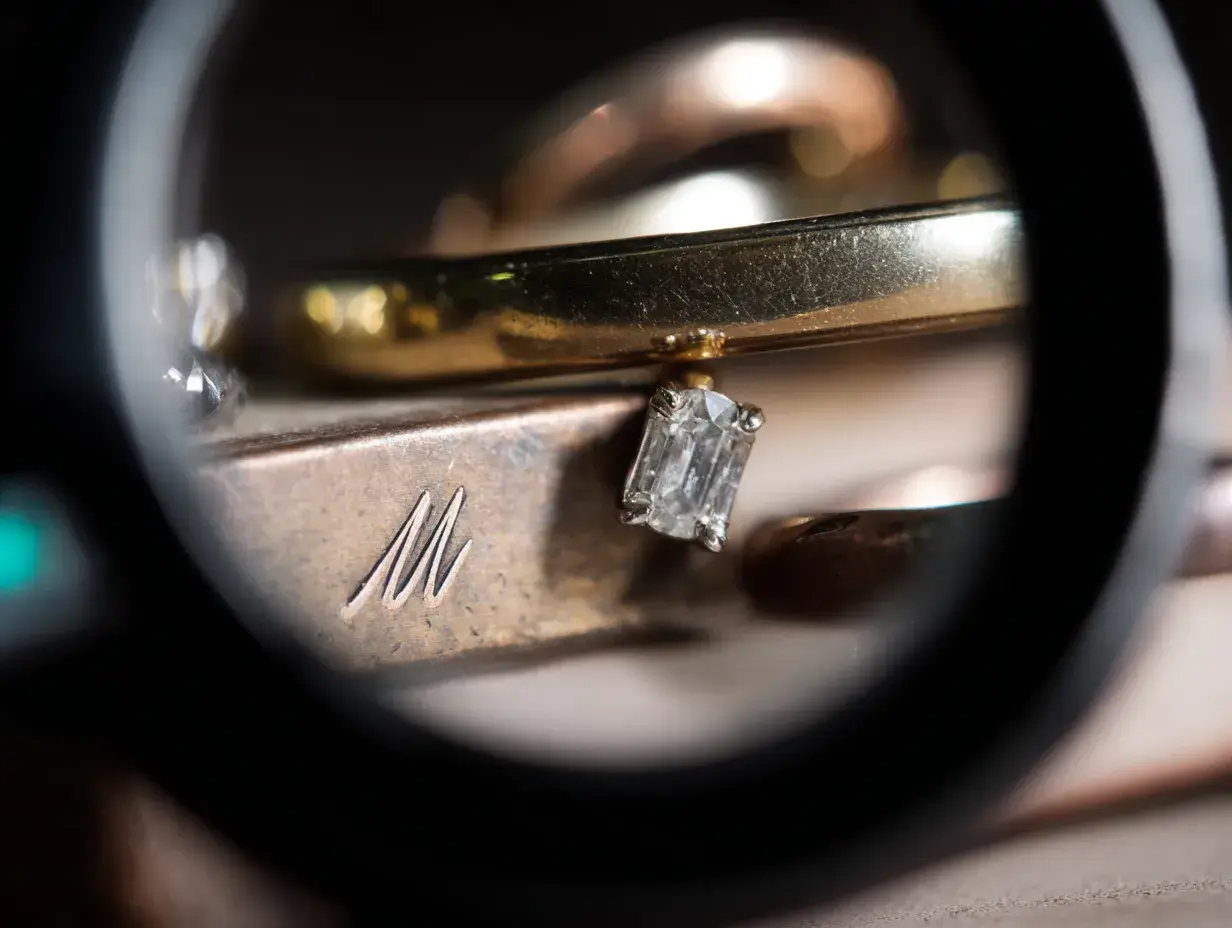
Complete Guide to Identifying Your Jewelry
Ever found a mysterious stamp inside your grandmother’s ring or on the back of a vintage brooch? Those tiny symbols are jewelry makers marks, and they hold the key to unlocking your piece’s history, authenticity, and value. Whether you’ve inherited antique jewelry or discovered a treasure at an estate sale, understanding these marks can transform an unknown piece into a documented artifact with proven provenance.
A jewelry makers marks database is your essential tool for decoding these cryptic symbols. These comprehensive online resources catalog thousands of marks from jewelers worldwide, spanning centuries of craftsmanship. With the right database, you can identify who made your jewelry, when it was crafted, where it originated, and what it’s worth today.
In this complete guide, you’ll discover how to use jewelry makers mark databases effectively, where to find the most reliable resources, and how to interpret the marks you find. From vintage brooches to contemporary designer pieces, we’ll help you become confident in identifying and valuing your jewelry collection.
What Are Jewelry Makers Marks?
Jewelry makers marks, also called maker’s marks or trademarks, are unique stamps, symbols, or engravings placed on jewelry by the manufacturer, designer, or craftsperson who created it. These marks serve as signatures that authenticate the piece’s origin and craftsmanship.
Think of a maker’s mark as a jewelry piece’s birth certificate. Just as artists sign paintings, jewelers have stamped their work with identifying marks for centuries. These marks typically consist of:
- Initials: Two or three letters representing the jeweler’s name (e.g., “TF” for Tiffany, “VCA” for Van Cleef & Arpels)
- Symbols: Unique logos or pictorial marks registered to specific makers
- Full names: Complete company names stamped in tiny letters
- Combinations: Initials paired with symbols or dates
The Purpose of Maker’s Marks
Maker’s marks fulfill several crucial functions in the jewelry world:
Authentication: They prove a piece’s genuine origin, protecting against counterfeits. A Cartier mark confirms you own an authentic Cartier piece, not an imitation.
Quality assurance: Established jewelers stake their reputation on every marked piece. The mark represents a promise of craftsmanship and material quality.
Historical documentation: Marks create a traceable lineage for jewelry, allowing historians and collectors to track design evolution and manufacturing techniques across decades or centuries.
Value determination: A recognized maker’s mark can dramatically increase a piece’s value. Jewelry from prestigious houses like Buccellati, Bulgari, or Harry Winston commands premium prices partly due to their marks.
History of Jewelry Marks
The practice of marking precious metals dates back to ancient civilizations. Medieval European guilds required goldsmiths to register personal marks as early as the 13th century. In England, the Goldsmiths’ Company in London established hallmarking requirements in 1300, creating one of the world’s oldest continuous quality control systems.
By the 17th and 18th centuries, most European countries had formalized marking systems. France introduced the poinçon de maître (master’s punch) requiring all goldsmiths to register unique marks. In America, jewelry marking became more standardized after the National Gold and Silver Stamping Act of 1906, though it remained less regulated than European systems.
Why Jewelry Makers Marks Databases Matter
Before the digital age, identifying jewelry makers marks required consulting massive reference books, visiting specialized libraries, or seeking expert appraisers. A single mark identification could take weeks of research across multiple sources. Today, jewelry makers marks databases have revolutionized this process, making information accessible in minutes rather than months.
The Challenge of Mark Identification
Unlike standardized hallmarks that indicate metal purity (like “925” for sterling silver or “750” for 18k gold), maker’s marks are unique to each jeweler. With tens of thousands of jewelers operating across centuries and continents, the variety of marks is nearly infinite. Consider these complications:
- No universal system: Each jeweler creates their own mark, following no standard format
- Evolution over time: Manufacturers often changed marks throughout their history as ownership, regulations, or branding evolved
- Regional variations: The same jeweler might use different marks in different countries or time periods
- Size and wear: Marks can be microscopic or worn down over decades of wear
- Similar marks: Different jewelers occasionally used similar-looking symbols
How Databases Solve These Problems
Modern jewelry makers marks databases aggregate information from multiple sources into searchable, visual archives. These digital resources offer several advantages:
Comprehensive coverage: The best databases include 40,000+ marks from jewelers worldwide, spanning the 17th century to present day.
Visual search capabilities: Upload a photo or describe the mark’s appearance to find matches, eliminating the need to know the jeweler’s name beforehand.
Detailed information: Each mark entry typically includes the maker’s name, location, active dates, mark variations, and often historical background about the company or craftsperson.
Regular updates: Digital databases can be continuously updated with newly discovered marks, corrections, and additional research.
Cross-referencing: Connect marks with hallmarks, date letters, and assay office symbols for complete identification.
Accessible anywhere: Research from home using your computer or smartphone, no library trips required.
Real-World Impact
Access to reliable databases has democratized jewelry authentication. Collectors can now verify estate sale finds before purchasing, avoiding costly mistakes. Families discovering inherited jewelry can uncover fascinating histories about pieces passed down through generations. Even jewelry stores use these databases to authenticate and properly price vintage inventory.
How to Use a Jewelry Makers Marks Database
Successfully using a jewelry makers marks database requires a systematic approach. Follow these steps to identify your jewelry’s maker efficiently:
Step 1: Locate the Mark
First, you need to find where the maker’s mark is stamped on your jewelry. Check common locations based on jewelry type:
- Rings: Inside the band (shank), usually near the bottom
- Bracelets: Near the clasp or on flat link surfaces
- Necklaces: On the clasp, bail, or a small tag
- Brooches/Pins: On the back, near the pin mechanism
- Earrings: On the back of posts or clip mechanisms
Use good lighting and magnification. Most maker’s marks are tiny—often just 2-3mm tall—requiring a jeweler’s loupe or magnifying glass to read clearly.
Step 2: Document the Mark
Before searching, carefully document what you see:
- Sketch or photograph: Draw the mark or take a clear, well-lit photo. Macro photography mode helps capture detail.
- Note all characters: Record letters, numbers, symbols, and their arrangement. Is it “AB” or “A.B.” or “A/B”?
- Describe the shape: Is the mark in a circle, oval, shield, diamond, or rectangle? The cartouche (frame shape) is often significant.
- Check for additional marks: Note any hallmarks, purity marks, or date letters nearby—these provide context.
Step 3: Search the Database
Most databases offer multiple search methods:
Keyword search: If you can read the mark clearly, type it directly. Try variations like “ABC”, “A.B.C.”, “A B C”.
Visual search: Many databases allow browsing marks by shape, symbol type (animals, geometric shapes, letters), or country. Start with broad categories and narrow down.
Advanced filters: Use filters for:
- Country of origin (if known)
- Time period (if you can estimate the jewelry’s age)
- Metal type (gold, silver, platinum)
- Mark characteristics (has crown, includes date, etc.)
Step 4: Compare and Verify
When you find potential matches:
- Compare carefully: Look at every detail. Small differences matter—a dot, dash, or letter variant could indicate a different maker or time period.
- Check active dates: Does the jeweler’s active period match your piece’s apparent age?
- Consider style context: Does the jewelry’s design align with the identified maker’s known work?
- Cross-reference other marks: Do accompanying hallmarks or purity marks confirm the origin country and time period?
Step 5: Document Your Findings
Once identified, record:
- Maker’s full name and location
- Dates the mark was in use
- Any historical information about the maker
- Source of identification (which database)
This documentation becomes part of your jewelry’s provenance, potentially increasing its value.
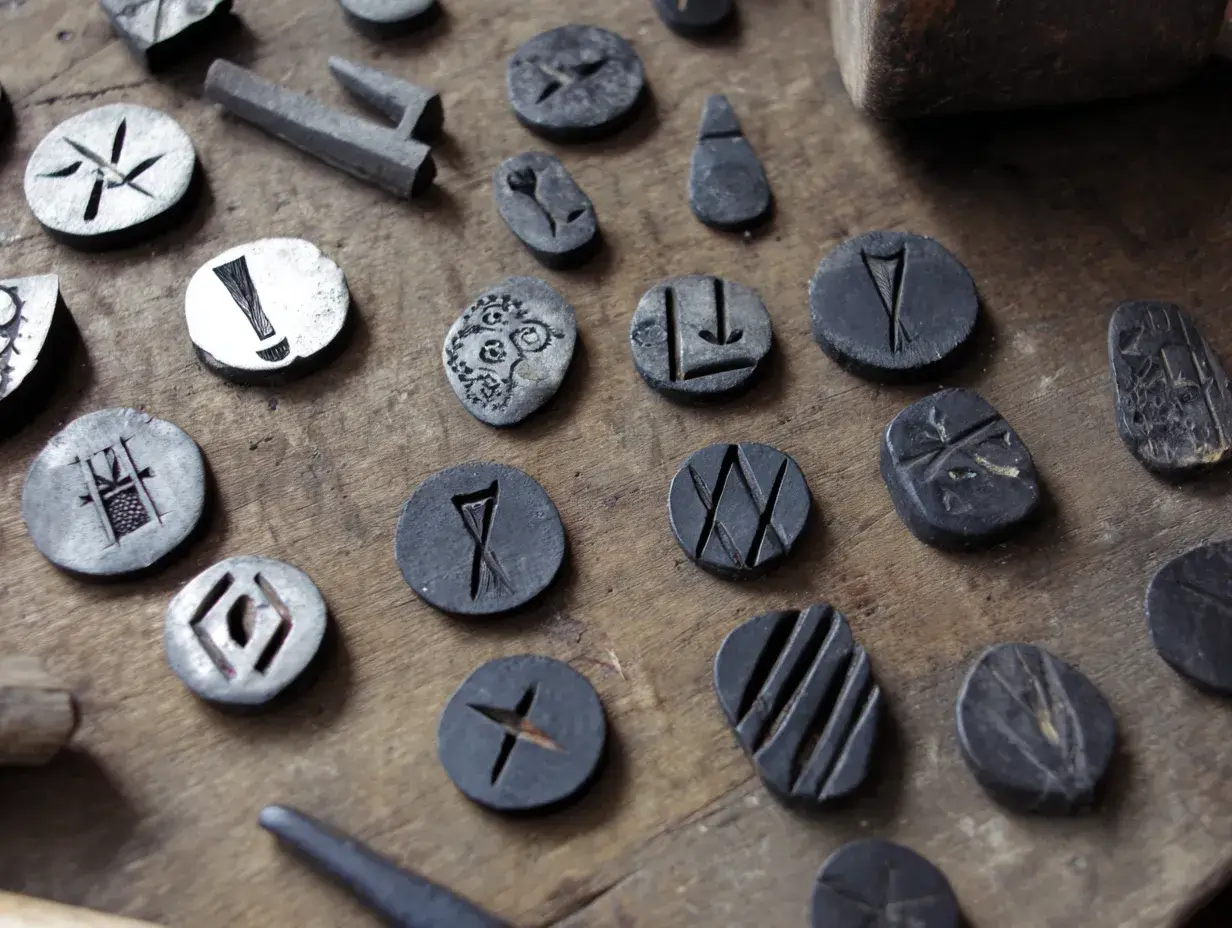
Where to Find Marks on Your Jewelry
Maker’s marks are intentionally placed in discreet locations to avoid detracting from the jewelry’s visual appeal. Understanding where jewelers typically place marks saves time and prevents overlooking important information.
Rings
The inner surface of the ring band (called the shank) is the primary location for maker’s marks on rings. Look specifically at:
- Inside bottom: The most common position, often where your palm side would be
- Behind the setting: On rings with large stones, marks may be behind the head where the stone is mounted
- Near sizing areas: Be aware that resizing can obscure or remove original marks
Engagement rings and wedding bands frequently have marks positioned where they won’t wear down from daily contact with surfaces.
Necklaces and Chains
Check these key areas on necklaces:
- Clasp mechanism: Many clasps have small flat surfaces perfect for stamping
- Jump rings: The connecting rings near clasps sometimes bear marks
- Pendant bails: The loop connecting a pendant to its chain
- Small tags: Some necklaces have tiny metal tags specifically for marks
- End caps: On beaded or pearl necklaces
Bracelets
Similar to necklaces, bracelets typically show marks:
- Clasp area: On or near the fastening mechanism
- Flat link surfaces: On link bracelets, one link often contains marks
- Inner surfaces: The side that touches your wrist
- End plates: On bangle bracelets
Brooches and Pins
The back surface is standard for brooch marks:
- Near the pin mechanism: Often stamped into the flat metal plate holding the pin
- Frame edges: Along the sides or bottom of ornate frames
- Hinge areas: Where moving parts attach
Earrings
Earring marks can be challenging to locate due to small size:
- Post backs: The flat surface behind pierced earrings
- Clip mechanisms: On clip-on or screw-back earrings
- Earring backs (backs of posts): Sometimes the mark is on the actual backing piece
- Wire ends: On hook-style earrings
Common Challenges
Worn marks: Decades of wear can fade marks. Angling jewelry under light may reveal worn impressions.
Microscopic size: Some marks require 10x magnification or stronger to read.
Missing marks: Not all jewelry is marked. Repairs, alterations, or certain manufacturing methods may result in unmarked pieces.
Multiple marks: Don’t stop at the first mark found. Jewelry often carries several stamps indicating maker, metal purity, assay office, and date.
Best Jewelry Makers Marks Databases
Several comprehensive databases serve as reliable resources for mark identification. Here are the most trusted options:
Antique Jewelry University (Lang Antiques)
One of the most extensive free online databases, maintained by Lang Antiques. Features:
- Hundreds of maker’s marks with photographs
- Searchable by letter, symbol, or country
- Detailed historical information for each maker
- Continuously updated with new submissions
- Particularly strong for American and European makers
Best for: General research across multiple time periods and regions.
Heritage Auctions Designer Marks Guide
Focused on high-end designer jewelry marks:
- Clear photographs of famous maker’s marks
- Emphasis on luxury brands (Cartier, Tiffany, Van Cleef & Arpels, etc.)
- Free access to identification guide
- Accompanied by valuation services
Best for: Identifying pieces from prestigious jewelry houses.
Costume Jewelry Collectors International (CJCI)
Specializes in vintage costume jewelry marks:
- Extensive coverage of 20th-century costume jewelry makers
- Detailed company histories
- Research articles and catalogs
- Resources dating back to 1997
Best for: Identifying costume jewelry from the 1920s-1980s.
925-1000.com (Online Encyclopedia of Silver Marks)
Comprehensive silver jewelry care mark database:
- Focus on silver and silverplate marks
- International coverage
- Organized by country and period
- Includes both sterling and silverplate marks
Best for: Silver jewelry and objects.
Books and Reference Materials
While digital databases are convenient, serious collectors should consider these print references:
- Warman’s Jewelry by Kathy Flood
- Miller’s Jewelry Marks
- Kovels’ Guide to Marks, Pottery and Porcelain, and Jewelry

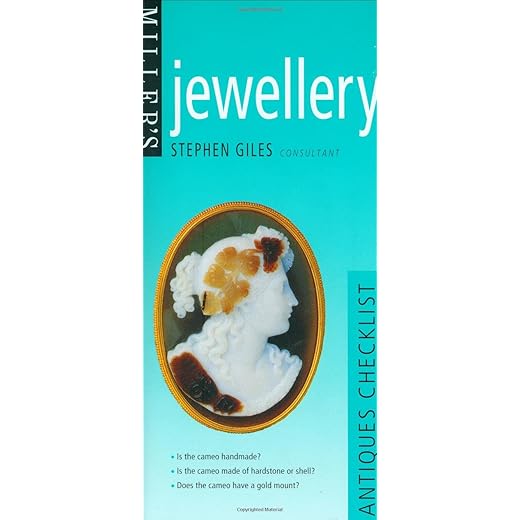

Regional books often provide deeper detail for specific areas. Libraries with rare book collections may house historical trade directories invaluable for researching obscure makers.
Reading and Interpreting Maker’s Marks
Understanding how to read maker’s marks requires knowledge of common formats and conventions used throughout jewelry history.
Format Types
Initials only: Most common format. Examples:
- “TF” = Tiffany & Co.
- “VCA” = Van Cleef & Arpels
- “RG” = René Grange
Full names: Often used by prestigious houses or in later periods:
- “CARTIER”
- “TIFFANY & CO”
- “BUCCELLATI”
Symbols and logos: Pictorial marks including:
- Animals (eagles, lions, swans)
- Geometric shapes (stars, crowns, anchors)
- Stylized letters or monograms
Combinations: Marks that include multiple elements:
- Initials in a shield or cartouche
- Name with date or location
- Symbol paired with letters
Understanding Mark Components
A complete set of jewelry stamps typically includes:
1. Maker’s mark: Identifies the manufacturer (what we’re discussing)
2. Purity/fineness mark: Indicates metal content:
- Gold: “18K”, “750” (18kt), “14K”, “585” (14kt)
- Silver: “925” or “STERLING” (92.5% silver)
- Platinum: “950”, “PLAT”, “PT”
3. Assay office mark: Shows where metal was tested (primarily European):
- Leopard head (London)
- Anchor (Birmingham)
- Eagle’s head (French gold)
4. Date letter: British jewelry included letters indicating year of assay
Regional Conventions
British marks: Highly standardized system with multiple required marks including maker’s mark, standard mark, assay office, and often date letter
French marks: Uses pictorial symbols (eagle head for gold, Minerva for silver) plus maker’s mark in a lozenge shape
American marks: Less regulated; typically just maker’s mark and purity indication. No government assay requirement.
Italian marks: Numerical purity marks (e.g., “750”) plus maker’s mark, often with location code
Dating Your Jewelry Using Marks
Maker’s marks serve as valuable dating tools when you understand how to interpret mark evolution and cross-reference with other evidence.
How Marks Help Date Jewelry
Mark registration dates: Many countries required jewelers to register marks. These registration records establish date ranges when specific marks were in use.
Company history: Knowing when a jewelry company operated narrows possible dates. If a maker was only active 1920-1945, your piece dates to that period.
Mark evolution: Successful jewelers often modified marks over time due to:
- Business partnerships forming or dissolving
- Ownership changes
- Address changes
- Regulation changes
- Modernizing branding
Cross-Referencing Evidence
Combine maker’s mark information with:
Design style: Art Deco geometric designs = 1920s-1930s; Retro big, bold pieces = 1940s; Minimalist modern = 1950s-1960s
Manufacturing techniques: Hand-crafted details suggest earlier periods; precision casting indicates post-1950
Materials: Certain synthetic stones, alloys, or treatments only available after specific dates
Other marks: Date letters (British jewelry), patent numbers, or copyright symbols with dates
Dating Challenges
Some complications to consider:
Revival styles: Victorian Revival jewelry made in 1920s mimics 1840s-1890s designs
Long-operating businesses: Companies active for decades might use similar marks throughout, making precise dating difficult
Reproduction marks: Some modern manufacturers recreate vintage marks (usually illegal but occurs)
Unmarked pieces: Much jewelry, especially from small workshops or certain periods, bears no maker’s mark
Authenticating Jewelry with Maker’s Marks
Maker’s marks are your first line of defense against counterfeits and misrepresented jewelry. Understanding authentication principles protects you from costly mistakes.
Why Authentication Matters
The jewelry market includes both innocent misidentifications and deliberate frauds. Common issues include:
- Fake designer jewelry: Counterfeit Cartier, Tiffany, or other high-end pieces with forged marks
- Misrepresented vintage pieces: Modern jewelry falsely sold as antique
- Wrong attributions: Jewelry incorrectly identified due to similar marks
- Altered pieces: Original marks removed or replaced
Authentication Process
1. Verify the mark matches database records: Compare your piece’s mark exactly with authenticated examples. Note any discrepancies in:
- Letter style and spacing
- Symbol details
- Mark size and depth
- Cartouche shape
2. Examine mark quality: Genuine marks show:
- Crisp, clear stamping (unless aged)
- Consistent depth
- Appropriate size for the piece
- Professional placement
Suspicious signs include:
- Blurry or unclear stamping
- Awkward positioning
- Unusually shallow or deep impressions
- Multiple strike marks (restamping attempts)
3. Assess design consistency: Does the jewelry’s style match the identified maker’s known work? Research examples of authentic pieces from that maker for comparison.
4. Check construction quality: High-end makers maintain consistent quality standards. Poor construction quality contradicts attribution to prestigious houses.
5. Consider provenance: Documentation, original boxes, receipts, or family history supporting the piece’s origin adds credibility.
When to Seek Professional Help
Consult professional appraisers or jewelers when:
- Purchasing expensive jewelry based on maker’s mark
- Marks appear altered or suspicious
- You cannot find the mark in any database
- The piece represents significant financial value
- Insurance documentation required
Assessing Value Using Marks
A maker’s mark can dramatically influence jewelry value, sometimes multiplying worth several times over. Understanding how marks affect value helps make informed buying and selling decisions.
How Maker’s Marks Impact Value
Brand premium: Jewelry from famous houses commands higher prices due to reputation, design excellence, and collectability. Examples:
- A diamond ring: $5,000 (no maker’s mark) vs. $15,000+ (Cartier mark)
- A vintage brooch: $200 (unknown maker) vs. $2,000+ (Tiffany mark)
Historical significance: Rare makers, especially from important design periods (Arts & Crafts, Art Nouveau, Art Deco), attract premium prices from collectors.
Quality indicator: Established makers maintain consistent standards. Their mark signals verified craftsmanship and material quality.
Collectability: Certain makers have dedicated collector bases willing to pay premiums for marked pieces.
Factors Affecting Value
Beyond the mark itself, consider:
Maker prestige: Not all marks add significant value. Prestigious houses (Cartier, Van Cleef & Arpels, Harry Winston, Buccellati, JAR) command highest premiums. Regional or lesser-known makers may add modest value.
Rarity: Scarce pieces from limited production periods or small workshops interest collectors more than common pieces.
Condition: Even marked jewelry loses value with damage, repairs, or alterations. Original condition maximizes mark-related value.
Market demand: Some makers go in and out of fashion. Current collector interest affects realized values.
Piece quality: The mark alone doesn’t determine value. Design excellence, material quality, and craftsmanship matter equally.
Valuation Resources
For accurate value assessment:
- Professional appraisals: Certified appraisers provide written valuations considering all factors
- Auction results: Check recent sales of comparable pieces from the same maker
- Dealer quotes: Contact reputable jewelry dealers specializing in your piece’s type or period
- Insurance values vs. resale: Understand the difference between replacement cost (insurance) and realistic resale value
Essential Tools for Mark Identification
Properly examining jewelry makers marks requires the right equipment. These tools make identification faster and more accurate:
Magnification Tools
Jeweler’s loupe: A 10x magnification loupe is the jewelry industry standard for examining marks. Look for:
- Triplet lens design (reduces distortion)
- Good optical quality
- Comfortable eyepiece
- Portable for travel
Illuminated magnifiers: Magnifying glasses with built-in LED lighting help see marks in hard-to-reach places.
Digital microscopes: For serious collectors, USB microscopes connect to computers, allowing:
- High magnification (up to 200x)
- Photo/video capture
- Screen viewing (easier on eyes)
- Sharing images with experts
Lighting
Daylight-balanced LED lights: True color rendering helps distinguish metals and see worn marks.
Raking light technique: Angle light across marks at low angles to reveal shallow impressions.
Photography Equipment
Macro lens or macro mode: Smartphone cameras with macro capability can document marks for database searches and expert consultation.
Lighting setup: Even, shadow-free lighting produces clearer photos.
Cleaning Supplies
Soft brushes: Gently remove dirt obscuring marks. Use soft bristle brushes to avoid scratching.
Mild soap solution: Careful cleaning may reveal hidden marks. Always test cleaning methods on inconspicuous areas first.
Polishing cloth: Non-abrasive jewelry polishing cloths remove tarnish that might hide marks.
Documentation Materials
Notebook or digital file: Record findings systematically including:
- Mark photographs
- Measurements
- Research notes
- Database references
- Appraisal information
Recommended Mark Identification Tools
Having the right equipment makes identifying jewelry makers marks much easier. Here are essential tools every jewelry collector should own:
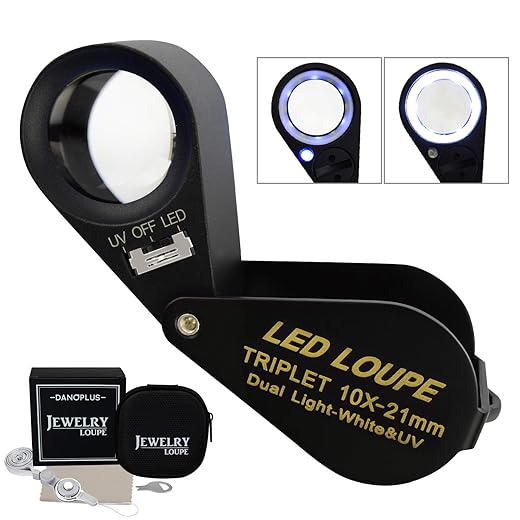
1. Professional Jeweler’s Loupe
This professional-grade 10x magnification loupe features triplet lens design for crystal-clear viewing of tiny maker’s marks without distortion. Compact and portable, it’s the same quality tool professional jewelers and gemologists use daily. The 21mm lens diameter provides a wide field of view perfect for examining stamps inside ring bands or on clasps.
Best for: Anyone serious about identifying jewelry marks accurately
2. LED Illuminated Magnifier
Brightech LightView Pro LED Magnifying Glass
This hands-free magnifying glass with built-in LED lighting solves the common problem of examining marks in dark, hard-to-reach places. The flexible arm positions the lens exactly where needed, while the bright LED illumination reveals worn or faded marks that might otherwise go unnoticed. Perfect for examining the inside of rings or the backs of brooches.
Best for: Extended examination sessions and photographing marks

3. USB Digital Microscope
Plugable USB Digital Microscope
For collectors building serious documentation, this digital microscope connects to your computer and provides up to 250x magnification. Capture high-resolution photos and videos of marks for database comparison and provenance records. The adjustable stand and software make it easy to save and organize images of your entire collection’s marks.
Best for: Serious collectors building comprehensive documentation
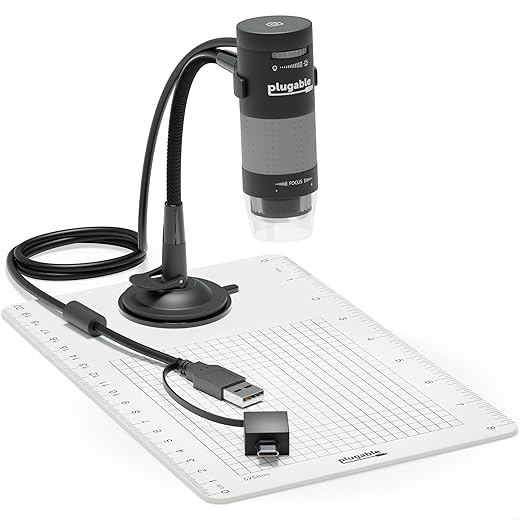
Plugable USB Digital Microscope 250x, 2MP Micro Camera with Flexible Arm Stand - Handheld USB & USB-C Microscope, Windows, Mac, ChromeOS, Linux, Android,...
4. Jewelry Cleaning Kit
Connoisseurs Delicate Jewelry Cleaner
Before examining marks, jewelry often needs gentle cleaning to remove dirt and tarnish that obscures stamps. This specially formulated cleaner safely removes buildup without damaging delicate pieces, revealing hidden marks. The kit includes a brush for detailed cleaning and is safe for gold jewelry guide, silver, and platinum.
Best for: Revealing obscured marks on tarnished or dirty jewelry

5. Reference Book
Warman’s Jewelry: Identification and Price Guide
While online databases are invaluable, this comprehensive reference book provides context, history, and identification tips for thousands of marks. The physical format lets you browse and discover marks you weren’t specifically searching for, often leading to unexpected identifications. Includes pricing guidelines for informed buying and selling.
Best for: Building foundational knowledge and offline reference
Note: As an Amazon Associate, I earn from qualifying purchases at no additional cost to you. These recommendations are based on extensive research of jewelry identification tools and collectors’ feedback.
Frequently Asked Questions
How do I identify a jewelry maker’s mark?
Start by locating the mark on your jewelry (typically inside rings, on clasps, or on the back of brooches). Use a 10x jeweler’s loupe to examine the mark clearly, then photograph or sketch it including all letters, symbols, and shapes. Search online jewelry makers marks databases using the mark’s characteristics. Compare your mark carefully with database examples, noting the time period the mark was used and whether it matches your jewelry’s style and other hallmarks.
Are all jewelry pieces marked with maker’s marks?
No, not all jewelry carries maker’s marks. Unmarked jewelry is common, especially in these situations: very old pieces predating marking practices, costume jewelry from small manufacturers, handmade pieces from individual artisans who didn’t register marks, pieces where marks were removed during repairs or alterations, and certain cultural traditions where marking wasn’t standard practice. The absence of a mark doesn’t necessarily indicate low quality or lack of value.
What’s the difference between a maker’s mark and a hallmark?
A maker’s mark identifies who made the jewelry (the manufacturer, designer, or craftsperson), while a hallmark indicates metal purity and was applied by an official assay office. Think of it this way: the maker’s mark is the jeweler’s signature, while the hallmark is a government or guild certification of metal quality. Both are important for full identification, but serve different purposes. Modern jewelry often shows both marks side by side.
Can maker’s marks be faked?
Yes, maker’s marks can be counterfeited, especially on high-value designer jewelry. Fake marks are a significant problem in the vintage and designer jewelry market. This is why authentication requires examining not just the mark itself, but also the jewelry’s construction quality, materials, design details, and overall consistency with the identified maker’s known work. When purchasing expensive jewelry based on a maker’s mark, always seek verification from a certified appraiser or reputable dealer specializing in that maker.
Where can I find free jewelry maker’s mark databases?
Several reputable free databases exist online. The most comprehensive include: Antique Jewelry University (Lang Antiques) which covers thousands of marks from multiple countries and time periods, Heritage Auctions’ designer marks guide focusing on luxury brands, 925-1000.com specializing in silver marks, and Costume Jewelry Collectors International for vintage costume jewelry marks. Most offer visual search capabilities and detailed maker histories. For the most thorough research, use multiple databases as each has different strengths.
How do I photograph jewelry marks for identification?
Use your smartphone’s macro mode or a camera with macro lens capability. Ensure excellent lighting—natural daylight or bright LED lights work best. Position the light at a low angle across the mark to create shadows that make impressions more visible. Hold the camera steady (use a tripod if possible) and take multiple shots at different angles. Focus precisely on the mark itself. Take both close-up detail shots and wider shots showing the mark’s location on the piece. Clear photos make database comparison and expert consultation much more effective.
Conclusion: Unlocking Your Jewelry’s History
Jewelry makers marks are more than tiny stamps—they’re keys to unlocking fascinating stories about craftsmanship, history, and value. Whether you’ve inherited vintage pieces, collect antique jewelry, or simply want to understand what you own, learning to use jewelry makers marks databases opens a world of discovery.
The digital age has transformed mark identification from a months-long research project requiring specialized libraries into a straightforward process anyone can complete at home. With the right tools—a good jeweler’s loupe, proper lighting, access to comprehensive databases, and careful observation—you can authenticate pieces, date jewelry accurately, and assess value confidently.
Remember these key takeaways:
- Start with careful examination: Use magnification and good lighting to locate and document marks clearly
- Use multiple databases: Cross-reference findings across several reliable sources for accurate identification
- Consider context: Evaluate marks alongside design style, construction quality, and other stamps
- Seek professional verification: For valuable pieces or uncertain identifications, consult certified appraisers
- Document your findings: Build provenance records that enhance your jewelry’s value and preserve its history
Every marked piece of jewelry carries a story waiting to be discovered. Armed with knowledge of jewelry makers marks databases and identification techniques, you’re now equipped to uncover those stories, authenticate your treasures, and appreciate the rich history behind each piece in your collection.
Ready to start identifying your jewelry? Grab your loupe, visit the recommended databases, and begin your journey into the fascinating world of jewelry makers marks. You might be surprised by what you discover about the pieces you’ve owned for years—or find that estate sale bargain is actually a valuable marked treasure from a renowned maker.
For more information about jewelry authentication, care, and collecting, explore our comprehensive guides on gemstone identification, jewelry care and maintenance, and vintage jewelry styles.
For information on fine jewelry marks (gold, silver, platinum), see our Complete Guide to Jewelry Marks.

Hi, I’m Sara Hein, a passionate jewelry researcher and educator. I created Jewelry Carats to share well-researched insights on gemstones, precious metals, and jewelry care. My goal is making expert jewelry knowledge accessible to everyone.