
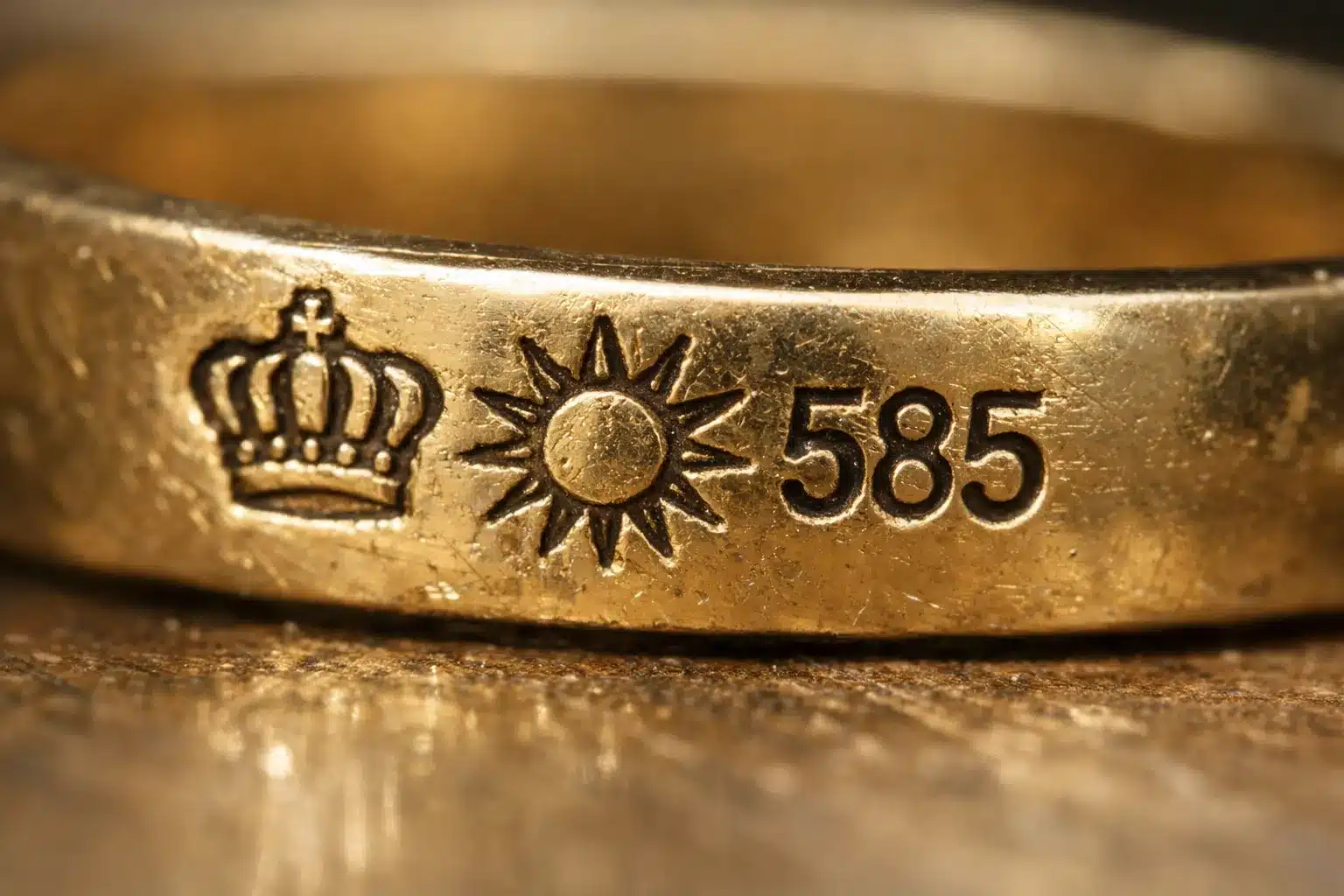
Complete Identification Guide
German precision extends far beyond engineering and into the world of jewelry hallmarking. For over 140 years, Germany has maintained one of Europe’s most distinctive systems for marking gold jewelry, combining regulatory standards with manufacturer responsibility. Whether you’ve inherited a piece stamped with mysterious numbers like 585 or 750, discovered a vintage ring bearing the crown and sun symbol, or simply want to authenticate German gold before purchase, understanding these hallmarks opens a window into both quality assurance and historical context.
This comprehensive guide walks you through everything you need to know about German gold hallmarks—from the landmark 1884 Act that unified the system to modern-day authentication techniques. You’ll learn to decode fineness marks, identify historical periods through stamps, avoid common authentication mistakes, and confidently evaluate German gold jewelry whether shopping at estate sales, online marketplaces, or antique dealers.
Understanding the German Hallmarking System
The German hallmarking system underwent a revolutionary transformation in 1884 when the Gesetz über den Feingehalt der Gold und Silberwaren (Act on the Fine Content of Gold and Silver Goods) established unified national standards across the newly formed German Empire. Prior to this watershed legislation, each German city maintained its own hallmarking system with unique town marks and guild regulations, creating a complex patchwork that made authentication challenging even for experts of that era.
The 1884 Act introduced two key elements that define German hallmarks to this day. For gold, the law mandated the Reichskrone und Sonne—the imperial crown within a circle representing the sun—as the official mark for items meeting the minimum standard of 585 parts per thousand (58.5% pure gold, equivalent to 14 karat). For silver, a similar mark featuring the Halbmond und Reichskrone (crescent moon with imperial crown) indicated at least 800 parts per thousand purity. Alongside these pictorial marks, manufacturers were required to stamp the numerical fineness and add their own maker’s mark to assume responsibility for accuracy.
What makes the German system unique among European hallmarking traditions is its reliance on manufacturer self-certification rather than independent government assay offices. Unlike Britain’s hallmarking system, where items must be tested at official assay offices, German manufacturers stamp their own pieces and bear legal responsibility for the accuracy of purity claims. This approach reflects the Germanic tradition of Handwerk—master craftsmanship combined with personal accountability.
For collectors and buyers, this self-certification system means that maker’s marks carry additional significance beyond simple identification. A reputable maker’s stamp alongside accurate fineness marks indicates not just who made the piece, but also serves as their guarantee of quality.
Complete German Gold Fineness Marks Guide
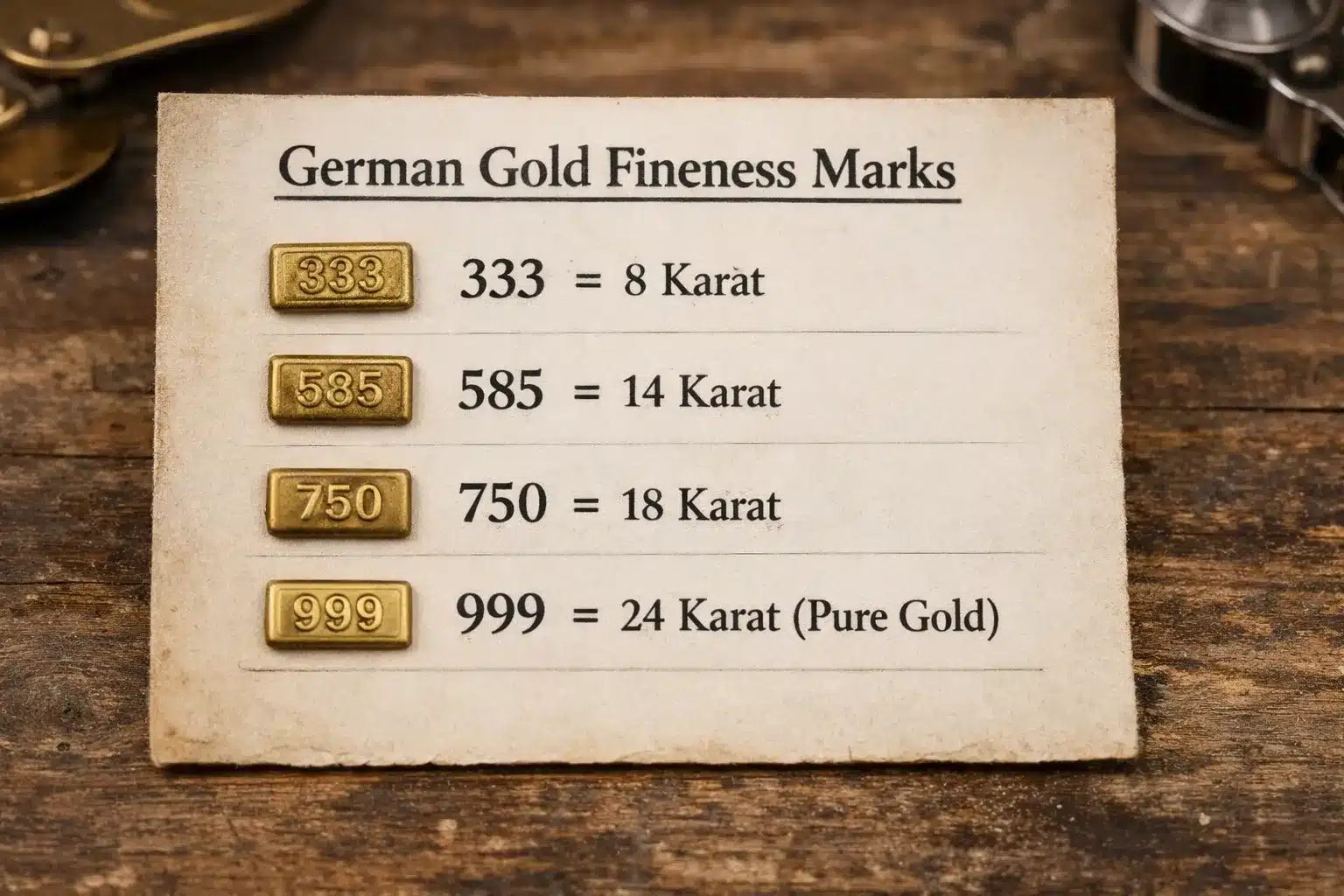
German gold fineness marks follow the metric system, expressing purity in parts per thousand rather than the karat system more familiar to American consumers. Understanding this numerical system is essential for accurately assessing German gold jewelry value and authenticity.
333 (8 Karat / 33.3% Pure Gold): The lowest fineness legally sold as “gold” in Germany, though Austria prohibits calling 333 alloys “gold jewelry” due to the less-than-half gold content. These pieces contain more base metals than gold and typically show noticeable tarnishing over time. Common in German-made budget jewelry from the mid-20th century, particularly children’s jewelry and lower-cost fashion pieces.
375 (9 Karat / 37.5% Pure Gold): Uncommon in Germany but occasionally found on pieces made for British Commonwealth export markets where 9 karat gold traditionally dominated lower-price segments. If you find a German maker’s mark alongside 375, the piece was likely intended for export rather than domestic German sale.
585 (14 Karat / 58.5% Pure Gold): The most common German gold standard and the minimum fineness eligible for the crown and sun hallmark under the 1884 Act. This fineness strikes an ideal balance between durability for daily wear and sufficient gold content for lasting beauty and value. The vast majority of German, Austrian, and Swiss gold jewelry bears the 585 mark. Wedding rings, everyday jewelry, and vintage pieces from 1884 onward typically feature this standard.
625 (15 Karat / 62.5% Pure Gold): A historical fineness largely discontinued by the 1940s, though antique pieces bearing 625 marks still surface in estate sales. This intermediate fineness was more common in English jewelry but occasionally appeared in German pieces, particularly from the pre-World War II era. Finding a 625 mark can help date a piece to the late 19th or early 20th century.
750 (18 Karat / 75% Pure Gold): Considered “fine gold” in Germany and preferred for high-quality jewelry pieces. More common in Southern European countries like Italy, but German jewelers use 750 for premium items, particularly those featuring precious gemstones or destined for special occasions. The higher gold content produces richer color and less tarnishing, though the softer alloy requires more careful wear.
916 (22 Karat / 91.6% Pure Gold): Rare in German jewelry as this very high fineness is too soft for most jewelry applications. Primarily found in German-made items for export to Middle Eastern or South Asian markets where 22 karat gold is culturally preferred.
One crucial note for buyers: the fineness mark indicates only the proportion of gold in the alloy, not the total weight. A large 333 piece may contain more actual gold by weight than a small 750 piece, though the 750 item has higher purity and generally commands premium pricing per gram.
How to Read and Identify German Hallmarks
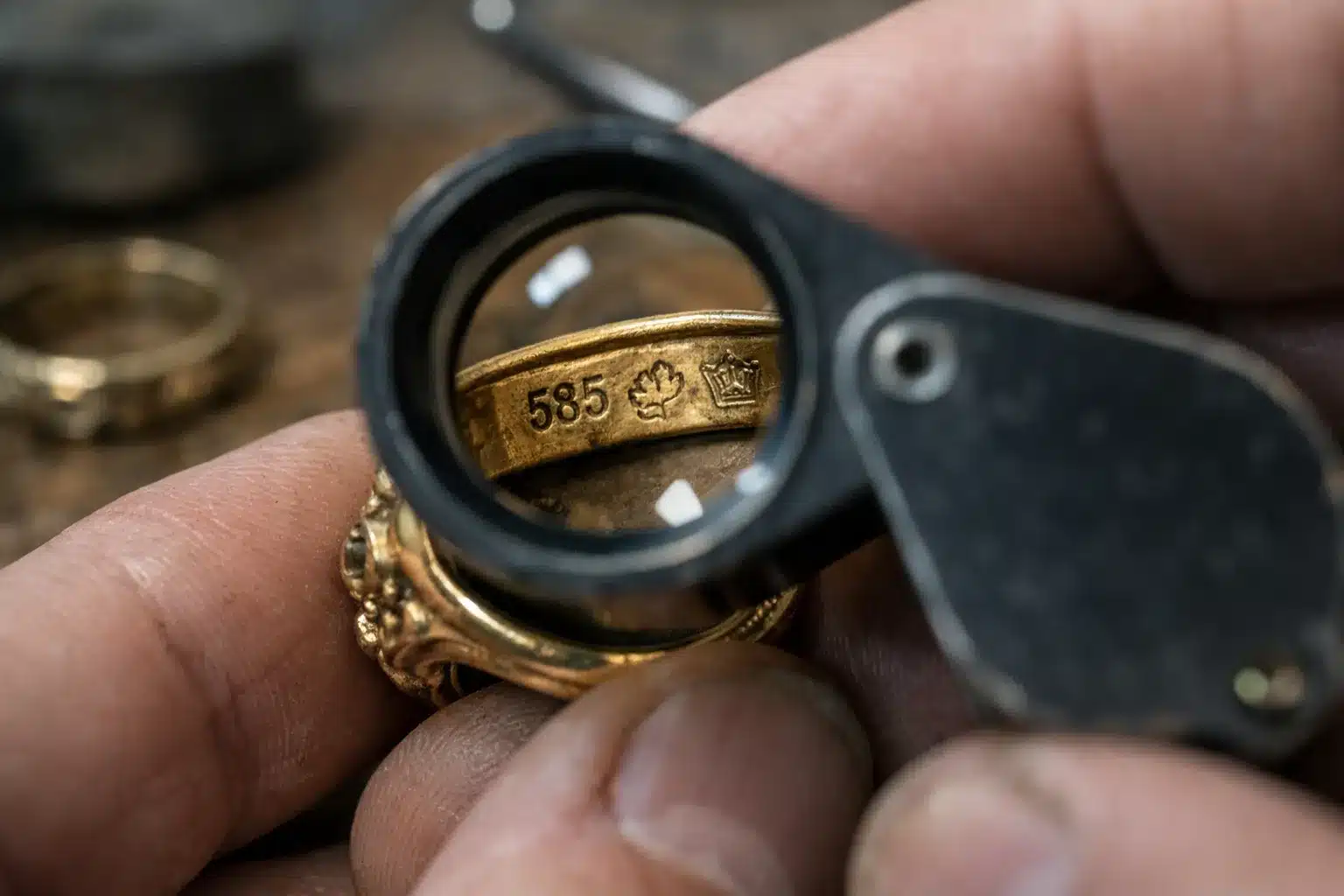
Successfully identifying German gold hallmarks requires the right tools, proper technique, and knowledge of where manufacturers typically place these tiny stamps. Unlike prominent maker’s signatures on art pieces, hallmarks are deliberately subtle—stamps measuring just 1-2 millimeters that can easily be missed without careful examination.
Start with the essential tool for any serious hallmark inspection: a 10x jeweler’s loupe. This magnification level represents the industry standard for examining hallmarks and will reveal details invisible to the naked eye. While stronger magnification might seem beneficial, 10x provides the optimal balance between detail visibility and practical field of view.
🔍 Recommended Identification Tool
Jarlink 30X 60X Illuminated Jewelers Loupe Magnifier
- ✓ Professional-grade 30X magnification for tiny hallmarks
- ✓ Built-in LED light for examining dark recesses
- ✓ Doublet lens design reduces distortion
- ✓ Compact folding design for portability
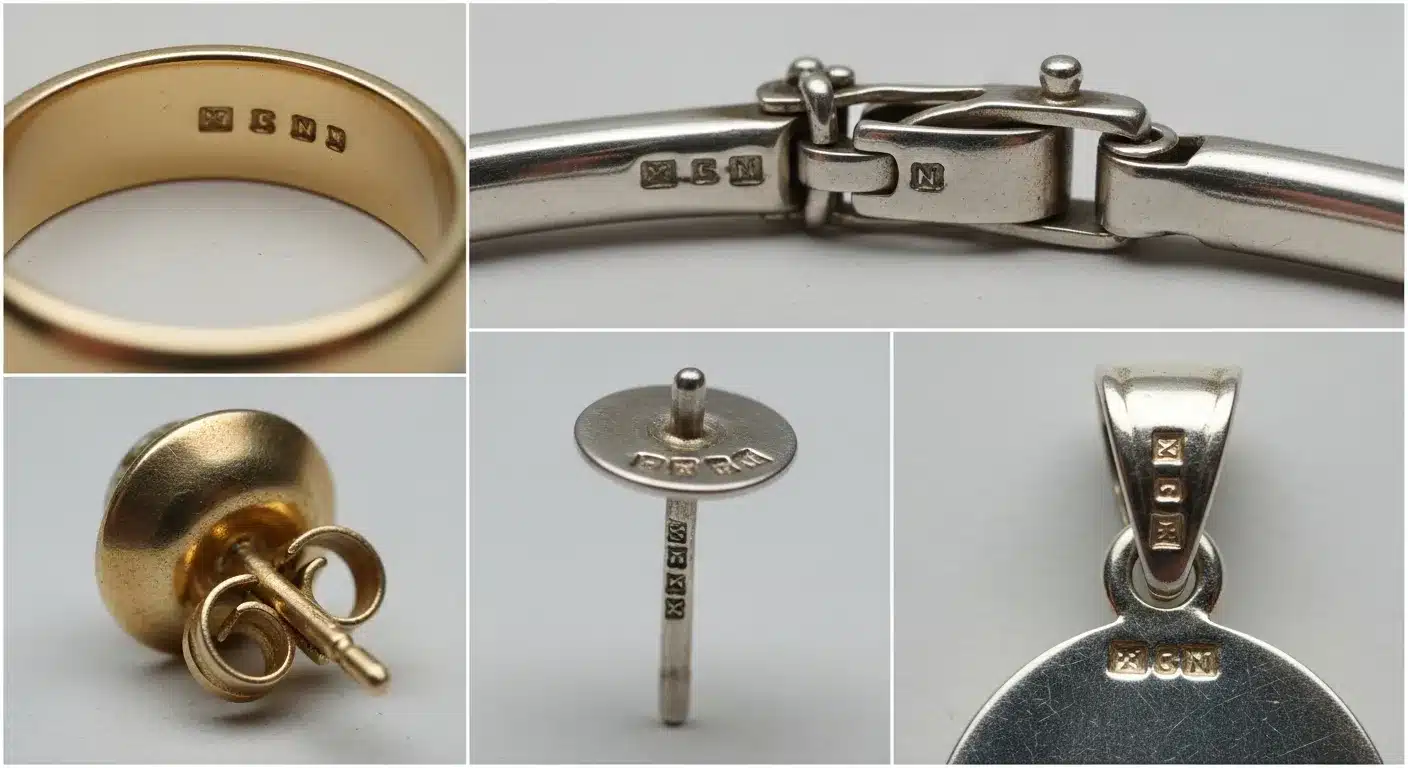
Where Hallmarks Hide: On rings, hallmarks almost always appear on the interior shank, typically near the bottom opposite the setting or design elements. Bracelets carry hallmarks on or near the clasp mechanism, often on the interior fold or safety catch. Necklaces and chains place marks on clasp components—look at both sides of barrel clasps and the jump rings connecting clasps to chains.
Earrings present particular challenges due to their small size. Post earrings may be marked on the post itself or on the backing where the post connects to the decorative element. Lever-back and French wire earrings typically show hallmarks on the ear wire itself. Vintage earrings sometimes lack hallmarks entirely when pieces were too delicate for stamping without damage.
When examining hallmarks, proper lighting makes enormous difference. Angle the piece under bright light and rotate slowly—hallmarks become visible when light catches the stamped impression at certain angles. The mark creates a subtle depression or raised area depending on stamping technique, and moving the piece reveals these dimensional changes.
The reading sequence matters. German hallmarks typically show the fineness mark first (585, 750, etc.), followed by the maker’s mark—usually initials or a trademark symbol within a shaped border. On pieces from 1884-1918, you might also find the crown and sun pictorial mark, though this became optional in later periods.
For extremely worn marks where numbers are barely visible, try this technique: place a small piece of white paper behind or beside the mark to increase contrast, then photograph with your phone’s camera using macro mode. Digital zoom on the photo often reveals numbers that eyes strain to see even with a loupe. Never attempt to “restore” or re-stamp hallmarks—this destroys authenticity and value.
Pre-1884 German Town Marks and Löthig System
Before the 1884 unification, each German city-state maintained its own hallmarking system, creating a fascinating but complex landscape for collectors. These pre-1884 pieces represent important historical artifacts and often command premium prices when properly identified and authenticated. Rather than the modern numerical parts-per-thousand system, pre-1884 marks used the Löthig measurement, where 16 löthig represented pure gold or silver (1000/1000).
Here’s the Löthig to modern conversion reference:
12 Löthig = 750/1000 (18 karat) – Used for higher-quality gold items
13 Löthig = 812.5/1000 – The most common pre-1884 fineness mark
14 Löthig = 875/1000 – Less common, found on premium pieces
15 Löthig = 937.5/1000 – Rare, high-purity historical items
16 Löthig = 1000/1000 – Essentially pure, extremely rare
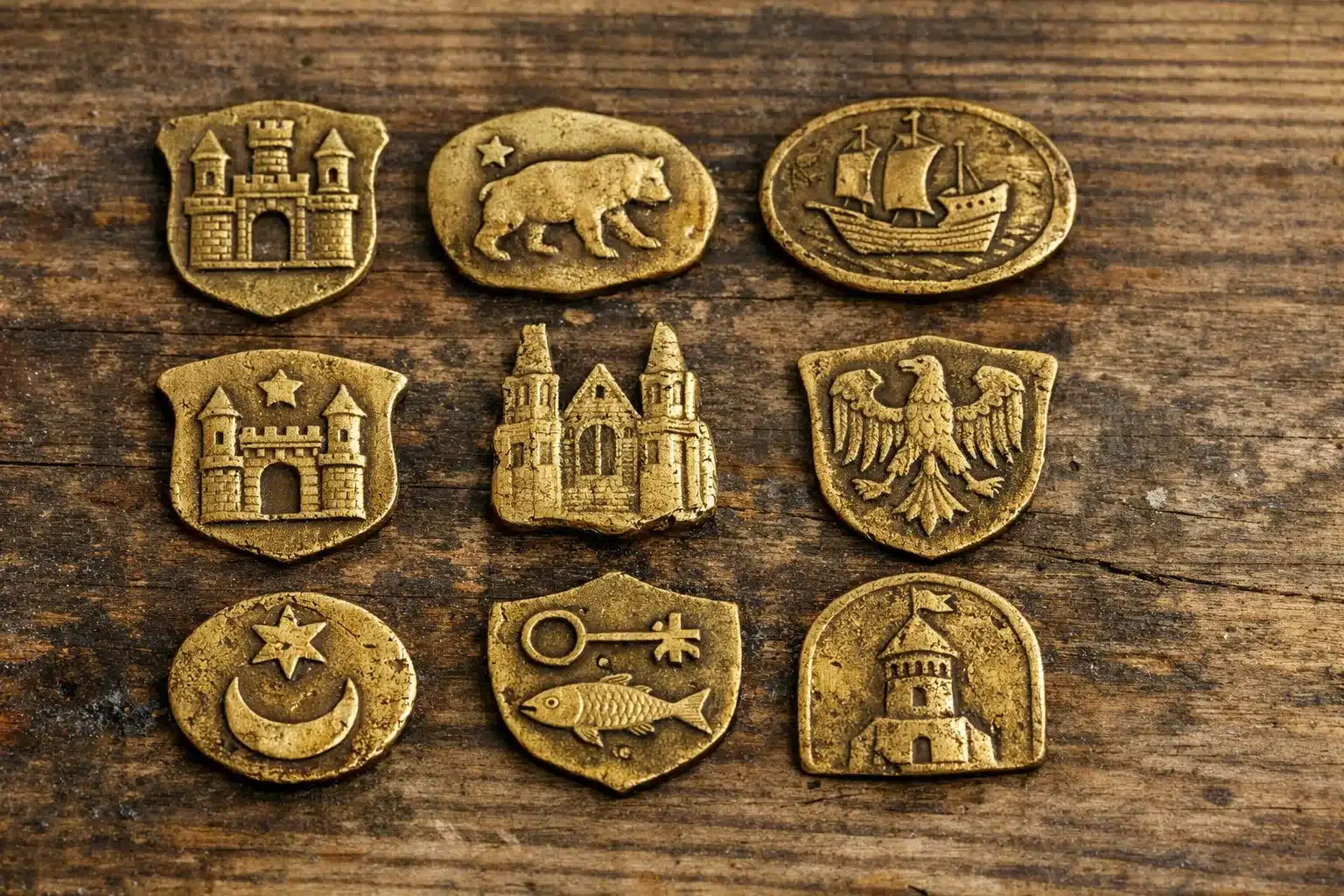
The most frequently encountered pre-1884 town marks came from major jewelry-producing centers. Berlin used a bear symbol reflecting the city’s heraldic arms. Munich employed the Münchner Kindl (Munich child), though variations existed across different periods. Hamburg featured a castle with three towers representing the city’s fortifications. Dresden used crossed swords, borrowed from the Electoral Saxony coat of arms. Nuremberg, historically one of Germany’s premier goldsmithing centers, employed the letter “N” within various shield shapes depending on the specific guild and period.
One particular town demands special mention: Hanau. This city near Frankfurt became notorious in the 19th century for producing pieces bearing pseudo hallmarks—fantasy marks that mimicked antique or foreign hallmarks but represented neither historical authenticity nor fraudulent intent in the legal sense. Hanau’s less-regulated trade environment allowed goldsmiths to stamp pieces with decorative marks resembling English, French, or historical German hallmarks. While legal at the time, these Hanau pseudo marks create authentication challenges today.
Common Hallmark Authentication Mistakes
Even experienced collectors make authentication errors when examining German gold hallmarks. Understanding these common pitfalls protects your investment and builds genuine expertise over time.
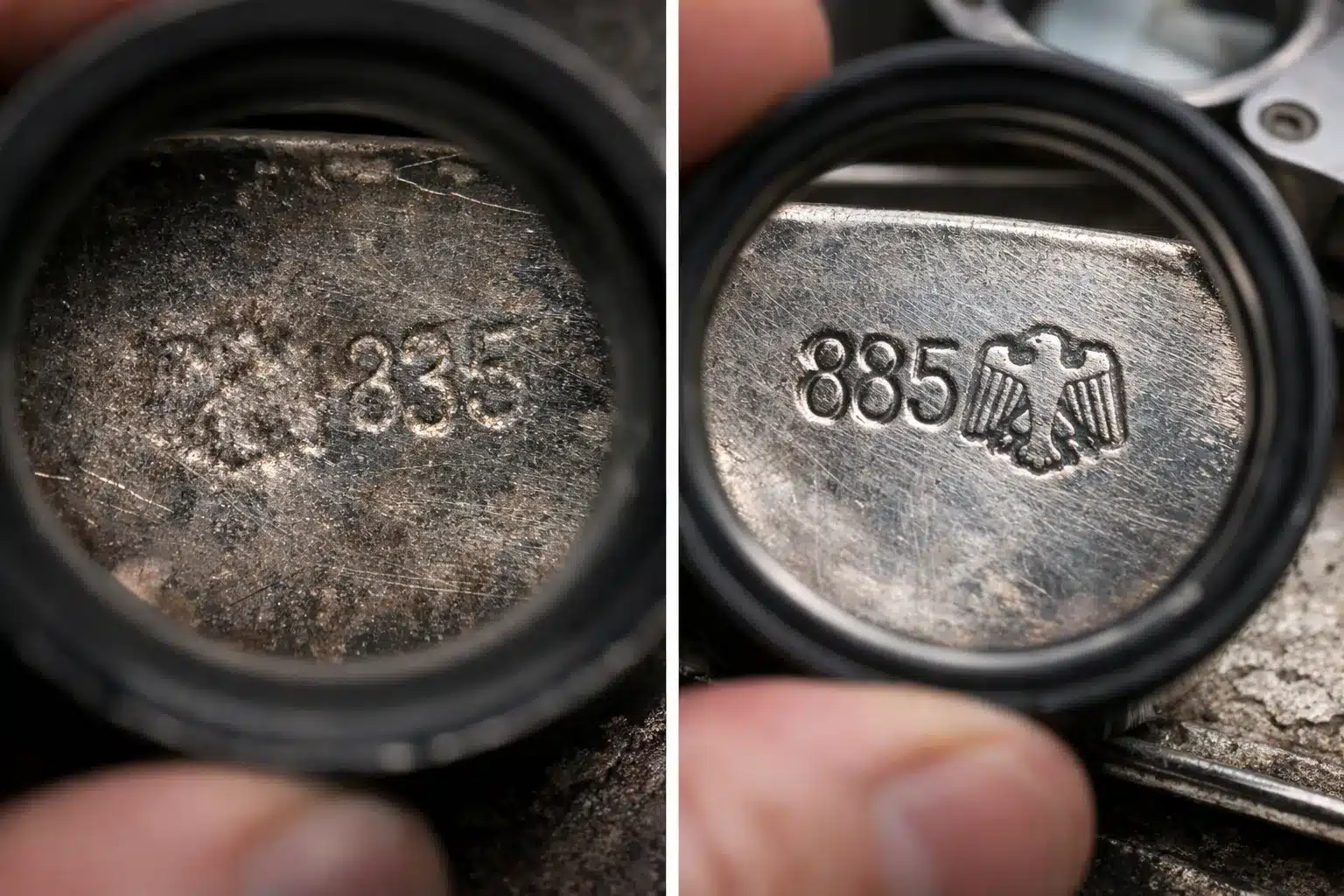
Misreading Worn or Partial Numerals: The difference between 585 and 595 might seem minor, but one represents legitimate 14 karat German gold while the other is effectively meaningless as no such standard exists. Worn stamps often show numbers where the middle digit is partially obscured—an “8” in 585 can look like a “9” when the center portion wears away. Always examine under magnification and compare against the complete numerical sequence visible in the stamp’s impression pattern.
Confusing Swiss Export Marks with German Origin: This represents one of the most widespread authentication errors. Swiss watch case manufacturers and jewelers frequently stamped the German crown and sun mark on pieces destined for potential export to Germany, complying with German import requirements even if the items never actually entered German markets. A piece bearing the crown and sun symbol does NOT automatically mean German manufacture—check for Swiss hallmarks or Swiss maker’s marks that reveal actual origin.
Hanau Pseudo Marks Confusion: As mentioned earlier, 19th-century Hanau manufacturers produced pieces with decorative marks resembling historical or foreign hallmarks. Collectors sometimes mistake these fantasy marks for genuine antique German town marks or even English hallmarks. Hanau pseudo marks typically show unusually ornate or perfect execution for their supposed age.
Gold-Plated vs. Solid Gold Confusion: Marks reading “GP” (gold plated), “GF” (gold filled), “RGP” (rolled gold plate), or similar indicate surface treatment rather than solid gold. A piece stamped “585 GP” tells you the plating is 14 karat gold, not that the entire item is solid 585 gold—a crucial distinction worth hundreds or thousands of dollars in value.
⚗️ Recommended Testing Kit
Precious Metal Testing Kit with Acid Test
- ✓ Tests gold purity from 10K to 22K accurately
- ✓ Includes testing stone and multiple acid solutions
- ✓ Professional-grade for serious collectors
- ✓ Verifies hallmark accuracy through chemical testing
For valuable pieces or when hallmarks raise questions, professional testing through X-ray fluorescence (XRF) analysis provides definitive answers without damaging the item. As the Gemological Institute of America notes, XRF testing can detect gold content to within 0.1% accuracy, revealing whether hallmarks match actual metal composition.
Dating German Gold Jewelry by Hallmarks
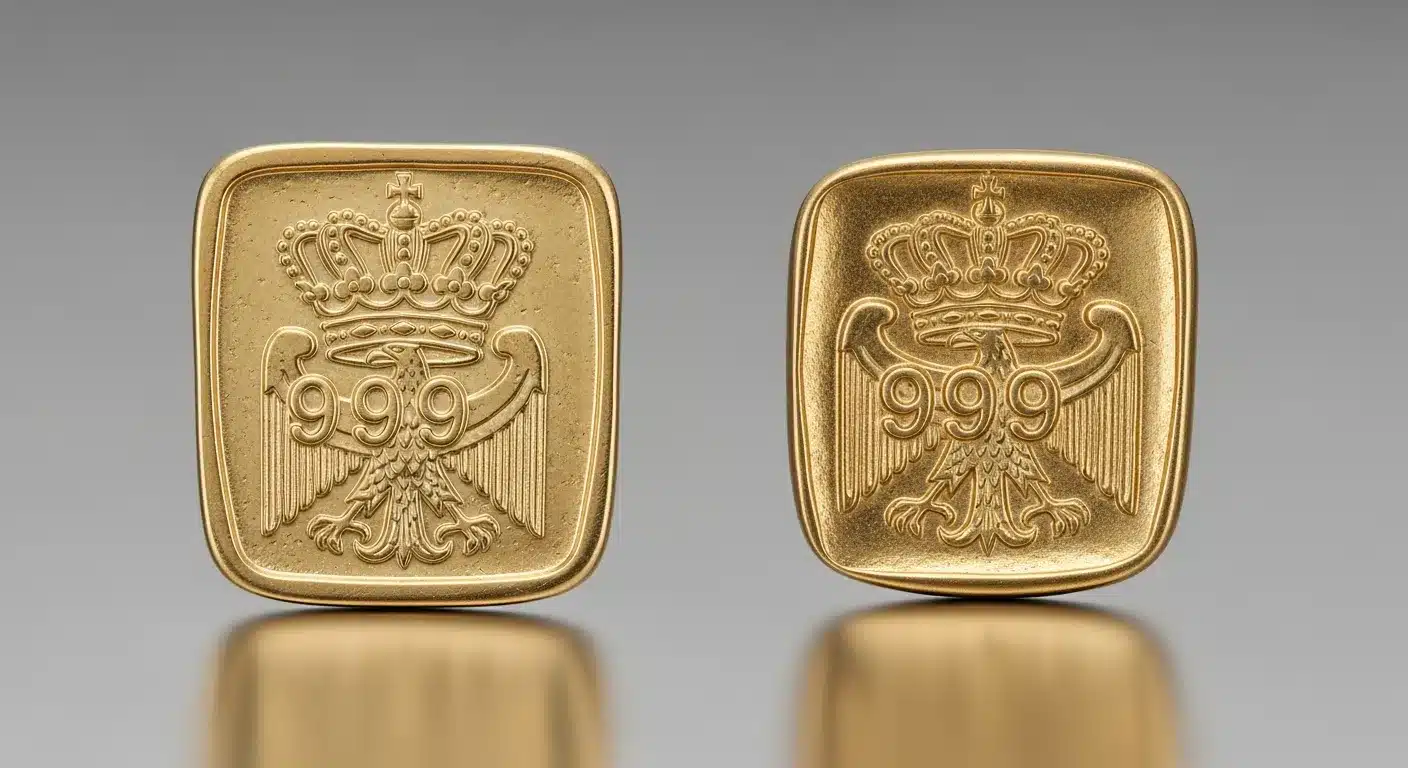
German hallmarks provide valuable clues for dating jewelry pieces, though the dating process requires understanding historical context beyond the marks themselves. Four distinct eras characterize German hallmarking, each leaving recognizable signatures on jewelry from those periods.
Imperial Era (1871-1918): Pieces from this period, if post-1884, bear the Reichskrone (imperial crown) symbols—sun for gold, crescent moon for silver. The crown used during this era featured specific artistic details reflecting late 19th century design aesthetics. Pre-1884 Imperial pieces show town marks and Löthig measurements. Finding jewelry with clear 1884-1918 hallmarks identifies valuable antiques from Germany’s imperial golden age.
Weimar Republic (1918-1933): The hallmarking system continued largely unchanged after World War I, though the imperial crown gradually transitioned to more simplified designs or disappeared entirely from many pieces. Economic turmoil during hyperinflation years (1921-1923) led some manufacturers to reduce gold content, making verification of fineness marks especially important for Weimar-era pieces.
Third Reich Period (1933-1945): The Nazi regime maintained the German hallmarking system while some manufacturers incorporated swastika symbols into their maker’s marks. From a purely hallmarking perspective, pieces from this period bear standard numerical fineness marks, though wartime metal shortages (particularly 1942-1945) mean lower gold content became more common.
Post-War Period (1945-Present): Modern German hallmarking emphasizes numerical fineness marks while pictorial symbols have become optional. The crown and sun symbol appears less frequently on contemporary pieces, though some traditional manufacturers maintain its use. Maker’s marks evolved toward simpler trademark-style designs, often featuring company names or logos rather than classical decorative frames.
Maker’s marks provide the most reliable dating tool when combined with hallmark knowledge. The comprehensive makers’ marks database at 925-1000.com allows collectors to research specific manufacturer symbols and determine operating periods, helping narrow dating to specific decades.
German vs Other European Hallmarking Systems
Understanding how German hallmarks differ from other European systems helps prevent authentication confusion and provides context for the German approach’s unique characteristics.
United Kingdom: Britain’s system represents the polar opposite of Germany’s self-certification approach. All precious metal articles above minimum weights must be tested at independent assay offices that stamp their own guarantee marks. British hallmarks typically include four marks: purity mark, assay office mark, date letter, and maker’s mark. German marks, by contrast, appear simpler and rely primarily on the manufacturer’s guarantee rather than government verification.
France: The French system combines mandatory government testing with pictorial purity marks. An eagle’s head indicates 18 karat gold (750), while other symbols denote different purities. French maker’s marks must appear in lozenge-shaped frames—a distinctive characteristic that helps identify French origin. The French approach shares Germany’s use of numerical parts-per-thousand but adds the mandatory government testing absent from German practice.
Italy: Italian hallmarking resembles the German system more closely, with numerical fineness marks (750 most common) and maker’s marks but without mandatory independent assay. Italian pieces often show regional variations, with certain marks indicating specific goldsmithing centers like Arezzo or Valenza.
Austria: As Germany’s close cultural neighbor, Austria maintains nearly identical hallmarking standards, with 585 the dominant fineness. Key difference: Austrian law prohibits calling anything below 585 “gold jewelry,” while Germany permits 333 items to bear that designation.
These differences create authentication challenges when jewelry changed hands internationally or manufacturers produced for export. When examining potentially German pieces, look for the complete marking package—a numerical fineness mark plus maker’s mark without British assay office symbols or French lozenge frames points toward German or Austrian origin.
Buying Guide: Authenticating German Gold Hallmarks
Whether shopping at estate sales, online marketplaces, antique shows, or jewelry stores, authenticating German gold hallmarks before purchase protects your investment and ensures you’re acquiring genuine items rather than modern reproductions or misrepresented pieces.
Seven-Point Authentication Checklist:
1. Verify Mark Clarity and Depth: Authentic hallmarks show crisp, even impressions punched into the metal during manufacture. The stamps create slight ridges or depressions with clean edges. Fake hallmarks applied later often appear scratched into the surface, lack uniform depth, or show hesitation marks from hand-engraving attempts.
2. Check Mark Placement Logic: Hallmarks occupy standard positions where manufacturers could stamp without damaging the piece. Marks appearing on visible surfaces, fragile areas, or locations that would weaken structural integrity should raise suspicion.
3. Confirm Numerical Consistency: German gold fineness marks should match recognized standards (333, 585, 750, etc.). Unusual numbers like 500, 600, or 700 don’t correspond to any German system and indicate problems.
4. Research the Maker’s Mark: If a maker’s mark appears, research it through online databases before purchasing. Established manufacturers have documented histories and recorded mark variations. Unknown or suspiciously generic maker’s marks warrant caution.
5. Assess Overall Quality Match: The piece’s construction quality should align with its hallmarks. High-purity 750 marks on poorly constructed, crude jewelry raises red flags—premium gold content typically accompanies skilled workmanship.
6. Request Professional Testing: For significant purchases, insist on professional gold testing before finalizing the transaction. Reputable sellers accommodate this request, recognizing that it protects both parties. XRF analysis provides non-destructive, accurate verification that hallmarks match actual gold content.
7. Document Everything: Photograph all hallmarks before purchase using macro mode on your phone camera. These images serve as records if authentication questions arise later and help with insurance documentation.
Red Flags That Warrant Extreme Caution:
Prices far below market value for the purported gold content and quality suggest problems. Sellers claiming “estate find” or “inheritance” with urgent need to sell quickly often employ pressure tactics characteristic of fraud. Multiple identical “antique” pieces indicate reproduction rather than genuine vintage items. Hallmarks that look too perfect for their supposed age, showing no wear consistent with decades of use, point toward modern fabrication.
Frequently Asked Questions About German Gold Hallmarks
What does 585 mean on gold jewelry from Germany?
The number 585 stamped on jewelry indicates 585 parts per thousand pure gold, which equals 58.5% gold content or 14 karat in the American system. This represents the most common German gold standard and has served as the minimum fineness for quality gold jewelry since the 1884 Hallmarking Act. The 585 fineness strikes an optimal balance between durability for daily wear and sufficient gold content for lasting beauty and value retention.
German, Austrian, and Swiss jewelers predominantly use 585 gold for everything from wedding rings to everyday jewelry pieces. The alloy’s strength comes from the 41.5% base metals mixed with the gold, typically including copper and silver, which provide structural integrity while maintaining attractive color and tarnish resistance.
How can I tell if German hallmarks are authentic or fake?
Authentic German hallmarks display several characteristic features that distinguish them from counterfeit stamps. First, examine the mark’s physical impression—genuine hallmarks create crisp, uniform depressions in the metal with clean edges and consistent depth throughout the stamp. Fakes often appear scratched onto the surface rather than properly punched, showing irregular edges, varying depth, or hesitation marks from hand-engraving attempts.
Second, verify that the numerical fineness corresponds to recognized German standards. Legitimate marks show 333, 585, 750, or other established purities—not random numbers like 500, 600, or invented finenesses. Third, research any maker’s mark through reliable databases to confirm it represents an actual German manufacturer. Finally, when investing in valuable pieces, request professional XRF testing to verify that the metal’s actual gold content matches the hallmarks.
What’s the difference between German crown and sun marks on gold versus crown and moon marks?
The crown and sun mark (Reichskrone und Sonne) specifically indicates gold jewelry meeting the 585 parts per thousand minimum standard (14 karat), while the crown and crescent moon mark (Halbmond und Reichskrone) appears on silver items with at least 800 parts per thousand purity. These pictorial symbols were introduced by the 1884 Hallmarking Act as official German quality marks, with the sun representing gold and the moon representing silver in traditional symbolic associations.
Both marks feature the imperial crown from Germany’s imperial period. While these pictorial marks were originally standard on German precious metal items, they’ve become optional in modern practice. Contemporary German jewelry more commonly shows only numerical fineness marks alongside maker’s marks.
Are pre-1884 German gold marks more valuable than modern hallmarks?
Pre-1884 German pieces bearing authentic town marks and Löthig measurements generally command premium prices compared to post-1884 items of equivalent gold content, though value depends heavily on multiple factors beyond the hallmarks themselves. The historical significance of pre-unification German jewelry, combined with the relative rarity of surviving pieces from that era, creates collector interest that elevates prices. Town marks from major goldsmithing centers like Nuremberg, Dresden, or Berlin particularly attract collectors.
However, pre-1884 pieces must be in good condition with clearly legible marks—worn or unclear hallmarks significantly reduce collector appeal. The piece’s artistic merit, craftsmanship quality, and historical provenance often matter more than hallmarks alone. A beautifully crafted 585 modern piece with excellent design may sell for more than a plain pre-1884 piece with interesting but worn town marks.
Why do some German gold pieces have no hallmarks at all?
Several legitimate reasons explain why German gold jewelry might lack visible hallmarks despite being genuine. First, German law never made hallmarking mandatory—manufacturers who chose not to mark their pieces faced no legal penalty, though the practice remained uncommon after 1884 when standardized marks provided clear market advantages. Very small or delicate jewelry items sometimes went unmarked because stamping would damage the piece or prove technically impossible given size constraints.
Second, repairs or alterations during a piece’s lifetime sometimes remove original hallmarks. Jewelry subjected to significant resizing, reconstruction after damage, or component replacement may lose marks during these processes. Third, custom-made or artisan pieces occasionally lack formal hallmarks while still being solid gold. For unmarked pieces, professional testing becomes essential before purchase through acid testing or XRF analysis.
Can Swiss or other foreign jewelry have German hallmarks?
Yes, Swiss manufacturers and other foreign producers frequently stamped German hallmarks on pieces destined for the German market. This practice occurred primarily because German law required that imported precious metal items meet the same standards as domestic production. Swiss watch case manufacturers routinely stamped the crown and sun mark on gold cases that might enter Germany through export, even if the items never actually reached German markets.
The presence of German marks therefore does not automatically indicate German manufacture. To determine actual origin, examine the piece for additional hallmarks characteristic of other countries—Swiss hallmarks include head symbols and numeric marks distinct from German systems. The maker’s mark often provides the best clue to actual origin, as manufacturer databases document whether specific stamps represent German, Swiss, Austrian, or other producers.
Conclusion: Mastering German Gold Hallmark Authentication
Understanding German gold hallmarks transforms what initially appears as mysterious tiny stamps into readable historical documents that reveal authenticity, quality, and origin. From the revolutionary 1884 Hallmarking Act that unified disparate city-state systems to modern numerical fineness marks maintaining those century-old standards, German hallmarking represents precision applied to jewelry authentication. The distinctive crown and sun symbol, the straightforward parts-per-thousand numerical system, and the manufacturer self-certification approach combine to create a hallmarking tradition that differs meaningfully from British assay offices or French pictorial complexity.
Success in authenticating German gold jewelry requires combining multiple knowledge elements covered in this guide: recognizing the complete range of fineness marks from 333 through 999, understanding historical context that divides pieces into pre-1884 town marks versus post-1884 unified standards, identifying common authentication mistakes, and employing practical examination techniques using proper tools and methodology. As you build expertise through examining actual pieces, pattern recognition develops that makes hallmark authentication increasingly intuitive.
For broader context on gold jewelry types and quality standards, explore our comprehensive guide to gold jewelry materials and hallmarking worldwide. Vintage jewelry collectors will find additional authentication guidance in our vintage jewelry identification resources. And once you’ve authenticated your German gold pieces, learn proper care and maintenance techniques to preserve both the jewelry and its hallmarks for future generations.
For comprehensive information on all gold hallmarks internationally, see our Complete Guide to Gold Hallmarks.

Hi, I’m Sara Hein, a passionate jewelry researcher and educator. I created Jewelry Carats to share well-researched insights on gemstones, precious metals, and jewelry care. My goal is making expert jewelry knowledge accessible to everyone.