

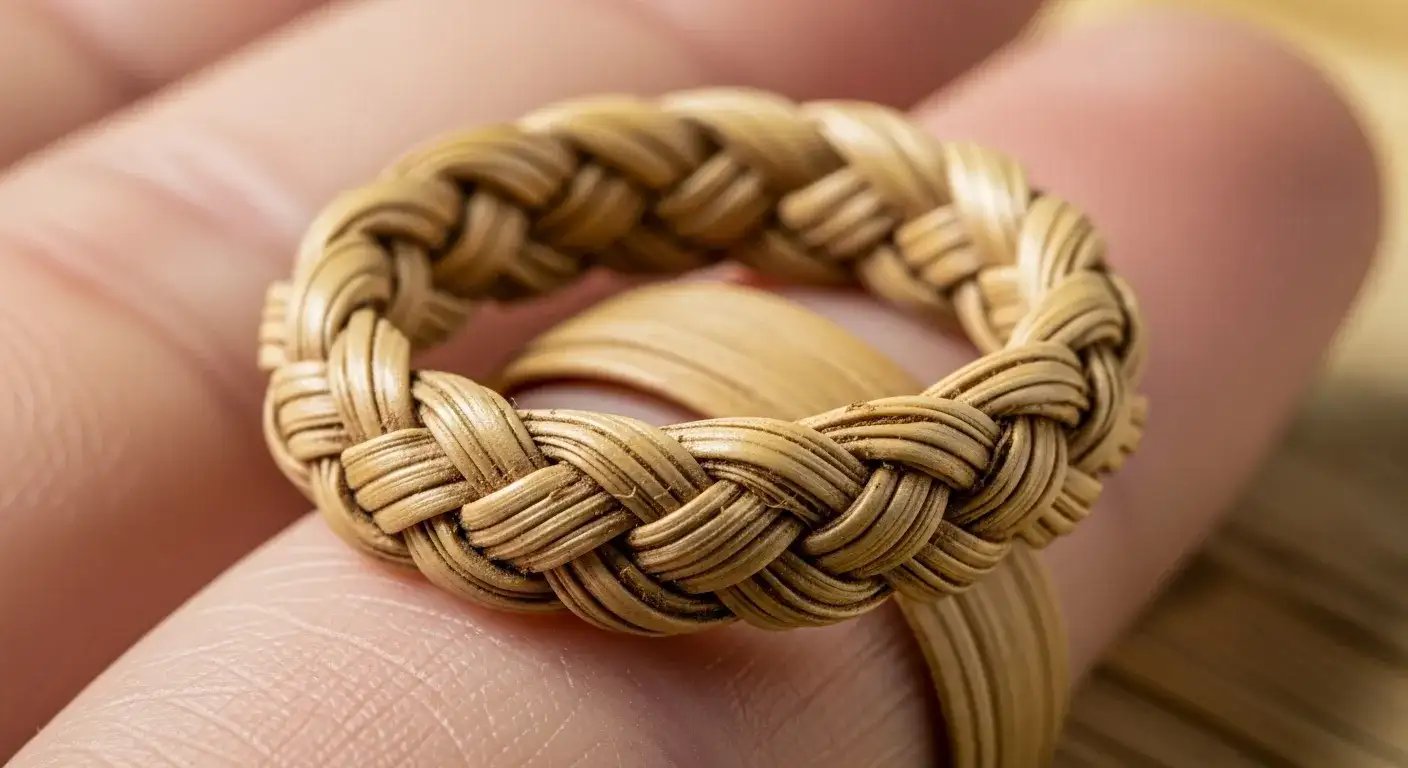
Ancient Origins of Wedding Rings
The earliest known wedding rings date back to ancient Egypt around 3000 BCE, where couples exchanged bands woven from reeds, hemp, and sedges that grew along the Nile River. The Egyptians viewed the circle as a powerful symbol of eternity—having no beginning and no end, it perfectly represented the infinite nature of love. The open space in the center was believed to represent a gateway to unknown worlds and the future that awaited the married couple. This circular symbolism would persist across millennia and cultures.
Egyptian rings were far from permanent, however. Made from organic materials, these early wedding bands would break down within a few years of wear. Couples who could afford more durable options commissioned rings crafted from leather, bone, or ivory. The wealthiest Egyptians wore rings of precious metals, particularly gold, which was associated with the sun god Ra. One of the most distinctive Egyptian ring designs was the ouroboros—a serpent swallowing its own tail—representing the eternal cycle of death and rebirth that was central to Egyptian cosmology.
Greek Contributions to Ring Traditions
When Alexander the Great conquered Egypt in 332 BCE, the Greeks adopted the Egyptian custom of exchanging rings as symbols of devotion. However, Greeks gave these rings their own cultural flavor. Rather than emphasizing eternity alone, Greek rings often depicted Eros (known as Cupid to the Romans), the god of love, or included romantic imagery of lovers embracing. These rings were given as tokens of affection but weren’t necessarily connected to formal marriage ceremonies, which in ancient Greece were primarily legal and financial arrangements between families.
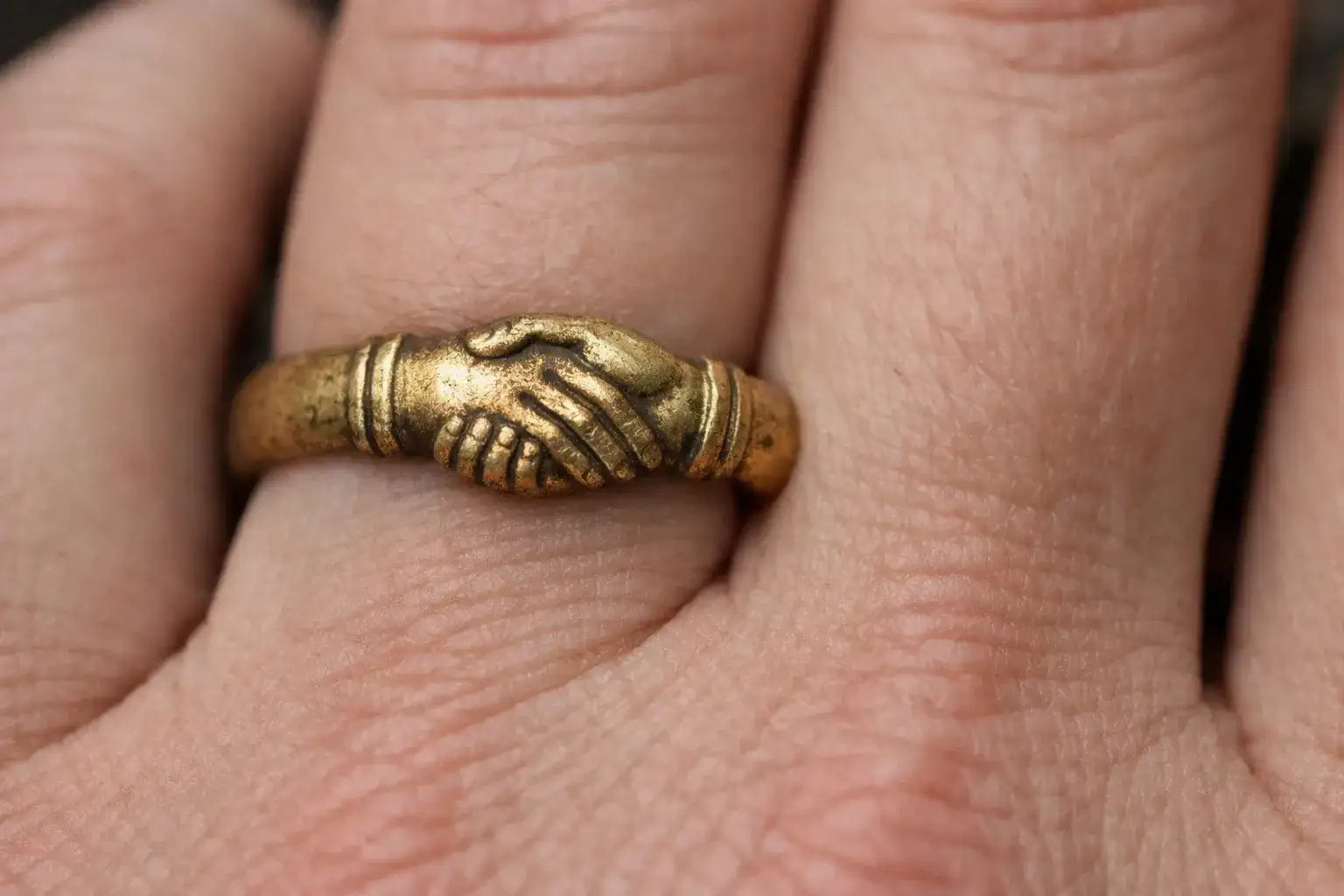
Roman Wedding Ring Evolution
The Romans, who conquered Greece in the 2nd century BCE, transformed the wedding ring from a token of love into a symbol of legal ownership and binding contract. According to research by the Gemological Institute of America, Roman men would present iron rings to their brides’ fathers as a form of purchase agreement. By the 2nd century CE, the practice evolved to giving the ring directly to the bride herself, symbolizing trust and the transfer of household authority.
The most popular Roman wedding ring design was the fede ring, featuring two right hands clasped together—”fede” derives from the Latin “manus in fide” meaning “hands joined in faith.” This motif represented both the marital agreement and friendship between spouses. Wealthy Romans commissioned elaborate fede rings carved in precious stones like onyx, carnelian, garnet, or amethyst. Iron remained common among lower classes, symbolizing strength and permanence even if not as visually stunning as gold or silver.
Some Roman rings featured small key designs, indicating that the wife now controlled the household pantry and possessed authority over domestic affairs. This represented a significant social development—women gaining some measure of power within their marriages, even if broader Roman society remained patriarchal. By the 3rd and 4th centuries CE, Romans began personalizing rings further by carving portraits of couples into the bands, a practice that would influence Byzantine and Medieval ring designs for centuries to come.
Medieval and Renaissance Transformations
As Christianity spread throughout Europe during the Medieval period, the Church incorporated wedding rings into religious marriage ceremonies, though not without initial resistance. Early Christians viewed ornate jewelry as pagan excess. During the 9th century, when the Church officially adopted wedding ring exchange as part of the marriage sacrament, rings were often heavily decorated with doves, interlaced hands, and Christian symbols—precisely the elaboration Church authorities found problematic.
By the 13th century, Church pressure led to simpler ring designs. A Bishop of Salisbury wrote approvingly that wedding rings should be “a symbol of the union of hearts” rather than displays of wealth. This tension between simplicity and ornamentation would continue throughout wedding ring history, with periods of restrained design alternating with eras of elaborate craftsmanship.
Byzantine Lovers’ Head Rings
As the Roman Empire transitioned into the Byzantine Empire, ring designs evolved to feature detailed portraits of betrothed couples. These lovers’ head rings typically showed the bride and groom’s faces or full figures carved into gold bands. After Christianity became the Byzantine Empire’s official religion in 380 CE, couples were often depicted with Jesus or a cross between them, blessing their union. These rings cost substantial sums and served as both religious talismans and status symbols for the Byzantine elite.
The Enduring Popularity of Fede Rings
The Roman fede design experienced a remarkable revival in Medieval Europe, particularly from the 12th century onward. Craftsmen created increasingly intricate versions featuring multiple interlocking bands, ornate enamel work in vibrant blues and reds, and incorporated gemstones. The tradition spread throughout Europe, with regional variations developing in Italy, France, England, and Ireland. The most famous descendant of the fede ring is the Irish Claddagh ring, first crafted in the 16th century in the fishing village of Claddagh near Galway. The Claddagh features two hands holding a heart topped with a crown, representing friendship, love, and loyalty—concepts that remain central to marriage even today.
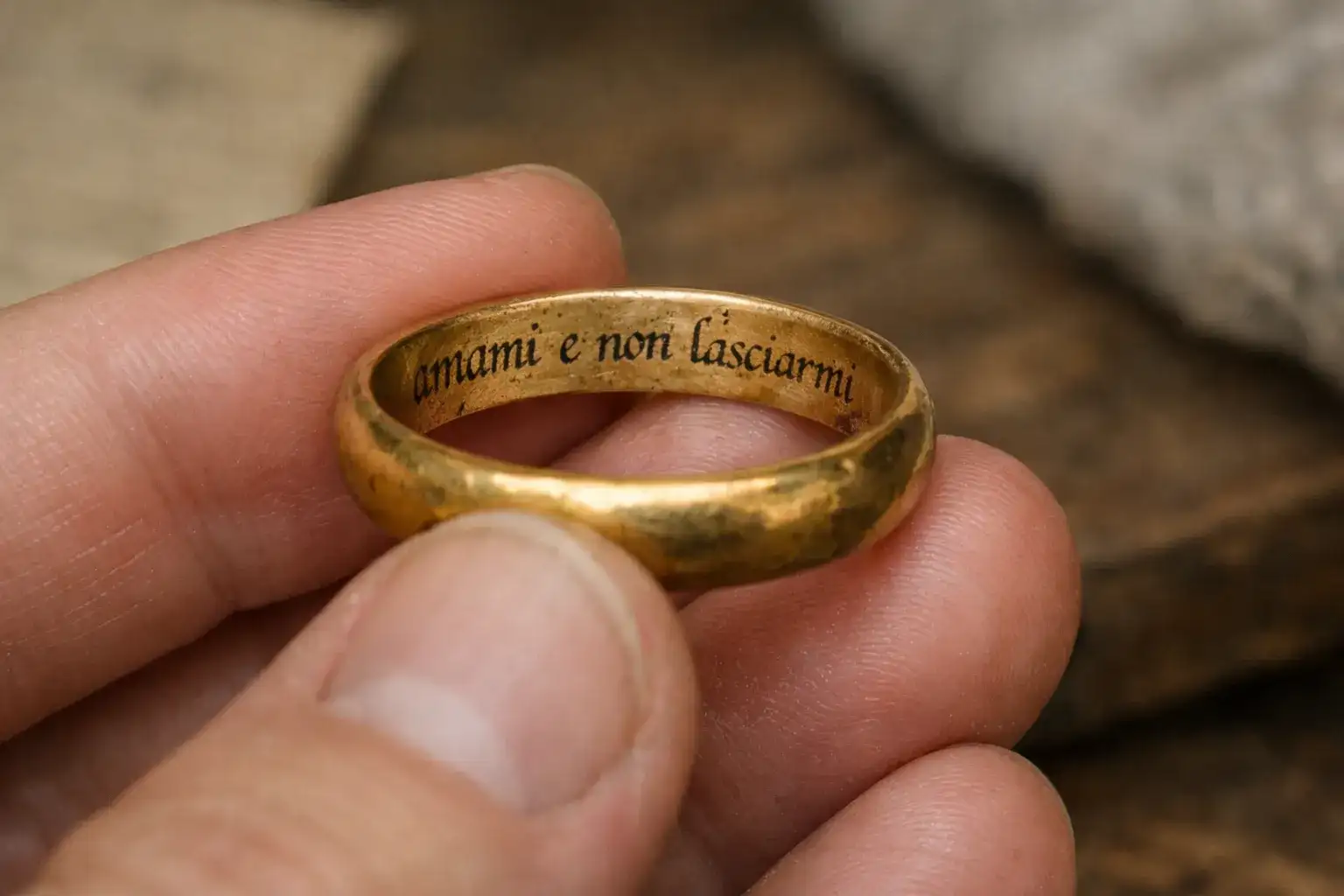
Posy Rings and Private Messages
Perhaps no ring style better demonstrates the Medieval shift toward viewing marriage as a personal romantic bond than the posy ring. Popular from the 15th through 17th centuries, these rings featured short verses or romantic phrases inscribed on the band. Early posy rings (15th century) had bold designs with text engraved on the outer surface, making the romantic sentiment publicly visible. Common inscriptions included French phrases like “Mon coeur avez” (You have my heart) or Latin expressions such as “Amor vincit omnia” (Love conquers all).
As goldsmithing techniques advanced, jewelers learned to engrave increasingly delicate text on the inner surface of rings, making the messages private between the couple. This innovation reflected a significant cultural development: marriage was becoming understood as an intimate personal relationship rather than merely a contractual arrangement between families. Typical inscriptions from this later period included heartfelt English phrases such as “Love me and leave me not,” “Two bodies, one heart,” and “United hearts death only parts.” The transition from public display to private intimacy marked wedding rings’ evolution into deeply personal symbols rather than social announcements.
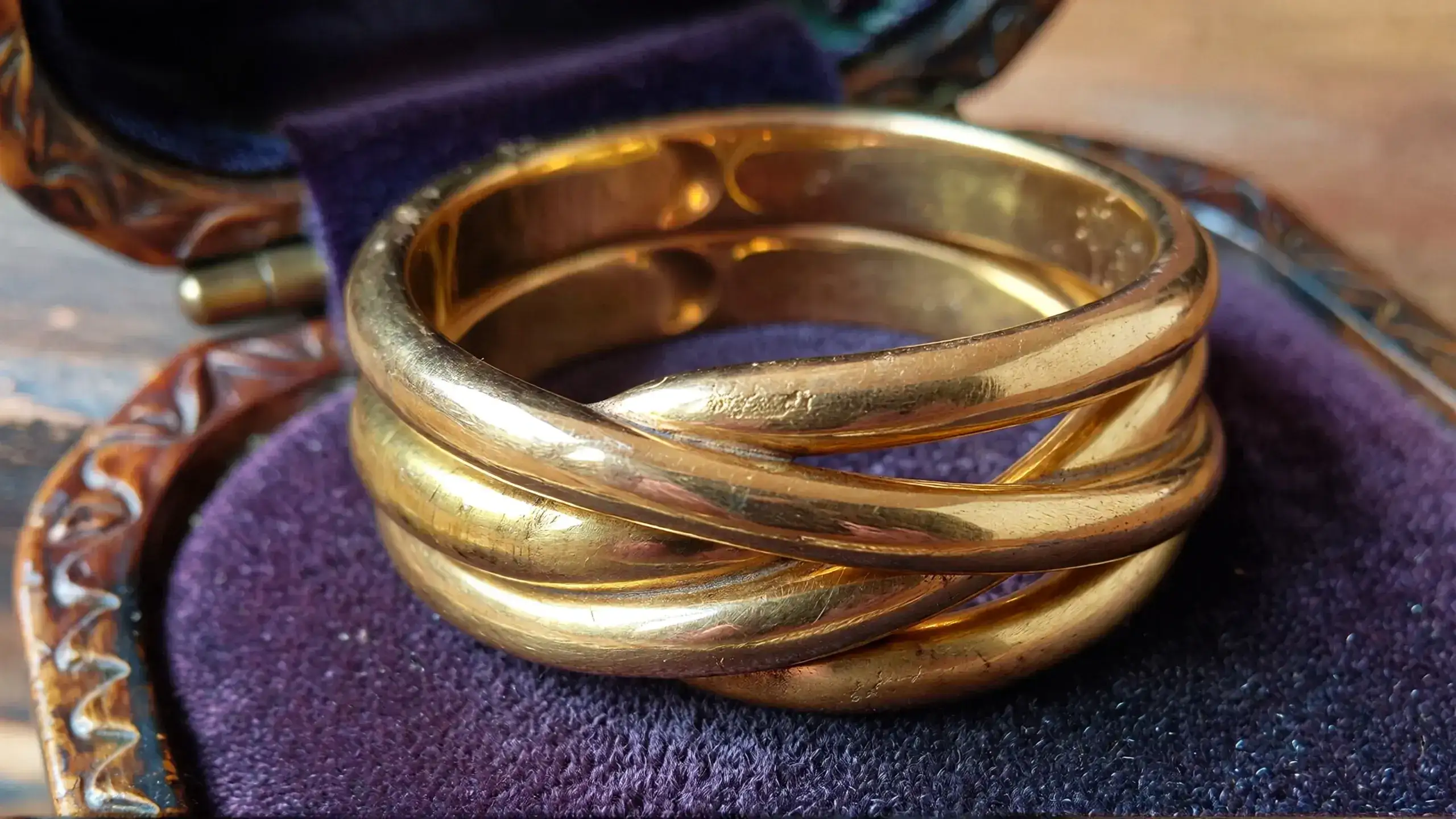
Gimmel Rings and Engagement Symbolism
The gimmel ring, popular from the 15th through 17th centuries, consisted of two or sometimes three interlocking bands that could separate and rejoin. During the engagement period, the bride and groom would each wear one section of the ring. At the wedding ceremony, the groom would place his band on the bride’s finger, reuniting the gimmel ring into a complete whole. This beautiful symbolism—two free individuals joining together to create something whole and complete—perfectly captured Renaissance ideals about marriage partnership.
Gimmel rings became increasingly elaborate as goldsmithing skills developed. Master craftsmen created complex designs featuring fede hands, forget-me-not flowers, red enamel hearts, and even memento mori imagery (skeletons and cherubs representing life, death, and eternal love). Some gimmel rings concealed hidden compartments or secret messages visible only when the bands separated. These intricate pieces required hundreds of hours of skilled labor and cost fortunes, making them exclusive to nobility and wealthy merchant families.
Jewish Marriage Ring Traditions
Jewish wedding ceremonies developed their own distinct ring customs. According to Talmudic law, the wedding ring must be a plain, unbroken circle of solid gold or silver with no stones or embellishments, representing a marriage free from complications or distractions. The ring must have a minimum value of one perutah (a small coin worth roughly a penny), ensuring the groom’s intentions are sincere rather than motivated by financial display.
However, from the 10th through 19th centuries, some Jewish communities used elaborate ceremonial marriage rings featuring intricate filigree work and tiny architectural structures representing the couple’s future home or the Temple in Jerusalem. These ornate rings, often with hinged roofs that opened to reveal Hebrew inscriptions inside, were likely shared among community members for multiple weddings rather than kept by individual couples. The contrast between the simple rings couples actually wore daily and the elaborate ceremonial pieces used during weddings demonstrates how Jewish tradition balanced symbolic richness with practical simplicity.
The Ring Finger Tradition: Myth and Reality
One of the most persistent beliefs about wedding rings is the idea of the vena amoris—a supposed vein running from the fourth finger of the left hand directly to the heart. This romantic notion, often attributed to ancient Egyptians and Romans, has influenced ring-wearing customs for over a thousand years. However, modern anatomy has definitively proven this belief to be purely mythological.
Anatomical research confirms that no vein runs uniquely from the ring finger to the heart. All fingers contain similar venous structures connecting to the same circulatory system. The fourth finger possesses no special anatomical features whatsoever. So why has this tradition persisted so strongly despite its anatomical impossibility?
The answer lies in cultural momentum and practical considerations. Once the Romans established the left hand’s fourth finger as the traditional ring finger—whether through genuine belief in the vena amoris or simply following Egyptian custom—the practice became deeply embedded in Western culture. When Christianity adopted ring exchanges into marriage ceremonies, priests followed existing Roman customs. During Medieval wedding ceremonies, the officiant would touch the thumb while saying “In the name of the Father,” move to the index finger for “the Son,” the middle finger for “and the Holy Spirit,” then place the ring on the fourth finger while saying “Amen.” This religious ritual reinforced the cultural norm.
Practical factors also played a role. The fourth finger is one of the least-used fingers in daily tasks, meaning rings worn there face less wear and damage. For right-handed people (the majority), the left hand sees even less heavy use, further protecting precious rings from scratches, dents, or loss. Some scholars suggest this practical consideration may have been the original reason, with the romantic vena amoris legend developing later to provide poetic justification for what was actually a pragmatic choice.
Notably, cultural variations demonstrate that the left hand’s fourth finger isn’t universal. In many countries including Germany, Austria, Norway, Denmark, Poland, Russia, and other Eastern European nations, wedding rings are worn on the right hand’s fourth finger instead. Orthodox Christian tradition and regional customs override the Roman-derived practice. In some cultures, engagement rings move from left to right hand after the wedding, or vice versa. These variations prove that ring finger customs are entirely cultural rather than anatomically determined.
Complete Wedding Ring Timeline Through History
Understanding the evolution of wedding rings becomes clearer with a comprehensive chronological overview. This timeline highlights key developments from ancient civilizations through modern innovations:
| Period/Date | Culture/Region | Materials & Styles | Significance |
|---|---|---|---|
| 3000 BCE | Ancient Egypt | Reeds, hemp, leather, gold ouroboros designs | Circle represents eternity; beginning of ring tradition |
| 332 BCE – 30 BCE | Hellenistic Greece | Iron, copper, Eros/Cupid motifs | Love tokens rather than marriage symbols |
| 2nd Century BCE – 5th Century CE | Roman Empire | Iron, gold, silver fede rings | Legal marriage contracts, household authority transfer |
| 380 CE – 1453 CE | Byzantine Empire | Gold lovers’ head rings, Christian imagery | Religious blessing incorporated into design |
| 9th Century | Christian Europe | Initially ornate, then simplified under Church pressure | Marriage becomes official Church sacrament |
| 1100s – 1600s | Medieval Europe | Fede rings revival, enameling, gemstones | Increasing craftsmanship sophistication |
| 15th – 17th Century | Renaissance Europe | Posy rings with inscriptions, gimmel rings | Marriage as personal intimate relationship |
| 1477 | Austria/Burgundy | First famous diamond engagement ring (Maximillian to Mary) | Beginning of diamond tradition among nobility |
| 1700s (Georgian Era) | England | Keeper rings (rose-cut diamonds flanking wedding band) | Protecting and accenting simple gold bands |
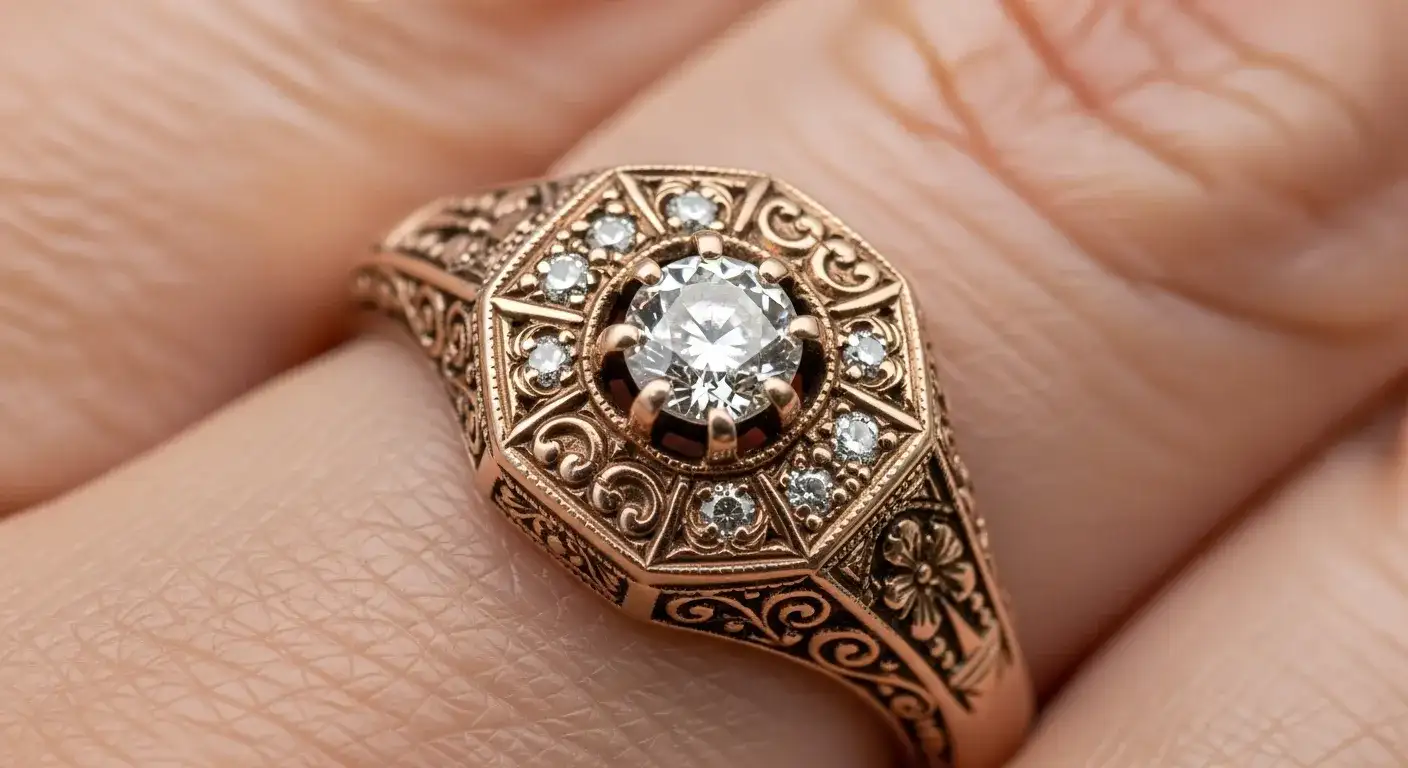
| 1800s (Victorian Era) | Europe/America | Rose gold, gemstones, ornate romantic designs | Queen Victoria’s influence on jewelry fashion |
| 1890s – 1910s (Edwardian Era) | Europe/America | Platinum, delicate filigree, diamonds | Introduction of platinum in fine jewelry |
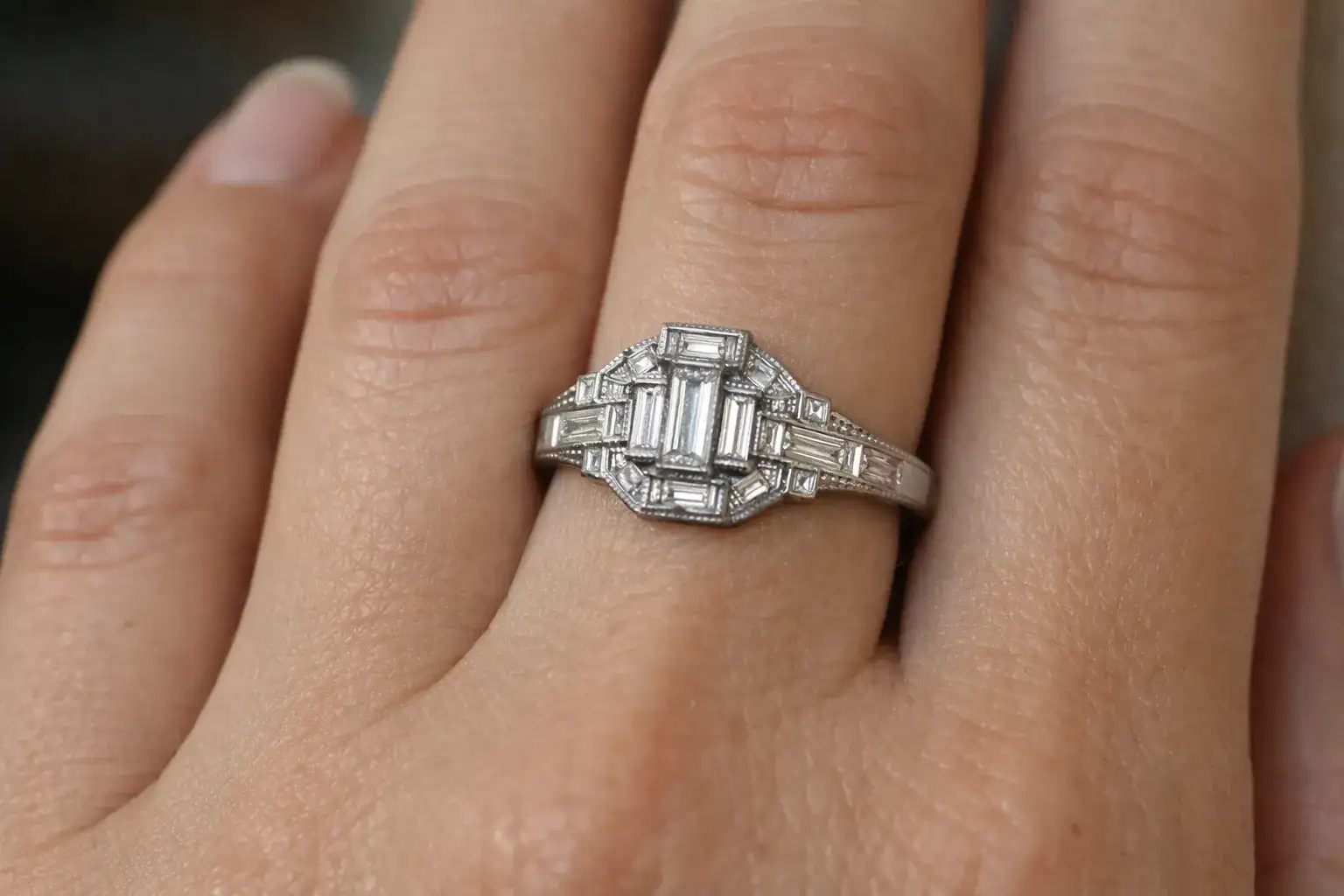
| 1920s – 1930s (Art Deco) | Global | Geometric designs, platinum, baguette diamonds | Modernist aesthetic influence |
| 1940s (WWII Era) | Global | Men’s bands become common; British utility rings (max 3g) | Soldiers wearing rings as reminders of home |
| 1947 | Global | De Beers “A Diamond is Forever” campaign launches | Diamond engagement rings become cultural norm |
| 1950s – 1960s | Western World | Matching his-and-hers sets become standard | Post-war prosperity; marriage symbolism equality |
| 2000s – Present | Global | Lab-grown diamonds, titanium, tungsten, ethical sourcing, customization | Technology meets tradition; conscious consumerism |
This timeline demonstrates how wedding ring traditions have continuously evolved while maintaining core symbolic meanings. Each era added its own cultural, technological, and aesthetic contributions to the enduring tradition.
The Rise of Diamond Engagement Rings
While diamonds have been valued for their hardness and rarity for thousands of years, their association with engagement and marriage is surprisingly recent. The oldest surviving diamond jewelry dates to around 300 BCE, but these pieces were valued for durability rather than brilliance—ancient cutting techniques couldn’t reveal the fire and sparkle we associate with modern diamonds.
The first recorded diamond wedding ring appeared in a will dated to the late 1300s or early 1400s, left by an English widow to her heirs. Historical records are sparse, but we know that by 1475, diamonds had acquired romantic significance. A poem celebrating the wedding of Italian aristocrats Costanzo Sforza and Camilla D’Aragona declared: “Two wills, two hearts, two passions are bonded in one marriage by a diamond.” This phrase captures the emerging symbolism of diamonds as representing unbreakable bonds.
The most famous early diamond engagement ring was presented in 1477 by Archduke Maximillian of Austria to Mary of Burgundy. According to historical accounts, the ring featured thin, flat-cut diamonds arranged to spell Mary’s initial “M”—a personalized touch that demonstrated both wealth and romantic sentiment. This high-profile royal engagement established diamonds as appropriate (though still rare and expensive) choices for betrothal among European nobility.
Other notable historical diamond engagement rings include the ring given by the Duke of Alençon to England’s Queen Elizabeth I, and the ring presented by Thomas, Duke of Norfolk, to Mary, Queen of Scots. Both proposals occurred in the 1560s-1570s, though neither resulted in marriage—Elizabeth I remained unmarried by political choice, while Mary was eventually executed by Elizabeth. Despite these failed engagements, the rings themselves entered history as examples of how diamonds symbolized serious matrimonial intentions among the powerful elite.
Diamond engagement rings grew steadily more popular during the Victorian era (1837-1901), driven by Queen Victoria’s well-documented love of jewelry. Victoria received numerous diamond pieces from Prince Albert, and her enthusiasm sparked trends throughout British society and beyond. However, diamonds remained just one option among many gemstones including rubies, sapphires, emeralds, and pearls. Wealthy Victorians often chose rings featuring clusters of various stones, or sentimental arrangements where the first letter of each gemstone spelled out words like “REGARD” (Ruby, Emerald, Garnet, Amethyst, Ruby, Diamond).
The transformation of diamonds from one choice among many to the dominant engagement ring stone resulted primarily from one of the most successful marketing campaigns in history. During the Great Depression of the 1930s, diamond sales plummeted as economic hardship made luxury purchases impossible for most people. De Beers, which controlled roughly 90% of the world’s diamond supply at the time, faced a crisis.
In 1938, De Beers hired N.W. Ayer advertising agency to create demand for diamonds. The campaign was multifaceted and brilliant: De Beers provided diamonds to Hollywood actresses to wear in films, loaned elaborate pieces to high-society women attending prominent social events, recruited famous artists including Salvador Dali and Pablo Picasso to create diamond-themed artwork, and placed strategic advertisements in magazines associating diamonds with romance, status, and eternal love.
The campaign’s ultimate success came in 1947 with the slogan “A Diamond is Forever,” written by copywriter Frances Gerety. This simple phrase accomplished several marketing goals simultaneously: it emphasized diamonds’ physical durability (literally the hardest natural substance), linked them to eternal love and marriage permanence, and subtly discouraged reselling diamonds (if they’re “forever,” you keep them). The slogan became one of the most recognized advertising phrases in history.
By 1953, Marilyn Monroe sang “Diamonds Are a Girl’s Best Friend” in the film “Gentlemen Prefer Blondes,” cementing diamonds’ place in popular culture. The campaign’s effectiveness was staggering: in 1939, only about 10% of American engagement rings featured diamonds. By 1990, that figure had jumped to 80%. When De Beers launched similar marketing campaigns in Japan during the 1960s and China in the 1990s, diamond engagement ring adoption followed similar exponential growth curves.
Today, while diamond engagement rings remain dominant in many cultures, modern couples increasingly explore alternatives including lab-grown diamonds, moissanite, sapphires, and other gemstones. This shift reflects both changing aesthetic preferences and growing awareness of ethical concerns surrounding diamond mining—topics we’ll explore in the modern trends section.
When Did Men Start Wearing Wedding Rings?
For most of recorded history, wedding rings were worn exclusively or predominantly by women. This gender asymmetry reflected broader social structures where marriage represented property transfer and female status change (from father’s household to husband’s), while men’s social status remained relatively unchanged by marriage. However, this one-sided tradition transformed dramatically during the 20th century.
While some historical evidence suggests that in certain ancient cultures and time periods men occasionally wore rings to signify marriage, these practices were neither widespread nor continuous. Egyptian pharaohs wore signet rings that might have denoted marital status among their many meanings. Some Roman men wore rings, though primarily as status symbols rather than wedding bands specifically. Throughout Medieval and Renaissance Europe, wedding rings remained almost exclusively women’s adornment.
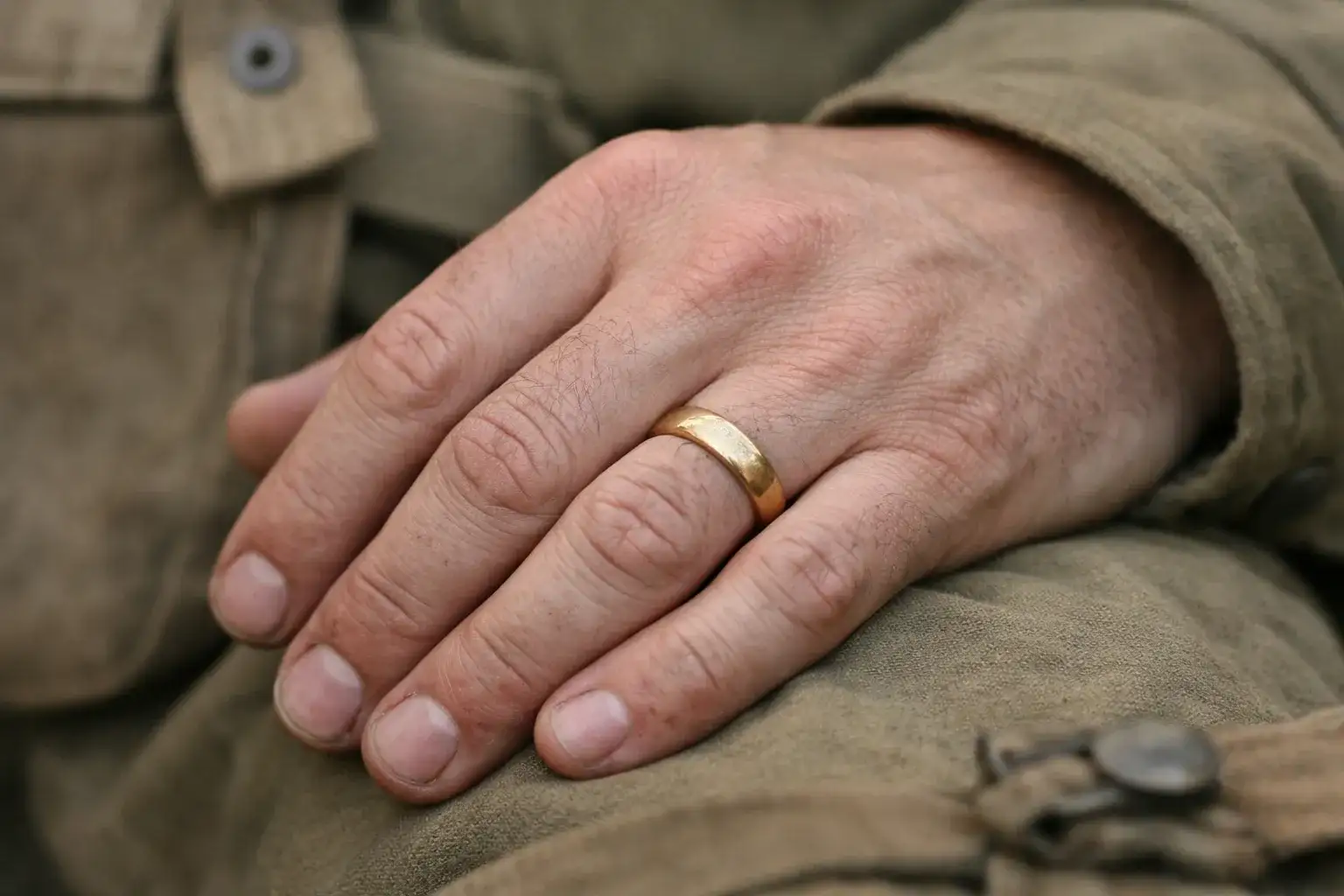
The first significant push toward dual-ring ceremonies came during World War I (1914-1918), when some soldiers began wearing rings as reminders of wives and families back home. However, this practice didn’t become widespread until World War II (1939-1945). As millions of men deployed to battlefronts across Europe, Africa, and the Pacific, wearing a wedding ring provided tangible connection to distant loved ones. The ring served as both a reminder of what they were fighting to protect and return to, and as a visible signal to others that they were married men with commitments back home.
Jewelry companies recognized this trend and began marketing men’s wedding bands specifically to military families. Advertisements emphasized themes of connection, faithfulness, and safe return. Rings worn by service members were typically simple, durable gold bands without embellishment—practical for military life and affordable for families facing wartime economic pressures.
When millions of veterans returned home after the war, many continued wearing their wedding rings. This created the critical mass necessary for civilian acceptance of men’s wedding bands. By the 1950s and 1960s, matching “his and hers” wedding ring sets became standard offerings from jewelry stores. What began as a wartime practice became permanent tradition, reflecting broader mid-century changes in marriage ideals toward partnership and equality.
The Korean War (1950-1953) reinforced the trend, and by the 1970s, men wearing wedding rings in Western countries was nearly universal. However, acceptance rates vary significantly across cultures even today. In some Scandinavian countries, men have worn wedding rings for centuries. In certain Middle Eastern and Asian cultures, men traditionally don’t wear wedding bands, though this is gradually changing due to Western influence. Orthodox Jewish tradition prohibits men from wearing rings during religious ceremonies, though some wear them at other times.
Modern men’s wedding rings reflect diverse aesthetic preferences and lifestyle needs. Options range from traditional yellow gold to platinum, titanium, tungsten carbide, carbon fiber, and even wood or silicone for men with active occupations or allergies. The explosion of choices demonstrates how a practice that barely existed a century ago has become deeply embedded in contemporary marriage culture.
Wedding Ring Traditions Across World Cultures
While Western wedding ring customs often dominate global consciousness due to cultural and economic influence, wedding jewelry traditions worldwide reveal remarkable diversity. Understanding these variations illuminates how different societies approach marriage, commitment, and public symbolism.
Asian Wedding Ring Traditions
Japan: Traditional Japanese weddings didn’t historically include ring exchanges—marriage was formalized through Shinto or Buddhist ceremonies focused on other symbolic elements. However, Western-style ring exchanges became popular after World War II, particularly in the 1960s-1970s. Modern Japanese couples typically exchange simple gold or platinum bands during their ceremonies. An interesting twist: Japanese tradition emphasizes the engagement ring purchase, with couples often selecting matching engagement and wedding ring sets together rather than the Western pattern of surprise engagement followed by joint wedding ring selection.
China: Ancient Chinese wedding traditions centered on jade rather than metal rings. Jade bangles and jewelry represented purity, protection, and prosperity. Modern Chinese couples have widely adopted Western diamond engagement rings (driven partly by De Beers marketing since the 1990s), but traditional elements persist. Some couples combine Western rings with jade pieces, or choose rings featuring jade inlays. The number eight is considered extremely lucky, so wedding dates on the 8th, 18th, or 28th are highly sought after, and some couples select rings with eight small diamonds or subtle design elements featuring eight.
India: Indian wedding traditions are remarkably diverse across religions, regions, and communities. Hindu weddings often don’t feature ring exchanges traditionally—instead, the groom ties a sacred necklace (mangalsutra) around the bride’s neck, and brides wear toe rings to signify married status. However, ring exchanges have become increasingly common in modern Indian weddings, blending Western influences with traditional practices. Indian brides often wear multiple rings on various fingers as part of elaborate jewelry sets including necklaces, bangles, earrings, and maang tikka (forehead jewelry). Muslim and Christian communities in India have their own distinct ring traditions, contributing to the subcontinent’s rich diversity of practices.
African Wedding Ring Customs
Africa’s 54 countries and thousands of ethnic groups maintain extremely diverse marriage traditions. In many traditional African societies, elaborate bride price negotiations and gift exchanges between families held more significance than personal jewelry exchange between the couple. However, wedding rings weren’t entirely absent.
Some cultures created rings from natural materials reflecting their environment and available resources. Woven grass rings, beaded rings using traditional craft techniques, carved bone or wood rings, and metal rings made by local smiths all served as wedding symbols in different regions. These rings often incorporated traditional patterns, colors, or symbols carrying specific cultural meanings about fertility, protection, or lineage.
Colonial influence and globalization have led to Western-style gold and diamond rings becoming common in urban African contexts, often combined with traditional ceremonies and customs. Modern African couples frequently participate in multiple ceremonies—traditional customary weddings following ethnic practices, plus civil or religious ceremonies featuring Western elements including ring exchanges. This blending of old and new creates unique hybrid traditions.
Middle Eastern Traditions
Islamic Traditions: Islamic law (Sharia) doesn’t require wedding rings, and practices vary widely across Muslim-majority countries and communities. Some interpretations discourage men from wearing gold rings (though silver and other metals are acceptable), while women may wear gold freely. In practice, many Muslim couples exchange rings during their nikah (marriage contract) ceremony, with styles ranging from simple bands to elaborate designs featuring geometric Islamic patterns or Quranic inscriptions.
Jewish Customs: As discussed earlier, Jewish law requires the groom to present a plain, unbroken gold or silver ring to the bride during the wedding ceremony. The ring must belong to the groom and have minimal intrinsic value (to prove his intentions aren’t mercenary). Many couples later replace this simple ceremonial ring with more elaborate versions, or the bride continues wearing the simple band as a meaningful symbol of the ceremony itself. Traditionally, Jewish grooms didn’t wear wedding rings, though this practice has changed in many modern communities.
Puzzle Rings: Middle Eastern legend speaks of puzzle rings—complex designs with multiple interlocking pieces that fall apart when removed and prove difficult to reassemble. According to folklore, husbands gave these rings to wives such that any attempt to remove the ring (for presumed adultery) would reveal itself when the woman couldn’t reassemble the pieces. While the story is almost certainly apocryphal, puzzle rings did exist historically as demonstrations of goldsmith skill rather than marital surveillance devices. Today they’re appreciated as artistic curiosities and sometimes chosen by couples who enjoy the craftsmanship and symbolism of many parts creating one whole.
Native American Traditions
Pre-contact Native American societies had diverse marriage customs varying by tribe, region, and cultural practices. Metal rings weren’t traditional in most Native cultures before European contact, as metallurgy wasn’t widely practiced. However, many tribes created wedding jewelry from available materials: carved bone, shells, woven fibers, and after trade relationships developed, incorporating glass beads and metal.
After contact with Europeans, some Native American jewelry makers created distinctive wedding ring styles blending traditional symbolism with Western forms. Turquoise holds particular significance in many Southwestern tribes (Navajo, Zuni, Hopi) and often appears in wedding jewelry. Turquoise is believed to provide protection, facilitate communication between earth and sky, and bring good fortune—appropriate symbolism for marriage.
Contemporary Native American jewelers craft stunning wedding rings incorporating traditional techniques like silverwork and stone inlay, combined with personal and cultural symbols meaningful to individual couples. These pieces honor heritage while participating in the broader ring-giving tradition.
European Variations
Even within Europe, significant variations exist in ring-wearing customs. In Germany, Austria, Norway, Denmark, Poland, Russia, and other Eastern European countries, wedding rings are traditionally worn on the right hand rather than the left. This practice connects to Orthodox Christian traditions and regional customs that developed separately from Catholic and Protestant Western European practices.
In some Scandinavian countries, couples exchange plain matching rings during engagement, both worn on the left hand. At the wedding, a more elaborate ring may be added for the bride, or both partners might receive additional rings. In Sweden and Finland, both engagement and wedding rings are worn on the left hand together.
These cultural variations demonstrate that while the circular band as a symbol of marriage commitment appears nearly universal in modern global culture, the specific customs surrounding how, when, where, and by whom these rings are worn remain beautifully diverse—each culture adding its own meaning and practice to the broader tradition.
Materials Evolution: From Reeds to Platinum and Beyond
The materials used to create wedding rings have evolved dramatically alongside technological advancement, changing economic systems, and shifting aesthetic preferences. Understanding this materials journey reveals how wedding rings balanced symbolism, durability, affordability, and beauty across millennia.
Organic Materials (3000 BCE – Present): The earliest rings fashioned from reeds, hemp, leather, and woven grasses served immediate symbolic purposes but lacked permanence. These organic materials deteriorated relatively quickly—sometimes lasting only a year or two—necessitating replacement. However, their symbolic value persisted, and even today some couples choose natural materials for eco-friendly wedding celebrations, though typically as symbolic ceremony rings rather than everyday wear.
Copper and Bronze (3000 BCE – 500 CE): As metallurgy developed, copper and bronze provided the first durable metal ring options. These materials allowed for more elaborate designs including engravings and shaping. However, both metals oxidize relatively easily, developing greenish patinas that could discolor skin. Bronze, being harder than copper, offered better durability but still scratched and wore down with time.
Iron (500 BCE – 500 CE): Romans favored iron wedding rings, particularly for betrothal, because iron symbolized strength and permanence—qualities desired in marriage. Iron rings were affordable enough for common citizens while still carrying symbolic weight. The main drawback? Iron rusts. Maintaining iron rings required regular care and oiling, and many deteriorated over the wearer’s lifetime. Few ancient iron wedding rings survive today due to corrosion.
Silver (500 BCE – Present): Silver provided beauty, workability for detailed designs, and resistance to corrosion better than copper or iron. It was more expensive than base metals but more affordable than gold, making it accessible to middle-class buyers. Silver’s main disadvantage is softness—it scratches easily and bends under pressure. Sterling silver (92.5% pure silver combined with 7.5% other metals like copper) offers better durability while maintaining silver’s luster. Silver remains popular today, particularly for alternative or budget-conscious couples.
Gold (2000 BCE – Present): Gold’s combination of beauty, rarity, workability, and resistance to tarnishing made it the ultimate precious metal for wedding rings throughout history. Pure 24-karat gold is too soft for daily wear, so jewelers combine it with other metals to create durable alloys. The most common gold purities include 18-karat (75% gold), 14-karat (58.3% gold), and 10-karat (41.7% gold). Different alloy metals create various gold colors: yellow gold (mixed with silver and copper), white gold (mixed with nickel or palladium), and rose gold (higher copper content). Gold’s premium price historically limited it to wealthy buyers, though industrialization and modern mining made gold more accessible by the 19th century.
Platinum (1900s – Present): Platinum entered jewelry use during the Edwardian era (1890s-1910s) when new techniques allowed working with this extremely hard, dense metal. Platinum is rarer than gold and denser (heavier), making platinum rings feel substantial. Its naturally white color doesn’t fade or require rhodium plating like white gold. Platinum’s durability makes it ideal for securing valuable diamonds and gemstones. However, platinum’s rarity and difficulty to work make it the most expensive common wedding ring material. It gained particular popularity in the 1990s-2000s as couples sought premium, low-maintenance options.
Modern Alternative Metals (1990s – Present): Contemporary technology introduced entirely new materials to wedding jewelry:
- Titanium: Lightweight, hypoallergenic, extremely strong, scratch-resistant, and affordable. Gray color and difficulty resizing are limitations.
- Tungsten Carbide: Hardest metal used in wedding rings, virtually scratch-proof, heavy weight, affordable. Cannot be resized; brittleness means severe impact can shatter it.
- Cobalt Chrome: White color like platinum, hypoallergenic, scratch-resistant, more affordable than platinum. Harder to resize than traditional metals.
- Stainless Steel: Extremely affordable, durable, hypoallergenic. Considered less prestigious than precious metals.
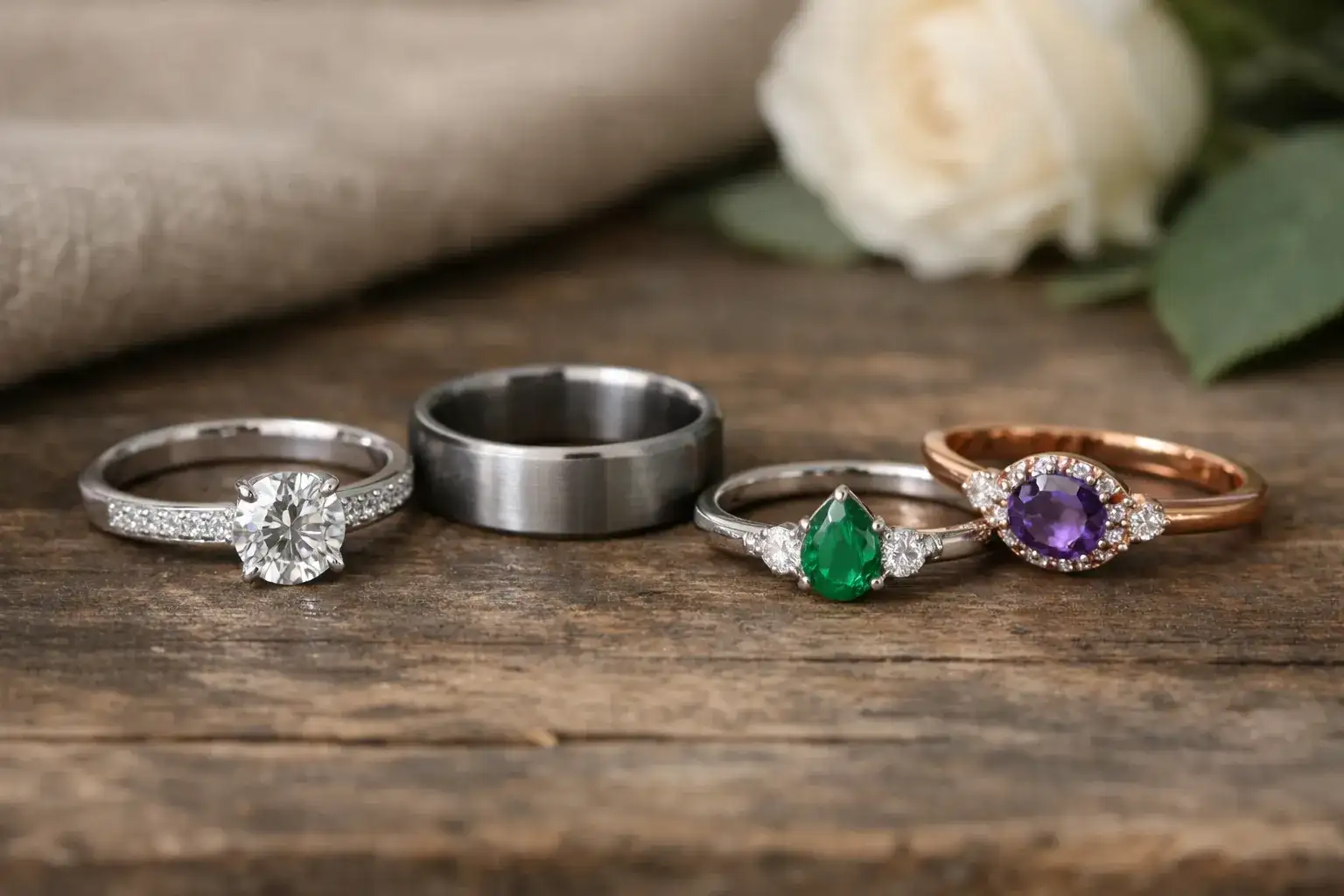
Gemstones: While the metal forms the band, gemstones add color, value, and meaning. Diamonds dominated the 20th century, but historical rings featured rubies (passion), sapphires (heavens/fidelity), emeralds (fertility/rebirth), and countless other stones. Modern couples increasingly explore alternatives like moissanite (brilliant, durable, ethical), lab-grown diamonds (identical to mined but conflict-free), and colored gemstones (personal meaning, uniqueness).
| Material | Historical Period | Durability | Cost Range | Best For |
|---|---|---|---|---|
| Reeds/Organic | Ancient-Present | Low | $ | Symbolic ceremonies, eco-conscious |
| Iron | Ancient Rome | Medium (rusts) | $ | Historical reproduction |
| Silver/Sterling | Ancient-Present | Medium (soft) | $$ | Budget-conscious, vintage aesthetic |
| Gold (10-18k) | Ancient-Present | High | $$$ | Traditional, value retention, customization |
| Platinum | 1900s-Present | Very High | $$$$ | Premium, low-maintenance, diamond settings |
| Titanium | 1990s-Present | Very High | $$ | Active lifestyles, metal allergies, lightweight |
| Tungsten | 2000s-Present | Extreme (brittle) | $-$$ | Scratch resistance, weight, affordability |
This materials evolution reflects humanity’s continuous quest to balance symbolic meaning, practical durability, aesthetic beauty, and economic accessibility in wedding rings—a balance each couple determines based on their own priorities and values.
How to Choose a Wedding Ring Based on Historical Style
Understanding wedding ring history isn’t just academic—it provides valuable guidance for modern couples selecting rings that resonate with their personal aesthetic, values, and lifestyle. Here’s how to apply historical knowledge to contemporary ring choices.
Match Your Personal Style to Historical Periods
If You Love Timeless Elegance and Romance (Victorian Era 1837-1901): Consider rose gold bands with delicate engravings, gemstone accents like sapphires or emeralds, or cluster designs featuring multiple small stones. Victorian rings often incorporated hearts, flowers, and romantic motifs. Modern jewelers create Victorian-inspired pieces that capture the era’s ornate beauty with contemporary durability. Best for: those who appreciate detailed craftsmanship, romantic symbolism, and feminine elegance.
If You Prefer Bold Geometric Design (Art Deco 1920s-1930s): Look for platinum or white gold rings featuring clean lines, geometric patterns, baguette-cut diamonds, and symmetrical designs. Art Deco rings balance bold architectural elements with refined sophistication. Modern Art Deco reproductions offer this distinctive aesthetic with better stone-setting security than fragile vintage pieces. Best for: modernists who appreciate strong visual impact and architectural sensibilities.
If You Want Medieval Romance (Posy Rings/Gimmel Rings): Commission a custom ring with meaningful inscriptions on the interior band, choose a gimmel-style with interlocking bands, or select a Claddagh ring honoring Irish tradition. These rings prioritize personal sentiment and symbolic meaning over ostentation. Best for: couples who value private meaning, literary references, or historical connection.
If Minimalism Appeals (Modern Simplicity): Plain gold, platinum, or alternative metal bands without embellishment honor the Jewish tradition of unadorned circles and appeal to contemporary minimalist aesthetics. Simple bands put the focus on the symbolism rather than decoration. Best for: practical types, minimalists, those with active lifestyles or professional requirements limiting jewelry wear.
### 📏 Recommended Product: Ring Sizing Tool
**Professional Ring Sizer Set with 1-17 Sizes**
* ✓ Accurate sizing at home before purchasing
* ✓ Professional jeweler-quality metal construction
* ✓ Includes full size range for any finger
* ✓ Reusable for lifetime; helps prevent costly sizing mistakes
Consider Your Lifestyle Needs
Active Lifestyle: If you work with your hands, engage in sports, or need rings that withstand daily wear without damage, prioritize durability. Platinum, titanium, and tungsten carbide offer exceptional resistance to scratching and denting. Avoid fragile vintage pieces or soft metals like pure gold and silver. Lower-profile settings protect gemstones from snagging or impact.
Metal Sensitivities: Nickel allergies affect approximately 10-20% of the population and can develop over time even without previous reactions. White gold often contains nickel alloys, causing irritation for sensitive individuals. Choose hypoallergenic materials: platinum (naturally pure), titanium, surgical stainless steel, or nickel-free gold alloys. Historical perspective: ancient peoples unknowingly avoided this issue by using pure metals or simple alloys before modern techniques introduced allergenic combinations.
Budget Consciousness: History offers solutions at every price point. Sterling silver provides beautiful, traditional aesthetics at accessible prices. Alternative metals like titanium and stainless steel deliver durability without premium costs. Consider vintage or estate rings, which often cost less than new pieces while offering unique historical character. Lab-grown diamonds provide identical beauty and durability to mined diamonds at 40-70% lower prices.
Sentimental Value: Following posy ring tradition, custom engravings transform simple bands into deeply personal talismans. Inscribe wedding dates, coordinates of meaningful locations, quotes from favorite literature, or private phrases significant to your relationship. Some couples incorporate family heirlooms—resetting inherited stones into new bands, melting down ancestral gold to craft new rings, or wearing passed-down rings directly if sizes accommodate.
Authenticity vs Reproduction
Genuine antique and vintage rings (typically defined as 100+ years and 20-100 years old respectively) carry historical provenance and unique character. However, they also present challenges: sizing antique rings often proves impossible without damage, old gemstone settings may be fragile or insecure, previous wear leaves scratches and thin spots, and verification of authenticity requires expertise.
Modern reproductions capture historical aesthetics with contemporary advantages: proper sizing from the start, modern security for valuable stones, warranties and guarantees, and often superior durability. The trade-off is losing genuine historical connection and antique patina that develops over decades. Neither choice is inherently superior—it depends on whether you value authentic history or practical reliability more.
Verifying Vintage/Antique Pieces: If purchasing genuine historical rings, examine hallmarks (stamps indicating metal purity and sometimes maker/date), check for appropriate patina (legitimate age shows specific wear patterns, not uniform distressing), consult expert appraisers before major purchases, and request written documentation of age and authenticity. Reputable antique jewelry dealers provide this information; reluctance to verify claims should raise red flags.
Common Mistakes When Choosing Wedding Rings
Learning from others’ errors saves time, money, and frustration. These common mistakes arise repeatedly when couples select wedding rings:
1. Confusing Engagement and Wedding Ring Origins and Purposes: Many assume engagement rings and wedding bands are interchangeable or developed together. Historically, they served different functions: engagement rings (betrothal rings) symbolized a promise to marry and were often valuable, while wedding rings represented the actual marriage ceremony and were frequently simpler. Understanding this distinction helps couples decide whether they want traditional separate rings, combined styles, or to forgo one entirely. No historical or contemporary rule requires both—choose what fits your preferences.
2. Getting Sized at the Wrong Time: Finger sizes fluctuate throughout the day (swelling occurs during heat or activity) and across seasons (fingers can be half a size smaller in winter). Additionally, the dominant hand’s ring finger often differs slightly in size from the non-dominant hand. Get sized by a professional jeweler in the late afternoon or evening when fingers are typically their largest. Try rings on for several minutes to ensure they don’t feel too tight when fingers naturally swell slightly while wearing jewelry. This prevents the frustration of rings that fit perfectly at the jeweler but feel uncomfortable during normal daily wear.
3. Ignoring Metal Allergies and Sensitivities: Many people discover metal allergies only after prolonged exposure to certain alloys. White gold frequently contains nickel, which causes reactions in sensitive individuals—symptoms include redness, itching, rashes, or even blistering where the ring contacts skin. Testing for metal allergies before committing to an expensive ring prevents this unpleasant discovery. Choose hypoallergenic metals (platinum, titanium, surgical steel, or nickel-free gold alloys) if you have sensitive skin or a history of metal reactions.
4. Assuming “Vintage-Style” Equals “Antique”: Jewelry marketed as “vintage-style” or “antique-inspired” is new jewelry designed to look old, not genuinely historical pieces. This distinction matters for value, collectibility, and expectations. Vintage-style reproductions cost significantly less than authentic antiques, don’t appreciate in value the same way, and lack historical provenance. Neither is inherently better—reproductions offer better durability and sizing options—but understanding what you’re buying prevents disappointment. Request explicit documentation if told a piece is genuinely antique.
5. Failing to Verify Hallmarks on Historical Pieces: Authentic antique rings bear hallmarks—small stamps indicating metal purity, origin, date, and sometimes the maker. These marks prove authenticity and provide historical information. Counterfeit antiques or misrepresented modern pieces may lack appropriate hallmarks or display incorrect marks. Learn to recognize hallmarks relevant to your desired period: British hallmarks include date letters and assay office marks, European pieces show purity numbers (750 = 18k gold), American marks vary by manufacturer. Consult reference guides or expert appraisers before purchasing expensive historical pieces.
6. Prioritizing Aesthetics Over Practical Durability: A ring might look stunning in a display case but prove impractical for daily wear. Raised settings with protruding gemstones snag on clothing, catch on objects, and risk stone loss. Soft metals scratch visibly within weeks. Delicate filigree work bends or breaks under normal stress. Consider your actual daily activities: if you type extensively, avoid high-profile designs that interfere with keyboard use; if you work out or practice sports, choose flush or low-profile settings; if you work with harsh chemicals, select metals that resist corrosion. The most beautiful ring that you can’t comfortably wear everyday serves poorly as a marriage symbol meant for lifelong daily use.
7. Overpaying for Reproductions Marketed as Historical: Unscrupulous sellers sometimes price modern reproductions as if they were genuine antiques, exploiting buyers’ lack of expertise. Research typical price ranges for authentic pieces from your desired period. Be suspicious of “bargain” antiques—genuine Georgian, Victorian, or Art Deco pieces from reputable periods command appropriate prices reflecting their rarity and age. If a price seems too good to be true, the piece is likely a reproduction (or has significant undisclosed damage). Work with established antique jewelry dealers who guarantee authenticity in writing and accept returns if independent appraisal reveals misrepresentation.
Caring for Vintage and Antique Wedding Rings
Historical wedding rings require special care to preserve their beauty and integrity for future generations. Proper maintenance protects your investment and honors the craftsmanship of long-ago artisans.
Cleaning Methods by Material
Gold Rings: Warm water with mild dish soap works for most gold rings. Soak for 10-15 minutes, gently brush with a soft toothbrush (baby toothbrushes work perfectly), and rinse thoroughly. Dry with a soft, lint-free cloth. Avoid harsh chemicals including chlorine bleach or abrasive cleaners that can damage gold alloys. For stubborn dirt, professional jeweler cleaning using ultrasonic cleaners provides deeper cleaning—however, ensure your piece is structurally sound first, as ultrasonic vibrations can loosen already-weak settings.
Silver and Sterling Rings: Silver tarnishes naturally when exposed to air and sulfur compounds. Specialized silver polishing cloths remove tarnish through gentle abrasion with embedded polishing compounds. For heavier tarnish, silver cleaning dips work quickly but use them sparingly—they’re mildly abrasive and can dull fine details over time. An alternative home remedy: line a bowl with aluminum foil, add hot water and baking soda, immerse silver ring for several minutes. A chemical reaction transfers tarnish from silver to aluminum. Rinse and dry thoroughly afterward.
Platinum Rings: Platinum is extremely durable and resists tarnishing, but it develops a patina over time—a subtle surface texture from tiny scratches that some collectors prefer as evidence of authenticity and age. Clean platinum with warm soapy water and a soft brush. Professional jewelers can polish platinum to restore original high shine if desired, but many vintage platinum collectors value the natural patina as part of the piece’s historical character.
### 🧼 Recommended Product: Jewelry Cleaning Solution
**Connoisseurs Precious Jewelry Cleaner for Gold, Platinum & Diamonds**
* ✓ Jeweler-recommended professional formula
* ✓ Safe for gold, platinum, and diamond jewelry
* ✓ Includes precision brush for intricate vintage designs
* ✓ Quick-drying formula leaves no residue or film
When NOT to Clean
Some antique rings should never be aggressively cleaned. If your ring features enamel work (common in Victorian, Byzantine, and gimmel rings), harsh cleaning or ultrasonic cleaning can crack or loosen enamel. Antique pieces with deliberately applied patina—including certain Arts and Crafts movement pieces where aged appearance was aesthetic intent—lose value and character if overly cleaned. Rings with extremely fragile settings, loose stones, or visible cracks risk damage from even gentle cleaning. For such pieces, consult professional conservators who specialize in antique jewelry rather than attempting home cleaning.
Proper Storage
Environmental factors deteriorate antique rings over time. Store vintage wedding rings in environments with controlled temperature (60-70°F ideal) and humidity (40-50% relative humidity prevents both excessive dryness and moisture damage). Keep different metal types separated—contact between different metals can cause galvanic corrosion. Store rings in individual soft cloth pouches or lined ring boxes to prevent scratches from contact with other jewelry. Avoid storing rings in bathrooms where humidity fluctuates dramatically, or in attics/basements with temperature extremes.
For valuable antique pieces, consider anti-tarnish storage solutions: anti-tarnish cloths or tabs (available from jewelry supply companies) slow silver tarnishing significantly, and silica gel packets in storage containers control moisture that can corrode metals or cloud gemstones.
### 📦 Recommended Product: Ring Storage Case
**Stackable Ring Display Storage Box with Velvet Compartments**
* ✓ Individual compartments prevent scratching between rings
* ✓ Velvet lining protects precious metals and gemstones
* ✓ Stackable design for growing collections
* ✓ Transparent lid allows viewing without handling
Professional Restoration vs DIY
Minor cleaning and basic maintenance can be handled at home, but significant restoration requires professional expertise. Seek professional help for: re-tipping worn prongs securing gemstones (prevents stone loss), repairing bent or broken bands, re-sizing rings (particularly tricky with intricate vintage pieces), re-applying protective rhodium plating on white gold, removing deeply embedded dirt from crevices and engravings, and assessing structural integrity before purchasing estate pieces.
Restoration costs vary widely depending on required work, but investing in proper professional care protects valuable antique rings. A $200 restoration on a $2,000 antique ring is money well spent compared to catastrophic damage from amateur attempts.
Insurance and Appraisal
Insure valuable antique wedding rings separately rather than relying on homeowner’s or renter’s insurance standard jewelry limits (often only $1,000-$2,000 total). Specialized jewelry insurance costs approximately 1-2% of appraised value annually and covers loss, theft, and damage. Obtain professional appraisals from certified gemologists (preferably GIA-certified) who understand antique jewelry specifically—general jewelry appraisers may misvalue historical pieces. Update appraisals every 3-5 years as antique jewelry values fluctuate with market demand. Maintain photographic documentation of your rings including detailed close-ups of distinctive features, hallmarks, and any unique characteristics that help with identification if theft occurs.
Modern Trends and the Future of Wedding Rings
As we move deeper into the 21st century, wedding ring traditions continue evolving to reflect contemporary values, technological capabilities, and changing social structures. These modern trends represent the latest chapter in the 5,000-year history of wedding rings.
Lab-Grown Diamonds and Ethical Sourcing: Increasing awareness of diamond mining’s environmental and humanitarian impacts has fueled demand for ethically sourced alternatives. Lab-grown diamonds—chemically, physically, and optically identical to mined diamonds—offer conflict-free options at 40-70% lower prices. These diamonds are created in controlled laboratory environments using high pressure and temperature or chemical vapor deposition, producing stones indistinguishable from mined diamonds except by specialized testing equipment. Major jewelry retailers now offer lab-grown options, and some couples choose exclusively lab-grown stones for ethical and budgetary reasons. Similarly, recycled diamonds (removed from estate jewelry and recut) and Fairtrade-certified mined diamonds appeal to conscientious consumers.
Gender-Neutral Ring Designs: Traditional gender distinctions in ring design (feminine=delicate and ornate, masculine=simple and substantial) are dissolving as couples reject rigid binary categories. Many jewelers now present collections as simply “wedding bands” rather than segregating “men’s” and “women’s” styles. Couples of all gender identities select rings based on personal aesthetic preferences rather than traditional gendered expectations. Same-sex marriage legalization in numerous countries since the early 2000s has further diversified ring selection patterns, with same-sex couples often choosing complementary rather than identical rings that reflect individual styles while harmonizing as a matched set.
Advanced Customization Technology: Computer-aided design (CAD) software and 3D printing revolutionize custom ring creation. Couples can now visualize proposed designs in detailed 3D models before committing to production, make precise adjustments digitally, and even print wax or resin prototypes to evaluate size and appearance. This technology democratizes custom design—what once required expensive consultations with master jewelers can now be accomplished through online custom ring services. The result is unprecedented personalization: rings incorporating fingerprints, soundwave patterns from spoken vows, constellation maps from wedding dates, or intricate geometries impossible to craft by hand.
Stackable and Multiple Band Trends: Rather than single wedding bands, many people now wear stacked combinations of multiple thin rings. This trend allows for personalization (adding bands for anniversaries, children’s births, or other milestones) and creates opportunities for mixing metals, textures, and stones. Some couples start with simple wedding bands and progressively add complementary rings over years of marriage, creating visual representations of their growing history together. This stackable approach echoes historical practices like Georgian-era “keeper rings” while embracing contemporary minimalist aesthetics.
Alternative Gemstones: While diamonds remain popular, couples increasingly choose non-traditional center stones for unique appearances and personal meaning. Sapphires (available in blue, pink, yellow, and other colors beyond traditional blue) offer excellent hardness second only to diamonds. Moissanite provides exceptional brilliance at lower cost than diamonds. Morganite (pink-peach colored beryl) gained popularity in the 2010s for its romantic color. Emeralds, rubies, opals, and numerous other gemstones allow couples to select stones with personal significance, birthstone connections, or simply preferred aesthetics beyond the diamond mainstream.
Sustainable and Eco-Friendly Materials: Environmental consciousness extends beyond gemstones to the metals themselves. Recycled gold and platinum offer beauty and quality while reducing mining environmental impact—modern refining produces recycled metals identical to newly mined materials. Some artisans create rings from unconventional sustainable materials: reclaimed wood inlays, recycled ocean plastic, meteorite fragments, fossilized dinosaur bone, or ethically sourced antler. These materials appeal to couples wanting rings that tell unique stories and reflect environmental values.
Minimalist and Alternative Ring Materials: Tattoo rings (wedding band tattoos on the ring finger) appeal to those who dislike wearing jewelry, work in professions prohibiting rings, or want permanent symbols. Silicone rings gained popularity for active individuals, providing wedding ring symbolism without the safety risks of metal rings catching on equipment or conducting electricity. These practical alternatives acknowledge that traditional precious metal rings don’t suit everyone’s lifestyle while maintaining the symbolic importance of wearing a wedding ring.
Technology Integration: Some experimental designs incorporate technology: smart rings that monitor health metrics, rings with hidden storage for emergency information, or rings with embedded NFC chips that can share contact information, unlock doors, or trigger personalized digital content. While still niche, these concepts represent how wedding rings might continue evolving as wearable technology develops.
These contemporary trends don’t replace traditional wedding ring customs but rather expand the range of choices available to modern couples. The fundamental symbolism—circular bands representing eternal commitment—persists even as materials, designs, and sourcing practices reflect 21st-century values and capabilities. Wedding rings continue adapting to serve each new generation while honoring thousands of years of tradition.
Frequently Asked Questions About Wedding Ring History
When did the tradition of wearing wedding rings begin?
The wedding ring tradition began in ancient Egypt approximately 5,000 years ago, around 3000 BCE. Egyptian couples exchanged rings woven from reeds, hemp, and sedges that grew along the Nile River. The Egyptians chose circular rings because the circle symbolized eternity—having no beginning and no end, it perfectly represented the infinite nature of love and marriage commitment. The space within the ring’s center was believed to represent a gateway to unknown worlds and the couple’s shared future together.
These early Egyptian rings were not permanent like modern wedding bands. Made from organic plant materials, they would deteriorate and break down within a year or two of regular wear. Wealthier Egyptians could afford rings crafted from more durable materials like leather, bone, ivory, or precious metals, particularly gold. One distinctive Egyptian ring design was the ouroboros—a serpent swallowing its own tail—which represented the eternal cycle of death and rebirth central to Egyptian beliefs. This ancient tradition of exchanging circular bands spread from Egypt to Greece (when Alexander the Great conquered Egypt in 332 BCE), then to Rome, and eventually throughout the world, evolving into the widespread custom we know today.
Why are wedding rings worn on the fourth finger of the left hand?
The tradition of wearing wedding rings on the fourth finger of the left hand originates from an ancient belief called the vena amoris or “vein of love.” Romans and Egyptians believed that this particular finger contained a vein that ran directly from the finger to the heart. Since the heart was considered the center of emotions and love, wearing a ring on this finger symbolized the connection between the married couple’s hearts. This romantic notion made the fourth finger the natural choice for displaying the ultimate symbol of romantic commitment.
However, modern anatomical science has conclusively proven that the vena amoris is purely mythological. No vein runs uniquely from the fourth finger to the heart—all fingers contain similar networks of veins connecting to the broader circulatory system. The fourth finger possesses no special anatomical features distinguishing it from other fingers. So why does the tradition persist despite being anatomically incorrect? The answer lies in cultural momentum, religious reinforcement, and practical considerations. Once established by the Romans, the practice became deeply embedded in Western culture and was later reinforced by Christian wedding ceremonies. Additionally, the fourth finger (especially on the left hand for right-handed people) sees less heavy use during daily activities, meaning rings worn there experience less wear, damage, and risk of loss compared to more frequently used fingers.
When did men start wearing wedding rings regularly?
While women have worn wedding rings for thousands of years, men wearing wedding bands regularly is a surprisingly recent phenomenon dating primarily to World War II (1939-1945). Before the 20th century, wedding rings in Western culture were almost exclusively worn by women, reflecting social structures where marriage represented a change in women’s status (from father’s household to husband’s) but men’s social position remained largely unchanged. Some ancient cultures and historical periods show evidence of occasional male ring-wearing, but these practices were neither widespread nor continuous through history.
The major shift occurred during WWII when millions of men deployed to military service far from home. Soldiers began wearing wedding rings as tangible reminders of wives and families they’d left behind. These rings provided emotional connection to distant loved ones and served as visible signals to others that the wearer was a married man with commitments waiting at home. Jewelry companies recognized this trend and began marketing men’s wedding bands specifically to military families, emphasizing themes of faithfulness, connection, and safe return. When veterans came home after the war, many continued wearing their rings, creating critical mass for broader civilian acceptance.
By the 1950s and 1960s, matching “his and hers” wedding ring sets became standard jewelry store offerings throughout Western countries. What began as a wartime practice became permanent tradition, reflecting mid-century changes in marriage ideals toward partnership and equality. Today, men wearing wedding rings is nearly universal in Western cultures, though acceptance rates vary globally. Some Scandinavian countries had male ring-wearing traditions extending back centuries, while certain Middle Eastern and Asian cultures traditionally don’t include male wedding bands (though this is gradually changing due to Western influence). The transformation from female-exclusive to universal ring-wearing represents one of the most significant changes in wedding ring history during the past century.
How did diamond engagement rings become so popular?
Diamond engagement rings’ overwhelming popularity results primarily from one of history’s most successful marketing campaigns rather than ancient tradition or natural cultural evolution. While diamonds have been valued for thousands of years due to their hardness and rarity, their specific association with engagement and marriage is surprisingly recent and largely manufactured through advertising.
Diamonds appeared occasionally in wedding and engagement jewelry from the 1400s onward—the first famous diamond engagement ring was presented in 1477 by Archduke Maximillian of Austria to Mary of Burgundy. However, diamonds remained just one option among many gemstones including rubies, sapphires, emeralds, and pearls through the 19th century and into the early 20th century. During the Great Depression of the 1930s, diamond sales collapsed as economic hardship made luxury purchases impossible for most people. De Beers, which controlled approximately 90% of the world’s diamond supply, faced a serious crisis as demand plummeted.
In 1938, De Beers hired the N.W. Ayer advertising agency to create demand for diamonds through a multifaceted campaign. De Beers provided diamonds to Hollywood actresses to wear in major films, loaned elaborate diamond pieces to high-society women attending prominent social events, recruited famous artists including Salvador Dali and Pablo Picasso to create diamond-themed artwork, and placed strategic magazine advertisements linking diamonds with romance, status, and eternal love. The campaign’s crowning achievement came in 1947 when copywriter Frances Gerety created the slogan “A Diamond is Forever.” This simple phrase accomplished multiple marketing goals: it emphasized diamonds’ physical durability, linked them to eternal love and marriage permanence, and subtly discouraged reselling diamonds (if they’re “forever,” you keep them).
The campaign’s effectiveness was extraordinary. In 1939, only about 10% of American engagement rings featured diamonds. By 1990, that figure had jumped to 80%. When De Beers launched similar marketing campaigns in Japan (1960s) and China (1990s), diamond engagement ring adoption followed similar exponential growth. Marilyn Monroe’s 1953 performance of “Diamonds Are a Girl’s Best Friend” in the film “Gentlemen Prefer Blondes” further cemented diamonds’ place in popular culture. Today, while diamond engagement rings remain dominant, modern couples increasingly explore alternatives including lab-grown diamonds, moissanite, colored gemstones, and other options, representing both changing aesthetics and growing awareness of ethical concerns surrounding diamond mining.
What is the difference between engagement rings and wedding rings historically?
Throughout most of history, engagement rings and wedding rings served distinctly different purposes and often looked quite different from each other. Understanding this historical distinction helps modern couples make informed decisions about their own ring choices.
Engagement rings (also called betrothal rings) were given during the engagement period—the time between a marriage proposal being accepted and the actual wedding ceremony. In ancient Rome, these were called annuli pronubi and served as promises or contracts indicating serious intention to marry. Roman betrothal rings were often simple iron bands without decoration. During Medieval and Renaissance periods, engagement rings became more elaborate, sometimes featuring gemstones or intricate designs. The engagement ring symbolized a promise—a binding commitment to proceed with marriage. It represented the transition period between single life and married life. Importantly, the engagement ring traditionally belonged to the woman alone, as men didn’t receive reciprocal engagement rings until very recently in history.
Wedding rings, in contrast, were exchanged during the actual wedding ceremony and represented the completed marriage itself rather than the promise of future marriage. These rings tended to be simpler in design than engagement rings. Many wedding bands throughout history were plain metal circles without any ornamentation, emphasizing the symbolic significance of the unbroken circle over material display. In many historical periods and cultures, wedding rings were worn by women only, with men’s wedding bands becoming common only in the mid-20th century as previously discussed.
The distinction became somewhat formalized in Medieval England during the 12th century when the Christian Church established marriage as a holy sacrament requiring formal ceremony. Prior to this, rings didn’t always clearly distinguish between engagement and marriage—they simply symbolized various forms of romantic commitment. Once the Church codified marriage ceremonies, two separate ring traditions emerged: the more personal, valuable engagement ring representing individual choice and promise, and the church-sanctioned wedding ring representing the official marriage contract blessed by religious authority.
In modern practice, engagement and wedding rings are often designed as coordinating sets, with the engagement ring featuring a prominent diamond or gemstone and the wedding band designed to sit flush against it. Some couples choose to combine their engagement and wedding rings permanently through soldering. Others maintain them as separate pieces with different symbolic meanings—the engagement ring representing the period of anticipation and planning, while the wedding ring represents the actual married state. Still other couples forgo engagement rings entirely, viewing them as unnecessary traditional expenditure, and exchange only wedding bands during their ceremonies. None of these approaches is more historically “correct” than others—couples today enjoy freedom to honor tradition, adapt it, or create entirely new practices that reflect their personal values and preferences.
Do all cultures wear wedding rings on the left hand?
No, wedding ring hand placement varies significantly across different cultures, religions, and regions worldwide. The left hand fourth finger tradition, while widespread in Western countries, is far from universal.
In many European countries including Germany, Austria, Norway, Denmark, Poland, Russia, Bulgaria, Greece, and other Eastern European nations, wedding rings are traditionally worn on the right hand’s fourth finger rather than the left. This practice connects to Orthodox Christian traditions and regional customs that developed independently from Catholic and Protestant Western European practices. In Germany and Austria specifically, couples often wear engagement rings on the left hand but transfer them to the right hand during the wedding ceremony, where they join with the wedding band. This physical movement from left to right symbolizes the transition from engaged to married status.
In India, wedding jewelry traditions vary enormously across the country’s diverse religions, regions, and communities. Hindu traditions often don’t include ring exchanges historically—instead, grooms tie sacred necklaces (mangalsutra) around brides’ necks, and married women wear toe rings as status indicators. When Indians do wear wedding rings (increasingly common in modern urban contexts), the choice of which hand varies by regional custom and individual preference. Some choose right hand following Indian numerology traditions, others choose left hand following Western influence.
Jewish tradition provides interesting variation: during Orthodox wedding ceremonies, the ring must be placed on the bride’s right index finger (not the fourth finger) for the ritual to be valid according to Jewish law. After the ceremony, many Jewish brides move the ring to the left hand’s fourth finger for daily wear, though some continue wearing it on the right index finger or choose not to wear the ring regularly at all. Male wedding rings, not traditional in Orthodox Judaism but increasingly common in Reform and Conservative communities, are typically worn on the left hand’s fourth finger when worn at all.
In Spain, Portugal, and many Latin American countries, couples sometimes wear engagement rings on the right hand and transfer them to the left hand during the wedding ceremony. Other Latin American traditions have couples wearing both engagement and wedding rings on the right hand. These variations demonstrate that even within broadly “Western” cultural contexts, significant differences exist.
The Netherlands and some Scandinavian communities have traditions where both partners wear plain engagement rings on the left hand, with more elaborate rings added at the wedding. In Sweden and Finland specifically, both engagement and wedding rings are worn together on the left hand, creating a stacked appearance similar to modern American trends but for different cultural reasons.
These global variations prove that wedding ring hand placement is entirely cultural tradition rather than any universal or “natural” practice. The specific hand and finger chosen carries meaning within each culture’s unique context—there’s no objectively “correct” way to wear a wedding ring. Modern couples increasingly make these choices based on personal preference, family tradition, cultural heritage, or practical considerations rather than following rigid rules, reflecting broader contemporary flexibility in wedding customs generally.
Conclusion: An Enduring Symbol Across Millennia
From ancient Egyptian reeds woven along the Nile to modern lab-grown diamonds set in custom 3D-printed platinum, the history of wedding rings spans 5,000 years of human civilization. Throughout this remarkable journey, the fundamental symbolism has remained constant: a circular band, unbroken and endless, representing eternal love, unwavering commitment, and two lives joined as one. Whether crafted from organic plant materials destined to deteriorate within months, wrought iron symbolizing Roman strength and permanence, intricately enameled Medieval gimmel rings hiding secret messages, or contemporary ethically sourced gemstones chosen for personal meaning, wedding rings transcend their material form to embody humanity’s most cherished relationships.
We’ve explored how different cultures adapted wedding ring traditions to their unique values—ancient Egyptians emphasizing eternity through ouroboros serpents, Romans creating fede clasped-hands symbolizing marital partnership, Medieval Europeans inscribing intimate posy messages celebrating love as personal rather than purely contractual, Jewish communities requiring plain unbroken circles representing uncomplicated devotion, and countless other variations demonstrating humanity’s creative expression of the universal desire to mark sacred unions.
The evolution of materials from reeds to precious metals to modern alternatives mirrors broader human technological and economic development. Each era’s wedding rings reflected available resources, craftsmanship capabilities, aesthetic preferences, and social structures. Victorian romance favored ornate rose gold with meaningful gemstones. Art Deco modernism embraced geometric platinum designs. WWII necessitated utility rings under metal rationing while simultaneously establishing men’s wedding bands as permanent tradition. Contemporary couples balance traditional symbolism with ethical sourcing, personal customization, and practical lifestyle needs—creating new chapters in this ongoing story.
As you consider your own wedding ring choices, let this history inform rather than constrain your decisions. The “rules” surrounding wedding rings are actually accumulated cultural preferences that have shifted dramatically across time and geography. There’s no single “correct” way to wear a wedding ring, no mandatory material or design, no universal finger or hand placement. What matters is that your rings carry meaningful symbolism for you and your partner, honor whatever traditions resonate with your values, and serve as daily reminders of the commitment you’ve made to each other.
Whether you choose vintage rings connecting you to history, modern designs reflecting contemporary aesthetics, simple bands emphasizing symbolic purity over ornament, or elaborate custom creations telling your unique story—your wedding rings join an unbroken chain of tradition extending back fifty centuries. You participate in one of humanity’s oldest and most enduring customs while simultaneously creating your own personal meaning within that grand historical tradition.
To explore more about jewelry traditions and care, discover vintage jewelry styles and their enduring value, learn how to clean and care for your precious rings, or understand different types of gold used in jewelry throughout history. May your wedding rings carry the weight of this remarkable history while representing the unique love story only you can tell.

Hi, I’m Sara Hein, a passionate jewelry researcher and educator. I created Jewelry Carats to share well-researched insights on gemstones, precious metals, and jewelry care. My goal is making expert jewelry knowledge accessible to everyone.