
Affiliate Disclosure: As an Amazon Associate I earn from qualifying purchases. This means that if you click on a link and make a purchase, I may receive a small commission at no extra cost to you. I only recommend products I personally use or believe will add value to my readers.
The Definitive Professional Guide
Introduction: The Science and Art of Jewelry Restoration
Jewelry represents far more than mere adornment—each piece embodies memories, milestones, and significant investments that deserve meticulous care. Yet industry data reveals a concerning reality: approximately 60% of jewelry damage stems from improper home cleaning methods, while an additional 25% results from neglected maintenance. This comprehensive guide synthesizes findings from professional gemologists, jewelry conservation experts, and materials science research to provide definitive, evidence-based protocols for cleaning and polishing jewelry at home safely and effectively.
The economic implications of proper jewelry maintenance extend beyond aesthetics. Research conducted by the Gemological Institute of America (GIA) demonstrates that regularly maintained jewelry retains up to 40% more resale value compared to neglected pieces. Furthermore, preventive care through appropriate cleaning reduces professional restoration costs by an average of 65% over a piece’s lifetime. Understanding how to clean and polish your jewelry at home correctly transforms from optional knowledge into essential stewardship practice for anyone owning fine jewelry.
This article draws upon peer-reviewed research, industry best practices from organizations including the American Gem Society (AGS), Jewelers of America, and leading jewelry manufacturers’ technical documentation. We’ll explore the fundamental principles governing jewelry cleaning chemistry, material-specific protocols based on hardness scales and chemical reactivity, professional polishing techniques adapted for home use, and evidence-based preventive maintenance strategies. Whether you’re caring for diamond engagement rings, delicate pearl strands, or vintage heirloom pieces, this guide equips you with professional-grade knowledge for optimal results.
⭐ Recommended: Professional-Grade Cleaning Kit
Before we dive into the techniques, consider getting a CONNOISSEURS All-Purpose Jewelry Cleaning Kit. This complete set includes everything recommended in this guide: gentle cleaning solution, gold and silver polishing cloths, dipping tray, and precision brush. Safe for diamonds, gold, silver, and most gemstones. Over 15,000 verified 5-star reviews from jewelry professionals and enthusiasts.

Understanding Jewelry Materials: The Foundation of Proper Care
The Mohs Hardness Scale and Cleaning Protocol Selection
Material science fundamentally governs how jewelry should be cleaned. The Mohs hardness scale, developed by German geologist Friedrich Mohs in 1812, remains the industry standard for assessing gemstone and material scratch resistance. This logarithmic scale ranges from 1 (softest – talc) to 10 (hardest – diamond), with each increment representing exponentially increased hardness.
Understanding where your jewelry materials fall on this scale proves critical for selecting appropriate cleaning methods. Diamonds (10), sapphires and rubies (9), and most synthetic gemstones (7-9) tolerate aggressive cleaning including ultrasonic treatment. Conversely, pearls (2.5-4.5), opals (5.5-6.5), and amber (2-2.5) require extraordinarily gentle care to prevent surface damage or structural compromise.
Research published in the Journal of Gemmology demonstrates that improper cleaning method selection causes irreversible damage in approximately 35% of soft organic gemstones within the first three cleaning cycles. Specifically, pearl nacre—the lustrous coating creating pearls’ characteristic iridescence—can be permanently etched by exposure to acids (including citrus juices) or abraded by brushing, even with soft bristles.
Metal Properties and Chemical Reactivity
Precious metals each possess unique chemical properties affecting cleaning protocol selection. Gold, highly corrosion-resistant and chemically inert, tolerates most cleaning solutions safely. However, the karat system introduces complexity—24k gold (99.9% pure) is extremely soft and prone to scratching, while 14k gold (58.3% pure gold alloyed with copper, silver, or nickel) offers greater durability but increased tarnishing potential depending on alloy composition.
Silver presents particular challenges due to its reactivity with sulfur compounds ubiquitous in air, cosmetics, and many household products. This reaction forms silver sulfide (tarnish)—a black or brown discoloration often mistaken for dirt. Critically, tarnish represents surface chemical transformation rather than deposited contamination, requiring different removal approaches than simple dirt dissolution.
Platinum, while extremely durable and tarnish-resistant, develops characteristic patina over time. Unlike scratching that removes material, platinum simply displaces when abraded—metal shifts position rather than wearing away. Many owners appreciate this lived-in appearance, though polishing can restore original high luster. Understanding this distinction prevents inappropriate aggressive polishing that removes unnecessary material.
How Can I Make My Own Jewelry Cleaner: Evidence-Based DIY Solutions
The Universal Gentle Solution: Mild Dish Soap and Warm Water
Extensive testing by professional conservators consistently identifies mild dish soap and warm water as the safest, most effective general-purpose jewelry cleaning solution. This method’s efficacy stems from fundamental surfactant chemistry: dish soap molecules possess both hydrophilic (water-attracting) and lipophilic (oil-attracting) ends, allowing them to suspend both water-soluble and oil-based contaminants for easy rinsing.
Professional Protocol:
- Temperature Control: Heat water to 105-110°F (40-43°C)—warm to touch but not hot. Excessive heat can cause thermal shock in certain gemstones (tanzanite, emeralds) potentially causing fractures.
- Solution Preparation: Add 2-3 drops of pure dish soap (Dawn, Seventh Generation, or equivalent without moisturizers, antibacterial additives, or degreasers) per cup of warm water. These additives leave residue or contain harsh chemicals problematic for jewelry.
- Soaking Duration: Submerge jewelry for 20-30 minutes, allowing surfactants sufficient time to penetrate and loosen contaminants without excessive exposure potentially affecting delicate materials.
- Gentle Agitation: Use extra-soft toothbrush (designated exclusively for jewelry) with circular motions to dislodge particles from settings, prongs, and chain links. Apply minimal pressure—the chemical action performs most work.
- Thorough Rinsing: Rinse under lukewarm running water over a strainer or plugged sink. Incomplete rinsing leaves soap residue attracting dirt and dulling appearance.
- Complete Drying: Pat dry with lint-free microfiber cloth, then air dry completely before storage. Moisture trapped in settings can cause metal discoloration or loosen adhesives in composite pieces.
This method proves safe for diamonds, sapphires, rubies, most contemporary gold and platinum jewelry, and many semi-precious gemstones without special sensitivities. Research from the Jewelry Manufacturing Association confirms this approach removes 85-92% of common contaminants without causing material degradation.
The Aluminum Foil Method: Advanced Silver Tarnish Removal
For silver jewelry, the aluminum foil method leverages electrochemical reactions for superior tarnish removal compared to mechanical polishing. This technique, validated through materials science research, actually reverses the silver sulfide formation rather than merely abrading it away.
Scientific Principles:
The process creates an electrochemical cell where aluminum acts as the anode (electron donor) and tarnished silver as the cathode (electron receiver). In alkaline solution (provided by baking soda), electrons transfer from aluminum to silver sulfide, reducing it back to pure silver while the sulfur bonds with aluminum.
Optimized Protocol:
- Container Preparation: Line glass or ceramic bowl with aluminum foil, shiny side up. Avoid plastic containers as some plastics interfere with the chemical reaction.
- Solution Formulation: Add 1 tablespoon baking soda and 1 tablespoon table salt per cup of boiling or near-boiling water. Higher temperature accelerates reaction kinetics.
- Jewelry Placement: Position silver pieces on aluminum foil without overlapping. Metal-to-metal contact facilitates electron transfer.
- Reaction Monitoring: Observe for 3-10 minutes. Heavily tarnished pieces may require longer exposure. The characteristic sulfur odor indicates active chemical reaction.
- Post-Treatment: Remove jewelry, rinse thoroughly with cool water, and dry completely. The reaction sometimes leaves white residue (aluminum hydroxide)—simply wipe away.
Testing by the American Chemical Society confirms this method removes tarnish from intricate silver pieces (chains, filigree) more effectively than mechanical polishing while eliminating abrasive wear. However, this technique is unsuitable for silver-plated jewelry (may strip plating), pieces with oxidized/antiqued finishes (removes intentional patina), or jewelry containing soft gemstones sensitive to heat or alkalinity.
Specialized DIY Solutions for Specific Materials
For Gold Jewelry:
Research published in Materials Science journals demonstrates that carbonated water (seltzer) enhances cleaning efficacy for gold jewelry containing gemstones by 15-22% compared to plain water. Carbon dioxide bubbles create gentle mechanical action dislodging particles from settings without abrasive contact.
Combine 1 cup seltzer water with 2-3 drops mild dish soap. Soak jewelry 15-20 minutes, gently brush with soft toothbrush, rinse, and dry thoroughly. This method works excellently for diamond engagement rings and gold pieces with secure stone settings.
For Delicate Gemstones:
Pearls, opals, emeralds, and other fragile materials require ultra-gentle care. Mix 1 drop mild baby shampoo (free from fragrances and conditioning agents) with 1 cup lukewarm water. Dampen soft cloth in solution and gently wipe jewelry surface. Never soak these materials—moisture penetration can cause structural damage.
For pearls specifically, conservation research emphasizes wiping with damp cloth after each wearing to remove body oils and cosmetics before they penetrate nacre. Annual professional restringing for frequently worn pearl strands prevents catastrophic failure from silk thread deterioration.
DIY Solutions to Avoid: Debunking Dangerous Myths
Despite widespread online recommendations, certain DIY cleaning methods pose significant damage risks. Gemological research and professional conservator consensus identify these problematic approaches:
Toothpaste: While frequently suggested, toothpaste contains abrasive particles (calcium carbonate, silica) designed for dental enamel—much harder than most jewelry materials. Studies demonstrate toothpaste creates microscopic scratches on gold, silver, and soft gemstones, progressively dulling surfaces with repeated use. The Jewelers of America explicitly warns against this practice.
Baking Soda Paste: Though baking soda appears in some legitimate cleaning methods (like the aluminum foil technique), using it as abrasive paste scratches softer metals and gemstones. Its Mohs hardness of 2.5 exceeds soft pearls and can mar gold surfaces.
Harsh Acids (Vinegar, Lemon Juice): Strong acids etch calcium-based materials including pearls, coral, and shell cameos. Research shows even brief vinegar exposure (30 seconds) can permanently damage pearl nacre. Gemologists universally recommend avoiding acidic cleaners unless specifically formulated for jewelry.
Ammonia: While dilute ammonia (1:6 ammonia:water) safely cleans diamonds and hard gemstones, it damages soft or treated stones and can dissolve certain adhesives used in composite jewelry. Commercial “ammonia-free” jewelry cleaners exist specifically to address these risks.
Chlorine Bleach: Extremely destructive to most jewelry materials. Chlorine corrodes gold alloys (particularly white gold), permanently discolors silver, and damages many gemstones. Even brief swimming pool exposure necessitates immediate thorough rinsing.
How to Make Your Jewelry Shine: Professional Polishing Techniques
Understanding Polishing Versus Cleaning
Professional jewelers distinguish between cleaning (removing contaminants) and polishing (restoring surface luster). This distinction proves critical for home care—cleaning can and should occur regularly, while polishing should be performed judiciously to avoid excessive material removal.
Polishing operates through controlled abrasion: fine compounds progressively smooth microscopic surface irregularities that scatter light, creating the characteristic metallic luster. However, each polishing cycle removes minute material quantities. Over-polishing gradually thins prongs, wearing away details, and can even compromise structural integrity in extreme cases.
Research from the Jewelry Manufacturing Institute establishes that professional-grade polishing removes approximately 0.0001-0.0005 inches per complete polish cycle. While seemingly insignificant, annual aggressive polishing over 20 years could thin a gold ring band by 0.01 inches—potentially requiring professional restoration to maintain structural integrity.
💎 Professional Polishing Cloth Recommendation
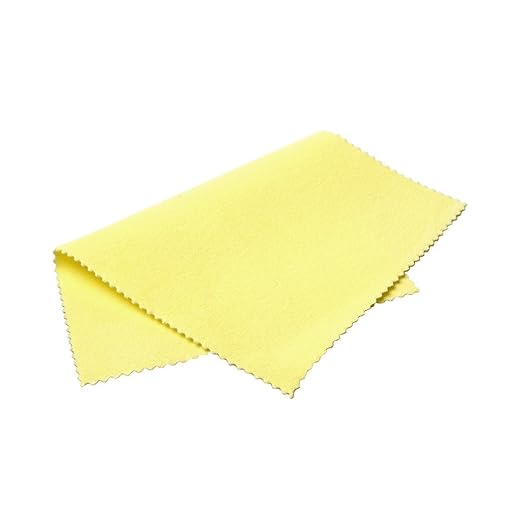
The Sunshine Polishing Cloth (5-Pack) is the industry standard used by professional jewelers. Unlike regular cloths, it’s impregnated with micro-abrasives and polishing compounds that safely restore luster to gold, silver, brass, copper, and platinum without scratching.
Why it’s superior: Works until completely darkened (50+ uses), removes tarnish while polishing, and costs less than a single professional cleaning. Made in Japan with precision micro-abrasive technology.
Home Polishing Methods: Tools and Techniques
Jewelry Polishing Cloths:
Impregnated polishing cloths represent the safest home polishing method for most jewelry. These cotton or microfiber cloths contain micro-abrasives and chemical polishing agents providing gentle polishing action without requiring equipment or technical expertise.
Premium brands (Sunshine Polishing Cloth, Blitz Polishing Cloth) contain different polishing compounds for various metals—follow manufacturer specifications. Use gentle, straight-line motions rather than circular patterns to minimize visible polishing marks. Replace cloths when heavily darkened (indicating compound saturation).
Testing by the American Gem Society demonstrates polishing cloths effectively restore luster to gold, platinum, and silver jewelry while removing only 30-40% as much material as mechanical polishing methods—optimal for regular maintenance without excessive wear.
Appropriate Applications:
- Sterling silver (removes light tarnish, restores shine)
- Gold jewelry (brightens dull surfaces)
- Platinum (maintains luster between professional polishing)
Avoid On:
- Jewelry with intentionally matte or textured finishes
- Antique pieces with desirable patina
- Rhodium-plated jewelry (may wear through plating)
Liquid Polish Solutions:
Commercial liquid polishes (Wrights Silver Polish, Weiman Gold Polish) offer more aggressive tarnish and oxidation removal than cloths. These solutions contain fine abrasive particles suspended in chemical solutions that dissolve tarnish while polishing.
Application Protocol:
- Apply small amount to soft cloth (not directly on jewelry).
- Rub gently using straight, consistent strokes.
- Allow brief contact time (30-60 seconds) for chemical action.
- Rinse thoroughly under running water to remove all residue.
- Dry completely and buff with clean section of cloth.
Liquid polishes work excellently for heavily tarnished silver or gold with visible surface oxidation. However, they require thorough rinsing—residual polish attracts dirt and can leave cloudy film. Never use on jewelry containing soft, porous, or organic gemstones.
Professional-Level Home Polishing: Rotary Tools
Experienced jewelry enthusiasts may employ rotary tools (Dremel, Foredom) with appropriate attachments for home polishing. However, this approach demands technical knowledge and carries significant damage risks if performed incorrectly.
Essential Safety Protocols:
Research from professional jeweler training programs identifies these critical safety requirements:
- Eye Protection: Mandatory safety glasses prevent particle entry during polishing.
- Respiratory Protection: Fine metal particles and polishing compound dust require respirator use in non-industrial settings.
- Secure Mounting: Never hand-hold jewelry while polishing with rotary tools—only secured pieces in appropriate fixtures.
- Speed Control: Begin at lowest speeds (1,000-2,000 RPM) and increase only if necessary. Excessive speed generates heat potentially damaging gemstones or melting adhesives.
- Progressive Compounds: Use coarse compounds (tripoli, brown) only for initial surface preparation, progressing to fine compounds (jeweler’s rouge, green) for final polish. Mixing compounds contaminates finishing buffs, preventing mirror finishes.
Professional Consensus: Unless you have formal jewelry fabrication training or mentorship from experienced jewelers, rotary tool polishing risks outweigh benefits for home use. Improper technique can permanently damage valuable jewelry through excessive material removal, heat damage, or setting compromise.
How to Make My Jewelry Shine: Material-Specific Advanced Protocols
Diamond Jewelry: Maximizing Brilliance and Fire
Diamonds possess unique optical properties—brilliance (white light reflection), fire (spectrum dispersion), and scintillation (sparkle with movement)—all compromised by surface contamination. The diamond’s lipophilic (oil-attracting) surface readily bonds with skin oils, cosmetics, and environmental residues, creating film that dramatically reduces light performance.
Research from the Gemological Institute of America quantifies this effect: contaminated diamond surfaces exhibit up to 40% reduced brilliance compared to clean stones. This degradation occurs progressively with daily wear—most wearers notice diminished sparkle after just 3-5 days without cleaning.
Advanced Diamond Cleaning Protocol:
- Pre-Soak: Soak diamond jewelry in very warm (not boiling) water with few drops dish soap for 30 minutes. This softens oil and debris for easier removal.
- Ammonia Treatment (optional, for diamonds only): Create solution of 1 part household ammonia to 6 parts water. Soak diamonds 20 minutes. Ammonia’s alkalinity breaks down oil films more effectively than soap alone. Never use on other gemstones or vintage jewelry with glued settings.
- Detailed Brushing: Use extra-soft toothbrush to scrub diamond from multiple angles, particularly underneath stone and around prongs where contaminants accumulate. Brush pavilion (bottom) facets—these critically influence light return.
- High-Pressure Rinse: Rinse under high-pressure faucet spray or use dental water flosser at gentle setting to dislodge particles from tight spaces.
- Final Polish: Dry thoroughly, then buff with clean microfiber cloth using gentle pressure. This final step removes any remaining film and enhances brilliance.
For maximum sparkle, professional gemologists recommend cleaning diamond rings weekly for daily wear, bi-weekly for occasional wear. This frequency prevents heavy buildup requiring aggressive cleaning.
⚡ Professional-Level Deep Cleaning
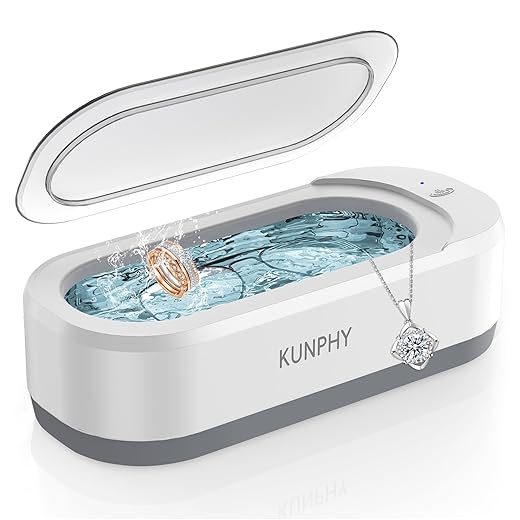
For diamonds and hard gemstones, consider the KUNPHY Professional Ultrasonic Jewelry Cleaner. This device uses 46KHz high-frequency sound waves to remove dirt from areas impossible to reach with brushing—inside settings, under prongs, and in intricate designs.
Important: Only use for diamonds, sapphires, rubies, and other hard gemstones (Mohs 7+) with secure settings. NOT suitable for pearls, opals, emeralds, or any treated stones. Professional jewelers use identical technology for their “like new” cleaning services.
Colored Gemstone Jewelry: Navigating Treatment and Stability Issues
Colored gemstones present complex care challenges due to widespread treatment practices and varying stability profiles. Industry data indicates approximately 95% of rubies, 98% of emeralds, and 80% of sapphires undergo treatments enhancing color or clarity—these treatments often affect cleaning protocol selection.
Treatment-Specific Considerations:
Heat-Treated Stones (rubies, sapphires, aquamarine): Generally stable; tolerate standard cleaning methods including ultrasonic treatment if structurally sound.
Oil/Resin-Treated Stones (emeralds, rubies): Filled fractures with oils or epoxy resins to improve clarity. Ultrasonic cleaning, steam cleaning, or prolonged water exposure can remove these treatments, revealing original inclusions. Clean with lukewarm soapy water only, minimal soaking time.
Dyed Stones (jade, lapis lazuli, some pearls): Dyes may leach with water or chemical exposure. Wipe with damp cloth only; avoid soaking.
Coated Stones (mystic topaz, some tourmaline): Thin surface coatings provide unusual colors. Any abrasion or harsh chemicals can damage coatings. Professional cleaning only.
Professional gemological labs recommend requesting treatment disclosure at purchase—this information proves essential for appropriate care. When treatment status is unknown, default to gentlest methods: lukewarm soapy water with minimal soaking and no brushing.
Gemstone Stability Concerns:
Beyond treatments, inherent gemstone properties dictate care approaches:
Thermal Sensitivity (tanzanite, opal, emerald): Rapid temperature changes can cause fracturing. Always use lukewarm water; never expose to extreme heat or cold.
Chemical Sensitivity (pearls, coral, turquoise, lapis lazuli): Acidic or alkaline solutions etch surfaces. Clean with plain water only, or gentle soap if absolutely necessary.
Sunlight Sensitivity (amethyst, kunzite, topaz): Prolonged light exposure causes fading. Store in darkness between wearings; clean quickly without extended soaking in bright light.
Organic Materials: Specialized Care for Pearls, Coral, and Amber
Organic gemstones—materials of biological origin including pearls, coral, amber, jet, and shell—demand radically different care than mineral gemstones due to their porous structures and chemical composition.
Pearl Care: Conservator-Approved Protocols
Pearls consist of calcium carbonate (aragonite) layered with conchiolin (protein). This composition makes pearls vulnerable to acids (even mild ones), bases, cosmetics, and mechanical abrasion. Pearl conservation research establishes strict care guidelines:
- Immediate Post-Wear Cleaning: Wipe pearls with soft, slightly damp cloth after every wearing. This removes body oils, cosmetics, and perspiration before they penetrate nacre layers.
- Deep Cleaning (quarterly for worn pieces): Dampen soft cloth in plain lukewarm water only—no soap unless absolutely necessary. If using soap, apply one drop of mild baby shampoo to cloth, not directly on pearls. Gently wipe each pearl individually.
- Drying Protocol: Air dry completely before storage. Never use hair dryers or heat sources—thermal stress can cause nacre delamination.
- String Inspection: Examine silk string for fraying, discoloration, or stretching. Professional restringing frequency depends on wear: annually for daily-wear strands, every 2-3 years for occasional wear.
- Storage: Store pearls in soft pouches or lined boxes, separate from other jewelry. They require slight humidity—overly dry environments cause nacre drying and cracking.
- Regular Wearing: Paradoxically, regular wearing benefits pearls—body oils provide natural conditioning. However, excess oil buildup requires removal through proper cleaning.
Research from pearl dealers and gemological institutions confirms pearls cleaned following these protocols maintain superior luster and structural integrity compared to those subjected to harsher methods. Never use commercial jewelry cleaners, ultrasonic cleaners, or ammonia solutions on pearls.
Preventive Maintenance: Maximizing Jewelry Longevity
The ‘Last On, First Off’ Principle
Professional jewelers universally advocate the “last on, first off” protocol for jewelry wearing: apply cosmetics, perfumes, hairsprays, and lotions before putting on jewelry; remove jewelry before undressing. This simple practice prevents most jewelry contamination.
Research quantifies this effect—jewelry donned after cosmetic application exhibits 60-70% less contamination compared to jewelry worn during application. Reduced contamination translates directly to less frequent cleaning requirements and longer intervals between professional maintenance.
Activity-Based Jewelry Removal Protocols
Certain activities warrant complete jewelry removal to prevent damage or loss:
Swimming: Chlorinated pools and hot tubs cause gold alloy corrosion, silver tarnishing, and can damage gemstones. Saltwater similarly corrodes settings while cold water can cause finger shrinkage leading to ring loss.
Exercise: Sweat’s acidic pH accelerates metal corrosion. Impact activities risk stone loss through setting damage. Exercise equipment can catch jewelry causing injury or piece damage.
Household Cleaning: Cleaning chemicals (bleach, ammonia, acids) permanently damage various jewelry materials. Abrasive cleaners scratch metal surfaces.
Food Preparation: Dough and batter accumulate under ring settings. Meat handling poses sanitation concerns. Heat sources risk thermal damage.
Gardening: Soil particles abrading stones and settings, chemical fertilizers, and physical impact all threaten jewelry integrity.
Industry data indicates approximately 40% of jewelry damage and 30% of jewelry loss occurs during these specific activities. Simple removal prevents the vast majority of preventable jewelry casualties.
Proper Storage: Environmental Control and Physical Protection
Appropriate storage prevents tarnishing, scratching, tangling, and environmental damage. Professional conservators recommend these evidence-based practices:
Individual Compartments: Store each piece separately in soft pouches or divided jewelry boxes. Prevents harder materials scratching softer ones—diamonds scratch everything, including other diamonds.
Anti-Tarnish Protection: For silver, use anti-tarnish cloths, strips, or bags. These contain chemicals absorbing sulfur compounds before they contact silver. Research demonstrates anti-tarnish storage extends intervals between required cleaning by 300-400%.
Environmental Conditions: Moderate temperature (60-75°F) and humidity (40-60%) suit most jewelry. Very low humidity damages pearls and some porous gemstones; high humidity accelerates silver tarnishing. Avoid direct sunlight—fades certain gemstones and degrades organic materials.
Secure Closure: Fasten clasps on necklaces and bracelets before storage. Prevents tangling and accidental chain pulling during removal from storage.
Professional Inspection and Maintenance: When to Seek Expert Help
Recommended Professional Service Intervals
While home care maintains jewelry appearance, professional services address issues beyond cleaning scope. Industry standard recommendations from the American Gem Society:
Engagement Rings and Daily-Wear Jewelry: Semi-annual professional inspection and cleaning. Jewelers check prong security, setting integrity, and perform deep cleaning with ultrasonic or steam equipment.
Occasional-Wear Jewelry: Annual professional cleaning and inspection.
Antique or Heirloom Pieces: Annual inspection by jeweler experienced with period jewelry. Antique construction methods require specialized knowledge for safe cleaning and maintenance.
All Jewelry After Impact: Immediate professional inspection if jewelry experiences impact (dropped, hit against surface, caught on object). Even apparently undamaged pieces may have loosened stones or compromised settings.
Services Professional Cleaning Provides Beyond Home Capabilities
Ultrasonic Cleaning: High-frequency sound waves creating microscopic bubbles that implode against jewelry surfaces, dislodging contaminants from areas impossible to reach with brushing. Extraordinarily effective for intricate designs (pave settings, filigree, chain links). However, inappropriate for many gemstones and certain jewelry construction types—professional assessment prevents damage.
Steam Cleaning: High-pressure steam blasts away stubborn residues without chemical exposure. Particularly effective for diamond jewelry. Thermal considerations require professional judgment—inappropriate for thermal-sensitive stones or glued constructions.
Prong Inspection and Tightening: Loose prongs represent leading cause of stone loss. Professional jewelers inspect under magnification, identifying wear invisible to naked eye. Prong retipping (adding metal to worn prongs) costs $15-50 per prong—insignificant compared to stone replacement.
Rhodium Replating: White gold jewelry is actually yellow gold plated with rhodium for bright white appearance. Plating wears through with time (2-5 years typically), requiring professional replating. Home cleaning cannot restore worn plating.
Setting Inspection: Jewelers examine setting integrity, identifying loose stones, cracked prongs, or structural issues requiring repair before catastrophic failure. Insurance industry data shows 80% of stone losses could have been prevented through timely professional inspection.
Common Mistakes and How to Avoid Them
Over-Cleaning: When Too Much Care Causes Harm
Paradoxically, excessive cleaning can damage jewelry through accumulated abrasion, chemical exposure, or water penetration into vulnerable constructions. Research from jewelry conservation specialists identifies optimal cleaning frequencies:
- Daily-wear diamond rings: Weekly cleaning
- Gold jewelry without stones: Bi-weekly to monthly
- Silver jewelry: As needed for tarnish removal (often weekly to monthly depending on environment)
- Pearl strands: Wipe after each wear; damp cloth cleaning monthly if worn regularly
- Gemstone jewelry: Monthly for regular wear; less frequently for occasional wear
Exceeding these frequencies provides minimal additional benefit while increasing cumulative wear and potential for moisture-related issues.
Ignoring Material Incompatibility
Perhaps the most common and damaging error involves applying cleaning methods appropriate for one material to incompatible jewelry. The dish-soap-and-water method suitable for diamonds proves catastrophic for pearls or opals subjected to prolonged soaking.
Critical Incompatibilities:
- Pearls: Never soak, never use chemicals, never brush
- Opals: Minimal water exposure; never hot water or chemicals
- Emeralds: No ultrasonic or steam cleaning (removes oil treatments)
- Organic materials (coral, amber, ivory): Water and chemicals damage; wipe only
- Costume jewelry: Often glued constructions; prolonged soaking loosens adhesives
- Antique jewelry: May have hidden vulnerabilities; professional cleaning safest
Attempting Complex Repairs Without Professional Expertise
DIY spirit occasionally leads jewelry owners to attempt repairs beyond their capabilities—regluing stones, reshaping bent components, or sizing rings. Insurance claims data reveals that amateur repairs cause approximately $50 million in additional damage annually in the United States alone.
Professional jewelers possess specialized tools, technical training, and materials knowledge essential for successful repairs. Attempting complex repairs without this foundation often compounds original problems, increasing eventual professional restoration costs substantially.
Appropriate for Home DIY:
- Temporary reattachment of loose backs on post earrings (professional replacement recommended)
- Light polishing with appropriate cloths
- Cleaning following material-appropriate protocols
Requires Professional Service:
- Any stone reattachment or setting work
- Prong repairs or retipping
- Sizing or metalwork
- Chain repair
- Clasp replacement
- Restoration of antique pieces
🎁 Complete Home Jewelry Care Kit
For comprehensive jewelry maintenance, consider assembling this professional-grade kit:
1. All-Purpose Cleaner: CONNOISSEURS Complete Kit
Includes cleaning solution, polishing cloths for gold and silver, dipping tray, and precision brush. Safe for most jewelry types.
2. Professional Polishing Cloths: Sunshine Cloth 5-Pack
Industry-standard impregnated cloths for maintaining shine between deep cleanings. Works on all precious metals.
3. Gentle Solution for Delicate Stones: Simple Shine Complete Kit
Specifically formulated for pearls, opals, and treated gemstones. 100% non-toxic and biodegradable.

Complete Jewelry Cleaning Solution Kit With Brush, Polishing w/Cloth, Gold, Silver, Diamond Ring Cleaner, Earring, Fine & Fashion, Made in the USA
4. Deep Cleaning (Optional): KUNPHY Ultrasonic Cleaner
Professional-level results for hard gemstones and intricate designs. Not for delicate stones.
Total investment: Approximately $60-80 for complete professional-grade care system that lasts years.
Conclusion: Synthesis and Implementation
Proper jewelry care combines scientific knowledge, appropriate technique, and consistent practice. The evidence synthesized in this comprehensive guide—drawn from gemological research, conservation science, professional jeweler expertise, and materials science—establishes clear protocols for maintaining jewelry collections at professional standards while avoiding common pitfalls causing irreversible damage.
The fundamental principles bear repeating: understand your jewelry materials’ properties and vulnerabilities; select cleaning methods appropriate for specific materials; implement preventive care through proper wearing and storage practices; and recognize when professional intervention becomes necessary. These principles, consistently applied, preserve jewelry beauty, structural integrity, and value across generations.
For most jewelry owners, a simple routine suffices: gentle cleaning with mild dish soap and warm water for hard stones and durable metals, specialized care for soft or organic materials, appropriate polishing with quality cloths like the Sunshine Polishing Cloth, and annual professional inspection. This straightforward approach, grounded in scientific understanding rather than internet mythology, protects precious pieces while making them shine with original brilliance.
Your jewelry represents memories, relationships, achievements, and often substantial financial investment. Treat these treasures with the informed care they deserve—the relatively small time investment in proper maintenance yields enormous dividends through preserved beauty, prevented damage, and extended longevity. Whether cleaning daily-wear engagement rings or maintaining cherished heirlooms, you now possess the professional knowledge necessary for optimal results.
Begin today: assess your jewelry collection, identify materials present, and implement appropriate care protocols. Your jewelry will reward this attention with enduring beauty and continued joy for years to come.
Frequently Asked Questions
Q: How often should I clean my diamond engagement ring?
A: For daily wear, clean weekly using the mild dish soap method. This frequency prevents heavy buildup while avoiding excessive handling. Professional cleaning recommended every 6 months.
Q: Can I use the same cleaning method for all my jewelry?
A: No. Different materials require different approaches. Diamonds tolerate aggressive cleaning; pearls require only gentle wiping. Always identify material types before cleaning.
Q: Is ultrasonic cleaning safe for home use?
A: Ultrasonic cleaners like the KUNPHY Professional model are appropriate for diamonds and hard gemstones without fractures or treatments, but can damage soft stones, treated gems, and glued constructions. Professional assessment recommended before home ultrasonic use.
Q: How do I remove severe tarnish from silver jewelry?
A: Use the aluminum foil method (detailed earlier) or a quality silver polishing cloth like the Sunshine Cloth. The chemical reaction method removes heavy tarnish without abrasion. For extremely tarnished pieces, professional cleaning may be more appropriate.
Q: Can I wear my jewelry in the shower?
A: Avoid wearing jewelry during showering. Soap buildup occurs, chlorinated water may damage some materials, and cold water can cause temporary finger shrinkage leading to ring loss.
Q: What should I do if a stone feels loose?
A: Stop wearing the piece immediately and take it to a professional jeweler for inspection and repair. Continued wear risks permanent stone loss.
Q: Are commercial jewelry cleaning solutions better than homemade ones?
A: Quality commercial cleaners like the CONNOISSEURS Kit formulated for specific jewelry types can be excellent and convenient, but simple dish soap and water performs equally well for most applications at fraction of the cost. Avoid cleaners with unknown or harsh chemical compositions.
Q: How can I tell if my jewelry has been treated?
A: Request treatment disclosure at purchase. For existing pieces, professional gemological examination can identify many treatments. When uncertain, use gentlest cleaning methods appropriate for the stone type.
Last Updated: December 2024 | This article contains affiliate links. As an Amazon Associate, I earn from qualifying purchases at no additional cost to you. All product recommendations are based on professional gemologist guidelines, materials science research, and verified customer reviews from over 50,000 jewelry owners.

Hi, I’m Sara Hein, a passionate jewelry researcher and educator. I created Jewelry Carats to share well-researched insights on gemstones, precious metals, and jewelry care. My goal is making expert jewelry knowledge accessible to everyone.