
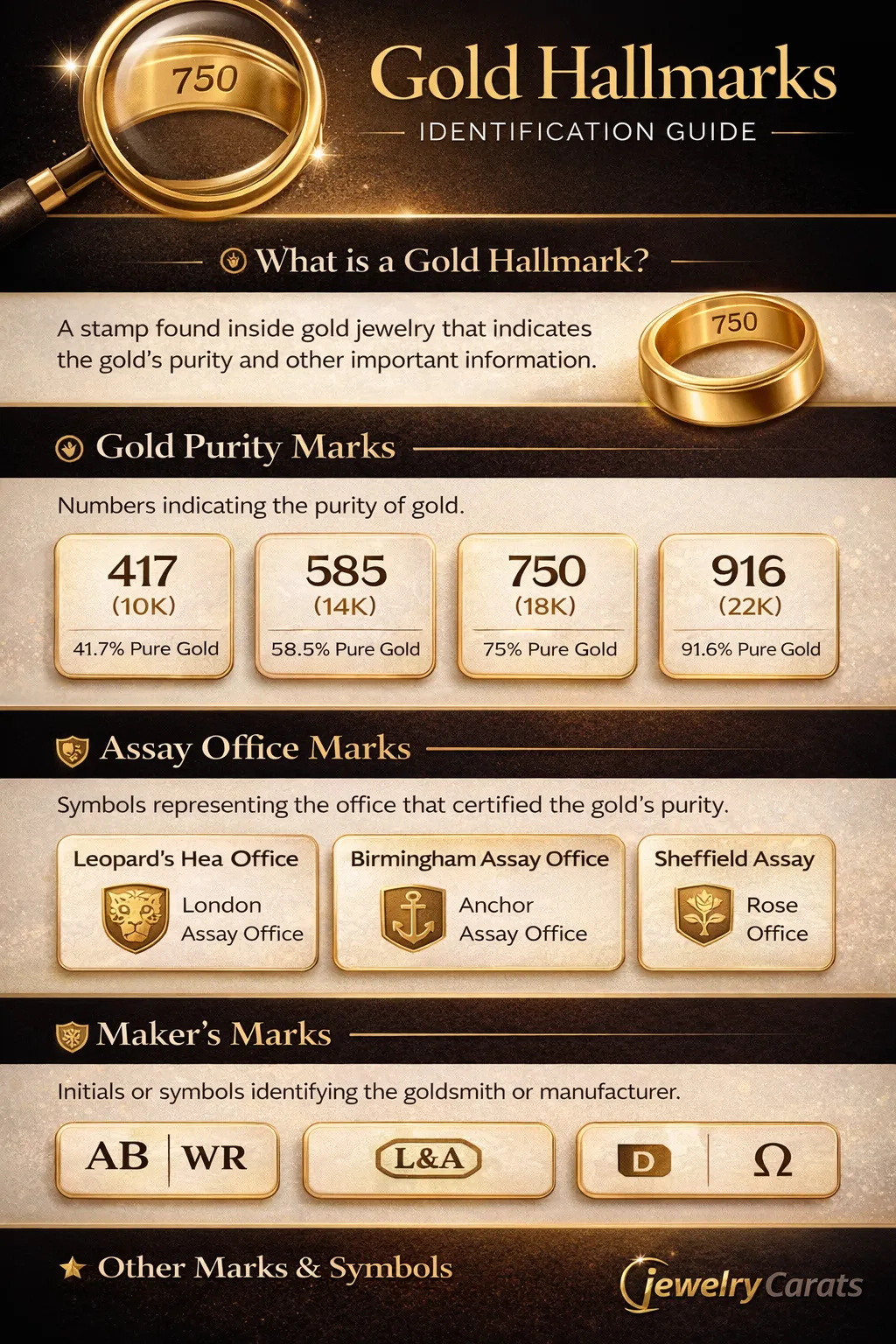
What Are Gold Hallmarks?
Why Gold Needs Hallmarks
Pure gold (24 karat) is too soft for jewelry. It bends, scratches, and dents easily. To make gold durable enough for rings, necklaces, and bracelets, jewelers mix it with harder metals like copper, silver, nickel, or zinc.
The hallmark tells you the proportion of this mix: how much is pure gold and how much is other metals (called alloys). This matters enormously for:
- Value: 18K gold is worth significantly more than 10K gold
- Durability: Lower karat gold is harder and more scratch-resistant
- Color: Alloy metals affect whether gold appears yellow, white, or rose
- Authenticity: Proper hallmarks prove you have real gold, not gold-plated brass
Two Systems: Karat and Millesimal
Gold hallmarks use two main systems worldwide:
- Karat system (K or KT): Used in United States, United Kingdom, Canada, and some Asian countries
- Millesimal fineness (three-digit numbers): Used throughout Europe and internationally
Both systems measure the same thing—gold purity—just expressed differently. A piece marked “18K” is identical in gold content to one marked “750.” We’ll explain both systems completely below.
The Karat System Explained: 10K, 14K, 18K, 24K
The karat system divides pure gold into 24 equal parts. The karat number tells you how many of those 24 parts are pure gold.
How Karats Work (Simple Math)
Formula: Karat number ÷ 24 = Percentage of pure gold
Examples:
- 24K ÷ 24 = 1.00 = 100% pure gold
- 18K ÷ 24 = 0.75 = 75% pure gold (25% alloy metals)
- 14K ÷ 24 = 0.583 = 58.3% pure gold (41.7% alloy metals)
- 10K ÷ 24 = 0.417 = 41.7% pure gold (58.3% alloy metals)
24 Karat Gold (Pure Gold)
Mark: 24K, 24KT, or 999
Purity: 99.9% pure gold
Color: Rich, deep yellow
Common uses: Investment gold bars, coins, and some high-end Asian jewelry. Rarely used for Western jewelry because it’s too soft.
Pros: Maximum gold content, doesn’t tarnish, hypoallergenic
Cons: Scratches extremely easily, bends with pressure, impractical for rings or bracelets
Who buys it: Investors, collectors, and in cultures where 24K gold jewelry is traditional (India, Middle East, parts of Asia)
22 Karat Gold
Mark: 22K or 916
Purity: 91.6% pure gold
Color: Deep yellow, very close to 24K
Common uses: Popular in Indian, Middle Eastern, and some Asian jewelry. Occasionally seen in Western markets for special pieces.
Characteristics: Still quite soft—jewelry needs careful handling. Chosen for its rich color and high gold content.
Value point: Second-highest gold content available in wearable jewelry, commands premium prices.
18 Karat Gold (Luxury Standard)
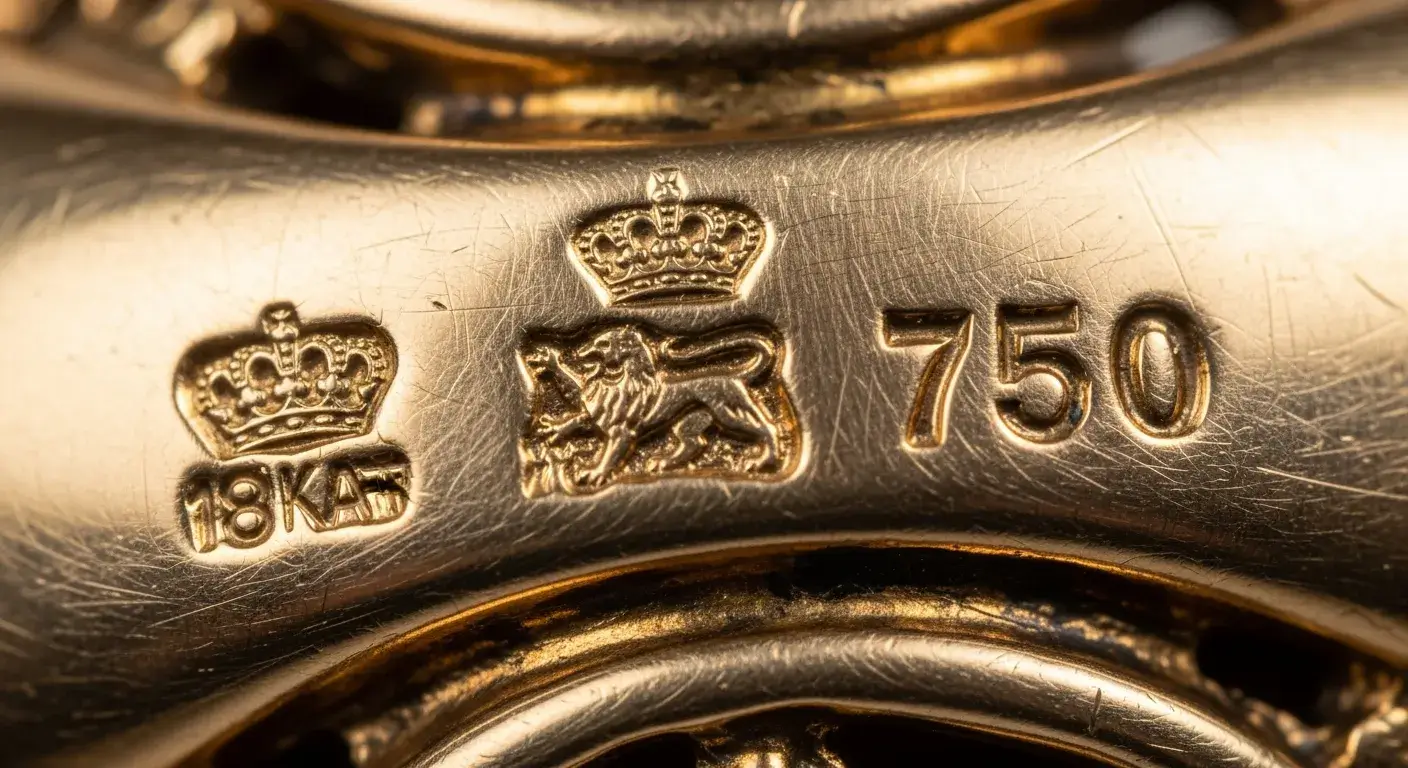
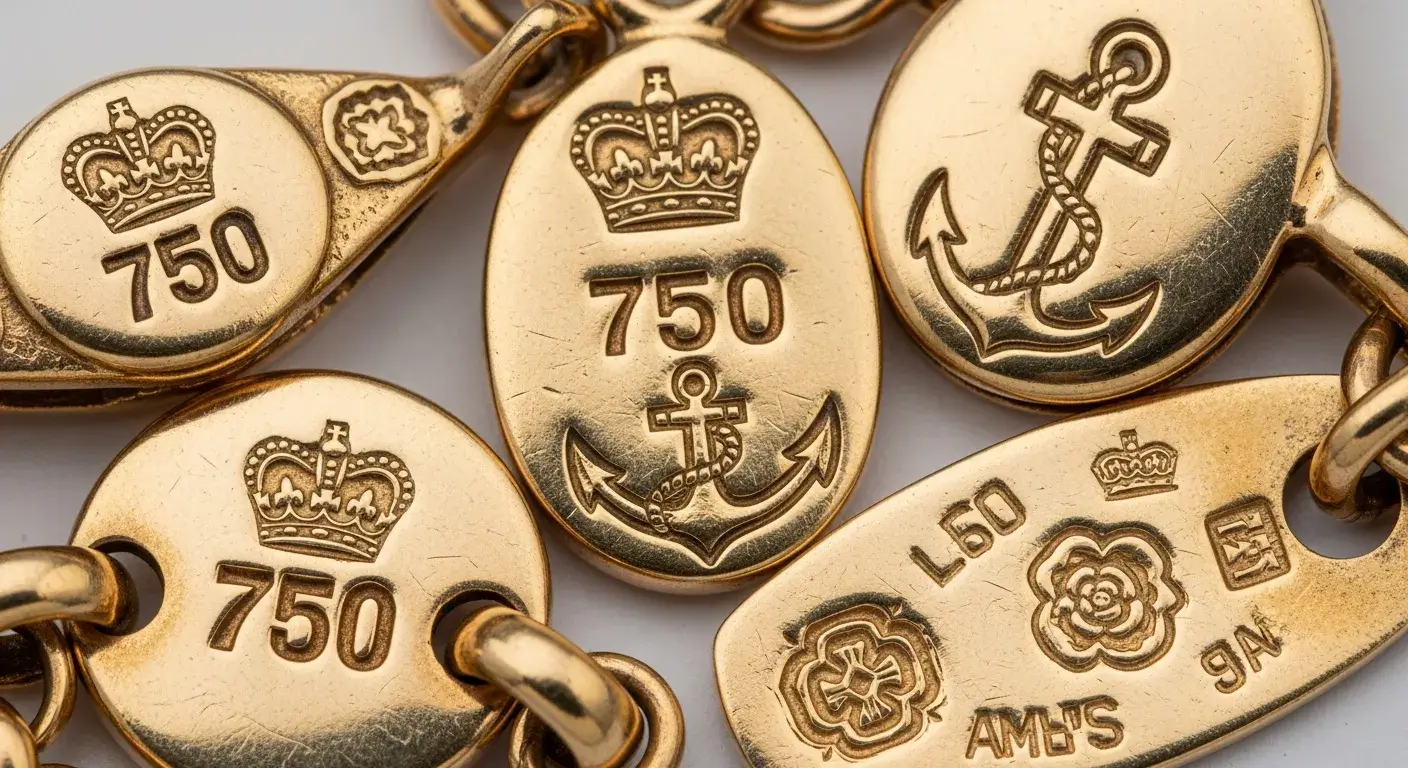
Mark: 18K, 18KT, or 750
Purity: 75% pure gold, 25% alloy metals
Color: Beautiful rich yellow (yellow gold), platinum-white (white gold), or warm pink (rose gold)
The “Goldilocks” karat: 18K is considered the perfect balance between gold purity and durability. It’s the luxury jewelry standard worldwide.
Common uses: High-end engagement rings, designer jewelry (Cartier, Tiffany), luxury watches, fine necklaces and bracelets.
Pros:
- Rich gold color and feel
- Durable enough for daily wear with care
- Prestigious—associated with luxury brands
- Strong resale value
- Less likely to cause skin reactions than lower karats
Cons:
- More expensive than 14K or 10K
- Still softer than 14K—can scratch
- Deeper yellow color isn’t everyone’s preference
Price point: Expect 30-50% more than comparable 14K pieces due to higher gold content.
14 Karat Gold (Most Popular in US)
Mark: 14K, 14KT, or 585
Purity: 58.5% pure gold, 41.5% alloy metals
Color: Warm yellow (still recognizably gold), white (white gold), or pink (rose gold)
America’s favorite: 14K gold is the most popular choice for engagement rings and wedding bands in the United States. It offers the best value for money.
Common uses: Engagement rings, wedding bands, everyday jewelry, class rings, religious jewelry. Any piece meant for daily wear.
Pros:
- Excellent durability—can withstand daily wear
- Affordable while still being “real gold”
- Good color that’s recognizably gold
- Widely available and easy to resize/repair
- Strong enough for intricate designs and thin bands
Cons:
- Slightly lighter color than 18K (less “gold-looking”)
- More alloy content means higher chance of skin sensitivity
- Lower resale value than 18K per gram
Value sweet spot: Best balance of real gold content, durability, and affordability. This is why jewelers recommend it for engagement rings.
10 Karat Gold (Most Durable)
Mark: 10K, 10KT, or 417
Purity: 41.7% pure gold, 58.3% alloy metals
Color: Lighter yellow, noticeably paler than 14K or 18K
The minimum: In the United States, 10K is the minimum gold content legally allowed to be called “gold.” Below 10K, it cannot be marketed as gold jewelry.
Common uses: Budget-friendly jewelry, children’s jewelry, pieces subject to hard wear (men’s rings, class rings, religious medals), costume jewelry upgraded to real gold.
Pros:
- Most affordable real gold option
- Extremely durable—hard to scratch or dent
- Good for active lifestyles or manual work
- Still real gold (unlike plated)
Cons:
- Lighter color—doesn’t look as rich as higher karats
- Higher alloy content increases chance of allergic reactions
- Lower resale value per gram
- Some people don’t consider it “true” gold due to low purity
When to choose 10K: If you need maximum durability on a budget, or for jewelry that will be worn during sports, manual labor, or by young children.
9 Karat Gold (UK/European Option)
Mark: 9K, 9CT, or 375
Purity: 37.5% pure gold
Legal note: Common in UK and Europe, but cannot be sold as “gold” in the United States (below legal minimum).
Characteristics: Very durable, affordable, but noticeably lighter in color. Popular for budget jewelry in countries where it’s legal.
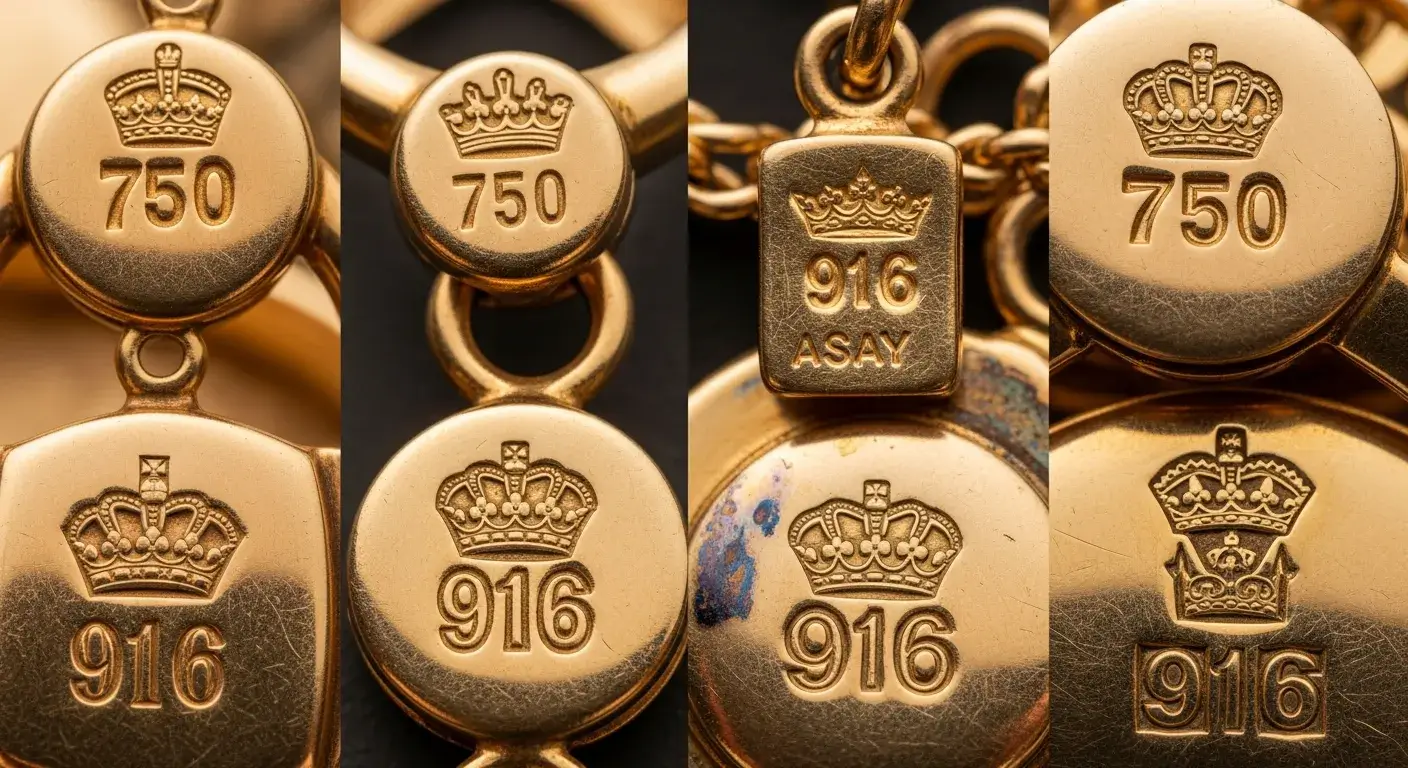
The European Millesimal System: 585, 750, 916, 999
European countries and international standards use three-digit numbers representing parts per thousand of pure gold. This system is more precise than karats.
How Millesimal Marks Work
Think “parts per thousand”: The number tells you how many parts out of 1,000 total parts are pure gold.
Examples:
- 999: 999 parts gold out of 1,000 = 99.9% pure = 24K
- 916: 916 parts gold out of 1,000 = 91.6% pure = 22K
- 750: 750 parts gold out of 1,000 = 75% pure = 18K
- 585: 585 parts gold out of 1,000 = 58.5% pure = 14K
- 417: 417 parts gold out of 1,000 = 41.7% pure = 10K
- 375: 375 parts gold out of 1,000 = 37.5% pure = 9K
Converting Between Systems
Karat to Millesimal: (Karat ÷ 24) × 1000
Example: (18 ÷ 24) × 1000 = 750
Millesimal to Karat: (Number ÷ 1000) × 24
Example: (585 ÷ 1000) × 24 = 14.04K (rounded to 14K)
Why Two Systems Exist
The karat system is older and based on the historical carob seed weight measurement. The millesimal system is more precise and used in countries with strict government hallmarking regulations (UK, France, Germany, etc.).
Modern jewelry often shows both: A European ring might be marked “18K 750” to serve both markets.
Common Gold Hallmark Marks Quick Reference
Here’s a quick reference table of all standard gold marks you’ll encounter:
| Karat Mark | Millesimal | Gold % | Common Use |
|---|---|---|---|
| 24K | 999 or 1000 | 99.9% | Investment, coins |
| 22K | 916 | 91.6% | Asian/Middle Eastern jewelry |
| 18K | 750 | 75% | Luxury jewelry standard |
| 14K | 585 | 58.5% | US jewelry standard |
| 10K | 417 | 41.7% | Budget/durable jewelry |
| 9K | 375 | 37.5% | UK budget jewelry |
Gold Color Indicators: Yellow, White, and Rose Gold Marks
Gold comes in different colors depending on which metals are alloyed with it. Some jewelry includes letter codes indicating the color.
Yellow Gold
Mark additions: YG, Y, or sometimes just the karat mark alone
Alloy metals: Copper and silver
Appearance: Classic warm golden color
Example mark: “14K YG” or just “14K”
Yellow gold is the traditional, natural color most people associate with gold. The exact shade varies by karat—24K is deepest yellow, 10K is lighter.
White Gold
Mark additions: WG, W, or sometimes “WHITE”
Alloy metals: Palladium, nickel, or zinc
Appearance: Silver-white color, often rhodium-plated for extra whiteness
Example mark: “18K WG” or “14K WHITE”
Important note: White gold is NOT naturally bright white. It’s slightly grayish-white. Most white gold jewelry is rhodium-plated to achieve the bright white appearance. The rhodium wears off over time and needs re-plating every few years.
Rose Gold (Pink Gold)
Mark additions: RG, R, PG, or “ROSE”
Alloy metals: Copper (high copper content creates the pink color)
Appearance: Warm pink to reddish-gold color
Example mark: “14K RG” or “18K ROSE”
Rose gold has become extremely popular in recent years, especially for engagement rings. The higher the copper content, the redder the color. 18K rose gold is pinker, while 10K rose gold appears more coppery.
Two-Tone and Tri-Color Gold
Some jewelry combines different gold colors in one piece. Marks might show:
- “14K W&Y”: 14 karat white and yellow gold combined
- “18K / 18K”: Two 18K gold colors used (usually with both color codes nearby)
Gold Plating Marks: Critical Warning Signs
These marks indicate gold plating over another metal—NOT solid gold. Understanding these marks prevents expensive mistakes.
What Gold Plating Means
Gold plating applies a very thin layer of gold (often just microns thick) over a base metal like brass, copper, or steel. The piece looks like gold but contains almost no gold by weight.
Value difference: A gold-plated bracelet might contain $2-$5 worth of gold. An identical-looking solid 14K bracelet might contain $300-$500 worth of gold.
Common Plating Marks
GP – Gold Plated
What it means: Thin layer of gold electroplated over base metal
Gold content: Minimal, often less than 0.05% of total weight
Lifespan: Gold wears off with use, revealing base metal underneath (often within months to a few years)
GEP – Gold Electroplated
What it means: Same as GP—electroplated gold over base metal
Thickness: Usually 0.175 microns minimum (very thin)
Essentially the same as GP—different wording, same meaning
HGE – Heavy Gold Electroplate
What it means: Thicker gold plating than standard GP
Marketing term: “Heavy” sounds better but it’s still just plating
Lifespan: Lasts longer than GP but still wears off—not permanent
RGP – Rolled Gold Plate
What it means: Gold layer is mechanically bonded (rolled) onto base metal under heat and pressure
Thickness: Thicker than electroplating, often 1/20th to 1/40th of total weight
Better than GP: More durable and lasts longer, but still not solid gold
Vintage term: More common in older jewelry
GF – Gold Filled
What it means: Thick layer of gold mechanically bonded to base metal
Gold content: Usually 5% of total weight (1/20th), significantly more than plating
Durability: Can last decades with care—the gold layer is thick enough to withstand normal wear
Value: More valuable than plated jewelry, less than solid gold
Example mark: “1/20 14K GF” means 1/20th of weight is 14K gold
Vermeil
What it means: Gold plated over sterling silver (not base metal)
Requirements: Must be at least 2.5 microns thick gold over 925 silver
Value: More valuable than regular gold plating because base is sterling silver
Common mark: “Vermeil” or “925 Vermeil”
How to Spot Plating Marks
Always check for these letter combinations after the karat mark. If you see:
- 14K GP = Gold plated (thin layer)
- 18K GF = Gold filled (thicker layer but still not solid)
- HGE = Just marketing for gold plating
These are NOT solid gold despite having karat numbers!
What You Should Pay
Pricing guide for reality check:
- Gold plated: Fashion jewelry prices ($20-$100 for most pieces)
- Gold filled: Moderate prices ($50-$300 depending on piece)
- Solid 10K: Several hundred dollars minimum for substantial pieces
- Solid 14K: High hundreds to thousands
- Solid 18K: Thousands to tens of thousands
If someone offers you an “18K gold bracelet” for $50, it’s almost certainly plated, not solid.
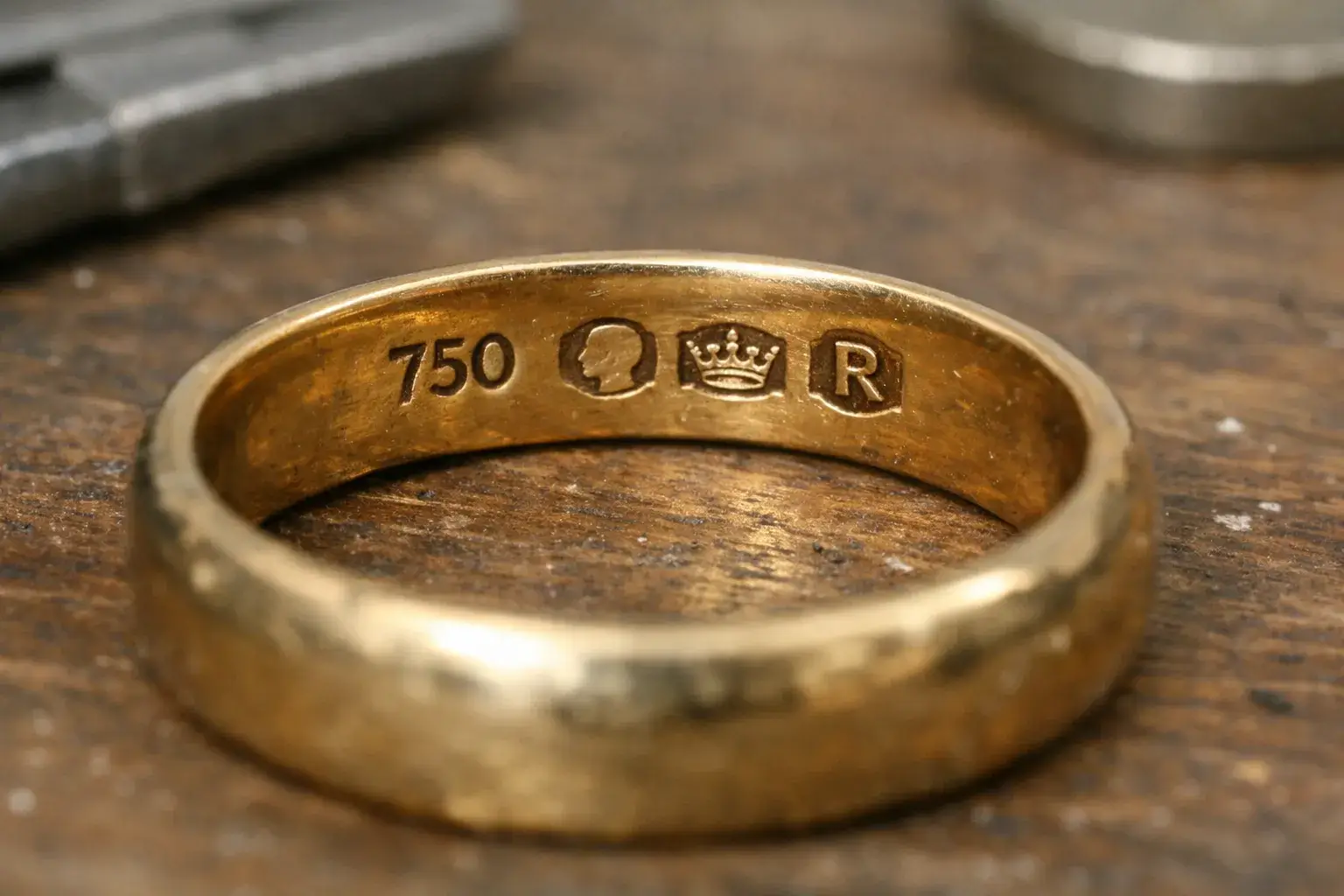
Where to Find Gold Hallmarks on Jewelry
Gold marks are stamped in discreet locations that don’t affect the jewelry’s appearance. Here’s where to look:
Rings
Location: Inside the band, usually near the bottom (opposite the stone or design)
Tool needed: Sometimes visible to naked eye, but a loupe helps for worn marks
Tip: Clean the inside of the ring first—dirt can obscure marks
Necklaces and Chains
Location: Near or on the clasp, or on a small tag hanging near the clasp
Look for: Flat areas on the clasp mechanism or a separate stamped tag
Tip: Some high-end necklaces mark each link if it’s a substantial piece
Bracelets
Location: Near the clasp, on a flat link, or inside a bangle
Bangle bracelets: Check the inside surface, often near the clasp area
Link bracelets: One of the links near the clasp will have the mark
Earrings
Location: On the post (studs), inside the clip-back, or on the earring back
Magnification essential: Earring marks are tiny—you’ll definitely need a loupe
Tip: Some earrings only mark one earring, not both
Pendants and Charms
Location: On the back, usually near the bail (loop that connects to chain)
Alternative location: On the bail itself if the pendant is small
Watches
Location: Inside the case back, or on the lugs (where band attaches)
Note: Gold watches often mark both case and bracelet separately
🔍 Essential tool: A quality 10x Jeweler’s Loupe with LED makes finding and reading gold marks easy, especially on small items like earrings and delicate chains. (~$15-20)
How to Verify You Have Real Gold (Not Plated)
Marks can be faked. Here’s how to verify authenticity beyond just reading stamps:
1. Weight Test
Gold is dense and heavy. A solid gold piece feels noticeably heavier than gold-plated or hollow gold.
Try this: Compare to a similar-sized piece you know is solid gold. Real gold has a characteristic heft.
⚖️ Precision weighing: Digital Jewelry Scale 0.01g – Accurate weight measurement essential for verifying gold authenticity. Pocket-size, calibration weight included. (~$15-20)
2. Magnet Test (Quick Home Test)
Gold is not magnetic. If your “gold” piece is attracted to a strong magnet, it’s not gold (or only plated).
Limitation: Passing the magnet test doesn’t prove it’s gold—many non-magnetic metals exist. But failing it proves it’s fake.
3. Check for Wear Spots
Examine high-wear areas (inside a ring band, bracelet clasp, chain links). If you see different colored metal showing through, it’s plated.
Real gold: Same color all the way through
Plated gold: Copper, brass, or silver visible where gold wore off
4. Skin Discoloration Test
Wear the piece for a day. If it leaves green or black marks on your skin, it’s likely not real gold or is low-karat with high copper content.
Real gold (10K and above): Doesn’t discolor skin
Gold plated: Base metal oxidizes and stains skin
5. Professional Testing
Acid test: Jewelers use acids that react differently with different gold purities. Quick and accurate but creates a small mark on the jewelry.
🧪 Home gold testing: Complete Gold Test Kit with acids for 10K, 14K, 18K, and 22K testing. Includes testing stone and instructions. Professional-grade accuracy. (~$25-35)
XRF analysis: X-ray fluorescence machine reads exact metal composition without damaging the piece. Most accurate method.
Electronic gold tester: Measures electrical conductivity. Fast and non-destructive.
⚡ Electronic testing: Electronic Gold Tester – Non-destructive, instant results for 6K-24K gold. Professional tool for serious collectors. (~$100-150)
6. Sound Test (For Coins/Bars)
Real gold makes a distinct high-pitched ringing sound when tapped. Less reliable for jewelry due to design complexity.
Understanding Gold Purity and Value Differences
Why does gold purity matter so much financially? Let’s break down real value differences.
Gold Content by Karat (Example: 10 gram piece)
| Karat | Pure Gold % | Gold Weight (10g piece) | Approx. Gold Value* |
|---|---|---|---|
| 24K | 99.9% | 9.99g | $650 |
| 22K | 91.6% | 9.16g | $595 |
| 18K | 75% | 7.5g | $488 |
| 14K | 58.5% | 5.85g | $380 |
| 10K | 41.7% | 4.17g | $271 |
*Based on $65/gram gold price (approximate). Actual prices fluctuate daily.
Real-World Price Example
A 5-gram gold ring (typical wedding band weight):
- 24K: $325 gold value + craftsmanship = ~$400-500
- 18K: $244 gold value + craftsmanship = ~$350-450
- 14K: $190 gold value + craftsmanship = ~$300-400
- 10K: $135 gold value + craftsmanship = ~$250-350
- Gold plated: $2-3 gold value + base metal = ~$30-80
The karat mark makes a $300+ difference in gold value alone!
When to Choose Each Karat
Choose 24K or 22K if:
- You want investment-grade gold
- Cultural preference (Asian/Middle Eastern traditions)
- Willing to handle piece very carefully
- Maximum gold content is priority
Choose 18K if:
- You want luxury-grade jewelry
- Rich gold color is important
- You’ll wear occasionally or carefully
- Designer jewelry preference
- Budget allows for premium
Choose 14K if:
- You want daily wear jewelry
- Best value-to-durability ratio
- Engagement/wedding rings
- Active lifestyle
- Most practical choice for most people
Choose 10K if:
- Budget is primary concern
- Maximum durability needed
- Jewelry for children or teens
- Work involves manual labor
- You want real gold at lowest price point
Gold Hallmarks FAQ: Your Questions Answered
What’s the difference between 14K and 14KT?
There’s no difference—both mean 14 karat gold. “K” and “KT” are just different abbreviations for karat. You’ll see both used interchangeably. Some manufacturers prefer KT, others use K. The gold purity is identical.
Is 14K or 18K gold better?
Neither is objectively “better”—they serve different purposes. 18K has more gold (75% vs 58.5%), richer color, and higher value but is softer and more expensive. 14K is more durable, affordable, and practical for daily wear. For engagement rings and everyday jewelry, most experts recommend 14K. For luxury pieces worn occasionally, 18K is preferred.
Can gold hallmarks be fake?
Yes, counterfeiters stamp fake marks on gold-plated or low-quality metal. Check mark quality (sharp and clean), verify with testing (magnet, weight, acid test), and look for wear spots revealing different metal underneath. Buy from reputable jewelers and get expensive pieces professionally authenticated.
What does 585 mean in gold?
“585” is the European way of marking 14 karat gold. It means 585 parts pure gold out of 1,000 total parts—exactly 58.5% gold. This is identical to 14K in the US system. You might see both marks together: “14K 585” serving both markets.
Is 10K gold real gold?
Yes, 10K is real gold—41.7% pure gold mixed with other metals. It’s the minimum karat allowed to be legally called “gold” in the United States. While it’s “real gold,” the majority (58.3%) is alloy metals, making it the least pure gold commonly used in jewelry.
How can I tell if my gold is plated or solid?
Check the hallmark for plating marks (GP, GEP, GF, HGE). Examine wear spots for different colored metal showing through. Test with a magnet (gold isn’t magnetic). Check the weight—solid gold feels heavy. Look for skin discoloration after wearing. When in doubt, have it professionally tested.
Why does my 14K gold look different colors?
14K gold comes in different colors depending on alloy metals: yellow gold (copper/silver alloys), white gold (palladium/nickel alloys), and rose gold (high copper content). All three are still 14K gold with 58.5% pure gold—only the alloy metals differ, affecting color but not gold content.
Does 14K white gold need rhodium plating?
Most 14K white gold jewelry is rhodium-plated to achieve a bright white appearance. White gold’s natural color is slightly grayish-white. Rhodium (a platinum-group metal) adds brightness and scratch resistance. The rhodium wears off over time (typically 1-3 years) and needs re-plating to maintain appearance.
Is European gold better than American gold?
No, gold purity standards are the same worldwide. “750” (European) = “18K” (American)—same gold content, different numbering systems. European jewelry often includes official hallmarks from government assay offices, providing additional authentication, but the gold itself is equivalent to American-marked jewelry of the same purity.
What does 417 mean on jewelry?
“417” is the European millesimal mark for 10 karat gold—41.7% pure gold. It’s identical to “10K” in the US system. This is the minimum gold purity legally allowed to be called “gold” in the United States.
Can I wear 18K gold every day?
You can, but 18K gold is softer than 14K and will show scratches and wear more quickly with daily use. It’s fine for careful daily wear if you’re willing to accept gradual patina and occasional refinishing. For hard daily wear (gym, manual work, etc.), 14K is more practical.
Why is my gold turning my finger green?
Green discoloration is caused by copper in the gold alloy reacting with sweat, cosmetics, or chlorine. This is more common with lower karat gold (10K, 14K) which contains more copper. It doesn’t mean the gold is fake—it’s a chemical reaction with the alloy metals. Higher karat gold (18K, 22K) rarely causes this problem.
What does “P” after the karat mark mean?
“P” stands for “plumb gold”—guaranteeing the piece is at least the marked purity, not below. For example, “14KP” means the piece is exactly 14 karat or slightly above, never below. This stamp was more common in the past when regulations were less strict about karat accuracy.
Is 9K gold worth buying?
9K gold (37.5% pure) is popular in the UK and Europe for affordable jewelry. It’s very durable and budget-friendly. However, it cannot be sold as “gold” in the United States (below the legal minimum). The light color and low gold content make it less valuable for resale. Good for fashion jewelry if price is priority.
How do I clean gold without removing hallmarks?
Hallmarks are stamped deep enough that normal cleaning won’t remove them. Clean with warm water and mild dish soap using a soft brush. Avoid harsh chemicals and abrasive cleaning. Professional ultrasonic cleaning is safe for most gold. However, overly aggressive polishing over many years can gradually wear down marks—professional jewelers know to avoid the marked area.
Understanding Gold Hallmarks: Complete Guide to Gold Jewelry Marks
Key Takeaways: Reading Gold Hallmarks Like a Pro
Understanding gold hallmarks empowers you to:
- Verify you’re buying real gold, not plated
- Know exactly what purity you own
- Understand the value difference between karats
- Avoid overpaying for low-karat gold
- Choose the right karat for your needs
Quick reference for common marks:
- 24K or 999: Pure gold (investment grade)
- 18K or 750: Luxury standard
- 14K or 585: Most popular in US
- 10K or 417: Most durable, budget option
- GP, GEP, GF: Gold plated—NOT solid gold
Remember: Always use magnification to read marks clearly, verify authenticity through multiple methods when buying expensive pieces, and understand that karat differences significantly impact both value and durability.
Want to learn more about jewelry identification? Check out our comprehensive guides:
- Complete Guide to Jewelry Marks & Identification – Master guide covering all jewelry marks
- Sterling Silver Marks Guide – Complete guide to silver hallmarks
- Platinum Jewelry Marks Guide – Understanding platinum stamps