
Affiliate Disclosure: As an Amazon Associate I earn from qualifying purchases at no additional cost to you.
Complete Beginner’s Tutorial
Introduction: Your Journey Into Jewelry Making Begins Here
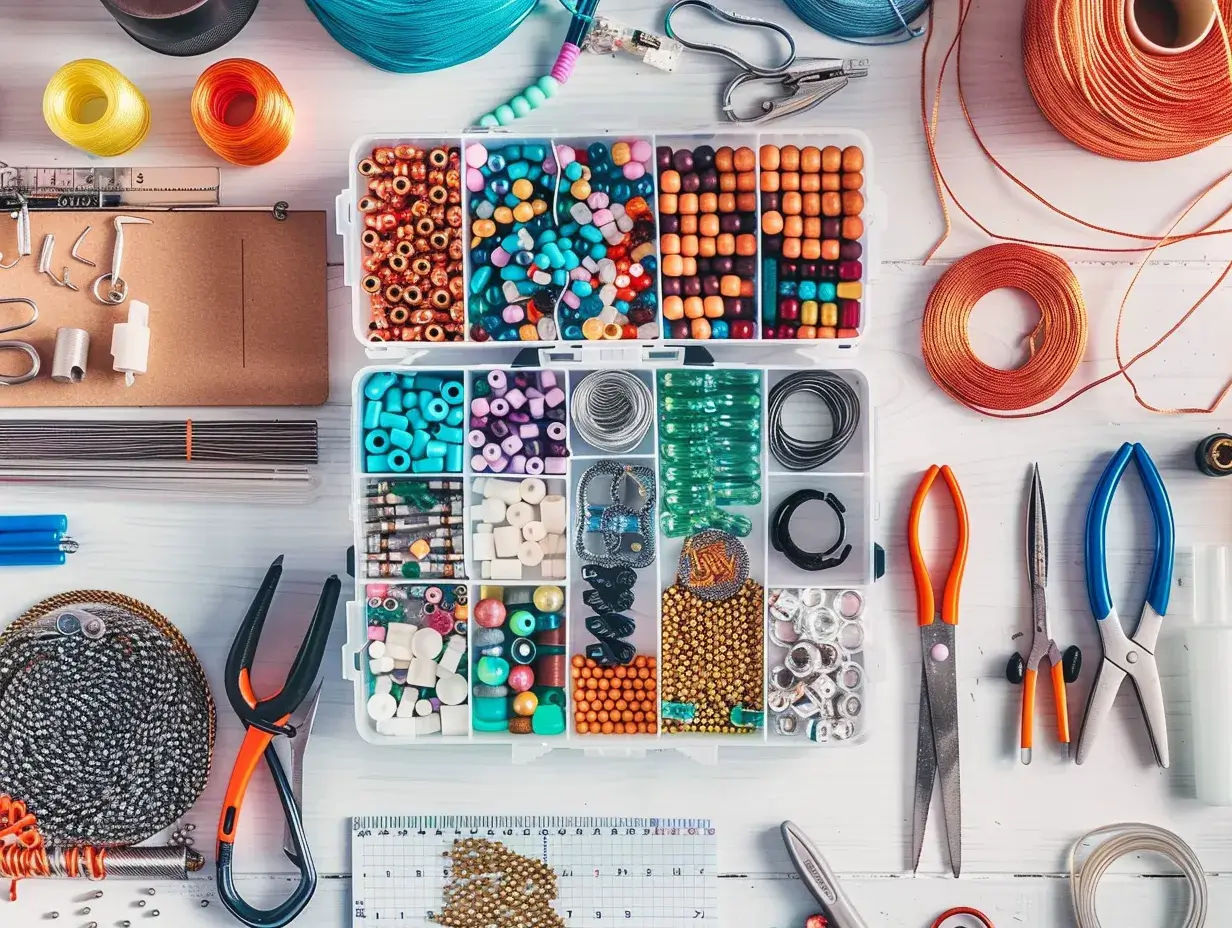
Creating handmade jewelry transforms wire, beads, and findings into wearable art reflecting your unique style. Whether crafting gifts for loved ones, building a small business, or exploring a rewarding creative hobby, jewelry making offers accessible artistry requiring minimal investment yet delivering profound satisfaction.
The journey from absolute beginner to confident jewelry maker doesn’t demand years of training or expensive equipment. With essential tools, quality materials, and proven techniques, you’ll create professional-looking pieces within hours. This comprehensive guide provides everything needed: tool selection, material understanding, workspace setup, and three complete beginner projects with step-by-step instructions.
Unlike vague tutorials assuming prior knowledge, this guide starts from zero. We explain why each tool matters, which materials work best for learning, and how to avoid common beginner frustrations. You’ll master fundamental techniques through hands-on projects: a simple wire bracelet, a beaded necklace, and wire-wrapped earrings. Each project builds skills progressively, ensuring success at every stage.
By article’s end, you’ll possess both theoretical knowledge and practical experience creating three finished jewelry pieces. More importantly, you’ll understand principles enabling you to design and execute original creations confidently. Your jewelry making adventure starts now.
Essential Tools for Jewelry Making
The Three Must-Have Tools (Foundation Set)
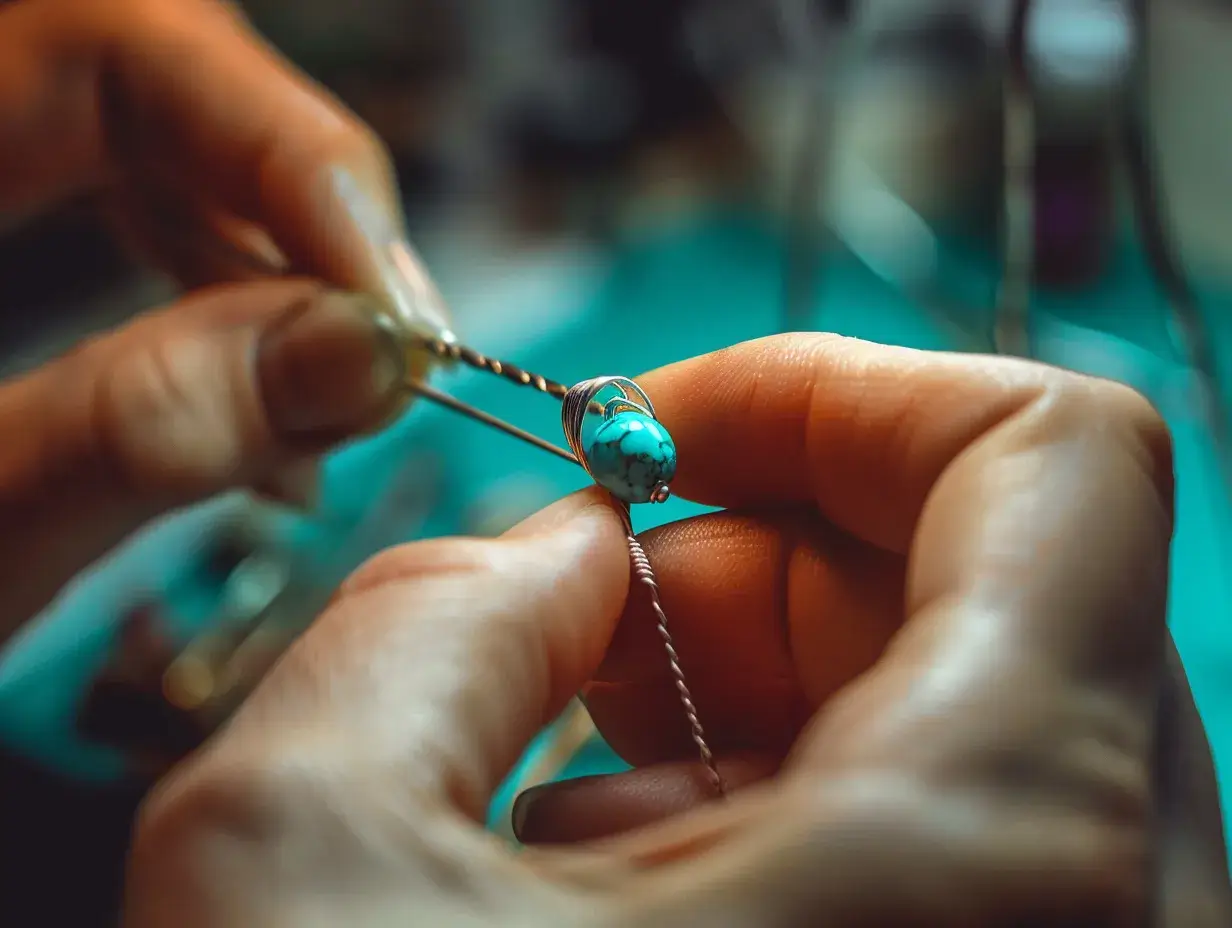
Every jewelry maker, from beginner to master craftsperson, relies on three fundamental tools. These form your essential toolkit:
1. Round-Nose Pliers
Round-nose pliers feature two smooth, tapered cylindrical jaws creating perfect loops and curves in wire. The graduated taper (thick at handle, thin at tip) allows multiple loop sizes from a single tool. Essential for: making jump rings, creating eye loops on headpins/eyepins, forming wire-wrapped loops, bending decorative spirals.
2. Chain-Nose Pliers (Flat-Nose Pliers)
Chain-nose pliers have flat, smooth inner jaws tapering to fine points. This design enables gripping small components without slipping while accessing tight spaces. Uses include: opening/closing jump rings properly, holding wire while wrapping, tucking wire ends securely, flattening crimp beads, straightening kinked wire.
3. Flush Wire Cutters
Quality flush cutters leave one side of cut wire nearly flat (flush), eliminating sharp points requiring filing. The angled blade design provides clean cuts through soft wire up to 18-gauge. Used for: trimming excess wire after wrapping, cutting headpins/eyepins to length, preparing wire lengths for projects, cutting soft beading wire.
🔧 Complete Beginner Tool Set
WORKPRO 7-Piece Jewelry Making Pliers Set
- ✓ All 3 essential tools plus 4 specialized pliers
- ✓ Round-nose, chain-nose, bent-nose, flat-nose pliers
- ✓ Diagonal wire cutters + nylon-jaw pliers (no marking)
- ✓ Wire looping plier for consistent loops
- ✓ Forged carbon steel – rust-resistant
- ✓ Ergonomic soft-grip handles reduce fatigue
- ✓ Includes carrying pouch + practice brass ring
- ✓ Perfect for beginners AND experienced makers
Why this set: Provides complete toolkit for under $25, eliminating need to purchase individual tools. High-quality construction ensures these pliers last years, not months. Nylon-jaw pliers prevent wire scratching – crucial for precious metals later.
Specialized Tools That Make Projects Easier
Wire Looping Tool
Creates perfectly uniform loops in one step – particularly valuable for making multiple earrings or chain links requiring consistent sizing. Not essential initially but dramatically improves efficiency and appearance once basic loop-making is mastered.
Crimping Pliers
Specifically designed for securing crimp beads without crushing beading wire. Standard pliers flatten crimps creating sharp edges; crimping pliers fold them into rounded, secure shapes. Essential for professional-looking strung jewelry (necklaces, bracelets).
Bent-Nose Pliers
Similar to chain-nose but with 45° angled tips providing better visibility when working in tight spaces. Excellent for tucking wire ends, detailed wire-wrapping, and reaching areas straight pliers can’t access comfortably.
Nylon-Jaw Pliers
Smooth nylon-coated jaws straighten wire and form gentle curves without scratching or marking metal surfaces. Invaluable when working with sterling silver, gold-filled, or any wire where surface perfection matters.
Materials: Understanding Wire, Beads, and Findings
Wire Basics: Gauge, Hardness, and Metal Types
Understanding Wire Gauge
Wire gauge measures thickness using AWG (American Wire Gauge) system – counterintuitively, larger numbers indicate thinner wire:
- 16-gauge: Thick, structural wire – requires significant force to bend
- 18-gauge: Medium-thick, holds shape well, good for bangles/rings
- 20-gauge: IDEAL FOR BEGINNERS – manageable yet sturdy
- 22-gauge: Slightly thin, excellent for wrapping and delicate work
- 24-gauge: Thin, breaks easily, for experienced makers only
- 26-28-gauge: Very thin, decorative wrapping wire
Wire Hardness Explained
- Dead-soft: Easily manipulated, bends with minimal force – best for learning
- Half-hard: Moderate stiffness, holds shape after forming – good for structural elements
- Hard: Very stiff, springs back when bent – advanced users only
Metal Types for Practice and Projects
Copper Wire: Perfect beginner choice – inexpensive ($8-12 per large spool), forgiving, develops beautiful patina, behaves similarly to precious metals. Practice extensively with copper before investing in expensive materials.
Silver-Plated Wire: Copper core with silver coating – affordable silver appearance ($12-18), good for gift-quality projects, coating wears with heavy manipulation.
Sterling Silver: 92.5% pure silver – professional material ($25-40+ per ounce), doesn’t tarnish quickly, ideal for selling pieces, expensive for practice work.
Gold-Filled Wire: Thick gold layer bonded to brass core – looks like solid gold ($30-50+), durable, tarnish-resistant, cost-effective alternative to solid gold.
🎨 Practice Wire Collection
Benecreat 18/20/22 Gauge Copper Wire Set
- ✓ Three essential gauges for complete learning
- ✓ 66 feet total (22 feet per gauge)
- ✓ Dead-soft temper – beginner-friendly
- ✓ Develop beautiful patina finish naturally
- ✓ Practice extensively without cost concerns
Beads: Types, Sizes, and Selection
Glass Beads: Affordable, consistent sizing, huge color range. Czech glass beads offer exceptional quality and unique finishes. Fire-polished beads provide brilliant sparkle.
Semi-Precious Stone Beads: Natural gemstones (amethyst, turquoise, jade, agate) – each unique, beautiful variations, higher price point justified by quality and appeal.
Crystal Beads: Machine-cut precision facets creating maximum light reflection. Swarovski crystals set industry standard but Chinese crystals offer good value for learning.
Seed Beads: Tiny uniform beads perfect for intricate beadwork, spacers, and decorative details. Japanese seed beads (Miyuki, Toho) provide superior consistency.
Bead Sizing:
- Measured in millimeters (mm)
- 4mm: Small accent beads
- 6-8mm: Standard bracelet/necklace beads
- 10-12mm: Focal/statement beads
- 14mm+: Large centerpiece beads
💎 Complete Bead Starter Collection
Glass Bead Assortment – 48 Colors, 8mm
- ✓ 1,300+ pieces in organized storage box
- ✓ 48 different colors + crystal varieties
- ✓ Uniform 8mm size – perfect for learning
- ✓ Complete bracelet projects included
- ✓ Enough beads for 20-30 beginner projects
Findings: The Hardware of Jewelry
Findings are small metal components connecting, securing, and finishing jewelry pieces:
Jump Rings: Small circular wire rings opened/closed to connect components. Available in multiple sizes (4mm-10mm common). Always use two pliers to open sideways – never pull apart creating weak spots.
Clasps:
- Lobster claw: Most popular, secure, easy to operate
- Spring ring: Compact, lighter weight, slightly harder to use
- Toggle: Decorative, easy one-handed closure, requires loop balance
- Magnetic: Easiest for arthritis/limited dexterity, less secure
Headpins and Eyepins:
Straight wire pieces with flat/ball head (headpin) or pre-formed loop (eyepin). Thread beads onto pin, create wire loop at top, trim excess. Foundation of most dangling earring designs.
Crimp Beads and Tubes:
Small metal cylinders securing flexible beading wire. Crimp beads (round) or crimp tubes (tubular) crushed with pliers to grip wire permanently. Essential for strung necklaces/bracelets.
Earring Hooks:
Pre-made ear wires in various styles – French hooks (most common), lever-backs (secure), posts with loops, kidney wires. Hypoallergenic materials (surgical steel, niobium, titanium) important for sensitive ears.
🔗 Complete Findings Starter Pack
KUUQA Jewelry Findings Assortment Kit
- ✓ 1,200+ pieces in organized storage case
- ✓ Jump rings (multiple sizes), lobster clasps, crimp beads
- ✓ Headpins, eyepins, ear hooks, spacer beads
- ✓ Ribbon ends, bead caps, cord ends included
- ✓ Everything needed for 30+ complete projects
- ✓ Silver-tone finish – professional appearance
Workspace Setup: Creating Your Jewelry Making Station
Essential Workspace Components
Work Surface: Dedicated space with good lighting prevents lost components and eye strain. Minimum 2’x2′ area sufficient. Bead mat or felt-lined tray prevents beads rolling away – absolute necessity.
Lighting: Jewelry making demands excellent visibility. Natural daylight best but inconsistent. LED task lamps with adjustable arms provide targeted bright light without heat. Minimum 500 lumens recommended; 800+ lumens ideal.
Storage/Organization: Tackle boxes, compartmented cases, or bead storage systems keep materials organized and accessible. Separate storage for different bead types, wire gauges, findings prevents wasted time searching.
Bead Board: Flocked design board with measurement markings and compartments. Layout entire project before assembly ensures proper sizing and balanced design. Grooved channels hold beads in sequence during design process.
📐 Design & Organization Essentials
1. Complete Jewelry Making Starter Kit
- ✓ Includes 34″ flocked bead board with measurements
- ✓ Tool kit: pliers, scissors, pins, tweezers
- ✓ Silver findings box: clasps, jump rings, ribbon ends
- ✓ Zippered tool case keeps everything organized
- ✓ All-in-one solution saves 30% vs buying separately
2. Bead Mat – Non-Slip Work Surface
- ✓ Soft flocked surface prevents bead rolling
- ✓ High-visibility color shows small components clearly
- ✓ Portable, folds for storage
Project 1: Simple Wire-Wrapped Bracelet
What You’ll Learn
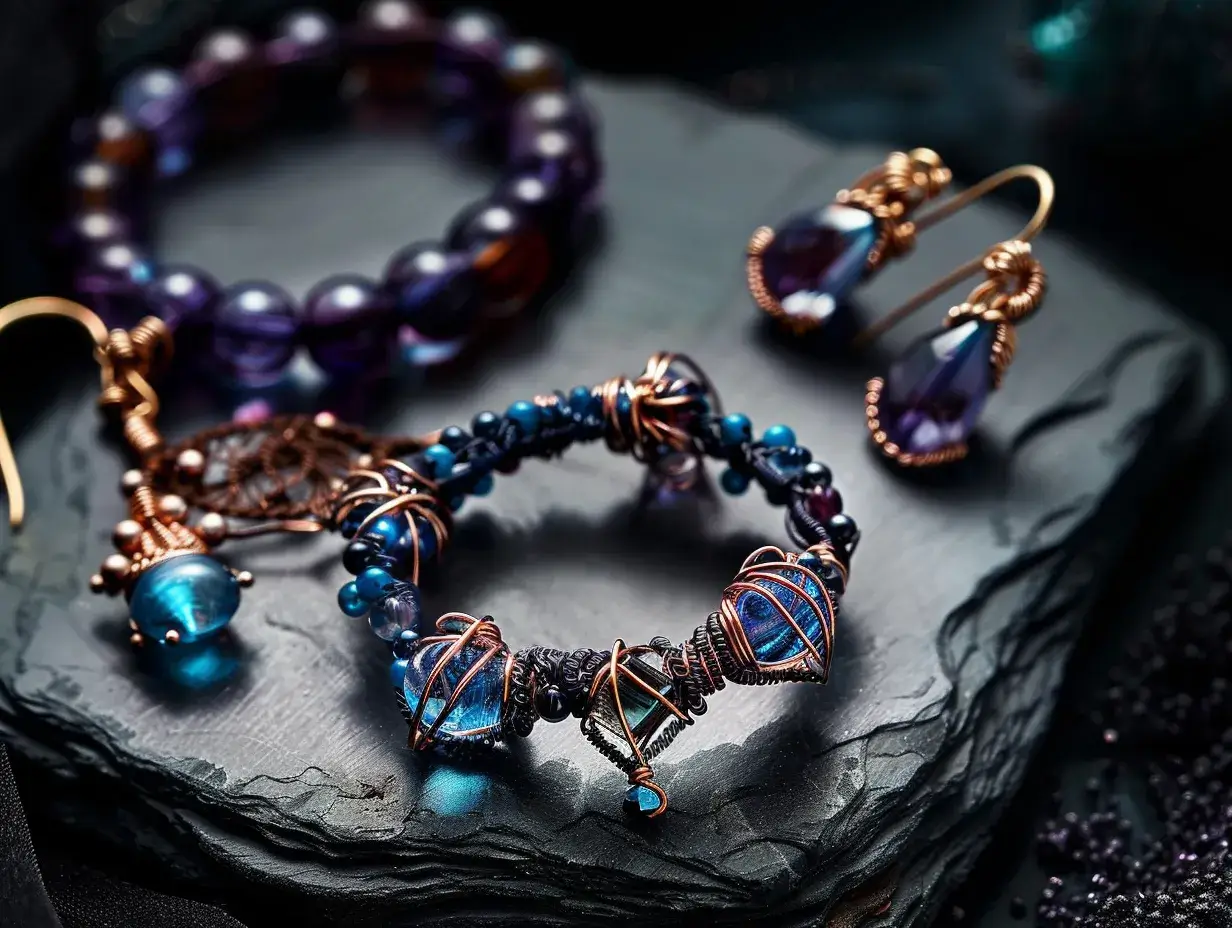
This project teaches fundamental wire-working skills: cutting wire to length, creating secure wrapped loops, connecting components with jump rings, and attaching clasps professionally. Completed bracelet wears beautifully and makes thoughtful gifts.
Materials Needed
- 20-gauge dead-soft wire (copper or silver-plated)
- 8-10 beads (8mm glass or semi-precious stones)
- 10-12 jump rings (6mm)
- 1 lobster claw clasp
- Round-nose pliers
- Chain-nose pliers (2 pairs preferred)
- Flush wire cutters
- Ruler
Step-by-Step Instructions
Step 1: Create Wire-Wrapped Bead Links
- Cut wire to 3-inch (75mm) length
- Using round-nose pliers, grip wire end 1/4 inch from end
- Bend wire over top jaw creating half-loop
- Reposition pliers inside loop, continue wrapping to form complete circle
- Using chain-nose pliers, grip loop firmly
- With free hand, wrap wire tail tightly around wire base 2-3 complete wraps
- Trim excess wire close to wraps with flush cutters
- Press cut end smooth against wraps using chain-nose pliers
- Thread bead onto wire stem
- Repeat loop and wrap process on opposite end
- Create 8-10 identical wire-wrapped bead links
Step 2: Connect Links with Jump Rings
- Open jump ring: grip each side with separate chain-nose pliers
- Twist ring sideways (never pull apart) opening gap
- Thread jump ring through loops of two adjacent bead links
- Close jump ring by twisting back until ends meet precisely
- Continue connecting all bead links in sequence
- Measure completed linked section – should be 6-6.5 inches for average wrist
Step 3: Attach Clasp
- Open new jump ring, thread through final bead link loop
- Thread same jump ring through lobster clasp loop
- Close jump ring securely
- Open another jump ring, attach to opposite end bead link loop
- This creates closure loop for lobster clasp to clip into
Step 4: Final Inspection
- Check all jump rings closed completely – no gaps
- Verify all wire wraps tight and secure
- Confirm clasp operates smoothly
- Polish wire with soft cloth if desired
Congratulations! You’ve completed your first wire-wrapped jewelry piece using professional techniques.
Project 2: Beaded Stretch Bracelet
What You’ll Learn
Master bead selection, pattern design, proper stringing technique, and secure finishing knots. This no-tools-required project perfect for absolute beginners builds confidence before tool-based work.
Materials Needed
- Stretch cord (0.8mm-1.0mm diameter recommended)
- 25-30 beads (8mm size for average adult)
- Scissors
- Super glue or jewelry adhesive
- Bead tray or mat
- Ruler or bead board
🎨 Quality Stretch Cord
FIVEIZERO Elastic Bracelet String Set
- ✓ 6 sizes: 0.4mm, 0.5mm, 0.6mm, 0.7mm, 0.8mm, 1mm
- ✓ Crystal-clear – becomes invisible in finished pieces
- ✓ Strong elastic – doesn’t break with normal wear
- ✓ 33 feet per size (198 feet total)
- ✓ Perfect for stone beads, glass beads, seed beads
Step-by-Step Instructions
Step 1: Design Your Pattern
- Measure wrist circumference – add 1 inch for comfortable fit
- Layout beads on bead board in desired pattern
- Experiment with color combinations, spacer placement
- Count total beads – verify length matches measurement
- Consider symmetry: balanced patterns most visually appealing
Step 2: String Beads
- Cut stretch cord 4 inches longer than finished bracelet length
- Tie temporary overhand knot 3 inches from one end (prevents beads sliding off)
- String beads one at a time following designed pattern
- Push beads snug against temporary knot
- Verify all beads strung correctly before proceeding
Step 3: Secure Final Knot
- Remove temporary knot carefully
- Hold both cord ends together
- Tie surgeon’s knot (modified square knot for security):
- Right over left, wrap twice
- Pull tight
- Left over right, wrap twice
- Pull very tight
- Apply small drop super glue to knot
- Allow 5 minutes drying time
- Trim excess cord close to knot (leave 2-3mm)
- Hide knot inside adjacent bead hole
Pro Tips:
- Test stretch before cutting cord – different elastics have different stretch rates
- Don’t overstretch elastic during stringing – weakens material
- Double-knot extra-heavy bracelets for security
- Clear stretch cord hides better than colored versions
Project 3: Wire-Wrapped Earrings
What You’ll Learn
Creating matched pairs with consistent measurements, making professional wire-wrapped loops, assembling multi-component earrings, and attaching ear wires properly. These techniques foundation for endless earring variations.
Materials Needed
- 22-gauge dead-soft wire
- 2 focal beads (6-10mm)
- 4 small accent beads (4mm)
- 2 headpins (2-inch/50mm length)
- 2 earring hooks (French hooks or lever-backs)
- Round-nose pliers
- Chain-nose pliers
- Flush wire cutters
- Ruler
✨ Earring Making Supplies
MODDA Complete Earring Making Kit
- ✓ 900+ pieces: beads, earring hooks, headpins, findings
- ✓ Multiple glass bead colors and sizes included
- ✓ 50 pairs earring hooks (hypoallergenic)
- ✓ Instructions + video tutorials included
- ✓ Organized storage case
- ✓ Everything for 30+ earring pairs
Step-by-Step Instructions
Step 1: Prepare Components (Make 2 Identical)
- Thread focal bead onto headpin
- Add small accent bead above focal bead
- Bend headpin wire 90° directly above top bead using chain-nose pliers
- Measure 3/8 inch (9mm) from bend
- Cut wire at measurement point with flush cutters
- Repeat exactly for second earring component
Step 2: Create Wire-Wrapped Loop
- Grip wire 1mm below cut end with round-nose pliers
- Bend wire over top jaw forming loop until wire crosses itself
- Switch to chain-nose pliers, grip loop at crossing point
- Hold pliers stationary
- With free hand, wrap wire tail tightly down around headpin stem
- Complete 2-3 full wraps – should be snug and even
- Trim excess wire flush against wraps
- Press cut end smooth using chain-nose plier tip
- Create identical loop on second component
Step 3: Attach Earring Hooks
- Open loop on earring hook by twisting sideways (like jump ring)
- Thread wrapped loop from bead component into earring hook loop
- Close earring hook loop completely
- Repeat for second earring
Step 4: Quality Control
- Measure both earrings – should be identical length
- Check wire wraps are tight, no sharp ends protruding
- Verify earring hooks close securely
- Polish wire with cloth for professional shine
- Place in protective bag or box for storage/gifting
You’ve now mastered wire-wrapping technique used in 80% of handmade earring designs!
Essential Techniques Mastery
Opening and Closing Jump Rings Correctly
CRITICAL: Never pull jump ring ends apart creating oval shape – permanently weakens metal and leaves gap impossible to close properly.
Correct Method:
- Grip each side of jump ring with separate chain-nose pliers
- Position hands as if holding steering wheel at 10 and 2 o’clock
- Twist one hand toward you, other away (opposing directions)
- This twists ring open sideways while maintaining circular shape
- Thread component(s) onto jump ring
- Reverse twisting motion to close ring
- Verify ends meet exactly – no gap visible
Making Consistent Wire Loops
Key Points:
- Always grip wire at same spot on round-nose pliers jaws for uniform loop size
- Permanent marker dot on pliers helps beginners maintain consistency
- Practice making 20 loops before starting actual project
- Dead-soft wire most forgiving for learning
- Wire wraps should be tight, even, no gaps between wraps
Proper Wire Cutting Technique
Guidelines:
- Position flush (flat) side of cutter toward component you’re keeping
- Angled side creates point – this is waste piece you’re removing
- Cut perpendicular to wire for cleanest end
- Don’t cut hardened wire with delicate flush cutters – damages blades
- Memory wire requires heavy-duty cutters specifically rated for it
Common Beginner Mistakes and Solutions
Mistake 1: Buying Too Many Advanced Tools Initially
Problem: Overwhelmed by tool options, beginners often purchase specialty tools they won’t use for months.
Solution: Start with 3-tool basic set. Add specialized tools only when encountering repeated need during projects. Master fundamentals with simple tools before expanding toolkit.
Mistake 2: Using Wrong Wire Gauge
Problem: Too-thick wire requires excessive force causing hand fatigue; too-thin wire breaks during manipulation.
Solution: Begin with 20-gauge dead-soft wire for virtually all beginner projects. Once comfortable, experiment with 18-gauge (structural) or 22-gauge (delicate) for specific applications.
Mistake 3: Not Measuring Properly
Problem: Bracelets too tight/loose, necklaces wrong length, earrings asymmetrical.
Solution: Always measure twice, cut once. Use bead board with measuring markings. For bracelets: wrist circumference plus 1 inch. Necklaces: standard lengths are 16″ (choker), 18″ (princess), 20″ (matinee), 24″ (opera).
Mistake 4: Overstretching Elastic Cord
Problem: Bracelet becomes loose and saggy after brief wear.
Solution: String beads with elastic at natural length – don’t pull taut. Elastic naturally shortens after stringing. Knot securely without over-tightening which weakens material.
Mistake 5: Using Improper Knots
Problem: Simple overhand knot comes undone, beads spill everywhere.
Solution: Always use surgeon’s knot (double-wrapped square knot) for elastic jewelry. Apply jewelry glue to knot for permanent security. Square knots for non-elastic applications.
Next Steps: Expanding Your Skills
Advanced Techniques to Learn
After mastering these three beginner projects, progress to:
- Wire weaving: Creating intricate woven patterns with multiple wire strands
- Stone setting: Securing cabochons and faceted stones in wire frameworks
- Metal stamping: Personalizing jewelry with stamped letters, numbers, designs
- Chain maille: Linking jump rings in specific patterns creating chainmail jewelry
- Bead embroidery: Stitching beads onto fabric backing for textured pieces
Quality Material Upgrades
Once techniques are solid, invest in premium materials:
- Sterling silver wire: Professionals standard – doesn’t tarnish quickly, holds value
- 14k gold-filled wire: Affordable alternative to solid gold, beautiful warm tone
- Genuine gemstone beads: Natural stones (turquoise, lapis, amethyst) elevate designs
- Swarovski crystals: Premium crystal beads with exceptional brilliance
- Sterling silver findings: Quality clasps, earring hooks, jump rings
⭐ Upgrade to Quality Materials
Sterling Silver Wire – Multiple Gauges
- ✓ .925 sterling silver (genuine, hallmarked)
- ✓ Dead-soft temper – easy to work
- ✓ Available in 18, 20, 22, 24 gauge
- ✓ Professional quality at reasonable price
Semi-Precious Stone Bead Collection
- ✓ Natural gemstones: amethyst, turquoise, jade, agate
- ✓ Smooth round beads (6mm, 8mm, 10mm sizes)
- ✓ Each strand ~15 inches (38-40cm)
- ✓ Temporarily strung for easy use
Building a Jewelry Portfolio
Document your journey:
- Photograph each completed piece with good lighting and plain background
- Keep project notes: materials used, techniques learned, time invested
- Create Instagram/Pinterest accounts showcasing work
- Build confidence and following before considering sales
- Gift pieces to friends/family for honest feedback
Frequently Asked Questions
What tools do I absolutely need to start making jewelry?
To start jewelry making, you need three essential tools: round-nose pliers (for creating loops and curves), chain-nose pliers (for gripping and bending wire), and flush wire cutters (for clean cuts). These three tools allow you to complete 90% of basic jewelry projects. For beginners, a complete 7-piece pliers set provides additional specialized tools like bent-nose pliers and nylon-jaw pliers that prevent wire marking. Optional but helpful additions include a bead board for design layout, a wire looping tool for consistent loops, and a magnifying headset for intricate work. Most beginners can start with a basic 3-piece set for under $20 and expand their toolkit as skills develop.
What’s the best wire gauge for beginners?
Beginners should start with 20-gauge wire for most projects – it’s thick enough to hold shape without being difficult to manipulate. For wire-wrapping practice, 22-gauge provides slightly easier handling while still maintaining structure. Avoid starting with wire thicker than 18-gauge (requires significant hand strength) or thinner than 24-gauge (too delicate, breaks easily during learning). Copper wire is ideal for beginners: inexpensive, forgiving, develops beautiful patina, and behaves similarly to precious metals. Once comfortable with 20-22 gauge copper, progress to silver-plated or gold-filled wire in the same gauges. Wire hardness matters too: dead-soft wire is easiest for beginners, half-hard holds shape better for structural elements, and hard wire is for advanced projects only.
How much should I spend on my first jewelry making supplies?
Beginners can start jewelry making for $40-80 total. A basic starter approach: 3-piece pliers set ($15-25), practice wire spools in copper ($8-12), assorted beads starter pack ($10-15), jump rings and findings variety pack ($8-12), and basic stringing materials ($5-10). This provides everything needed for multiple projects while learning fundamentals. Complete beginner kits offering tools plus materials range $50-100 and provide excellent value – they include curated components that work well together, eliminating guesswork. After mastering basics with practice materials, invest in quality tools ($30-50 per specialized plier) and precious metal wires. Many beginners overspend initially on advanced tools they don’t yet need – start simple, expand thoughtfully as skills develop.
Can I make jewelry to sell after completing beginner projects?
Yes, but expect 3-6 months of consistent practice before creating sellable pieces. Beginners typically need 20-30 complete projects to develop techniques producing professional-quality jewelry customers will purchase. Focus initially on mastering fundamentals: consistent loops, secure crimps, balanced designs, durable construction. Practice projects using inexpensive materials develop skills without financial pressure. Once techniques are solid, upgrade to quality materials – sterling silver, gold-filled wire, genuine gemstone beads. Customers pay premium prices for craftsmanship quality, not beginner enthusiasm. Build a portfolio of 10-15 polished pieces before attempting sales. Start with friends and family for honest feedback, then Etsy or local craft fairs. Price to cover materials plus reasonable labor – track time invested to understand true costs. Many successful jewelry businesses started with beginners who committed to consistent practice and continuous skill improvement.
What’s the easiest first jewelry project for absolute beginners?
The easiest beginner project is a simple beaded stretch bracelet – requires no tools, teaches bead selection and pattern creation, completed in 15-20 minutes, and produces wearable results immediately. Second-easiest: wire-wrapped loop earrings using headpins and beads – introduces essential wire-working techniques (making loops, using pliers correctly) with minimal materials. These projects build confidence before attempting complex techniques. For first tool-based project, create a basic chain bracelet using pre-made chain, jump rings, and lobster clasp – teaches opening and closing jump rings properly (fundamental skill for all jewelry making) plus attaching clasps securely. Avoid starting with intricate wire-wrapping, stone setting, or metal stamping – these require muscle memory developed through simpler projects. Success with easy projects motivates continued learning; frustration with overly ambitious first attempts discourages many beginners who would otherwise excel with proper progression.
Conclusion: Your Jewelry Making Journey Continues
Congratulations on completing this comprehensive introduction to jewelry making! You now possess foundational knowledge transforming raw materials into beautiful, wearable art. The three projects you’ve mastered – wire-wrapped bracelet, beaded stretch bracelet, and wire-wrapped earrings – represent core techniques underlying thousands of jewelry designs.
Remember: every expert jeweler started exactly where you are now. The difference between hobbyist and master craftsperson isn’t innate talent but consistent practice, attention to detail, and willingness to learn from mistakes. Your first pieces may not be perfect – that’s expected and valuable. Each project teaches lessons improving subsequent work.
Continue developing skills through regular practice. Set weekly goals: master a new technique, complete three pieces, experiment with unfamiliar materials. Document your progress through photographs and notes. Join online jewelry-making communities for inspiration, troubleshooting help, and encouragement from fellow makers.
The tools and materials recommended in this guide provide everything needed for extensive exploration. As skills advance, thoughtfully expand your toolkit and material selection. Invest in quality when ready – superior tools and materials make challenging techniques more accessible and produce noticeably better results.
Most importantly: enjoy the creative process. Jewelry making offers rare combination of artistic expression, technical skill development, and tangible results. Whether crafting gifts for loved ones, building a small business, or simply exploring a rewarding hobby, you’ve taken the essential first steps toward mastery. Your jewelry-making adventure has just begun – create confidently, experiment boldly, and wear your handmade pieces proudly!
Last Updated: December 2024 | This article contains affiliate links. As an Amazon Associate, I earn from qualifying purchases at no additional cost to you.

Hi, I’m Sara Hein, a passionate jewelry researcher and educator. I created Jewelry Carats to share well-researched insights on gemstones, precious metals, and jewelry care. My goal is making expert jewelry knowledge accessible to everyone.