
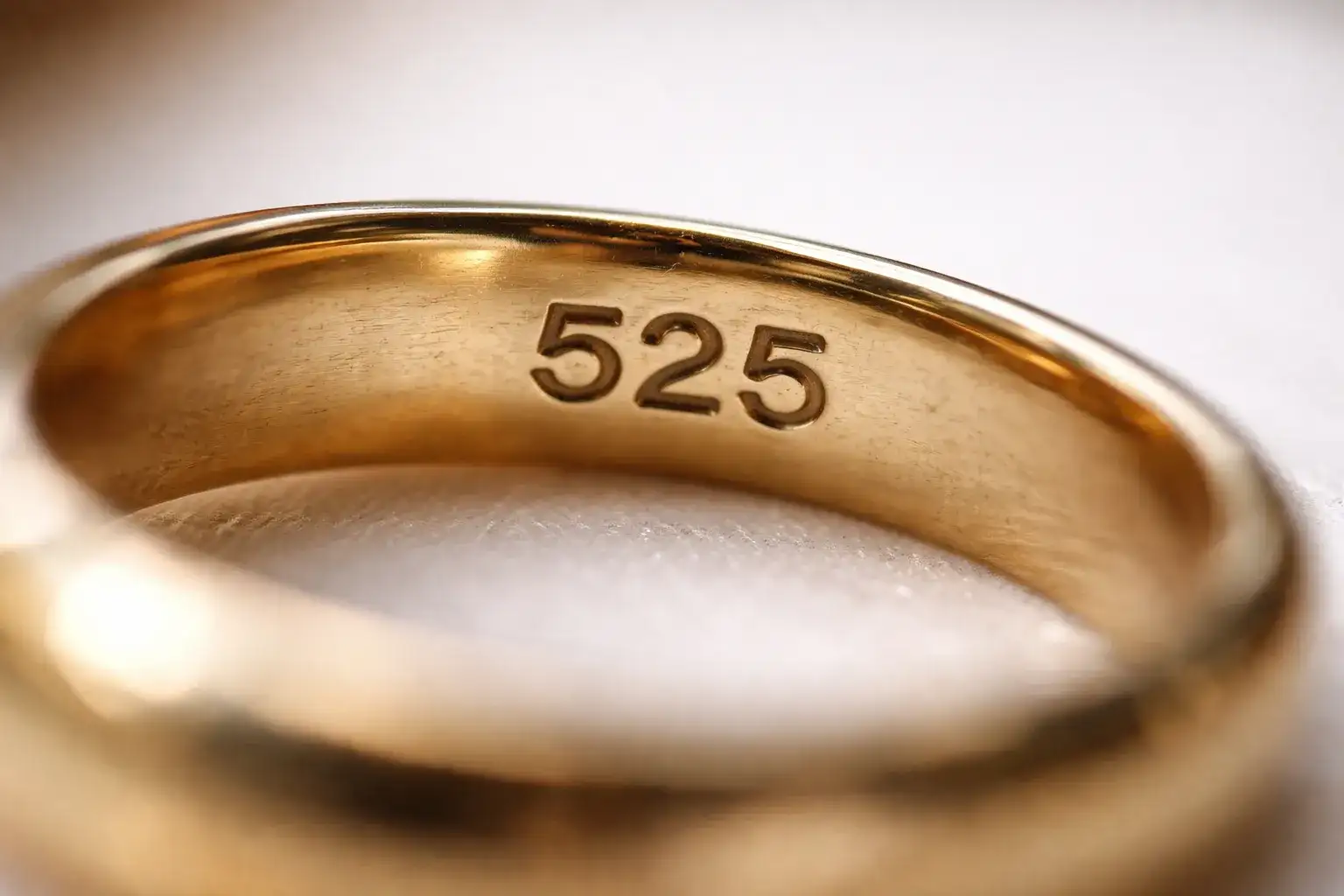
Complete Guide to This Uncommon Gold Mark
Found “525” stamped on your jewelry and wondering what it means? You’re looking at an uncommon gold purity mark that tells you exactly how much precious metal is in your piece. Unlike the familiar “14k” or “18k” stamps you might recognize, 525 represents a non-standard gold fineness that’s rarely seen in modern jewelry—but that doesn’t mean it’s fake or worthless.
This comprehensive guide explains everything you need to know about the 525 hallmark: what it means, why it’s uncommon, how it compares to standard gold marks, and whether jewelry bearing this stamp is worth buying. Whether you inherited a piece marked 525, found one at an estate sale, or simply want to understand your jewelry better, you’ll discover the complete story behind this mysterious number.
We’ll cover how to identify 525 marks on different types of jewelry, what the marking tells you about gold content and value, the historical context of this uncommon purity, and practical guidance on buying, selling, and authenticating 525 gold. By the end of this guide, you’ll have expert-level knowledge about this rare hallmark and the confidence to make informed decisions about 525 gold jewelry.
What Does 525 Mean? Quick Answer
The number 525 stamped on jewelry indicates that the piece contains 52.5% pure gold and 47.5% alloy metals. This marking uses the millesimal fineness system, where numbers represent parts per thousand—so 525 means 525 parts gold out of 1,000 total parts.
To convert this to the more familiar karat system, use the formula: (525 ÷ 1000) × 24 = 12.6 karats. This makes 525 gold approximately 12.6 karat gold, which falls between standard 12 karat (500) and 14 karat (585) gold. The 525 marking is considered uncommon because it doesn’t correspond to any standard karat weight used in modern jewelry manufacturing.
Why does this matter? Because when you’re buying or selling 525 gold jewelry, you need to understand that it contains less gold than the popular 14k (585) standard, but more than 12k (500). This affects both the value and the durability of your jewelry. The higher alloy content makes 525 gold more durable than higher-karat gold, but it also means the piece contains less valuable precious metal.
While 525 is a legitimate gold purity marking—not a sign of fake jewelry—its rarity can make authentication and resale more challenging compared to standard gold purities. Most contemporary jewelry uses standardized marks like 585 (14k), 750 (18k), or 917 (22k). If you encounter a 525 mark, you’re likely dealing with vintage jewelry, European pieces, or potentially a misidentified 585 stamp that’s difficult to read clearly.
Understanding Gold Purity Marks
Gold purity marks exist because pure 24-karat gold is too soft for everyday jewelry wear. Jewelers create durable pieces by mixing pure gold with stronger metals like copper, silver, zinc, or nickel. These mixtures are called alloys, and the purity mark tells you exactly how much gold versus other metals the jewelry contains.
Two main systems communicate gold purity: the karat system and the millesimal fineness system. The karat system, popular in the United States, divides purity into 24 parts. For example, 18-karat gold means 18 parts pure gold and 6 parts other metals (18÷24 = 75% gold). The karat marking appears as “14k,” “18k,” or “22k” stamped on jewelry.
The millesimal fineness system, more common internationally, expresses purity in parts per thousand. A piece marked “750” contains 750 parts gold per 1,000 total parts, or 75% pure gold. This is the same as 18-karat gold. The advantage of this system is precision—you know the exact percentage of gold content at a glance.
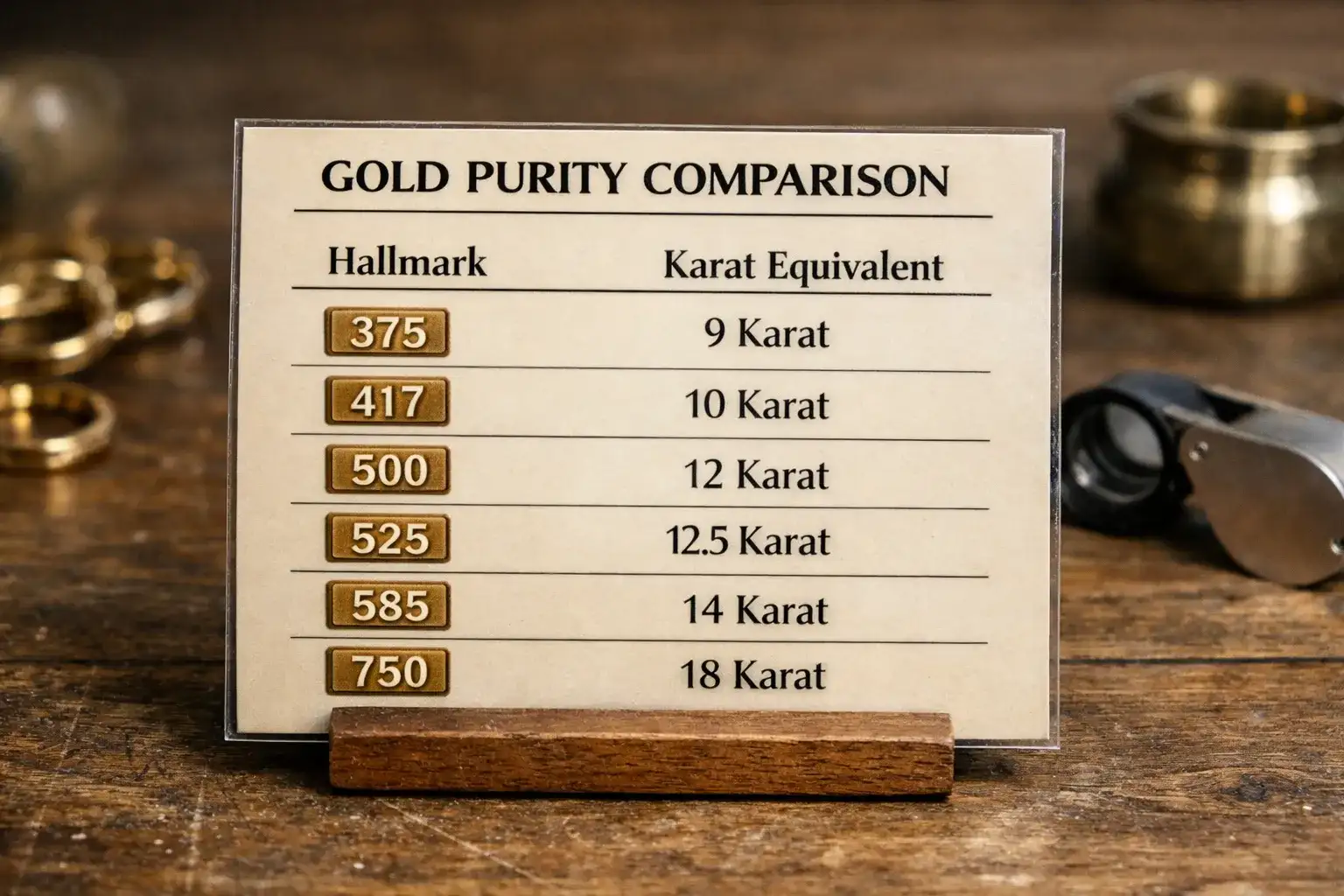
Here’s a comparison of the most common gold purity marks you’ll encounter:
| Mark | Percentage | Karat Equivalent | Standard? | Common Use |
|---|---|---|---|---|
| 375 | 37.5% | 9k | Yes (UK) | European jewelry, budget pieces |
| 417 | 41.7% | 10k | Yes (USA) | Minimum legal standard USA |
| 500 | 50.0% | 12k | Yes (Vintage UK) | Antique jewelry, discontinued 1932 |
| 525 | 52.5% | 12.6k | NO (rare) | Uncommon, vintage pieces |
| 585 | 58.5% | 14k | Yes (International) | Most popular worldwide |
| 750 | 75.0% | 18k | Yes (International) | Fine jewelry, luxury pieces |
| 916 | 91.6% | 22k | Yes (Asia/Middle East) | High-purity jewelry, investment |
| 999 | 99.9% | 24k | Yes (Pure gold) | Coins, bullion, rarely jewelry |
As this table shows, 525 stands out as a non-standard purity. While legitimate, it doesn’t align with the internationally recognized fineness standards that have been adopted for manufacturing consistency and consumer protection. This is why finding 525-marked jewelry is unusual and why it deserves special attention when encountered.
Why 525 is Uncommon: Historical Context
The 525 hallmark’s rarity has deep roots in jewelry manufacturing history. To understand why this mark is uncommon today, we need to examine how gold standards evolved over the past two centuries, particularly in the United Kingdom where the story largely begins.
UK 12-Carat Gold Era (1854-1932)
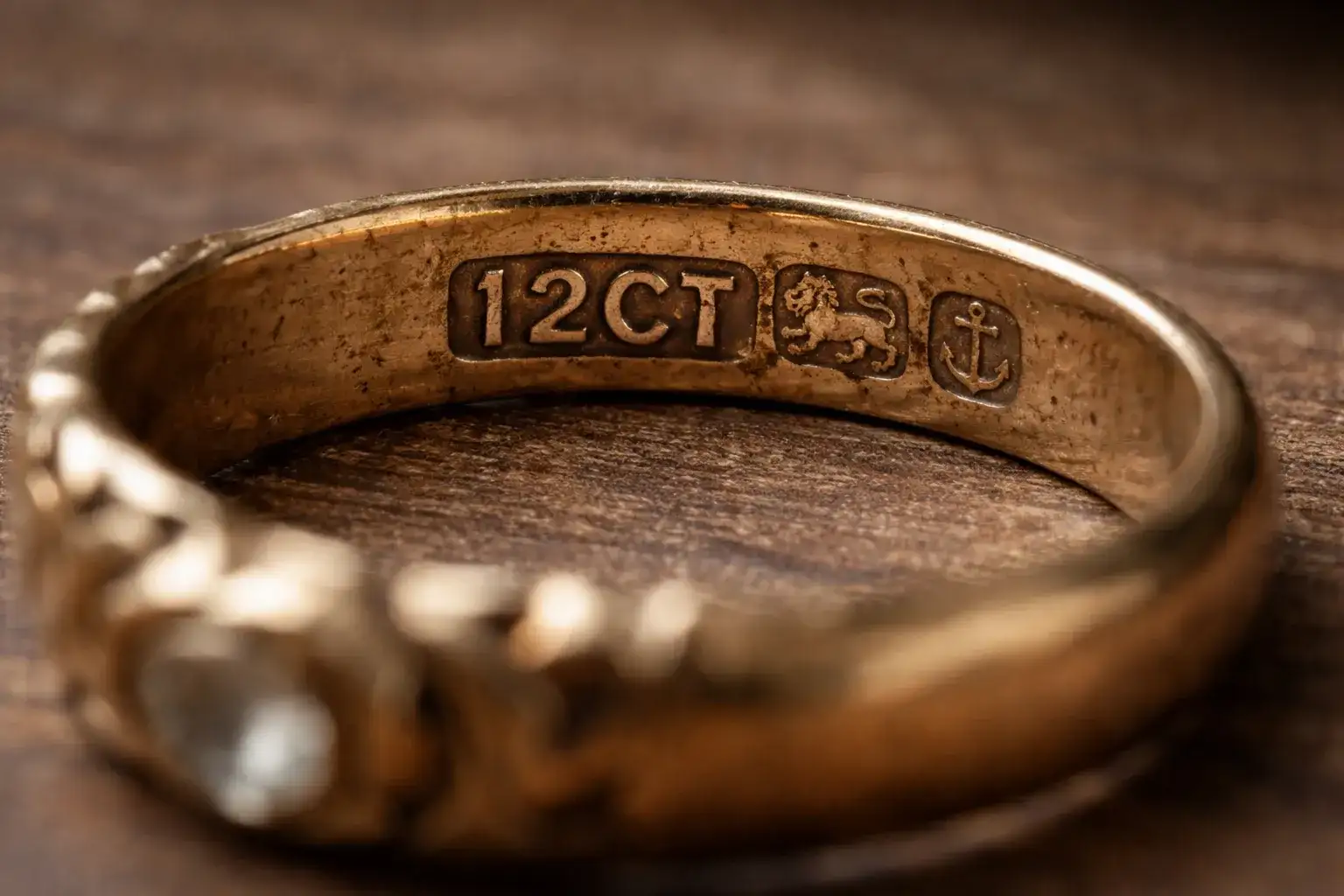
Before 1854, British law recognized only two gold standards: 18-carat (750) and 22-carat (916). The British Hallmarking Act of 1854 expanded these standards to include 9-carat, 12-carat, and 15-carat gold to accommodate different price points and uses. Importantly, 12-carat gold was marked as “12ct” or “.5” (representing 12÷24 = 0.5 or 50%), which corresponds to a fineness of 500—not 525.
This 12-carat standard remained legal in the UK until 1932, when it was discontinued. The 1932 reform abolished both 12-carat and 15-carat standards in favor of the more internationally aligned 14-carat (585) gold. This decision reflected a move toward global standardization in the jewelry trade. After 1932, British jewelers could no longer legally hallmark new pieces as 12-carat gold.
During this entire period (1854-1932), the official 12-carat mark was 500, not 525. So where did 525 come from? The answer lies in Continental Europe and non-standard manufacturing practices.
Continental European Use
While the UK used standardized hallmarks regulated by government assay offices, some Continental European countries allowed more flexibility in gold fineness. Without the strict oversight of British hallmarking law, some jewelers in Germany, Italy, and other European nations experimented with non-standard alloys.
The 525 fineness likely emerged as an attempt to create gold that was slightly purer than 12-karat (500) but more affordable than 14-karat (585). At 52.5% gold content, these pieces could be marketed as “better than 12-karat” while using less precious metal than full 14-karat gold. However, this mark never achieved widespread adoption and remained a regional, sporadic practice rather than an industry standard.
Why 585 Won Over 525
The jewelry industry eventually standardized around 585 instead of 525 for mathematically logical reasons. When you divide 14 (karats) by 24 (total karats in pure gold), you get 0.5833, which rounds to 58.3% or a fineness of 583. For simplicity, this was standardized to 585.
In contrast, 525 (52.5%) converts to exactly 12.6 karats—an awkward number that doesn’t correspond to any whole karat value. It falls uncomfortably between 12k and 14k without being either. From a manufacturing and consumer perspective, having jewelry that’s “12 and a half karats” created confusion rather than clarity.
As international trade in jewelry expanded in the 20th century, manufacturers recognized the value of standardization. Buyers in New York, London, Paris, and Dubai needed to immediately understand jewelry purity without complex calculations. The industry coalesced around clear standards: 10k (417), 14k (585), 18k (750), and 22k (916). The odd-man-out 525 fineness was gradually phased out.
Today’s Rarity
In modern jewelry markets, 525-marked pieces are decidedly rare. Most examples you’ll encounter are vintage or antique jewelry, primarily from European makers working before the mid-20th century. When you do find a piece marked 525, consider these possibilities:
First, it may be a genuine vintage piece from the era when non-standard finenesses were more common. Second, there’s a possibility the mark is actually 585 but difficult to read due to wear, size, or poor lighting—always examine stamps with a magnifying loupe before concluding you have a 525 piece. Third, some contemporary artisan jewelers working outside mainstream manufacturing might occasionally use 525, though this is extremely uncommon. Finally, if the piece seems modern and mass-produced, it may be mismarked or require professional authentication.
The bottom line: 525 represents a historical footnote in gold jewelry manufacturing. It’s a legitimate purity that was used in specific times and places, but it never became a globally recognized standard. This rarity is precisely what makes properly authenticated 525 pieces interesting to collectors while simultaneously making them more challenging to value and resell in today’s market.
How to Find and Read 525 Marks on Jewelry
Locating and correctly reading a 525 hallmark requires patience and the right tools. These tiny stamps are often less than 2 millimeters in height and placed in inconspicuous locations to preserve the jewelry’s aesthetic appeal. Knowing where to look and how to examine the mark properly makes the difference between accurate identification and costly mistakes.
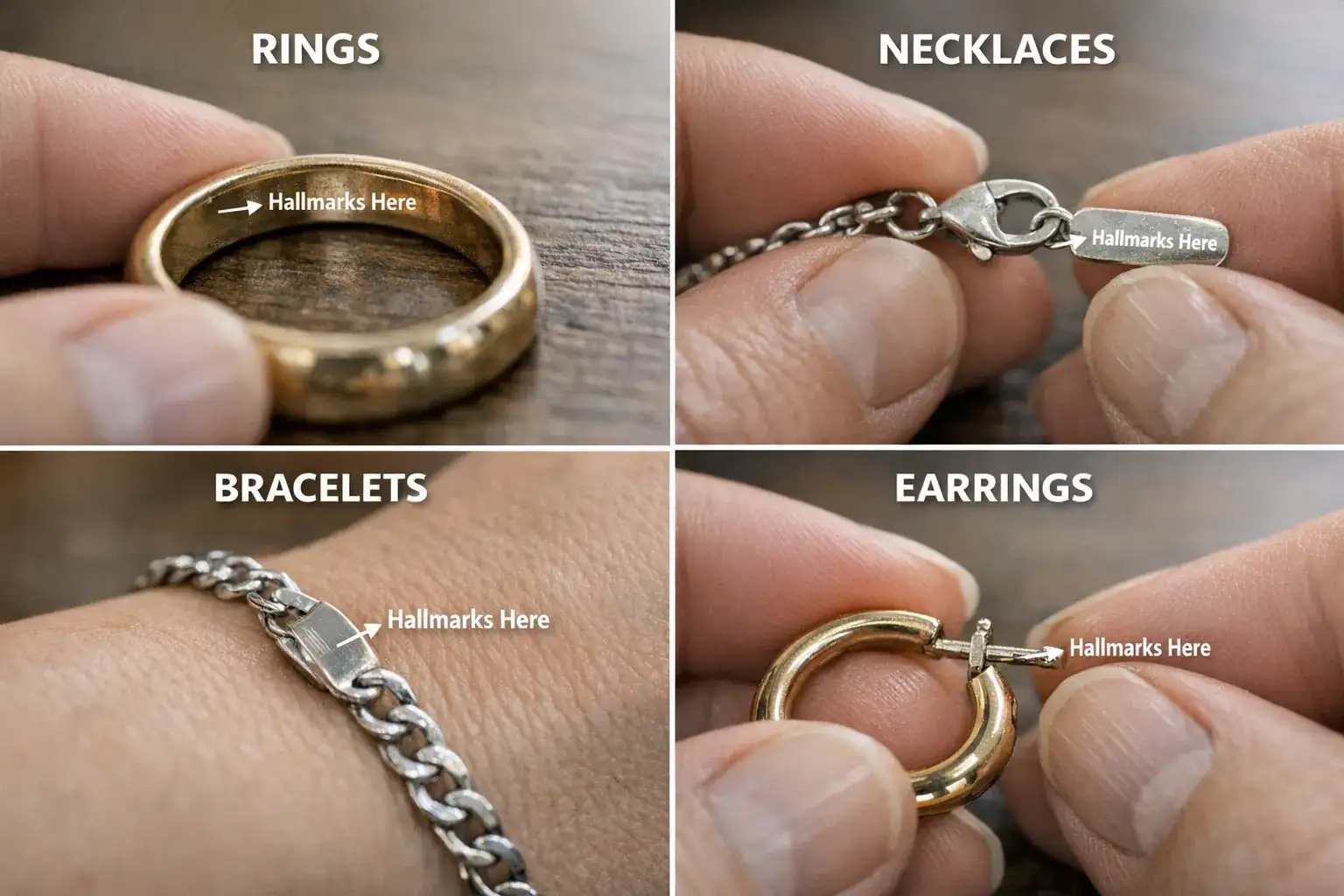
Where to Look for Hallmarks
Rings: Check the inside of the band, typically near the bottom (the part farthest from the stone or decorative element). Wide bands often have larger, more legible stamps, while thin bands may have marks so small they require magnification. Wedding and engagement rings traditionally place hallmarks where they won’t show when worn.
Necklaces and Bracelets: Examine the clasp mechanism carefully—hallmarks appear on the small ring that connects the clasp to the chain, on the clasp itself, or on a small rectangular tag near the clasp. Some higher-quality pieces include a separate hallmark tag that dangles from the clasp area.
Earrings: For post earrings, check the post itself or the small area where the post connects to the decorative front. For hook or lever-back earrings, look on the back of the earring or on the lever mechanism. Screw-back earrings often have marks on the threaded post or the back plate.
Pendants: Inspect the back side of the pendant body and the bail (the loop that connects to the chain). Some pendants have marks on both locations. If the pendant has any flat surfaces on the reverse, that’s typically where you’ll find stamps.
Tools You Need
A 10x magnification jeweler’s loupe is essential for reading small hallmarks accurately. While a standard magnifying glass can help, jeweler’s loupes provide the clarity and magnification needed to distinguish between similar-looking numbers like 525 and 585. LED-illuminated loupes offer the added benefit of directed lighting, which helps read stamps in recessed or shadowed areas.
Good lighting is critical—natural daylight or bright white LED light works best. Avoid yellow-tinted lighting, which can distort your view of small engraved details. Position the jewelry so light reflects off the stamp at an angle, making the recessed characters more visible through shadow contrast.
🔍 Recommended Jeweler’s Loupe
10X Magnification Jeweler’s Loupe with LED Light
- ✓ 10x magnification ideal for reading tiny hallmarks
- ✓ Built-in LED lighting illuminates stamps clearly
- ✓ Foldable pocket design for portability
- ✓ Professional-grade glass optics
What the 525 Mark Looks Like
The mark typically appears as a simple “525” in a sans-serif or serif font. The numbers are recessed into the metal through stamping, creating a mirror-image depression. On very old pieces, wear might make the numbers less distinct—the “2” might look like a “6” or “8” if partially worn, which is why careful examination is crucial.
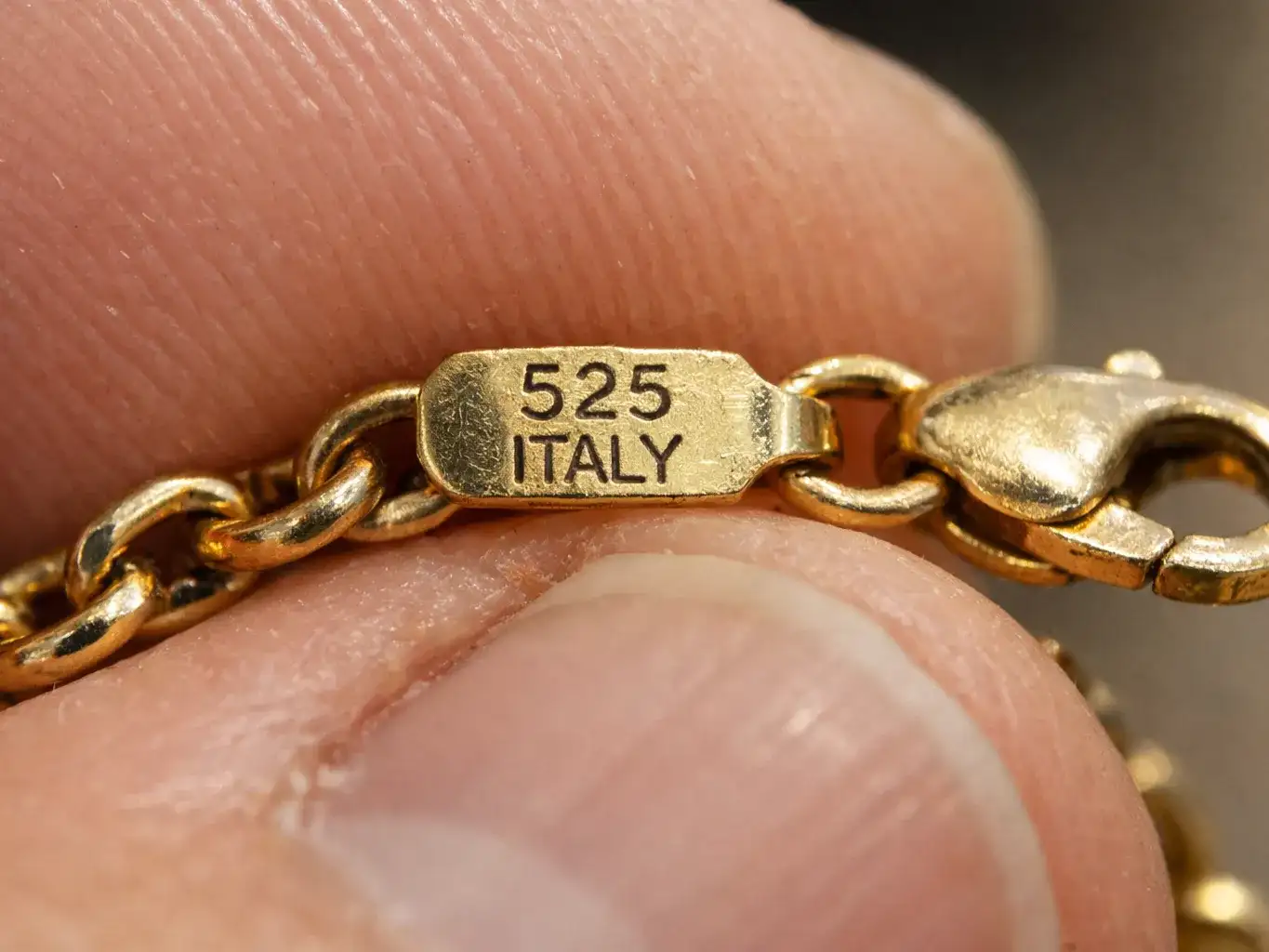
You may encounter variations including “525” alone as a standalone mark, “525” accompanied by a maker’s mark (often initials or a symbol), country indicators like “525 Italy” or “525 UK,” or rarely, the karat equivalent “12.6k” or “12.6kt” though this is extremely uncommon.
The size of the stamp varies with the jewelry piece. Larger items like bracelets might have 2-3mm tall numbers, while delicate rings might feature stamps under 1mm in height—so small they look like a series of tiny dots without magnification.
Common Reading Errors to Avoid
The most frequent misidentification occurs when 585 is read as 525. The “8” and “2” can appear similar when stamped small or when partially worn. Always examine all three digits carefully and confirm each number individually. If you’re uncertain, professional appraisal is worthwhile for valuable pieces.
Another error happens when people read the mark upside down—rotating the jewelry 180 degrees might reveal that what looked like “525” is actually “SZS” or another maker’s mark. Orientation matters, especially with small stamps on curved surfaces like ring bands.
Finally, some people confuse hallmarks with other stamps like size numbers (rings), inventory codes, or design pattern numbers. True purity hallmarks are typically 3 or 4 digits and appear in specific, traditional locations. A “525” stamped on the front of a pendant or prominently displayed is more likely a model number than a purity mark.
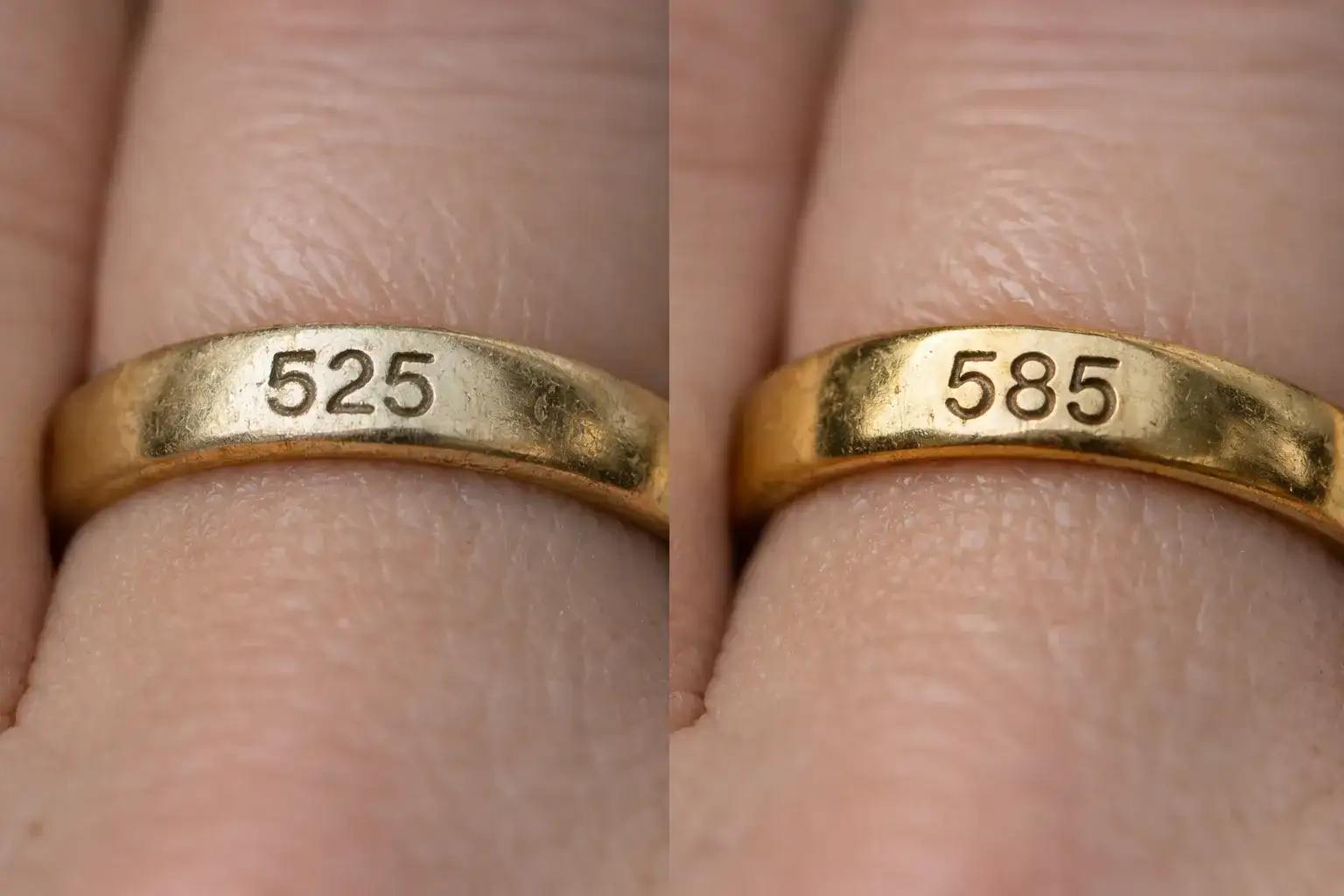
525 vs Other Gold Marks: Key Differences
Understanding how 525 compares to standard gold marks helps you evaluate what you’re buying or selling. The differences aren’t just numerical—they have real implications for value, durability, and marketability.
525 vs 500 (12k Gold)
The 500 hallmark represents exactly 50% gold content, which equals precisely 12 karats. This was a legal standard in the UK from 1854 to 1932 and appears on vintage British jewelry. In contrast, 525 contains 52.5% gold, making it 5% purer than 12-karat gold. While this might seem like a meaningful difference, it’s subtle enough that most people can’t distinguish 500 from 525 by appearance alone.
In practical terms, both 500 and 525 gold are uncommon today. If you’re comparing two vintage pieces, the 525 has slightly more gold content and therefore slightly higher melt value. However, both face the same resale challenge: they’re non-standard purities that most modern buyers don’t recognize.
525 vs 585 (14k Gold) – The Most Important Comparison
This is the critical distinction every 525 jewelry owner needs to understand. The 585 hallmark is the international standard for 14-karat gold (58.5% pure), while 525 represents only 52.5% pure gold. That 6-percentage-point difference translates to roughly 11% more gold content in 585 versus 525.
What does this mean financially? If gold is trading at $60 per gram, 585 gold yields $35.10 per gram in pure gold content, while 525 yields only $31.50 per gram—a $3.60 difference per gram. On a 20-gram bracelet, that’s $72 in value difference based on gold content alone.
Beyond value, the market recognition matters enormously. A piece marked 585 is instantly understood by jewelers, pawn shops, and buyers worldwide as 14-karat gold. A piece marked 525 often triggers confusion, skepticism, or lowball offers because the mark is unfamiliar. For resale purposes, 585 is vastly superior to 525.
There’s also the verification issue. Because 525 and 585 can look similar when stamped small, always confirm you’re reading the mark correctly. Use a loupe, check under multiple lighting angles, and if uncertain, have the piece professionally tested. Many people who think they own 525 gold actually possess the much more common 585 gold.
525 vs 417 (10k Gold)
At 41.7% gold content, 10-karat (417) gold is the minimum legal standard in the United States. It’s significantly less pure than 525 gold, which contains about 26% more gold by weight. A 525 piece has roughly one-quarter more intrinsic value than an equivalent 417 piece.
The trade-off is durability: 10k gold is harder and more scratch-resistant because of its higher alloy content. If you’re choosing between the two for everyday wear items like a wedding band, 10k might actually be the better choice despite lower gold content. For collector value or melt value, 525 is superior.
525 vs 750 (18k Gold)
The 750 mark represents 75% pure gold (18 karats) and is widely recognized as the standard for fine jewelry. It contains approximately 43% more gold than 525—a substantial difference. At current gold prices, 750 gold is worth about $45 per gram in gold content versus $31.50 for 525.
Visually, 18k gold has a richer, warmer yellow color compared to the paler appearance of 525 gold. The higher gold content in 750 gives jewelry a more luxurious look and feel. For heirloom pieces, engagement rings, and fine jewelry intended to last generations, 750 (18k) is the preferred choice. The 525 mark is rarely if ever found on fine jewelry comparable to 18k pieces.
Quick Reference Comparison
To summarize these differences at a glance:
- Gold Content: 417 (41.7%) < 500 (50%) < 525 (52.5%) < 585 (58.5%) < 750 (75%)
- Market Recognition: 585 and 750 = High | 417 = Medium | 525 and 500 = Very Low
- Resale Ease: 585 and 750 = Easy | 417 = Moderate | 525 and 500 = Difficult
- Durability: 417 > 525 > 585 > 750 (higher alloy content = more durable)
- Color Richness: 750 > 585 > 525 > 417 (higher gold content = deeper yellow color)
Understanding these relationships helps you make informed decisions whether you’re buying, selling, or simply valuing 525 gold jewelry.
Common Mistakes About 525 Marks
Misinformation about 525 gold circulates widely, leading to confusion and poor purchasing decisions. Let’s correct the most frequent errors people make when encountering this uncommon hallmark.
Mistake #1: “525 Means 21.6 Karats”
This is a mathematical error that appears surprisingly often in jewelry discussions and even some published guides. The calculation is completely wrong. To convert a fineness mark to karats, use this formula: (fineness ÷ 1000) × 24 = karat value.
For 525, the correct math is: (525 ÷ 1000) × 24 = 0.525 × 24 = 12.6 karats. That’s 12.6 karats, not 21.6 karats. The confusion likely stems from misunderstanding the formula or possibly confusing the mark with the result (525 being mistakenly used as the karat value rather than the fineness).
Remember: fineness marks are parts per thousand, karat marks are parts per 24. A 21.6-karat piece would have a fineness of 900 (exactly 90% pure gold), which is completely different from 525.
Mistake #2: “525 is Sterling Silver”
This confusion arises because both 525 and 925 (the sterling silver mark) end in “25.” However, they represent entirely different metals. Sterling silver is always marked 925, indicating 92.5% pure silver and 7.5% alloy metals, typically copper.
A 525 marking specifically indicates gold purity—52.5% pure gold. There is no such thing as “525 silver.” If you have a piece that appears silver-colored and is marked 525, you’re almost certainly looking at white gold, which is a gold alloy mixed with white metals like palladium, nickel, or silver to create a silver-white appearance.
To tell the difference: gold (even white gold) is significantly heavier and denser than silver. A 525 white gold ring will feel noticeably heavier than a comparable silver ring of the same size. When in doubt, professional testing can definitively identify the metal composition.
Mistake #3: “525 is the Same as 14k Gold”
While 525 is sometimes colloquially called “14-karat gold” because it’s closer to 14k than any other standard karat, this is technically incorrect and can lead to pricing errors. True 14-karat gold has a fineness of 585 (58.5% pure), not 525 (52.5% pure).
The difference is significant: 585 gold contains roughly 11% more gold than 525 gold. If you’re buying or selling and the parties assume 525 equals 14k, someone is getting shortchanged. Always clarify the exact fineness when discussing value and pricing.
Mistake #4: “525 Means Fake or Gold-Plated”
The unfamiliarity of the 525 mark leads some people to assume it indicates counterfeit or gold-plated jewelry. This is not the case. The 525 hallmark is a legitimate fineness mark for solid gold, albeit an uncommon one.
Gold-plated items use different markings entirely, such as “GP” (gold plated), “GF” (gold filled), “RGP” (rolled gold plate), or “GEP” (gold electroplate). A piece marked “525 GP” would mean 525-purity gold plating, while “525” alone indicates solid gold throughout.
That said, the rarity of 525 does mean you should verify authenticity through testing, especially if the piece appears modern or the price seems too good to be true. Legitimate 525 gold exists, but so do counterfeits and mismarked pieces. Professional authentication is wise for valuable items.
Mistake #5: “All 525 Gold is Antique or Vintage”
While most 525-marked jewelry you’ll encounter is indeed vintage—particularly European pieces from the early to mid-20th century—this isn’t a universal rule. Some contemporary artisan jewelers or small workshops, especially in countries without strict hallmarking regulations, may occasionally produce 525 gold pieces.
Additionally, some 525 pieces you find might be relatively modern jewelry from the 1970s-1990s, which isn’t truly antique but also isn’t contemporary. Don’t automatically assume a 525 piece is 100+ years old. Age determination requires examining other factors like style, construction technique, patina, and any accompanying maker’s marks or hallmarks beyond the purity stamp.
525 Gold Jewelry Value and Pricing
Determining the value of 525 gold jewelry requires understanding both the intrinsic metal value and the market factors that affect what buyers will pay. Unlike standard gold purities with established market recognition, 525 requires extra calculation and consideration.
How to Calculate Gold Content Value
The formula for calculating the pure gold content value is straightforward: Weight (in grams) × Current Gold Spot Price (per gram) × Purity Percentage. For 525 gold, the purity percentage is 0.525.
Here’s a worked example: Suppose you have a 525 gold bracelet weighing 15 grams, and today’s gold spot price is $65 per gram. The calculation would be: 15 grams × $65/gram × 0.525 = $512.25. This $512.25 represents the value of the pure gold content—also called the melt value or intrinsic value.
To make these calculations easier, you can find the current gold spot price at financial websites like Kitco or World Gold Council. Spot prices fluctuate daily based on market conditions, so always use the current day’s price for accurate valuation.
Melt Value vs Market Value
The melt value is only the starting point for understanding what 525 jewelry is worth. Market value—what someone will actually pay for the piece—depends on numerous additional factors:
For Vintage or Antique 525 Pieces: Historical significance, maker’s reputation, craftsmanship quality, condition, and rarity can all add premium above melt value. A well-preserved Victorian-era 525 gold brooch from a known maker might sell for 150-300% of melt value to collectors. However, this requires authentication, provenance documentation, and accessing the right market of collectors.
For Modern 525 Pieces: Contemporary jewelry marked 525 typically sells for melt value or slightly above—but only to buyers who understand the uncommon marking. Without collector appeal or exceptional craftsmanship, modern 525 gold competes directly with standard 14k (585) gold and typically loses due to lower market recognition.
Comparison to Standard Gold Purities
To understand the value differential, let’s compare what you’d get for the same weight of different gold purities at a hypothetical $60 per gram spot price:
- 10k (417): $60 × 0.417 = $25.02 per gram
- 12k (500): $60 × 0.500 = $30.00 per gram
- 525 Gold: $60 × 0.525 = $31.50 per gram
- 14k (585): $60 × 0.585 = $35.10 per gram
- 18k (750): $60 × 0.750 = $45.00 per gram
This shows that 525 gold is worth about 10.3% less per gram than standard 14k (585) gold, but about 5% more than 12k (500) gold. For a 20-gram item, the difference between 525 and 585 is $72 in gold content value—a meaningful gap.
Resale Considerations
Selling 525 gold presents unique challenges compared to standard purities. Pawn shops and gold buyers, who primarily purchase based on melt value, may offer low percentages—typically 40-60% of melt value—and the unusual marking might trigger extra skepticism, resulting in even lower offers. Some buyers unfamiliar with 525 may refuse the piece entirely or demand expensive testing before making an offer.
Online gold buyers and mail-in services sometimes offer better percentages (70-85% of melt value) because they process larger volumes and have more sophisticated testing equipment. However, shipping valuable jewelry carries risk, and you’ll need to wait for payment.
Private sales to collectors can command the best prices if your piece has historical, artistic, or collectible value beyond the gold content. This requires finding the right buyer, which takes time and effort. Auction houses may be interested in exceptional 525 pieces with documented provenance, but fees typically range from 15-25% of the sale price.
When 525 Has Extra Value Beyond Gold Content
Certain factors can make a 525 piece worth significantly more than its melt value: authenticated antique or vintage provenance (especially from recognized makers), exceptional craftsmanship or artistic merit, historical significance or documented ownership history, maker’s marks from important jewelry houses, and completeness of original components (particularly for complex pieces like bracelets or parures).
A hallmarked 525 piece from a well-documented UK jeweler working during the 12-carat gold era (1854-1932), for example, might attract collectors willing to pay premium prices. Similarly, an Italian 525 gold piece with designer attribution could command values far exceeding the gold content.
Should You Buy 525 Gold Jewelry?
The decision to purchase jewelry marked 525 depends entirely on your goals, expectations, and the specific piece in question. Here’s an honest assessment of the pros and cons to guide your decision.
Advantages of 525 Gold
Lower Initial Cost: Because 525 contains less gold than standard 14k (585), it typically costs less for comparable weight and design. If you’re on a budget but want solid gold jewelry, 525 can offer savings of 10-15% compared to 585 pieces.
Increased Durability: The higher alloy content (47.5% versus 41.5% in 14k) makes 525 gold harder and more resistant to scratching, denting, and wear. For everyday jewelry like wedding bands or chains subject to constant wear, this durability advantage is real.
Vintage and Collectible Appeal: If you appreciate historical jewelry and the story behind uncommon hallmarks, 525 pieces offer uniqueness. Collectors of hallmarks or vintage European jewelry specifically seek out these non-standard marks as interesting additions to their collections.
Suitable for Daily Wear: The practical durability combined with solid gold construction makes 525 appropriate for jewelry you’ll wear constantly without worry. It won’t tarnish, fade, or turn your skin green like gold-plated items might.
Disadvantages of 525 Gold
Non-Standard Fineness: The biggest drawback is that 525 doesn’t align with any recognized international standard. This creates confusion, skepticism, and valuation difficulties that you’ll encounter whenever you try to sell, insure, or repair the piece.
Resale Challenges: Selling 525 gold is demonstrably harder than selling standard purities. Buyers either don’t recognize the mark or low-ball their offers due to unfamiliarity. Expect to accept lower percentages of melt value or spend significant time finding knowledgeable buyers.
Less Market Recognition: Jewelers, appraisers, and repair shops immediately understand 585, 750, and other standard marks. With 525, you’ll need to explain and justify the purity, which can be frustrating and time-consuming.
Lower Gold Content Than 14k: You’re getting about 11% less actual gold compared to standard 14k pieces. Over time and with gold price appreciation, this difference compounds—your 525 jewelry appreciates more slowly than higher-purity alternatives.
Possible Misidentification Risk: The rarity of 525 means there’s a higher chance of encountering fake or mismarked pieces. Extra due diligence and potentially professional testing become necessary, adding cost and complexity to your purchase.
When Buying 525 Makes Sense
Consider purchasing 525 gold jewelry in these scenarios: You’re buying a documented vintage or antique piece where the 525 mark is part of the item’s historical authenticity. You prioritize durability for everyday wear and the price is meaningfully lower than comparable 14k pieces. You’re a collector interested in uncommon hallmarks and non-standard gold purities. You’re buying primarily for personal use and enjoyment rather than investment or future resale. The piece has exceptional craftsmanship, design, or maker provenance that justifies the purchase regardless of the uncommon purity mark.
When to Avoid 525 Gold
Steer clear of 525 jewelry if: You’re buying primarily as an investment or store of value—standard purities offer better liquidity. Easy future resale is important to you—you’ll struggle to get fair value for 525. You’re uncertain about the piece’s authenticity and can’t afford professional testing. The piece is presented as “14k” but actually marked 525—this indicates either seller ignorance or intentional misrepresentation. The price is comparable to or higher than standard 14k alternatives—you’re paying the same for less gold content. You lack confidence in your ability to verify the marking is truly 525 and not a worn or misread 585.
Final Recommendation
For most buyers, standard gold purities (585, 750, 917) are safer, more liquid, and easier to value. Choose these for engagement rings, investment pieces, or any jewelry you might someday want to sell.
However, 525 gold has its place. For vintage jewelry enthusiasts, collectors of uncommon hallmarks, or buyers finding well-priced 525 pieces they intend to keep forever, it’s perfectly legitimate. Just go in with eyes open: verify authenticity, understand the resale limitations, price it appropriately relative to 14k gold (at least 10% less), and buy because you love the specific piece, not because you expect it to be a great investment.
When in doubt, have any valuable 525-marked piece professionally tested and appraised before purchasing. The modest cost of authentication is worth it to avoid expensive mistakes with uncommon gold purities.
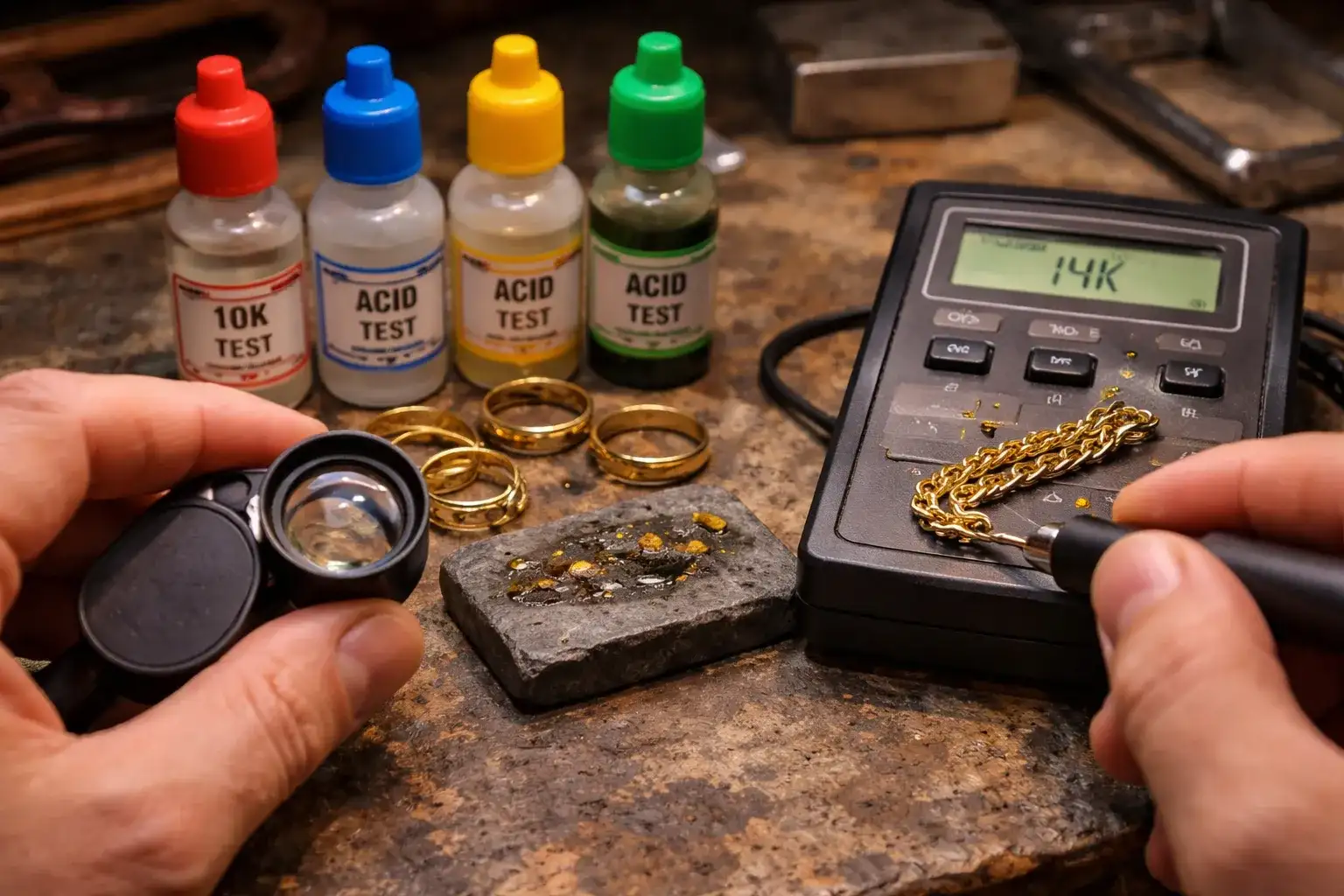
How to Test and Authenticate 525 Gold
Because 525 is an uncommon hallmark, verifying authenticity becomes especially important. Several testing methods exist, ranging from simple at-home checks to professional laboratory analysis. Combining multiple methods provides the most reliable authentication.
Visual and Physical Inspection
Start with basic visual examination. Genuine gold has a distinctive color that varies by purity and alloy composition: yellow gold should show a warm yellow tone (less intense than 18k or 22k), white gold appears silver-white (not the bright white of silver), and rose gold displays a pinkish hue from copper alloying.
Weight provides another important clue. Gold is extremely dense—a small piece of solid gold feels surprisingly heavy in your hand. If a supposedly 525 gold bracelet feels light for its size, it may be gold-plated over a lighter base metal. Compare to jewelry you know is solid gold to develop a feel for appropriate weight.
The magnet test, while simple, helps identify obvious fakes. Real gold is not magnetic—if a strong magnet attracts your 525-marked piece, it’s either not gold at all or contains significant magnetic metal components suggesting it’s not solid gold. Note that this test only rules out fakes; passing the magnet test doesn’t prove authenticity since many non-gold metals are also non-magnetic.
Acid Testing
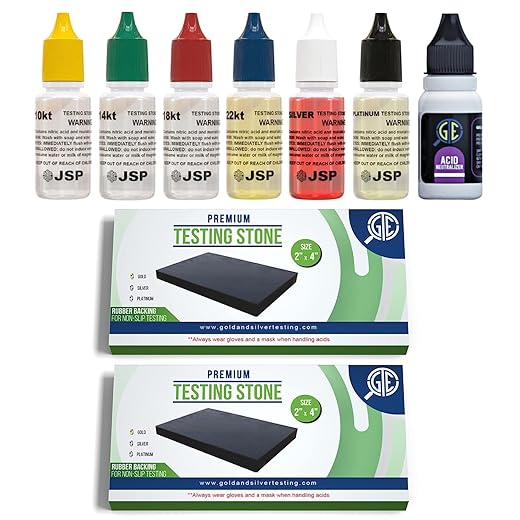
Acid testing kits, available from jewelry supply companies, provide reasonably accurate home testing. The process involves applying tiny amounts of nitric acid mixed with hydrochloric acid to an inconspicuous part of the jewelry (never on a visible surface). Different acid strengths react differently with various gold purities.
For 525 gold testing specifically: 10k testing acid should not turn the metal green or cause bubbling—525 contains more gold than 10k, so it should resist the 10k acid. 14k testing acid should show a reaction, typically turning slightly green or causing a color change—525 contains less gold than 14k, so it won’t resist 14k acid as well as true 14k gold would.
If the metal resists 10k acid but reacts to 14k acid, it confirms a gold content between 41.7% and 58.5%, which is consistent with 525 (52.5%). However, acid testing can damage jewelry if done incorrectly and doesn’t provide the precision needed to distinguish 525 from nearby purities like 500 or 585. Use acid testing as a general verification, not definitive proof.
🧪 Recommended Gold Testing Kit
Professional Gold Testing Kit with Multiple Acid Solutions
- ✓ Tests 10k, 14k, 18k, and 22k gold purity levels
- ✓ Ideal for verifying unusual hallmarks like 525
- ✓ Includes testing stone and dropper bottles
- ✓ Professional-grade accuracy for home use
Electronic Gold Testing
Electronic gold testers measure electrical conductivity to determine gold purity. More sophisticated than acid tests, these devices can distinguish between close purities and provide digital readouts of the approximate gold content percentage.
For 525 gold, an electronic tester should read approximately 52-53% gold content. This precision makes electronic testing valuable for confirming unusual hallmarks like 525. However, quality electronic testers cost $200-500, making them impractical for one-time use. Many jewelry stores and pawn shops offer electronic testing as a service, typically for $20-40.
Professional Appraisal and XRF Testing
When the piece is valuable or you need absolute certainty, professional appraisal is the gold standard (pun intended). A qualified jewelry appraiser or gemologist can perform X-ray fluorescence (XRF) testing, which precisely measures the elemental composition of metal alloys without damaging the jewelry.
XRF testing can determine gold content to within 0.5%, definitively confirming whether a mark is truly 525 or perhaps a worn 585 or misidentified 500. Professional appraisal typically costs $50-150 depending on the complexity of the piece and your location, but provides certified documentation of composition—valuable for insurance, resale, or estate purposes.
Seek appraisers certified by recognized organizations like the Gemological Institute of America (GIA) or the American Gem Society (AGS). These credentials ensure the appraiser follows professional standards and has proper training in jewelry evaluation.
Red Flags Suggesting Fake or Plated Jewelry
Watch for these warning signs that indicate a piece marked 525 may not be solid gold: The item feels too light for its size—gold’s density means real gold jewelry has substantial weight. Discoloration or wear reveals a different metal underneath—solid gold doesn’t “wear off” to show another color beneath. The mark appears alongside “GF” (gold filled), “GP” (gold plated), or “RGP” (rolled gold plate)—these modifiers indicate plating, not solid gold. The 525 stamp looks crudely applied, uneven, or different in quality from other markings on the piece—authentic hallmarks are professionally struck. The piece is priced far below what comparable solid gold jewelry costs—if it seems too good to be true, it probably is.
If you encounter multiple red flags, professional testing becomes essential before purchasing or accepting the piece’s stated value.
525 Italy and Other Geographic Marks
Geographic indicators accompanying purity marks provide valuable information about a piece’s origin and can help with authentication and dating. The combination of a purity mark with a country name represents dual information: the gold content and where the jewelry was manufactured.
“525 Italy” Explained
When you see “525 Italy” stamped on jewelry, it communicates two distinct facts: “525” indicates the gold purity (52.5% pure gold, 47.5% alloy metals), and “Italy” identifies the country of manufacture. Italy is a major gold jewelry producer with a centuries-long tradition of craftsmanship, particularly known for chain-making and decorative gold work.
Finding “525 Italy” on a piece suggests it was made in Italy, likely several decades ago, using a non-standard gold purity. Modern Italian jewelry more commonly bears “585 Italy” (14k gold) or “750 Italy” (18k gold) markings, as these align with current international standards. A 525 Italy piece indicates either vintage manufacturing from when non-standard purities were more acceptable, or production by a smaller workshop operating outside mainstream standards.
Italian jewelry marked 525 should still exhibit the quality craftsmanship Italy is known for. Examine the piece for smooth finishes, well-executed decorative elements, and solid construction. Italian makers often include additional maker’s marks—initials or symbols—that can help date and authenticate the piece through hallmark databases.
Not to Be Confused With 585 Italy
The marking “585 Italy” is far more common than “525 Italy.” The difference of just one digit—a “5” versus an “8” in the middle position—represents a significant change in gold content and value. Always use magnification when reading these marks to avoid confusing the two. The “585 Italy” mark indicates standard 14-karat gold from Italy and is widely recognized and valuable. The “525 Italy” mark indicates the less common, non-standard 12.6-karat gold from Italy.
If you’re purchasing Italian gold, verify which marking is actually present. Unscrupulous sellers might describe a 525 piece as “14k Italian gold,” which is technically incorrect even though 525 is close to 14k. The gold content and value difference matters financially.
Other Geographic Variations of 525
While “Italy” is the most common country indicator you’ll see with 525 marks, other possibilities exist. “525 UK” or “525 GB” can appear on British pieces, though these are rare—the UK’s official 12-carat standard was 500, not 525. Finding a genuine UK-hallmarked 525 piece would be exceptional. “525 Germany” or “525 DE” might appear on German jewelry. German hallmarking historically allowed more variation than the strictly regulated British system. Some German jewelers used non-standard purities, making 525 possible though still uncommon.
If you find a 525 mark with no country indication, origin becomes harder to determine. Continental European manufacture is most likely, but definitive identification would require examining style, construction techniques, and any additional maker’s marks present on the piece.
Frequently Asked Questions About 525 Jewelry
Is 525 gold real gold or fake?
Yes, 525 is real gold with 52.5% pure gold content and 47.5% alloy metals. It represents an uncommon but legitimate gold purity marking, equivalent to approximately 12.6 karats. The marking itself is authentic and indicates solid gold throughout the piece, not gold plating or gold-filled construction.
The confusion about authenticity often arises because 525 isn’t a standardized fineness in most modern jewelry markets. However, rarity doesn’t equal fakeness. Historical pieces from the UK during the 12-carat gold era, some European jewelry from the early to mid-20th century, and occasional modern pieces from artisan jewelers can legitimately carry this mark.
To verify authenticity, examine the piece for appropriate weight since gold is very dense and heavy for its size, check the color which should be consistent with gold alloying, and consider professional testing if the jewelry appears valuable. The 525 mark itself indicates real gold—but as with any jewelry purchase, independent verification of unmarked pieces is always wise.
Why is my ring stamped 525 instead of 14k?
Your ring is stamped 525 because it contains 52.5% pure gold rather than the 58.5% required for 14-karat gold. Several scenarios could explain this marking. First, your ring may be a vintage or antique piece from when non-standard gold purities were more common, particularly from European makers. Second, it’s possible the mark is actually 585 (standard 14k) but difficult to read clearly due to size, wear, or angle. The numbers can look similar when stamped small or partially worn.
Third, some manufacturers, especially historically, intentionally used 525 as an intermediate purity between 12k (500) and 14k (585). This wasn’t standard practice but did occur. Fourth, if the ring is modern and the 525 mark looks professional, it might come from a small workshop or artisan jeweler working outside mainstream manufacturing standards.
To determine which scenario applies, examine the mark carefully with a 10x loupe under good lighting. Look at the middle digit specifically—is it definitely a “2” or could it be an “8” that’s worn or poorly struck? If you’re uncertain, having the piece tested professionally will definitively establish the gold content. The difference between 525 and 585 affects the ring’s gold value by approximately 10%, so accurate identification matters for insurance and resale purposes.
What’s the difference between 525 and 585 gold?
The primary difference is gold content: 585 contains 58.5% pure gold and equals exactly 14 karats, while 525 contains 52.5% pure gold and equals approximately 12.6 karats. This 6-percentage-point difference means 585 gold has roughly 11% more pure gold by weight than 525 gold.
In practical terms, 585 represents the international standard marking for 14-karat gold and is widely recognized, easily valued, and simple to resell anywhere in the world. In contrast, 525 is non-standard, uncommon, and may present significant challenges when trying to sell or get fair value. Many buyers won’t recognize it or will be suspicious of its legitimacy.
For value calculation, if pure gold trades at $60 per gram, 585 gold yields $35.10 per gram of actual gold content versus $31.50 per gram for 525 gold. On a 20-gram bracelet, this difference amounts to $72 in gold value. The 585 marking also associates with contemporary jewelry manufacturing standards and quality control, while 525 more commonly appears on vintage, antique, or non-mainstream pieces.
Additionally, 585 gold has a slightly richer yellow color due to higher gold content, though the difference isn’t dramatic enough for most people to notice without direct comparison. Both purities are durable for everyday wear, though the higher alloy content in 525 makes it marginally harder and more scratch-resistant than 585.
How much is 525 gold worth per gram?
The value of 525 gold per gram depends on the current market spot price of pure gold. To calculate, multiply today’s spot price by 0.525 which represents the 52.5% purity. For example, if pure gold is trading at $65 per gram, 525 gold would be worth $65 × 0.525 = $34.13 per gram in terms of pure gold content.
However, this melt value represents only what the gold itself is worth, not what you’d actually receive when selling. The market value you can expect depends on several factors. Pawn shops typically offer 40-60% of melt value, so at a $34.13 per gram melt value, you might receive $13.65-$20.48 per gram. Online gold buyers and mail-in services generally offer better rates, typically 70-85% of melt value, translating to $23.89-$29.01 per gram in our example.
Private collectors might pay premium prices for 525 pieces with historical significance, exceptional craftsmanship, or documented provenance from recognized makers. In these cases, market value could exceed melt value significantly. However, such sales require finding knowledgeable buyers and take time.
For current calculations specific to today’s market, check the live gold spot price at financial websites like Kitco or BullionVault, then multiply by 0.525. Remember that spot prices fluctuate continuously during market hours, so values change daily. The formula gives you the base metal value—actual selling prices will be lower unless the piece has collectible value beyond its gold content.
Can 525 be sterling silver instead of gold?
No, 525 absolutely cannot be sterling silver. Sterling silver is always marked 925, indicating 92.5% pure silver content and 7.5% alloy metals. The numbers 525 and 925 look somewhat similar because they both end in “25,” which creates confusion, but they represent entirely different metals and purity levels.
The marking 525 specifically and exclusively indicates 52.5% pure gold content, not silver. There is no such thing as “525 silver” in legitimate jewelry hallmarking. If you have a piece stamped 525 that appears silver in color, you’re almost certainly looking at white gold rather than silver. White gold is created by alloying pure gold with white-colored metals such as palladium, nickel, or silver itself, which gives the resulting alloy a silver-white appearance.
To verify whether a 525-marked piece is white gold or potentially silver, consider the weight test. Gold is significantly denser and heavier than silver—roughly twice as heavy for the same volume. A 525 white gold ring will feel noticeably heavier than a comparable sterling silver ring of identical size and design. If the piece feels lightweight, either it’s very small or hollow, or you may need professional testing to verify the metal composition.
When in doubt, a simple acid test or electronic gold test performed by a jeweler can definitively identify whether the metal is gold or silver. This testing typically costs $20-40 and removes all uncertainty. Don’t assume silver just because the color appears white—white gold is extremely common in contemporary and vintage jewelry, while a 525 silver marking would be completely illegitimate.
Should I buy jewelry marked 525 or look for 14k instead?
For most buyers, choosing 14k gold marked 585 is the better decision compared to 525 gold. The 585 marking is internationally standardized, universally recognized, and significantly easier to resell if your circumstances change. It contains more actual gold (58.5% versus 52.5%), which means better value retention and appreciation as gold prices rise over time. Standard 14k jewelry also typically commands better market prices and finds buyers more easily.
However, 525 gold jewelry can be the right choice in specific circumstances. If you’re purchasing a documented vintage or antique piece where the 525 mark is part of the item’s historical authenticity and collectible value, it may be worth buying despite the non-standard purity. For everyday wear jewelry where durability matters more than gold content, the slightly higher alloy percentage in 525 makes it marginally more resistant to scratches and dents. If you’re a collector specifically interested in uncommon hallmarks and non-standard gold purities, 525 pieces offer uniqueness. If you’re buying primarily for personal use and enjoyment rather than investment or future resale, and the price is significantly lower than comparable 14k pieces, 525 can offer good value.
Before purchasing any 525-marked jewelry, take these steps: verify the marking is truly 525 and not a misread or worn 585 stamp by using a loupe, confirm the piece is priced appropriately below standard 14k market rates to reflect the lower gold content, and understand that resale will be more challenging than with standard purities. Buy primarily for personal use rather than viewing it as an investment.
If you have doubts about authenticity, can’t verify the marking clearly, or the piece is priced at or above standard 14k rates, walk away and choose standard 585 marked jewelry instead. The modest premium for proper 14k gold is worth it for the liquidity, recognition, and peace of mind. When in doubt, standard purities are always safer for most buyers.
Conclusion
The 525 hallmark represents a fascinating footnote in jewelry history—a legitimate gold purity marking that never achieved mainstream acceptance. At 52.5% pure gold (approximately 12.6 karats), jewelry stamped 525 contains real gold but falls outside the standardized purities that dominate today’s market. While most 525 pieces are vintage or antique, particularly from European makers, the marking is authentic when found on properly made solid gold jewelry.
The key takeaways for anyone encountering 525 gold: the marking is real but uncommon, it contains approximately 11% less gold than standard 14k (585) jewelry, resale is more challenging due to limited market recognition, and value should reflect its position between 12k and 14k gold. For collectors of vintage jewelry or uncommon hallmarks, 525 pieces offer historical interest and uniqueness. For everyday buyers seeking investment or easy liquidity, standard purities like 585 or 750 make more sense.
If you own or are considering purchasing 525 gold jewelry, always verify the marking with magnification since 525 and 585 can appear similar when stamped small. Have valuable pieces professionally tested to confirm authenticity and exact gold content. Price 525 jewelry at least 10% below comparable 14k pieces to account for the lower gold content and resale challenges. And most importantly, buy because you love the specific piece and intend to keep it, not primarily as an investment vehicle.
With the knowledge from this guide, you’re now equipped to confidently identify, evaluate, and make informed decisions about 525 gold jewelry. Whether you’re assessing an inherited piece, considering a vintage purchase, or simply satisfying your curiosity about an unfamiliar hallmark, you understand exactly what 525 means and how to approach it wisely.
For more information about gold jewelry and hallmarks, explore these related guides: Understanding Gold Purity and Karat Systems, How to Test Gold Jewelry at Home, and Essential Care Guide for Maintaining Your Gold Jewelry.

Hi, I’m Sara Hein, a passionate jewelry researcher and educator. I created Jewelry Carats to share well-researched insights on gemstones, precious metals, and jewelry care. My goal is making expert jewelry knowledge accessible to everyone.