
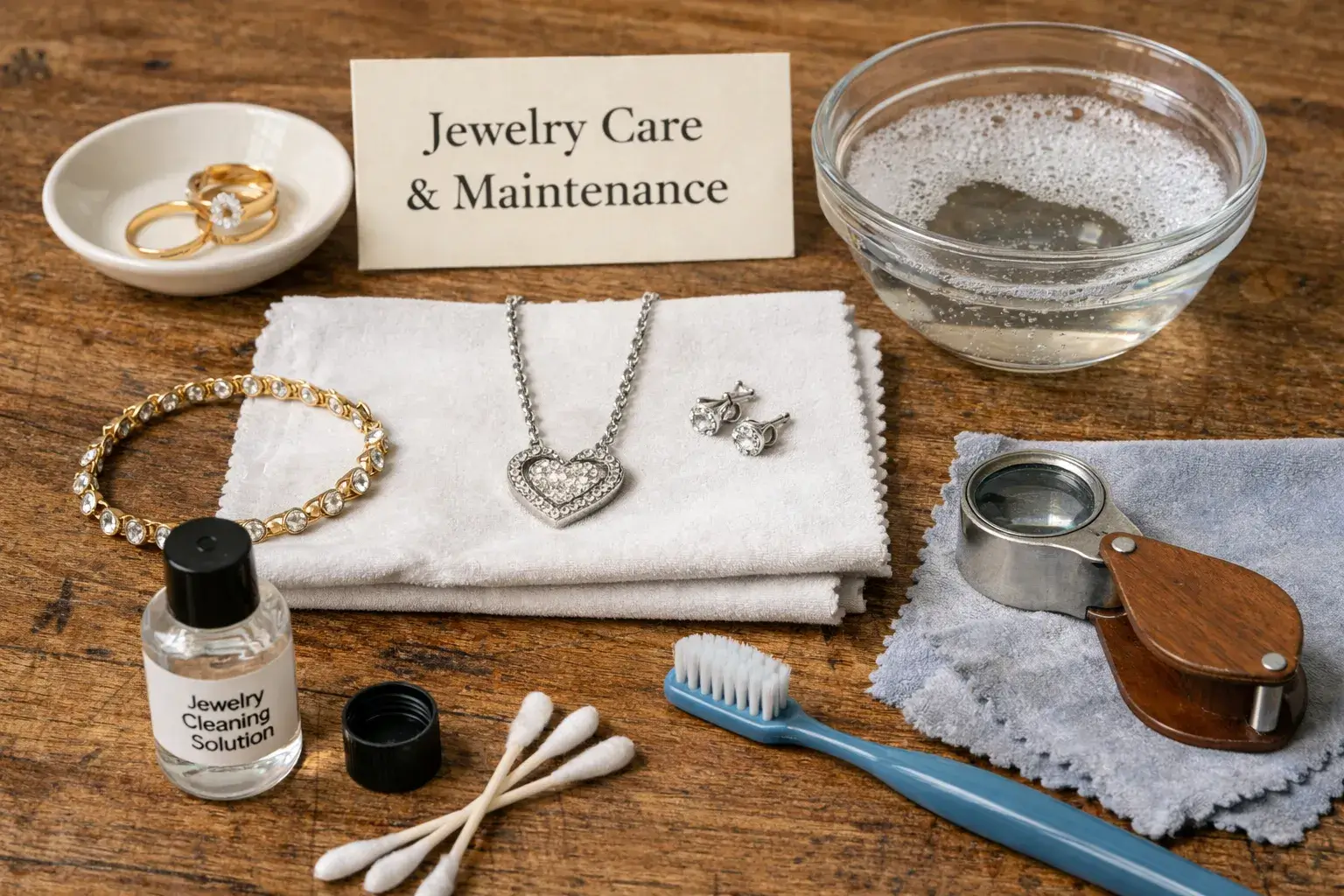
Proper jewelry care transforms treasured pieces from short-lived accessories into heirloom investments. Whether you own delicate diamond rings, vintage gold necklaces, or everyday silver earrings, understanding proper cleaning, storage, and maintenance techniques prevents damage, preserves value, and keeps your jewelry sparkling for generations.
This comprehensive guide covers professional care techniques for every jewelry type, from daily maintenance routines to deep cleaning methods, storage solutions, and when professional servicing becomes necessary.
Understanding Jewelry Materials & Their Care Needs
Different metals and gemstones require specific care approaches. What works for gold may damage pearls, and silver cleaning methods can harm certain gemstones.
Metal-Specific Care Requirements
| Metal Type | Durability | Main Care Concerns | Cleaning Frequency |
|---|---|---|---|
| Gold (14K-24K) | High | Scratches, dulling, dirt buildup in settings | Monthly deep clean, weekly rinse |
| Sterling Silver | Medium | Tarnishing, chemical reactions, scratches | Every 2-4 weeks, store with anti-tarnish strips |
| Platinum | Very High | Patina development (desirable), minimal tarnish | Every 2-3 months |
| White Gold | High | Rhodium plating wears off, yellowing | Monthly clean, re-plate every 1-2 years |
| Rose Gold | High | Copper content may darken over time | Monthly clean, gentle methods only |
Gemstone Hardness & Cleaning Safety
The Mohs scale determines a gemstone’s scratch resistance and influences cleaning methods. Harder stones (9-10) tolerate vigorous cleaning, while softer stones (below 7) require gentle care.
| Hardness Level | Gemstones | Safe Cleaning Methods | Avoid |
|---|---|---|---|
| Hard (9-10) | Diamond, Ruby, Sapphire | Ultrasonic, steam, brushing, all soaps | Sharp impacts (cleavage risk for diamonds) |
| Medium-Hard (7-8.5) | Emerald, Aquamarine, Topaz, Spinel | Warm water, mild soap, soft brush | Ultrasonic (especially emerald with inclusions) |
| Medium (6-7) | Moonstone, Tanzanite, Jade | Gentle wipe with damp cloth, minimal water | Harsh chemicals, ultrasonic, prolonged water |
| Soft (3-5.5) | Pearl, Opal, Turquoise, Coral | Dry soft cloth only, occasional damp wipe | Water immersion, chemicals, abrasion |
⚠️ Critical Warning: Never use the same cleaning method for all jewelry. Pearls, opals, emeralds, and organic gems (coral, amber, jet) are particularly vulnerable to water damage, chemicals, and ultrasonic cleaners. Always verify your gemstone’s specific care requirements before cleaning.
Daily & Weekly Jewelry Care Routine
Consistent maintenance prevents dirt accumulation and catches damage early. A simple routine keeps jewelry pristine between deep cleanings.
Daily Care Practices (30 seconds per piece)
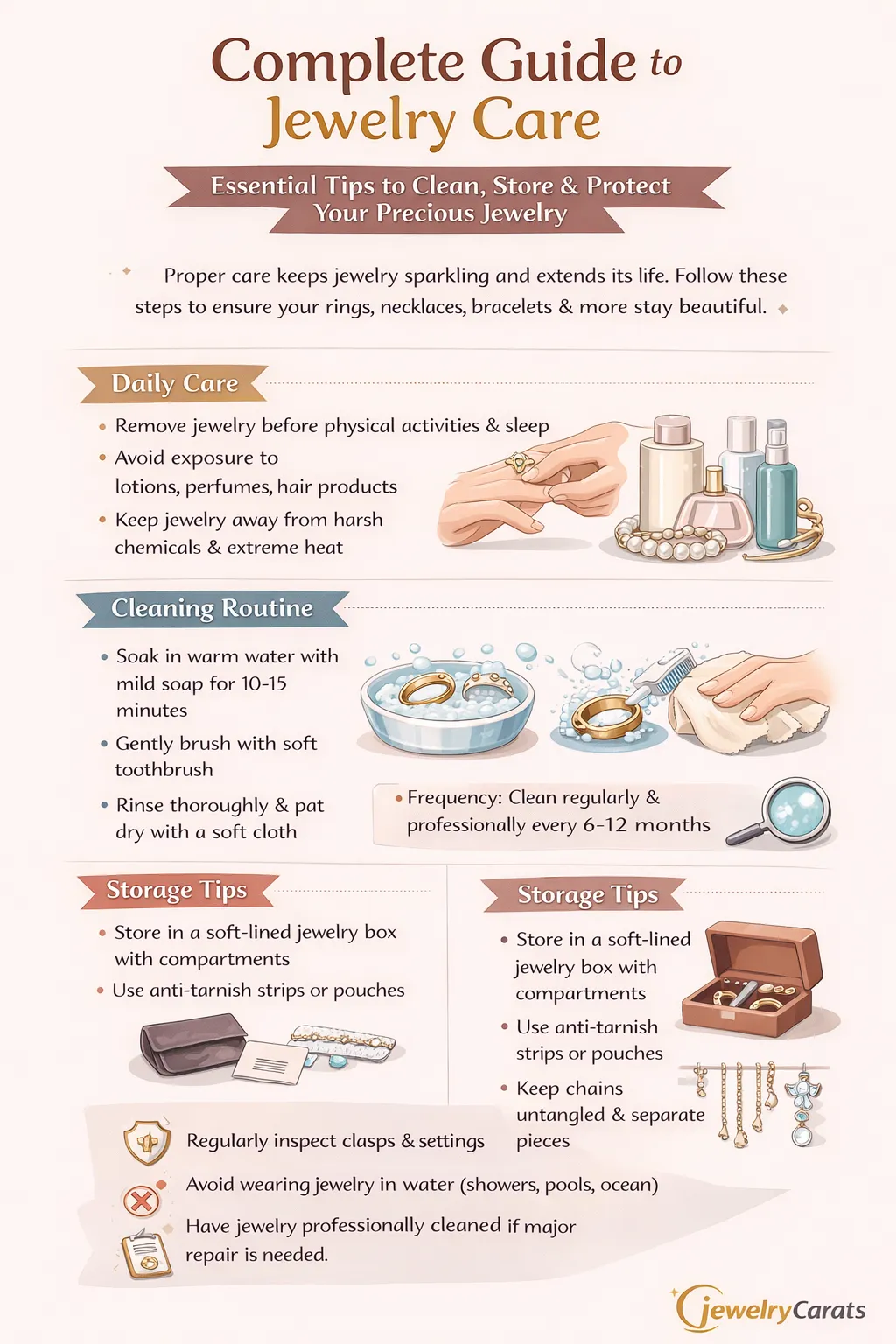
- Remove jewelry before: Showering, swimming, exercising, applying lotions/perfumes, cleaning with chemicals, sleeping
- Quick wipe: Use a soft microfiber cloth to remove oils and residue after wearing
- Visual inspection: Check for loose stones, bent prongs, damaged clasps, or wear patterns
- Proper placement: Don’t toss jewelry in a pile—use designated compartments or individual pouches
Weekly Maintenance (5-10 minutes)
- Gentle rinse for hard stones: Diamonds, sapphires, rubies in gold/platinum settings can be rinsed under warm water, then patted dry
- Soft cloth buffing: Restore shine to metal surfaces using a jewelry polishing cloth
- Check closures: Earring backs, necklace clasps, bracelet hinges—ensure all mechanisms function smoothly
- Rotate pieces: Give frequently-worn items a rest day to prevent accelerated wear
💎 Pro Tip: The “last on, first off” rule protects jewelry from cosmetic damage. Put jewelry on after applying makeup, lotion, and perfume. Remove it first when undressing to avoid snagging on clothing.
Deep Cleaning Methods by Jewelry Type
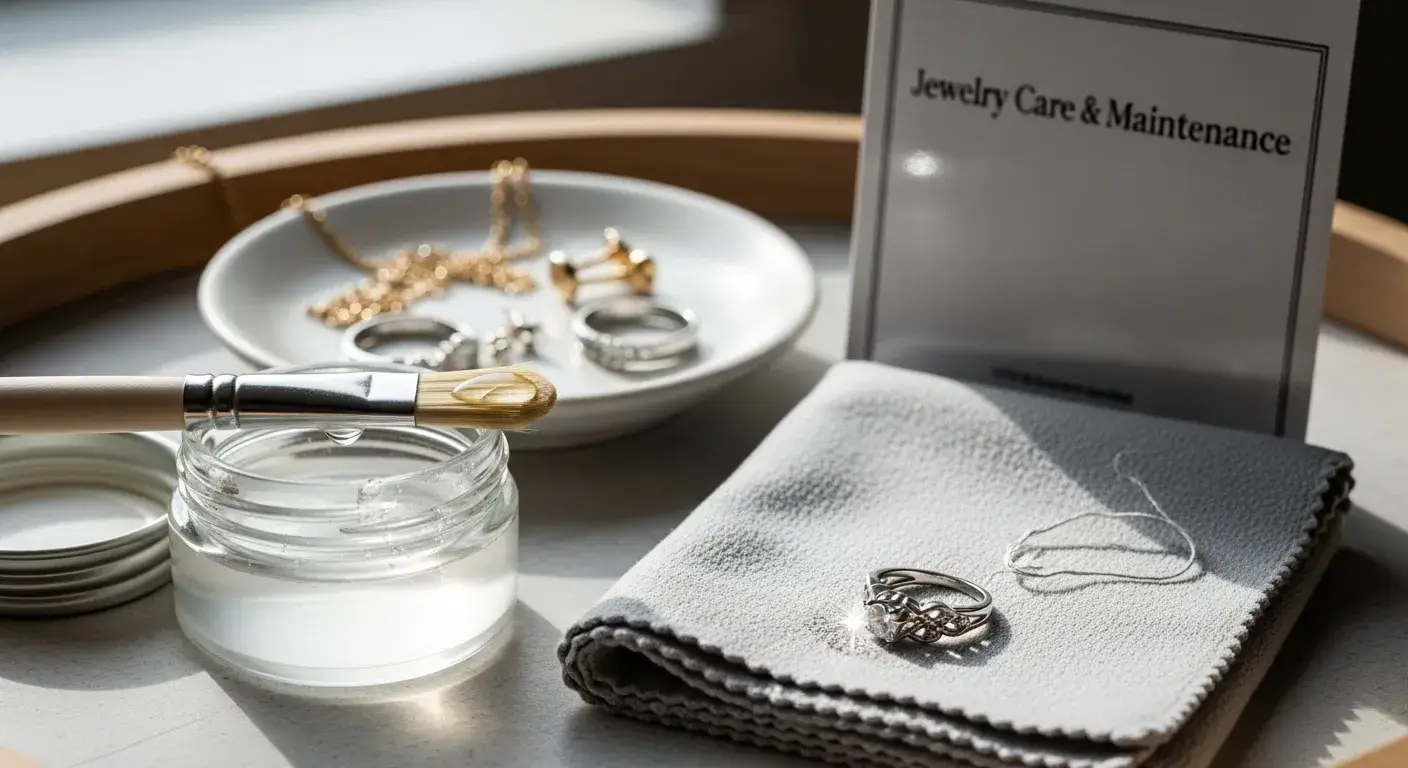
Monthly or quarterly deep cleaning removes embedded dirt, restores brilliance, and extends jewelry lifespan. Each metal and gemstone combination requires specific techniques.
Gold Jewelry Deep Cleaning
For solid gold with hard gemstones (diamonds, sapphires, rubies):
- Prepare solution: Mix 1/2 cup warm water with 3-4 drops mild dish soap (Dawn works well) in a small bowl
- Soak: Submerge jewelry for 15-30 minutes to loosen oils and dirt
- Gentle brushing: Use a soft-bristled toothbrush to clean under stone settings, in crevices, and around prongs
- Rinse thoroughly: Use lukewarm running water, ensuring no soap residue remains
- Dry completely: Pat with lint-free cloth, air dry for 10 minutes before storing
For gold with delicate gemstones (emeralds, opals, pearls):
- Skip the soaking—use only a slightly damp cloth
- Avoid brushing gemstones directly; clean only the metal portions
- Never submerge pearls, opals, or emeralds in water
Silver Jewelry Tarnish Removal
Silver tarnishes naturally when exposed to sulfur compounds in air. Multiple cleaning methods exist, from gentle polishing to chemical dips.
Method 1: Polishing Cloth (Safest for all silver)
- Use a silver polishing cloth with anti-tarnish compounds
- Rub gently in straight lines (not circles) to avoid scratching
- Continue until tarnish disappears and shine returns
- Best for: Lightly tarnished pieces, silver with gemstones
Method 2: Baking Soda Paste (Moderate tarnish)
- Mix 3 parts baking soda with 1 part water to form a paste
- Apply to tarnished areas with soft cloth or fingers
- Rub gently in circular motions for 2-3 minutes
- Rinse thoroughly under warm water
- Dry immediately and completely with soft cloth
Method 3: Aluminum Foil Bath (Heavy tarnish)
- Line bowl with aluminum foil, shiny side up
- Add 1 tablespoon baking soda + 1 tablespoon salt per cup of boiling water
- Place silver jewelry on foil (must touch foil for chemical reaction)
- Wait 5-10 minutes as tarnish transfers to foil
- Remove, rinse, dry immediately
- Warning: Only for plain silver—damages many gemstones
⚠️ Silver Cleaning Cautions:
- Never use aluminum foil method on silver with pearls, opals, turquoise, or porous stones
- Avoid silver dip solutions—they remove metal and can damage gemstones
- Don’t over-polish; excessive rubbing removes microscopic silver layers
- Antique oxidized silver has intentional blackening in recesses—preserve this patina
Diamond & Hard Gemstone Cleaning
Diamonds are extremely hard but attract oils that dull their brilliance. Regular cleaning maintains their “fire” and sparkle.
Weekly Quick Clean:
- Mix warm water with drop of dish soap
- Swirl jewelry in solution for 30 seconds
- Rinse under warm running water
- Dry with lint-free cloth
Monthly Deep Clean:
- Soak in ammonia solution (1 part ammonia to 6 parts water) for 30 minutes
- Brush gently around and under diamond settings
- Rinse thoroughly
- Inspect prongs and settings while cleaning—report any looseness to jeweler
✨ Diamond Brilliance Secret: Diamonds have a natural affinity for grease. Skin oils, lotions, and soaps create a film that reduces light reflection. Weekly cleaning removes this film, restoring the diamond’s signature sparkle. A properly cleaned diamond should show intense “fire” (colored light flashes) in natural daylight.
Pearl & Delicate Gemstone Care
Pearls, opals, emeralds, and organic gems require the gentlest care. Water, chemicals, and abrasion damage these vulnerable materials.
Pearl Cleaning (every 3-4 wearings):
- Wipe with soft, barely damp cloth immediately after wearing
- Never submerge pearls in water (damages nacre and silk thread)
- Avoid contact with perfumes, hairspray, cosmetics
- Store flat in breathable cloth pouch (pearls need moisture from air)
- Restring every 1-2 years if worn frequently
Emerald Care:
- Emeralds contain natural fissures often filled with oil/resin
- Never use ultrasonic cleaners (causes fracturing)
- Avoid prolonged water exposure and temperature changes
- Clean only with slightly damp soft cloth
- Professional re-oiling every few years maintains appearance
Opal Care:
- Opals contain 5-10% water and can dry out/crack
- Store with damp cotton ball in sealed bag (maintains moisture)
- Never expose to heat, direct sunlight, or dry environments
- Clean only with damp cloth—no soaps or chemicals
- Remove before showering, swimming, or dishwashing
Professional Cleaning Methods & Equipment
Jewelers use specialized equipment that delivers superior cleaning results. Understanding these methods helps you decide between home care and professional service.
Ultrasonic Cleaners
How they work: High-frequency sound waves (20,000-40,000 Hz) create microscopic bubbles that implode, dislodging dirt from hard-to-reach areas.
Safe for:
- Diamonds in stable settings
- Rubies and sapphires without fractures
- Solid gold and platinum (no hollow construction)
Dangerous for:
- Emeralds (causes fracturing)
- Pearls, opals, turquoise (can shatter)
- Loose or damaged stone settings
- Treated or fracture-filled diamonds
- Antique jewelry with fragile construction
Steam Cleaning
How it works: Pressurized steam (300°F+) blasts away dirt and oils without abrasion.
Best for: Diamonds, rubies, sapphires in secure settings with no fragile components
Never use on: Any heat-sensitive stones (pearls, opals, tanzanite, emeralds), jewelry with glue-set stones, vintage pieces with weak solder joints
Professional Polishing & Refinishing
Jewelers use buffing wheels with polishing compounds to remove surface scratches and restore mirror-like shine to metals.
When you need it:
- Deep scratches on gold or platinum that home polishing can’t remove
- White gold rhodium plating has worn off (yellowing visible)
- Silver severely tarnished beyond home cleaning methods
- Restoration of antique pieces to original luster
Polishing cautions:
- Each polishing removes microscopic metal layers—limit to once every 1-2 years
- Excessive polishing can thin prongs and weaken settings
- Some antique patinas are valuable—verify before polishing
Proper Jewelry Storage Solutions
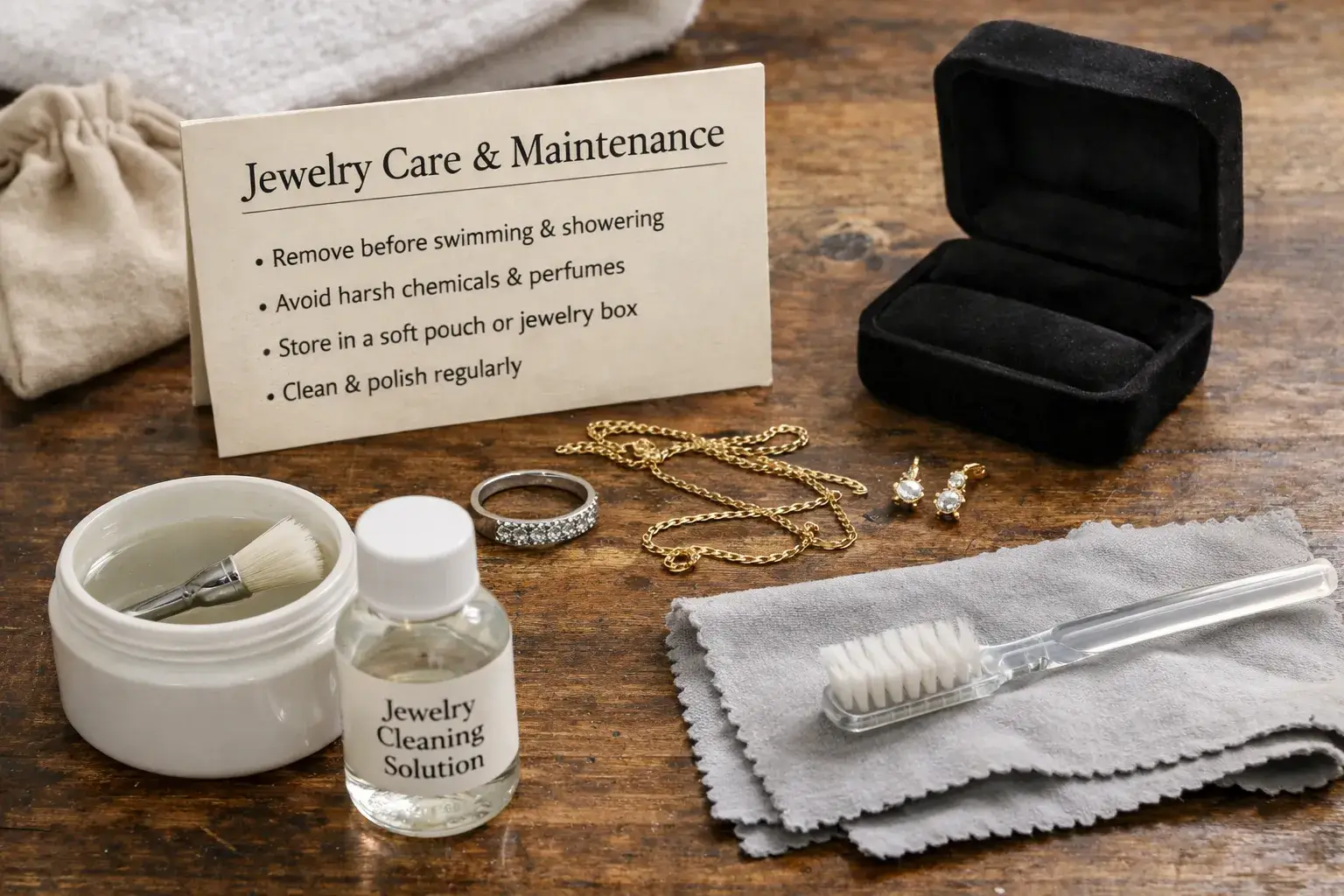
Storage directly impacts jewelry longevity. Poor storage causes scratches, tangling, tarnish acceleration, and metal corrosion.
Storage Principles by Metal Type
| Metal | Storage Requirements | What to Avoid |
|---|---|---|
| Gold | Soft cloth pouches, separate compartments, minimal air exposure | Contact with harder metals, extreme temperature/humidity |
| Sterling Silver | Anti-tarnish cloth, sealed containers, tarnish prevention strips, low humidity | Open air exposure, rubber bands, latex, wool (contains sulfur) |
| Platinum | Soft pouches, separate from other metals (prevents scratching them) | Impact with hard surfaces (although platinum resists scratching) |
| Costume Jewelry | Dry environment, separate storage from fine jewelry | Moisture (causes metal flaking), mixing with genuine pieces |
Gemstone-Specific Storage
- Diamonds: Store separately (can scratch everything else, including other diamonds)
- Pearls: Store flat in breathable cloth, never airtight containers (need air moisture), keep away from other jewelry
- Opals: Store with damp cotton ball in sealed bag to maintain moisture content
- Soft stones (turquoise, coral, amber): Individual soft pouches to prevent scratching
Ideal Storage Conditions
- Temperature: 60-75°F (15-24°C), stable (avoid attics/basements)
- Humidity: 45-55% for most jewelry; slightly higher (55-60%) for pearls and opals
- Light: Dark storage prevents color fading in gemstones like amethyst, kunzite, topaz
- Air circulation: Moderate for most; pearls need air exposure, silver needs minimal exposure
🔒 Security Storage Tips:
- Don’t store all valuable jewelry in obvious locations (jewelry boxes on dressers)
- Use a home safe rated for jewelry (fire-resistant, bolted to floor)
- Consider bank safe deposit boxes for pieces worn infrequently
- Document jewelry with photos, appraisals, and serial numbers for insurance
- Never post photos of valuable jewelry on social media with location tags
Maintenance Schedule by Jewelry Type
Consistent maintenance prevents small issues from becoming costly repairs. Follow this professional-recommended schedule.
Engagement Rings & Daily-Wear Pieces
- Daily: Quick wipe with soft cloth after removal
- Weekly: Gentle cleaning with soap and water
- Monthly: Deep cleaning, thorough prong inspection
- Every 6 months: Professional inspection of settings, prongs, clasps
- Annually: Professional cleaning, re-tipping worn prongs if needed
Sterling Silver Jewelry
- After each wear: Wipe to remove skin oils
- Every 2-4 weeks: Polishing cloth treatment or gentle cleaning
- Every 3-6 months: Deep tarnish removal if needed
- Storage: Check anti-tarnish strips quarterly, replace when discolored
Pearl Jewelry
- After each wear: Wipe with barely damp soft cloth
- Every 6 months: Inspect silk thread for fraying or stretching
- Every 1-2 years: Professional restringing if worn regularly
- Every 3-5 years: Restringing for occasionally-worn pieces
Vintage & Antique Jewelry
- Annually: Professional inspection for metal fatigue, loose stones, worn solder joints
- Minimal home cleaning: Very gentle methods only
- Climate control: Avoid extreme temperature and humidity fluctuations
- Professional conservation: Use jewelers specializing in antique restoration
Common Jewelry Damage & How to Prevent It
Understanding damage causes allows preventive care that extends jewelry lifespan dramatically.
The Top 8 Causes of Jewelry Damage
1. Chemical Exposure
Chlorine (pools, cleaning products) causes gold and silver pitting and can dissolve solder joints. Hair bleach discolors gold. Remove jewelry before swimming, cleaning, or using beauty chemicals.
2. Physical Impact & Abrasion
Hard knocks chip diamonds (despite their hardness), bend prongs, and crack softer gemstones. Remove jewelry during exercise, heavy lifting, sports, and household work.
3. Cosmetic Buildup
Lotions, perfumes, sunscreen, and makeup accumulate in settings, dull gemstones, and create films on metal surfaces. Always apply cosmetics before putting on jewelry.
4. Improper Storage
Jewelry pieces touching each other cause scratches, tangling, and prong damage. Store each piece separately in individual compartments or soft pouches.
5. Water Damage
Prolonged water exposure damages pearls, opals, emeralds, and weakens adhesives in assembled jewelry. Shower steam alone can harm delicate pieces. Remove jewelry before bathing.
6. Temperature Extremes
Sudden temperature changes can fracture gemstones with inclusions or internal stresses. Opals can crack from heat. Avoid leaving jewelry in hot cars or cold outdoor locations.
7. Delayed Repairs
Ignoring loose prongs, bent clasps, or frayed chains leads to lost stones and irreparable damage. Inspect jewelry regularly and repair issues immediately.
8. Incorrect Cleaning Methods
Using ultrasonic cleaners on emeralds, steam cleaning pearls, or harsh chemicals on delicate stones causes permanent damage. Always verify safe cleaning methods for your specific jewelry.
When to Seek Professional Jewelry Services
Recognizing when professional intervention is necessary prevents further damage and ensures proper restoration.
Immediate Professional Attention Required:
- Loose stones: Any movement or rattling sounds indicate compromised settings—stop wearing immediately
- Bent or damaged prongs: Even slightly bent prongs can’t hold stones securely
- Broken or weakened clasps: Necklaces and bracelets with faulty closures risk loss
- Cracked or chipped gemstones: Cracks can propagate with wear; require professional assessment
- Visible solder joint separation: Indicates metal fatigue; piece may break completely
Routine Professional Services (Every 6-12 Months):
- Prong inspection and re-tipping: Prongs wear thin over time; re-tipping prevents stone loss
- Professional cleaning: Ultrasonic and steam cleaning reach areas impossible at home
- Settings tightening: Bezel and pave settings gradually loosen; professional tightening prevents losses
- Rhodium re-plating: White gold’s rhodium coating wears off yearly; re-plating restores white color
Specialized Services as Needed:
- Pearl restringing: Every 1-2 years for frequently worn pearls
- Stone re-cutting/polishing: Removes chips or scratches from valuable gemstones
- Antique jewelry restoration: Specialized jewelers repair vintage pieces using period-appropriate techniques
- Appraisals: Every 2-3 years for insurance, or after any repair work
💡 Choosing a Jeweler for Repairs:
- Verify certification (GIA, AGS, or equivalent gemological credentials)
- Ask about their specific experience with your jewelry type (antique, high-end, etc.)
- Request detailed written estimates before authorizing work
- Inquire about warranty/guarantee on repair work
- For valuable pieces, consider jewelers who work on-premises (not outsourced repairs)
Travel Care for Jewelry
Traveling with jewelry requires extra precautions to prevent loss, damage, and theft.
Packing & Transportation
- Use jewelry travel case: Padded, zippered cases with individual compartments
- Carry-on only: Never pack valuable jewelry in checked luggage
- Minimize what you bring: Bring only pieces you’ll actually wear
- Documentation: Photograph jewelry before traveling; carry appraisal copies separately
- Insurance: Verify travel coverage with your jewelry insurance or homeowner’s policy
Hotel Storage
- Use hotel safe for all jewelry when not wearing (not just valuable pieces)
- If no in-room safe, request safe deposit box at front desk
- Never leave jewelry visible in hotel room (on nightstand, bathroom counter)
- Don’t store jewelry in luggage in hotel room
Beach & Pool Precautions
- Remove all jewelry before swimming: Chlorine damages metals; stones can loosen in cold water; rings easily slip off
- Apply sunscreen before putting on jewelry: Prevents buildup in settings
- Avoid wearing jewelry on beach: Sand scratches everything; loss risk from burial or waves
- If you must wear pieces: Simple studs only; remove rings (fingers swell in heat)
Jewelry Care Myths Debunked
Common misconceptions about jewelry care can cause more harm than good.
❌ MYTH: “Toothpaste is a great jewelry cleaner.”
✓ TRUTH: Toothpaste is too abrasive for most jewelry. It scratches soft gemstones, damages pearl nacre, and can remove metal. Modern toothpastes contain harsh whitening agents that corrode metals.
❌ MYTH: “Ultrasonic cleaners are safe for all jewelry.”
✓ TRUTH: Ultrasonic cleaners can fracture emeralds, damage pearls, loosen fragile settings, and shatter treated or fracture-filled stones. Use only for diamonds, rubies, sapphires in secure settings.
❌ MYTH: “Professional cleaning is unnecessary with home care.”
✓ TRUTH: Professional jewelers catch early signs of damage invisible to untrained eyes: thinning prongs, loose settings, metal fatigue. Annual professional inspections prevent 80% of stone losses.
❌ MYTH: “If jewelry is waterproof, it’s safe for swimming.”
✓ TRUTH: “Waterproof” means resistant to water damage, not chemical damage. Pool chlorine and ocean salt corrode metals and can dissolve solder. Water temperature changes can also loosen settings.
❌ MYTH: “Diamonds can’t scratch or chip.”
✓ TRUTH: While diamonds are the hardest natural material, they have cleavage planes and can chip from hard impacts. Diamonds also scratch each other, requiring individual storage.
Building Your Jewelry Care Kit
Essential tools and supplies make home jewelry care effective and safe.
Basic Kit (Under $50):
- Soft jewelry polishing cloth (untreated microfiber)
- Silver polishing cloth with anti-tarnish treatment
- Mild dish soap (Dawn or similar)
- Soft-bristled toothbrush or baby toothbrush
- Lint-free cloths (cotton or microfiber)
- Small bowl for cleaning solutions
- Anti-tarnish storage strips or bags for silver
Intermediate Kit ($50-150):
Add to basic kit:
- Jeweler’s loupe (10x magnification) for inspecting prongs and settings
- Jewelry cleaning solution specific to your jewelry types
- Pearl cleaning cloth (ultra-soft)
- Travel jewelry case with compartments
- Baking soda (for silver tarnish removal)
- Professional jeweler’s rouge cloth (for polishing)
Advanced Kit ($150-300):
For serious collectors:
- Home ultrasonic cleaner (use cautiously, only for appropriate jewelry)
- Jewelry steam cleaner (for diamonds in secure settings)
- Complete set of jewelry polishing cloths for different metals
- Professional jewelry cleaning solutions (ammonia-based for diamonds)
- Humidity-controlled storage cabinet
- Digital scale (for tracking metal weight, detecting wear)
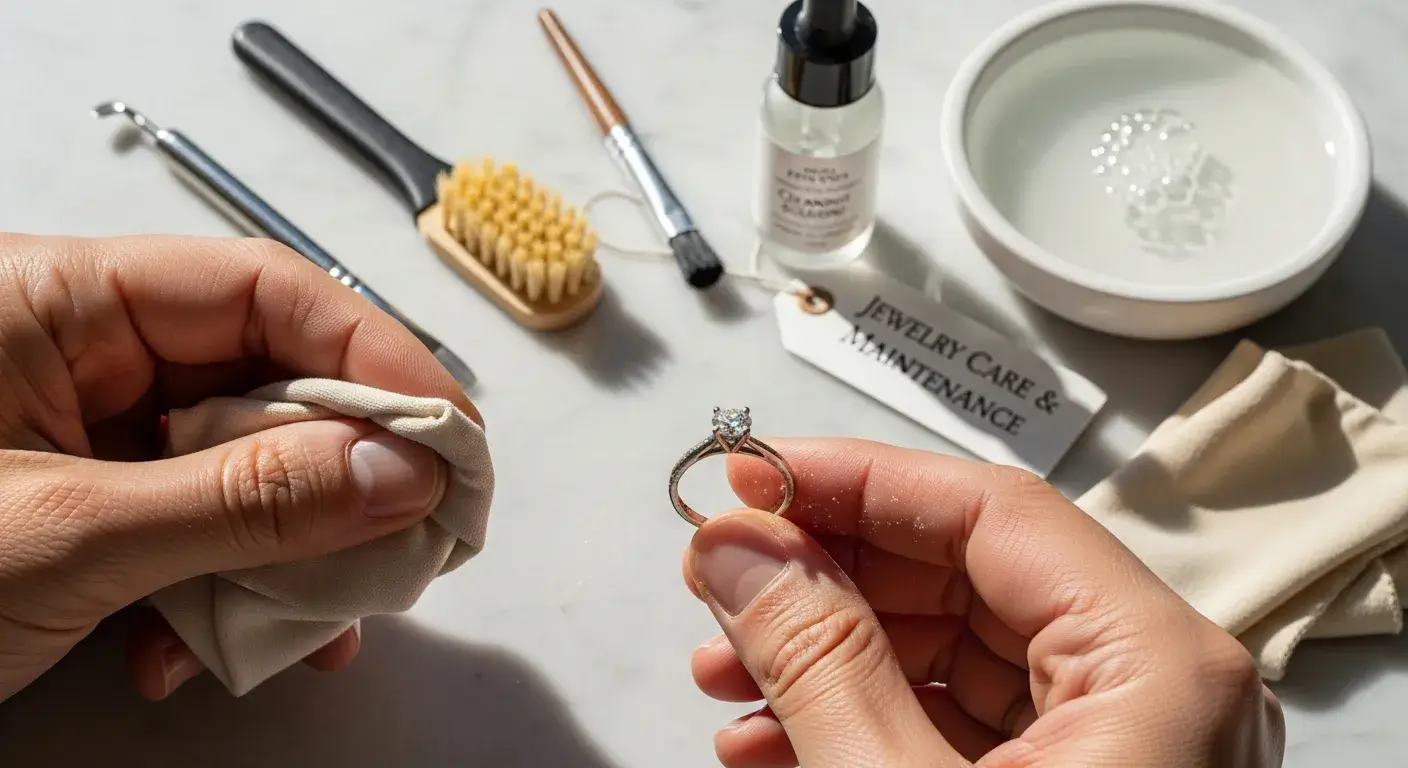
The Complete Guide to Jewelry Care & Maintenance (2026)
Jewelry Care FAQ
Final Thoughts: Jewelry Care as Investment Protection
Proper jewelry care isn’t just about maintaining appearance—it’s about preserving value, preventing loss, and ensuring pieces last for generations. A $5,000 engagement ring with neglected maintenance loses both beauty and security. The same ring with consistent care retains brilliance, structural integrity, and full value.
The most valuable lesson: consistency matters more than intensity. Weekly gentle cleaning prevents the need for aggressive restoration. Daily removal before risky activities prevents most damage. Professional inspections catch problems before they cause loss.
Invest 5 minutes weekly in jewelry care, and your pieces will remain as stunning as the day you acquired them—ready to become treasured heirlooms rather than cautionary tales of “I wish I’d taken better care of it.”