
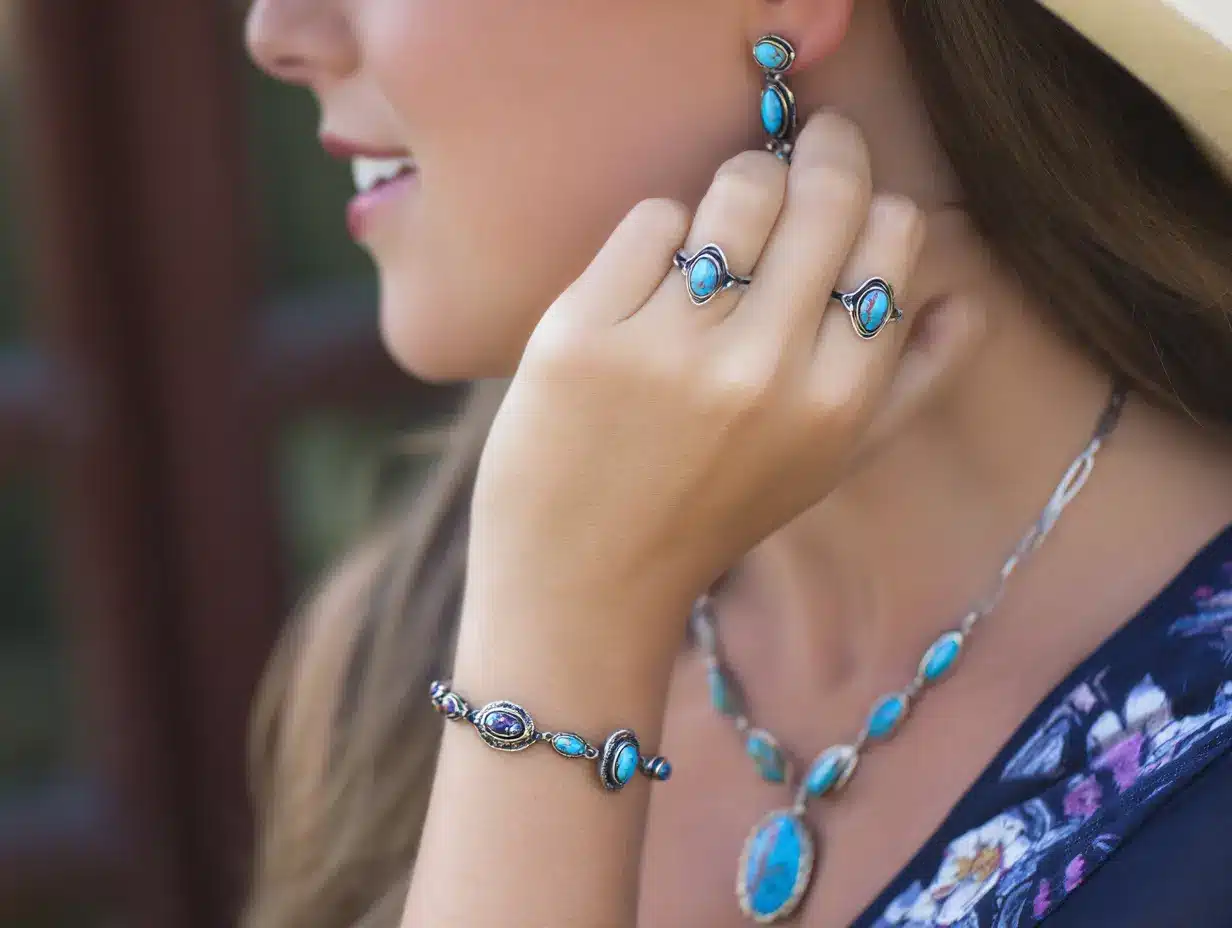
50 Years of Southwestern Elegance (1975-2025)
The history of Carolyn Pollack jewelry spans five remarkable decades, transforming from a modest Albuquerque garage workshop in 1975 into one of America’s most recognizable Southwestern jewelry brands. From pioneering the sterling silver and turquoise aesthetic on QVC to building a manufacturing empire that produced over 650,000 pieces annually, Carolyn Pollack’s journey reflects both entrepreneurial vision and unwavering commitment to authentic Southwestern craftsmanship. This comprehensive guide traces the complete timeline, explains the often-confusing relationship between Relios, Carolyn Pollack, and American West brands, and provides collectors with practical information on identifying, valuing, and caring for these distinctive pieces.
Whether you inherited vintage Relios pieces from the 1980s, purchased American West jewelry during a QVC show, or discovered Carolyn Pollack designs at estate sales, understanding this brand’s rich history enhances both appreciation and value. The 2023 transition that saw manufacturing move to QVC marks another pivotal chapter, making this an ideal time to document the complete story of how a Minnesota-born designer became synonymous with Southwestern elegance.
The Early Years: From Minnesota to New Mexico (1975-1980)
Carolyn’s Background and Design Beginnings
Carolyn Pollack’s creative journey began long before she founded her jewelry empire. Growing up in Minnesota, she developed her artistic sensibility through a unique collaboration with her mother, a gifted seamstress who brought Carolyn’s design visions to life in fabric and clothing. This early experience instilled both an appreciation for handcraftsmanship and the confidence to pursue original design work rather than following existing patterns.
After graduating from college in Minnesota, Carolyn’s creative focus shifted from fashion to jewelry. Her first visit to New Mexico in the mid-1970s proved transformative—she immediately recognized the state as her “forever home,” captivated by the vibrant artistic traditions, dramatic landscapes, and rich multicultural heritage of the Southwest. The region’s blend of Native American, Hispanic, and frontier influences would become the defining aesthetic of her jewelry designs for the next fifty years.
Meeting Bill Pollack and Founding Relios Inc
In 1975, Carolyn married Bill Pollack, a jeweler who shared her entrepreneurial spirit. Together, they founded Relios Inc in Albuquerque, New Mexico, operating initially from their garage. Bill assumed the role of President and business strategist, while Carolyn served as Vice President and Lead Jewelry Designer. This partnership proved essential—Bill’s business acumen and manufacturing expertise complemented Carolyn’s creative vision, allowing the company to scale production while maintaining quality standards.
The Relios name (derived from “reliable”) signaled their commitment to dependable craftsmanship. From the outset, they established principles that would guide the company for decades: using authentic .925 sterling silver, sourcing natural gemstones rather than synthetic alternatives, and manufacturing entirely in the United States. These weren’t merely marketing positions but fundamental business decisions that differentiated Relios from competitors increasingly shifting production overseas.
First Workshop in Albuquerque
By the late 1970s, the Pollacks had moved beyond garage production into a proper workshop facility in Albuquerque’s South Valley. This location proved strategic—New Mexico offered access to turquoise and other regional gemstones, proximity to Native American artistic communities, and lower operating costs than coastal cities. More importantly, designing and manufacturing in the heart of the Southwest ensured authenticity; the jewelry reflected genuine regional aesthetics rather than mass-produced interpretations created elsewhere.
During these formative years, Carolyn developed signature design elements that would define her work: bold sterling silverwork featuring intricate stamping and filigree, vibrant color combinations pairing turquoise with coral or lapis, and nature-inspired motifs including feathers, flowers, and wildlife. These early pieces, now highly collectible, established the aesthetic vocabulary that continues in American West Jewelry today.
Building Relios: The JCPenney Era (1980s)
Expansion into Mainstream Retail
The 1980s marked Relios’s transformation from regional artisan workshop to national jewelry supplier. After a decade refining manufacturing processes and building inventory capacity, the Pollacks pursued mainstream retail distribution. Their timing aligned perfectly with growing consumer interest in Southwestern aesthetics—sparked by Georgia O’Keeffe’s legacy, Native American rights movements, and the romantic appeal of Western landscapes.
Relios jewelry caught the attention of JCPenney buyers seeking authentic Southwestern sterling silver pieces to meet customer demand. The partnership proved mutually beneficial: JCPenney gained exclusive access to American-made Southwestern jewelry with genuine design credentials, while Relios secured consistent large-volume orders enabling significant manufacturing expansion.
Becoming JCPenney’s Main Sterling Supplier
By the mid-1980s, Relios had become JCPenney’s primary sterling silver jewelry supplier, a remarkable achievement for a company barely a decade old. This relationship required substantial production capacity—the Pollacks expanded their Albuquerque facility and hired skilled silversmiths and stone setters to meet demand. Production volumes that had been measured in hundreds of pieces annually grew to thousands, then tens of thousands.
This era established manufacturing systems and quality control processes that would later support even larger QVC orders. Pieces from this period typically feature the Relios crescent moon and R hallmark alongside .925 sterling stamps. JCPenney distribution introduced millions of Americans to Southwestern-style sterling silver jewelry, creating a customer base that would later follow Carolyn to QVC.
Production Scale and Manufacturing Growth
The manufacturing infrastructure built during the JCPenney years proved essential for future success. The Pollacks invested in specialized equipment for casting, stamping, stone-setting, and finishing. They developed training programs to teach traditional silversmithing techniques while maintaining production efficiency. This balance between artisan craftsmanship and industrial-scale manufacturing became a defining characteristic of Relios jewelry—pieces that appeared handcrafted but could be produced in significant quantities.
By 1987, when QVC launched 24-hour broadcasting, Relios had the production capacity, quality systems, and inventory management necessary to serve television retail’s unique demands. The JCPenney relationship provided an invaluable training ground for the even larger opportunity ahead.
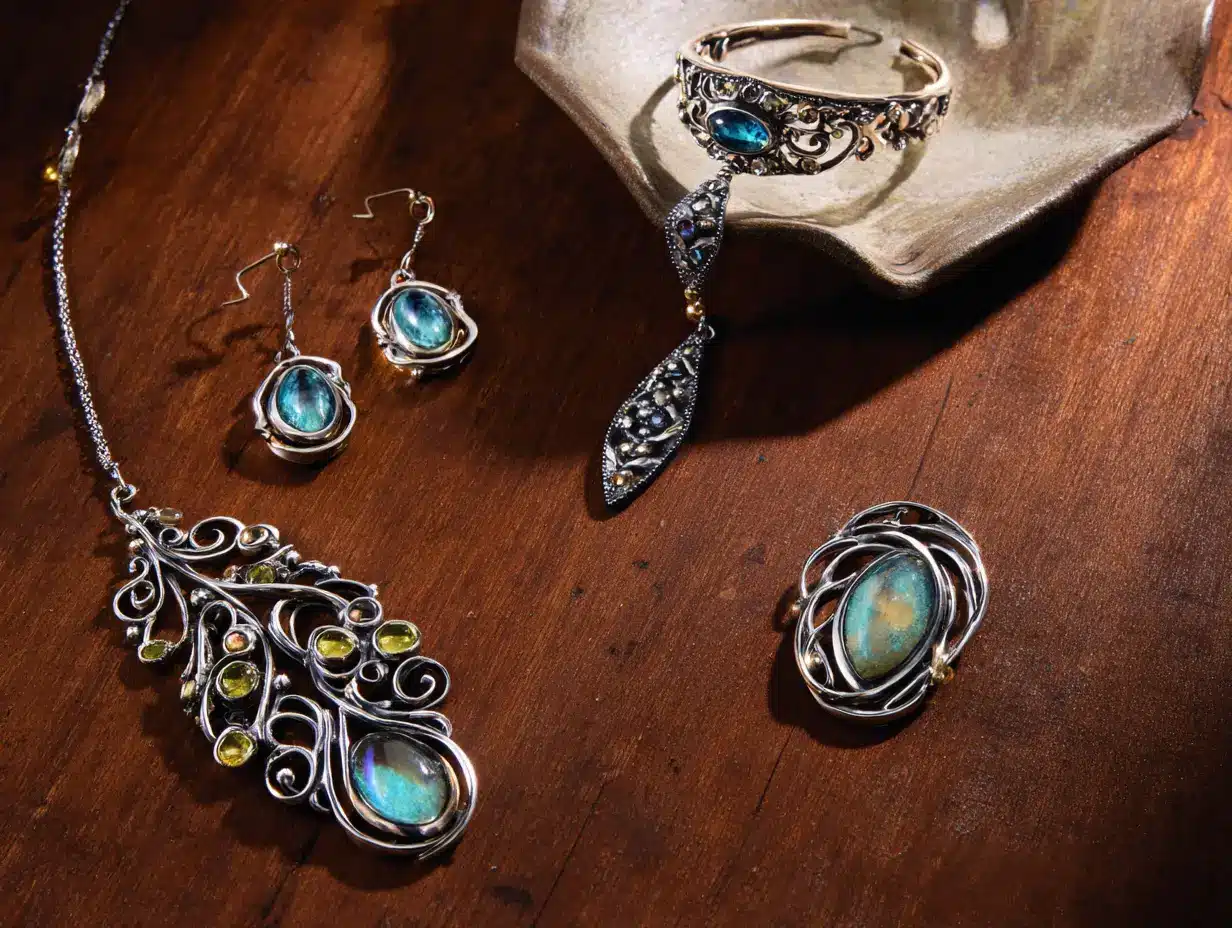
The QVC Revolution (1987-1994)
Relios Launches on QVC (1987)
In 1987, QVC (Quality Value Convenience) expanded from limited broadcasting to 24-hour-per-day programming, seeking jewelry vendors who could supply high-quality merchandise in substantial quantities. Relios Inc perfectly fit these requirements—authentic Southwestern designs, established manufacturing capacity, and American-made provenance that resonated with QVC’s target demographic.
The initial Relios presentations on QVC exceeded expectations. Television shopping proved ideally suited for jewelry sales—cameras could showcase intricate silverwork details, demonstrate how gemstone colors caught light, and display pieces on models in ways print catalogs couldn’t match. The Southwestern aesthetic particularly translated well on screen, with turquoise blues and coral reds providing visual pop that captured viewers’ attention.
24/7 Broadcasting Begins
QVC’s round-the-clock format meant Relios needed inventory available continuously, not just for scheduled shows. This required maintaining extensive stock across multiple product lines—rings, bracelets, necklaces, earrings—in various sizes and gemstone color variations. The Pollacks responded by further expanding production capacity and implementing sophisticated inventory management systems.
During this period, the company employed over 220 associates at their Albuquerque facility. By 2011, they were creating 577 new designs annually and shipping more than 650,000 units. This scale made Relios one of New Mexico’s largest jewelry manufacturers, yet the company maintained its Made in USA commitment even as competitors shifted production overseas to reduce costs.
Carolyn Joins On-Air (1994)
In 1994, seven years after Relios began selling on QVC, Carolyn Pollack made her first on-air appearance as a guest presenter. This decision proved transformative for the business. As Carolyn later recalled, “Somehow, I let [Bill] talk me into representing our jewelry on QVC. I had no clue what I was doing! I had zero on-air experience.”
Despite initial nervousness, Carolyn’s genuine passion for her designs and knowledge of Southwestern culture resonated powerfully with viewers. She didn’t simply sell jewelry—she told stories about turquoise mines, explained Native American symbolism, and shared the inspiration behind specific pieces. This educational, relationship-focused approach built an intensely loyal customer base. Many collectors arranged their schedules around Carolyn’s QVC appearances, known for offering exclusive designs and special values.
The personal connection Carolyn established with customers proved invaluable. QVC hosts, models, and viewers developed genuine relationships with her over 30 years of regular appearances. This customer loyalty would later help smooth the 2023 transition when manufacturing operations changed hands.
Brand Evolution: Understanding Relios, Carolyn Pollack, and American West
The Relios Inc Parent Company
Understanding the relationship between Relios, Carolyn Pollack Jewelry, and American West Jewelry confuses many collectors, but the structure is straightforward once explained. Relios Inc, founded in 1975 by Bill and Carolyn Pollack, is the parent manufacturing company that has operated continuously from Albuquerque for nearly fifty years. This corporate entity owns the production facilities, employs the workforce, and holds the manufacturing licenses.
Early jewelry pieces (1975-1990s) typically bore only the Relios hallmark—a crescent moon with an R above it, alongside .925 sterling silver stamps. These vintage Relios pieces are now highly sought by collectors for their substantial sterling weight, genuine turquoise stones, and distinctive mid-century Southwestern aesthetic.
Carolyn Pollack Brand Line Launch
As Carolyn’s personal profile grew through QVC appearances in the 1990s, it became clear that her name carried significant brand equity. Customers specifically requested “Carolyn Pollack designs” rather than simply “Relios jewelry.” In response, the company launched Carolyn Pollack Jewelry as a distinct brand line within the Relios Inc portfolio, typically marked with a script CP signature alongside Relios marks and sterling stamps.
This branding strategy allowed different product positioning: Relios continued as a more accessibly-priced line sold through various retail channels, while Carolyn Pollack Jewelry represented premium designs sold primarily through QVC and the company’s website. Despite different branding, both lines maintained the same manufacturing standards and Made in USA provenance.
American West Jewelry Introduction
American West Jewelry launched as another Relios Inc brand, eventually becoming the primary identity for the company’s jewelry offerings. The American West brand emphasized the heritage and authenticity of designs created in New Mexico, marketed as “American West Jewelry by Carolyn Pollack” to leverage her established name recognition while developing a distinct brand identity.
American West Jewelry organized designs into named collections that made selection easier for customers: the Classics Collection featured timeless Southwestern motifs, the Spirit Stones Collection highlighted specific gemstones with spiritual associations, the Arrowhead Collection drew inspiration from Native American artifacts, and the Leather Collection incorporated leather elements alongside sterling silver. This collection-based approach helped customers build coordinated jewelry wardrobes rather than purchasing isolated pieces.
How the Brands Relate
To summarize the relationship: Relios Inc is the parent manufacturing company founded in 1975. Over five decades, it has marketed jewelry under three primary brand names—Relios (primarily 1975-2000), Carolyn Pollack Jewelry (1990s-present), and American West Jewelry (2000s-present). All pieces are designed by Carolyn Pollack’s team and manufactured at the Albuquerque facility, maintaining consistent quality standards regardless of which brand name appears on the jewelry.
For collectors, this means a vintage 1980s Relios cuff bracelet, a 2005 Carolyn Pollack pendant, and a 2020 American West ring all represent the same design lineage and manufacturing quality, simply marketed under different brand identities at different points in the company’s evolution.
Identifying Carolyn Pollack Jewelry: Marks and Hallmarks Guide
The CP Script Mark
The most recognizable Carolyn Pollack hallmark is her script CP signature, typically stamped on the interior of rings, the back of pendants, or the underside of bracelets. This flowing, connected script mark appeared in the 1990s as Carolyn’s personal brand identity strengthened. Pieces bearing this mark were designed under her direct supervision and represent premium offerings within the product line.
However, the CP script mark has an interesting backstory that explains why some collectors find it confusing. According to research shared by jewelry collectors, this mark was previously owned by Carlisle Jewelry Company, an Albuquerque-based manufacturer that went out of business in the 1980s. Carolyn Pollack acquired the mark in the 1990s and has used it consistently since. This explains why the script doesn’t obviously read as “CP” to some viewers—it originated as Carlisle’s mark, repurposed for Carolyn Pollack.
Relios Crescent Moon and R
The Relios hallmark features a crescent moon with an R positioned above it, sometimes described as “R over moon” or “R and crescent.” This mark appeared on virtually all company jewelry from 1975 through the early 2000s and continues on American West branded pieces. The crescent moon symbol connects to Southwestern and Native American iconography, where lunar imagery holds cultural significance.
When examining older jewelry, you may find pieces marked only with the Relios crescent and R (typically pre-1990s), pieces with both Relios and CP marks (1990s-2000s transition period), or pieces with only the CP mark (later Carolyn Pollack branded items). All are authentic; the mark variation simply reflects when during the company’s five-decade history the piece was manufactured.
The Carlisle Jewelry Connection
As mentioned above, the CP script mark’s history includes an acquisition from Carlisle Jewelry Company. This detail proves useful for collectors researching vintage pieces. If you discover jewelry with a CP-like script mark but no other Pollack or Relios indicators, check production details carefully—it might be an original Carlisle piece from the 1980s rather than Carolyn Pollack jewelry. Carlisle pieces have collectible value in their own right as representatives of 1980s Albuquerque jewelry manufacturing.
The Carlisle connection also explains why some older collectors recall seeing CP-marked jewelry before Carolyn Pollack’s QVC fame in the 1990s. They may have encountered Carlisle Jewelry Company pieces rather than Carolyn Pollack designs, though the marks appear similar.
Native American Designer Collaboration Marks
Throughout their history, Bill and Carolyn Pollack have collaborated with acclaimed Native American artists, licensing their designs for manufacture at the Albuquerque facility. According to American West Jewelry’s official history, partnerships have included Roderick Tenorio (Kewa/Santo Domingo Pueblo), Fritz Casuse, Veronica Benally, Cody Sanderson, Myron Panteah, Wanesia Misquadace, Veronica Poblano, and Cippy CrazyHorse.
Jewelry from these collaborations typically features multiple hallmarks: the individual artist’s mark (such as Roderick Tenorio’s RMT and loop design), the Relios crescent and R indicating manufacture at Carolyn Pollack’s facility, and sterling .925 stamps. These collaboration pieces are particularly collectible because they represent a meeting point between individual Native American artistic vision and production-scale manufacturing, making distinctive designs accessible to broader audiences while providing artists with licensing income and exposure through QVC’s platform.
Sterling 925 Stamps and Variations
All Carolyn Pollack jewelry features .925 sterling silver hallmarks, indicating 92.5% silver content—the standard for sterling silver. These stamps appear alongside other marks and may read “925,” “.925,” or “STERLING .925” depending on the piece’s age and available space for stamping.
Some pieces also incorporate other metals for design contrast, particularly brass or copper. When multiple metals are used, the stamp may specify “925 STERLING & BRASS” or similar language. These mixed-metal pieces were particularly popular in 1990s and 2000s designs, providing warm gold and copper tones alongside cool silver without significantly increasing costs like gold overlay would.
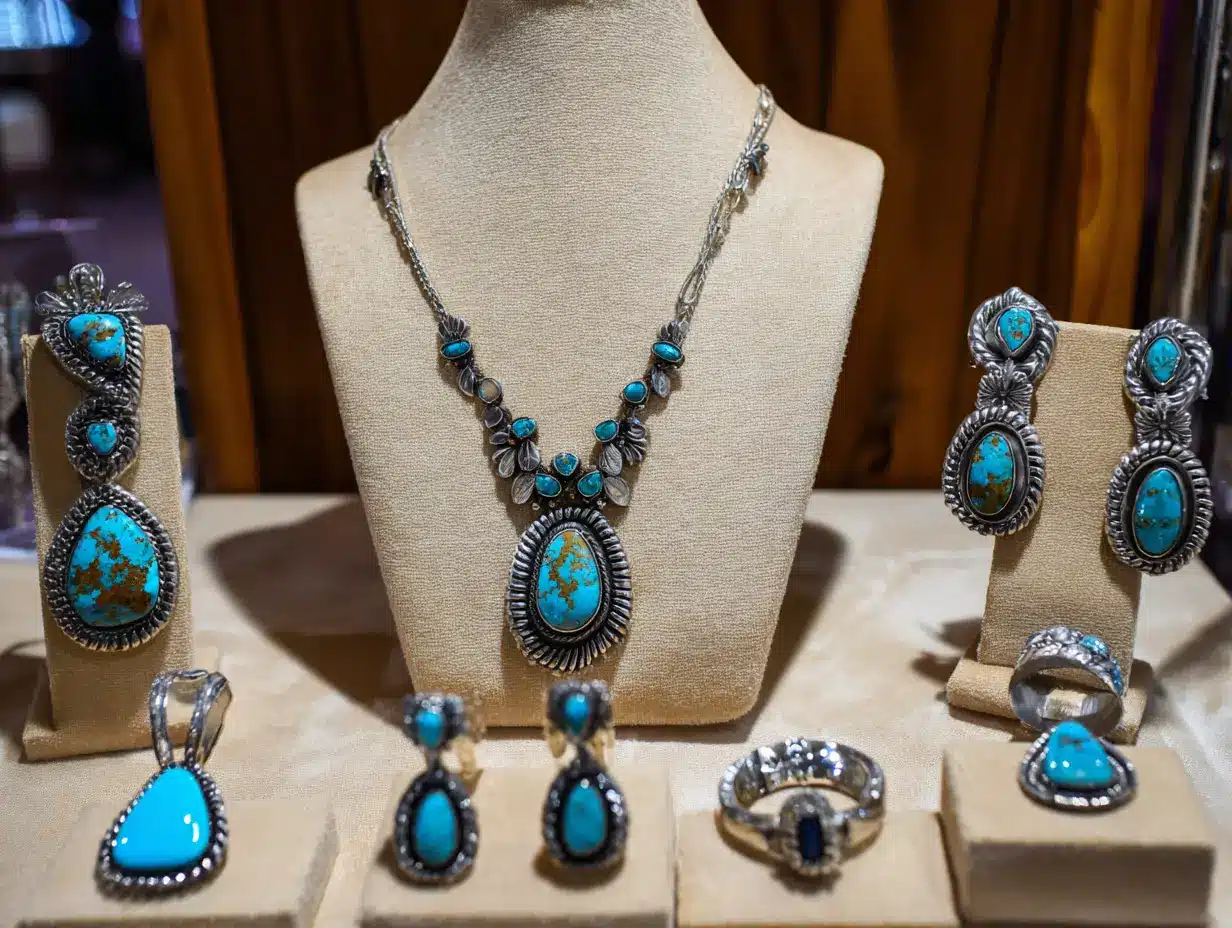
Signature Collections Through the Decades
Early Relios Designs (1975-1990s)
The earliest Relios jewelry from the late 1970s and 1980s is characterized by substantial sterling silver weight—these pieces used heavier gauge silver than later production allowed for cost reasons. Design aesthetics reflected the era’s embrace of bold Southwestern style, with chunky cuff bracelets featuring large natural turquoise cabochons, oversize belt buckles with intricate stampwork, and statement necklaces incorporating leather, beading, and feathers alongside sterling components.
Gemstone choices focused heavily on traditional Southwestern materials: turquoise (particularly Sleeping Beauty, Kingman, and Morenci varieties from Arizona mines), red coral, black onyx, and mother of pearl. The vibrant color combinations—bright turquoise against silver, coral against lapis—created visual impact that distinguished Relios jewelry from subtler contemporary silver jewelry designs.
These early pieces are now highly collectible, with pristine examples commanding premium prices at estate sales and vintage jewelry markets. Collectors value them for authentic heavy silver content, genuine turquoise before mine depletion drove up costs, and period-correct 1980s Southwestern aesthetic.
American West Classic Collection
The American West Classics Collection represents timeless Southwestern designs that transcend fashion trends. Key pieces include squash blossom necklaces—the iconic Navajo-style necklace featuring a horseshoe-shaped naja pendant suspended from silver beads and stylized squash blossom decorations. Carolyn Pollack’s versions honor this traditional form while incorporating contemporary gemstone choices and refined silverwork details.
The collection also features modernized versions of concho designs, traditionally worn as belt decorations but adapted by Carolyn into bracelets, earrings, and pendants. Stamped sterling silver featuring Southwestern motifs—feathers, arrows, kokopelli figures, pueblo patterns—appears throughout the Classics line, connecting to century-old Native American silversmithing traditions.
Turquoise remains central to the Classics Collection. American West Jewelry sources genuine turquoise certified by the Gemological Institute of America (GIA), offering varieties from bright robin’s egg blue (Sleeping Beauty) to deeper greenish-blue tones (Royston) to distinctive matrix patterns (Number Eight). This gemstone variety allows customers to select turquoise that matches their personal preference while ensuring authenticity.
Spirit Stones Collection
The Spirit Stones Collection explores the cultural and spiritual significance of specific gemstones in Native American traditions. Each piece features a focal gemstone selected not just for aesthetic beauty but for traditional associations with specific qualities or spirit animals. For example, turquoise represents protection and luck, red coral connects to life force and vitality, and lapis lazuli symbolizes wisdom and truth.
Designs in this collection often incorporate animal motifs—dragonflies (transformation), hummingbirds (joy), horses (freedom), and butterflies (change)—crafted in sterling silver and embellished with gemstones. The combination of symbolic animal imagery and meaningful stones creates jewelry that customers wear as personal talismans rather than merely decorative accessories.
Arrowhead Collection
The Arrowhead Collection draws inspiration from Native American arrowhead artifacts, translating these functional tools into contemporary jewelry designs. Sterling silver arrowhead shapes are enhanced with inlaid gemstones, overlay work, or stamped patterns. The edgy, angular aesthetic appeals to customers seeking bolder, more modern Southwestern designs rather than traditional rounded forms.
This collection demonstrates Carolyn Pollack’s skill at evolving Southwestern jewelry beyond historical reproduction into contemporary fashion. While deeply rooted in cultural references, the Arrowhead pieces work equally well with casual jeans and leather as with more formal attire, expanding when and how customers can wear Southwestern-style jewelry.
Turquoise Collection Varieties
Given turquoise’s central importance to Southwestern jewelry, American West maintains an extensive Turquoise Collection showcasing different mine sources and color variations. As turquoise mines have depleted over recent decades, documenting source authenticity has become increasingly important. American West provides GIA certification for major pieces, guaranteeing natural turquoise rather than reconstituted or simulated alternatives.
The collection differentiates between Sleeping Beauty turquoise (pure sky blue without matrix, from a now-closed Arizona mine), Kingman turquoise (ranging from bright blue to blue-green), spiderweb turquoise (featuring delicate black matrix patterns), and other varieties. This education helps collectors understand why certain pieces command higher prices—Sleeping Beauty turquoise has become scarce since the mine’s 2012 closure, while certain matrix patterns are particularly rare.
“For those who want to learn how to distinguish between the various types of turquoise by origin and quality, a dedicated illustrated guide is a useful investment for both collectors and enthusiasts.”
Leather Collection Innovations
The Leather Collection represents Carolyn Pollack’s innovation in materials beyond traditional sterling and gemstones. By incorporating braided leather strands, leather cording, and leather cuff elements into jewelry designs, the collection achieved a more casual, Western-ranch aesthetic distinct from formal Southwestern elegance.
Leather pieces proved particularly popular with male customers—leather cuff bracelets with sterling silver accents became signature men’s jewelry items. The leather also allowed for adjustability; leather cord necklaces could be tied to different lengths, and leather bracelet cuffs could accommodate various wrist sizes more easily than solid sterling silver pieces.
This collection demonstrates the brand’s evolution beyond pure Southwestern traditional designs toward a broader Western lifestyle aesthetic, appealing to customers who appreciate handcrafted leather goods, ranch culture, and outdoor living as much as Native American artistic traditions.
Design Philosophy and Southwestern Influence
New Mexico as Inspiration
Carolyn Pollack has consistently emphasized that designing and manufacturing in New Mexico isn’t merely a business decision but essential to creative authenticity. The state’s dramatic landscapes—from the Sangre de Cristo Mountains to the Rio Grande Valley, from high desert mesas to ancient pueblo ruins—provide endless visual inspiration. Living in this environment allows Carolyn to absorb Southwestern aesthetics organically rather than studying them from afar.
The multicultural heritage of New Mexico—where Native American, Hispanic, and Anglo cultures have interacted for centuries—informs the design vocabulary. Spanish colonial silver techniques influenced early Native American silversmiths, who then developed distinctive styles. Carolyn’s work honors this complex cultural exchange, drawing inspiration from multiple traditions while maintaining her own creative voice.
According to American West Jewelry’s heritage statement, Carolyn’s mission is “to create heirloom jewelry that inspires women, bonding them across cultures and down through generations: grandmother to mother to daughter.” This intergenerational vision reflects both the timeless quality of well-crafted sterling silver and the cultural transmission central to Southwestern traditions.
Materials and Gemstones Sourcing
Sourcing authentic materials has become increasingly challenging as traditional sources have changed. Many famous turquoise mines have closed or limited production, making vintage turquoise increasingly valuable. Carolyn Pollack’s purchasing relationships built over decades provide access to genuine turquoise from known mines, authenticated before use in jewelry.
Beyond turquoise, the company sources diverse gemstones aligned with Southwestern color palettes: spiny oyster shell (ranging from orange to purple, harvested from the Sea of Cortez), red coral (traditionally from Mediterranean sources), lapis lazuli (deep blue from Afghanistan), malachite (rich green banding from Congo), and rhodonite (pink with black matrix from Australia). These global sources create the vibrant color combinations characteristic of Carolyn Pollack designs.
The .925 sterling silver used throughout production comes from recycled silver sources, addressing both sustainability concerns and supply chain reliability. Sterling silver’s durability makes it ideal for jewelry intended as heirlooms rather than disposable fashion accessories—properly cared for, these pieces can last generations.
Native American Designer Partnerships
Bill and Carolyn Pollack’s commitment to partnering with Native American designers reflects both business strategy and cultural values. By licensing designs from artists like Roderick Tenorio and Fritz Casuse, Relios Inc accomplished several goals: incorporating authentic Native artistic vision into production jewelry, providing artists with steady licensing income beyond one-off sales, and introducing Native American design to much larger audiences through QVC’s reach.
These partnerships required careful navigation of complex cultural and creative questions. How do you maintain an individual artist’s distinctive style while adapting designs for production-scale manufacturing? How do you credit artists appropriately while also maintaining brand consistency? The solution involved clear contracts specifying licensing terms, hallmarking jewelry with both artist marks and Relios/Carolyn Pollack marks, and promoting artists’ names on QVC presentations.
This collaborative approach differs significantly from jewelry companies that simply appropriate Native American design motifs without attribution or compensation. By creating formal partnerships, paying licensing fees, and crediting artists, the Pollacks built ethical relationships that benefited Native designers while enriching the jewelry’s cultural authenticity.
Made in USA Commitment
Maintaining American manufacturing throughout five decades required continuous commitment despite pressure to offshore production for cost savings. As Carolyn Pollack stated, “At a time when most manufacturing in this country is being done overseas, it is a bold business goal and it is in keeping with Carolyn Pollack Jewelry’s dedication to the authentic Southwestern lifestyle.”
The Albuquerque facility employs hundreds of skilled workers—silversmiths, stone setters, polishers, quality control specialists—providing stable jobs in New Mexico’s manufacturing sector. This investment in American workforce development, while costly, ensures quality control, protects intellectual property, and maintains the authentic connection between jewelry and its Southwestern birthplace.
For customers, “Made in USA” provides both patriotic appeal and quality assurance. Jewelry manufactured under American labor and environmental regulations offers greater certainty about ethical production than pieces from factories with opaque supply chains. This transparency becomes increasingly valuable as consumers prioritize ethical consumption.
The QVC Partnership: 30+ Years of Live Shows
Building Customer Relationships On-Air
Carolyn Pollack’s 30-year tenure as a QVC guest demonstrates the unique power of television retail for building customer relationships. Unlike traditional retail where customers interact briefly with sales associates, QVC’s format allowed Carolyn to spend hours on air explaining designs, sharing inspiration stories, and connecting personally with viewers who called in.
Regular customers arranged schedules around Carolyn’s QVC appearances, knowing these shows offered exclusive designs, special values, and the pleasure of learning from a passionate designer. Carolyn’s warm, authentic presentation style—she genuinely loves her jewelry and the Southwestern culture inspiring it—resonated with audiences. She didn’t follow scripted sales pitches but spoke naturally about what made each piece special.
This relationship-building proved invaluable during the 2023 transition. Loyal customers who had followed Carolyn for decades trusted her when she explained the manufacturing changes, continuing to support the brand based on personal connection rather than abandoning it due to uncertainty about new ownership.
TSV (Today’s Special Value) Strategy
QVC’s Today’s Special Value (TSV) program features one product per day at exceptional pricing, promoted heavily to drive sales volume. Carolyn Pollack jewelry regularly earned TSV status, demonstrating the brand’s popularity and QVC’s confidence in its sales potential. TSV appearances drove production to new heights—manufacturing sufficient inventory for a TSV required coordinating complex supply chains to have thousands of identical pieces ready for the air date.
These special events generated excitement among collectors, who would purchase multiple pieces during TSV shows knowing the value proposition wouldn’t be repeated. Many collectors acquired their most treasured Carolyn Pollack pieces during TSV events, combining excellent pricing with exclusive designs created specifically for these appearances.
Production Scale: From 220 Employees to International Reach
The QVC partnership’s success required continuous production expansion. At its height, the Albuquerque facility employed over 220 associates, operated multiple shifts, and produced 650,000+ jewelry pieces annually. This scale made Relios Inc one of America’s largest sterling silver jewelry manufacturers, rivaling companies with century-long histories.
Despite this industrial scale, quality control remained paramount. Each piece underwent multiple inspection stages to verify sterling silver content, gemstone quality, secure stone settings, and proper hallmarking. This quality assurance prevented the defect issues that plague mass production, maintaining customer confidence in online jewelry purchases sight unseen.
QVC’s international reach extended Carolyn Pollack jewelry far beyond American markets. QVC Germany, QVC UK, and QVC Italy all carried American West Jewelry, introducing Southwestern aesthetics to European customers unfamiliar with these design traditions. This international exposure raised the brand’s profile while creating a global collector base.
Award-Winning QVC Vendor Status
American West Jewelry’s excellence earned recognition through multiple QVC QStar Awards, which honor top-performing vendors based on sales performance, customer satisfaction, and operational excellence. These awards validated the Pollacks’ business model—that authentic, American-made, designer jewelry could compete successfully with imported mass-market alternatives by offering superior quality and meaningful customer relationships.
The QStar awards provided powerful third-party validation of quality, particularly valuable for customers purchasing jewelry sight unseen through television retail. Knowing a vendor had earned QVC’s highest recognition reassured customers about both product quality and company reliability.
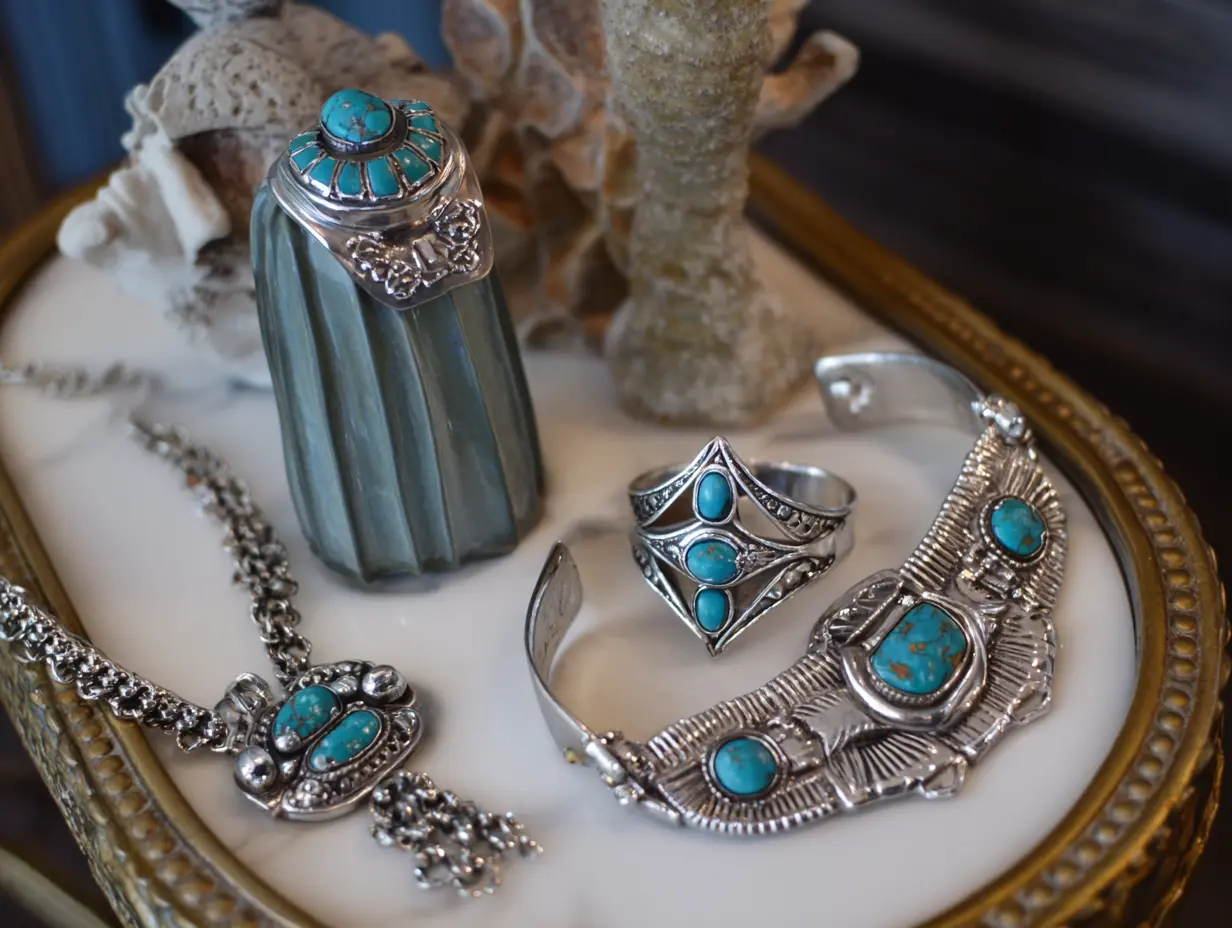
Carolyn Pollack Jewelry Value and Collectibility Guide
What Makes Pieces Valuable
Several factors determine Carolyn Pollack jewelry value. First, age and rarity matter significantly. Early Relios pieces from the 1970s and 1980s, particularly those featuring now-depleted turquoise sources or discontinued designs, command premium prices. Pieces with substantial sterling silver weight—heavier gauge silver used before cost-cutting pressures—are more valuable than lighter contemporary equivalents.
Second, gemstone quality affects value. Authentic turquoise, especially from closed mines like Sleeping Beauty, increases worth substantially. Natural coral (increasingly restricted due to environmental protection) proves more valuable than alternatives. Certified gemstones with GIA documentation command higher prices than uncertified stones.
Third, condition dramatically impacts value. Pieces with intact gemstones, minimal silver tarnish that cleans easily, secure stone settings, and clear hallmarks are worth more than damaged alternatives. Even collectible vintage Relios pieces lose significant value if turquoise is cracked, silver is dented, or settings are loose.
Fourth, desirability of specific designs matters. Large statement pieces—substantial cuff bracelets, bold squash blossom necklaces, oversized belt buckles—typically command higher prices than smaller items like stud earrings or delicate rings. Unique or limited edition pieces, particularly those from Native American designer collaborations, are more collectible than mass-produced standards.
Vintage vs Contemporary Pricing
Vintage Relios pieces (1970s-1990s) generally command higher prices than equivalent contemporary American West pieces due to several factors. The vintage market values authenticity—these pieces genuinely represent their era rather than reproducing past styles. Vintage pieces often feature heavier silver and larger natural turquoise stones than current production allows for cost reasons.
Contemporary American West pieces benefit from modern manufacturing refinements—more consistent quality control, better stone setting techniques, improved finishing. However, they lack the vintage cachet that drives collectible markets. Savvy buyers can find excellent contemporary pieces at attractive prices, particularly during QVC special events or outlet sales, while vintage pieces increasingly appreciate as they become scarcer.
The 2023 manufacturing transition adds interesting complexity to this equation. Pieces manufactured before the QVC takeover may eventually carry premium value as “authentic Pollack Albuquerque” production, while post-transition pieces, though still designed by Carolyn, represent different manufacturing. Time will reveal whether this distinction materially affects collectibility.
Condition Assessment Tips
When evaluating Carolyn Pollack jewelry, examine several condition factors systematically. Check gemstones carefully for cracks, chips, or looseness in settings—use a jeweler’s loupe for close inspection. Even hairline cracks significantly reduce turquoise value and may worsen over time.
Inspect silver for damage beyond normal tarnish. Light tarnish cleans easily and doesn’t affect value, but deep scratches, dents, or misshapen metalwork reduces worth. Check prongs and bezel settings around gemstones—bent prongs or lifting bezels suggest structural issues requiring professional repair before the stones fall out.
Verify hallmarks are clearly legible. Worn or partially obscured marks complicate authentication, potentially affecting value. While marks naturally wear over decades, illegible hallmarks raise questions about authenticity that can deter serious collectors.
Test for proper closure mechanisms on bracelets and necklaces. Catches should engage securely; spring rings should snap closed completely. Worn catches may require replacement—a relatively simple silversmith repair but a cost factor to consider when assessing purchase prices.
Rarity Factors
Certain elements dramatically increase Carolyn Pollack jewelry rarity and collectibility. Limited edition pieces, particularly those created exclusively for specific QVC events, are rarer than ongoing production items. Pieces from Native American designer collaborations, especially artists who worked with Relios briefly rather than for extended periods, are scarcer and more collectible.
Jewelry featuring now-closed mine turquoise sources—Sleeping Beauty, Number Eight, Lander Blue—gains rarity as supplies deplete. Similarly, pieces with natural Mediterranean coral (increasingly restricted by environmental regulations) become rarer as sources dry up.
Unusual size variations also affect rarity. Extra-large cuff bracelets or rings in extended sizes were produced in smaller quantities than standard sizes, making them harder to find. Conversely, extremely small sizes may be rare but less desirable if they fit fewer collectors.
Mistakes or variations sometimes create unexpected rarity. Pieces with inverted stamps, double-struck hallmarks, or unusual gemstone substitutions (using one stone type where another was standard) may intrigue collectors seeking oddities, though mainstream market values these less consistently than intentional design variations.
Market Trends for Collectors
The Carolyn Pollack collecting market shows several interesting trends. First, vintage 1980s Relios jewelry has appreciated steadily over the past decade as collectors recognize the era’s authentic Southwestern aesthetic and substantial silver content. Estate sales, vintage jewelry shops, and online platforms like Etsy and eBay are increasingly stocking vintage pieces at premium prices.
Second, turquoise-centered pieces consistently outperform other gemstone jewelry in secondary markets. Turquoise’s iconic association with Southwestern style and increasing scarcity from mine closures drives sustained demand. Pieces with documented Sleeping Beauty turquoise, in particular, have appreciated notably since that mine’s 2012 closure.
Third, the 2023 manufacturing transition sparked renewed collector interest. When retirement announcements generated uncertainty about brand continuation, many longtime customers purchased additional pieces to secure “authentic Pollack” jewelry before changes took effect. This buying surge temporarily increased prices, though markets have since stabilized as production continues under new ownership.
Fourth, younger collectors are discovering Southwestern jewelry through vintage fashion trends, introducing new buyers to Carolyn Pollack designs. Social media platforms, particularly Instagram and TikTok, feature vintage jewelry styling content that showcases bold Southwestern pieces as fashion-forward rather than dated. This generational discovery suggests sustained long-term demand.
The 2023 Transition: Retirement and What It Means
April 2023 Announcement
In April 2023, Bill and Carolyn Pollack announced plans to retire from active management of Relios Inc’s manufacturing operations. After nearly fifty years building the business from garage workshop to QVC powerhouse, they decided to step back from daily operational responsibilities while continuing their design partnership. The announcement, delivered through a personal video message to customers, emphasized that this represented an evolution rather than an ending.
The news generated immediate reaction among the loyal collector community. QVC forums, social media groups, and jewelry blogs buzzed with discussion about what the transition meant for American West Jewelry’s future. Some collectors rushed to purchase pieces before changes took effect, driving strong sales during the transition period. Others expressed concern about whether manufacturing quality and design aesthetics would remain consistent under new ownership.
Manufacturing Transition to QVC
QVC (owned by parent company Xcel Brands) assumed responsibility for American West Jewelry’s manufacturing operations. This transition followed a pattern where QVC had previously acquired or partnered with successful jewelry vendors including Isaac Mizrahi, Logo by Lori Goldstein, and Judith Ripka. The strategy allows QVC to secure exclusive control over popular brands while providing founding designers with retirement liquidity.
Manufacturing operations relocated from the Pollacks’ Albuquerque facility to QVC’s production partners. This change raised questions about the Made in USA commitment that had defined Carolyn Pollack jewelry for five decades. While QVC hasn’t publicly specified all manufacturing locations, the company has emphasized maintaining quality standards and design authenticity.
For the 220+ employees at the Albuquerque facility, the transition created uncertainty. While some positions continued supporting Carolyn’s ongoing design work, large-scale manufacturing employment moved to QVC’s network. This workforce impact affected not just individual families but New Mexico’s jewelry manufacturing ecosystem.
Carolyn’s Continued Design Role
Importantly, the manufacturing transition does not end Carolyn Pollack’s involvement with jewelry design. The arrangement allows Carolyn to continue creating designs from her home studio, freed from daily operational management responsibilities. She remains actively involved in selecting gemstones, developing new collections, and making QVC appearances, maintaining the personal connection with customers that built the brand.
This arrangement parallels other successful designer transitions where founding designers step back from operations while maintaining creative control. Isaac Mizrahi, for example, continues designing for QVC after his company’s acquisition, benefiting from QVC’s manufacturing resources while focusing purely on creative work.
For customers, Carolyn’s continued involvement provides reassurance that American West Jewelry will maintain design authenticity even as manufacturing operations change hands. Her QVC appearances continue, allowing the personal relationship with customers to endure beyond operational transitions.
Impact on Collectors and Brand Future
The 2023 transition creates interesting dynamics for collectors. Pieces manufactured before the changeover may eventually carry “original Pollack Albuquerque production” cachet, similar to how pre-acquisition pieces from other jewelry brands command premiums. However, whether this distinction materializes into actual value differences remains uncertain.
Brand continuity depends heavily on QVC maintaining design quality and aesthetic authenticity. If post-transition jewelry maintains the characteristics customers value—genuine gemstones, quality sterling silver, distinctive Southwestern designs—the brand should continue successfully. If cost-cutting compromises quality or designs drift away from Southwestern roots, collector enthusiasm may wane.
Early indications suggest QVC understands the brand equity at stake. Initial post-transition jewelry releases have maintained core design elements and quality standards. Carolyn’s continued active participation provides creative continuity that reassures longtime customers. However, long-term success requires sustained attention to the authentic craftsmanship that differentiated Carolyn Pollack jewelry throughout fifty years of evolution.
Care and Authentication Guide
Sterling Silver Maintenance
Proper care ensures Carolyn Pollack sterling silver jewelry remains beautiful for generations. Sterling silver naturally tarnishes when exposed to air, developing a dark patina over time. While some collectors appreciate this aged appearance, most prefer bright silver luster requiring regular maintenance.
For routine cleaning, use a silver polishing cloth specifically designed for sterling silver. These cloths contain mild cleaning agents that remove tarnish without scratching. Rub gently in straight lines rather than circles, which can create visible swirl marks. For intricate stampwork and detailed areas, use a soft jewelry brush with gentle silver cleaner.
Avoid harsh chemical cleaners, ultrasonic cleaners, or steam cleaning on pieces with gemstones, as these can damage turquoise, coral, and other porous stones. Never immerse American West jewelry in silver dip cleaners—these chemicals can strip patina from intentionally oxidized design elements and damage gemstone settings.
Store sterling silver jewelry in anti-tarnish bags or cloth pouches to slow oxidation. Keep pieces separated to prevent scratching—don’t throw multiple bracelets together in a jewelry box where they’ll scrape against each other. Proper storage significantly reduces cleaning frequency.
“Investing in proper anti-tarnish storage is one of the simplest ways to preserve the beauty of your Carolyn Pollack sterling silver pieces between wearings.”

Cirhy Necklace Organizer Box, Anti-Tarnish Jewelry Box & Dustproof Necklace Case, Velvet Jewelry Tray for Drawer Storage, Tangle-Free Jewelry Organizer with...
Gemstone-Specific Care
Different gemstones in Carolyn Pollack jewelry require specific care approaches. Turquoise, the most common gemstone, is porous and relatively soft (5-6 on the Mohs hardness scale). Never soak turquoise in water, which can cause discoloration and damage. Avoid exposing turquoise to lotions, perfumes, hairsprays, or household chemicals. Clean turquoise gently with a barely damp soft cloth, then dry immediately.
Coral is even more delicate than turquoise. This organic material can fade with sun exposure and scratch easily. Clean coral only with a dry soft cloth—never use water or cleaning solutions. Store coral jewelry away from other pieces to prevent scratching. Re-stringing coral necklaces periodically if worn frequently, as thread weakens over time.
Mother of pearl, used in inlay work, tolerates gentle cleaning better than turquoise or coral but should still be treated carefully. Wipe with a slightly damp cloth and dry immediately. Avoid ultrasonic cleaners, which can loosen mother of pearl inlay pieces.
Lapis lazuli, malachite, and other opaque gemstones generally tolerate gentle water cleaning but benefit from immediate drying. These stones can be porous depending on quality grade, so err on the side of caution with minimal water exposure.
Authenticating Vintage Pieces
When purchasing vintage Carolyn Pollack or Relios jewelry, authentication prevents costly mistakes. Start by examining hallmarks carefully using magnification. Authentic pieces should display clear Relios, CP, or American West marks alongside .925 sterling stamps. Blurry, incomplete, or missing marks raise red flags.
Check weight and construction quality. Authentic Carolyn Pollack jewelry uses substantial sterling silver—pieces should feel heavy for their size. Flimsy, lightweight “silver” suggests plated base metal rather than sterling. Examine stone settings carefully; professional bezel or prong work indicates quality manufacturing. Sloppy glued-in stones or obvious gaps around gemstones suggest questionable authenticity.
Research the seller’s reputation. Established vintage jewelry dealers, estate sale companies, and auction houses have expertise in authentication and reputational stakes that discourage selling fakes. Private sellers on general marketplaces may be unknowledgeable or intentionally deceptive. Request detailed photos of hallmarks, close-ups of gemstones, and construction details before purchasing significant pieces remotely.
When uncertain about authenticity, consult expert appraisers or gemologists. While appraisals cost money upfront, they prevent expensive mistakes on high-value pieces. Appraisers can verify sterling silver content, authenticate gemstones, and confirm design legitimacy against known Carolyn Pollack production.
Spotting Reproductions
As Carolyn Pollack jewelry has appreciated in collectible markets, reproductions and imitations have emerged. Spotting fakes requires attention to specific details. Most obviously, reproductions lack proper hallmarks or use fake marks that don’t match authentic Relios/Carolyn Pollack stamps. Research actual hallmark appearances before purchasing to recognize discrepancies.
Gemstone quality often betrays reproductions. Authentic pieces use natural turquoise, coral, and other gemstones; cheaper reproductions substitute plastic, resin, or low-grade synthetic alternatives. Natural turquoise shows subtle color variation and authentic matrix patterns, while fake turquoise appears uniformly colored with artificially regular matrix. Under magnification, resin shows bubble inclusions absent from natural stones.
Construction quality reveals authenticity. Carolyn Pollack jewelry features professional metalwork—clean solder joins, smooth interior surfaces, secure stone settings. Reproductions often show crude soldering, rough interior finishing, or poorly executed stampwork that mimics the appearance of authentic pieces without matching the quality.
Price provides another authentication clue. While deals exist, prices dramatically below market rates suggest problems. Sellers offering “authentic Carolyn Pollack cuff bracelets” for $20 when similar pieces sell for $150-300 elsewhere are probably selling fakes. If pricing seems too good to be true, it probably is.
Frequently Asked Questions About Carolyn Pollack Jewelry History
When was Carolyn Pollack jewelry founded?
Carolyn Pollack jewelry was founded in 1975 when Carolyn and her husband Bill Pollack established Relios Inc in Albuquerque, New Mexico. They began operations in their garage, producing sterling silver Southwestern-style jewelry that would eventually become one of America’s most recognized jewelry brands. The early years focused on regional sales and developing the distinctive aesthetic that would later succeed on QVC. By the 1980s, the company had expanded significantly, becoming JCPenney’s main sterling silver supplier before transitioning to television retail in 1987.
The Carolyn Pollack brand name emerged later in the company’s evolution, during the 1990s, as Carolyn’s personal recognition grew through QVC appearances. Prior to that, jewelry was primarily marketed under the Relios brand name. Today, American West Jewelry by Carolyn Pollack represents the current iteration of this fifty-year heritage, maintaining the design philosophy and quality standards established in 1975.
What is the difference between Relios, Carolyn Pollack, and American West jewelry?
Relios, Carolyn Pollack, and American West are all related brands from the same company founded in 1975. Relios Inc is the parent manufacturing company established by Bill and Carolyn Pollack. For the first two decades, jewelry was marketed primarily under the Relios brand name and bore the crescent moon R hallmark. In the 1990s, as Carolyn’s profile increased through QVC appearances, the Carolyn Pollack brand line was introduced featuring her CP script signature mark. American West Jewelry launched in the 2000s as another brand identity, marketed as American West Jewelry by Carolyn Pollack.
All three represent the same manufacturing company and design team, with consistent quality standards and Made in USA commitment. The different brand names reflect marketing evolution over fifty years rather than distinct product lines. Vintage 1980s Relios pieces, 2000s Carolyn Pollack jewelry, and current American West designs all share the same Southwestern aesthetic and sterling silver craftsmanship, simply marketed under different identities at different points in the company’s history.
How can I identify authentic Carolyn Pollack jewelry marks?
Authentic Carolyn Pollack jewelry displays several distinctive hallmarks depending on when it was manufactured. The earliest pieces (1970s-1990s) feature the Relios crescent moon with an R above it, along with .925 sterling silver stamps. From the 1990s forward, the CP script signature mark appears alongside or instead of the Relios mark. Current American West pieces may show American West stamps along with Carolyn Pollack marks. All authentic pieces should include clear .925 or STERLING .925 stamps indicating sterling silver content.
Pieces from Native American designer collaborations show multiple marks—the individual artist’s hallmark (such as Roderick Tenorio’s RMT mark), the Relios crescent and R, and sterling stamps. The script CP mark has an interesting history; it was originally used by Carlisle Jewelry Company in the 1980s before Carolyn Pollack acquired and repurposed it in the 1990s. Examine marks carefully using magnification, looking for clear, well-struck stamps rather than blurry or partial impressions that might indicate reproductions.
Is vintage Carolyn Pollack jewelry valuable and worth collecting?
Vintage Carolyn Pollack and Relios jewelry from the 1970s through 1990s has become increasingly valuable to collectors for several reasons. Early pieces typically feature heavier gauge sterling silver than later cost-conscious production allowed, providing superior substance and weight. Many vintage pieces showcase genuine turquoise from now-closed or depleted mines like Sleeping Beauty, making them irreplaceable. The authentic 1980s Southwestern aesthetic, crafted during the era it represents rather than reproducing it later, appeals to both jewelry collectors and vintage fashion enthusiasts.
Values vary significantly based on condition, design, gemstones, and rarity. A standard vintage Relios cuff bracelet in good condition might sell for $150-400, while rare pieces with exceptional turquoise or unusual designs can command $500-1,000 or more. Collecting vintage Carolyn Pollack jewelry offers good potential for appreciation as pieces become scarcer and the brand’s fifty-year history gains recognition. Focus on pieces with intact gemstones, clear hallmarks, and designs that capture authentic Southwestern style for the best investment value.
What happened to Carolyn Pollack jewelry in 2023?
In April 2023, Bill and Carolyn Pollack announced their retirement from active management of Relios Inc’s manufacturing operations after nearly fifty years building the business. QVC, which had been the brand’s primary retail partner since 1987, assumed responsibility for manufacturing operations. This transition involved relocating production from the Pollacks’ Albuquerque facility, where over 220 employees had crafted jewelry since 1975, to QVC’s manufacturing partners. The change impacted the workforce and raised questions among collectors about the future of American West Jewelry’s Made in USA heritage.
Importantly, Carolyn Pollack continues her involvement with jewelry design despite the operational transition. She maintains her design role from a home studio and continues making QVC appearances, preserving the personal connection with customers that built the brand. The long-term impact on collectors remains to be seen—pieces manufactured before the 2023 transition may eventually carry “original Pollack Albuquerque” cachet, though whether this distinction affects actual market values depends on QVC maintaining quality standards and design authenticity in ongoing production.
How should I care for my Carolyn Pollack sterling silver and turquoise jewelry?
Caring for Carolyn Pollack jewelry requires attention to both sterling silver and gemstone needs. For sterling silver, use a silver polishing cloth to remove tarnish regularly, rubbing gently in straight lines rather than circles. Avoid harsh chemical cleaners or silver dips, which can damage gemstones and strip intentional patina from oxidized design elements. Store silver jewelry in anti-tarnish bags or pouches, keeping pieces separated to prevent scratching.
Turquoise requires special care because it’s porous and relatively soft. Never soak turquoise in water, which causes discoloration and damage. Avoid exposing turquoise to lotions, perfumes, hairsprays, or household chemicals. Clean turquoise only with a barely damp soft cloth, drying immediately. Coral, another common gemstone in Carolyn Pollack jewelry, is even more delicate—clean with only a dry soft cloth and store away from harder gemstones that might scratch it. Mother of pearl, lapis, and malachite tolerate gentle damp cloth cleaning but should be dried immediately. With proper care following these guidelines, Carolyn Pollack sterling silver and gemstone jewelry remains beautiful for generations, making it worthy of the heirloom designation the company intended.
A Legacy of Southwestern Excellence
The history of Carolyn Pollack jewelry represents a remarkable American success story—a designer and her husband transforming a garage workshop into a jewelry empire recognized across the world. From humble 1975 beginnings through the transformative QVC partnership to the 2023 manufacturing transition, the brand has consistently delivered on its founding promise: authentic Southwestern designs crafted with quality materials and genuine artistry. The Pollacks’ commitment to manufacturing in New Mexico, collaborating with Native American artists, and using natural gemstones set their jewelry apart in an era of mass production and overseas manufacturing.
For collectors, enthusiasts, and anyone who owns Carolyn Pollack jewelry, understanding this fifty-year history enriches appreciation for these pieces. A vintage Relios cuff bracelet isn’t merely an accessory but a tangible connection to 1980s Southwestern style and American jewelry manufacturing heritage. A contemporary American West necklace carries forward design traditions developed over five decades, embodying Carolyn’s mission to create heirloom jewelry that bonds women across generations. As the brand enters its next chapter under QVC ownership, the foundation built from 1975 through 2023 ensures that Carolyn Pollack’s distinctive Southwestern aesthetic and commitment to quality craftsmanship continue inspiring jewelry lovers for years to come.
Whether you’re researching an inherited piece, building a collection, or simply curious about this iconic American jewelry brand, the complete history traced here demonstrates how passion, craftsmanship, and authentic cultural connection can create jewelry that transcends temporary fashion trends to become truly timeless.
Explore more about vintage jewelry and care: Southwest Indian Jewelry History | How to Clean Sterling Silver Jewelry | Turquoise Gemstone Guide
Hi, I’m Sara Hein, a passionate jewelry researcher and educator. I created Jewelry Carats to share well-researched insights on gemstones, precious metals, and jewelry care. My goal is making expert jewelry knowledge accessible to everyone.