Skip to content
Jewelry Carats
Jewelry Carats
  • HOME
  • JEWELRY TYPES
    • Rings
    • Necklaces
    • Bracelets
    • Earrings
    • Watches
  • MATERIALS
    • Gold Jewelry
    • Silver Jewelry
    • Diamonds Jewelry
    • Gemstones Jewelry
  • STYLES
    • Fine Jewelry
    • Fashion Jewelry
    • Vintage Jewelry
  • CARE GUIDE
    • Cleaning
    • Storage
    • Repair And Maintenance
  • ABOUT
  • SHOP
  • BLOG
  • CONTACT
  • HOME
  • JEWELRY TYPES
    • Rings
    • Necklaces
    • Bracelets
    • Earrings
    • Watches
  • MATERIALS
    • Gold Jewelry
    • Silver Jewelry
    • Diamonds Jewelry
    • Gemstones Jewelry
  • STYLES
    • Fine Jewelry
    • Fashion Jewelry
    • Vintage Jewelry
  • CARE GUIDE
    • Cleaning
    • Storage
    • Repair And Maintenance
  • ABOUT
  • SHOP
  • BLOG
  • CONTACT

Art Deco

Home | Styles | Vintage Jewelry | Art Deco | Page 2

Art Deco jewelry captures the glamour, innovation, and bold geometric beauty of the 1920s and 1930s, representing one of the most distinctive and influential periods in jewelry history. Characterized by streamlined forms, brilliant diamonds, vibrant colored gemstones, and architectural precision, Art Deco pieces embody the Jazz Age’s optimism and modernity. Understanding Art Deco characteristics, collecting strategies, and care requirements helps you appreciate and acquire these iconic treasures that remain eternally stylish.

The Art Deco Era (1920-1935)

Art Deco emerged following World War I, reflecting society’s desire for modernity, luxury, and escape from wartime austerity. The movement drew inspiration from diverse sources: ancient Egyptian art following Tutankhamun’s tomb discovery, Cubism’s geometric abstraction, the Machine Age’s streamlined aesthetics, and exotic Eastern influences. This eclectic fusion created jewelry unlike anything preceding it—bold, colorful, geometric, and unmistakably modern. Art Deco jewelry epitomizes the Roaring Twenties’ spirit, embodying an era of social change, technological advancement, and cultural revolution.

Defining Characteristics of Art Deco Jewelry

Geometric Designs

Art Deco jewelry embraces geometric shapes—rectangles, triangles, circles, and zigzags arranged in symmetrical, architectural patterns. Unlike the flowing, organic lines of preceding Art Nouveau, Art Deco favors crisp angles and mathematical precision. These geometric compositions create bold visual impact celebrating industrial age aesthetics and modern design sensibilities.

Color Contrasts

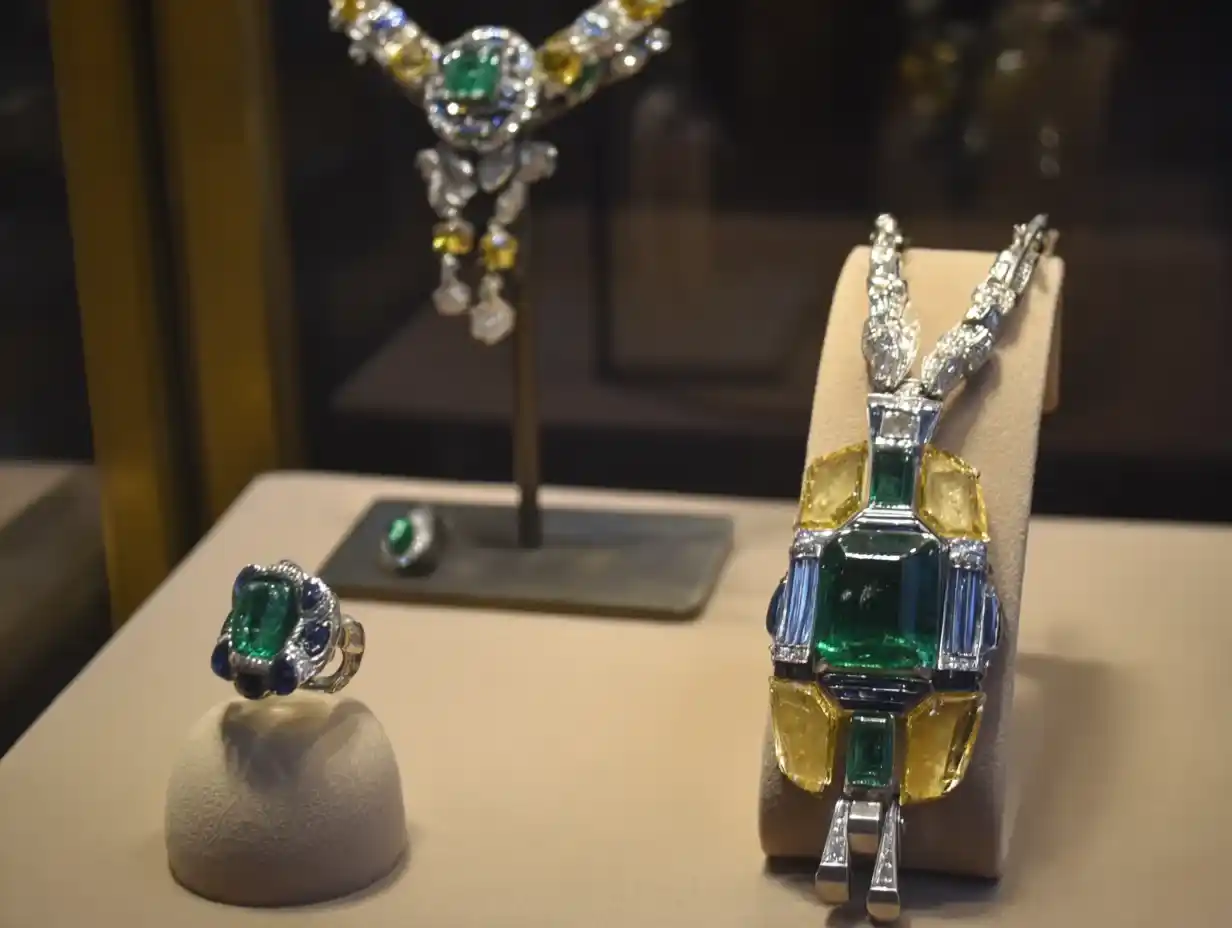
Art Deco pieces feature dramatic color combinations unknown in earlier periods. Sapphires, rubies, and emeralds contrast against diamond backgrounds. Black onyx paired with diamonds creates striking monochrome elegance. Vibrant jade, coral, and turquoise add exotic flair. These bold color choices reflect the era’s love of drama and visual impact, breaking Victorian jewelry’s restrained palettes.

Platinum Settings

Platinum’s introduction revolutionized jewelry making during the Art Deco period. This strong, white metal enabled delicate, lace-like settings impossible with heavier gold. Platinum’s neutral color perfectly showcased diamonds and colored gemstones without warm gold tones interfering. Openwork platinum settings created airy, sophisticated designs reflecting the era’s fascination with lightness and modernity.

Symmetry and Balance

Art Deco jewelry exhibits perfect symmetry and mathematical balance. Designs mirror precisely along central axes, creating harmonious, orderly compositions. This symmetry reflects the era’s appreciation for machine precision and architectural principles applied to personal adornment. Even complex pieces maintain balanced proportions and carefully calculated arrangements.

Popular Art Deco Jewelry Styles

Cocktail Rings

Art Deco popularized cocktail rings—large, bold rings worn during Prohibition-era cocktail parties. These statement pieces featured substantial center stones surrounded by geometric diamond or colored gemstone arrangements. Cocktail rings’ dramatic presence perfectly suited the era’s glamorous social scene, making them iconic Art Deco jewelry types still coveted today.

Long Necklaces and Sautoirs

Long necklaces, often exceeding 30 inches, suited the era’s dropped waistlines and sleeveless dresses. Sautoirs—decorative chains with tassels or pendants—hung dramatically, emphasizing fashion’s elongated silhouettes. These pieces combined geometric links with elaborate terminals, creating movement and sparkle enhancing flapper-era glamour.

Jabot Pins and Brooches

Art Deco brooches featured geometric designs, often rectangular or triangular, encrusted with diamonds and colored stones in architectural patterns. Jabot pins—decorative pins securing necklines—combined functionality with artistry. These pieces served as outfit focal points, their bold designs commanding attention in ways Victorian jewelry never attempted.

Geometric Bangles and Bracelets

Wide bangles featuring geometric patterns and flexible bracelets with angular links epitomized Art Deco wrist adornment. Link bracelets alternated materials and colors creating rhythmic patterns. Wide cuff bracelets displayed elaborate geometric designs across substantial surfaces. These pieces complemented the era’s sleeveless fashions, drawing attention to arms previously hidden by Victorian sleeves.

Clip Brooches and Double Clips

Art Deco introduced clip brooches—mechanically ingenious pieces attaching without piercing fabric. Double clips could be worn together or separated, providing versatility previously unknown. These innovations reflected the era’s love of mechanical precision and practical ingenuity combined with decorative beauty.

Materials in Art Deco Jewelry

Diamonds

Diamonds dominated Art Deco jewelry, used lavishly in geometric patterns. Old European and transitional cut diamonds provided sparkle while baguette and emerald cuts aligned perfectly with geometric design sensibilities. Diamonds often served as brilliant backgrounds highlighting colored gemstones’ dramatic impact.

Colored Gemstones

Sapphires, rubies, emeralds, and semi-precious stones added vibrant color to Art Deco pieces. Calibré-cut stones—precisely cut matching geometric patterns—enabled seamless color integration. Art Deco jewelers embraced colored gemstones more boldly than previous eras, celebrating their decorative potential.

Enamel and Exotic Materials

Black enamel provided dramatic contrast in geometric designs. Carved jade, coral, and rock crystal added sculptural elements. These exotic materials reflected the era’s fascination with global influences and willingness to experiment beyond traditional precious materials.

Identifying Authentic Art Deco Jewelry

Construction Techniques

Authentic Art Deco pieces exhibit period-appropriate construction. Hand-fabricated platinum settings display characteristic millegraining—tiny beads edging metalwork. Settings show careful hand finishing despite geometric precision. Modern reproductions often lack these subtle handwork indicators, appearing too perfect or machine-made.

Stone Cutting

Art Deco pieces feature period-appropriate diamond cuts—old European, transitional, single cuts—rather than modern brilliant cuts developed later. Colored stones display calibré cutting matching geometric patterns precisely. These cutting styles help date pieces authentically to the Art Deco era.

Design Authenticity

Genuine Art Deco jewelry exhibits design cohesion and sophistication distinguishing it from later reproductions. Proportions feel balanced, geometric patterns flow logically, and overall composition displays artistic integrity. Study authentic examples developing eye for genuine Art Deco design sensibility versus superficial geometric styling.

Collecting Art Deco Jewelry

Condition Assessment

Evaluate Art Deco pieces carefully for condition. Check platinum for wear or damage. Examine stone security—period settings may need professional inspection ensuring prongs remain secure after decades. Assess whether pieces retain original components versus later repairs or replacements affecting value and authenticity.

Provenance and Documentation

Documentation enhances Art Deco jewelry value. Original boxes, receipts, or family history add provenance. Pieces from renowned houses—Cartier, Van Cleef & Arpels, Boucheron—command premiums. Research makers’ marks and hallmarks verifying authenticity and origin.

Investment Potential

Quality Art Deco jewelry from prestigious makers appreciates consistently. The style’s enduring popularity and limited supply of authentic pieces ensure strong collector demand. Fine examples in excellent condition represent sound investments combining aesthetic pleasure with financial appreciation potential.

Caring for Art Deco Jewelry

Art Deco pieces require gentle care respecting their age and delicate construction. Clean carefully using professional services familiar with vintage jewelry. Avoid ultrasonic cleaners potentially loosening aged settings. Store pieces individually in soft pouches preventing scratches. Have settings professionally inspected regularly ensuring stone security. Some Art Deco pieces feature delicate enamel or fragile materials requiring extra caution—consult specialists regarding appropriate care for specific pieces.

Wearing Art Deco Jewelry Today

Art Deco jewelry remains remarkably wearable nearly a century after its creation. Geometric designs suit contemporary fashion beautifully, providing sophisticated alternatives to modern jewelry. Pair Art Deco pieces with simple, modern clothing allowing jewelry to shine. Mix Art Deco with contemporary pieces creating eclectic, personalized style. These treasures deserve regular wear rather than vault imprisonment—their creators designed them for glamorous lives, not museum cases.

Modern Art Deco Revival

Contemporary jewelers create Art Deco-inspired pieces capturing the style’s essence while utilizing modern techniques and materials. These new pieces offer Art Deco aesthetics at accessible prices for those unable to acquire authentic vintage examples. While lacking historical significance, quality reproductions provide geometric glamour for Art Deco style lovers on contemporary budgets.

Explore our comprehensive Art Deco jewelry guides below for detailed information on specific styles, authentication techniques, collecting strategies, and care recommendations. Whether acquiring your first Art Deco piece or building an established collection, you’ll find expert guidance for appreciating these magnificent examples of jewelry art representing one of history’s most glamorous and innovative periods.

Home | Styles | Vintage Jewelry | Art Deco | Page 2

Egyptian Revival Jewelry 1920S Art Deco Scarab

by Sara Hein
Egyptian Revival Jewelry 1920S Art Deco Scarab

The Egyptian Revival jewelry of the 1920s Art Deco period is one of the most iconic designs of this era. These pieces, popularized as “scarab” jewelry, were characterized by bold geometric shapes, vibrant enamel colors and exotic gemstones. During this …

Read More…..

Categories Art Deco

Home | Styles | Vintage Jewelry | Art Deco | Page 2

Art Deco Jewelry Supplies

by Sara Hein
Art Deco Jewelry Supplies

Art Deco jewelry supplies provide a vast variety of materials for crafting ancient-looking but modernly fashionable pieces. These supplies come in all shapes, sizes, colors, and designs couples with an alluring charm that is sure to attract attention. With the …

Read More…..

Categories Art Deco

Home | Styles | Vintage Jewelry | Art Deco | Page 2

1930S Art Deco Jewelry History

by Sara Hein
1930S Art Deco Jewelry History

The 1930s were a period of transformation for the jewelry industry, due in part to the art deco movement. The art deco trend emerged during this decade and it was renowned for its modern, luxury look that showcased geometric and …

Read More…..

Categories Art Deco

Home | Styles | Vintage Jewelry | Art Deco | Page 2

Most Famous Art Deco Jewelry Designers

by Sara Hein
Most Famous Art Deco Jewelry Designers

The jewelry of the Art Deco period has an air of sophistication and opulence about it. It was created between World War I and the Great Depression, and its lavishness is still admired by many to this day. Art deco …

Read More…..

Categories Art Deco

Home | Styles | Vintage Jewelry | Art Deco | Page 2

Ruby Lane Art Deco Jewelry

by Sara Hein
Ruby Lane Art Deco Jewelry

Ruby Lane Art Deco Jewelry has become increasingly popular over the last decade, gaining much of its fame for its intricate sculpture-like design and elegant look. The unique look of Art Deco Jewelery reflects its main influences from the 1920s …

Read More…..

Categories Art Deco
Newer posts
← Previous Page1 Page2
M
© 2026 Jewelry Carats | Privacy Policy | Cookie Policy | Terms And Conditions | Copyright Notice | Affiliate Disclosure | Disclaimer | Editorial Guidelines | Sitemap