
Affiliate Disclosure: As an Amazon Associate I earn from qualifying purchases at no additional cost to you.
Why Wire Selection Matters
Wire selection fundamentally impacts jewelry project success – choosing appropriate gauge determines whether ear wires hold shape or droop disappointingly, selecting correct material affects durability and value, understanding wire hardness predicts workability and finished piece strength. For beginners, the overwhelming variety of wire options (gauges from 12-30, materials from copper to gold, shapes from round to square, tempers from dead soft to full hard) creates paralysis preventing creative progress.
This comprehensive guide eliminates confusion providing clear decision frameworks. We explain gauge numbering system and which gauges suit specific projects, compare wire materials (copper, sterling silver, gold-filled) regarding cost, workability, and appropriate uses, decode wire hardness (temper) selecting best options for different techniques, and provide practical recommendations for building starter wire collection and progressing to advanced materials.
Whether creating first wire-wrapped pendant, building production jewelry business, or simply understanding why purchased wire won’t cooperate, mastering wire selection fundamentals empowers confident material choices producing beautiful, durable finished jewelry.
Understanding Wire Gauge
Gauge System Explained
Counter-Intuitive Numbering: Wire gauge uses inverse system – HIGHER numbers = THINNER wire. This confuses beginners expecting larger numbers to indicate thicker wire.
Examples:
- 12 gauge = 2.05mm diameter (THICK, heavy-duty)
- 20 gauge = 0.81mm diameter (medium, versatile)
- 28 gauge = 0.32mm diameter (THIN, delicate)
Why This System? Historically, gauge number indicated how many times wire was drawn through progressively smaller dies. More passes = thinner wire = higher gauge number. Today, gauge is reference point; actual diameter measured in millimeters or inches.
Gauge Selection by Project Type
12-14 Gauge (1.6-2.0mm) – Heavy Structural:
- Cuff bracelets
- Neck wires
- Large rings/bangles
- Sculpture armatures
- Very stiff – requires heavy-duty tools
- Holds shape exceptionally well
16-18 Gauge (1.0-1.3mm) – Medium Structural:
- Ear wires (strong enough to hold shape)
- Clasps and hooks
- Substantial rings
- Wire-wrapped beads
- Bracelet frames
- Excellent beginner gauge – workable but strong
20-22 Gauge (0.6-0.8mm) – MOST VERSATILE:
- Rings, pendants, general components
- Head pins, jump rings
- Wire wrapping
- Coiling, weaving
- PERFECT starting point for beginners
- Most commonly used gauges in jewelry making
24-26 Gauge (0.4-0.5mm) – Delicate Work:
- Coiling around heavier wire
- Small bead attachments
- Wire weaving, crocheting, knitting
- Lightweight earrings
- Easy to bend but breaks if kinked
28-30 Gauge (0.3mm) – Ultra-Fine:
- Seed bead work
- Intricate decorative coiling
- Very specialized applications
- Extremely delicate
Wire Materials Comparison
Practice/Budget-Friendly Materials
🟤 Copper Wire (BEST FOR BEGINNERS)
1. Jewelry Wire Multi-Gauge Set (10 Rolls – 5 Sizes)
- ✓ Complete starter pack: 18, 20, 22, 24, 26 gauge
- ✓ Gold and silver colors (5 each)
- ✓ 230 feet total wire
- ✓ Tarnish-resistant coating
- ✓ Perfect for learning all gauges
- ✓ Affordable complete solution
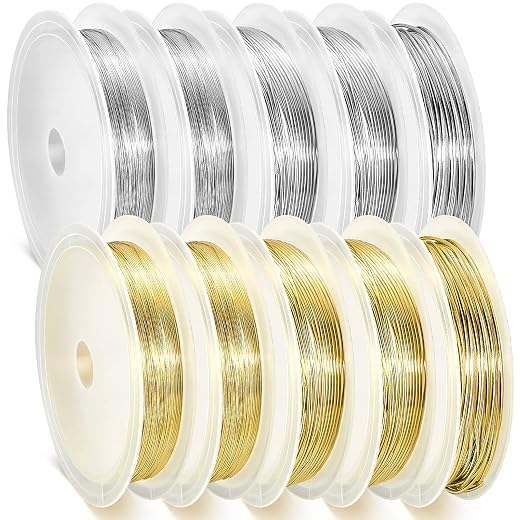
10 Roll 230ft Jewelry Wire for Making 18, 20, 22, 24, 26 Gauge Craft Beading Wire Jewelry Making Supplies Bendable Copper, 5 Size(Gold and Silver)
2. Anezus 20 Gauge Copper Wire (82 feet)
- ✓ Single 20-gauge spool – most versatile gauge
- ✓ Antique bronze plated
- ✓ Tarnish-resistant
- ✓ 82 feet generous practice length
- ✓ 0.8mm diameter perfect for learning

Why Copper for Beginners:
- Extremely affordable ($5-15 for large quantities)
- Very malleable – forgiving of mistakes
- Can be reworked multiple times
- Beautiful warm color
- Perfect for practice before expensive metals
Professional-Quality Materials
⚪ Sterling Silver Wire
1. Artistic Wire 18 Gauge Silver Plated (4 yards)
- ✓ Professional quality brand
- ✓ Silver-plated over copper
- ✓ Tarnish-resistant coating
- ✓ Dead soft temper
- ✓ Perfect for finished jewelry

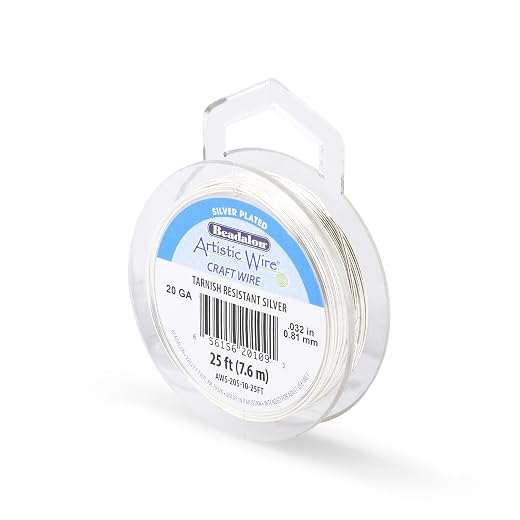
2. Artistic Wire 20 Gauge Silver (25 feet)
- ✓ Most versatile gauge
- ✓ Silver-plated copper
- ✓ Permanent color coating
- ✓ Dead soft workability
- ✓ Professional finish
Sterling Silver Characteristics:
- 92.5% silver, 7.5% copper alloy
- Professional quality standard
- Excellent durability
- Beautiful bright finish
- Tarnishes but easily polished
- Higher cost but worth investment
🌈 Colored Craft Wire
1. MIKIMIQI 26 Gauge Gold Wire (328 feet)
- ✓ Huge 328-foot spool
- ✓ Gold color tarnish-resistant
- ✓ Fine 26-gauge for delicate work
- ✓ Permanent color coating
- ✓ Excellent value
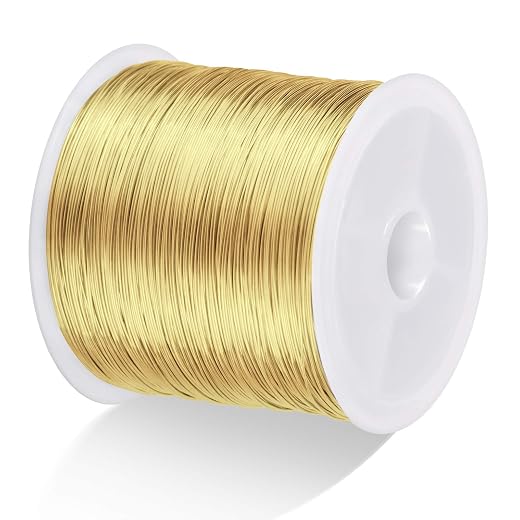
Colored Wire Benefits:
- Permanent enamel coating won’t chip
- Huge color variety
- Tarnish-resistant
- Dead soft temper
- Perfect for colorful designs
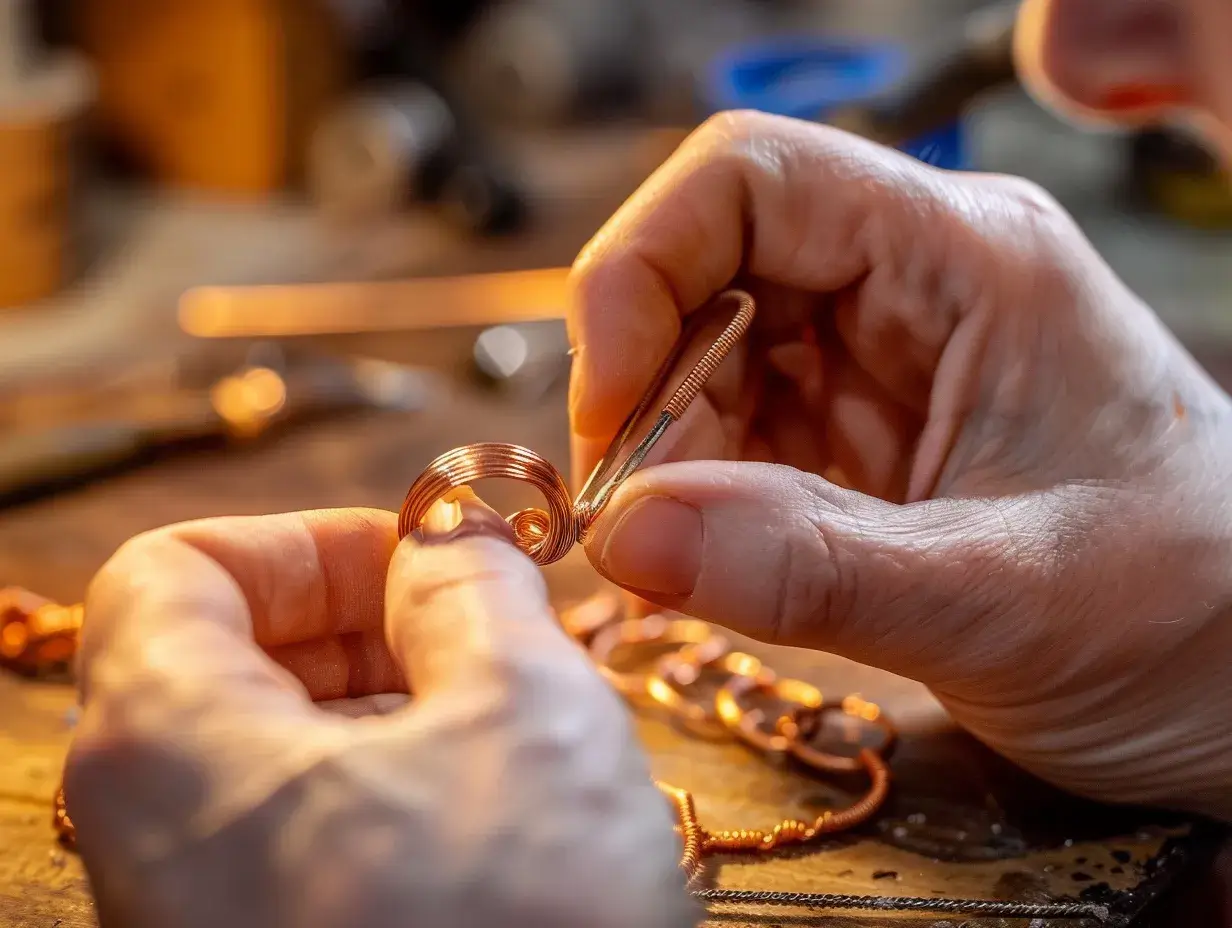
Wire Hardness (Temper) Explained
Three Standard Tempers
1. DEAD SOFT (Beginner Recommended)
Characteristics:
- Annealed to softest possible state
- Bends extremely easily
- No spring-back resistance
- Shapes readily without force
Best For:
- Learning wire wrapping techniques
- Complex curves and spirals
- Tight bends and wraps
- Shaping around mandrels
- Intricate designs
Limitation: Loses shape easily – needs work-hardening for structural pieces
2. HALF HARD (Most Versatile)
Characteristics:
- Partially work-hardened
- Moderate stiffness
- Some spring-back
- Holds shape well
Best For:
- Ear wires (need shape retention)
- Clasps and hooks
- Jump rings
- General components
- Balanced workability/strength
3. FULL HARD (Specialized Use)
Characteristics:
- Maximum work-hardening
- Very stiff
- Strong spring-back
- Difficult to bend
Best For:
- Spring-loaded clasps
- Maximum tension applications
- Structural components
- Limited general use
Essential Wire Working Tools
🔧 Wire Working Tool Kit
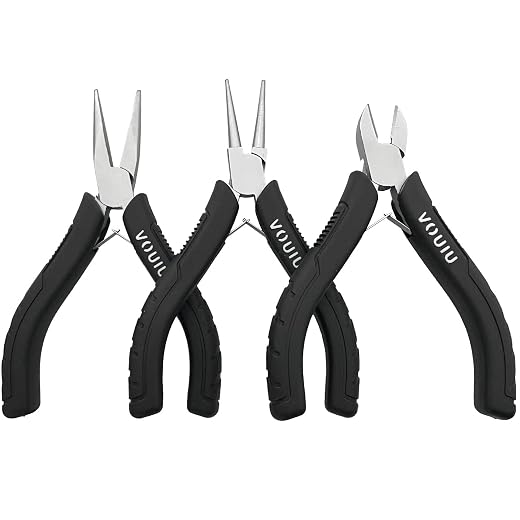
1. Jewelry Making Pliers Set (3-Piece)
- ✓ Round nose pliers (loops, curves)
- ✓ Chain nose pliers (gripping, bending)
- ✓ Wire cutters (flush cut)
- ✓ Complete basic toolkit
- ✓ Comfortable grips
- ✓ Forming rings perfectly round
- ✓ Size markings
- ✓ Essential for ring making
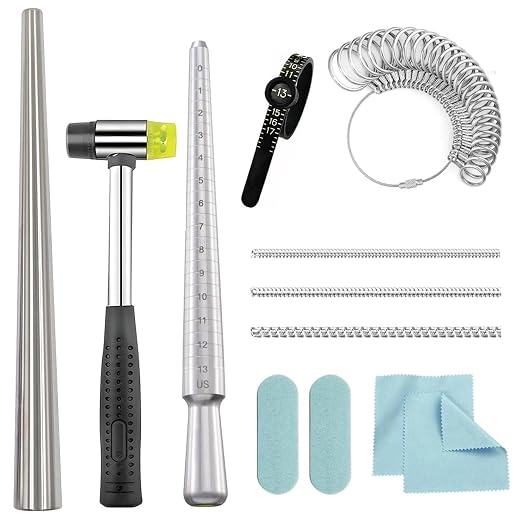
- ✓ Identifies wire gauge accurately
- ✓ Essential for unlabeled wire
- ✓ Professional quality

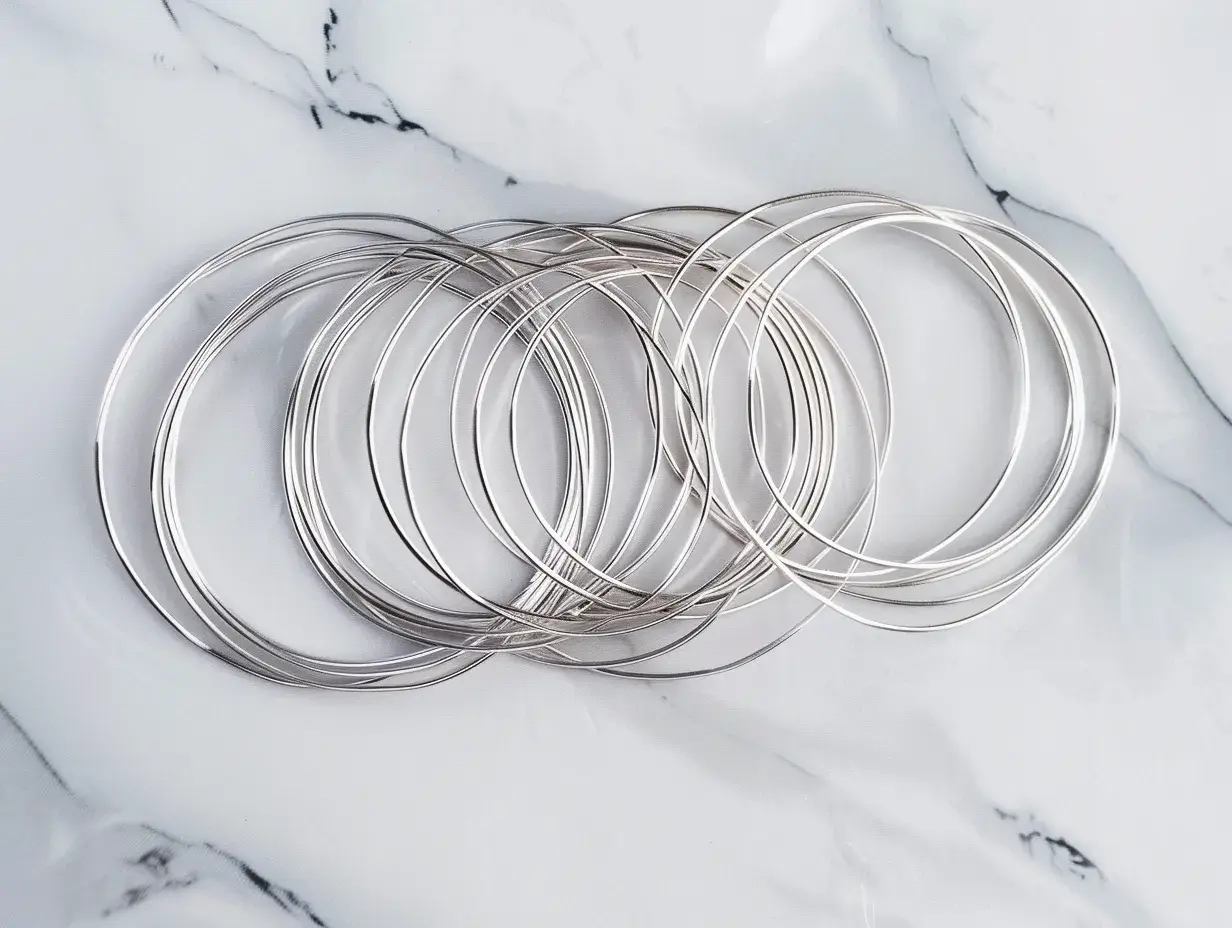
Building Your Wire Collection
Beginner Starter Collection
Recommended First Purchase:
- Multi-gauge practice pack: Copper wire variety (18, 20, 22, 24, 26 gauge) – $10-20
- Single versatile spool: 20-gauge copper, 30+ yards – $8-12
- Basic tool set: Round nose, chain nose, cutters – $15-25
Total Startup: $35-60
Why This Combination: Multiple gauges for discovering preferences, generous practice material, complete tool set, affordable if deciding jewelry making isn’t for you.
Intermediate Expansion
After Mastering Basics on Copper:
- Add sterling silver/gold-filled: 20-gauge dead soft, 10-15 feet – $20-40
- Specialized gauges: 18-gauge for ear wires, 24-gauge for detail work
- Half-hard temper wire: For clasps, hooks requiring shape retention
Advanced Collection
Production Jewelry Making:
- Large spools (100+ yards) favorite gauges
- Multiple materials (silver, gold-filled, brass)
- Various shapes (round, half-round, square)
- All three tempers for different applications
Common Wire Selection Mistakes
1. Starting with Expensive Metal: Practice on copper first. Mistakes happen – learn on affordable material.
2. Wrong Gauge for Project: Too thick = difficult to bend, breaks tools. Too thin = weak, doesn’t hold shape. Reference gauge chart.
3. Ignoring Wire Hardness: Dead soft for learning, half-hard for finished ear wires/clasps. Wrong temper causes frustration.
4. Insufficient Quantity: Running out mid-project disappointing. Buy more than estimated need – wire stores indefinitely.
5. Poor Quality Wire: Cheap unlabeled wire may be inconsistent gauge, brittleness. Stick with reputable brands (Artistic Wire, Beadsmith, Parawire).
Frequently Asked Questions
What gauge wire should I use for jewelry making?
Wire gauge selection depends on project type and structural requirements. Gauge numbering is inverse – higher number = thinner wire. Recommended gauges by project: (1) 12-14 gauge (1.6-2.0mm) – Heavy structural work: cuff bracelets, neck wires, large rings, armatures, bangles. Very stiff, requires heavy-duty tools. (2) 16-18 gauge (1.0-1.3mm) – Medium structural work: ear wires, clasps, substantial rings, wire-wrapped beads, bracelet frames. Good balance strength/workability. Most popular for beginners. (3) 20-22 gauge (0.6-0.8mm) – General jewelry making: rings, pendants, hooks, jump rings, head pins, wire wrapping, coiling. Versatile, most commonly used range. Perfect starting point for beginners. (4) 24-26 gauge (0.4-0.5mm) – Delicate work: coiling around heavier wire, small bead attachments, weaving, crocheting, knitting, lightweight earrings. Easy to bend, prone to breaking if kinked. (5) 28-30 gauge (0.3mm) – Ultra-fine work: seed bead attachment, intricate coiling, decorative weaving. Very delicate, specialized applications. Beginner recommendation: Start with 20-gauge wire for learning basic techniques – strong enough for structure, thin enough to bend easily. Purchase multi-gauge starter packs (18, 20, 22, 24, 26 gauge) providing versatility discovering preferred working gauges before investing in large spools.
What type of wire is best for jewelry making?
Best wire type depends on budget, skill level, and intended use. Wire material options: (1) Copper wire (BEST FOR BEGINNERS) – Inexpensive ($5-10 for large spool), extremely malleable and forgiving, beautiful warm color, perfect for practice and prototypes, tarnishes naturally creating rustic patina, easily shaped and reworked. Ideal starting material before investing in expensive metals. (2) Sterling silver wire – 92.5% silver + 7.5% copper alloy, professional quality for finished jewelry, excellent durability, beautiful bright finish, moderate price ($1-3 per foot depending on gauge), tarnishes but easily polished, industry standard for quality jewelry. Use after mastering techniques on copper. (3) Gold-filled wire – Thick layer 14K gold bonded to brass core, looks identical to solid gold, fraction of solid gold cost, durable (won’t chip like plating), hundreds times thicker than gold plating, excellent for upper-end designs, perfect compromise quality/affordability. (4) Silver-filled wire – Similar to gold-filled but with silver layer, economical alternative to sterling silver, 5-10% silver content, good for practice on ‘nicer’ material. (5) Brass wire – Golden color, stiffer than copper, affordable, beautiful vintage aesthetic, harder to work (shows kinks more easily). (6) Colored craft wire – Permanent enamel coating over copper, huge color variety, tarnish-resistant, dead soft temper, perfect for colorful designs, coating won’t chip. Beginner progression: Start copper wire for learning → advance to sterling silver or gold-filled for selling finished jewelry.
What does wire hardness mean in jewelry making?
Wire hardness (temper) indicates how much the wire has been work-hardened through manipulation. Three standard tempers: (1) DEAD SOFT – Annealed (heated and cooled) to softest state. Bends extremely easily with no spring-back. Shapes readily into curves and spirals. Best for: Complex wire wrapping, intricate designs requiring tight bends, shaping around mandrels, beginners learning techniques. Disadvantage: Loses shape easily, not suitable for items requiring spring tension (like ear wires that need to hold shape). Can be work-hardened through manipulation or tumbling after shaping. (2) HALF HARD – Partially work-hardened. Moderate stiffness with some spring-back. Holds shape better than dead soft while remaining workable. Best for: Ear wires, clasps, jump rings, general jewelry components requiring shape retention. Most versatile temper for finished jewelry. Balanced between workability and structural integrity. (3) FULL HARD – Maximum work-hardening. Very stiff with strong spring-back. Difficult to bend, requires significant force and heavy tools. Holds shape exceptionally well. Best for: Spring-loaded clasps, items requiring maximum tension, structural components. Limited use in typical jewelry making. Recommendation: Beginners should purchase DEAD SOFT wire for learning (easiest to manipulate). Work-harden finished pieces through gentle hammering or tumbling achieving desired stiffness. As skills develop, experiment with half-hard wire for items requiring shape retention.
How much wire do I need for jewelry projects?
Wire quantity needed varies dramatically by project complexity. Approximate wire requirements: Simple jump ring (8mm diameter): 2 inches wire. Pair simple ear wires: 6-8 inches total. Basic wire-wrapped pendant: 12-24 inches depending on complexity. Simple ring band: 3-4 inches for average size. Wire-wrapped bead: 4-8 inches depending on wrap style. Coiled bracelet: 3-5 feet depending on design. Complex wire-wrapped pendant with elaborate design: 3-6 feet. Wire-crocheted bracelet: 15-30 feet. Purchasing recommendations: (1) Starter practice: Buy multi-gauge variety pack (5-10 yards each gauge) or single 25-30 yard spool common gauge (20 or 22) providing generous practice material. Cost: $10-20. (2) Specific project: Calculate required length, add 20-30% safety margin accounting for waste, mistakes, practice pieces. (3) Production work: Large spools (100+ yards) economical if making multiple similar pieces. Wire waste considerations: Beginners waste 20-40% initially through mistakes, incorrect measurements, practice pieces. Experienced makers waste 10-15%. Account for learning curve when purchasing. Better to start with more wire than needed – leftover wire stores indefinitely and useful for future projects. Running out mid-project frustrating, especially if color/finish discontinued. Storage tip: Label all wire clearly with gauge, material, temper, purchase date preventing confusion when building wire collection.
Can I use craft wire for fine jewelry?
Craft wire suitability for fine jewelry depends on wire type and jewelry definition. Craft wire categories: (1) Base metal craft wire (copper, brass, colored enamel) – Suitable for: Artisan jewelry, practice pieces, costume jewelry, craft projects, wire art, prototypes. NOT suitable for: High-end fine jewelry, pieces marketed as precious metal, jewelry requiring hallmarking, heirloom pieces. Reasons: Tarnishes (except coated), lower perceived value, skin reactions (some people), doesn’t meet ‘fine jewelry’ industry standards (requires precious metals). However: Creates beautiful finished pieces, excellent for selling at craft fairs/online, perfect for artistic expression, much more affordable allowing experimentation. (2) Precious metal craft wire (sterling silver, gold-filled) – YES, absolutely suitable for fine jewelry. These ARE fine jewelry materials despite ‘craft wire’ marketing. Sterling silver and gold-filled craft wire identical to jewelry supply house wire, often same manufacturers, meets fine jewelry standards. Only difference: packaging and marketing (craft stores vs jewelry suppliers). Quality considerations: Source matters more than ‘craft’ label. Verify: Actual metal content (sterling = 92.5% silver), reputable brand, proper gauge/hardness labeling, tarnish-resistant coating if desired. Professional jewelers frequently use ‘craft wire’ from brands like Artistic Wire, Beadsmith, Parawire for finished jewelry. Bottom line: Copper/brass craft wire = artisan/craft jewelry (beautiful, sellable, not ‘fine jewelry’). Sterling silver/gold-filled craft wire = legitimate fine jewelry materials regardless of ‘craft’ branding.
Conclusion
Wire selection transforms from overwhelming confusion to confident decision-making once fundamentals understood. Remember: gauge numbering is inverse (higher number = thinner wire), 20-22 gauge represents sweet spot for beginners balancing workability and strength, copper wire provides perfect affordable learning material before investing in precious metals, dead soft temper easiest for beginners while half-hard better for finished structural pieces, multi-gauge starter packs offer best value discovering personal preferences.
Successful wire selection progression: Start with affordable copper multi-gauge variety pack and basic tools ($35-60 investment). Practice fundamental techniques (loops, spirals, wrapping) on forgiving copper wire. Master gauge selection through experimentation – discover which gauges feel comfortable and suit preferred project types. Expand to sterling silver or gold-filled wire once consistent technique developed. Invest in larger spools of favorite gauges and materials for production work.
Most importantly: Don’t overthink initial purchases. Wire stores indefinitely, techniques improve with practice, and “wrong” wire teaches valuable lessons about material properties. Your wire collection grows organically as skills develop and creative vision clarifies. Start with recommended beginner setup, practice consistently, and enjoy the creative freedom wire jewelry making provides. Every expert jeweler started with single spool of wire and determination to learn – your wire jewelry journey begins today!
Last Updated: December 2024 | This article contains affiliate links. As an Amazon Associate, I earn from qualifying purchases at no additional cost to you.

Hi, I’m Sara Hein, a passionate jewelry researcher and educator. I created Jewelry Carats to share well-researched insights on gemstones, precious metals, and jewelry care. My goal is making expert jewelry knowledge accessible to everyone.