
Affiliate Disclosure: As an Amazon Associate I earn from qualifying purchases at no additional cost to you.
Complete Care Guide
Introduction: Why Gold Jewelry Loses Its Shine
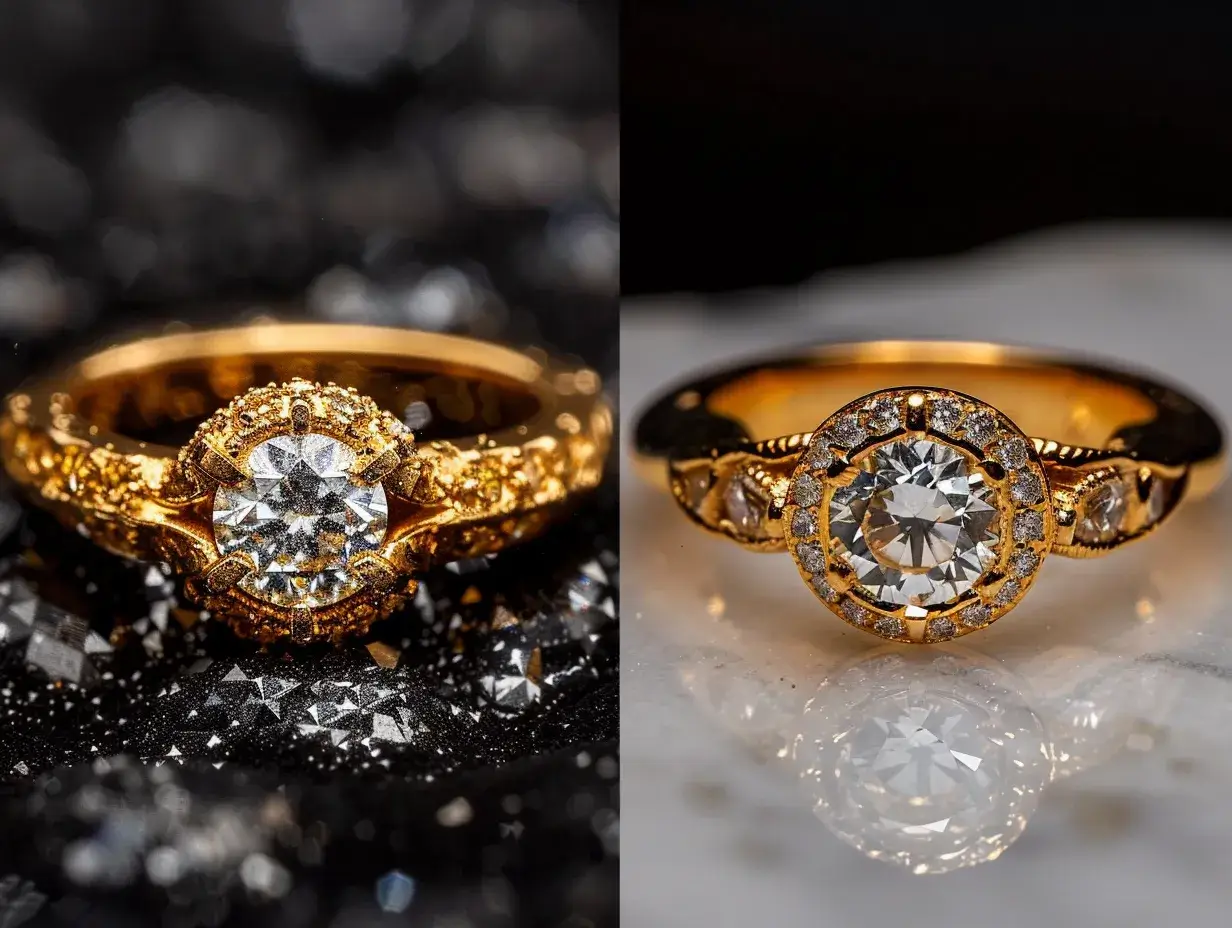
Gold jewelry captivates with brilliant luster – the warm glow of yellow gold, bright sparkle of white gold, romantic blush of rose gold. However, even the finest gold pieces lose their radiant shine over time, developing dull, lackluster appearance that fails to reflect light beautifully. This disappointing transformation isn’t permanent damage – it’s surface contamination and minor wear completely reversible with proper care and maintenance.
Understanding why gold dulls empowers you to prevent shine loss and restore brilliance when needed. Unlike silver’s chemical tarnish, gold’s dulling occurs primarily from external factors: body oils coating surfaces, lotion residue creating film, cosmetic buildup blocking light reflection, environmental dust settling on intricate details, and microscopic scratches diffusing light rather than reflecting sharply. These everyday exposures accumulate gradually until noticeable dullness obscures gold’s natural beauty.
This comprehensive guide reveals professional jewelry care secrets maintaining gold’s magnificent shine. We cover proven cleaning methods from simple dish soap solutions to professional-grade products, karat-specific care requirements ensuring appropriate treatment for different gold purities, gemstone safety preventing damage to precious stones set in gold, protective strategies minimizing exposure to shine-dulling elements, and maintenance schedules keeping gold perpetually brilliant. Whether caring for heirloom pieces passed through generations, protecting investment-grade jewelry maintaining resale value, or simply enjoying everyday accessories looking their absolute best, these tips ensure your gold jewelry maintains the stunning shine that makes it precious.
Understanding Gold: Properties and Purity
Gold Karat System Explained
Gold purity determines both appearance and care requirements. The karat system measures gold content percentage:
- 24 Karat (24K): 100% pure gold – bright yellow, very soft, rarely used for jewelry (too soft for daily wear)
- 22 Karat (22K): 91.7% gold – deep yellow, soft, popular in Asian and Middle Eastern jewelry
- 18 Karat (18K): 75% gold – rich yellow color, good durability, popular for fine jewelry
- 14 Karat (14K): 58.3% gold – balanced color and strength, most popular in U.S. jewelry
- 10 Karat (10K): 41.7% gold – paler yellow, very durable, affordable option
How Karat Affects Shine and Care:
Higher karat gold (22K, 24K) displays richer color and lustrous shine but scratches more easily requiring gentler handling and careful polishing. Lower karat gold (10K, 14K) resists scratching better but contains more alloy metals potentially contributing to slight tarnishing over time. All karats respond beautifully to proper cleaning and maintenance.
Gold Color Variations
Yellow Gold: Traditional gold appearance – mix of pure gold with copper and silver alloys. Maintains color permanently, doesn’t require plating, easiest to maintain shine through regular cleaning.
White Gold: Gold alloyed with white metals (nickel, palladium, silver) creating silvery-white appearance, typically rhodium-plated for brilliant white finish. Rhodium plating wears thin over time (1-3 years depending on wear) revealing yellowish gold underneath. Requires periodic re-plating maintaining white appearance. Gentle cleaning essential preventing premature plating wear.
Rose Gold (Pink Gold): Gold alloyed with higher copper content creating pinkish hue. Copper can develop slight patina over time but easily removed through cleaning. Increasingly popular for its romantic, vintage aesthetic.
Why Gold Dulls (But Doesn’t Truly Tarnish)
Pure gold doesn’t tarnish or oxidize – it’s chemically stable and inert. Gold jewelry dulls from:
- Surface contamination: Body oils, lotions, cosmetics, hairsprays, perfumes coat gold creating dull film
- Environmental buildup: Dust, dirt, cooking residue accumulate in crevices and on surfaces
- Microscopic scratches: Daily wear creates tiny scratches diffusing light reflection
- Alloy metal reaction: Lower karat gold’s alloy metals (copper, silver, nickel) can slightly tarnish affecting overall appearance
- Chemical exposure: Chlorine, harsh cleaners, certain chemicals create surface changes
Good News: All these factors are reversible through proper cleaning and care. Gold’s shine restoration is simpler than silver tarnish removal – usually requiring only dirt removal and light polishing.
Daily Habits to Maintain Gold Shine
When to Remove Gold Jewelry
ALWAYS Remove Gold Jewelry Before:
- Swimming: Chlorine in pools reacts with gold alloys, saltwater leaves mineral deposits. Both dull finish significantly
- Showering/Bathing: Soap scum coats gold, hot water loosens settings potentially losing stones
- Exercising: Sweat creates acidic film dulling gold, impact risks damaging settings
- Sleeping: Prevents unnecessary wear, tangling, and pressure on settings
- Applying cosmetics: Lotions, perfumes, hairsprays contain chemicals coating gold. Apply cosmetics FIRST, then jewelry
- Cleaning house: Harsh chemicals (bleach, ammonia cleaners) damage gold and gemstones
- Gardening/manual work: Dirt embeds in settings, impact can bend prongs or scratch gold
- Cooking: Grease splatters coat jewelry, heat can loosen stone settings
The “Last On, First Off” Rule:
Put jewelry on AFTER getting dressed, applying makeup, styling hair, and spraying perfume. Remove jewelry FIRST when coming home before washing hands, showering, or doing chores. This simple habit dramatically reduces exposure to dulling substances.
Quick Daily Maintenance
30-Second Daily Wipe:
After removing jewelry each evening, quickly wipe with jewelry polishing cloth. This simple action removes daily oil and dirt accumulation before it builds up, maintaining shine between deep cleanings. Keep polishing cloth in jewelry box for convenient daily use.
✨ Essential Gold Polishing Cloths
1. CONNOISSEURS Premium Gold Polishing Cloth (14×14″)
- ✓ Extra-large 14″x14″ size – lasts longer
- ✓ Ultra-soft fabric won’t scratch gold
- ✓ Anti-tarnish formula protecting gold
- ✓ Two-sided: cleaning + buffing
- ✓ Reusable hundreds of times
- ✓ Professional jewelry care standard
2. Mayflower Pro Size Polishing Cloth (11×14″)
- ✓ Made in USA with quality materials
- ✓ 100% cotton – environmentally friendly
- ✓ Non-toxic cleaning formula
- ✓ Two-step system: white cloth cleans, gray cloth shines
- ✓ Safe for 14K, 18K, and 24K gold
- ✓ Also works on platinum and silver
3. LIFETIME JEWELRY Polishing Cloth (2-Pack)
- ✓ Dual-sided design for cleaning and polishing
- ✓ Compact size perfect for travel
- ✓ Works on all gold types
- ✓ Affordable 2-pack value
- ✓ Removes tarnish and restores shine
Professional Gold Cleaning Methods
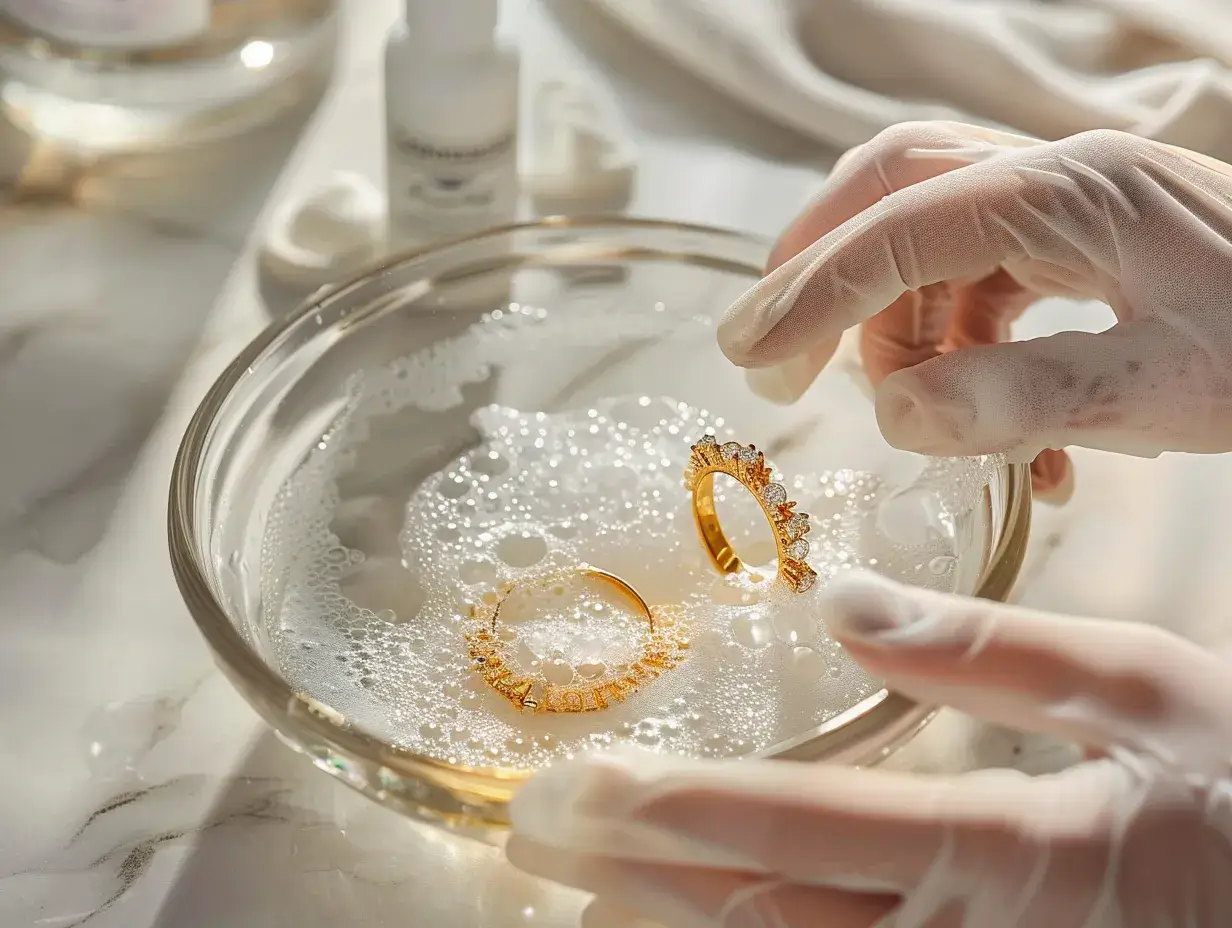
Method 1: Mild Dish Soap and Water (Best for Regular Cleaning)
Why This Works:
Mild dish soap designed to cut grease and oils – exactly what accumulates on gold jewelry from skin contact, lotions, and cosmetics. This gentle yet effective method safely cleans all gold karats and most gemstones without harsh chemicals or abrasives.
Step-by-Step Process:
- Prepare solution: Fill small bowl with warm (not hot) water, add 2-3 drops mild dish soap (Dawn Original recommended). Mix gently
- Soak jewelry: Place gold pieces in solution, soak 10-15 minutes. This loosens dirt, oils, and buildup
- Gentle scrubbing: Use soft-bristle toothbrush (designated for jewelry only) gently scrub:
- Around gemstone settings and prongs
- Chain links and clasps
- Engraved areas and details
- Under settings where dirt hides
- Thorough rinsing: Rinse under warm running water ensuring ALL soap removed. Close drain or place bowl underneath catching jewelry if it slips
- Complete drying: Pat dry with lint-free microfiber cloth. Air dry additional 10-15 minutes before storing
🧼 Gold Cleaning Essentials – DIY Method
1. Dawn Ultra Original Dish Soap
- ✓ Clear formula – no dyes that could stain
- ✓ Powerful grease-cutting action
- ✓ Gentle enough for fine jewelry
- ✓ Recommended by professional jewelers
- ✓ Affordable and readily available
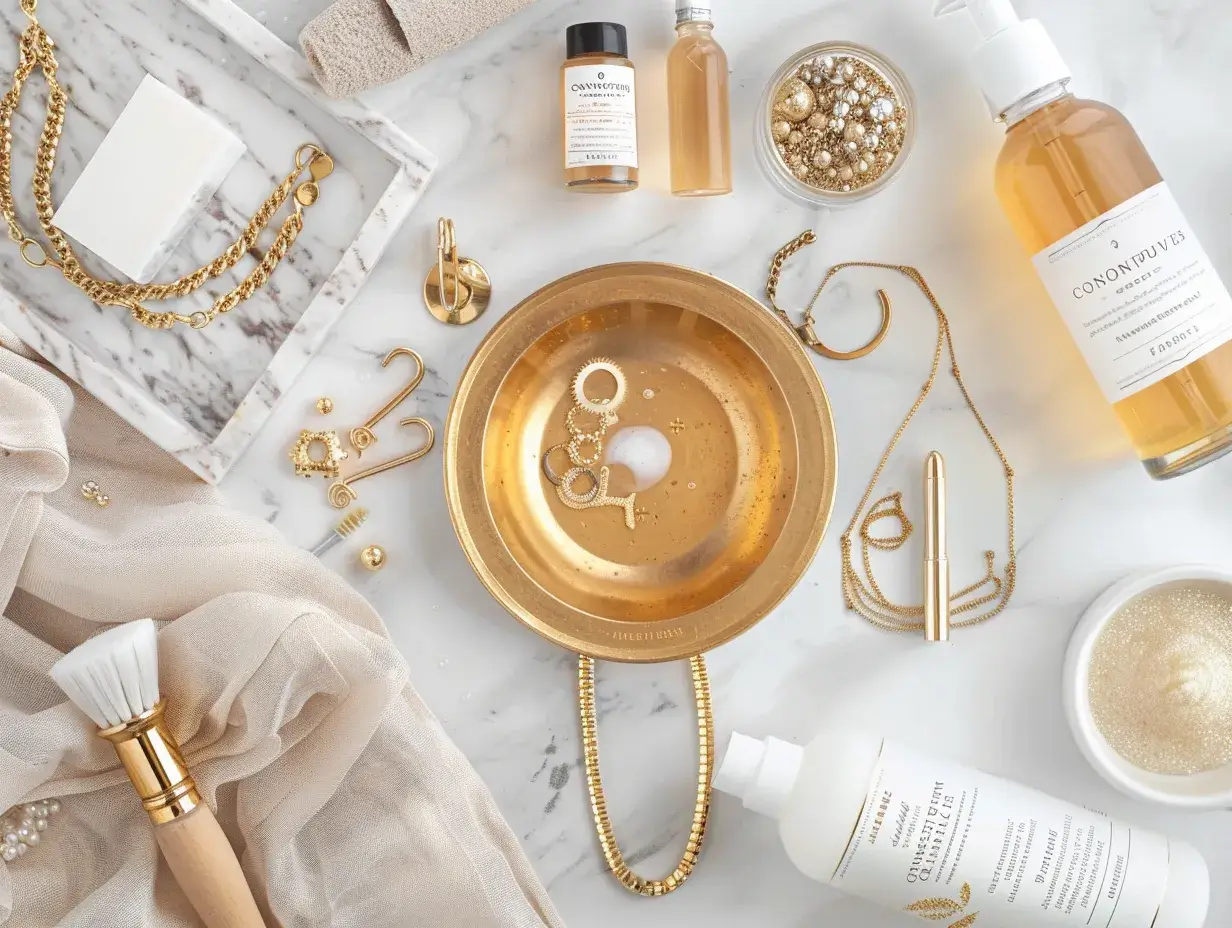
2. CONNOISSEURS Jewelry Cleaning Kit with Brush
- ✓ Soft-bristle brush designed for jewelry
- ✓ Won’t scratch gold or gemstones
- ✓ Reaches intricate details
- ✓ Includes cleaning solution + 2 polishing cloths
- ✓ Complete care system
Frequency: Clean weekly for daily-wear jewelry, after each wearing for occasional pieces.
Safe For: All gold karats, diamonds, sapphires, rubies, hard gemstones.
NOT Safe For: Pearls, opals, emeralds, turquoise, coral (require special cleaning – see gemstone section).
Method 2: Commercial Gold Jewelry Cleaners
Advantages Over DIY Methods:
Professional jewelry cleaning solutions formulated specifically for gold deliver faster, more thorough cleaning than dish soap. Concentrated formulas penetrate stubborn buildup, restore brilliant shine quickly, and often include anti-tarnish agents providing lasting protection.
🏆 Top Professional Gold Cleaning Solutions
1. CONNOISSEURS All-Purpose Jewelry Cleaner (8oz)
- ✓ #1 Best Seller in jewelry care products
- ✓ Works in 30 seconds – fast results
- ✓ Safe for gold, platinum, diamonds, gemstones
- ✓ Includes dip tray and soft-bristle brush
- ✓ 2 polishing cloths included (gold + silver)
- ✓ Crystal-clear formula with fresh fragrance
- ✓ Used by professional jewelers worldwide
2. Blitz Gem & Jewelry Cleaner Concentrate (8oz)
- ✓ Concentrated formula – 8x uses per bottle
- ✓ Since 1912 – trusted brand heritage
- ✓ Non-toxic, biodegradable, eco-friendly
- ✓ Works instantly on gold, silver, platinum
- ✓ Safe for diamonds, rubies, sapphires, topaz
- ✓ Free of ammonia, alcohol, harsh VOCs
- ✓ Made in USA
3. CONNOISSEURS Diamond Dazzle Stik (Travel Pen)
- ✓ Portable pen – perfect for on-the-go cleaning
- ✓ Brush tip reaches between prongs and settings
- ✓ Advanced polymer formula with micro-cleaners
- ✓ Reduces appearance of fine scratches
- ✓ Perfect for engagement rings and diamond jewelry
- ✓ Fits in purse or makeup bag
- ✓ 36,000+ Amazon reviews – proven results
4. Blitz Foamz Jewelry Cleaning Foam (2.5oz)
- ✓ TSA-compliant size – travel-friendly
- ✓ Fast-acting foam lifts dirt instantly
- ✓ No-mess application
- ✓ Compact bottle fits in luggage
- ✓ Safe for all precious metals
How to Use Commercial Cleaners:
- Read product instructions – formulas vary by brand
- Typical dip method: Submerge jewelry 10-30 seconds (follow label timing)
- Use provided brush for detailed cleaning
- Rinse thoroughly under warm water
- Dry completely with soft cloth
- Buff with polishing cloth for maximum shine
Frequency: Weekly for heavily-worn pieces, monthly for occasional jewelry, or when soap cleaning insufficient.
Method 3: Ultrasonic Cleaning
How Ultrasonic Cleaners Work:
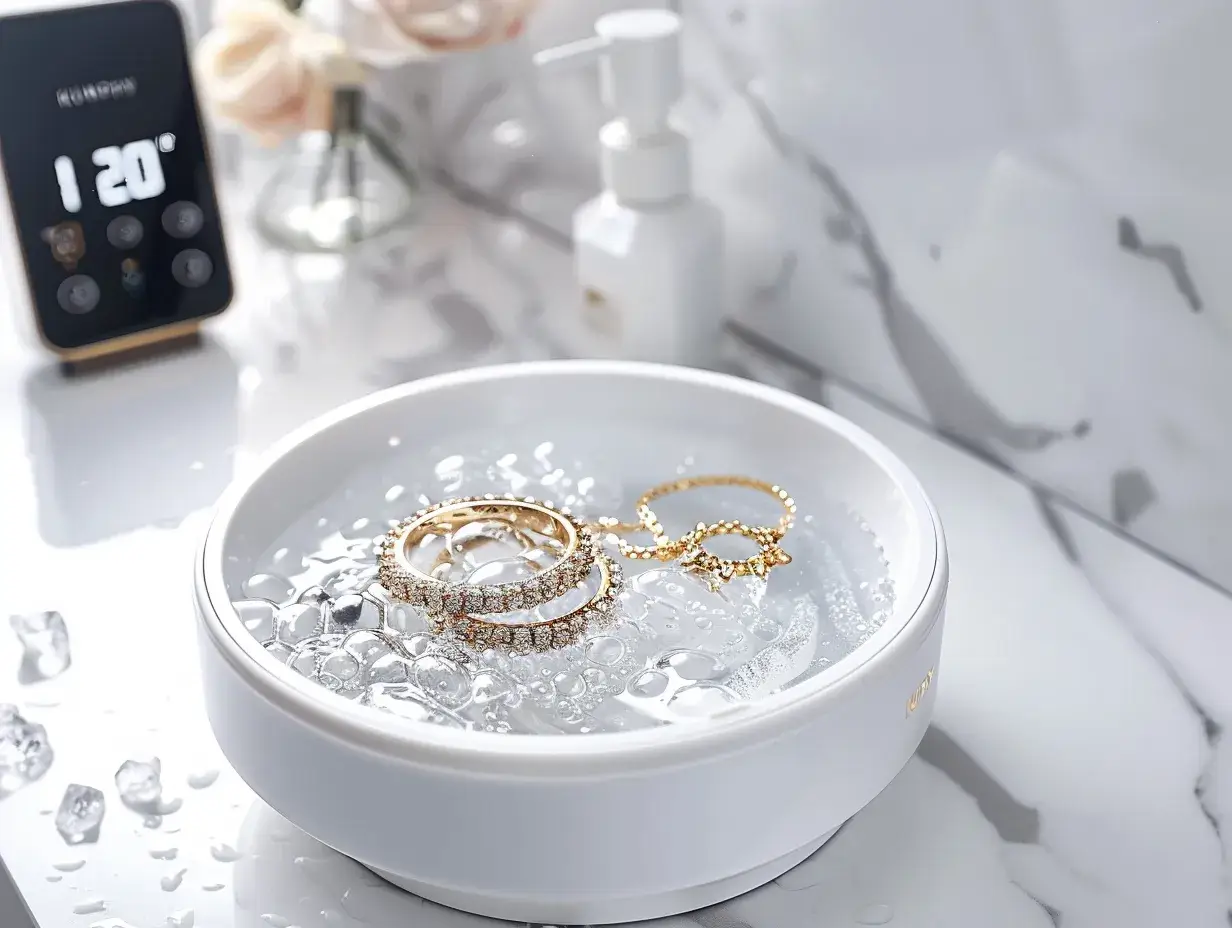
Ultrasonic cleaners generate high-frequency sound waves creating microscopic bubbles in cleaning liquid. These bubbles collapse against jewelry surfaces creating scrubbing action reaching every crevice impossible to clean manually – perfect for intricate gold jewelry with complex settings.
🔬 Ultrasonic Cleaning for Gold Jewelry
1. KUNPHY Professional Ultrasonic Cleaner (12oz)
- ✓ 46KHz high-frequency cleaning
- ✓ 360° coverage reaching all surfaces
- ✓ One-touch operation – simple to use
- ✓ 3-minute auto cycle
- ✓ Quiet operation under 45dB
- ✓ Perfect for gold rings, chains, bracelets
- ✓ Compact 12oz size for home use
2. KUNPHY Ultrasonic Cleaning Solution (8.5oz)
- ✓ Formulated for gold, silver, platinum
- ✓ Safe for diamonds and gemstones
- ✓ Enhances ultrasonic cleaning effectiveness
- ✓ Concentrated formula
- ✓ Non-toxic ingredients
Learn More: For complete ultrasonic cleaning guidance including solution types and safety, see our comprehensive guide: What Liquid to Use in Ultrasonic Cleaner for Jewelry
Ultrasonic Cleaning Best Practices:
- Use appropriate solution: Water alone works but commercial ultrasonic solution or mild dish soap enhances cleaning
- Check gemstone safety: Safe for diamonds, sapphires, rubies. NOT safe for pearls, opals, emeralds, or glued stones
- Inspect jewelry first: Ensure no loose stones – vibrations can dislodge weakened settings
- Don’t overcrowd: Clean 2-3 pieces maximum per cycle ensuring proper coverage
- Standard cycle: 3-5 minutes sufficient for most gold jewelry
- Rinse after: Always rinse thoroughly removing all cleaning solution
Frequency: Monthly for intricate pieces, or when manual cleaning doesn’t reach all areas.
Gold Type-Specific Care
Yellow Gold Maintenance
Characteristics:
Yellow gold maintains natural gold color permanently requiring no plating. It’s the most traditional and easiest gold type to maintain. Higher karat yellow gold (18K, 22K) displays richer color but scratches more easily.
Specific Care Tips:
- All standard cleaning methods safe (soap, commercial cleaners, ultrasonic)
- Higher karat = gentler polishing needed (soft cloth only, no aggressive buffing)
- Avoid harsh chemicals (chlorine, bleach) that can affect alloy metals
- Regular polishing maintains warm glow
- Store separately from harder metals preventing scratches
White Gold Special Considerations
The Rhodium Plating Factor:
Most white gold jewelry features thin rhodium plating creating brilliant white finish. This plating wears through over time (typically 1-3 years) revealing yellowish-white gold underneath. Proper care extends plating life:
White Gold Care Essentials:
- Gentle cleaning only: Use mildest methods (dish soap preferred over harsh commercial cleaners)
- Minimal polishing: Excessive polishing wears through rhodium plating faster
- Avoid abrasives: No toothpaste, baking soda paste, or rough cloths
- Quick cleaning cycles: Brief ultrasonic cycles (2-3 minutes) rather than extended exposure
- Professional re-plating: When plating wears thin (jewelry looks yellowish), jeweler can re-plate ($50-100 typically)
- Remove during harsh activities: Chlorine and chemicals accelerate plating wear dramatically
Rose Gold Care
Understanding Copper Content:
Rose gold’s beautiful pink hue comes from higher copper alloy content. Copper can develop slight patina (darkening) over time but easily removed through cleaning.
Rose Gold Maintenance:
- Standard cleaning methods safe and effective
- If patina develops: Gentle cleaning with commercial gold cleaner restores original color
- Some wearers appreciate natural patina development creating vintage aesthetic
- Avoid harsh chemicals affecting copper component
- Store in anti-tarnish environment minimizing patina formation
Gold-Plated Jewelry Care
Critical Difference:
Gold-plated jewelry features thin gold layer over base metal (brass, copper, silver). This delicate plating requires extremely gentle care preventing wear-through:
Plated Gold Do’s and Don’ts:
DO:
- Clean with mild dish soap and water only
- Pat dry gently – no rubbing
- Store carefully in soft pouches
- Remove before any water exposure
- Limit wearing frequency extending plating life
DON’T:
- Use commercial jewelry cleaners (too harsh)
- Polish excessively (wears through plating)
- Use ultrasonic cleaners (vibrations can separate plating)
- Expose to chemicals, perfumes, lotions
- Wear during swimming, showering, exercising
Realistic Expectations: Gold plating eventually wears through revealing base metal. Proper care extends life but replating or replacement eventually necessary.
Gemstone Safety in Gold Jewelry
Safe for All Cleaning Methods
Hard, Durable Gemstones:
- Diamonds: Hardest natural material – safe for any cleaning method including ultrasonic, steam, harsh chemicals. Actually benefit from frequent cleaning maintaining maximum brilliance
- Sapphires: Very hard (9 Mohs) – safe for all cleaning methods
- Rubies: Corundum like sapphires – all methods safe
- Topaz: Durable and chemical-resistant
- Aquamarine: Stable and cleaning-safe
- Amethyst: Durable quartz – all methods appropriate
Require Gentle Care
Pearls (Most Delicate):
- NEVER ultrasonic clean – vibrations damage nacre
- NEVER use harsh chemicals – pearls dissolve in acids
- Clean with barely damp soft cloth only
- Wipe after each wearing removing oils
- Store separately from harder gems
- Professional cleaning recommended
Opals:
- High water content makes them fragile
- Avoid ultrasonic cleaning (can crack opals)
- Use only soft damp cloth
- Never soak in water
- Store in slightly humid environment preventing drying/cracking
Emeralds:
- Often oil-filled treatment requiring gentle care
- Avoid ultrasonic cleaners (can damage filling)
- Mild soap and water acceptable but brief exposure
- Never use harsh chemicals
- Professional cleaning safest option
Turquoise, Coral, Amber:
- Porous and chemically reactive
- Damp cloth cleaning only
- No chemicals, no soaking, no ultrasonic
- Absorb oils and perfumes – remove before applying cosmetics
When Unsure – Professional Cleaning
If gold jewelry contains unknown gemstones or combination of different stones with varying hardness, professional jeweler cleaning safest option. Jewelers identify stones and use appropriate cleaning method for each component.
Protection and Prevention Strategies
Protective Jewelry Coatings
Why Consider Protective Coating:
Clear protective coatings create invisible barrier on gold jewelry surfaces protecting against tarnishing, scratching, and chemical exposure. Particularly beneficial for frequently-worn pieces or lower karat gold prone to dulling.
🛡️ Protective Jewelry Coatings
1. Eternal Jewelry Coating Spray
- ✓ Clear protective barrier against tarnish
- ✓ Prevents scratching and wear
- ✓ Safe for gold, silver, platinum
- ✓ Easy spray application
- ✓ Lasts 3-6 months per application
- ✓ Professional-grade protection
2. ProtectaClear 4oz (Brush-On)
- ✓ Brush-on application for precise coverage
- ✓ Creates hard protective finish
- ✓ Prevents tarnish and corrosion
- ✓ Long-lasting protection
- ✓ Won’t yellow or discolor
When to Use Protective Coatings:
- Daily-wear rings and bracelets (maximum exposure)
- Lower karat gold showing tarnish tendency
- Rose gold prone to copper patina
- Jewelry worn during activities increasing wear
- Pieces you want “set and forget” protection
Application Tips:
- Clean jewelry thoroughly before coating
- Dry completely – no moisture trapped under coating
- Apply thin, even coat following product instructions
- Allow complete drying (24 hours typically)
- Reapply every 3-6 months or when protection wears
Proper Storage Preventing Dullness
Storage Environment Matters:
Where and how you store gold jewelry dramatically affects how quickly it dulls. Proper storage minimizes exposure to air, dust, and humidity maintaining shine between wearings.
Ideal Gold Storage:
- Individual compartments: Prevent pieces scratching each other
- Soft lining: Velvet or microfiber protects surfaces
- Anti-tarnish materials: While gold doesn’t tarnish, alloy metals benefit from protection
- Covered storage: Protects from dust and air exposure
- Climate-controlled area: Stable temperature and moderate humidity
- Away from bathroom: Humidity accelerates dulling
Complete Storage Guide: For comprehensive jewelry storage strategies including anti-tarnish solutions and organization systems, see our detailed guide: The Best Ways to Store Different Types of Jewelry
📦 Gold Jewelry Storage Solutions
1. SONGMICS Large Jewelry Box with Lock
- ✓ Multiple compartments keeping pieces separated
- ✓ Velvet lining preventing scratches
- ✓ Lockable for valuable gold jewelry
- ✓ Dust-proof lid
- ✓ Organized storage maintaining shine
2. Velvet Jewelry Pouches (50-Pack)
- ✓ Individual pouches for each piece
- ✓ Soft velvet preventing scratches
- ✓ Drawstring closure
- ✓ Perfect for travel
- ✓ Protects gold from dust and air
What NOT to Do: Common Mistakes Damaging Gold
Harmful Cleaning Methods
NEVER Use These on Gold Jewelry:
- Toothpaste: Abrasives scratch gold surface, especially damaging to soft high-karat gold and rhodium plating
- Creates micro-scratches dulling finish permanently
- Whitening toothpastes even more abrasive
- Gel toothpastes still contain scratching particles
- Baking Soda Paste: Too abrasive for gold
- While effective on some metals, scratches soft gold
- Particularly damaging to 18K, 22K, 24K gold
- Can wear through gold plating quickly
- Bleach or Chlorine: Reacts with gold alloys causing discoloration
- Can permanently damage lower karat gold
- Weakens solder joints potentially causing breakage
- Never wear gold jewelry in chlorinated pools
- Harsh Ammonia Solutions: While safe for diamonds in gold settings, pure ammonia too harsh for some gold alloys
- If using ammonia: Dilute heavily (1 part ammonia to 6 parts water)
- Brief exposure only
- Not recommended for regular cleaning
- Vinegar or Lemon Juice: Acidic nature can damage certain gold alloys over time
- Boiling Water: Extreme temperature can loosen stone settings or crack certain gemstones
Handling Mistakes
- Excessive polishing: Too much polishing wears away gold over time, especially problematic for plated jewelry
- Storing jewelry dirty: Oils and chemicals left on gold cause faster dulling
- Mixing jewelry types: Hard diamonds scratch softer gold when stored together
- Wearing during harsh activities: Impact, chemicals, abrasion damage gold unnecessarily
- Ignoring loose settings: Cleaning jewelry with loose stones can dislodge them – inspect first
Maintenance Schedule for Maximum Shine
Daily Maintenance (30 seconds)
- Quick wipe with polishing cloth after removing jewelry
- Visual inspection for damage or loose stones
- Proper storage in jewelry box or pouch
Weekly Care (5-10 minutes)
- Mild soap and water cleaning for daily-wear pieces
- Gentle brush cleaning of intricate areas
- Thorough drying and polishing
- Check clasps and closures functioning properly
Monthly Deep Cleaning (15-20 minutes)
- Commercial gold cleaner or ultrasonic cleaning
- Detailed inspection of settings and prongs
- Professional polishing cloth treatment
- Storage area cleaning removing dust
Semi-Annual Professional Service
- Professional jeweler cleaning and inspection
- Prong tightening and setting security check
- Professional polishing removing deep scratches
- Rhodium re-plating for white gold if needed
Troubleshooting Common Gold Jewelry Problems
Problem: Gold Looks Dull/Cloudy
Cause: Oil and dirt buildup coating surface
Solution:
- Soak in warm water with dish soap 15 minutes
- Gentle brush cleaning
- Rinse thoroughly
- Dry and polish with gold polishing cloth
- If still dull: Use commercial gold cleaner or ultrasonic
Problem: Gold Has Fine Scratches
Cause: Daily wear, contact with harder materials
Solution:
- Light scratches: Polishing cloth often minimizes appearance
- Deeper scratches: Professional jeweler polishing restores smooth surface
- Prevention: Store separately from diamonds and hard gemstones
Problem: White Gold Looks Yellowish
Cause: Rhodium plating wearing thin revealing natural gold color underneath
Solution:
- Professional rhodium re-plating ($50-100)
- Temporary: Clean thoroughly – sometimes just dirty
- Prevention: Gentle care extends plating life
Problem: Gold Feels Sticky or Greasy
Cause: Lotion, cosmetic, or hairspray residue
Solution:
- Multiple soap and water cleanings
- Commercial cleaner cuts through stubborn residue
- Prevention: Apply cosmetics before jewelry
Problem: Stone Looks Dull Despite Clean Setting
Cause: Buildup underneath stone invisible from top
Solution:
- Ultrasonic cleaning reaches underneath settings
- Professional jeweler cleaning if ultrasonic unavailable
- Never try to clean under settings manually – risks loosening stone
When to Seek Professional Jewelry Services
Professional Cleaning Recommended When:
- Jewelry contains unknown gemstones requiring identification
- Heavy tarnish or discoloration doesn’t respond to home cleaning
- Intricate vintage pieces with delicate components
- Heirloom jewelry with sentimental value (minimize risk)
- Deep scratches requiring professional polishing
- Annual maintenance for valuable pieces
Professional Services Available:
- Steam cleaning: Professional-grade equipment reaching all areas
- Professional polishing: Removes deep scratches restoring smooth finish
- Prong re-tipping: Worn prongs rebuilt securing stones
- Setting inspection: Professional examination ensuring stone security
- Rhodium re-plating: Restores white gold to brilliant white finish
- Chain repair: Fixes broken links or clasps
Cost Expectations:
- Basic professional cleaning: $20-40
- Cleaning with inspection: $30-50
- Polishing service: $40-80
- Rhodium plating: $50-100
- Prong work: $20-40 per prong
Worth the Investment: Professional services every 6-12 months prevent costly repairs and ensure jewelry remains secure and beautiful.
Frequently Asked Questions
How do I keep my gold jewelry shiny?
Keep gold jewelry shiny through regular maintenance: (1) Clean weekly with mild dish soap and warm water using soft-bristle brush – removes body oils, lotions, and daily grime; (2) Polish monthly with jewelry polishing cloth specifically for gold – restores luster without scratching; (3) Store properly in anti-tarnish lined jewelry box or individual soft pouches preventing oxidation and scratches; (4) Remove jewelry during activities exposing gold to chemicals (chlorine, harsh cleaning products, perfumes, hairsprays); (5) Avoid wearing during exercise, swimming, showering where sweat and chemicals dull finish. For heavily soiled pieces, use professional gold cleaning solution or ultrasonic cleaner with appropriate solution. Higher karat gold (18K, 22K, 24K) requires gentler care being softer and more scratch-prone. Regular professional cleaning every 6-12 months ensures settings remain secure while maintaining maximum brilliance. Prevention is easier than restoration – proper daily habits minimize cleaning needs.
What is the best way to clean gold jewelry at home?
The best home cleaning method for gold jewelry uses warm water, mild dish soap, and soft-bristle brush: (1) Mix 2-3 drops Dawn dish soap in bowl with warm (not hot) water; (2) Soak gold jewelry 10-15 minutes loosening dirt and oils; (3) Gently scrub with soft toothbrush paying attention to crevices, prongs, and chain links; (4) Rinse thoroughly under warm running water ensuring all soap removed; (5) Pat dry with lint-free microfiber cloth; (6) Air dry completely before storing. This method safely cleans all gold karats without damaging metal or gemstones (except pearls, opals, emeralds requiring special care). For stubborn buildup, commercial gold cleaning solutions work faster providing professional results. Ultrasonic cleaners offer deep cleaning for heavily soiled pieces but check gemstone compatibility first. Never use harsh chemicals (bleach, chlorine, abrasives) damaging gold’s surface. Clean gold jewelry every 1-2 weeks maintaining shine between professional cleanings.
Can I clean gold jewelry with toothpaste?
No, do NOT clean gold jewelry with toothpaste. This common myth causes damage rather than helping. Toothpaste contains abrasives designed for tooth enamel – much harder than gold. These abrasives create micro-scratches on gold’s surface dulling finish over time, especially on higher karat gold (18K, 22K, 24K) which is softer. White gold with rhodium plating particularly vulnerable – toothpaste wears through thin plating requiring expensive re-plating. Toothpaste also damages gemstone settings and can crack softer stones like pearls, opals, turquoise. Instead use proven safe methods: mild dish soap and water for routine cleaning, jewelry polishing cloths for quick shine, or professional gold cleaning solutions for deeper cleaning. These methods effectively clean without causing damage. If you’ve used toothpaste on gold jewelry, polish with proper jewelry cloth to minimize visible scratching and switch to appropriate cleaning methods preventing further damage.
How often should I clean my gold jewelry?
Clean gold jewelry based on wear frequency and exposure: Daily-wear pieces (engagement rings, wedding bands): Clean weekly with mild soap and water, quick polish with cloth 2-3 times weekly. Body oils, lotions, cosmetics accumulate rapidly on frequently-worn jewelry dulling shine quickly. Occasional-wear pieces (special occasion jewelry): Clean after each wearing before storage preventing buildup. Less-worn jewelry stored properly: Inspect and clean every 2-3 months. Deep cleaning schedule: Every 1-2 months use commercial gold cleaner or ultrasonic cleaner for thorough cleaning. Professional cleaning: Every 6-12 months have jeweler professionally clean, inspect settings, check for loose stones, and verify prongs secure. Adjustment factors: Heavy lotion/cosmetics use = more frequent cleaning needed. Manual work/gardening = clean after each exposure. Swimming (chlorine/salt water) = immediate cleaning prevents damage. Proper storage between wearings extends time between cleanings. Quick daily wipe with polishing cloth takes seconds preventing heavy buildup requiring intensive cleaning.
Does gold lose its shine over time?
Yes, gold loses shine over time but through surface contamination and minor scratching – not because gold itself tarnishes or degrades. Pure gold (24K) doesn’t tarnish or oxidize, but gold jewelry (usually 10K-18K alloys) develops dull appearance from: (1) Oil and dirt buildup – body oils, lotions, cosmetics, environmental grime coat surface blocking light reflection creating dull film; (2) Micro-scratches – daily wear creates tiny scratches diffusing light rather than reflecting it sharply; (3) Chemical exposure – chlorine, harsh cleaning products, perfumes create film on gold; (4) Lower karat gold (10K, 14K) contains more alloy metals that can slightly tarnish contributing to dullness. White gold specifically: Rhodium plating wears thin over time revealing yellowish gold underneath requiring periodic re-plating. Good news: Gold’s shine is completely restorable through proper cleaning and polishing. Unlike silver’s chemical tarnish requiring tarnish removers, gold simply needs dirt removal and light polishing restoring original brilliance. Regular maintenance prevents heavy buildup keeping gold looking new indefinitely. Proper storage between wearings minimizes dust and oxidation exposure maintaining shine longer.
Conclusion
Maintaining gold jewelry’s brilliant shine requires consistent care but rewards you with perpetually stunning pieces reflecting light beautifully and complementing your style perfectly. The strategies outlined in this comprehensive guide address every aspect of gold care: understanding why gold dulls enabling prevention, multiple cleaning methods from simple dish soap to professional ultrasonic systems, karat-specific requirements ensuring appropriate treatment for different gold purities, gemstone safety preventing damage to precious stones, protective coatings and storage minimizing shine loss, and realistic maintenance schedules fitting busy lifestyles.
Key takeaways: Clean regularly using gentle methods appropriate for your gold type – weekly soap and water cleaning for daily-wear pieces prevents heavy buildup requiring intensive restoration. Polish monthly with quality jewelry cloths maintaining luster between deep cleanings. Store properly in anti-tarnish environments with individual compartments preventing scratching and dust accumulation. Remove jewelry during activities exposing gold to chemicals, abrasion, or impact. Invest in professional cleaning and inspection every 6-12 months ensuring settings remain secure while achieving maximum brilliance impossible with home methods alone.
Remember prevention surpasses restoration in both ease and effectiveness. Daily habits removing jewelry before swimming, showering, applying cosmetics, and exercising prevent 80% of dulling and damage. Quick 30-second wipe with polishing cloth after each wearing maintains shine effortlessly. Proper storage in jewelry boxes rather than bathroom counters protects from humidity and chemical exposure accelerating dulling.
Your gold jewelry deserves care matching its beauty and value. Whether treasured heirlooms passed through generations, significant investment pieces, sentimental gifts, or everyday accessories bringing joy, proper maintenance ensures they remain as brilliant as the day you acquired them. Implement these care strategies today – your future self will thank you when examining perfectly maintained, brilliantly shining gold jewelry decades from now, looking identical to their original splendor thanks to consistent, informed care preserving their timeless beauty.
Last Updated: December 2024 | This article contains affiliate links. As an Amazon Associate, I earn from qualifying purchases at no additional cost to you.
Related Articles: How to Clean Gold Jewelry That’s Turning Black | What Liquid to Use in Ultrasonic Cleaner for Jewelry | The Best Ways to Store Different Types of Jewelry

Hi, I’m Sara Hein, a passionate jewelry researcher and educator. I created Jewelry Carats to share well-researched insights on gemstones, precious metals, and jewelry care. My goal is making expert jewelry knowledge accessible to everyone.