
Complete Safety Guide (2025)
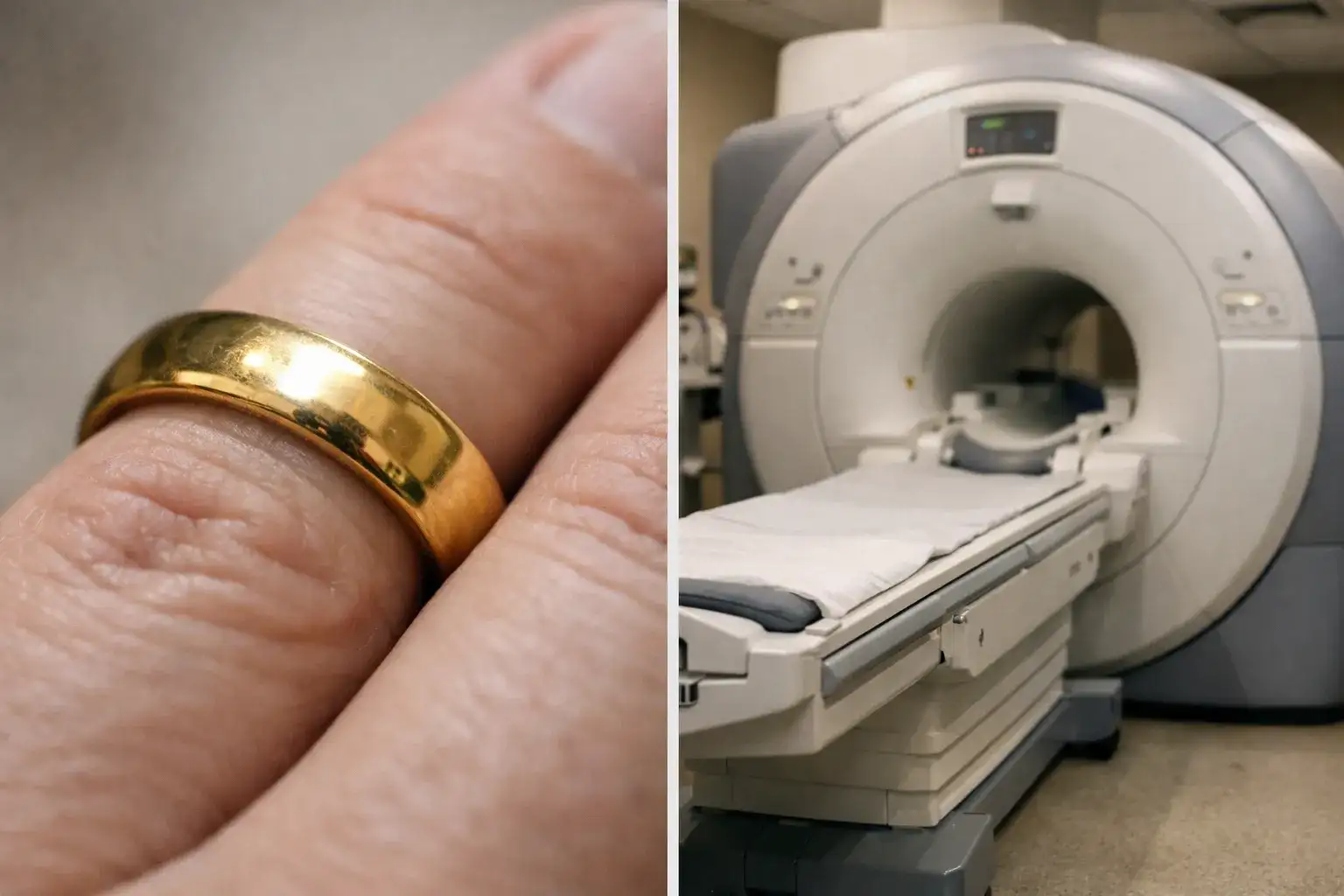
You’ve scheduled an MRI scan, and suddenly a concerning question emerges: what about your gold wedding ring? Your everyday jewelry? That nose piercing you got last year? The answer isn’t as straightforward as you might expect. While some medical facilities tell patients that gold, silver, and platinum jewelry are acceptable, others insist on removing everything metallic. This confusing variance in policies leaves patients wondering what’s actually safe.
The truth about gold jewelry and MRI safety involves understanding magnetic properties, radiofrequency heating risks, and critical differences between gold alloys. This comprehensive guide cuts through the conflicting advice to give you science-based answers about wearing gold jewelry during MRI scans, whether it’s your cherished wedding ring, body piercings, or that trendy permanent bracelet you just welded on.
We’ll explore why a 14-karat white gold ring poses different risks than 18-karat yellow gold, what to do if your wedding ring won’t budge, and practical solutions for body piercings that can’t be easily removed. Most importantly, you’ll learn when it’s genuinely safe to keep jewelry on and when removal is absolutely mandatory.
How MRI Machines Work: Understanding the Magnetic Risks
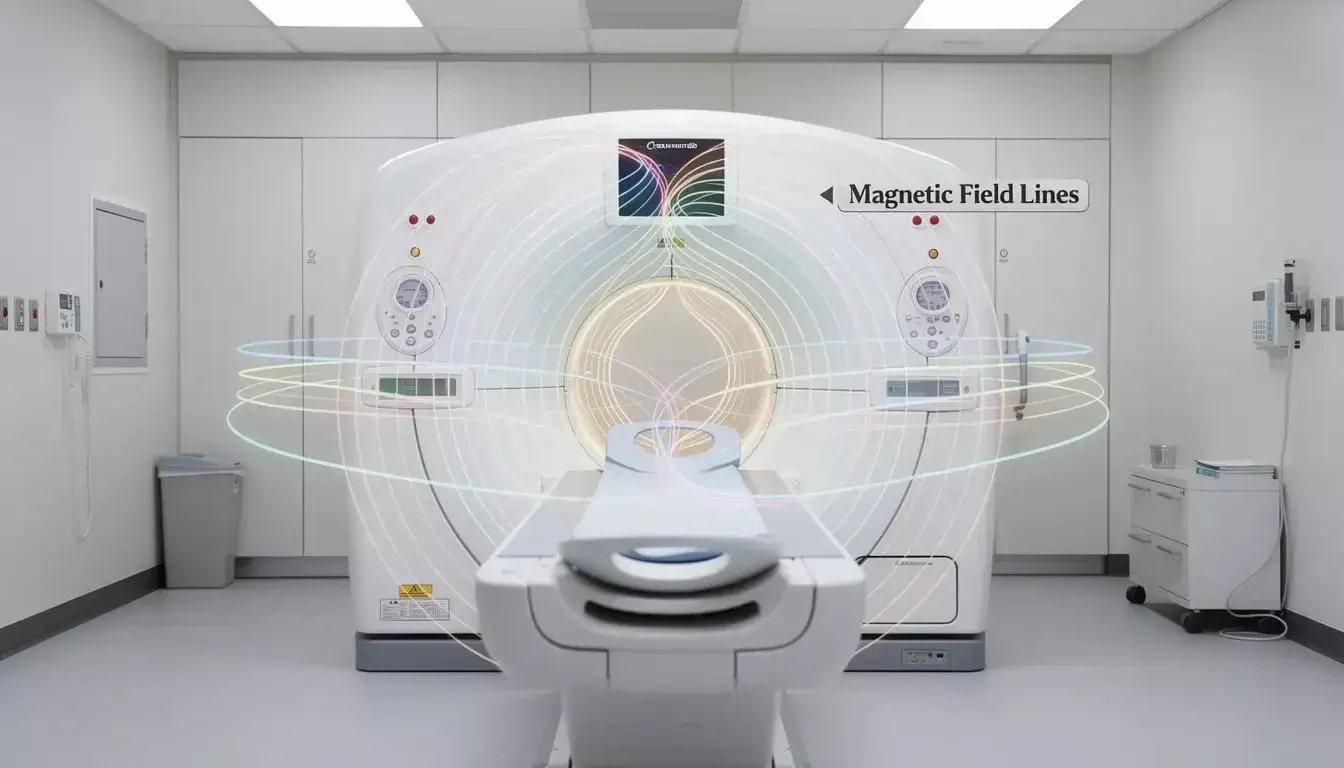
Magnetic Resonance Imaging (MRI) uses three distinct magnetic field components, each posing unique risks to jewelry wearers. The main magnetic field, typically ranging from 1.5 Tesla to 3 Tesla in modern scanners, is approximately 30,000 times stronger than Earth’s magnetic field and remains constantly active—even when the machine isn’t scanning.
The radiofrequency (RF) system generates powerful electromagnetic pulses that cause hydrogen atoms in your body to emit signals. These RF pulses can induce electrical currents in conductive materials like gold, potentially causing significant heating. Finally, gradient magnetic fields rapidly switch on and off during scanning, creating the characteristic loud knocking sounds while also inducing eddy currents in nearby conductors.
Understanding these three components explains why jewelry safety isn’t simply about whether something is “magnetic” or not. Even non-magnetic materials can heat up dangerously or interfere with image quality during an MRI scan.
The Truth About Gold and MRI Safety
Gold’s Magnetic Properties Explained
Gold is classified as diamagnetic, meaning it exhibits extremely weak repulsion from magnetic fields rather than attraction. This property makes pure gold fundamentally different from ferromagnetic materials like iron, nickel, or cobalt, which can be violently pulled toward the MRI magnet. The common statement that “gold is not magnetic” is technically accurate—gold won’t be ripped from your body by the magnetic field.
However, this fact has led to dangerous misconceptions. The original post’s claim that “gold contains iron” is scientifically incorrect and dangerously misleading. Pure gold contains no iron whatsoever. The confusion arises because gold jewelry—especially lower karat alloys—may contain other metals that do have magnetic properties.
The Real Risk: Radiofrequency Heating
While gold won’t be attracted to the magnet, it is an excellent electrical conductor. When exposed to the powerful radiofrequency pulses used during MRI scanning, gold can experience induced electrical currents that generate heat. Studies have documented gold jewelry heating to temperatures exceeding 140°F (60°C) during scans, enough to cause second-degree burns on skin.
The heating risk increases with jewelry size, shape, and proximity to RF coils. Rings, chains, and large earrings present higher risks than small studs. A patient documented on Physics Forums experienced their white gold wedding ring becoming uncomfortably hot and vibrating during an MRI, forcing mid-scan removal—a situation that could have caused serious injury.
Image Artifacts and Diagnostic Quality
Even when heating doesn’t occur, gold jewelry can severely compromise image quality through artifacts—distortions in the MRI images caused by interaction with magnetic fields. These artifacts appear as dark voids or bright spots, potentially obscuring the very anatomy physicians need to examine. For this reason, jewelry near the imaging area must always be removed, regardless of metal type.
Gold Alloy Complete Breakdown: Karat Matters for Safety
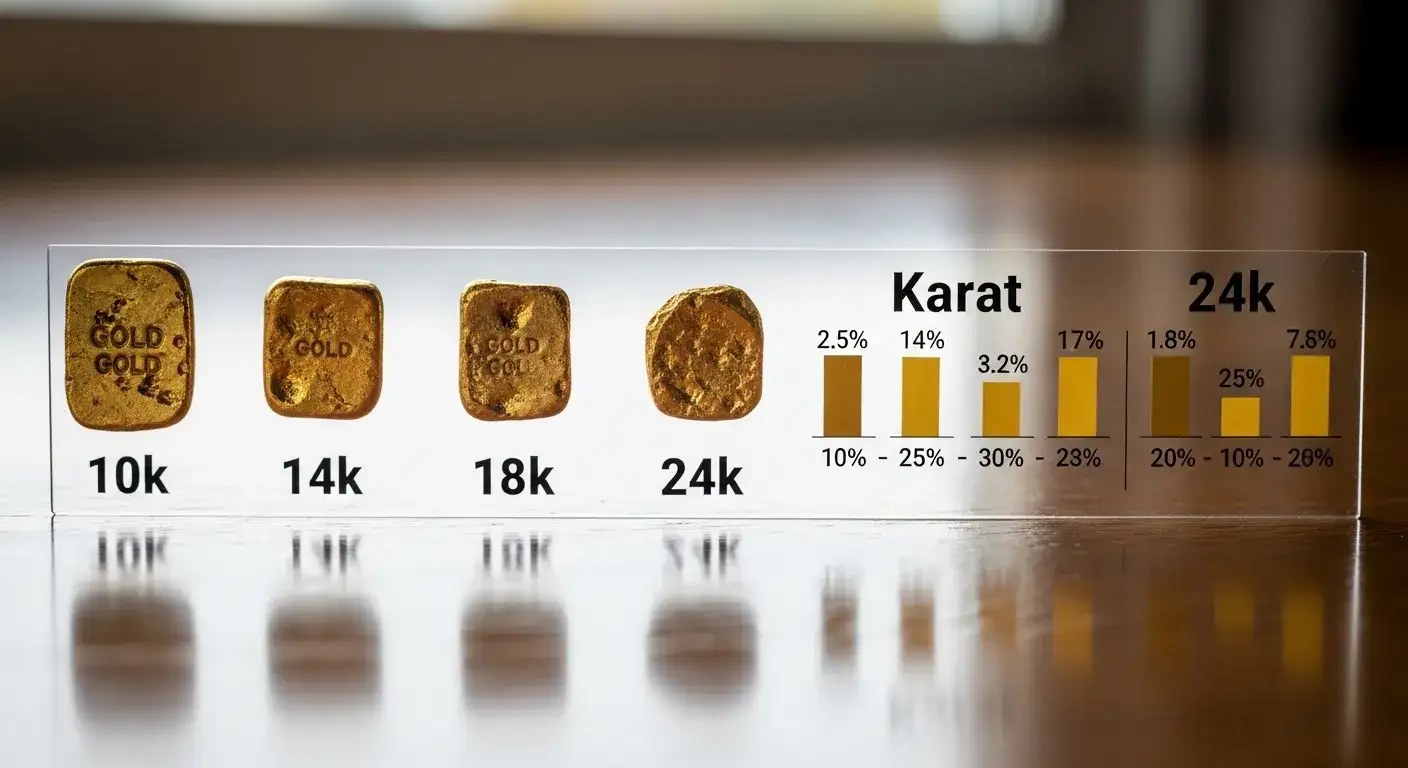
24-Karat Pure Gold: Safest But Rare
Pure 24-karat gold contains 99.9% gold with minimal alloying metals. This composition makes it the safest gold for MRI environments, as it lacks magnetic metals like nickel or iron. However, pure gold is too soft for most jewelry applications and rarely used for rings, chains, or body jewelry. If you own 24-karat gold items, they present minimal MRI risk beyond potential RF heating.
18-Karat Gold: 75% Gold, 25% Alloys
Eighteen-karat gold contains 75% pure gold and 25% other metals. The specific alloy metals determine MRI safety. Yellow 18k gold typically uses copper, silver, and zinc—all non-magnetic but conductive. White 18k gold frequently contains nickel or palladium, with nickel being weakly ferromagnetic and potentially problematic. Rose 18k gold contains higher copper content, increasing conductivity and heating potential.
14-Karat Gold: Most Common Wedding Rings
Fourteen-karat gold, the most popular choice for wedding rings in the United States, contains only 58.3% gold. The remaining 41.7% consists of various alloy metals. This higher alloy content increases both magnetic susceptibility and heating risk compared to higher-karat gold. White 14k gold almost always contains nickel, making it potentially reactive to magnetic fields.
10-Karat Gold: Highest Risk Alloy Content
Ten-karat gold contains just 41.7% actual gold—less than half. The majority composition of other metals significantly increases MRI risks. These pieces are more likely to contain ferromagnetic elements, experience greater heating, and cause more pronounced image artifacts. If your jewelry is 10k gold, removal before MRI is strongly recommended.
Gold-Plated vs Solid Gold
Gold-plated jewelry features a thin gold layer over a base metal core, which is often steel, brass, or other ferromagnetic materials. This construction makes gold-plated jewelry extremely dangerous in MRI environments. The magnetic base metal can be forcefully attracted to the scanner, while the gold coating does nothing to mitigate this risk. Never wear gold-plated jewelry in an MRI under any circumstances.
White Gold, Yellow Gold, and Rose Gold: Critical Safety Differences
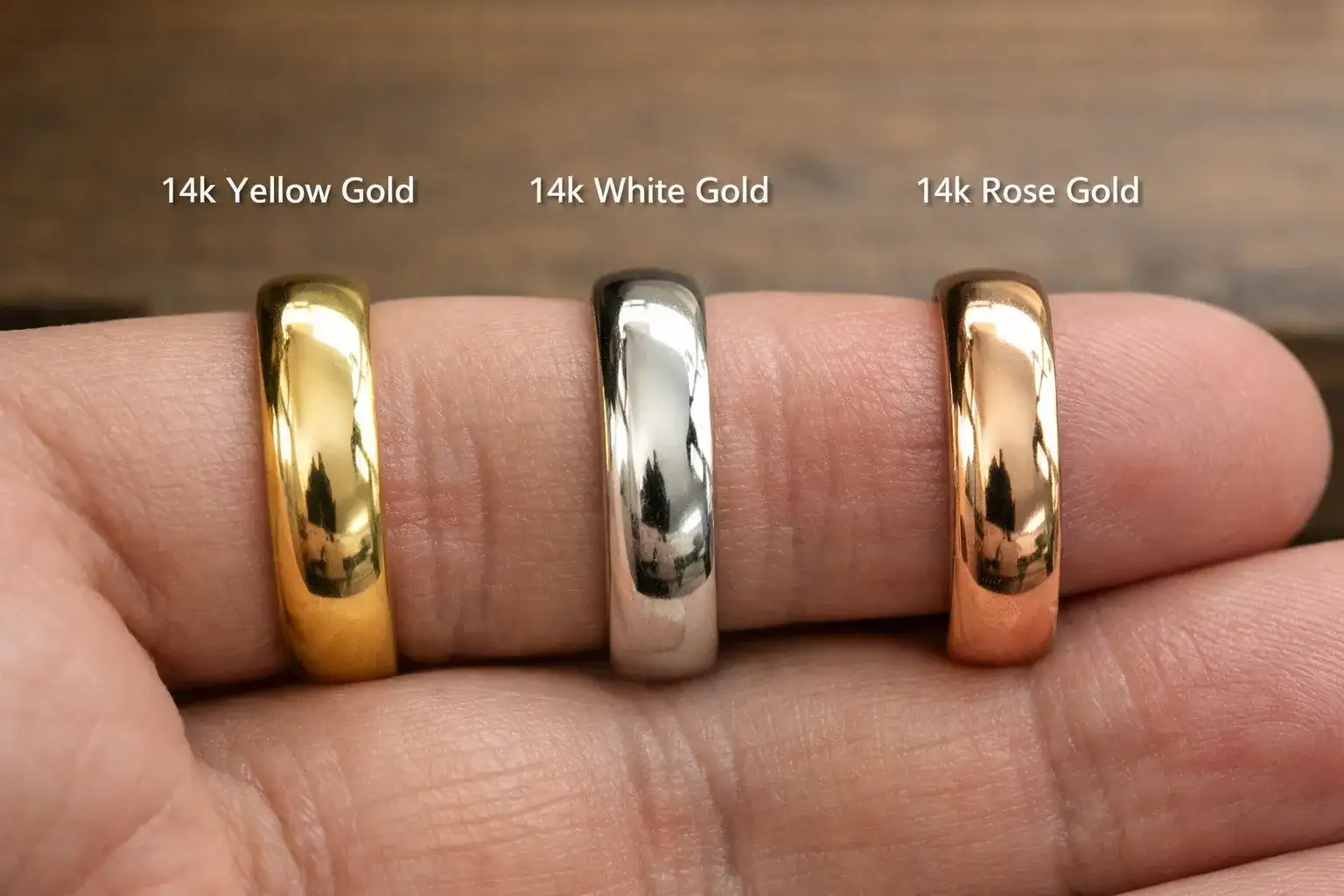
White Gold Safety Concerns
White gold poses unique MRI risks that many facilities and patients don’t adequately address. To achieve its silvery color, white gold is alloyed with white metals—most commonly nickel, palladium, or platinum. Nickel is weakly ferromagnetic, meaning it can interact with the MRI’s magnetic field. A documented case on Physics Forums describes a patient whose white gold ring heated uncomfortably and vibrated during scanning, demonstrating real-world risks.
Additionally, white gold is often rhodium-plated to enhance its white appearance. This plating can wear off over time, exposing the nickel-containing alloy beneath. If you have white gold jewelry, inform your MRI technologist specifically that it’s white gold, not yellow, as they may apply stricter safety protocols.
Yellow Gold Composition
Yellow gold maintains gold’s natural color through alloys with copper, silver, and zinc. These metals are non-magnetic, making yellow gold generally safer than white gold for MRI environments. However, all three alloying metals are conductive and can experience RF heating. The copper content in particular makes yellow gold susceptible to eddy current formation during gradient switching.
Rose Gold Heating Risk
Rose or pink gold achieves its distinctive color through higher copper content—sometimes up to 25% in 18k rose gold. Copper’s excellent electrical conductivity makes rose gold jewelry particularly prone to radiofrequency heating during MRI scans. While copper itself isn’t magnetic, the enhanced heating risk means rose gold pieces should be removed before scanning, especially larger items like bangles or statement rings.
Wedding Rings and MRI: Why Hospital Policies Differ
Permissive vs Conservative Policies
You may encounter dramatically different policies at various medical facilities. Concord Orthopaedics states that “gold, sterling silver and platinum jewelry may be worn unless the jewelry is near the area being imaged,” while Baton Rouge General recommends removing all jewelry “just in case.”
This variance stems from different risk tolerance levels, magnet field strengths, and local safety protocols. Facilities with older, lower-field-strength magnets (0.5T) may be more permissive than those with newer 3T scanners. Conservative policies prioritize absolute safety, while permissive policies balance convenience with calculated risk assessment.
The “Near Imaging Area” Critical Qualifier
Facilities that allow wedding rings almost always include a crucial qualifier: “unless near the area being imaged.” This distinction matters enormously. A wedding ring on your finger during a brain MRI presents minimal risk—it’s far from the imaging area and RF coils. The same ring during a hand MRI must be removed, as it would be directly in the imaging field, causing severe artifacts and potential heating.
When You Can Safely Keep Rings On
Based on current medical imaging guidelines, wedding rings may potentially be safe to wear when: (1) the imaging area is distant from the jewelry (head/brain scans while ring is on finger), (2) the ring is confirmed to be solid gold, silver, or platinum without magnetic components, (3) the ring can be quickly removed if heating occurs, (4) the facility’s radiologist has specifically approved it, and (5) you’re willing to immediately report any sensations of warmth or discomfort.
When Removal is Absolutely Required
Remove all gold jewelry without exception when: (1) the jewelry is in or near the imaging area, (2) you cannot confirm the exact composition or karat, (3) the facility requires removal (always follow facility protocols), (4) the jewelry is white gold or contains nickel, (5) previous scans caused warming sensations, or (6) you’re undergoing a 3T high-field MRI where risks are elevated.
Body Piercing Complete MRI Guide
Titanium Implant-Grade Piercings
Implant-grade titanium (typically Grade 23 Ti-6Al-4V ELI) is the safest metal for body piercings during MRI scans. This titanium alloy is the same material used for hip replacements, dental implants, and surgical pins—all of which are considered MRI-safe. Studies by the Association of Professional Piercers confirm titanium piercings are non-ferromagnetic and cause only minimal image artifacts.
If you have titanium body jewelry, request a mill certificate from your piercer—official documentation proving the metal composition. Presenting this to MRI staff can prevent unnecessary removal. However, be prepared for resistance; some facilities maintain blanket “remove all piercings” policies regardless of metal type.
Surgical Steel Controversy
Surgical stainless steel (316L or 316LVM) contains small amounts of nickel, creating controversy about MRI safety. While some facilities accept surgical steel piercings, the nickel content can cause minor magnetic attraction and heating. Body modification experts report that surgical steel is generally safe but may cause artifacts if positioned directly in the imaging area. When possible, swap surgical steel for titanium or acrylic retainers before MRI appointments.
Fresh Piercings Protocol
Piercings less than six months old present a significant dilemma. Removing jewelry can allow the piercing channel to close within hours, requiring re-piercing after your scan. For fresh piercings that cannot be removed, discuss these options with your piercer and MRI facility: (1) acrylic or bioplast retainers that keep the channel open, (2) glass retainers for certain piercing types, or (3) postponing the MRI if medically feasible until the piercing matures.
Specific Piercing Type Guidance
Nose and septum piercings are easily swapped for clear acrylic retainers available at piercing studios. Nipple piercings should be removed or replaced with plastic barbells. Navel piercings tolerate acrylic curved barbells. Cartilage and industrial piercings may require custom-length plastic pieces. Surface piercings and microdermals present the greatest challenge, as they’re designed to be permanent and require professional removal if MRI scanning is needed in their direct vicinity.
### 🔄 Recommended MRI-Safe Piercing Retainers
**Clear Acrylic Piercing Retainer Kit**

* ✓ Completely MRI-safe clear plastic
* ✓ Multiple sizes for different piercings
* ✓ Keeps piercings open during scan
* ✓ Easy self-insertion and removal
Permanent Jewelry and MRI: The Modern Dilemma
Permanent jewelry—chains, bracelets, or anklets that are welded closed without clasps—has exploded in popularity since 2022. This trend creates a genuine crisis for MRI patients. The welded jewelry cannot be removed without cutting, and most permanent jewelry uses 14k gold, which as discussed earlier, contains significant alloy content that may be problematic for MRI.
If you have permanent jewelry and need an MRI, you have three options. First, visit a jeweler who can carefully cut the piece with specialized tools, preserving the chain for re-welding afterward (cost typically $20-50). Second, inform the hospital before your appointment; some facilities have jewelry-cutting capabilities, though they may not preserve the piece carefully. Third, in true emergencies, the MRI facility will cut the jewelry as a last resort, though this destroys it completely.
The smart strategy: if you anticipate regular medical imaging (family history of conditions requiring MRI, current health issues), think carefully before getting permanent jewelry. Alternatively, choose permanent pieces for areas distant from common imaging sites—an ankle bracelet is unlikely to interfere with brain or chest MRIs, while a permanent necklace could be problematic.
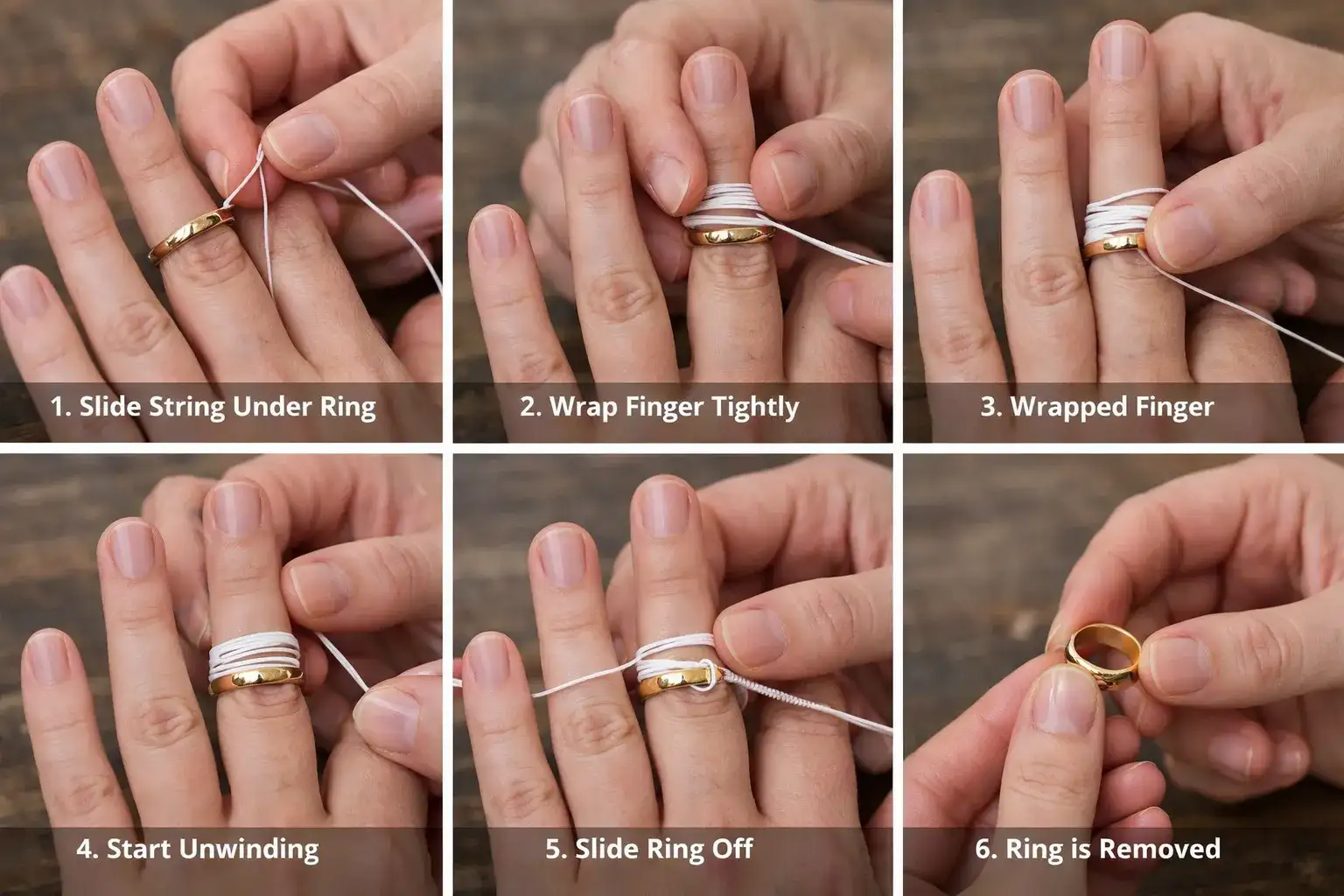
Wedding Ring Stuck? Emergency Removal Techniques
The String or Dental Floss Method
This time-tested technique works for rings that are simply too tight. Take strong thread or unwaxed dental floss, slip one end under the ring (toward your palm), then tightly wrap the floss around your finger working from the ring toward your fingertip. Make 15-20 tight wraps. Next, grasp the end that went under the ring and unwind it, pulling toward your fingertip. The compression from wrapping should allow the ring to slide over the wrapped area. This method works best for mild swelling situations.
Soap and Ice Combination
Reduce finger swelling by elevating your hand and applying ice for 10-15 minutes. Then, liberally apply liquid dish soap (not hand lotion, which isn’t slippery enough) around and under the ring. Slowly rotate the ring while pulling toward your fingertip. The combination of reduced swelling and maximum lubrication often succeeds where other methods fail.
When to Seek Professional Help
Visit a jeweler if home methods fail and your MRI isn’t urgent. Jewelers have ring-cutting saws and ring spreaders designed to remove stuck rings without injury. Most will cut and later repair your ring for $40-80, preserving the piece. Visit an emergency room if your finger is blue, numb, or severely swollen—these indicate circulation compromise requiring immediate ring removal.
### 💍 Recommended Silicone Wedding Ring Alternative
**Enso Silicone Wedding Ring**
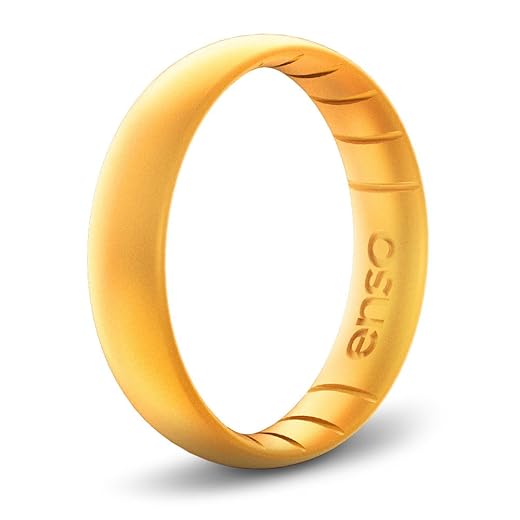
* ✓ Completely MRI-safe non-metallic alternative
* ✓ Wear during scan while gold ring is stored
* ✓ Multiple colors and styles available
* ✓ Affordable backup option ($15-30)
Pre-MRI Preparation Checklist
One Week Before Your MRI
Create a comprehensive inventory of all jewelry and piercings you currently wear, including items you rarely remove. Test removing each piece to identify any that are stuck, too tight, or haven’t been taken out in years. For permanent jewelry or dermal piercings, contact your piercer or jeweler now to discuss removal and replacement options. Purchase any needed alternatives like silicone rings or acrylic retainers while you have time to ensure proper fit.
Three Days Before Scan
If any rings are stuck, begin daily ice-and-elevation sessions to reduce chronic finger swelling. Continue test-removing all jewelry to ensure nothing has become tighter. Confirm storage plans—will you leave valuable pieces at home, or bring a secure case? Review your MRI facility’s specific jewelry policy by calling their prep line.
Day Before MRI
Lay out everything you’ll wear to the appointment. Choose clothing completely free of metal—no zippers, metal buttons, underwire bras, or metallic threads. Prepare your jewelry storage container. Remove any jewelry that’s difficult to take off so you can do it calmly at home rather than rushing at the facility.
Day of MRI Protocol
Remove all remaining jewelry before leaving for your appointment. Bring your storage container in a bag you can carry into the changing area. Arrive 15 minutes early to allow adequate time for final checks. When asked about metal objects, be completely honest about any jewelry you couldn’t remove—the technologist needs this information to ensure safety.
### 🔒 Recommended Jewelry Storage for Hospital Visits
**Small Travel Jewelry Organizer**

* ✓ Secure compartments prevent loss
* ✓ Compact size fits in purse
* ✓ Soft interior protects pieces
* ✓ Keeps jewelry organized during MRI
What If You Forgot to Remove Jewelry?
If you realize you’re wearing jewelry after entering the MRI room or during setup, immediately inform the technologist—before the scan begins. Do not be embarrassed; this happens frequently, and technologists prefer knowing before problems occur. They will either help you remove the item or assess whether scanning can proceed safely.
If you notice jewelry during an active scan (you feel warming, vibration, or pulling), press the emergency call button immediately. Do not try to tolerate discomfort or wait until the scan finishes. The technologist will stop the scan, remove you from the bore, and address the situation. Your safety is the absolute priority, and stopping a scan causes no harm—images can be retaken.
The worst-case scenario—jewelry becoming a projectile—primarily affects large ferromagnetic objects, not gold jewelry. However, gold can still heat dangerously or cause skin burns. Never gamble with “maybe it will be fine.” Always report forgotten jewelry immediately.
MRI Magnet Strength Considerations
0.5T Open MRI Systems
Open MRI systems typically use lower field strengths around 0.5 Tesla. These machines present reduced magnetic force and lower radiofrequency power, making them somewhat more forgiving of small jewelry pieces. However, “safer” does not mean “safe”—even 0.5T systems can cause heating and artifacts. Follow the same precautions regardless of magnet type.
1.5T Standard MRI
Most hospital MRI systems operate at 1.5 Tesla, providing excellent image quality while maintaining manageable safety protocols. This field strength represents the standard against which most jewelry safety research was conducted. Guidelines for 1.5T scanners generally permit distant gold/platinum/silver wedding rings but require removal of all other jewelry.
3T High-Field MRI
Modern 3 Tesla MRI systems provide superior image resolution but generate significantly stronger magnetic forces and higher radiofrequency power. At 3T, even non-magnetic jewelry experiences greater heating due to enhanced RF deposition. Many 3T facilities enforce stricter jewelry policies, requiring removal of all metal objects regardless of composition or location. Always declare if you’re having a 3T scan when discussing jewelry safety.
Frequently Asked Questions About Gold Jewelry and MRI
Can I wear my 14k gold wedding ring during an MRI scan?
The answer depends on several factors. Many MRI facilities allow 14k gold wedding rings to remain on if the imaging area is far from your hands—for example, during brain, spine, or foot MRIs. However, this permission comes with important caveats. You must be able to confirm the ring is solid 14k gold (not gold-plated), it must not be white gold containing nickel, you should be able to remove it quickly if it becomes warm, and your specific facility must permit it.
Conservative safety guidelines recommend removing all jewelry regardless of composition. If your 14k gold wedding ring won’t come off and your MRI isn’t in the hand area, inform the technologist immediately. They may allow scanning with extra monitoring, or they may help you remove it using specialized techniques. Never assume it’s safe without explicit approval from your MRI facility, and immediately report any warming sensations during scanning.
Is white gold safe for MRI or does it contain magnetic metals?
White gold presents specific MRI safety concerns that pure yellow gold does not. To achieve its silvery appearance, white gold is alloyed with white metals—most commonly nickel, palladium, or platinum. Nickel is weakly ferromagnetic, meaning it can interact with magnetic fields. A documented patient experience on Physics Forums describes their white gold ring vibrating and heating uncomfortably during an MRI scan, forcing removal mid-procedure.
The percentage of nickel varies by manufacturer and karat. Fourteen-karat white gold often contains 10-20% nickel, while 18-karat white gold may use more palladium and less nickel. Additionally, most white gold jewelry is rhodium-plated to enhance whiteness, but this plating wears off over time, exposing the nickel-containing alloy beneath. For these reasons, white gold jewelry should generally be removed before MRI scans. If removal isn’t possible, specifically inform your MRI technologist that the piece is white gold so they can take appropriate precautions and monitor for heating.
What should I do if my wedding ring won’t come off before an MRI?
A stuck wedding ring before an MRI requires a methodical approach. First, try the elevation and ice method: keep your hand raised above your heart for 15-20 minutes while applying ice to reduce finger swelling. Then apply generous amounts of liquid dish soap (more slippery than hand lotion) and slowly rotate the ring while pulling toward your fingertip.
If this fails, attempt the string technique: slip dental floss or strong thread under the ring toward your palm, tightly wrap it around your finger 15-20 times working from the ring toward your fingertip, then unwind by pulling the end that went under the ring. The compression often allows the ring to slide over the wrapped area. For MRIs that aren’t urgent, visit a jeweler who can cut and later repair your ring for $40-80.
If home methods fail and your MRI is urgent, inform the facility when you arrive. Many hospitals have ring-cutting equipment and can remove it safely, though they may not preserve the piece as carefully as a jeweler would. As a temporary solution, consider purchasing a silicone wedding ring to wear during the scan while your gold ring is secured in the facility’s locker. Most importantly, never enter the MRI room hoping a stuck ring “won’t be a problem”—always disclose it to staff so they can make informed safety decisions.
Can I keep gold earrings or nose piercings in during an MRI?
Gold earrings and nose piercings generally must be removed before MRI scans, though the specific requirements depend on piercing location relative to imaging area and your facility’s policies. Earrings present particular concern during head, neck, or facial MRIs, as they sit directly in the imaging field where they will cause severe artifacts and potentially heat from radiofrequency exposure.
For body MRIs far from ear piercings, some facilities may permit small gold studs to remain, though conservative practice recommends removal. Nose piercings should typically be removed regardless of imaging area, as the nose is central to many scan types. If you have piercings that are difficult to remove, plan ahead by purchasing clear acrylic or bioplast retainers from a piercing studio—these MRI-safe alternatives keep your piercing open during the scan.
Fresh piercings less than six months old present a dilemma, as removing jewelry can allow the channel to close within hours. For this situation, consult both your piercer and MRI facility in advance. Many piercers stock glass or high-quality plastic retainers specifically for medical procedures. If you have permanent jewelry like welded nose chains or dermal anchors, discuss removal options with your facility well before your appointment—these may require professional piercer involvement or facility cutting protocols.
What happens if I accidentally forget to remove jewelry before an MRI?
If you realize you’re wearing jewelry after entering the MRI room, immediately inform the technologist before scanning begins. This happens frequently, and technologists would much rather know beforehand than discover a problem during or after the scan. They will stop the setup process and either help you remove the item or assess whether it’s safe to proceed based on the jewelry type, composition, and location relative to the imaging area.
If you notice forgotten jewelry during an active scan—particularly if you feel any warming, vibration, pulling sensation, or discomfort—press the emergency call button immediately. Do not try to tolerate the sensation or wait for the scan to finish. The technologist will immediately stop the sequence, remove you from the scanner bore, and address the situation. Stopping a scan causes no harm to you or the equipment; images can simply be retaken once the jewelry is removed.
The most serious risk from forgotten jewelry is thermal injury from radiofrequency heating. Gold jewelry, particularly rings, chains, and large earrings, can heat to dangerous temperatures within minutes of scanning. Less likely but possible is the jewelry becoming dislodged and pulled toward the magnet if it contains any ferromagnetic components. In documented incidents, small ferromagnetic items have been pulled from patients at high velocity, though pure gold doesn’t present this specific risk. The key takeaway: always disclose forgotten jewelry immediately rather than hoping it won’t cause problems.
What are the best MRI-safe alternatives to gold jewelry?
Several excellent MRI-safe alternatives allow you to maintain your style or keep piercings open during scans without any safety concerns. For wedding rings, high-quality silicone rings from companies like Enso or Qalo provide a comfortable, completely non-metallic alternative that looks surprisingly elegant. These cost $15-40, come in multiple colors and styles, and many people adopt them as permanent everyday rings even without MRI considerations.
For body piercings, clear acrylic or bioplast retainers are the gold standard. These flexible plastic pieces keep piercing channels open while being completely MRI-invisible. Most piercing studios stock various sizes for different piercing types. Glass retainers work beautifully for septum piercings and certain ear placements, combining MRI safety with aesthetic appeal. For those who can’t wear plastic, implant-grade titanium jewelry is generally considered MRI-safe, though you should obtain a mill certificate proving composition.
For those who simply want to avoid the jewelry question entirely, consider leaving valuable pieces at home on MRI days. Bring a small, secure jewelry case to transport everyday pieces you remove before entering the facility. Some patients find it easiest to develop a routine of removing all jewelry the night before scans, storing everything in one location at home, and wearing completely metal-free clothing to appointments. This approach eliminates any last-minute stress about forgotten items or stuck rings.
Conclusion
Navigating gold jewelry safety during MRI scans requires understanding that “gold” isn’t a single entity—the karat, color, and alloy composition dramatically affect safety. While pure 24k gold presents minimal magnetic risk, the reality is that most jewelry contains significant percentages of other metals. White gold’s nickel content, rose gold’s high copper levels, and lower-karat alloys all introduce variables that simple “gold is non-magnetic” statements dangerously oversimplify.
The safest approach remains removing all jewelry before MRI scans whenever possible. However, we recognize this isn’t always practical or feasible—wedding rings may be stuck, fresh piercings can’t be removed without closing, and permanent jewelry requires cutting. In these situations, complete honesty with your MRI technologist becomes paramount. They can assess your specific situation, test jewelry with magnets when appropriate, and make informed decisions about scan safety.
When facing MRI appointments, prepare early. Test removing all jewelry a week in advance. Purchase MRI-safe alternatives for pieces that can’t come off. Communicate proactively with your imaging facility about any concerns. Remember that while policies vary between institutions, they all share the same goal: your safety and optimal diagnostic imaging. By understanding the science behind the guidelines, you can make informed decisions about jewelry and MRI safety while advocating effectively for yourself in medical settings.
For more information about gold jewelry care and properties, explore our comprehensive guides. Learn about proper jewelry storage techniques to keep your pieces safe during medical procedures. If you’re considering different gold types, read our comparison of white gold versus yellow gold to understand alloy differences.

Hi, I’m Sara Hein, a passionate jewelry researcher and educator. I created Jewelry Carats to share well-researched insights on gemstones, precious metals, and jewelry care. My goal is making expert jewelry knowledge accessible to everyone.