
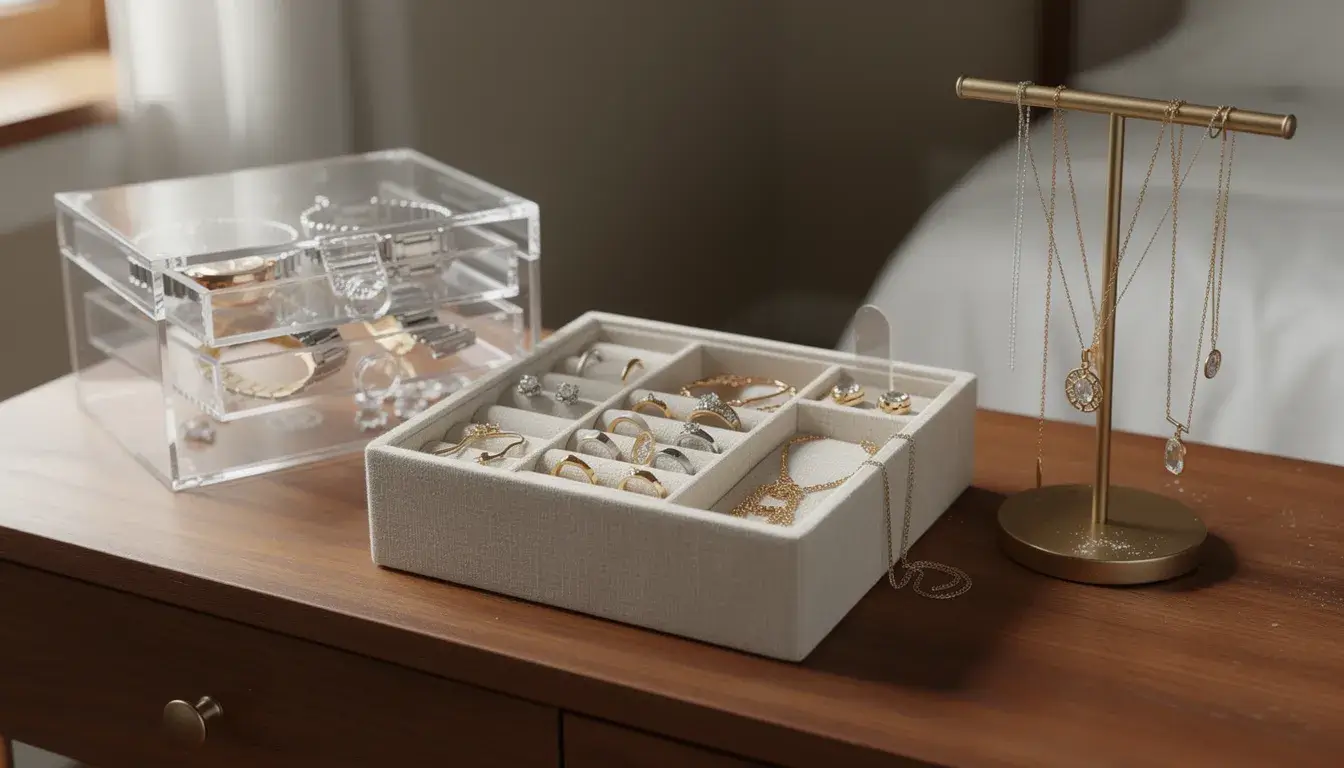
Proper jewelry storage is as critical as regular cleaning for preserving beauty and preventing damage. Poor storage causes scratches, tarnishing, tangling, lost pieces, and structural damage that regular cleaning cannot reverse. This comprehensive guide teaches professional storage techniques that protect your jewelry investment—from organizing daily-wear pieces to preserving heirloom treasures and preventing the most common storage mistakes that destroy valuable jewelry.
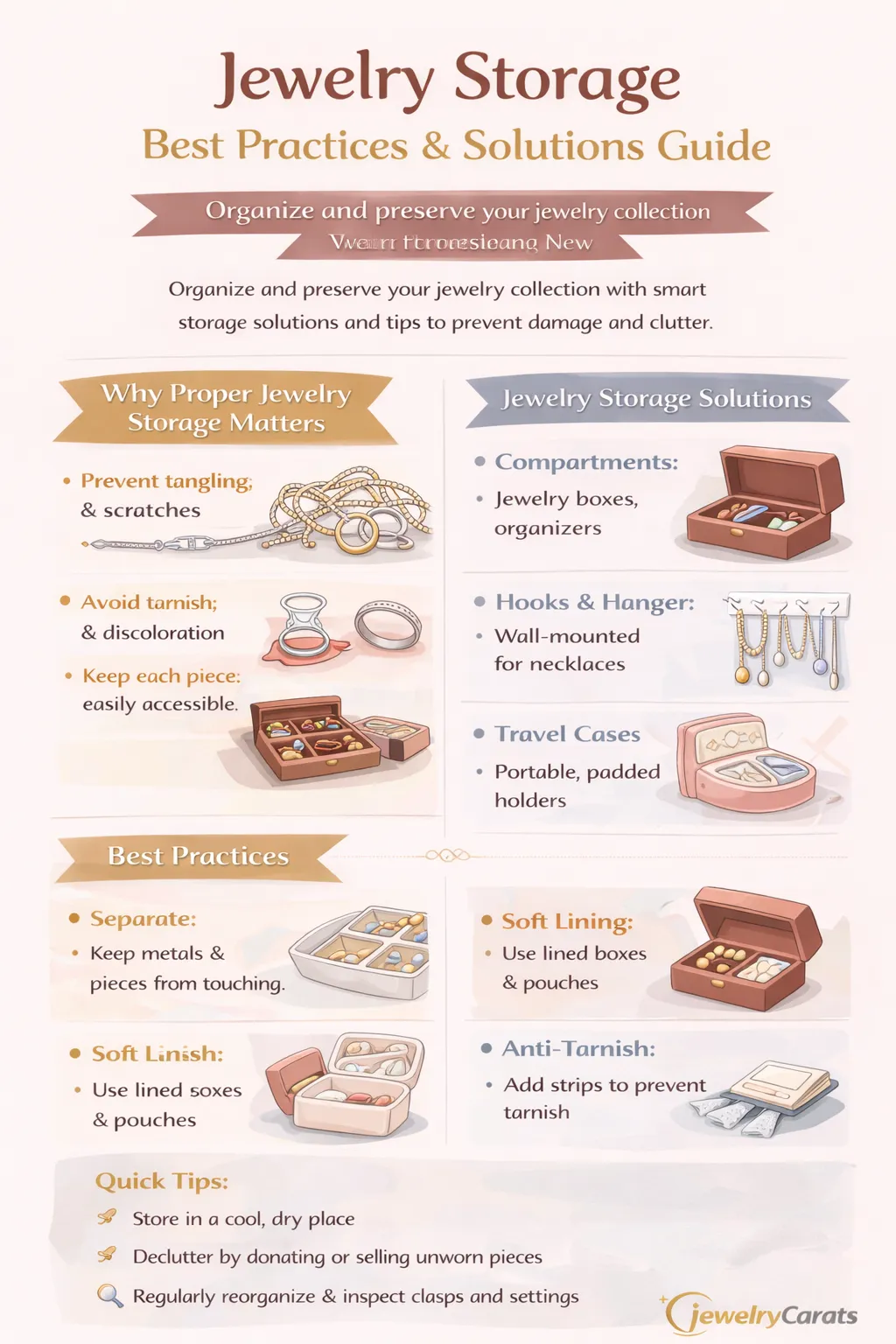
Why Proper Jewelry Storage Matters
Storage mistakes cause cumulative damage that becomes expensive or impossible to repair.
The Cost of Poor Storage
- Surface scratches: Jewelry rubbing together creates scratches requiring professional polishing ($50-200 per piece)
- Prong damage: Necklaces catching on other pieces bends prongs, risking stone loss
- Accelerated tarnishing: Improper storage increases silver tarnish rate 5-10x
- Chain tangling: Knotted chains require jeweler untangling or replacement ($30-100+)
- Lost pieces: Disorganized storage leads to misplaced jewelry—most never recovered
- Moisture damage: Pearls, opals dry out in low humidity; metals corrode in high humidity
- Gemstone damage: Soft stones (pearls, opals, turquoise) scratch from contact with harder jewelry
What Jewelry Storage Must Prevent
| Storage Problem | Damage Caused | Most Vulnerable Jewelry | Prevention |
|---|---|---|---|
| Pieces touching each other | Scratches, prong bending, chain tangling | All jewelry, especially soft metals and stones | Individual compartments or soft pouches |
| Air exposure | Tarnishing (silver), oxidation | Sterling silver, copper alloys | Anti-tarnish bags, sealed containers |
| Excessive humidity | Metal corrosion, tarnish acceleration | Silver, gold-filled, costume jewelry | Silica gel packets, climate control |
| Low humidity | Drying, cracking, dulling | Pearls, opals, amber, ivory | Moderate humidity (50-60%), damp storage for opals |
| Direct sunlight | Color fading, material degradation | Amethyst, kunzite, topaz, pearls, coral | Dark storage, UV-protected cases |
| Temperature extremes | Material expansion/contraction, cracking | Opals, pearls, antique pieces | Stable room temperature storage |
Storage Solutions by Jewelry Type
Sterling Silver Storage
Silver tarnishes from exposure to sulfur compounds in air. Proper storage dramatically slows this process.
Best storage methods for silver:
- Anti-tarnish cloth bags: Treated fabric absorbs sulfur; best long-term storage solution
- Anti-tarnish strips or tabs: Place in jewelry box or storage container; replace every 3-6 months
- Ziplock bags with air removed: Budget option—squeeze out air before sealing to limit sulfur exposure
- Silver-specific storage boxes: Lined with tarnish-resistant material, individual compartments
- Silica gel packets: Control humidity (excess moisture accelerates tarnish)
What to avoid near silver:
- Rubber bands (contain sulfur—never touch silver)
- Wool clothing or felt (sulfur content)
- Newspaper or cardboard (sulfur in ink and paper)
- Latex or rubber materials
- High humidity environments
💡 Silver Storage Secret: Wearing silver regularly actually slows tarnishing—skin oils create protective barrier. Store frequently-worn silver pieces in easily accessible location, reserve anti-tarnish bags for occasional-wear items. Paradoxically, the silver you wear most tarnishes slowest.
Gold Jewelry Storage
Gold is relatively low-maintenance but still requires proper storage to prevent scratches and maintain finish.
Gold storage guidelines:
- Individual soft pouches: Microfiber or cotton bags prevent scratching
- Separate compartments: Gold pieces should not touch each other or harder jewelry
- Away from silver: Store gold separately from silver (silver tarnish can transfer)
- Dry environment: Avoid high humidity (though gold resists corrosion better than silver)
Special considerations by karat:
- 24K gold: Very soft—requires extra protection from scratching
- 18K gold: Moderately soft—standard storage adequate
- 14K-10K gold: More durable—tolerates closer storage
- White gold: Rhodium plating can wear from friction—individual storage best
- Rose gold: Copper content can darken—keep dry, away from chemicals
Diamond Jewelry Storage
Diamonds are the hardest natural material—they scratch everything else, including each other.
Diamond storage rules:
- Always store separately: Diamonds scratch all other jewelry and each other
- Individual pouches mandatory: Soft cloth bags for each diamond piece
- Never jumbled together: Multiple diamond pieces in same compartment will scratch each other
- Prong protection: Ensure prongs don’t catch on storage materials
- Regular inspection: Check settings during storage/retrieval—catch loose stones early
Engagement ring-specific storage:
- Designated ring dish on nightstand (not bathroom—humidity and loss risk)
- Travel case for trips—hard-sided with individual slots
- Never on windowsills, countertops, or near sinks (loss risk)
- If removing during day, use small container in purse/bag—not loose in pocket
Pearl Jewelry Storage
Pearls are organic and porous—they require special storage conditions to prevent deterioration.
Pearl storage requirements:
- Store flat, not hanging: Hanging stretches silk thread over time
- Breathable cloth pouches: Pearls need air moisture—never airtight containers or plastic bags
- Away from other jewelry: Pearls scratch easily; store separately
- Moderate humidity (55-60%): Too dry = cracking; too humid = damage
- No direct sunlight: UV exposure damages nacre (pearl coating)
- Room temperature: Avoid temperature extremes
Pearl necklace specific care:
- Lay flat to prevent thread stretching
- Inspect thread every 6 months for wear
- Restring every 1-2 years if worn frequently
- Never store in sealed plastic—pearls dehydrate
Gemstone Jewelry Storage by Hardness
| Gemstone Type | Storage Priority | Special Requirements |
|---|---|---|
| Very Hard (Diamond, Ruby, Sapphire) | Separate storage—will scratch softer jewelry | Individual pouches; can scratch each other |
| Hard (Topaz, Aquamarine, Spinel) | Separate from harder stones | Standard soft pouches adequate |
| Medium (Amethyst, Citrine, Garnet) | Protection from all harder jewelry | Avoid sunlight (color fading) |
| Soft (Opal, Turquoise, Pearl, Coral) | Individual ultra-soft pouches | Climate control critical; special humidity needs |
Opal Storage (Special Requirements)
⚠️ Opal Critical Storage Needs:
Opals contain 5-10% water and will crack if they dry out. This makes opal storage uniquely challenging:
- Store with damp cotton ball in sealed bag: Maintains moisture without oversaturation
- Check moisture weekly: Re-dampen cotton if dry
- Never in dry environments: Avoid safes, low-humidity rooms
- Avoid temperature extremes: Heat accelerates moisture loss
- No direct sunlight or heat sources
- Individual storage away from all other jewelry
If opal cracks from drying, damage is permanent and irreversible. Preventive moisture maintenance is essential.
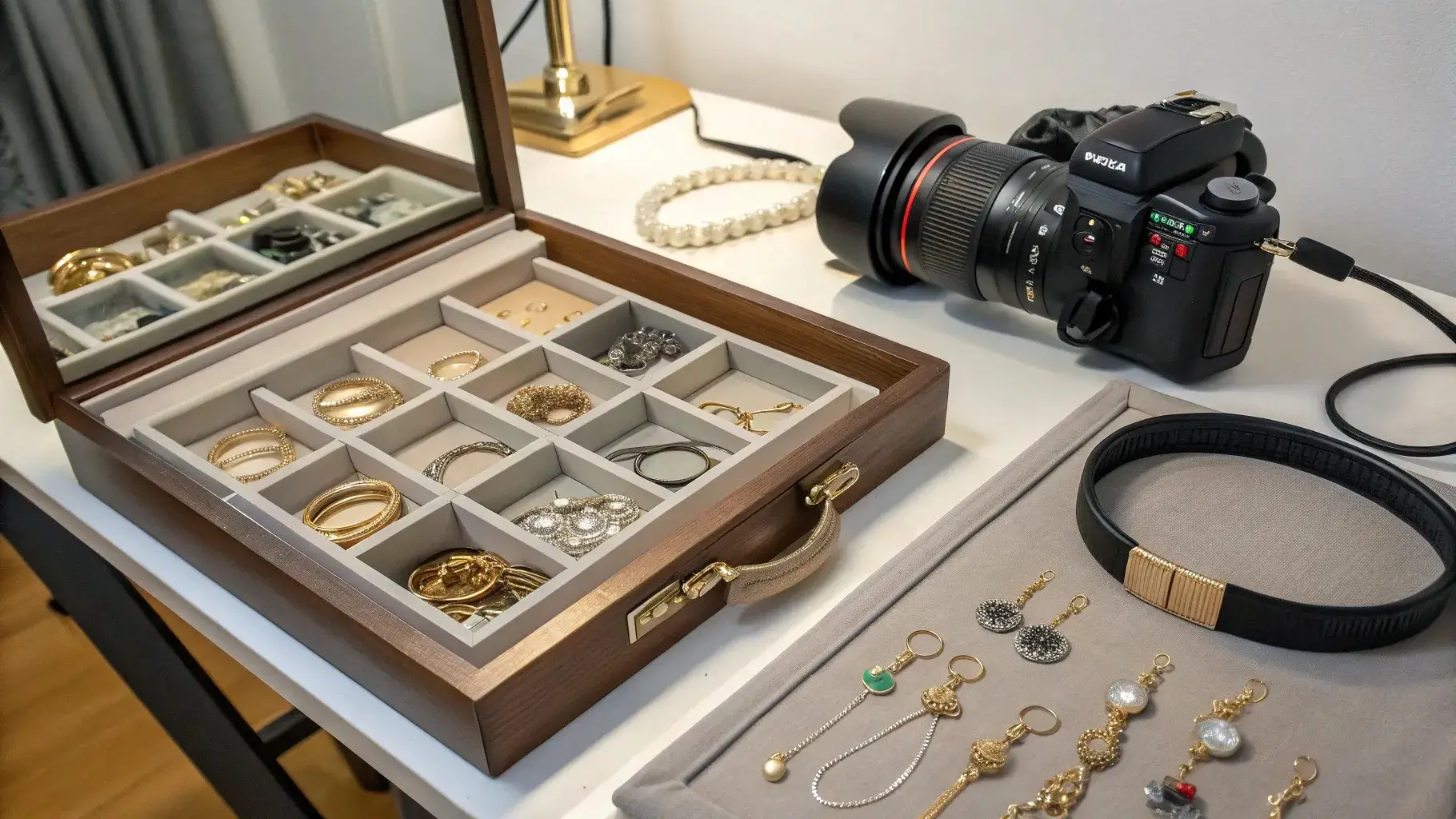
Jewelry Organization Systems
Jewelry Box Selection
Features to prioritize:
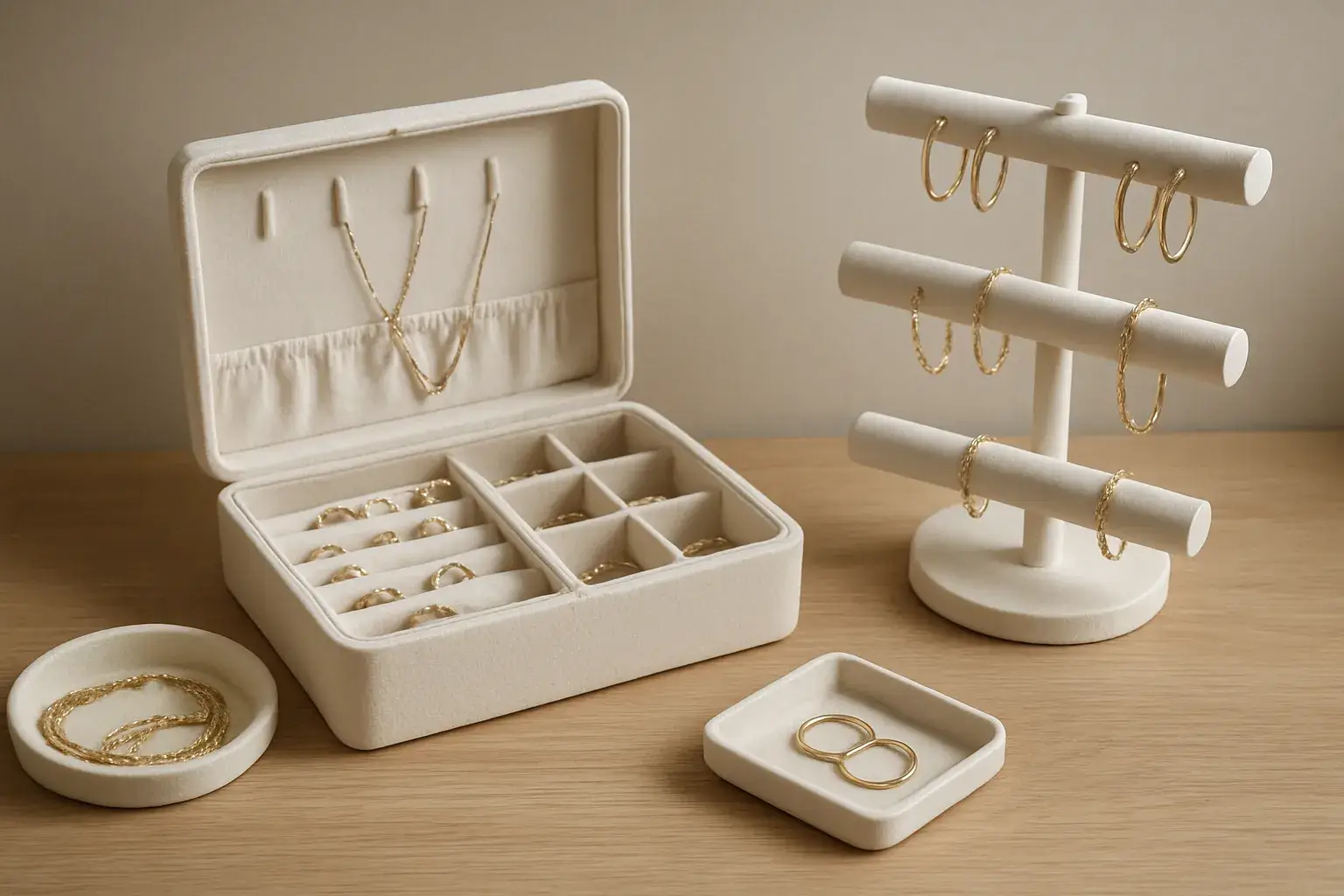
- Multiple compartments: Minimum 10-15 separate spaces for varied jewelry
- Soft lining: Velvet, felt, or microfiber prevents scratching
- Ring rolls or slots: Keep rings separated and upright
- Necklace hooks: Prevent tangling (though flat storage often better)
- Stackable trays: Maximize vertical space while maintaining organization
- Secure closure: Prevents accidental spills during moving
- Lockable option: For valuable pieces
Jewelry box types:
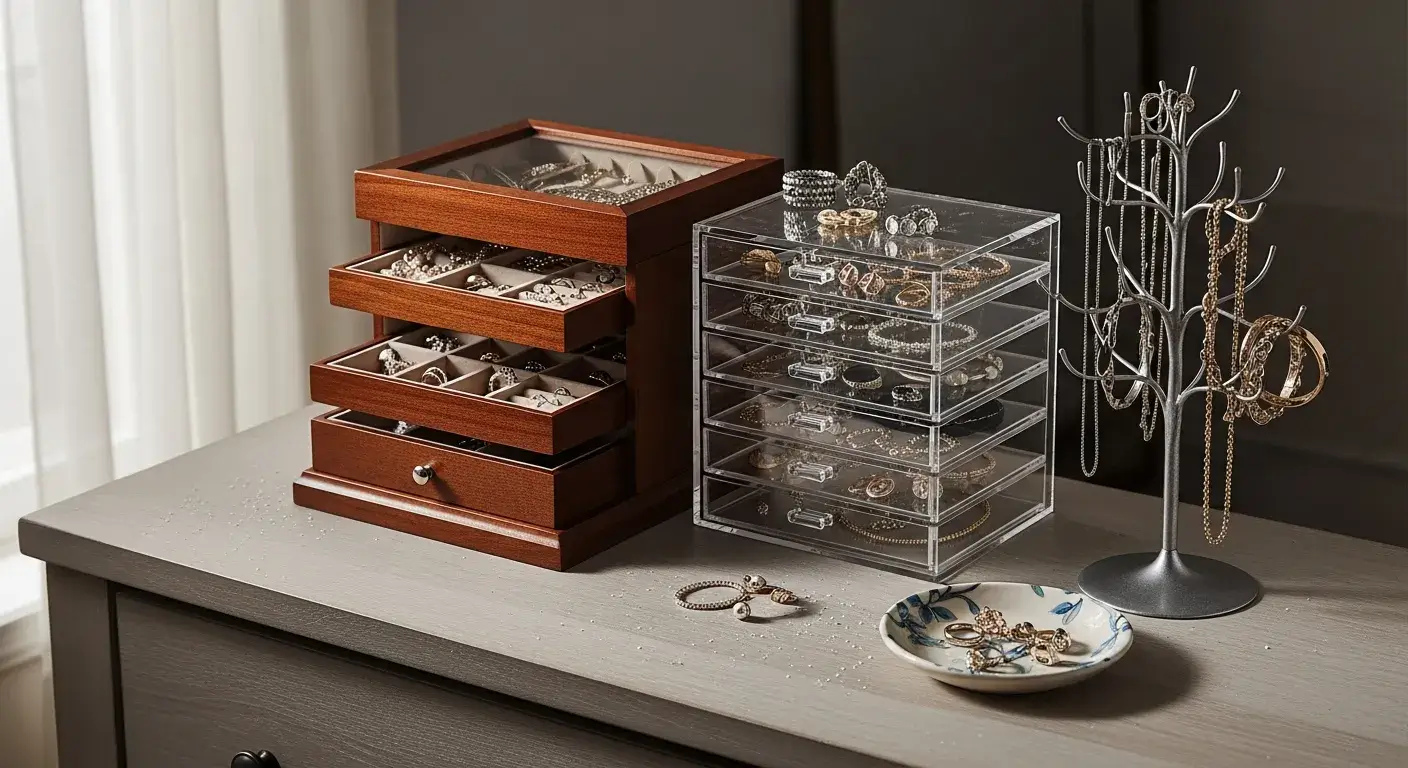
- Traditional standing boxes: Multiple drawers, good capacity, requires counter space
- Travel cases: Compact, portable, limited capacity but excellent for trips
- Wall-mounted cabinets: Save counter space, high capacity, built-in mirror often included
- Drawer organizers: Fit inside dresser drawers, customizable compartments
Alternative Storage Solutions
For extensive collections:
- Stackable drawer systems: Clear acrylic allows visibility while keeping jewelry separated
- Individual pouches in drawer: Budget-friendly for large collections
- Hanging organizer: Clear pockets for daily-wear pieces (not for necklaces—causes stretching)
- Ice cube trays: Repurposed for small items like stud earrings—cheap and effective
- Egg cartons (cleaned): Budget solution for organizing small pieces
For minimal collections:
- Small decorative dishes: For rings removed daily
- Ring holder stands: Attractive display for daily rings
- Simple pouches: Individual bags sufficient if jewelry isn’t extensive
Travel Jewelry Storage
Travel requires compact storage that still prevents damage.
Travel storage essentials:
- Hard-sided travel case: Protects from crushing in luggage
- Individual compartments: Prevents pieces from touching during transit
- Ring rolls: Soft fabric with individual ring slots
- Necklace cards: Thread chains through card holes to prevent tangling
- Small zip pouches: Group jewelry types (all earrings together, all rings, etc.)
Travel rules:
- Carry-on only—never check valuable jewelry
- Bring only what you’ll actually wear
- Photograph jewelry before travel for insurance purposes
- Keep travel case in hotel safe when not wearing pieces
- Consider leaving extremely valuable items at home
Environmental Factors in Jewelry Storage
Temperature & Humidity Control
| Jewelry Type | Ideal Temperature | Ideal Humidity | Why It Matters |
|---|---|---|---|
| Most jewelry (gold, diamonds, sapphires) | 60-75°F (15-24°C) | 45-55% | Standard room conditions prevent extremes |
| Pearls & opals | 60-70°F (15-21°C) | 55-60% | Slightly higher humidity prevents drying |
| Sterling silver | 65-75°F (18-24°C) | 40-50% | Lower humidity slows tarnish |
| Antique jewelry | Stable 65-70°F | 50-55% | Avoid fluctuations—thermal stress damages old solder |
Light Exposure
UV radiation and prolonged light exposure damages certain gemstones and organic materials.
Light-sensitive materials requiring dark storage:
- Amethyst: Fades to pale lavender or clear with prolonged UV exposure
- Kunzite: Loses pink color in sunlight
- Topaz: Some varieties fade
- Pearls: UV damages nacre coating
- Coral & amber: Organic materials degrade in light
- Dyed or treated stones: Color treatments fade
Storage solutions for light-sensitive jewelry:
- Opaque jewelry boxes (not clear acrylic for these pieces)
- Dark cloth pouches
- Drawer storage away from windows
- UV-protective display cases if showcasing (available for collectors)

Security & Loss Prevention
Home Security for Valuable Jewelry
- Never store all valuable jewelry in one obvious location (traditional jewelry box on dresser = first place thieves check)
- Home safe: Fireproof, bolted to floor, hidden location. Minimum rating TL-15 for valuable jewelry
- Bank safe deposit box: For rarely-worn heirlooms and extremely valuable pieces
- Insurance documentation: Photograph all jewelry, keep appraisals, note serial numbers
- Avoid social media posts: Never post photos of valuable jewelry with location tags
- Home security system: Monitored alarm for homes with significant jewelry collections
Preventing Accidental Loss
- Designated removal locations only: Always same ring dish, never random countertops
- Never near drains: Avoid removing jewelry near sinks, toilets, open drains
- Before exercise/swimming: Put jewelry in secure location before removing, not locker rooms
- Traveling: Count pieces before leaving hotel; check room thoroughly
- Daily routine: “Last on, first off”—put jewelry on after getting dressed, remove first when undressing
Common Jewelry Storage Mistakes
⚠️ Storage Mistakes That Damage Jewelry:
- Jumbling everything together: Causes scratches, tangling, lost pieces. Solution: individual compartments or pouches
- Bathroom storage: High humidity corrodes metals, damages pearls. Solution: bedroom storage instead
- Hanging all necklaces: Stretches chains, causes clasp stress. Solution: lay flat or use necklace cards
- Windowsill storage: UV fading, temperature extremes. Solution: drawer or closed box storage
- Storing silver in open air: Accelerates tarnish dramatically. Solution: anti-tarnish bags or strips
- Mixing valuable and costume jewelry: Base metals corrode, transfer tarnish. Solution: separate storage areas
- Ignoring pearls and opals: They dry out and crack. Solution: special humidity maintenance
- Overstuffed compartments: Pieces rub together despite separation. Solution: limit pieces per compartment
- Jewelry in purse/pocket loose: Loss risk, damage from keys. Solution: small zip pouch or case
Building Your Ideal Storage System
Assess Your Collection
- Inventory everything: Count pieces, note types (rings, necklaces, earrings), metals, gemstones
- Categorize by wear frequency: Daily, weekly, occasional, special occasion, heirloom
- Identify special needs: Which pieces need individual storage, climate control, dark storage?
- Note valuable pieces: What requires security storage vs. standard storage?
Design Storage System
- Daily-wear jewelry: Accessible location (dresser top, nightstand), easy to reach compartments
- Regular-wear pieces: Standard jewelry box with compartments, bedroom location
- Occasional-wear: Can be less accessible (drawer, closet shelf), prioritize protection over convenience
- Heirlooms/rarely worn: Safe or safe deposit box, maximum protection
- Silver collection: Dedicated anti-tarnish storage separate from other metals
Final Thoughts: Storage as Jewelry Care Foundation
Jewelry storage isn’t an afterthought—it’s the foundation of preservation. Even perfectly cleaned jewelry deteriorates rapidly with poor storage, while properly stored pieces remain pristine with minimal maintenance.
The investment in quality storage solutions pays dividends in prevented damage, reduced cleaning needs, and extended jewelry lifespan. A $50 jewelry box with proper compartments prevents thousands in repair costs and irreversible damage over time.
Build your storage system around your specific collection’s needs. Silver-heavy collections need anti-tarnish focus. Diamond jewelry demands individual separation. Pearl and opal owners must maintain climate control. Assess what you own, understand each material’s vulnerabilities, and create an organized system that protects your investment for generations.