

Earrings frame your face and complete your look, from subtle studs for everyday wear to dramatic chandeliers for special occasions. Understanding earring types, backs, and how to choose styles that flatter your face shape helps you build a versatile earring collection. This comprehensive guide covers everything you need to know about earrings.
Primary Earring Categories
- Stud Earrings: Sit directly on the earlobe without dangling
- Hoop Earrings: Circular or semi-circular shapes that loop through the ear
- Drop Earrings: Hang below the earlobe with minimal movement
- Dangle Earrings: Hang below the earlobe with moving components
- Chandelier Earrings: Multi-tiered dangles creating dramatic looks
- Specialty Styles: Ear cuffs, climbers, threaders, and clip-ons
Earring Measurements
Earring size affects both appearance and comfort:
- For Studs: Measured by stone or setting diameter (typically 2mm to 10mm)
- For Hoops: Measured by inner diameter (typically 10mm to 70mm+)
- For Drops/Dangles: Measured by total length from earlobe to bottom
As a reference, a dime is approximately 18mm in diameter. This helps visualize earring sizes when shopping online.
Stud Earrings
Stud earrings are the most versatile earring type, featuring a decorative front that sits directly on the earlobe with a post that goes through the piercing. They’re secure, comfortable, and appropriate for virtually any occasion.
Classic Diamond Studs
Diamond stud earrings represent timeless elegance and are often considered an essential jewelry investment.
Diamond Stud Characteristics
- Typically feature round brilliant cut diamonds
- Set in simple prong settings (usually four or six prongs)
- Available in white gold, yellow gold, rose gold, or platinum
- Sized by total carat weight (0.25ctw to 2.0ctw+ common)
- Work for every occasion from office to evening events
Choosing Diamond Stud Size
Small (0.25 – 0.50 total carat weight):
- Subtle, professional appearance
- Perfect for everyday office wear
- Won’t overwhelm petite frames
- More affordable entry point
Medium (0.75 – 1.0 total carat weight):
- Noticeable but not overwhelming
- Versatile for work through evening
- Most popular size range
- Substantial enough to appreciate quality
Large (1.5+ total carat weight):
- Makes definite statement
- More suitable for evening and special occasions
- Requires secure earring backs
- Significant investment piece
Diamond Alternative Studs
Cubic Zirconia (CZ): Affordable diamond simulant with excellent sparkle. Perfect for everyday wear without expensive jewelry anxiety.
Moissanite: Lab-created gemstone with more fire than diamonds. Ethical, affordable, nearly as hard as diamonds.
Lab-Grown Diamonds: Chemically identical to natural diamonds at lower cost. Ethical, sustainable option gaining popularity.
Gemstone Studs
Colored gemstone studs add personality while maintaining the stud’s simplicity and versatility.
Popular Gemstone Choices
Sapphire Studs:
- Available in blue (most common) and fancy colors (pink, yellow, green)
- Very durable (9 on Mohs scale)
- Suitable for daily wear
- September birthstone
Ruby Studs:
- Bold red color makes statement
- Extremely durable (9 on Mohs scale)
- July birthstone
- Symbolizes passion and vitality
Emerald Studs:
- Rich green color
- Softer than sapphire/ruby (requires more care)
- May birthstone
- Often treated with oil (normal practice)
Birthstone Studs:
- Personalized to birth month
- Meaningful gifts
- Available at all price points
- Can be simple or elaborate settings
Pearl Studs
Pearl stud earrings offer classic sophistication and work beautifully from casual to formal occasions.
Pearl Types
Freshwater Pearls:
- Most affordable pearl option
- Available in white, pink, lavender, and other colors
- Often slightly irregular shape (adds character)
- Perfect for everyday wear
Akoya Pearls:
- Classic white or cream saltwater pearls
- Perfectly round shape
- High luster
- More expensive than freshwater
- Traditional choice for formal occasions
South Sea Pearls:
- Largest pearl type
- Golden or white colors
- Most expensive
- Luxurious, statement pieces
Pearl Size Guide
- 6-7mm: Delicate, appropriate for young wearers
- 7-8mm: Standard size, versatile for any age
- 8-9mm: Substantial without being oversized
- 9mm+: Makes statement, best for mature wearers
Other Stud Styles
Ball Studs
Simple spheres of gold, silver, or other metals. Minimalist style works with everything. Available in various sizes (2mm to 10mm+).
Flower Studs
Floral designs ranging from simple to elaborate. Can feature gemstones or metal only. Feminine, romantic aesthetic.
Geometric Studs
Modern shapes like triangles, squares, hexagons. Contemporary, minimalist appeal. Popular in mixed metals.
Animal and Nature Studs
Butterflies, hearts, stars, and other playful designs. Range from whimsical to sophisticated. Fun for expressing personality.
Hoop Earrings
Hoop earrings create complete or near-complete circles through the earlobe. This classic style has remained popular across cultures and centuries.
Small Hoops (Under 1 inch / 25mm diameter)
Subtle hoops that work for professional settings and everyday wear.
Small Hoop Benefits
- Professional and work-appropriate
- Won’t interfere with phone use
- Comfortable for all-day wear
- Won’t catch on clothing or hair
- Suitable for conservative environments
Small Hoop Variations
Huggie Hoops: Very small hoops (10-15mm) that “hug” the earlobe. Secure fit, won’t pull or stretch piercings. Perfect for active lifestyles.
Thin Wire Hoops: Delicate wire creating minimalist circles. Elegant, understated look. Can be worn in multiple piercings.
Textured Small Hoops: Twisted, hammered, or diamond-cut surfaces add interest to small size.
Medium Hoops (1-2 inches / 25-50mm diameter)
The most versatile hoop size, balancing presence with wearability.
Medium Hoop Characteristics
- Visible but not overwhelming
- Work for both casual and dressy occasions
- Frame face beautifully
- Available in endless style variations
- Most popular hoop size
Medium Hoop Styles
Classic Round Hoops: Traditional circular shape. Timeless appeal. Available in various thicknesses.
Oval Hoops: Elongated circles create lengthening effect. Modern variation on classic hoops.
Diamond/Gemstone Hoops: Hoops encrusted with stones. Adds sparkle and glamour. Works for evening events.
Large Hoops (Over 2 inches / 50mm diameter)
Bold statement hoops that command attention.
When to Wear Large Hoops
- Special occasions and evening events
- Fashion-forward casual outfits
- When earrings are the main accessory
- With updos or hair pulled back (shows them off)
- Not recommended for conservative professional settings
Large Hoop Considerations
- Can be heavy (choose lightweight materials)
- May catch on clothing or hair
- Can stretch piercings over time
- Not suitable for sleeping
- Require secure closures
Hoop Closure Types
Hinged Hoops
Hoop opens and closes with a hinge mechanism. Click shut for security. Easy to put on and remove. Most secure hoop closure.
Continuous Hoops
Seamless circles with no visible closure. Wire threads through ear and snaps into place. Sleek, uninterrupted appearance. Requires more dexterity to fasten.
French Wire Hoops
One end hooks through a loop. Simple, traditional design. Less secure than hinged hoops. Best for smaller, lighter hoops.
Hoop Thickness
Wire thickness affects both appearance and durability:
- Thin (1-2mm): Delicate, minimalist look. Can bend more easily.
- Medium (2-4mm): Most popular thickness. Balance of presence and comfort.
- Thick (4mm+): Bold, substantial appearance. Very durable. Makes strong statement.
Special Hoop Styles
Twisted Hoops
Wire twists creating rope-like texture. Catches light beautifully. Adds dimension without added weight.
Hammered Hoops
Textured surface from hammering technique. Organic, artisanal appearance. Reflects light differently than smooth hoops.
Two-Tone Hoops
Combines different metal colors. Often features yellow and white gold. Modern, fashion-forward look.

Drop & Dangle Earrings
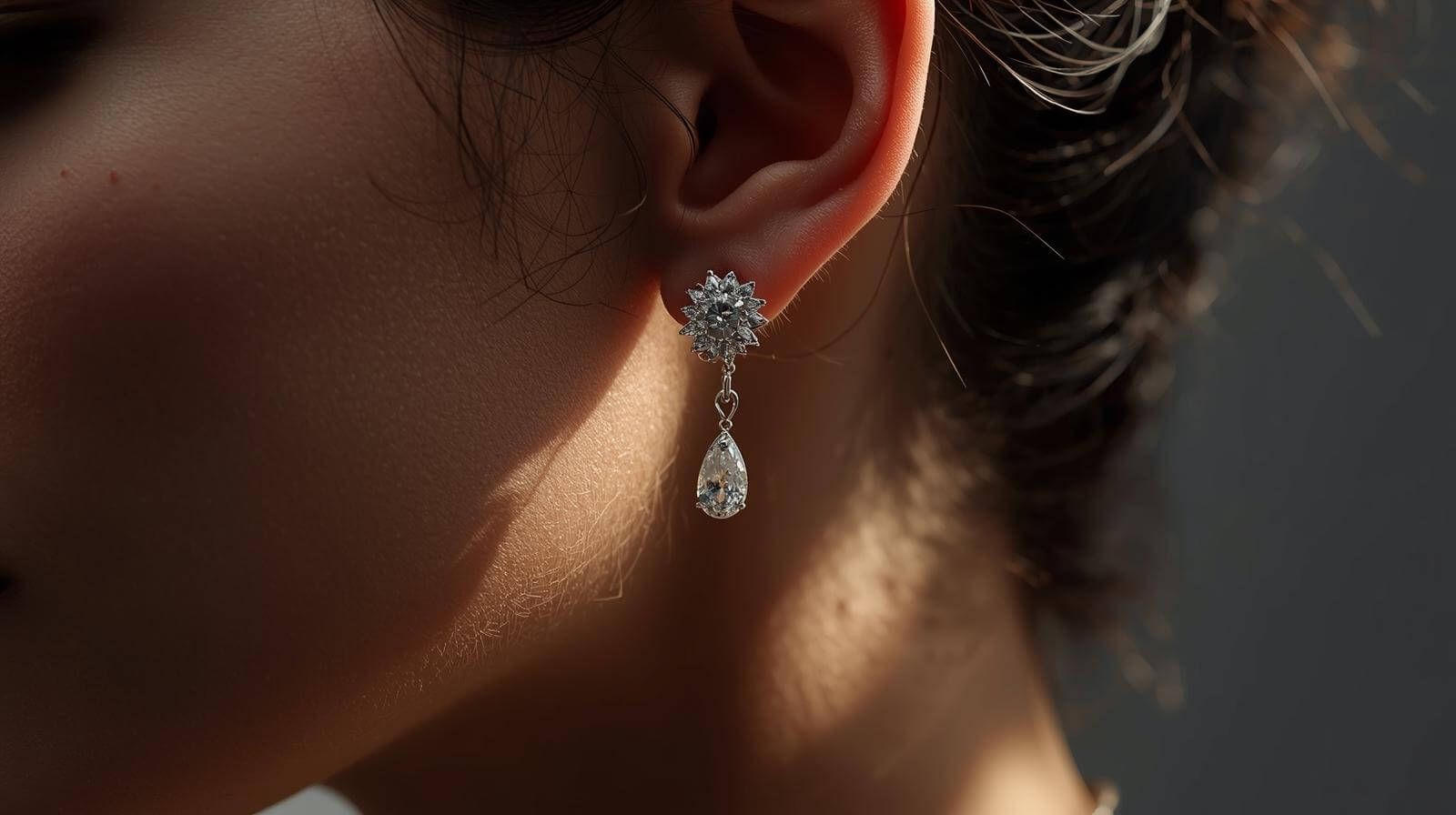
Earrings that hang below the earlobe add movement and elegance. “Drop” and “dangle” are often used interchangeably, though drops typically have less movement.
Drop Earrings
Drop earrings feature a stationary pendant hanging from the earlobe. Movement is minimal, creating refined elegance.
Drop Earring Characteristics
- Length typically 1-2 inches
- Pendant hangs directly from post or hook
- More formal than studs, less dramatic than dangles
- Perfect for business formal and elegant events
- Won’t swing excessively or create distraction
Popular Drop Styles
Teardrop/Pear Shaped: Classic drop shape wider at bottom. Flattering, timeless design. Works with pearls, gemstones, or metal only.
Geometric Drops: Triangular, rectangular, or other angular shapes. Modern, contemporary aesthetic.
Single Stone Drops: One gemstone suspended below the ear. Simple elegance. Highlights the stone’s beauty.
Dangle Earrings
Dangle earrings feature components that move freely, creating dynamic visual interest and catching light as you move.
Short Dangles (1-2 inches)
- Versatile length appropriate for many occasions
- Add interest without overwhelming
- Work well for professional settings
- Comfortable for extended wear
Medium Dangles (2-3 inches)
- More noticeable, makes statement
- Best for evening and special occasions
- Requires consideration with neckline
- May need updo or hair pulled back
Long Dangles (3+ inches)
- Dramatic, attention-grabbing
- Reserved for special occasions
- Can be heavy (choose lightweight materials)
- Requires simple outfit to avoid competing
- Not suitable for active situations
Chandelier Earrings
Multi-tiered dangle earrings resembling chandeliers. These elaborate earrings create maximum impact.
Chandelier Earring Features
- Multiple layers of components
- Often feature gemstones, crystals, or beads
- Reserved for formal events and special occasions
- Work beautifully with updos
- Should be the focal point of your jewelry
When to Wear Chandelier Earrings
- Weddings (bride, bridesmaids, or guests)
- Formal galas and black-tie events
- Evening parties and celebrations
- Proms and formal dances
- Any occasion where formal attire is expected
Chandelier Styling Tips
- Skip the necklace (earrings are the statement)
- Keep other jewelry minimal
- Wear hair up or pulled back to showcase earrings
- Choose simple, solid-colored outfits
- Ensure outfit neckline doesn’t compete
Tassel Earrings
Earrings featuring fabric, chain, or beaded tassels. Bohemian, fashion-forward style.
Tassel Earring Characteristics
- Movement and texture
- Available in countless colors
- Lightweight despite size
- Casual to dressy depending on materials
- Very trendy (popularity fluctuates)
Other Earring Types
Beyond traditional categories, several specialty earring styles offer unique wearing options and aesthetics.
Ear Cuffs
Decorative pieces that wrap around the outer ear without requiring a piercing.
Ear Cuff Benefits
- No piercing required
- Creates multi-piercing look
- Modern, edgy aesthetic
- Can be worn alone or with studs
- Easy to remove when desired
Ear Cuff Styles
Simple Bands: Thin metal bands wrapping ear cartilage. Minimalist, modern look.
Embellished Cuffs: Feature gemstones or decorative elements. More dramatic, statement-making.
Connected Cuffs: Connect to lobe earring via chain. Creates cohesive look. Very fashion-forward.
Climbers (Ear Crawlers)
Earrings that follow the curve of your ear upward from the lobe.
Climber Characteristics
- Single post through earlobe
- Design extends up ear curve
- Often features graduated stones
- Modern, unique appearance
- Creates illusion of multiple piercings
Climber Styling
- Wear hair behind ears to show design
- Skip other ear jewelry
- Works well with minimalist outfits
- Best with simple necklines
Threader Earrings
Thin chains or wires that thread through the piercing, with decorative elements on one or both ends.
Threader Benefits
- Adjustable length (pull more or less through)
- Delicate, modern aesthetic
- Can wear asymmetrically
- Lightweight and comfortable
- Creates movement without dangles
Threader Considerations
- Can slip out more easily than post earrings
- Require gentle handling
- Not ideal for active wear
- Best for occasional, careful wear
Jacket Earrings (Ear Jackets)
Two-piece earrings with a stud in front and decorative piece behind the earlobe.
Ear Jacket Features
- Front and back components
- Creates dimensional look
- Often features larger design behind ear
- Versatile (wear front piece alone or with jacket)
- Modern, fashion-forward style
Clip-On Earrings
Earrings for non-pierced ears featuring a clip mechanism.
Modern Clip-On Improvements
- More comfortable than vintage clip-ons
- Available in most traditional earring styles
- Adjustable tension on many models
- Padded clips reduce discomfort
- Growing market as people avoid piercings
Clip-On Types
Paddle Back: Flat clip with hinged mechanism. Most secure. Can be heavy.
Screw Back: Adjustable screw controls pressure. Customizable comfort. Can loosen during wear.
Magnetic: Magnets hold earring in place. Very easy to use. Less secure for heavy earrings.
Magnetic Earrings
Two pieces held together by magnets—one on each side of the earlobe. No piercing required.
Magnetic Earring Considerations
- Easiest to put on and remove
- No discomfort from clips
- Can fall off more easily than other styles
- Not suitable for valuable jewelry
- May interfere with pacemakers or medical devices

Earring Backs Explained
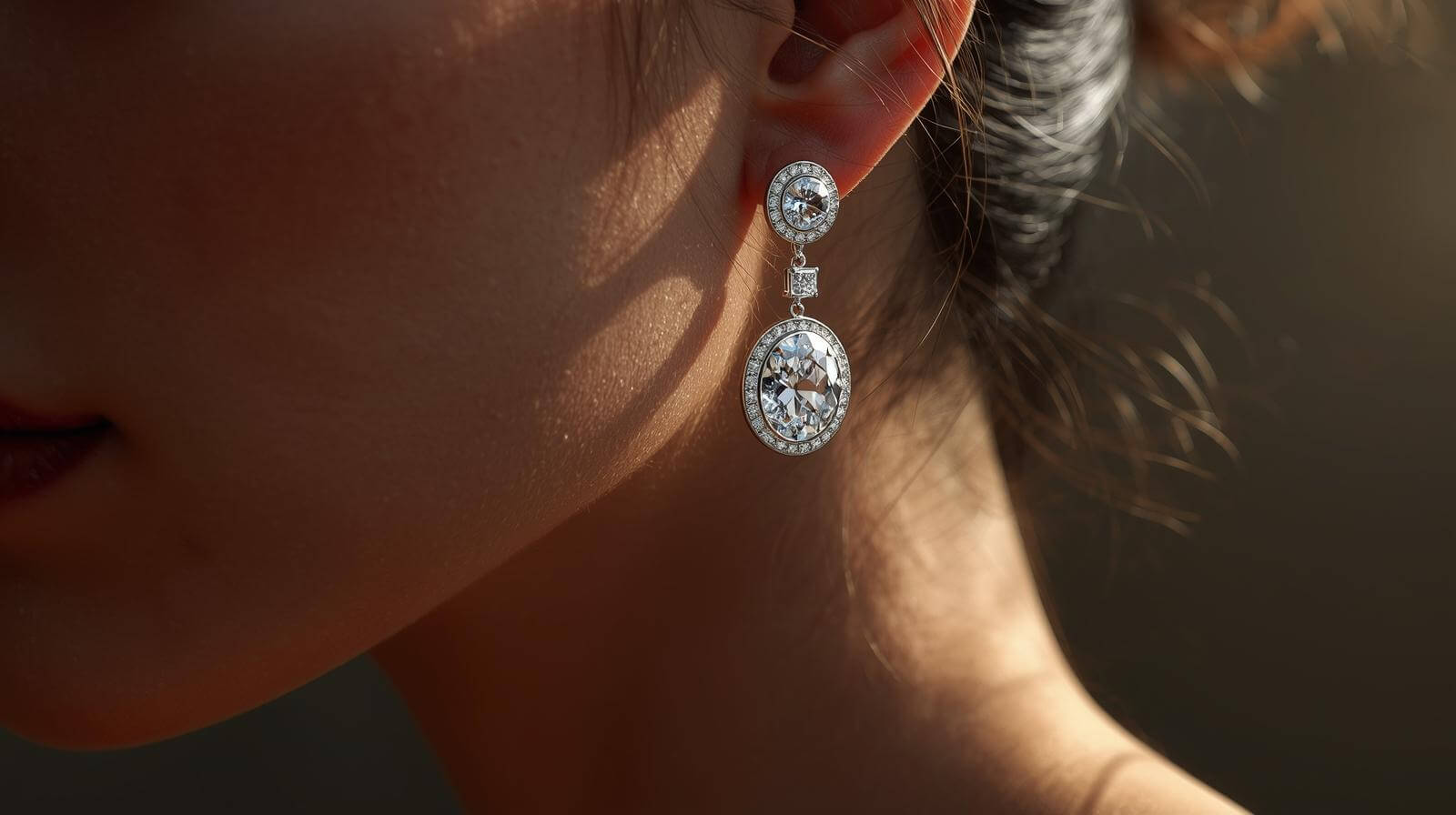
The backing mechanism affects both security and comfort. Understanding earring backs helps you choose appropriate options for different earring values and wearing situations.
Butterfly Backs (Push Backs)
The most common earring back, featuring metal with folding wings.
Butterfly Back Characteristics
- Quick and easy to use
- Included with most stud earrings
- Adequate for lightweight earrings
- Can loosen over time
- Not recommended for expensive jewelry
Butterfly Back Quality Levels
Standard Butterfly: Basic, thin metal. Loses tension easily. Replace frequently.
Premium Butterfly: Thicker metal, better spring tension. Lasts longer. Worth upgrading for better security.
Jumbo Butterfly: Larger backs for heavy earrings. Distributes weight better. More secure than standard.
Screw Backs
Backs that twist onto the post, providing maximum security.
Screw Back Advantages
- Most secure backing mechanism
- Ideal for expensive or valuable earrings
- Won’t come off accidentally
- Prevents loss during active wear
- Recommended for children (can’t remove easily)
Screw Back Disadvantages
- Slower to put on and remove
- Requires both hands
- Can be difficult with limited dexterity
- Threads can wear over time
Lever Backs (Euro Wires)
Wire mechanism that clicks closed behind the ear.
Lever Back Benefits
- Very secure (clicks firmly shut)
- Comfortable for extended wear
- Easy to put on and remove
- Professional, elegant appearance
- Suitable for valuable earrings
Common Uses
- Drop and dangle earrings
- Gemstone earrings
- Fine jewelry
- European-style earrings
French Hooks (Fish Hooks)
Simple wire hooks that thread through the ear.
French Hook Characteristics
- Easy to put on and remove
- Comfortable, no pressure on earlobe
- Minimal security (can fall out)
- Common for drop and dangle earrings
- Not recommended for expensive jewelry
French Hook Variations
Kidney Wires: Hook curves back forming loop. Slightly more secure than basic hooks.
Ball-End Hooks: Small ball at wire end provides minimal security. Better than plain hooks.
Hinged Backs
Hinged mechanism snaps shut, common on hoop earrings.
Hinged Back Types
Snap Closure: Post snaps into mechanism with audible click. Secure and reliable.
Hidden Snap: Closure concealed in earring design. Sleek appearance. Very secure.
La Pousette Backs
Flat disc backs that slide onto the post, used in European fine jewelry.
La Pousette Features
- Flat, comfortable against skin
- More secure than butterfly backs
- Common in high-end jewelry
- Elegant, minimalist appearance
Comfort Backs
Large, cushioned disc backs for heavy earrings.
Comfort Back Benefits
- Distributes weight across larger area
- Reduces pressure on earlobe
- Prevents drooping of heavy earrings
- Ideal for large diamond studs or heavy earrings
- More comfortable for extended wear
Choosing Earrings for Face Shape
Selecting earrings that complement your face shape creates balance and enhances your natural features.
Round Face
Goal: Create length and angles to elongate the face.
Best Earring Styles
- Long drops and dangles (create vertical lines)
- Angular, geometric shapes (add definition)
- Rectangular or triangular earrings
- Threaders (elongating effect)
Avoid
- Round studs (echo face shape)
- Button earrings
- Short, round hoops
- Anything that adds width
Oval Face
Goal: The most versatile face shape—almost any earring style works.
Best Earring Styles
- All styles work well
- Experiment with different lengths
- Try trendy or unusual styles
- Mix and match based on occasion
Special Considerations
While most styles work, consider:
- Very long earrings may over-elongate
- Balance with hairstyle and outfit
- Use this versatility to showcase personal style
Square Face
Goal: Soften strong angles with curved lines.
Best Earring Styles
- Round hoops (soften angular jawline)
- Curved, organic shapes
- Teardrop earrings
- Round studs
- Oval dangles
Avoid
- Angular, geometric shapes (emphasize angles)
- Square or rectangular earrings
- Very short earrings (widen appearance)
Heart-Shaped Face
Goal: Balance wider forehead with narrower chin.
Best Earring Styles
- Teardrop shapes (wider at bottom)
- Chandelier earrings
- Bottom-heavy designs
- Round studs
- Small hoops
Avoid
- Top-heavy designs (emphasize wide forehead)
- Ear cuffs (draw attention to upper ear)
- Climbers
Long Face (Oblong)
Goal: Add width and break up length.
Best Earring Styles
- Wide, horizontal designs
- Button or cluster studs
- Short, wide hoops
- Triangular shapes with point up
Avoid
- Very long dangles (over-elongate)
- Thin, linear designs
- Extremely long drops
Diamond Face
Goal: Highlight cheekbones while balancing narrow forehead and chin.
Best Earring Styles
- Oval or teardrop shapes
- Chandelier earrings
- Drops with some width
- Studs with some detail
Avoid
- Very wide designs (overemphasize cheekbones)
- Extremely narrow designs
Comfort & Safety Tips
Wearing earrings comfortably and safely requires attention to materials, weight, and proper care.
Preventing Earring-Related Issues
Avoiding Allergic Reactions
Safe Materials:
- 14k or 18k gold (higher purity = less nickel)
- Platinum
- Titanium (hypoallergenic)
- Surgical stainless steel
- Niobium
Materials to Avoid:
- Nickel (common allergen)
- Mystery metals
- Cheap costume jewelry
- Copper (tarnishes, stains skin)
Preventing Stretched Piercings
- Avoid wearing heavy earrings continuously
- Remove earrings before sleeping
- Rotate lighter and heavier earrings
- Use earring backs that support weight
- Consider surgical repair if stretching occurs
Preventing Infections
- Clean earrings regularly with rubbing alcohol
- Wash hands before touching earrings or ears
- Don’t share earrings
- Remove earrings if irritation develops
- Keep new piercings clean during healing
Comfort Considerations
Weight Management
- Limit wearing time for heavy earrings
- Choose hollow designs over solid (lighter)
- Use comfort backs for heavy earrings
- Remove earrings during long events if uncomfortable
Sleeping in Earrings
Safe to Sleep In:
- Small, flat studs
- Huggies (very small hoops)
- New piercings during healing (6-8 weeks)
Remove Before Sleeping:
- Hoops (can catch on bedding)
- Dangles or drops
- Anything with sharp posts
- Heavy earrings
Earring Hygiene
Regular Cleaning
- Clean earrings with rubbing alcohol weekly
- Soak in warm soapy water for buildup
- Gently brush posts with soft toothbrush
- Dry completely before storing
- Clean backs/clasps as thoroughly as fronts
Signs to Stop Wearing
- Redness or swelling around piercing
- Itching or burning sensation
- Discharge or crusting
- Persistent pain
- Rash or discoloration
If symptoms persist after removing earrings, consult a doctor.
Frequently Asked Questions
What is the most versatile earring type?
Small to medium diamond or pearl studs are the most versatile earrings, working for every occasion from office to evening events. They’re comfortable for all-day wear, appropriate for conservative settings, and never go out of style.
What earring back is most secure?
Screw backs provide maximum security as they twist onto the post and won’t come off accidentally. Lever backs are nearly as secure while being easier to use. For valuable earrings, avoid standard butterfly backs in favor of these more secure options.
How do I choose earring size for my face?
Consider your face shape and size. Petite features work best with smaller, delicate earrings, while larger features can handle bold statement pieces. Round faces benefit from long, angular earrings, while square faces look best with curved, softer shapes.
Can I wear hoop earrings to work?
Small to medium hoops (under 2 inches diameter) are generally work-appropriate in most professional settings. Very large hoops are better reserved for casual wear. Consider your workplace culture—conservative environments may prefer studs.
How heavy is too heavy for earrings?
If your earlobes feel sore after wearing earrings, they’re too heavy. Generally, earrings over 5-7 grams should be worn for limited time only. Very heavy earrings worn consistently can stretch piercings permanently.
Are clip-on earrings comfortable?
Modern clip-on earrings are significantly more comfortable than vintage versions. Look for padded clips, adjustable tension, and lightweight designs. Even so, remove clip-ons periodically during wear to prevent discomfort.
How do I stop my earrings from smelling?
Clean earrings weekly with rubbing alcohol, especially posts and backs where dead skin cells accumulate. Remove earrings before sleeping and showering. If odor persists despite cleaning, you may have an infection requiring medical attention.
Can I wear dangle earrings every day?
Yes, but choose lighter-weight dangles and remove them occasionally to prevent stretched piercings. Very long or heavy dangles are better reserved for special occasions. Ensure secure backs to prevent loss during daily activities.
Building Your Earring Collection
Understanding earring types, backs, and how to choose flattering styles empowers you to build a versatile collection. Start with essential studs—diamond or pearl—then expand based on your lifestyle and preferences.
Invest in quality backs for valuable earrings, choose hypoallergenic materials if you have sensitive skin, and don’t be afraid to experiment with different styles. Your face shape provides guidance, but personal style and comfort matter most.
Remember that earrings frame your face and often become the focal point of your jewelry. Choose pieces that make you feel confident and authentic, whether that’s classic studs or dramatic chandeliers.
Continue Exploring Jewelry Types
Return to the main guide:
- Complete Guide to Jewelry Types
Explore other jewelry types:
- Ring Types & Styles Guide
- Necklace Types & Lengths Guide
- Bracelet Types & Styles Guide
Learn about jewelry care:
- Complete Jewelry Care & Maintenance Guide