

Necklaces frame your face, complement your neckline, and complete your outfit. Understanding necklace lengths, styles, and chain types helps you choose pieces that flatter your body type and suit any occasion. This comprehensive guide covers everything from chokers to rope-length necklaces, plus expert styling tips.
Standard Necklace Length Categories
The jewelry industry recognizes six standard necklace lengths:
- Choker: 14-16 inches
- Princess: 17-19 inches
- Matinee: 20-24 inches
- Opera: 28-36 inches
- Rope: 37+ inches
- Lariat: Variable length (no clasp)
How Length Affects Appearance
Shorter necklaces (choker, princess) draw attention to your face and create a youthful, bold look. Medium lengths (matinee) add sophistication and work well in professional settings. Longer necklaces (opera, rope) create elegance and can be styled in multiple ways.
Your height also affects how necklace lengths appear. Petite individuals may find that princess length sits where matinee would on taller individuals. Consider trying on necklaces before purchasing or ordering adjustable lengths.
Necklace Lengths Explained
Each necklace length serves different purposes and suits different occasions. Understanding these distinctions helps you build a versatile necklace collection.
Choker Length (14-16 inches)
Chokers sit high on the neck, resting just above or at the collarbone. This bold length makes a statement and draws attention upward to your face.
Choker Characteristics
- Sits at base of neck, above collarbone
- Creates youthful, edgy aesthetic
- Works best with off-shoulder or low necklines
- Not recommended for high-neck tops
- Can make short necks appear shorter
Best Occasions for Chokers
- Evening events and parties
- Fashion-forward casual outfits
- Summer with tank tops or sundresses
- Statement pieces for special occasions
Choker Materials
Velvet Chokers: Soft ribbon material, popular in 1990s and currently trending again. Casual, bohemian aesthetic.
Metal Chokers: Rigid metal bands or flexible chain chokers. Can be plain or feature stones, engraving, or decorative elements.
Beaded Chokers: Multiple strands of small beads. Common in Native American and bohemian jewelry styles.
Tattoo Chokers: Stretchy plastic material creating tattoo-like appearance. Ultra-casual, trendy style.
Princess Length (17-19 inches)
The most versatile and popular necklace length, princess length sits just below the collarbone. This is the “standard” necklace length that works with almost any outfit.
Why Princess Length Works
- Complements nearly all necklines
- Appropriate for casual through formal occasions
- Doesn’t interfere with collar or neckline
- Perfect length for pendant necklaces
- Flatters all body types and heights
- Safe choice when unsure about recipient’s preferences
Princess Length Styling
This length serves as the foundation of most necklace collections. It’s the ideal length for:
- Everyday wear with any outfit
- Professional and office settings
- Pendant necklaces (the pendant sits in the perfect spot)
- Base layer for necklace layering
- Gift-giving when you’re unsure of preferences
Styling Tip: Princess length works with crew necks, V-necks, scoop necks, and button-ups. It’s the most fail-safe necklace investment.
Matinee Length (20-24 inches)
Matinee necklaces fall between the collarbone and bust, sitting at or just above the bust line. This elegant length adds sophistication and works beautifully in business and formal settings.
Matinee Necklace Benefits
- Adds elegance without overwhelming
- Perfect for business attire
- Works with high necklines and turtlenecks
- Creates lengthening effect on torso
- Ideal for layering over sweaters and blouses
Best Uses for Matinee Length
Professional Settings: This length looks polished with business suits, blazers, and professional attire. It adds personality without being too bold.
Formal Events: Matinee-length pearl or gemstone necklaces provide classic elegance for formal occasions.
Layering: Works as the middle layer when styling multiple necklaces together.
Winter Fashion: Perfect length for wearing over turtlenecks, sweaters, and high-neck tops.
Matinee Style Variations
Pearl Strands: Classic matinee-length pearls remain timeless. Single or multi-strand options available.
Beaded Necklaces: Gemstone or glass bead necklaces at this length add color and texture to solid-colored outfits.
Statement Necklaces: Large, bold pendants work well at matinee length without overwhelming your frame.
Opera Length (28-36 inches)
Opera-length necklaces reach below the bust, creating dramatic elegance. This versatile length can be worn long, doubled as a shorter necklace, or knotted for various looks.
Opera Length Versatility
The beauty of opera length lies in its styling flexibility:
Worn Long: Creates elegant, elongating effect. Perfect with evening gowns and formal attire. Dramatic and sophisticated.
Doubled: Loop the necklace to create a shorter, two-strand look. Transforms into princess or matinee length instantly.
Knotted: Tie a loose knot in the strand for vintage-inspired 1920s flapper aesthetic. Popular with pearl strands.
Best Occasions for Opera Length
- Evening events and galas
- Theater and opera (hence the name)
- Formal weddings
- Black-tie occasions
- Special celebrations requiring elegant attire
Classic Opera-Length Pieces
Pearl Strands: Long pearl necklaces epitomize elegance. Can be worn traditionally long or doubled for princess length.
Gemstone Beads: Semi-precious stone beads (jade, turquoise, coral) create bohemian elegance.
Chain Necklaces: Simple gold or silver chains offer minimalist sophistication.
Rope Length (37+ inches)
Rope-length necklaces exceed 37 inches, often reaching 45 inches or longer. These extremely long necklaces offer maximum versatility and dramatic styling options.
Rope Length Styling Options
The extended length creates numerous wearing possibilities:
Single Strand: Worn long, reaching below the waist. Ultra-dramatic and elegant.
Doubled: Creates matinee length with extra volume.
Tripled: Loop three times for a layered choker or princess-length look.
Wrapped Around Wrist: Some rope necklaces can double as wrap bracelets.
Belted: Wear as a belt or hip chain for bohemian styling.
Popular Rope-Length Styles
Pearl Ropes: Long pearl strands remain classics. The Great Gatsby’s 1920s flapper aesthetic popularized this style.
Beaded Ropes: Seed beads or small gemstone beads create colorful, textured pieces.
Chain Ropes: Simple metal chains offer minimalist elegance with maximum versatility.
Lariat Necklaces (Variable Length)
Lariats are unique necklaces without clasps, featuring long chains or cords with decorative ends. Thread one end through a loop or knot to secure.
Lariat Advantages
- Adjustable length (wear shorter or longer)
- Creates Y-shape that elongates the neck
- No clasp fumbling (easy to put on)
- Unique, modern aesthetic
- Works with various necklines
Styling Lariats
Traditional Y-Style: Thread one end through the loop, creating a Y or lasso shape.
Wrapped Style: Wrap around neck multiple times for a layered choker look.
Asymmetric Drape: Let one end hang longer than the other for contemporary edge.
Knotted: Tie a decorative knot for vintage-inspired styling.
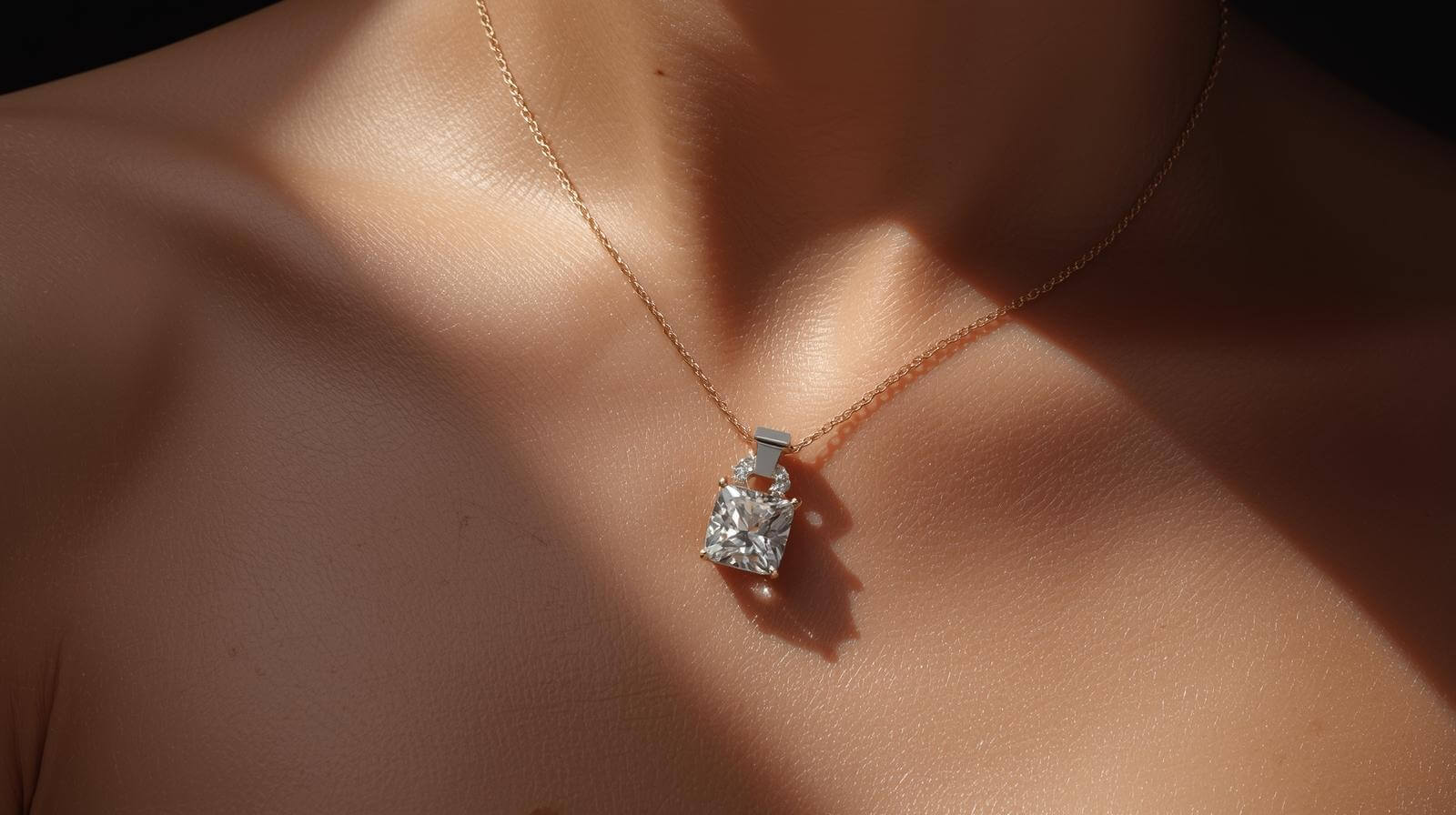

Necklace Styles
Beyond length, necklaces are categorized by their design style. Understanding these styles helps you describe what you’re looking for and identify pieces that match your aesthetic.
Pendant Necklaces
Pendant necklaces feature a decorative element (pendant) hanging from a chain. The pendant becomes the focal point of the piece.
Types of Pendants
Solitaire Pendants: Single gemstone set in a simple setting. Classic and elegant. Common for diamonds and birthstones.
Religious Symbols: Crosses, Stars of David, Om symbols, and other faith-based pendants. Meaningful personal jewelry.
Lockets: Hollow pendants that open to hold photos or mementos. Vintage charm with sentimental value.
Initial Pendants: Letters representing names or initials. Personalized and meaningful.
Symbolic Pendants: Hearts, infinity symbols, anchors, keys, or other meaningful shapes.
Birthstone Pendants: Featuring the wearer’s birth month gemstone. Personal and colorful.
Pendant Sizing Guide
- Small (under 1 inch): Delicate, everyday wear
- Medium (1-2 inches): Noticeable but not overwhelming
- Large (over 2 inches): Statement pieces for special occasions
Collar Necklaces
Collar necklaces sit flat against the skin, following the natural curve of the collarbone. These bold pieces make strong statements.
Collar Necklace Types
Rigid Collars: Metal bands that encircle the neck. Ancient Egyptian and tribal-inspired. Bold and architectural.
Multi-Strand Collars: Multiple chains or bead strands create fuller collar effect. More flexible than rigid collars.
Statement Collars: Large, ornate pieces covering the collarbone area. Often feature stones, metalwork, or mixed materials.
Styling Collar Necklaces
- Pair with simple, solid-colored outfits
- Best with strapless, off-shoulder, or boat-neck tops
- Avoid competing patterns or other statement jewelry
- Perfect for transforming basic t-shirts into fashion statements
Bib Necklaces
Bib necklaces feature elaborate designs covering a large area of the chest, resembling a baby’s bib. These dramatic pieces command attention.
Bib Necklace Characteristics
- Multiple rows or large surface area
- Heavy visual weight
- Often feature gemstones, beads, or intricate metalwork
- Statement pieces for special occasions
- Should be the only prominent jewelry worn
When to Wear Bib Necklaces
- Special events and celebrations
- Evening occasions
- With simple, solid-colored outfits
- When you want the necklace to be the outfit’s focal point
Festoon Necklaces
Festoon necklaces feature multiple draped chains or strands creating scalloped, swag-like patterns. Popular in Edwardian and Art Nouveau eras.
Festoon Features
- Romantic, vintage-inspired aesthetic
- Multiple connection points create draped effect
- Often incorporate gemstones or pearls
- Elegant for formal occasions
Rivière Necklaces
Rivière necklaces feature a single row of identically-cut gemstones in a continuous line. “Rivière” is French for “river,” referring to the flowing appearance.
Rivière Characteristics
- Stones gradually increase in size toward the center
- Simple, elegant design showcases stones
- Typically uses diamonds but can feature colored gemstones
- Classic formal jewelry
- Investment pieces often passed down as heirlooms
Station Necklaces
Station necklaces feature gemstones or decorative elements spaced at intervals along a chain, rather than concentrated in one area.
Station Necklace Benefits
- Delicate, modern aesthetic
- Sparkle distributed along entire necklace
- Versatile for layering
- Works with any neckline
- Appropriate for casual through formal occasions
Y-Necklaces and Lavaliers
Y-necklaces feature chains that come together at a single point, then continue downward creating a Y-shape. Lavaliers are similar but feature a pendant at the Y’s bottom point.
Y-Necklace Advantages
- Creates elongating effect
- Works beautifully with V-necks
- Draws eye downward, flattering for many body types
- Elegant and sophisticated
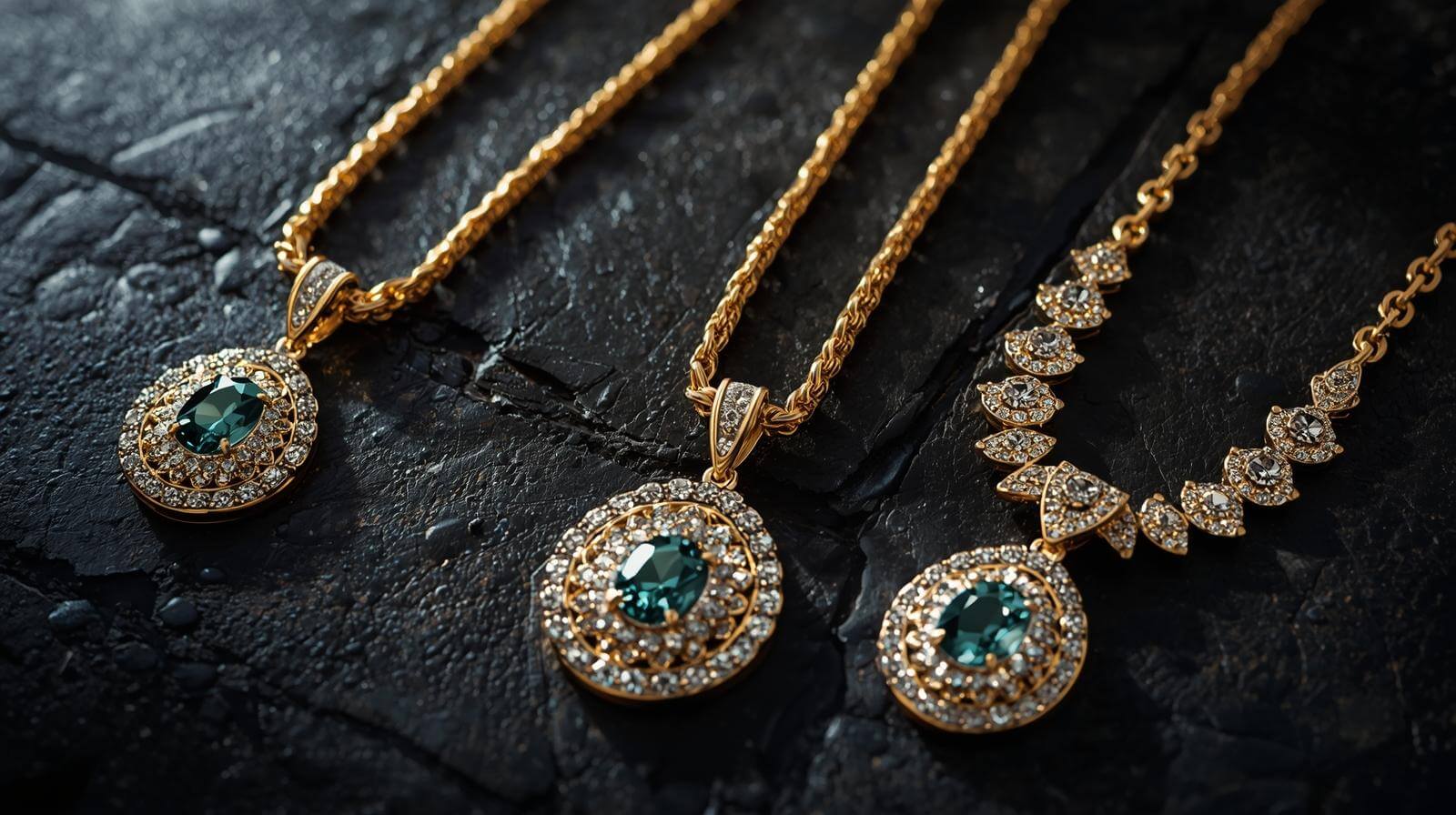

Chain Types Guide
The chain style affects both the necklace’s appearance and durability. Understanding chain types helps you select pieces that match your aesthetic and withstand daily wear.
Cable Chain
The most common chain style, featuring oval or round links in a simple, uniform pattern.
Cable Chain Characteristics
- Classic, timeless appearance
- Strong and durable
- Affordable to produce
- Works with any pendant
- Available in various widths
Best for: Everyday pendant necklaces, classic styles, budget-friendly options
Box Chain
Square links create a smooth, uniform chain with substantial feel. Links connect at corners creating a box-like pattern.
Box Chain Benefits
- Smooth, sleek appearance
- Very durable (doesn’t kink easily)
- Modern, contemporary look
- Catches light beautifully
- Strong enough for heavier pendants
Best for: Modern jewelry, men’s necklaces, substantial pendants
Rope Chain
Multiple small links twist together creating a rope-like appearance. One of the most durable chain styles.
Rope Chain Features
- Catches and reflects light beautifully
- Very strong and durable
- Substantial appearance
- Works well without pendants
- Popular in both fine and fashion jewelry
Best for: Statement chains worn alone, heavy pendants, masculine jewelry
Snake Chain
Tight, smooth links create a flexible, rounded chain resembling snakeskin. Creates sleek, modern appearance.
Snake Chain Characteristics
- Extremely smooth, liquid-like movement
- Contemporary, minimalist look
- Works beautifully with modern pendants
- Can kink if not handled carefully
- Best suited for occasional wear
Best for: Modern pendants, omega chains (flattened snake chains), special occasion jewelry
Figaro Chain
Italian-origin chain featuring a pattern of three short links followed by one long link, repeated.
Figaro Chain Appeal
- Distinctive, recognizable pattern
- Italian jewelry tradition
- More interesting than cable chains
- Strong and durable
- Works well with or without pendants
Best for: Italian-inspired jewelry, men’s chains, casual wear
Curb Chain
Interlocking links that lie flat when worn, creating a uniform surface. Links are twisted so they sit in the same plane.
Curb Chain Benefits
- Lies flat against skin
- Won’t twist or flip
- Available in wide range of widths
- Masculine aesthetic (especially in wider widths)
- Substantial presence
Best for: Men’s jewelry, substantial chains worn alone, hip-hop inspired styles
Singapore Chain
Twisted links create a rope-like appearance with beautiful light reflection. More delicate than traditional rope chains.
Singapore Chain Features
- Elegant sparkle and movement
- More feminine than rope chains
- Catches light beautifully
- Works with light to medium pendants
- Classic, timeless appearance
Best for: Fine jewelry, delicate pendants, elegant everyday wear
Herringbone Chain
Flat, flexible chain with slanted links creating a V-pattern resembling herringbone fabric weave.
Herringbone Characteristics
- Elegant, fluid movement
- Lies flat against skin
- Substantial appearance despite delicate links
- Can kink if twisted
- Requires careful handling
Best for: Statement chains worn alone, special occasions, careful wearers
Care Note: Herringbone chains require special care. Store flat, avoid twisting, and don’t hang on hooks.
Wheat Chain
Four strands of twisted oval links braided together, creating a texture resembling wheat stalks.
Wheat Chain Benefits
- Strong and durable
- Beautiful texture and sparkle
- Resists tangling
- Elegant appearance
- Works with or without pendants
Best for: Everyday wear, durable fine jewelry, versatile pieces
Bead Chain (Ball Chain)
Small beads or balls connected by short rods or wire, creating a uniform chain.
Bead Chain Uses
- Military dog tags (most recognizable use)
- Casual, industrial aesthetic
- Affordable option
- Works with modern, minimalist pendants
- Popular in men’s jewelry
Best for: Casual wear, dog tag necklaces, contemporary designs
Necklace Clasps
The clasp secures your necklace and affects both functionality and aesthetics. Understanding clasp types helps you choose secure, easy-to-use closures.
Lobster Clasp
The most common clasp type, featuring a spring-loaded mechanism shaped like a lobster claw.
Lobster Clasp Advantages
- Very secure (rarely opens accidentally)
- Easy to use with one hand
- Durable and long-lasting
- Available in various sizes
- Industry standard for good reason
Spring Ring Clasp
Circular clasp with spring-loaded mechanism. Smaller and more delicate than lobster clasps.
Spring Ring Characteristics
- Simple, traditional design
- More affordable than lobster clasps
- Adequate security for lightweight necklaces
- Can be difficult for those with limited dexterity
- Smaller sizes harder to manipulate
Toggle Clasp
Decorative clasp featuring a bar that slides through a ring to secure.
Toggle Clasp Features
- Easy to use (no tiny mechanisms)
- Can be decorative (often worn in front)
- Great for arthritis or limited dexterity
- Less secure than lobster clasps (can slip out if sized poorly)
- Works best with proper sizing
Magnetic Clasp
Magnets hold the two ends together. Easiest clasp type to use.
Magnetic Clasp Considerations
- Extremely easy to fasten
- Perfect for arthritis or dexterity issues
- Less secure than mechanical clasps
- Not recommended for valuable jewelry
- Can interfere with pacemakers (consult doctor)
Box Clasp
One end inserts into a box housing and clicks to lock. Common on pearl necklaces and high-end pieces.
Box Clasp Benefits
- Very secure with audible click
- Elegant appearance
- Often includes safety catch
- Common on vintage and antique jewelry
- Durable when well-made
S-Hook Clasp
Simple S-shaped hook that slides through a ring or loop.
S-Hook Characteristics
- Minimalist, contemporary look
- Can be worn in front as design element
- Easy to use
- Less secure (can unhook with movement)
- Best for lightweight necklaces
Layering Necklaces
Layering multiple necklaces creates a curated, personalized look. Master this technique to maximize your necklace collection’s versatility.
Basic Layering Rules
Vary the Lengths
The golden rule of necklace layering: each piece should be at least 2-3 inches different in length. This prevents tangling and creates clear visual separation.
Classic Three-Layer Combo:
- Layer 1: Choker (14-16 inches)
- Layer 2: Princess (18 inches)
- Layer 3: Matinee (22-24 inches)
Mix Textures and Weights
Combine different chain styles, pendants, and thicknesses for visual interest:
- Delicate chain + chunky chain
- Plain chain + textured chain
- Simple strand + pendant necklace
- Thin chains + one statement piece
Consider Scale
- Start with your most substantial piece
- Add delicate pieces around it
- Avoid wearing multiple chunky necklaces together
- Let one piece be the focal point
Layering Formulas
The Minimalist Stack (2 Necklaces)
Simple and Elegant:
- Delicate choker or princess length
- Longer chain with small pendant
Perfect for: Office wear, everyday style, beginners
The Classic Trio (3 Necklaces)
Most Versatile Combination:
- Short delicate chain (choker to princess)
- Medium pendant necklace (princess to matinee)
- Long simple chain (matinee to opera)
Perfect for: Balanced, curated look that works for most occasions
The Maximalist Layer (4+ Necklaces)
Bold Fashion Statement:
- Multiple varying lengths
- Mix of styles and textures
- One focal piece with supporting pieces
Perfect for: Fashion-forward looks, special events, when jewelry is the outfit focus
Mixing Metals in Layers
Modern jewelry styling embraces mixed metals. Successfully mixing gold, silver, and rose gold requires intentional choices:
Mixed Metal Guidelines
- Ensure one metal predominates (70/30 or 60/40 ratio)
- Use pieces that already combine metals as anchors
- Keep individual pieces cohesive (don’t mix metals within single necklaces unless designed that way)
- Confidence matters—wear mixed metals intentionally, not accidentally
Layering with Pendants
Pendant Layering Tips
- Limit to one or two pendants maximum
- Vary pendant sizes (small with medium, not two large)
- Ensure pendants don’t hit at same level
- Balance busy pendants with simple chains
- Consider pendant meanings (layering multiple symbolic pieces can feel cluttered)
Avoiding Tangling
Tangle Prevention
- Put on shortest necklace first, longest last
- Ensure each necklace settles before adding next
- Use necklaces with different chain types (less likely to intertwine)
- Consider layering necklaces or necklace spacers
- Store layered necklaces separately when not wearing
Matching Necklaces to Necklines
Choosing necklaces that complement your outfit’s neckline creates polished, intentional style. Follow these guidelines for flattering combinations.
V-Neck
Best Necklace Choices:
- Y-necklaces or lariats (echo the V-shape)
- Pendant necklaces at princess length
- Layered necklaces with varying lengths
- Single strand that sits inside the V
Avoid: Chokers (compete with neckline), anything that cuts across the V
Crew Neck (Round Neckline)
Best Necklace Choices:
- Princess length (18-20 inches)
- Matinee length (sits below neckline)
- Long pendant necklaces
- Opera-length necklaces
Avoid: Chokers (hidden by neckline), very short necklaces
Scoop Neck
Best Necklace Choices:
- Princess length that follows the scoop
- Short pendants that sit in the curve
- Collar necklaces
- Bib necklaces
Pro Tip: Choose necklaces that echo the neckline’s curve for cohesive look
Boat Neck
Best Necklace Choices:
- Long necklaces (matinee to opera length)
- Collar necklaces
- Statement earrings instead of necklace
Avoid: Short necklaces (hidden by wide neckline)
Off-Shoulder or Strapless
Best Necklace Choices:
- Chokers (now visible and flattering)
- Collar necklaces
- Statement necklaces
- Multiple strands
- Bib necklaces
Perfect Opportunity: Showcase neck and collarbones with bold choices
Turtleneck or High Neck
Best Necklace Choices:
- Long necklaces (opera or rope length)
- Matinee-length pieces worn over the turtleneck
- Layered long chains
Alternative: Skip the necklace entirely and wear statement earrings
Avoid: Anything shorter than matinee length (hidden or awkward)
Button-Up Shirt
Best Necklace Choices:
- Princess length worn outside collar
- Long pendants
- Delicate chains
Styling Options: Wear collar open with necklace visible, or button up and let necklace drape over
Halter Neck
Best Necklace Choices:
- Back necklaces (worn in back, not front)
- Long pendant that sits in center
- Skip necklace, focus on earrings and bracelets
Challenge: Halter necklines cover most necklace real estate, making this difficult to style
Asymmetric Neckline
Best Necklace Choices:
- Simple, delicate chains
- Skip the necklace (let neckline be the statement)
- Asymmetric necklaces if carefully coordinated
General Rule: Asymmetric necklines are already dramatic—less is more with jewelry
Necklace Care & Storage
Proper care extends necklace life and maintains beauty. Different materials require specific care approaches.
Daily Care Practices
When to Remove Necklaces
- Before Showering: Soap buildup dulls chains and stones
- Before Swimming: Chlorine damages precious metals
- Before Exercising: Sweat tarnishes silver, damages pearls
- Before Sleeping: Prevents tangling and breakage
- Before Applying Products: Put necklaces on after perfume, hairspray, lotion
Cleaning Necklaces
General Cleaning Method
- Mix warm water with mild dish soap
- Soak necklace for 15-20 minutes
- Gently clean with soft brush (soft toothbrush works well)
- Focus on links and clasp where dirt accumulates
- Rinse thoroughly under warm water
- Pat dry with soft, lint-free cloth
- Allow to air dry completely before storing
Metal-Specific Care
Gold Necklaces:
- Clean regularly with soap and water
- Polish with jewelry cloth
- Professional cleaning annually
- Higher karat gold is softer—handle gently
Silver Necklaces:
- Polish regularly with silver cloth
- Store in anti-tarnish bags
- Use silver cleaner for heavy tarnish
- Wear frequently (body oils help prevent tarnish)
Platinum Necklaces:
- Most durable precious metal
- Clean like gold
- Develops attractive patina over time
- Professional polishing restores original shine
Stone and Pearl Care
Diamond Necklaces:
- Can withstand ultrasonic cleaning
- Attract oils—clean regularly for sparkle
- Very durable for daily wear
Pearl Necklaces:
- Extremely delicate—wipe with soft, damp cloth only
- Apply perfume/hairspray BEFORE putting on pearls
- Last jewelry on, first jewelry off
- Restring every 1-2 years if worn frequently
- Never use chemicals or ultrasonic cleaners
Gemstone Necklaces:
- Hard stones (sapphire, ruby): Clean like diamonds
- Soft stones (opal, emerald, turquoise): Wipe gently only
- Avoid ultrasonic cleaners for soft or treated stones
Storage Solutions
Preventing Tangles
Hanging Storage:
- Necklace trees or stands
- Wall-mounted hooks
- Over-door organizers
- Keeps chains separated and tangle-free
Flat Storage:
- Jewelry boxes with individual compartments
- Velvet-lined trays
- Individual soft pouches for each necklace
- Prevents scratching between pieces
Travel Storage
- Use travel jewelry cases with compartments
- Thread necklaces through straws to prevent tangling
- Fasten clasps before packing
- Wrap delicate pieces in soft cloth
- Pack jewelry in carry-on (not checked luggage)
Long-Term Storage
- Climate-controlled environment
- Away from direct sunlight (can damage some gemstones)
- Not in bathroom (humidity damages metals)
- Anti-tarnish strips for silver storage
- Individual pouches prevent scratching
Dealing with Tangles
Untangling Method
- Lay necklace on flat surface
- Apply drop of baby oil or lubricant to knot
- Use two needles or pins to gently work knot loose
- Work slowly and patiently
- Clean necklace after untangling to remove oil
Prevention: Store necklaces separately, fasten clasps before storing, hang when possible
Frequently Asked Questions
What is the most versatile necklace length?
Princess length (17-19 inches) is the most versatile, sitting just below the collarbone. This length works with almost any neckline, suits all body types, and transitions seamlessly from casual to formal occasions. It’s the ideal choice when you’re unsure or buying a gift.
Can I layer necklaces of different metals?
Yes, mixing metals is fashionable and widely accepted in modern jewelry styling. Ensure one metal predominates (60-70%), and wear the mixed metals intentionally rather than accidentally. Using pieces that already combine metals helps create cohesion.
How do I keep my necklace from tangling?
Store necklaces separately using hanging storage (necklace trees, hooks) or individual pouches in jewelry boxes. Always fasten the clasp before storing. When traveling, thread necklaces through straws or use travel cases with compartments. Put necklaces on in order from shortest to longest.
What necklace should I wear with a V-neck?
V-necks pair beautifully with Y-necklaces or lariats that echo the neckline’s shape, pendant necklaces at princess length, or layered necklaces with varying lengths. Avoid chokers, which compete with the V-neckline rather than complementing it.
How often should I clean my necklaces?
Clean frequently worn necklaces monthly with mild soap and warm water. Polish silver pieces as tarnish appears. Pearls should be wiped with a soft, damp cloth after each wear. Have valuable necklaces professionally cleaned and inspected annually.
Can I shorten or lengthen a necklace?
Yes, most necklaces can be adjusted by a jeweler. Adding length requires additional chain matching the original. Shortening involves removing links. Simple chains are easiest to adjust, while necklaces with intricate designs may be more challenging. Consult a professional jeweler for accurate assessment.
What’s the difference between a lariat and a Y-necklace?
Both create Y-shapes, but lariats have no clasp—you thread one end through a loop or knot to secure. Y-necklaces have traditional clasps and a fixed Y-shape design. Lariats offer more styling versatility and adjustable length, while Y-necklaces provide consistent appearance.
Should I wear a necklace with a turtleneck?
Long necklaces (opera or rope length) work beautifully over turtlenecks. Matinee-length pieces can also work when worn outside the fabric. Avoid short necklaces, which will be hidden. Alternatively, skip the necklace entirely and wear statement earrings instead.
Building Your Necklace Collection
Understanding necklace types, lengths, and styling techniques empowers you to build a versatile collection that works for any occasion. Start with essential pieces—a princess-length chain and a matinee-length strand—then expand based on your lifestyle and style preferences.
Remember that quality matters more than quantity. A few well-made necklaces in complementary lengths will serve you better than many lower-quality pieces. Consider your wardrobe’s necklines, your daily activities, and your personal aesthetic when selecting necklaces.
Experiment with layering, mix metals confidently, and don’t be afraid to break traditional “rules” when it serves your style. The perfect necklace is one that makes you feel confident and authentic.
Continue Exploring Jewelry Types
Return to the main guide:
- Complete Guide to Jewelry Types
Explore other jewelry types:
- Ring Types & Styles Guide
- Earring Types & Styles Guide
- Bracelet Types & Styles Guide
Learn about necklace care:
- Complete Jewelry Care & Maintenance Guide