
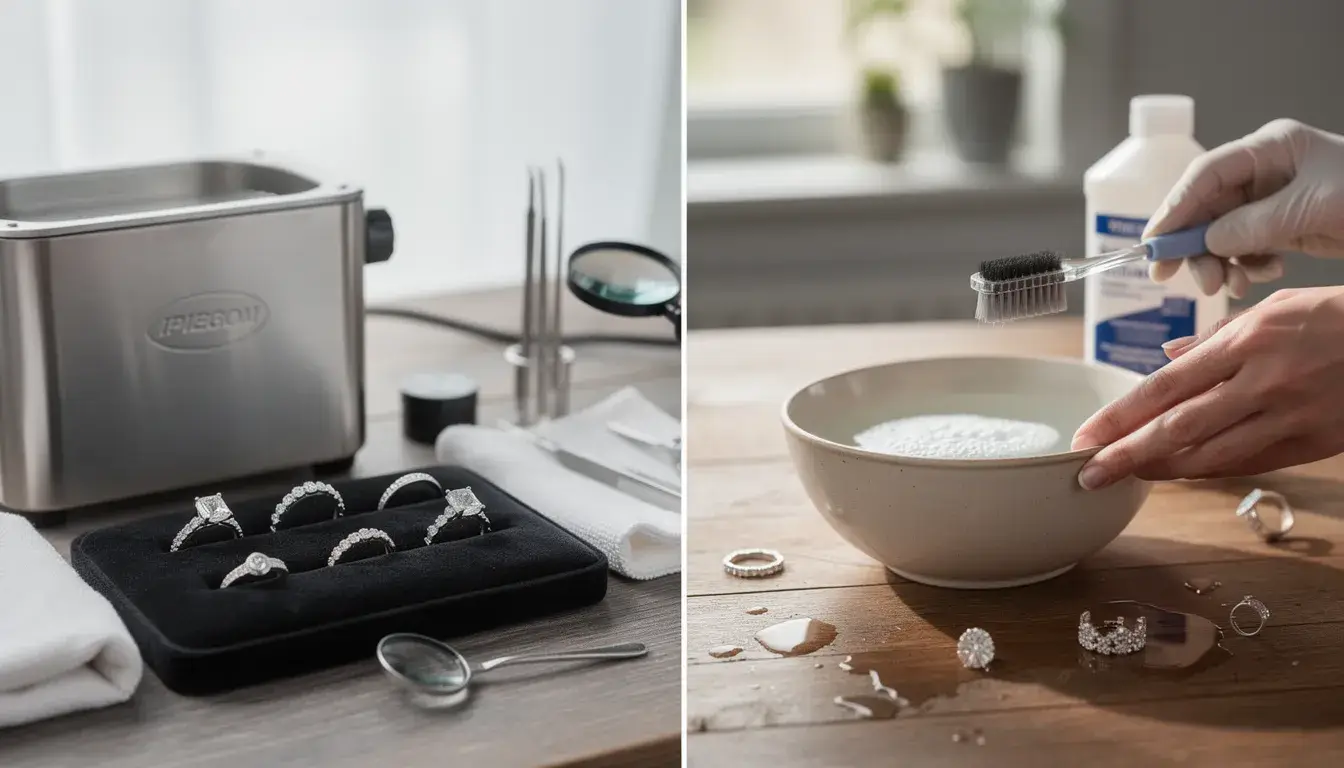
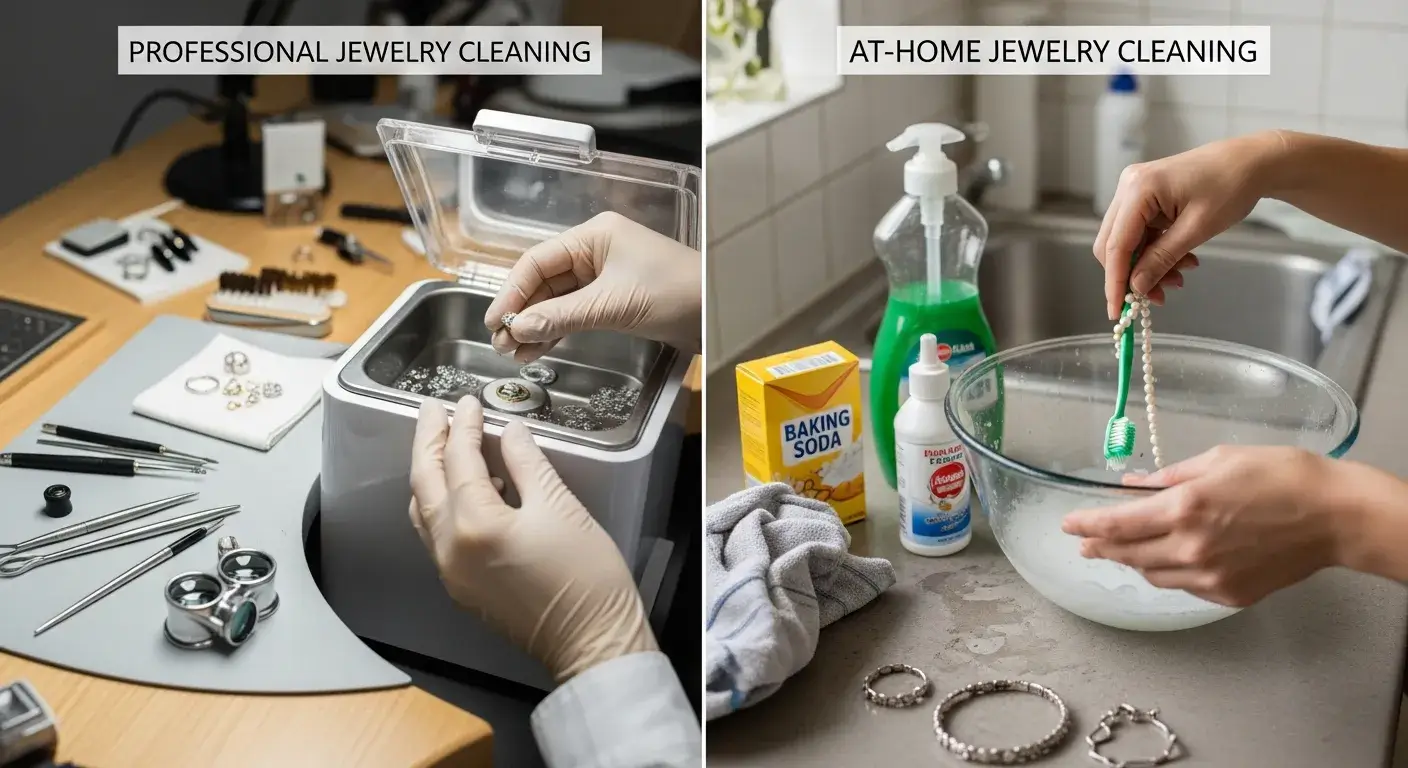
The jewelry cleaning question every owner faces: Can I clean this myself, or do I need a professional? While home cleaning handles most maintenance needs effectively and affordably, professional jewelers provide services impossible to replicate at home—from industrial ultrasonic cleaning to microscopic damage inspection. This guide clarifies exactly when each approach is appropriate, what professionals do that you can’t, and how to maximize value from both methods.
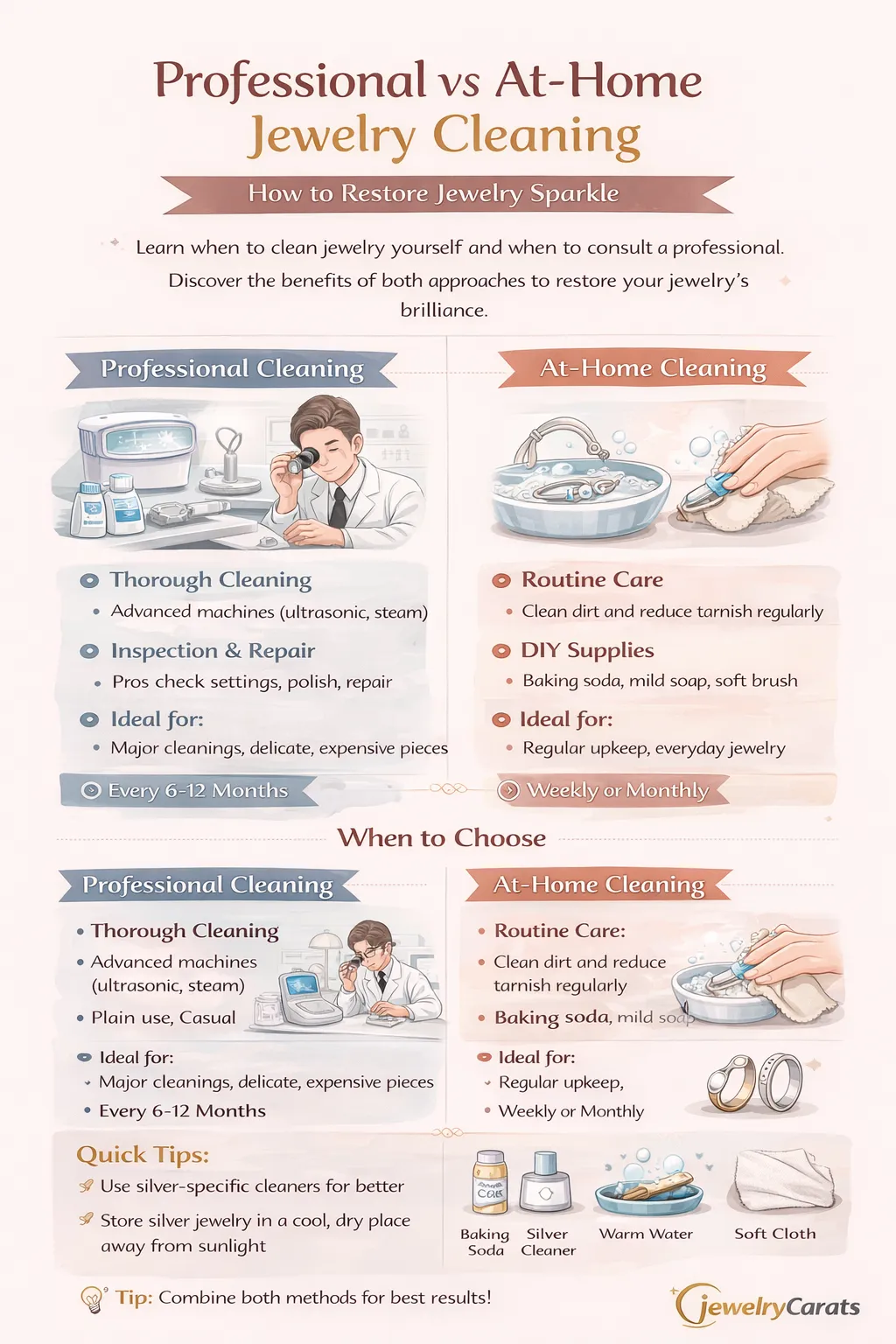
What Professional Jewelers Do That You Can’t
Professional jewelry cleaning encompasses more than just washing—it’s comprehensive care combining cleaning, inspection, and minor repairs.
Professional Equipment & Capabilities
1. Industrial Ultrasonic Cleaners
Professional ultrasonic units operate at higher frequencies and power than home versions:
- Power difference: Commercial 40-50 kHz vs home 30-40 kHz
- Tank size: Larger capacity allows better circulation
- Heat control: Heated solution (140°F) cuts through oils home units can’t remove
- Results: Removes embedded dirt from crevices impossible to reach manually
- Safe for: Diamonds, rubies, sapphires in secure settings (professionals assess first)
2. Steam Cleaning
High-pressure steam (300°F+) blasts away stubborn buildup:
- Capability: Reaches under tightest prong settings
- Effectiveness: Removes oils soap and ultrasonic miss
- Speed: Complete cleaning in 30-60 seconds
- Limitations: Only for heat-tolerant stones (diamonds, sapphires, rubies)
3. Professional Buffing & Polishing
Jewelers use rotating buffing wheels with polishing compounds:
- Scratch removal: Eliminates surface scratches home polishing can’t fix
- Mirror finish restoration: Returns metals to original luster
- Process: Progressive grits from coarse to ultra-fine
- Caution: Removes microscopic metal layers—limit to once every 1-2 years
4. Microscopic Inspection
Jewelers examine jewelry under magnification (10x-40x):
- Prong checking: Catches thinning before stone loss occurs
- Setting integrity: Identifies loose stones invisible to naked eye
- Crack detection: Finds hairline fractures in gemstones
- Solder joint assessment: Spots weakness before jewelry breaks
- Metal wear evaluation: Measures prong thickness, band thinning
5. Specialized Services
- Rhodium re-plating: Restores white gold’s white appearance (impossible at home)
- Prong re-tipping: Rebuilds worn prongs to secure stones
- Stone tightening: Adjusts bezels and prongs to eliminate movement
- Thread replacement: Restrings pearls on silk or nylon
- Repair integration: Fixes damage discovered during cleaning
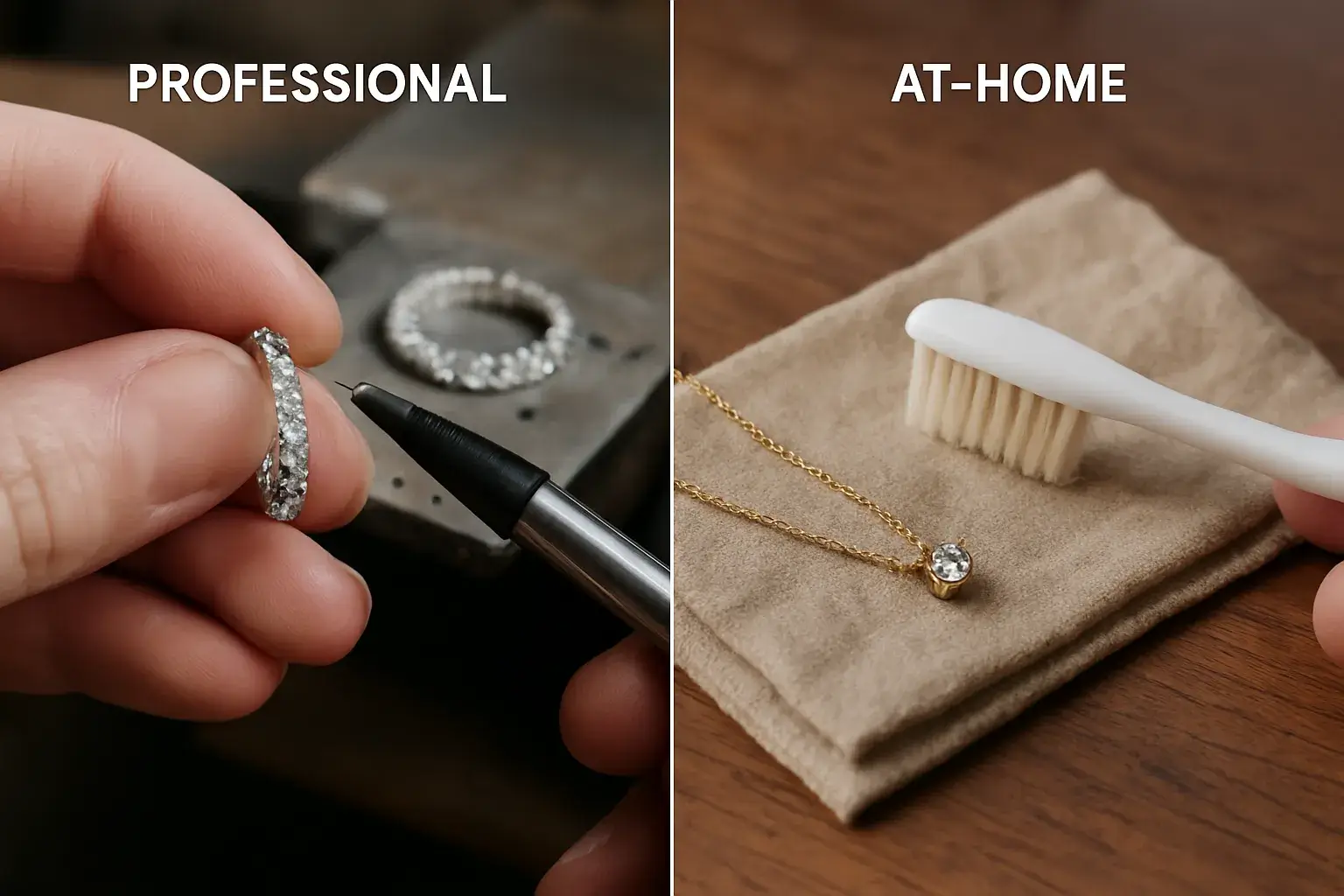
What You Can Accomplish at Home
Home cleaning effectively handles routine maintenance and light buildup for most jewelry types.
Home Cleaning Capabilities
| Cleaning Task | Home Method | Effectiveness | Cost |
|---|---|---|---|
| Regular maintenance cleaning | Soap & water, soft brush | Excellent for weekly care | ~$5 (soap, brush, cloths) |
| Light tarnish removal | Polishing cloth | Very effective on silver | ~$8-12 per cloth |
| Diamond brilliance restoration | Ammonia solution soak | Excellent results | ~$3 (ammonia bottle) |
| Heavy silver tarnish | Aluminum foil method | Excellent on plain silver | ~$2 (foil, baking soda) |
| Surface polishing | Jewelry polishing cloth | Good for light scratches | ~$10-15 |
When Home Cleaning is Sufficient
- Weekly/monthly maintenance: Regular cleaning prevents heavy buildup requiring professional care
- Simple jewelry: Plain gold chains, silver bangles, stud earrings without complex settings
- Light soiling: Daily oils, lotions, cosmetic residue
- Surface tarnish: Silver that hasn’t reached heavy blackening stage
- Jewelry you understand: Pieces where you know metal type, gemstones, and safe cleaning methods
Home Cleaning Limitations
- Embedded dirt under settings: Home ultrasonic units lack power for deep cleaning
- Worn prong detection: Can’t see microscopic thinning without magnification
- Deep scratches: Polishing cloths work on surface only; deep scratches need buffing wheel
- Rhodium re-plating: White gold yellowing requires professional plating service
- Antique jewelry: Fragile construction needs expert assessment before cleaning
- Complex gem combinations: Uncertain gemstone identification makes home cleaning risky
Cost Comparison: Professional vs Home Cleaning
Professional Cleaning Costs
| Service | Typical Cost | Frequency Needed | Annual Cost |
|---|---|---|---|
| Basic cleaning & inspection | Free – $30 | Every 6 months | $0 – $60 |
| Deep ultrasonic cleaning | $20 – $50 | Annually | $20 – $50 |
| Steam cleaning | $15 – $40 | Annually | $15 – $40 |
| Polish & buff | $40 – $100 | Every 2-3 years | $15 – $40 |
| Rhodium re-plating (white gold) | $50 – $150 | Every 1-2 years | $30 – $100 |
| Prong re-tipping | $30 – $75 per prong | Every 3-5 years | $10 – $30 |
| Pearl restringing | $50 – $150 | Every 1-2 years (if worn) | $30 – $100 |
Total annual professional cost for engagement ring: $75-250 depending on services needed
Home Cleaning Investment
| Supply | Initial Cost | Lifespan | Annual Cost |
|---|---|---|---|
| Mild dish soap | $3 – $5 | 6-12 months | $4 – $8 |
| Soft-bristled brush | $5 – $10 | 1-2 years | $3 – $7 |
| Silver polishing cloths (3) | $25 – $35 | 6-12 months each | $30 – $40 |
| Jewelry polishing cloths (2) | $20 – $30 | 6-12 months each | $25 – $35 |
| Ammonia solution | $3 – $5 | 1 year | $3 – $5 |
| Microfiber cloths (pack) | $10 – $15 | 1-2 years | $6 – $10 |
| Home ultrasonic cleaner (optional) | $30 – $60 | 3-5 years | $7 – $15 |
Total annual home cleaning cost: $70-120 for comprehensive home care supplies
💰 Cost-Benefit Analysis: Home cleaning costs similar to professional annually, but provides weekly care vs. 1-2 professional visits. Optimal strategy: Regular home maintenance (weekly/monthly) + professional service twice yearly = best results at lowest cost. Home care prevents heavy buildup; professional visits catch damage early.
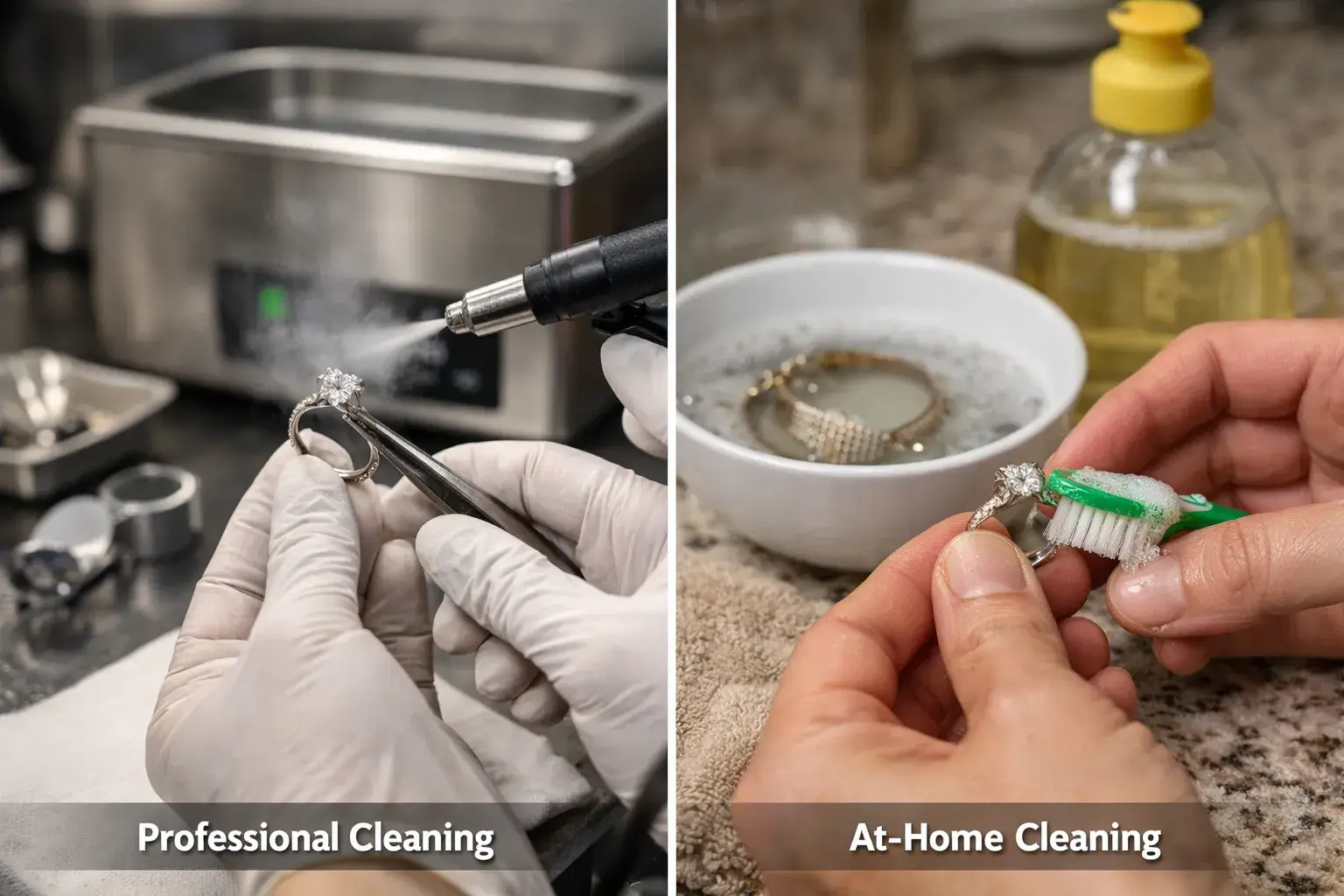
When Professional Cleaning is Essential
Certain situations absolutely require professional expertise—attempting home cleaning risks permanent damage.
Mandatory Professional Situations
1. Visible Damage or Loose Stones
- Stone moves or makes rattling sound (stop wearing immediately)
- Bent, damaged, or missing prongs
- Cracked or chipped gemstones
- Separated solder joints or broken components
- Risk of home cleaning: Complete stone loss, further structural damage
2. Antique & Valuable Jewelry
- Pieces over 50 years old with potential fragile construction
- Jewelry with foil-backed stones (water destroys foil)
- Victorian filigree or delicate metalwork
- Pieces with historical or collectible value
- Risk of home cleaning: Irreversible damage to construction, value destruction
3. Jewelry with Unknown Gemstones
- Inherited pieces without documentation
- Stones you can’t confidently identify
- Multiple gemstone types in single piece
- Possible treated or enhanced stones
- Risk of home cleaning: Permanent gemstone damage from inappropriate methods
4. Heavily Soiled Jewelry with Gemstones
- Years of accumulated buildup under settings
- Jewelry with both durable and delicate stones
- Pieces where you can’t reach dirt without risking stones
- Risk of home cleaning: Incomplete cleaning or stone damage attempting aggressive methods
When Professional Inspection is Critical
- Every 6 months for engagement rings: Daily wear causes fastest prong wear
- Annually for other fine jewelry: Regular wear pieces need inspection
- Before major events: Wedding, anniversary photos—ensure jewelry is secure
- After any impact or damage: Dropped jewelry, caught on clothing, hit hard surface
- When jewelry feels different: Spins on finger, feels loose, sounds unusual
Combining Home & Professional Care
The optimal jewelry care strategy uses both approaches synergistically.
Recommended Care Schedule
For Daily-Wear Jewelry (Engagement Rings, Wedding Bands):
At Home:
- Daily: Quick wipe with soft cloth after removal
- Weekly: Soap and water cleaning with soft brush (5 minutes)
- Monthly: Deep clean with ammonia solution for diamonds (15 minutes)
- Visual inspection: Check prongs weekly while cleaning
Professional:
- Every 6 months: Ultrasonic cleaning, microscopic inspection, prong check
- Annually: Complete assessment with any needed repairs (re-tipping, tightening)
- Every 1-2 years: Rhodium re-plating for white gold
For Occasional-Wear Fine Jewelry:
At Home:
- After each wear: Wipe clean before storage
- Monthly or before wearing: Quick clean if stored for weeks
- Quarterly: Full cleaning if stored long-term
Professional:
- Annually: Cleaning and inspection
- As needed: Any visible issues or before major events
For Sterling Silver Collections:
At Home:
- Every 2-4 weeks: Polishing cloth treatment
- As needed: Tarnish removal when darkening appears
- Storage maintenance: Replace anti-tarnish strips quarterly
Professional:
- Annually or when heavily tarnished: Deep cleaning with stones safely handled
- Every 2-3 years: Professional polishing for scratched pieces
How to Choose a Professional Jeweler
Qualifications to Verify
- Gemological certification: GIA (Gemological Institute of America), AGS (American Gem Society), or equivalent
- Experience level: Minimum 5+ years for valuable jewelry, 10+ for antiques
- On-premises work: Jewelers who work on-site vs. outsourcing repairs (better accountability)
- Insurance: Jeweler’s block insurance protects your jewelry while in their care
- Specialization: For antiques, find jewelers specializing in restoration; for high-end pieces, certified bench jewelers
Questions to Ask Before Leaving Jewelry
- “What specific services will be performed?” Get detailed list, not just “cleaning”
- “Do you work on-premises or outsource?” On-site is preferable for security and communication
- “What is your process for this jewelry type?” Ensures they understand gemstone and metal specifics
- “How long will this take?” Simple cleaning: same day to 24 hours; repairs: 1-2 weeks
- “What does this cost?” Get written estimate before authorizing work
- “Do you guarantee your work?” Reputable jewelers warranty repairs
- “Will you call before doing additional work?” Prevents surprise charges
Red Flags to Avoid
- Unwilling to provide written estimates
- Cannot explain their cleaning process
- No insurance or certification
- Pressure to leave jewelry without documentation
- Extremely cheap prices (suggests shortcuts or hidden costs)
- Won’t let you watch process (for simple cleanings)
- No detailed receipt when accepting jewelry
Maximizing Value from Professional Cleanings
How to Prepare Jewelry for Professional Service
- Document everything: Photograph jewelry before leaving, note any existing damage
- Remove before appointment: Don’t wear jewelry to jeweler—brings extra oils to clean
- List concerns: Note loose stones, unusual sounds, visible damage
- Bring documentation: Previous appraisals, receipts, gemstone certificates
- Ask for thorough inspection: Don’t accept “looks fine”—request detailed assessment
What to Request During Service
- Microscopic inspection report: Prong condition, settings, potential issues
- Before/after photos: For heavily soiled pieces or after polishing
- Preventive maintenance recommendations: What needs monitoring or future service
- Home care advice: Specific to your jewelry’s needs
Final Thoughts: The Optimal Care Partnership
Professional and home jewelry care aren’t competing options—they’re complementary strategies that together provide comprehensive protection. Home cleaning handles frequent maintenance affordably, preventing heavy buildup and preserving daily beauty. Professional services deliver deep cleaning impossible at home and catch structural issues before they cause loss or require expensive repairs.
The jewelry owners who maintain the most beautiful, longest-lasting pieces use both approaches strategically: consistent home care weekly, professional service semi-annually. This partnership maximizes jewelry beauty while minimizing long-term costs through preventive maintenance.
Think of it as an investment in protection: the $0-60 spent annually on professional cleaning and inspection prevents the $500-5,000 cost of replacing lost stones or repairing damage that home care couldn’t detect. Meanwhile, weekly home cleaning prevents the need for aggressive professional restoration that removes metal with each polishing. Together, these approaches preserve your jewelry’s beauty and value for generations.