
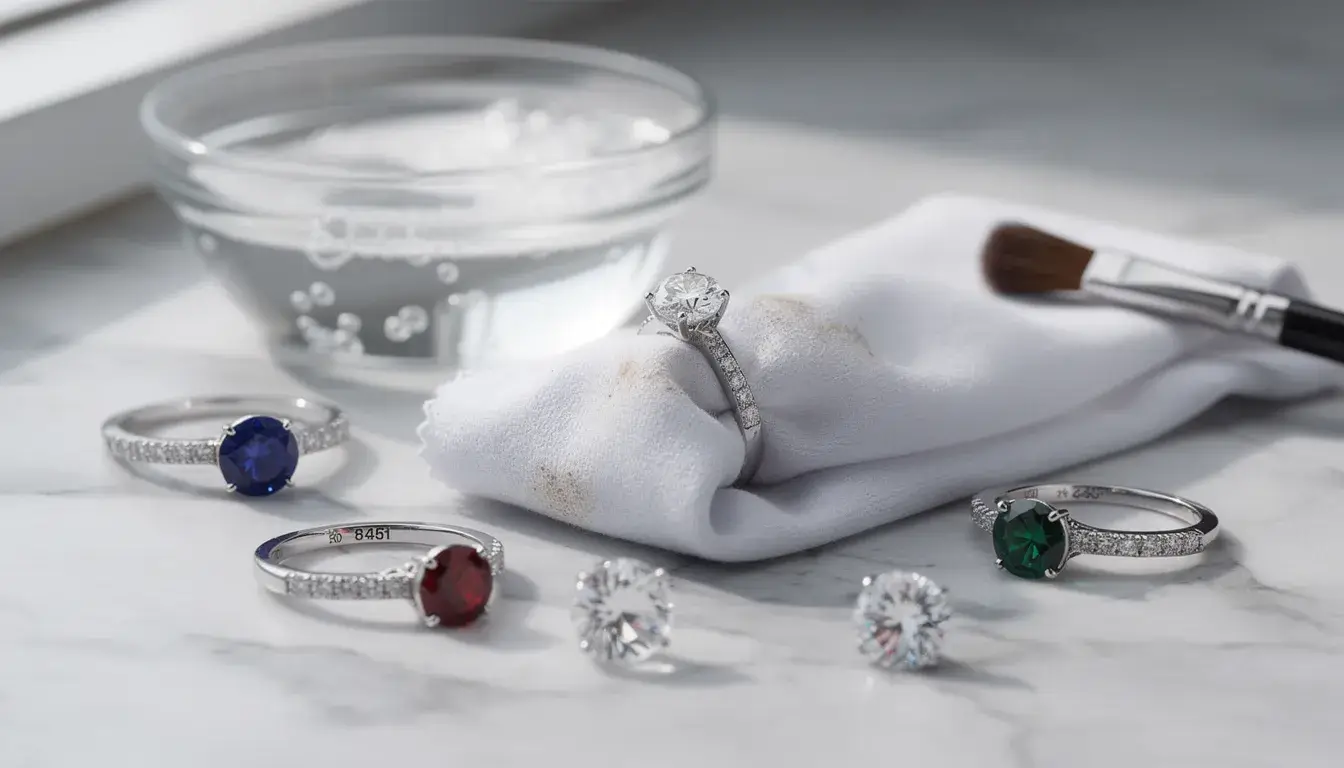
Diamonds and gemstones lose their sparkle not from age, but from accumulated oils, lotions, dirt, and soap residue that create a dulling film. Regular cleaning restores their natural brilliance, revealing the fire and clarity that made you fall in love with them. This comprehensive guide teaches professional cleaning methods for diamonds, colored gemstones, and engagement rings—with specific techniques for each stone type to ensure safe, effective results.
Learn which cleaning methods work for your specific gemstones, understand the science behind diamond brilliance, and discover the critical mistakes that can damage valuable stones permanently.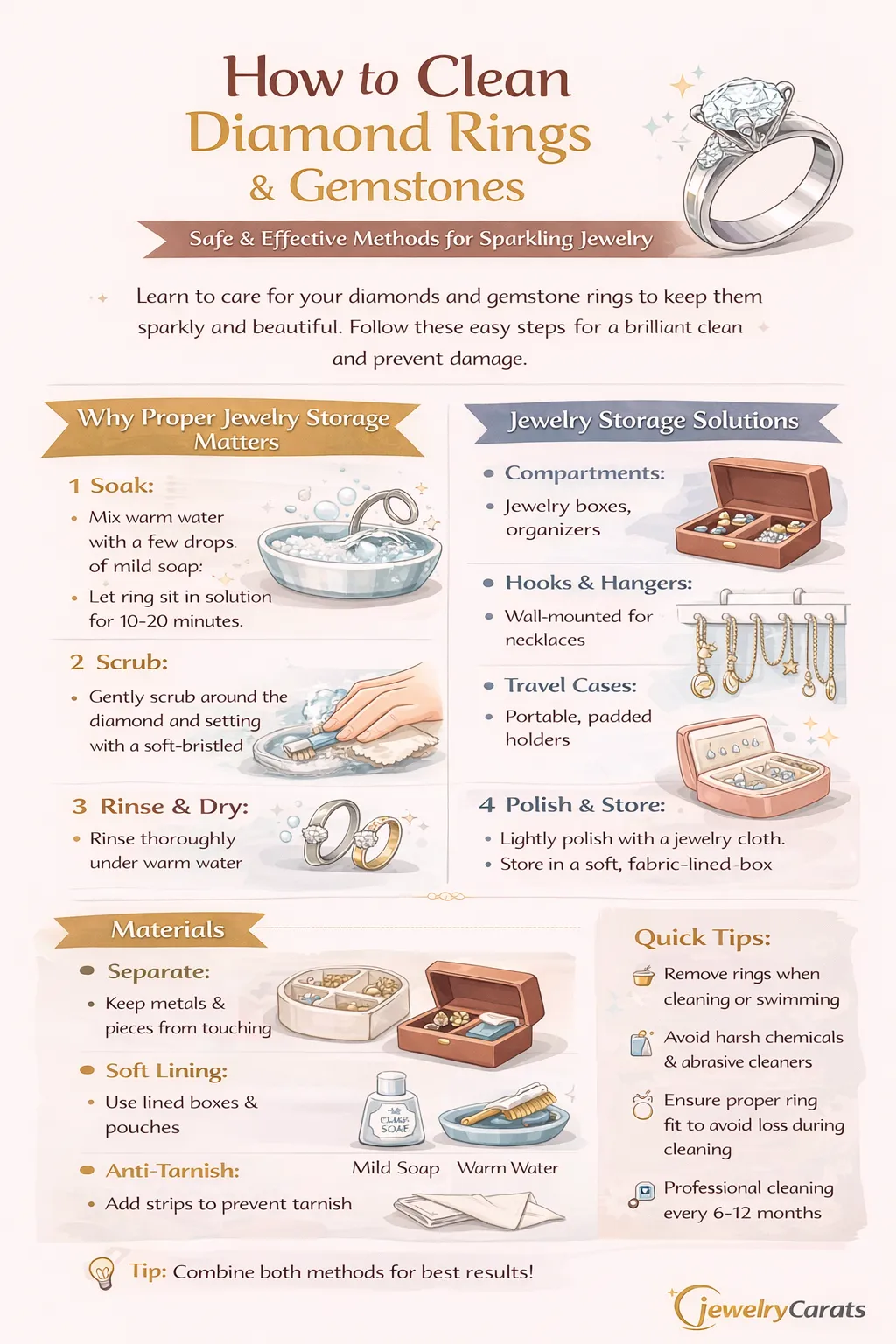
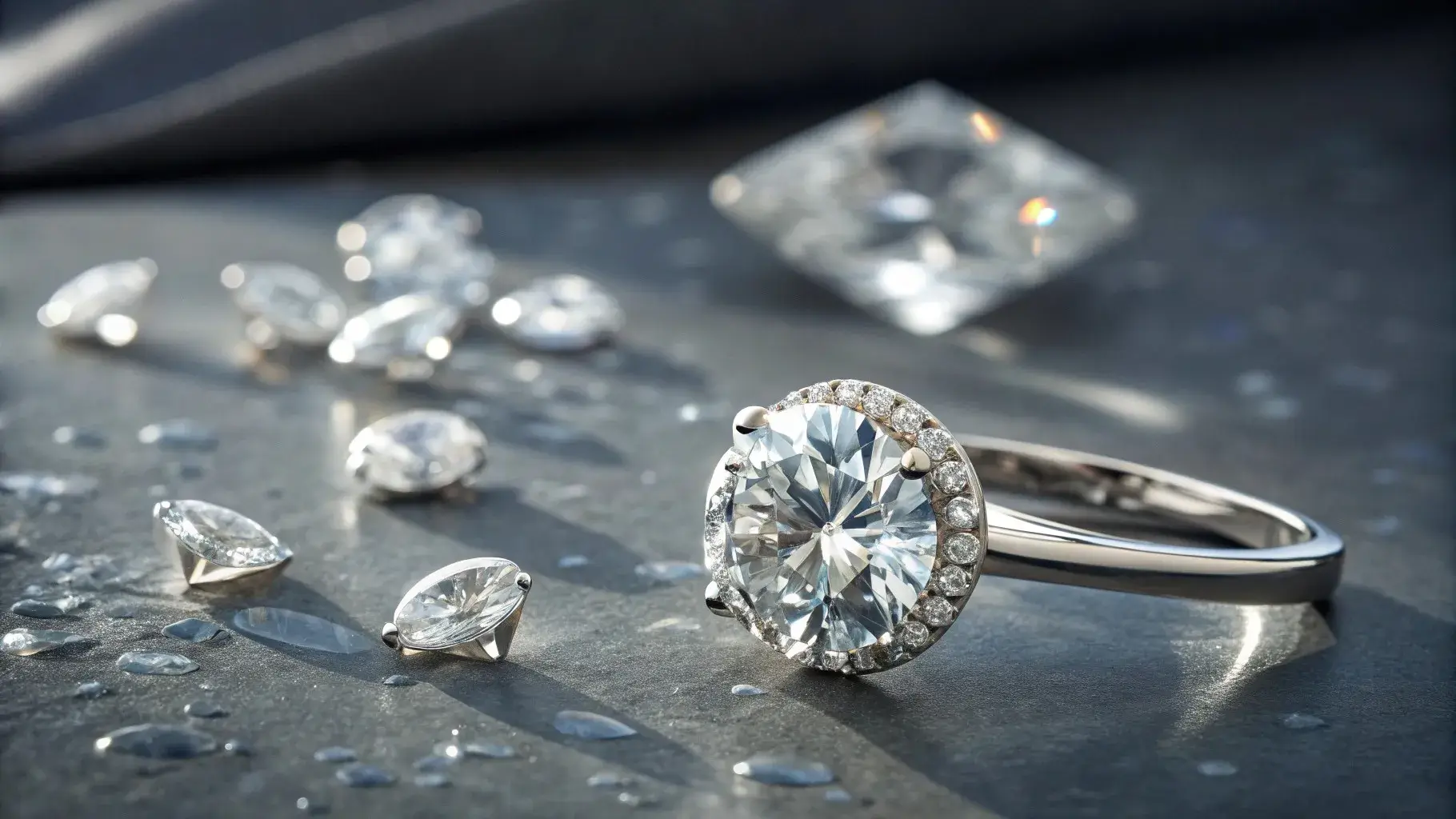
Understanding Diamond Brilliance & Why Diamonds Get Cloudy
Diamonds are renowned for their sparkle, but understanding what creates that brilliance helps you maintain it properly.
The Three Components of Diamond Beauty
- Brilliance: White light reflecting from diamond’s internal and external surfaces
- Fire: Colored light flashes (rainbow colors) dispersed by diamond’s refractive properties
- Scintillation: Sparkle and flash pattern as diamond or light source moves
All three depend on light entering and exiting the diamond unobstructed. When oils or dirt coat the surface, light cannot penetrate properly—the diamond appears dull, cloudy, or lifeless.
Why Diamonds Attract Oil & Dirt
Diamonds are lipophilic—they naturally attract and hold grease and oils. This property makes them particularly susceptible to dulling from:
- Skin oils: Natural oils from touching jewelry transfer to diamond surface
- Lotions and cosmetics: Hand creams, makeup, sunscreen create persistent films
- Soaps and detergents: Residue builds up with repeated exposure
- Cooking oils: Kitchen work coats diamonds in grease films
- Environmental dust: Airborne particles adhere to oil-coated surfaces
The pavilion (bottom) of diamonds accumulates the most buildup, directly impacting light return and reducing visible sparkle.
How Often Should You Clean Diamond Jewelry?
| Wear Frequency | Quick Cleaning | Deep Cleaning | Professional Cleaning |
|---|---|---|---|
| Daily Wear (engagement rings) | Weekly | Every 2 weeks | Every 6 months |
| Several times weekly | Every 2 weeks | Monthly | Annually |
| Occasional wear | After each wear | Every 2-3 months | Every 1-2 years |
| Special occasions only | Before wearing | 2-3 times per year | As needed |
The Basic Diamond Cleaning Method: Soap & Water
This gentle, effective method is safe for diamonds in secure settings and provides excellent results for regular maintenance.
Step-by-Step Diamond Cleaning Process
What you need:
- Small bowl
- Warm water (not hot)
- 3-4 drops mild dish soap (Dawn recommended)
- Soft-bristled toothbrush or jewelry brush
- Lint-free cloth
- Strainer or mesh (to prevent loss down drain)
Process:
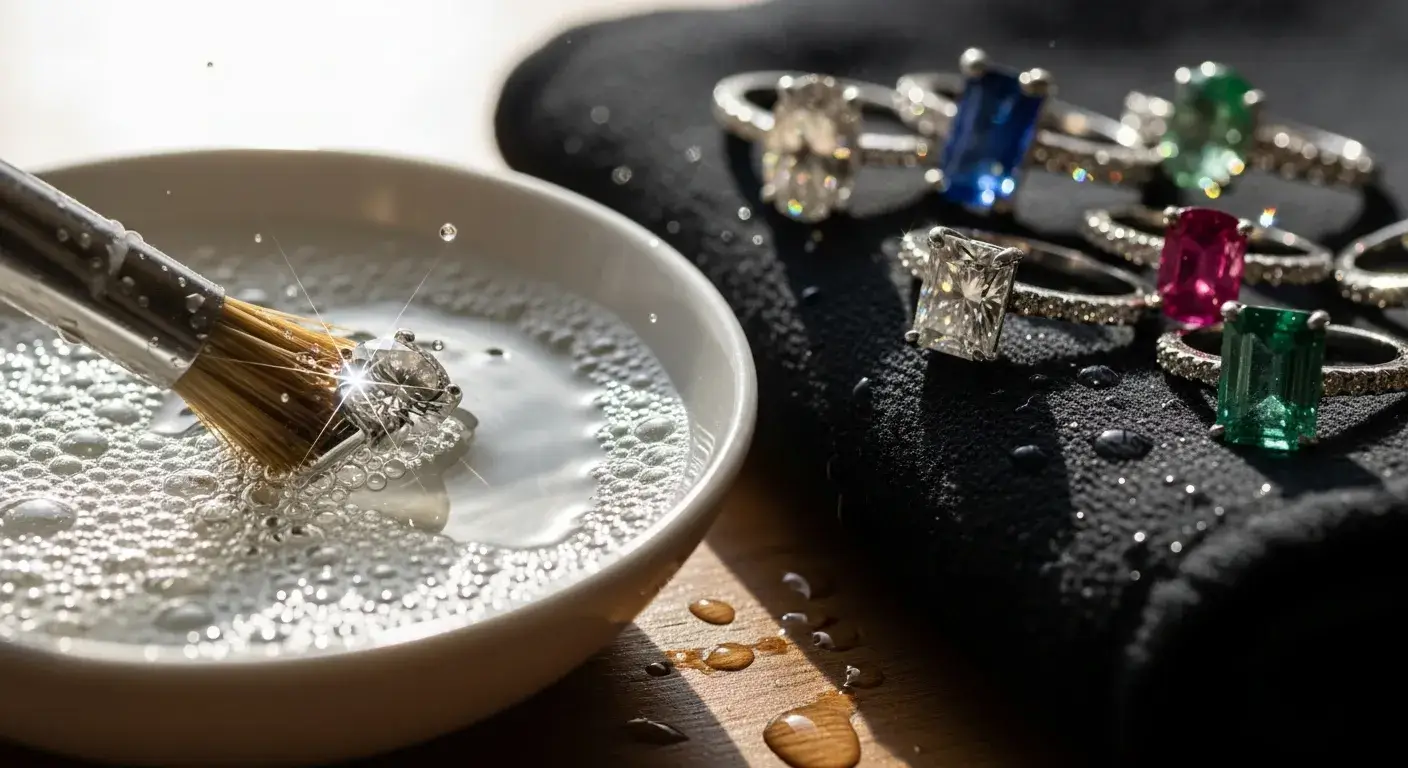
- Prepare solution: Fill bowl with 1 cup warm water, add 3-4 drops dish soap, swirl gently
- Soak diamond jewelry: Submerge for 20-30 minutes to loosen oils and dirt
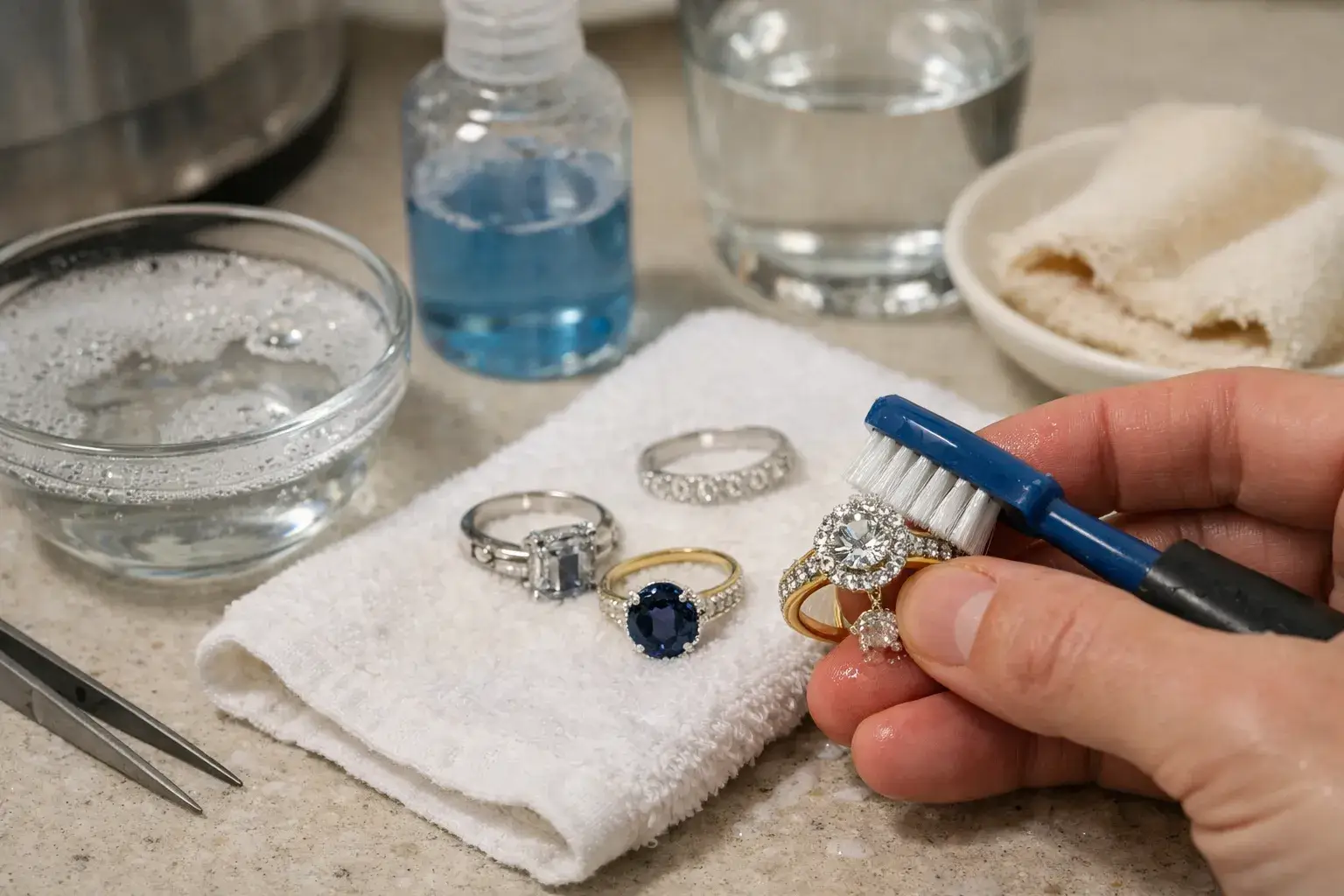
- Brush gently: Use soft brush to clean around and under diamond settings, focusing on pavilion (bottom of stone). Pay special attention to prongs where dirt accumulates
- Rinse thoroughly: Rinse under warm running water over strainer for 30+ seconds, ensuring all soap removed
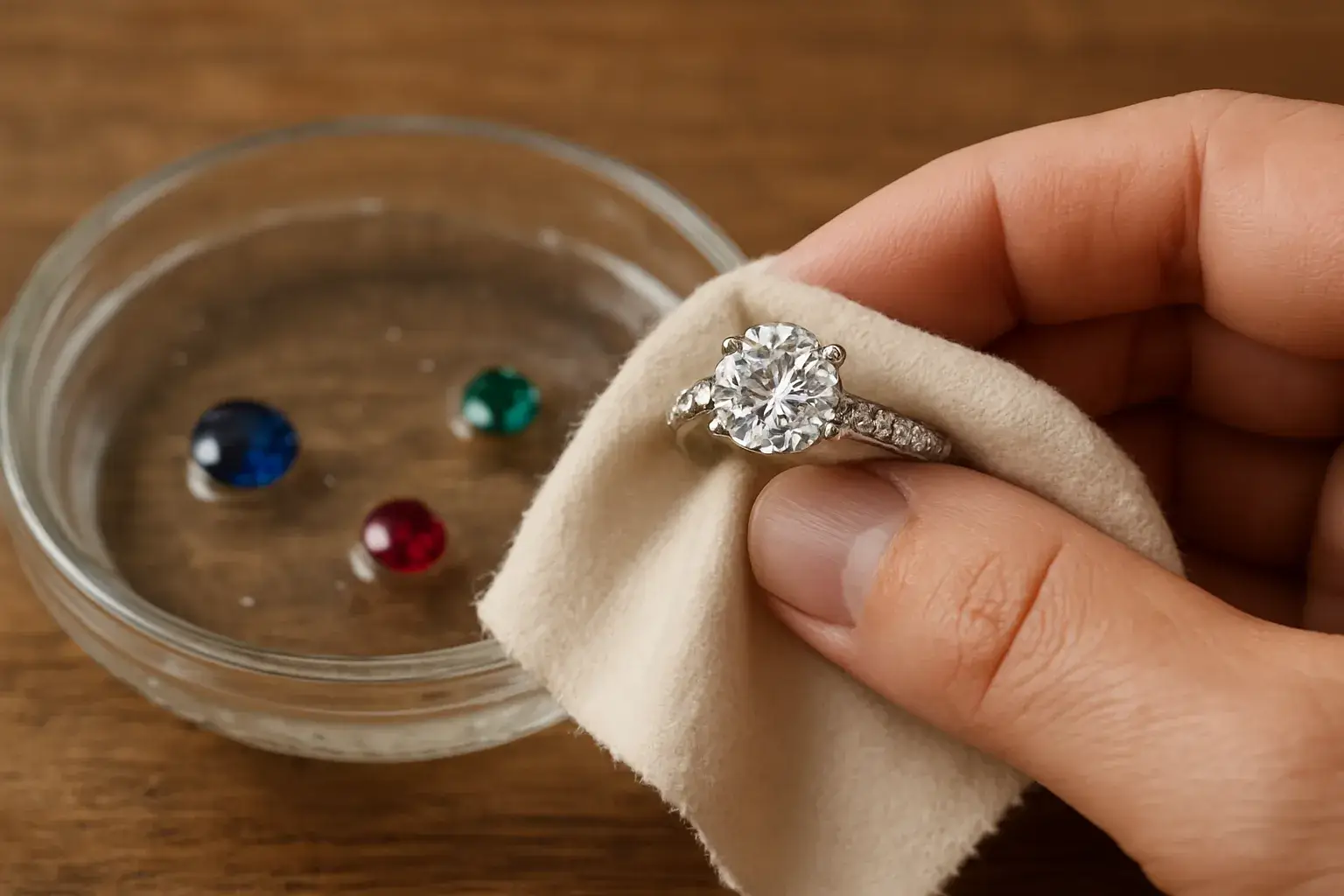
- Dry completely: Pat with lint-free cloth, let air dry 10 minutes before storing
- Inspect while cleaning: Check for loose prongs, movement in setting, or unusual sounds (rattling indicates loose stone)
💎 Pro Tip for Maximum Sparkle: When cleaning diamonds, focus 80% of your effort on the pavilion (bottom) and underside of the setting. This is where oils accumulate most and have the greatest impact on light return. A clean pavilion dramatically increases diamond brilliance—often more than cleaning the crown (top).
Deep Cleaning Diamonds: The Ammonia Method
For heavily soiled diamond jewelry or when soap cleaning doesn’t restore full brilliance, ammonia provides deeper cleaning power.
When to Use Ammonia Cleaning
- Diamonds appear cloudy despite regular soap cleaning
- Visible oils or cosmetic buildup in settings
- Monthly deep clean for engagement rings
- Preparing jewelry for special occasions
Ammonia Cleaning Process
Solution: 1 part household ammonia to 6 parts water (use in well-ventilated area)
- Mix solution in glass bowl: Never use metal containers with ammonia
- Soak jewelry 30-40 minutes: Ammonia cuts through oils that soap can’t remove
- Brush thoroughly: Focus on pavilion and around prongs—this is where ammonia works best
- Rinse extensively: 1-2 minutes under running water; ammonia residue irritates skin
- Dry and inspect in bright light: Properly cleaned diamond shows intense fire and brilliance
⚠️ Ammonia Safety & Restrictions:
- Use in well-ventilated area only (open window, outdoors, or near ventilation)
- Never mix with other cleaners (especially bleach—creates toxic gas)
- Safe ONLY for natural diamonds in gold/platinum settings
- NEVER use on: Emeralds, pearls, opals, coral, turquoise, or organic gemstones
- Avoid on treated diamonds: Fracture-filled or clarity-enhanced stones
- Don’t use on antique jewelry: Can weaken old solder joints
Ultrasonic & Steam Cleaning for Diamonds
Professional-grade cleaning methods deliver superior results but require understanding of safety limitations.
Ultrasonic Cleaning
How it works: High-frequency sound waves (20,000-40,000 Hz) create microscopic bubbles that implode, dislodging dirt from impossible-to-reach areas under settings.
Safe for:
- Natural diamonds in secure, undamaged gold or platinum settings
- Rubies and sapphires without fractures or significant inclusions
- Well-constructed jewelry with strong prongs and settings
NEVER use on:
- Emeralds (ultrasonic vibrations fracture included stones)
- Opals, pearls, coral, turquoise (can shatter or crack)
- Fracture-filled or clarity-enhanced diamonds
- Tanzanite, kunzite, fluorite (brittle stones)
- Jewelry with loose stones or damaged prongs
- Antique jewelry with fragile construction
- Glued-in stones or doublets/triplets
Using ultrasonic cleaner safely:
- Inspect jewelry carefully for damage before placing in cleaner
- Fill with water and drop of dish soap
- Place jewelry in basket (don’t overcrowd)
- Run 3-5 minute cycle
- Rinse thoroughly under running water
- Dry completely with soft cloth
Steam Cleaning
How it works: Pressurized steam (300°F+) blasts away dirt and oils without mechanical abrasion.
Best for: Diamonds, rubies, sapphires in secure settings
Never use on: Heat-sensitive stones (emeralds, opals, pearls, tanzanite, topaz), jewelry with glued components, or pieces with weak solder joints
Cleaning Colored Gemstones Safely
Colored gemstones require different care than diamonds based on their hardness, porosity, and treatment history.
The Mohs Scale & Cleaning Safety
Gemstone hardness determines appropriate cleaning methods:
| Hardness | Gemstones | Safe Cleaning Methods | Avoid |
|---|---|---|---|
| Very Hard (9-10) | Diamond, Ruby, Sapphire, Moissanite | All methods including ultrasonic and steam | Only if stones are fracture-filled or have significant inclusions |
| Hard (7.5-8.5) | Topaz, Aquamarine, Spinel, Chrysoberyl | Warm water, mild soap, soft brushing | Ultrasonic if heavily included; avoid sudden temperature changes |
| Medium Hard (7-7.5) | Amethyst, Citrine, Garnet, Tourmaline | Gentle soap and water, minimal soaking | Prolonged water exposure; harsh chemicals |
| Medium (6-7) | Moonstone, Tanzanite, Jade, Peridot | Damp cloth only, brief soap wash | Ultrasonic, steam, prolonged soaking, abrasives |
| Soft (3-5.5) | Pearl, Opal, Turquoise, Coral, Amber | Dry or barely damp soft cloth only | Any water immersion, chemicals, ultrasonic, steam |
Stone-Specific Cleaning Guidelines
Emeralds:
- Clean with damp cloth only—never immerse in water
- Emeralds are oiled or resin-filled to improve clarity; water and heat remove treatments
- Never use ultrasonic or steam (causes fracturing)
- Professional re-oiling needed every few years to maintain appearance
Sapphires & Rubies (Corundum):
- Very durable; can handle soap and water, gentle brushing
- Ultrasonic safe if stones are natural and not heavily included
- Avoid ultrasonic on fracture-filled or diffusion-treated stones
- Steam cleaning generally safe for natural, untreated stones
Pearls:
- Wipe with barely damp soft cloth immediately after wearing
- Never submerge in water (damages nacre and silk thread)
- Keep away from all chemicals, cosmetics, perfumes
- Store flat in breathable cloth pouch (pearls need air moisture)
Opals:
- Dry cloth only for cleaning
- Opals contain 5-10% water; water immersion or heat causes cracking
- Store with damp cotton ball to maintain moisture
- Never expose to heat, direct sunlight, or dry environments
Aquamarine & Topaz:
- Soap and water safe with gentle brushing
- Avoid sudden temperature changes (can cause internal fractures)
- Ultrasonic generally safe but inspect for inclusions first
- Don’t expose to harsh chemicals or prolonged sunlight (can fade)
Tanzanite:
- Warm water and mild soap only
- Very brittle—avoid ultrasonic and steam cleaning
- Never expose to sudden temperature changes
- Remove before any physical activity or household work
✨ Special Care for Treated Gemstones:
Many gemstones undergo treatments to enhance color or clarity. These treatments affect cleaning safety:
- Fracture-filled stones: Avoid water, heat, ultrasonic (removes filling)
- Dyed stones: No water immersion (removes dye)
- Coated stones: Gentle dry cloth only (water removes coating)
- Heat-treated stones: Usually stable; standard cleaning safe
- Irradiated stones: Standard cleaning safe once treatment completed
When purchasing gemstone jewelry, always ask about treatments so you can clean appropriately.
Cleaning Engagement Rings & Wedding Bands
Engagement rings receive the most wear and exposure to contaminants, requiring specialized care routines.
Daily Engagement Ring Care
- Remove before: Hand washing, applying lotion, cooking, exercising, sleeping, showering
- Quick wipe after wearing: Soft cloth removes fresh oils before they set
- Safe storage: Designated ring dish on nightstand—never windowsills, sinks, or countertops
- Visual inspection: Check daily for loose stones, prong damage, unusual sounds
Weekly Engagement Ring Cleaning
- Quick soap and water clean: 5-minute process prevents buildup
- Focus on pavilion: Brush under stone where oils accumulate most
- Check prongs: Ensure all prongs hold stone securely
- Dry thoroughly: Moisture in setting can cause issues over time
Monthly Deep Clean & Inspection
- Ammonia soak for maximum brilliance restoration
- Thorough prong inspection with magnification if possible
- Check for any metal wear on band underside
- Verify stone doesn’t move or make sounds when gently wiggled
Professional Service Schedule
- Every 6 months: Professional cleaning and prong inspection
- Annually: Prong re-tipping if worn thin
- Every 5-10 years: Comprehensive overhaul (rhodium re-plating for white gold, thorough restoration)
What NOT to Do When Cleaning Gemstone Jewelry
Dangerous Cleaning Mistakes
- Using toothpaste: Too abrasive—scratches gemstones and dulls polish permanently
- Harsh chemicals: Bleach, acetone, ammonia (on soft stones), harsh cleaners damage stones and settings
- Ultrasonic on wrong stones: Destroys emeralds, opals, pearls, tanzanite
- Hot water on temperature-sensitive stones: Can fracture tanzanite, opal, some tourmalines
- Abrasive materials: Paper towels, scouring pads, steel wool scratch everything
- Jewelry dip solutions: Too harsh for most gemstones; damage treatments and settings
- Cleaning over open drain: Recipe for loss—always use strainer or bowl
Common Mistakes That Damage Gemstones
- Assuming all gemstones clean like diamonds: Each stone type needs specific care
- Ignoring treatment history: Treated stones require gentler methods
- Over-brushing soft stones: Pearls, opals, coral should never be brushed
- Prolonged soaking of porous stones: Turquoise, coral, lapis absorb water and discolor
- Using ultrasonic on antique jewelry: Damages fragile old settings and glued stones
When to Seek Professional Cleaning & Services
Professional jewelers provide services impossible to replicate at home.
Professional Cleaning Benefits
- Industrial-strength ultrasonic: More powerful than home units
- Steam cleaning: Reaches areas impossible with home methods
- Professional inspection: Catches early damage invisible to untrained eye
- Prong tightening: Prevents stone loss from worn settings
- Polish and refinishing: Removes scratches from metal
Signs You Need Professional Help
- Stone moves or rattles (loose setting—stop wearing immediately)
- Visible prong damage or thinning
- Diamond appears cloudy despite thorough cleaning (may indicate internal damage or treatment issues)
- Antique or valuable pieces requiring expert care
- Jewelry with gemstones you’re uncertain how to clean safely
Final Thoughts: Brilliance Through Consistent Care
Diamond and gemstone jewelry loses sparkle from daily life exposure to oils, cosmetics, and environmental contaminants—not from age or wear. Regular gentle cleaning restores full brilliance, revealing the fire and beauty that made these stones precious.
The key to maintaining stunning jewelry is consistency: weekly quick cleans for daily-wear pieces prevent the need for aggressive restoration. Understanding your specific gemstones allows safe, effective cleaning tailored to each stone’s properties.
Remember that cleaning reveals existing issues rather than creating them. If you discover loose stones, unusual sounds, or visible damage during cleaning, stop wearing the piece immediately and seek professional repair. The few minutes invested weekly in proper cleaning preserves your jewelry’s beauty and structural integrity for generations—ensuring your treasured pieces remain as brilliant as the day you first wore them.