
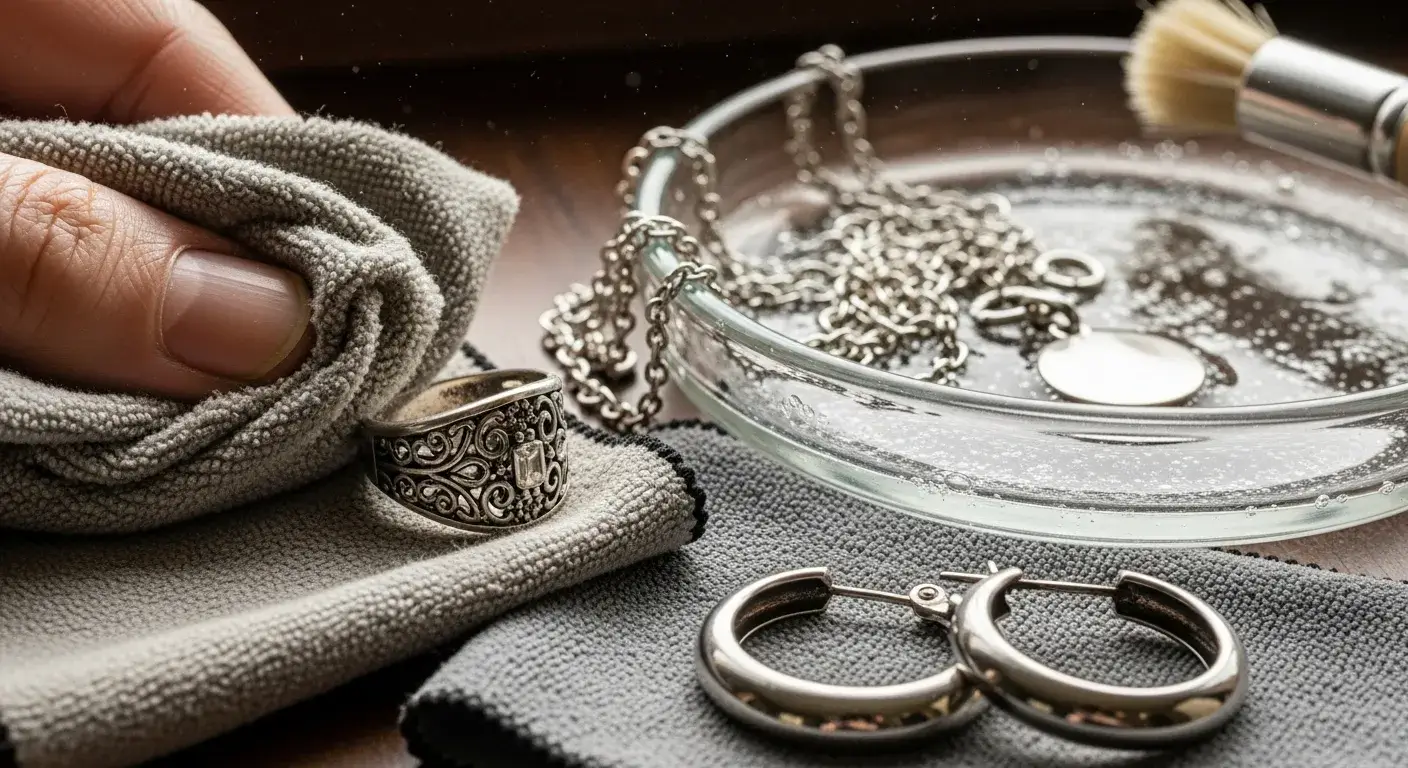
Silver jewelry’s luminous beauty comes with a challenge: tarnish. That blackish, yellowish, or brownish discoloration develops naturally as silver reacts with sulfur compounds in the air. While tarnish is inevitable, it’s completely reversible with proper cleaning techniques. This comprehensive guide teaches you professional methods to remove tarnish safely, restore brilliant shine, and prevent future oxidation on sterling silver, silver-plated, and antique pieces.
From gentle polishing cloths to powerful chemical reactions, discover which silver cleaning method works best for your jewelry type—and learn what to avoid to prevent permanent damage.
Understanding Silver Tarnish: The Science Behind the Darkening
Silver tarnish isn’t dirt or damage—it’s a chemical reaction that occurs when silver encounters sulfur compounds in the environment.
What Causes Silver to Tarnish?
- Hydrogen sulfide in air: Present in trace amounts from pollution, volcanic activity, and industrial emissions
- Sulfur-containing materials: Rubber bands, latex gloves, wool clothing, certain foods (eggs, onions, mustard)
- Body chemistry: Some people’s skin pH causes faster tarnishing due to acids in sweat
- Cosmetics and lotions: Many contain sulfur compounds that accelerate tarnish
- Environmental conditions: High humidity accelerates tarnishing significantly
- Storage conditions: Prolonged air exposure without protection speeds tarnish development
The Tarnishing Process Explained
Silver (Ag) reacts with hydrogen sulfide (H₂S) to form silver sulfide (Ag₂S), the black layer we see as tarnish. This process happens in stages:
- Light tarnish (yellow tint): Initial reaction, thin silver sulfide layer forming
- Medium tarnish (brown/gold): Thicker sulfide layer developing
- Heavy tarnish (black/dark gray): Thick silver sulfide coating obscures metal
The good news: Silver sulfide is a surface phenomenon—the silver underneath remains pure and undamaged. Tarnish removal simply converts silver sulfide back to silver.
Sterling Silver vs. Fine Silver vs. Silver-Plated
| Silver Type | Composition | Tarnish Resistance | Cleaning Considerations |
|---|---|---|---|
| Fine Silver (.999) | 99.9% pure silver | Lowest (pure silver tarnishes slowly) | Very soft; gentle methods only |
| Sterling Silver (.925) | 92.5% silver, 7.5% copper | Medium (copper accelerates tarnish) | Standard cleaning methods safe |
| Argentium Silver | 92.5%+ silver with germanium | High (germanium reduces tarnish) | Tarnishes slowly; gentle cleaning adequate |
| Silver-Plated | Thin silver layer over base metal | Variable (depends on plating quality) | Extra gentle; abrasion removes plating |
⚠️ Critical Warning for Silver-Plated Jewelry: Aggressive cleaning methods (harsh polishing, chemical dips, abrasives) can wear through silver plating, exposing base metal underneath. Once plating is removed, it cannot be restored at home—professional re-plating is required. Always use the gentlest effective method on silver-plated pieces.
Essential Silver Cleaning Supplies
Building a proper silver care kit ensures safe, effective tarnish removal without damage.
Basic Silver Cleaning Kit:
- Silver polishing cloth: Impregnated with anti-tarnish compounds; essential for regular maintenance
- Microfiber cloths: Multiple soft cloths for polishing and drying
- Mild dish soap: Dawn or similar for washing before and after treatment
- Soft-bristled brush: Baby toothbrush for crevices (use sparingly on plated items)
- Baking soda: Gentle abrasive for stubborn tarnish
- Aluminum foil: For electrochemical tarnish removal method
Advanced Supplies (Optional):
- Commercial silver polish: Wright’s Silver Cream or similar professional-grade polish
- Anti-tarnish strips: For storage (absorb sulfur compounds from air)
- Silver storage bags: Treated fabric prevents tarnish during storage
- Jeweler’s rouge cloth: Ultra-fine abrasive for final high polish
What to Avoid:
- Paper towels or tissues: Wood fibers scratch silver
- Harsh chemical dips: Remove metal along with tarnish; damage many gemstones
- Abrasive cleaners: Scouring powders, steel wool, rough sponges
- Lemon juice or vinegar: Too acidic; can damage silver alloys and gemstones
Method 1: Silver Polishing Cloth (Safest for All Silver)
Why this method works: Silver polishing cloths contain micro-abrasives and anti-tarnish compounds that remove tarnish through gentle friction while depositing protective coating.
Step-by-Step Process:
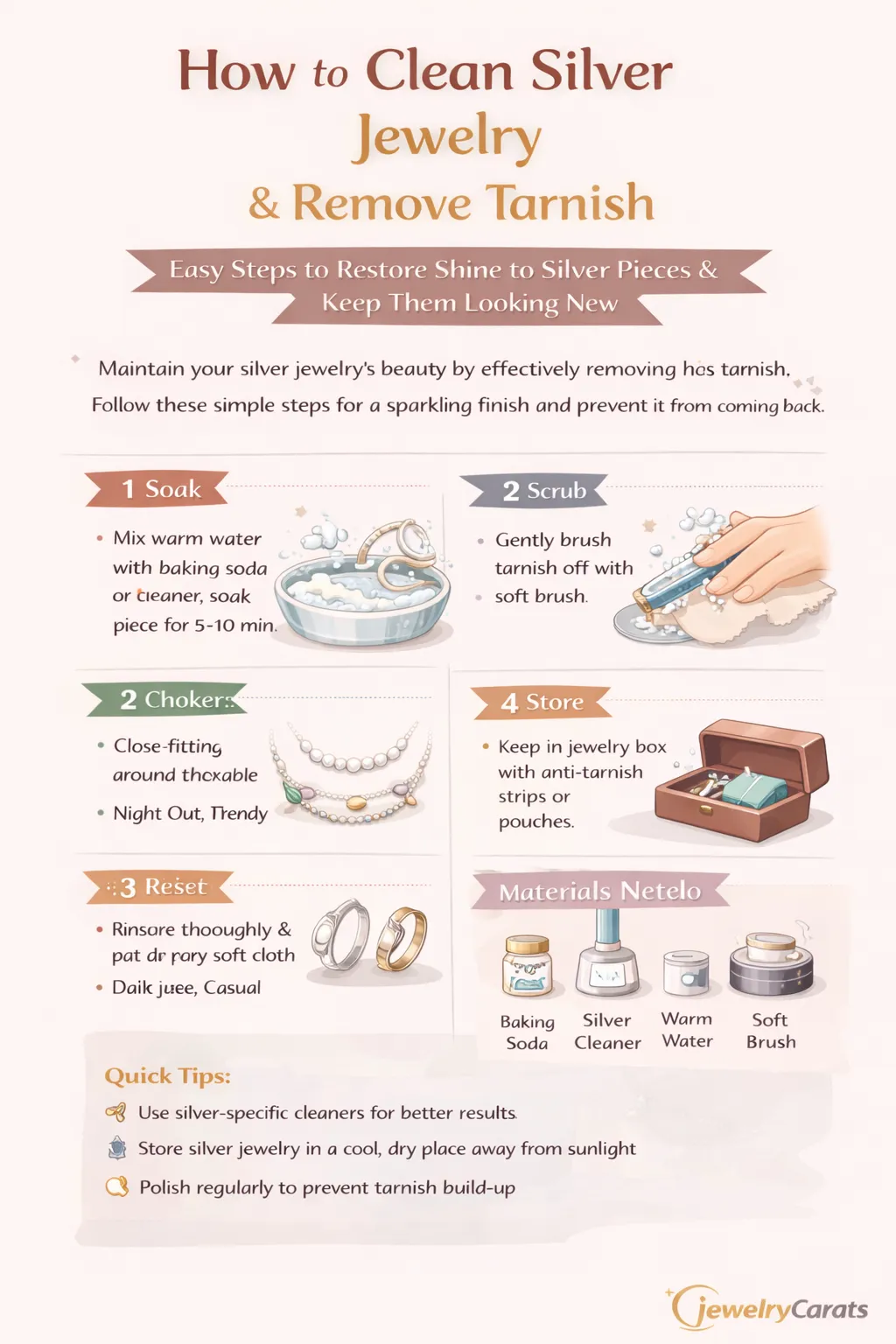
- Wash jewelry first: Use warm water and mild soap to remove oils and dirt. Pat dry completely with soft cloth.
- Rub with polishing cloth: Use straight back-and-forth motions, not circles (circular rubbing can create visible scratch patterns).
- Focus on tarnished areas: Apply gentle pressure to darkened spots. Don’t scrub vigorously—let the cloth do the work.
- Work in sections: For chains or complex pieces, work one area at a time for even results.
- Use clean section of cloth: As cloth darkens from removed tarnish, rotate to clean area for best results.
- Continue until shine returns: Most light tarnish removes in 2-5 minutes of gentle rubbing.
- Final wipe: Use clean soft cloth to remove any residue from polishing cloth.
Advantages:
- Safest method for all silver types including plated jewelry
- No risk of chemical damage to gemstones
- Deposits protective anti-tarnish coating
- Perfect for intricate pieces and jewelry with stones
- No water immersion required (safe for porous stones like turquoise)
Limitations:
- Less effective on heavy, thick tarnish layers
- Requires more time and effort than chemical methods
- Polishing cloths become saturated over time; need replacement
- Difficult to reach deep crevices in ornate designs
💡 Polishing Cloth Pro Tips:
- Never wash silver polishing cloths—washing removes the anti-tarnish treatment
- Cloths turn black from use; this is normal—they still work until fully saturated
- Replace polishing cloths every 6-12 months with regular use
- Store used cloths in sealed bag to prevent transferring tarnish-causing compounds
- For maximum shine, follow polishing cloth with buffing using clean microfiber
Method 2: Baking Soda Paste (Moderate Tarnish)
Why this method works: Baking soda is a mild abrasive that mechanically removes tarnish through gentle scrubbing action.
Step-by-Step Process:
- Create paste: Mix 3 parts baking soda with 1 part water in small bowl. Consistency should be thick paste, not runny.
- Apply to silver: Use soft cloth or clean fingers to apply paste to tarnished areas.
- Gentle circular rubbing: Rub paste in small circular motions for 2-3 minutes. Use light pressure—excessive force causes scratching.
- Focus on tarnished spots: Concentrate on darker areas while avoiding excessive rubbing on shiny surfaces.
- Rinse thoroughly: Rinse under warm running water for 30+ seconds, ensuring all paste residue is removed.
- Dry immediately: Pat completely dry with soft lint-free cloth. Don’t air dry—water spots form on silver.
- Final polish: Buff with clean microfiber cloth to restore full shine.
Advantages:
- Inexpensive and readily available
- Effective on moderate tarnish that polishing cloths can’t remove
- Gentle enough for regular use on sterling silver
- Non-toxic and safe for household use
Cautions and Limitations:
- Mildly abrasive—not recommended for silver-plated jewelry (can wear through plating)
- Don’t use on antique silver with intentional oxidized patina in recesses
- Avoid on silver with porous stones (turquoise, coral, pearl, opal)—paste gets stuck
- Not effective on heavily tarnished pieces—requires more aggressive method
- Excessive use can create micro-scratches, dulling silver over time
Method 3: Aluminum Foil & Baking Soda Bath (Heavy Tarnish)
Why this method works: This electrochemical reaction (called ion exchange) converts silver sulfide (tarnish) back to silver by transferring sulfur atoms to aluminum. The chemical reaction does the work—no scrubbing required.
The Science: When silver and aluminum contact in an electrolyte solution (baking soda water), electrons flow from aluminum to silver sulfide, reversing the tarnishing process. Tarnish literally transfers from silver to aluminum foil.
Step-by-Step Process:
- Line container: Use glass, plastic, or ceramic bowl. Line bottom completely with aluminum foil, shiny side UP. Foil must cover entire bottom.
- Prepare solution: Boil water. For each cup of boiling water, add 1 tablespoon baking soda + 1 tablespoon salt. Stir to dissolve.
- Pour into container: Pour hot solution over aluminum foil in bowl. Solution will bubble slightly—this is normal.
- Place silver on foil: Silver MUST touch aluminum foil for reaction to occur. If multiple pieces, ensure each contacts foil.
- Watch the magic: Within 2-10 minutes, tarnish visibly transfers to aluminum. Heavy tarnish may take longer.
- Check progress: If tarnish remains after 10 minutes, flip pieces to expose untouched areas to foil.
- Remove and rinse: Use tongs (water is hot). Rinse thoroughly under cool water.
- Dry completely: Pat dry immediately with soft cloth. Air drying causes water spots.
- Final buff: Polish with microfiber cloth for brilliant shine.
What You’ll See:
- Aluminum foil turns black as sulfur transfers from silver
- Solution may smell slightly sulfurous (like rotten eggs)—this indicates reaction is working
- Bubbling and fizzing during process is normal
- Silver brightens dramatically, sometimes instantly
Advantages:
- Extremely effective on heavy, stubborn tarnish
- No physical scrubbing required—gentle on silver
- Fast results—most tarnish removes in 5-10 minutes
- Works on intricate designs where polishing can’t reach
- Inexpensive materials available in every household
⚠️ CRITICAL RESTRICTIONS – Aluminum Foil Method:
- NEVER use on silver with gemstones: Damages pearls, opals, turquoise, amber, coral, and most porous stones
- NEVER use on silver-plated jewelry: Can loosen or damage plating
- NEVER use on antique silver with oxidized details: Removes intentional darkening in decorative recesses
- Avoid on silver with glued components: Hot water loosens adhesives
- Don’t use on pieces with enamel: Heat and chemicals can damage enamel work
When in doubt about gemstones or construction, use polishing cloth method instead.
Method 4: Commercial Silver Polish (Professional Results)
Recommended products: Wright’s Silver Cream, Hagerty Silver Polish, Weiman Silver Polish—all contain similar cleaning compounds with mild abrasives.
Step-by-Step Process:
- Wash first: Clean silver with soap and water, then dry completely. Polish works best on clean surface.
- Apply small amount: Use soft cloth to apply thin layer of polish to tarnished areas. A little goes a long way.
- Rub in circles: Use gentle circular motions, allowing polish to work for 30-60 seconds on heavy tarnish.
- Buff away tarnish: As you rub, tarnish transfers to cloth (cloth will darken). Continue until silver brightens.
- Rinse thoroughly: Rinse under warm water to remove all polish residue. Polish left on silver can cause new tarnish.
- Dry immediately: Pat completely dry with soft cloth.
- Final buffing: Use clean dry cloth for mirror-like shine.
Advantages:
- Professional-quality results at home
- Effective on stubborn tarnish that other methods can’t remove
- Often contains tarnish-prevention compounds for longer-lasting shine
- Works on intricate designs and hard-to-reach areas
Limitations and Cautions:
- Contains mild abrasives—don’t use excessively (removes microscopic silver)
- Not recommended for silver-plated jewelry (wears through plating over time)
- Must be rinsed completely—residue attracts new tarnish
- Some polishes contain ammonia—avoid on silver with certain gemstones
- More expensive than home remedies
Method 5: Ultrasonic Cleaner (For Experienced Users)
How it works: High-frequency sound waves create microscopic bubbles that implode, dislodging dirt and light tarnish from silver surface and crevices.
Safety for silver: Ultrasonic cleaning is generally safe for solid sterling silver pieces WITHOUT gemstones or delicate construction.
Process:
- Fill ultrasonic cleaner with water and drop of mild dish soap
- Place silver jewelry in basket (don’t overcrowd)
- Run for 3-5 minute cycle
- Rinse jewelry thoroughly under running water
- Dry completely with soft cloth
When ultrasonic is safe:
- Plain sterling silver chains, bangles, cuffs
- Solid silver pieces with secure construction
- Silver with diamonds or sapphires in secure settings (inspect first)
NEVER use ultrasonic on:
- Silver with pearls, opals, emeralds, turquoise, coral (will damage stones)
- Antique silver with fragile construction or solder joints
- Silver-plated jewelry (vibrations can loosen plating)
- Pieces with glued components or assembled parts
- Oxidized silver with intentional dark patina
Cleaning Silver Jewelry with Gemstones
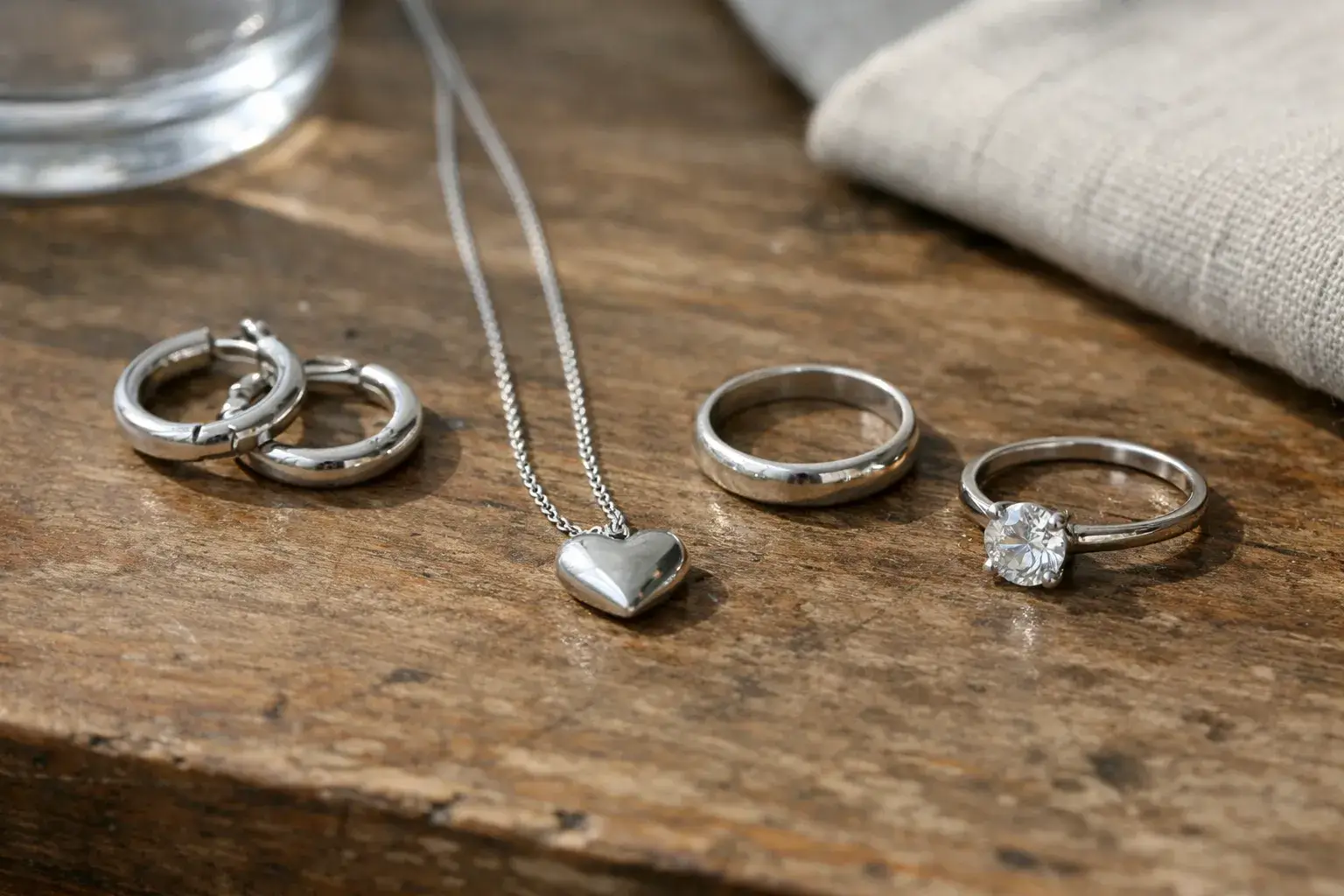
Silver jewelry often features gemstones that require special consideration during cleaning.
Gemstone-Safe Silver Cleaning
| Gemstone | Safe Methods | Never Use |
|---|---|---|
| Diamonds | All methods safe if stone is secure | Only if stone is loose or damaged |
| Sapphires, Rubies | Polishing cloth, gentle wash, commercial polish | Ultrasonic if heavily included |
| Turquoise | Dry polishing cloth ONLY | Water, chemicals, ultrasonic, foil method |
| Pearls | Barely damp cloth on silver only; never touch pearl | All water immersion, chemicals, abrasives |
| Opals | Dry cloth only | Any water exposure, heat, chemicals |
| Amber, Coral | Dry cloth only | Water, chemicals, abrasives, ultrasonic |
Special Technique for Silver with Delicate Stones
When silver jewelry contains pearls, opals, turquoise, or other vulnerable gemstones:
- Use polishing cloth on silver parts only: Carefully polish silver setting while completely avoiding gemstone surface
- Q-tip precision: For tight spaces, wrap polishing cloth around Q-tip to reach silver near stones without touching them
- Never immerse: No water exposure for the entire piece—dry cleaning methods only
- Professional cleaning recommended: For valuable pieces with delicate stones, consider jeweler cleaning
Removing Tarnish from Antique Silver Jewelry
Antique silver pieces require extra caution to preserve both value and historical integrity.
Why Antique Silver Needs Special Care
- Intentional patina: Many antique pieces have darkened recesses (oxidation) as part of the design—this should be preserved
- Fragile construction: Old solder joints may be weak; aggressive cleaning can break pieces
- Soft alloys: Antique silver often uses softer alloys more susceptible to scratching
- Historical value: Over-cleaning can reduce collectible value of antique pieces
- Delicate filigree: Intricate Victorian-era work easily damaged by harsh methods
Safe Antique Silver Cleaning Method
- Assess the piece: Determine if darkening is tarnish (uniform blackening) or intentional patina (dark in decorative recesses only)
- Use gentlest method: Start with dry polishing cloth only
- Preserve oxidized areas: If piece has intentional dark details in engravings or recesses, avoid those areas entirely
- Light touch only: Barely polish high points that should be bright; don’t scrub
- Never use aluminum foil method: Removes all darkening including desirable patina
- Consider professional restoration: For valuable antiques, consult specialist in antique silver
📚 Identifying Intentional Patina vs. Tarnish:
- Intentional patina: Dark areas in engraved details, recessed patterns, or decorative elements that create contrast with bright silver
- Tarnish: Uniform darkening across entire piece, including flat surfaces and high points
- Rule of thumb: If darkening enhances the design by creating depth and definition, it’s likely intentional and should be preserved
Preventing Silver Tarnish: Long-Term Care Strategies
Prevention dramatically reduces cleaning frequency and preserves silver beauty.
Storage Solutions for Tarnish Prevention
- Anti-tarnish strips or tabs: Place in jewelry box or storage container; absorb sulfur from air (replace every 3-6 months)
- Anti-tarnish bags: Treated fabric bags prevent air exposure; ideal for individual pieces
- Ziplock bags with air removed: Budget option—remove air before sealing to limit sulfur exposure
- Silver storage boxes: Lined with tarnish-resistant fabric; separate compartments prevent scratching
- Chalk in storage: Plain white chalk absorbs moisture that accelerates tarnish
- Silica gel packets: Control humidity in storage containers
Daily Habits That Prevent Tarnish
- Wear your silver regularly: Skin oils actually slow tarnishing; frequently-worn silver tarnishes less
- Remove before washing hands: Soap residue accelerates tarnish
- Apply cosmetics before jewelry: Perfumes, hairspray, lotions contain tarnish-causing compounds
- Take off before swimming: Chlorine rapidly tarnishes silver
- Wipe after wearing: Quick wipe with soft cloth removes oils that cause tarnish
- Avoid rubber band storage: Rubber contains sulfur; never use rubber bands on silver
Materials to Keep Away from Silver
- Rubber bands and latex gloves
- Wool clothing (store silver away from wool)
- Newspaper (ink contains sulfur)
- Certain foods: eggs, onions, mustard, mayonnaise
- Household chemicals and cleaning products
What NOT to Do When Cleaning Silver
Dangerous Silver Cleaning Methods to Avoid
- Commercial silver dip solutions: While effective, they remove microscopic silver layers with each use. Over time, details blur and metal thins. Use only as last resort.
- Toothpaste: Too abrasive; creates micro-scratches that dull silver finish permanently
- Harsh chemicals: Bleach, ammonia, acetone damage silver and many gemstones
- Boiling in solution: Extreme heat can warp silver and crack gemstones
- Steel wool or abrasive pads: Create deep scratches requiring professional polishing to remove
- Dishwasher: Detergent is too harsh; heat can damage silver and loosen stones
Common Silver Cleaning Mistakes
- Over-polishing: Excessive polishing removes silver. Limit polishing to when actually needed.
- Using dirty cloths: Dirt particles on cloth scratch silver; use clean cloths always
- Cleaning over open drain: Many pieces lost this way; use bowl or plug sink
- Air drying: Causes water spots; always pat dry immediately after wet cleaning
- Ignoring gemstones: What works for plain silver can destroy gemstones; always verify stone safety
- Cleaning valuable antiques without research: Can destroy historical patina and reduce value
When to Seek Professional Silver Cleaning
Professional jewelers have tools and expertise for situations beyond home care capabilities.
Signs You Need Professional Help
- Heavy tarnish on silver with gemstones: Jewelers can clean silver without risking stone damage
- Antique or valuable pieces: Professional assessment prevents accidental value reduction
- Severely tarnished silver-plated items: Requires expert touch to avoid wearing through plating
- Silver with damaged areas: Weak spots need repair before cleaning
- Pieces with intricate designs: Professional ultrasonic or steam cleaning reaches areas impossible at home
Professional Silver Services
- Deep ultrasonic cleaning: More powerful than home units; safe for appropriate pieces
- Professional buffing and polishing: Restores mirror finish to heavily scratched silver
- Re-oxidizing services: Restores intentional dark patina to antique pieces
- Silver re-plating: For silver-plated pieces where plating has worn through
Final Thoughts: Silver Care as a Lifestyle
Silver jewelry maintenance doesn’t have to be difficult or time-consuming. The key is consistency: regular gentle cleaning prevents the need for aggressive tarnish removal. A quick wipe with a polishing cloth after wearing, combined with proper storage, keeps silver brilliant with minimal effort.
Remember that tarnish is not damage—it’s a reversible surface reaction. Even heavily blackened silver can be restored to sparkling perfection with appropriate methods. Choose your cleaning technique based on your specific jewelry: plain sterling silver tolerates more aggressive methods, while silver with gemstones or plating requires gentle care.
By understanding tarnish causes and prevention strategies, you transform silver care from a frustrating chore into simple maintenance that preserves your jewelry’s beauty for generations.