
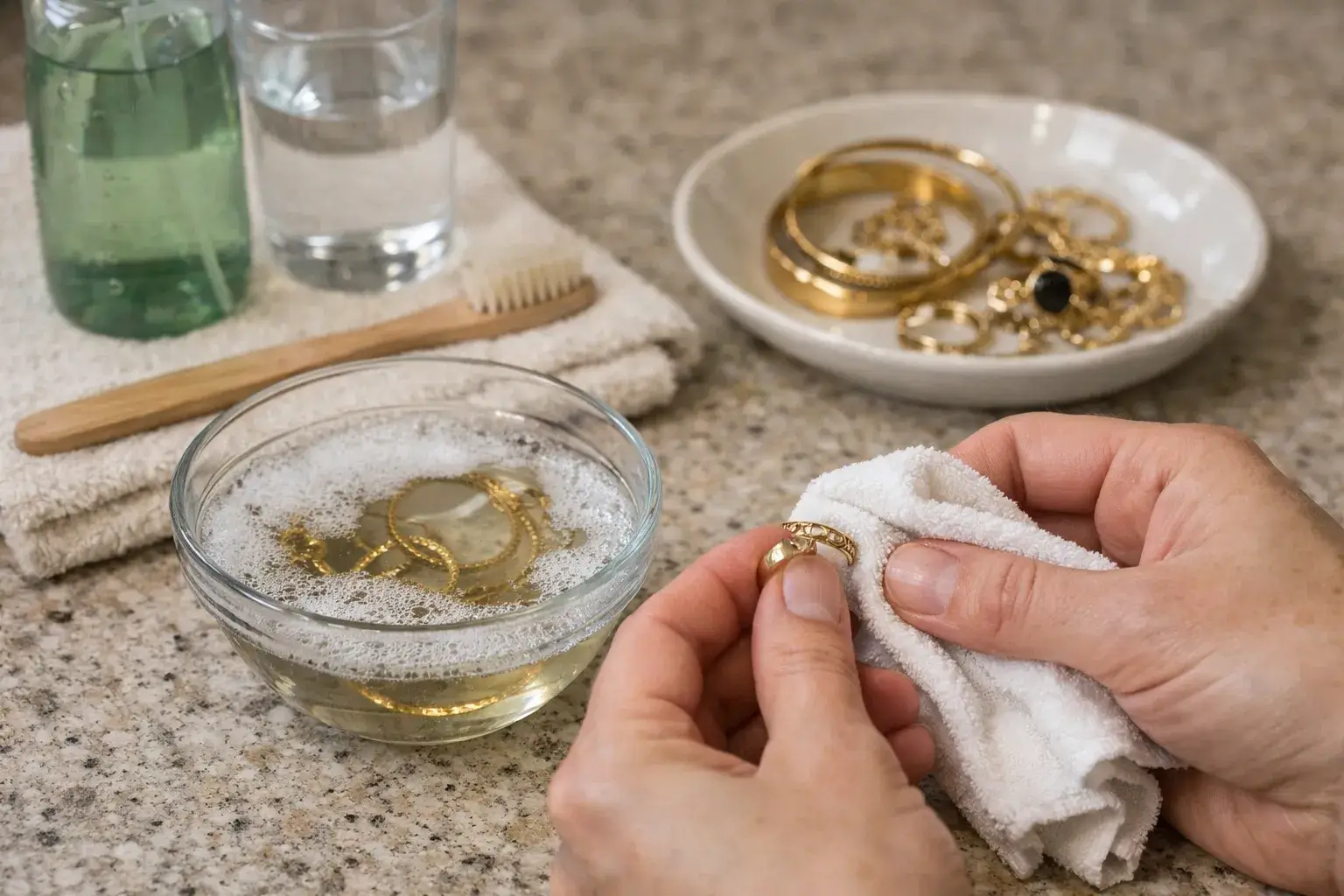
Gold jewelry maintains its beauty for centuries with proper care, but dailywear accumulates oils, lotions, dirt, and cosmetics that dull its natural luster. Learning professional cleaning techniques allows you to restore your gold pieces to sparkling perfection safely at home—without expensive jeweler visits or harsh chemicals that risk damage.
This comprehensive guide covers proven methods for cleaning every type of gold jewelry, from simple gold chains to complex diamond-set pieces, with specific techniques for different karat weights and gemstone combinations.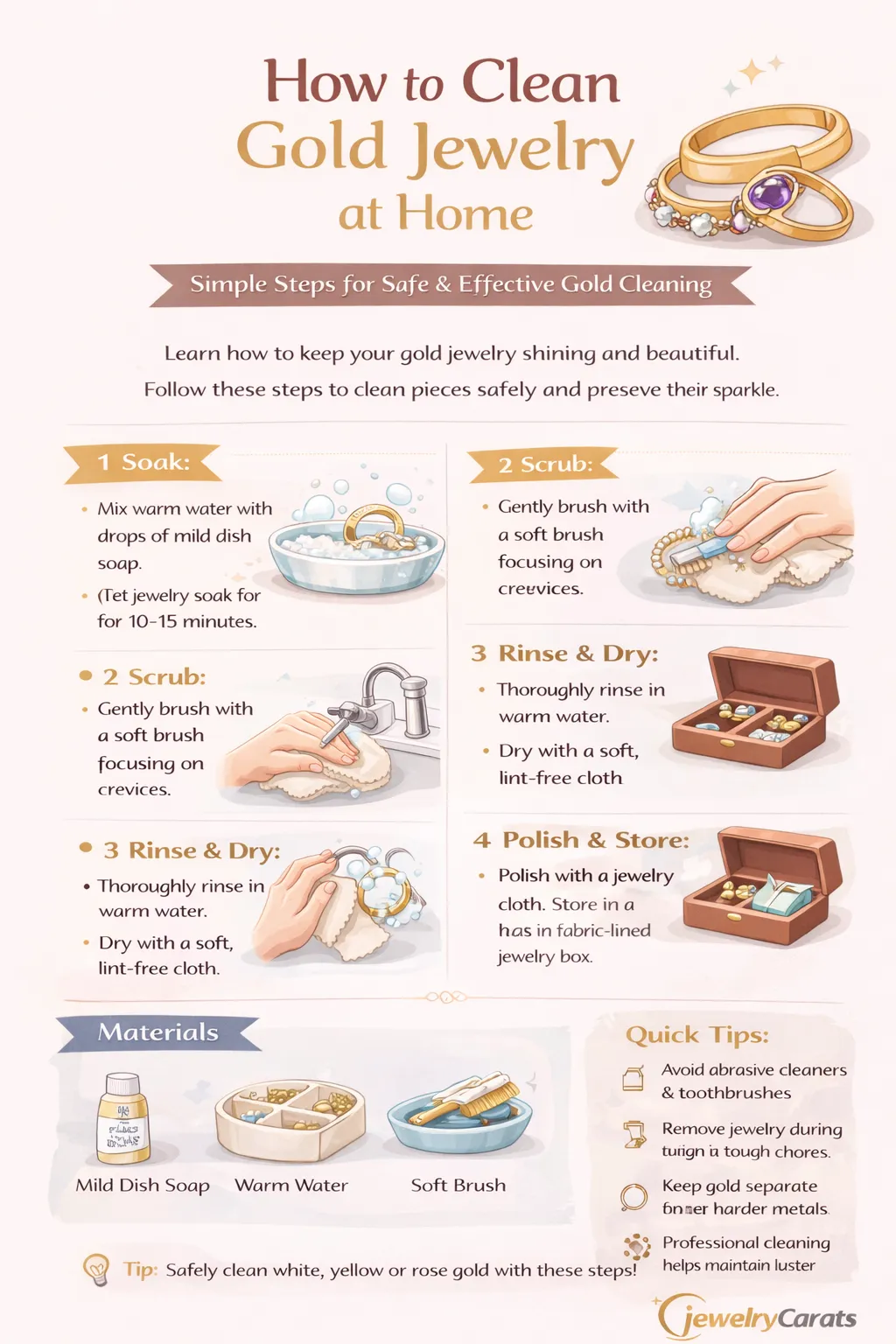
Understanding Gold Before You Clean
Gold’s purity and alloy composition determine appropriate cleaning methods. Pure gold (24K) is soft and requires gentler treatment than alloyed gold (10K-18K), which contains harder metals like copper, silver, or zinc.
Gold Purity & Cleaning Considerations
| Karat | Gold Content | Characteristics | Cleaning Approach |
|---|---|---|---|
| 24K Gold | 99.9% pure | Very soft, scratches easily, never tarnishes | Extra gentle cleaning, soft cloths only |
| 22K Gold | 91.7% pure | Soft, limited tarnish resistance | Gentle cleaning, avoid abrasive materials |
| 18K Gold | 75% pure | Durable, excellent tarnish resistance | Standard cleaning methods safe |
| 14K Gold | 58.3% pure | Very durable, good tarnish resistance | All standard cleaning methods safe |
| 10K Gold | 41.7% pure | Most durable, slight tarnish possible | Tolerates vigorous cleaning |
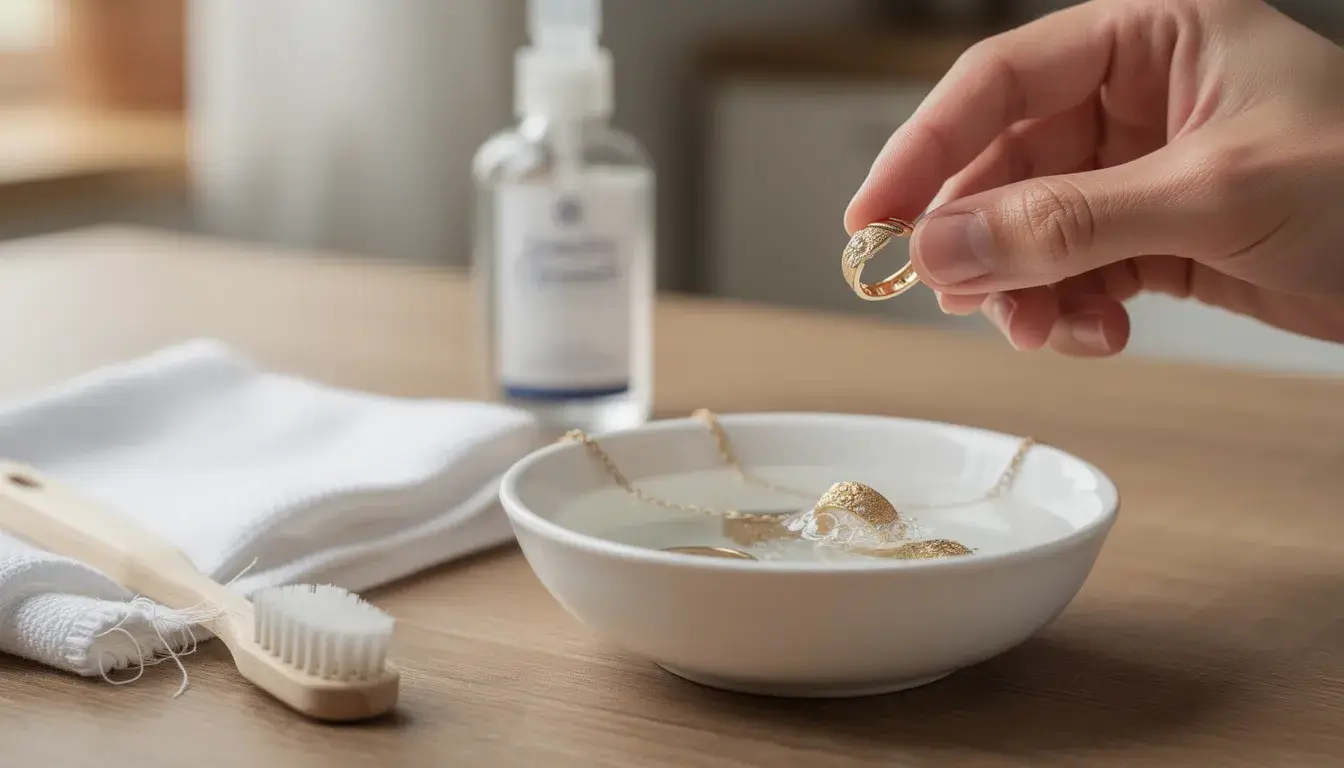
Gold Color Variations & Alloy Differences
- Yellow Gold: Traditional gold color, alloyed with silver and copper. Most forgiving for home cleaning.
- White Gold: Alloyed with palladium or nickel, rhodium-plated for white appearance. Requires gentler cleaning to preserve rhodium layer.
- Rose Gold: Contains higher copper content for pink color. Copper can darken with harsh chemicals—use mild solutions only.
⚠️ Before You Begin: Inspect jewelry for loose stones, damaged prongs, or weak solder joints before cleaning. Submerging damaged pieces in water can worsen problems or cause stone loss. If you notice any damage, seek professional repair before cleaning.
Essential Supplies for Cleaning Gold Jewelry
Having the right tools ensures effective cleaning without damage. Most supplies are inexpensive household items.
Basic Cleaning Kit:
- Mild dish soap: Dawn or similar (no moisturizers, degreasers, or antibacterial additives)
- Warm water: Not hot (can loosen stone settings); not cold (less effective)
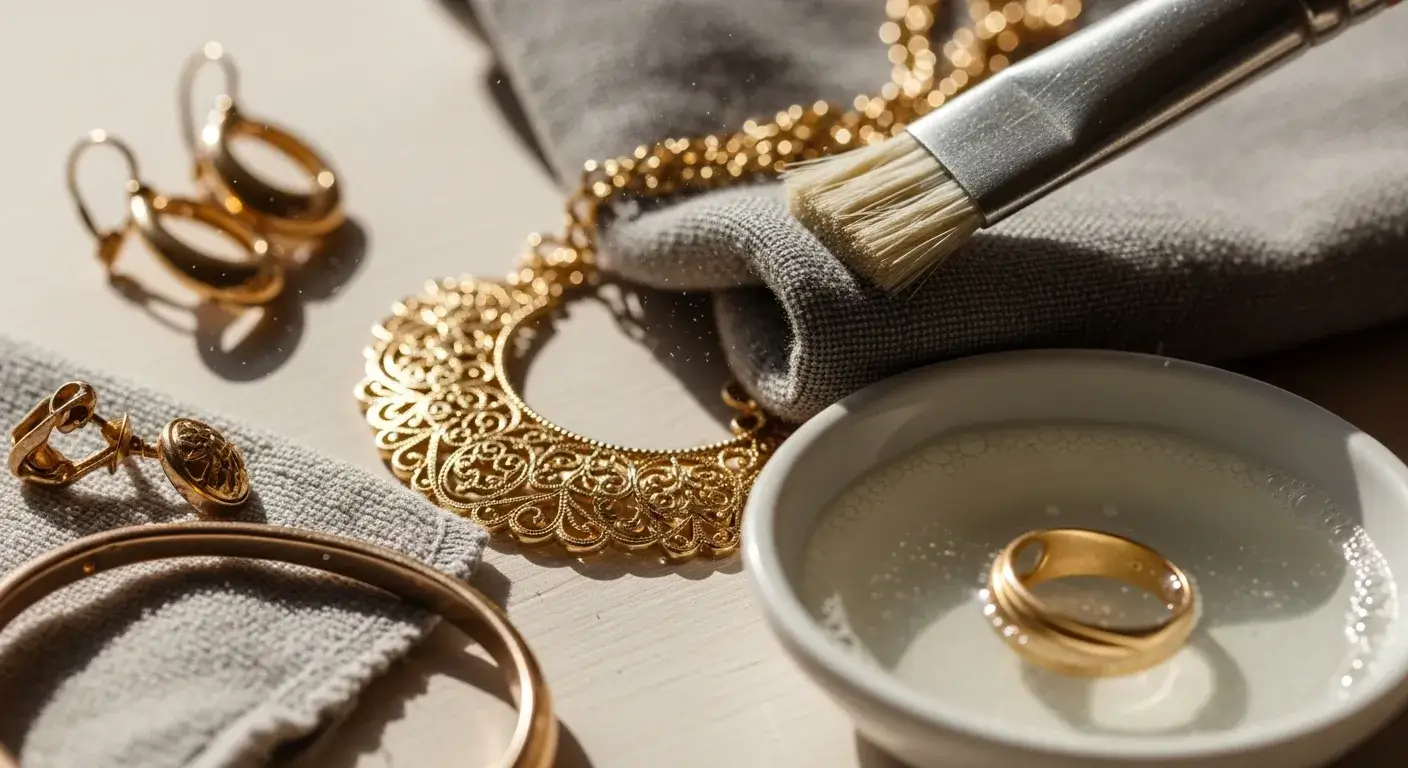
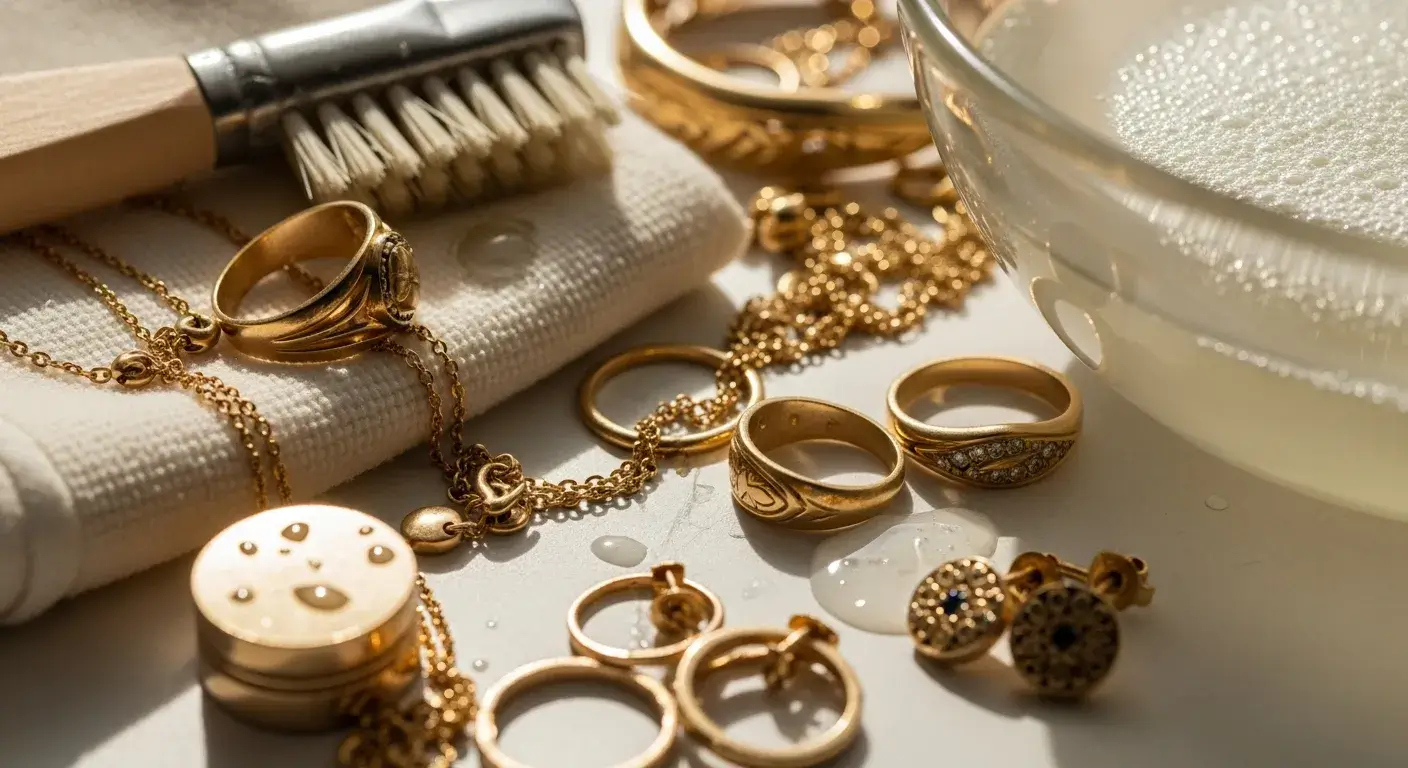
- Small bowl: Glass or ceramic, dedicated to jewelry cleaning
- Soft-bristled brush: Baby toothbrush or dedicated jewelry brush
- Lint-free cloths: Microfiber or cotton (no paper towels—they scratch)
- Strainer or mesh: Prevents jewelry from going down drain during rinsing
The Basic Gold Cleaning Method: Soap & Water
This gentle, effective method works for 95% of gold jewelry cleaning needs. It’s safe for all karat weights and most gemstone combinations.
Fill small bowl with 1 cup warm (not hot) water. Add 3-4 drops of mild dish soap. Swirl gently to mix—don’t create excessive suds.
Place gold jewelry in solution. Soak for 15-30 minutes. This loosens oils, dirt, and cosmetic buildup without scrubbing. For heavily soiled pieces, soak up to 40 minutes.
Use soft-bristled brush to clean under and around stone settings, chain links and crevices, textured or engraved surfaces, and behind prongs and bezels. Brush gently—vigorous scrubbing can scratch gold or loosen stones.
Rinse under warm running water over a strainer or mesh. Ensure all soap residue is removed—soap film dulls gold and stones. Rinse for at least 30 seconds per piece.
Pat dry with lint-free cloth. Don’t rub vigorously (can cause micro-scratches). Let air dry for 10-15 minutes before storing or wearing to ensure complete moisture removal.
Use jewelry polishing cloth to restore maximum shine. Rub gently in straight lines, not circles. This removes any remaining film and brings out gold’s natural luster.
💡 Cleaning Frequency:
- Daily-wear pieces (rings, bracelets): Weekly with soap and water
- Occasional-wear pieces (necklaces, earrings): Every 2-4 weeks
- Special occasion pieces: Before each wearing
- Professional deep cleaning: Every 6-12 months
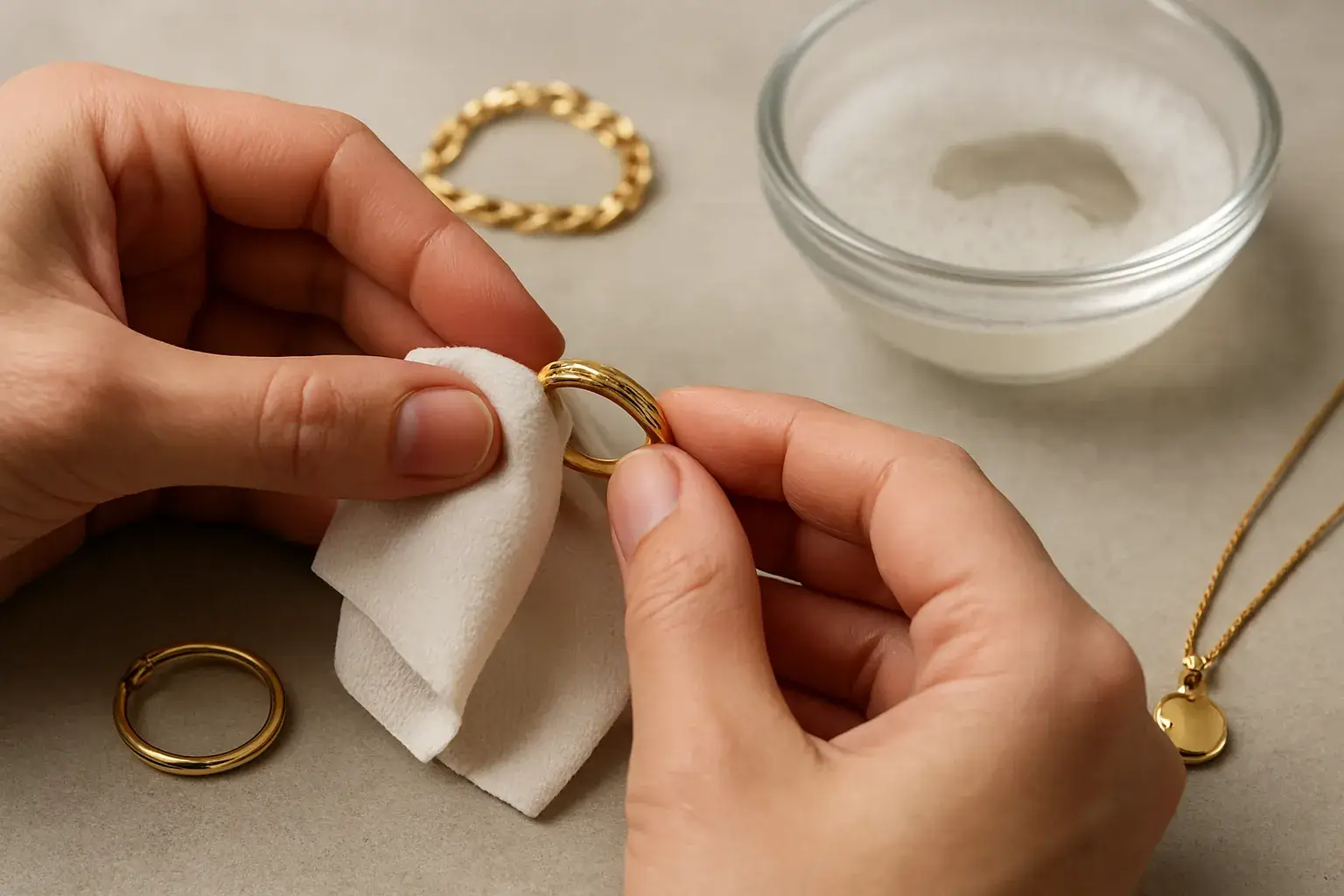
Deep Cleaning Gold Jewelry with Diamonds
Diamonds are extremely durable and tolerate more aggressive cleaning than other gemstones. This method restores maximum brilliance to diamond jewelry.
The Ammonia Deep Clean Method
When to use: Monthly or when diamonds appear cloudy or dull despite regular soap cleaning.
Safe for: Natural diamonds in secure gold settings with no damage or loose stones.
Never use on: Treated diamonds (fracture-filled, clarity-enhanced), colored gemstones, pearls, or opals.
Step-by-Step Ammonia Cleaning:
- Prepare solution: Mix 1 part household ammonia with 6 parts water in well-ventilated area. Use glass bowl.
- Soak jewelry: Submerge diamond jewelry for 30-40 minutes. Ammonia cuts through oils and restores diamond brilliance.
- Gentle brushing: Use soft brush to clean under diamond settings and around prongs. Focus on pavilion (bottom) of diamonds where oils accumulate.
- Rinse extensively: Rinse under running water for 1-2 minutes. Ammonia residue can irritate skin and dull metal finish.
- Dry and inspect: Pat dry, then examine diamonds in bright light. Properly cleaned diamonds show intense fire (rainbow flashes) and brilliance.
⚠️ Ammonia Safety Precautions:
- Use in well-ventilated area or near open window
- Don’t inhale fumes directly—ammonia irritates respiratory system
- Wear gloves if you have sensitive skin
- Never mix ammonia with other cleaners (especially bleach—creates toxic gas)
- Store ammonia in original container, away from children and pets
Cleaning Gold with Colored Gemstones
Colored gemstones require careful consideration. Many are softer than diamonds and vulnerable to chemicals, heat, and prolonged water exposure.
Gemstone Safety Guide
| Gemstone Type | Safe Cleaning Method | Never Use |
|---|---|---|
| Rubies & Sapphires | Soap and water, gentle brushing, can soak | Avoid only if fracture-filled or heavily included |
| Emeralds | Damp cloth only, no soaking, no brushing gemstone | Water immersion, ultrasonic, steam, chemicals |
| Aquamarine, Topaz | Soap and water, gentle brushing | Harsh chemicals, ultrasonic if included |
| Opals | Dry soft cloth only, occasional damp wipe | Any water immersion, chemicals, prolonged moisture |
| Pearls | Barely damp soft cloth immediately after wearing | Any water, soap, chemicals, brushing, ultrasonic |
| Turquoise, Coral | Dry soft cloth only | Water, chemicals, ultrasonic, heat |
✨ Why Emeralds Need Special Care: Emeralds have natural fissures (cracks) that jewelers fill with oil or resin to improve clarity and appearance. Water exposure, heat, and ultrasonic vibrations remove these treatments, making fissures visible and the stone appear cloudy. Always treat emerald jewelry with extreme gentleness and minimal water contact.
What NOT to Do When Cleaning Gold
Never Use These on Gold:
- Chlorine bleach: Causes pitting, discoloration, weakens solder joints permanently
- Toothpaste: Too abrasive—scratches gold and damages gemstones despite popular myth
- Paper towels: Wood fibers scratch gold surface—use soft cloths only
- Harsh chemicals: Acetone, paint thinner, harsh degreasers damage gold and stones
- Abrasive materials: Steel wool, scouring pads, abrasive sponges scratch deeply
When to Seek Professional Gold Jewelry Cleaning
Professional cleaning provides benefits home care can’t match.
Professional Services Include:
- Ultrasonic deep cleaning: Removes embedded dirt home methods miss
- Steam cleaning: For diamonds and durable stones in gold settings
- Prong inspection and tightening: Prevents stone loss
- Polish and buff: Removes scratches and restores mirror finish
- Rhodium re-plating: For white gold pieces showing yellow areas
Final Thoughts on Gold Jewelry Care
Regular, gentle cleaning maintains gold’s natural beauty while preventing damage and costly repairs. The simple soap-and-water method handles 95% of cleaning needs safely and effectively. Reserve stronger methods for specific situations, always prioritizing gemstone safety.
Remember: cleaning reveals problems it doesn’t create them. If you discover loose stones, thin prongs, or unusual wear during cleaning, seek professional help immediately. The few minutes invested in regular gentle cleaning preserves your gold jewelry’s beauty and value for generations—transforming everyday pieces into future heirlooms.