
What Is Platinum? The Precious White Metal
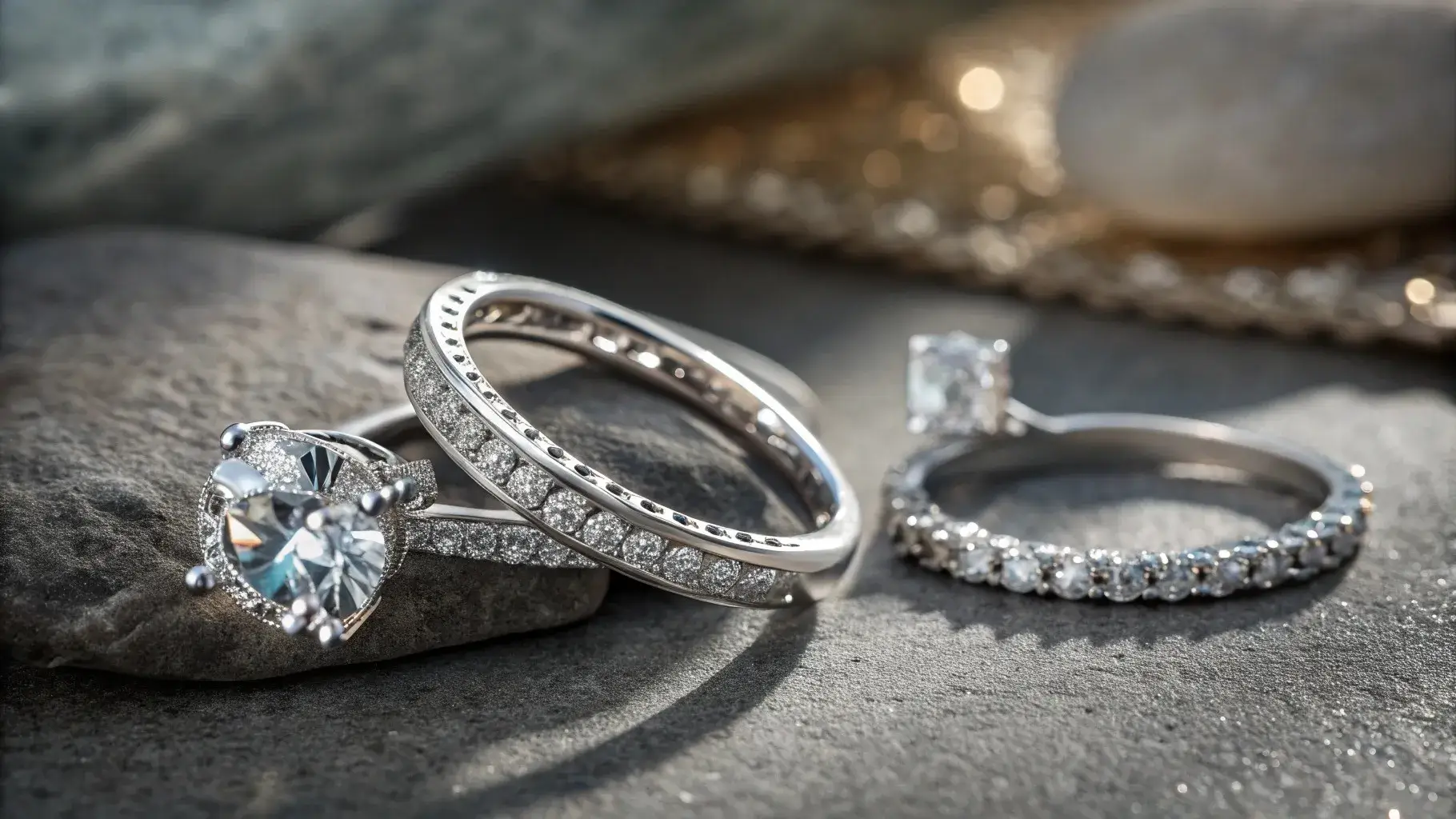
Platinum is a naturally white precious metal, denser and rarer than gold. It belongs to the platinum group metals (PGMs), which includes platinum, palladium, rhodium, ruthenium, iridium, and osmium.
Platinum’s Unique Properties
Natural white color: Unlike white gold (which is yellow gold alloyed with white metals), platinum is naturally bright white. It never needs re-plating to maintain color.
Extreme density: Platinum is 60% denser than gold. A platinum ring feels noticeably heavier than an identical gold ring.
Hypoallergenic: Platinum rarely causes allergic reactions, making it ideal for sensitive skin.
Durability: Platinum is extremely durable. It doesn’t chip or wear away—it displaces when scratched, maintaining its mass.
Rarity: Platinum is 30 times rarer than gold. Annual platinum production is a tiny fraction of gold production.
Why Platinum for Jewelry?
Jewelers choose platinum for several reasons:
- Secure settings: Platinum’s strength holds diamonds and gemstones securely
- Prestigious: Associated with luxury and high-end jewelry
- Pure appearance: Natural white color enhances diamonds
- Longevity: Platinum jewelry lasts generations without losing metal
- No maintenance: Unlike white gold, doesn’t need re-plating
Platinum Purity Marks: Understanding the Numbers
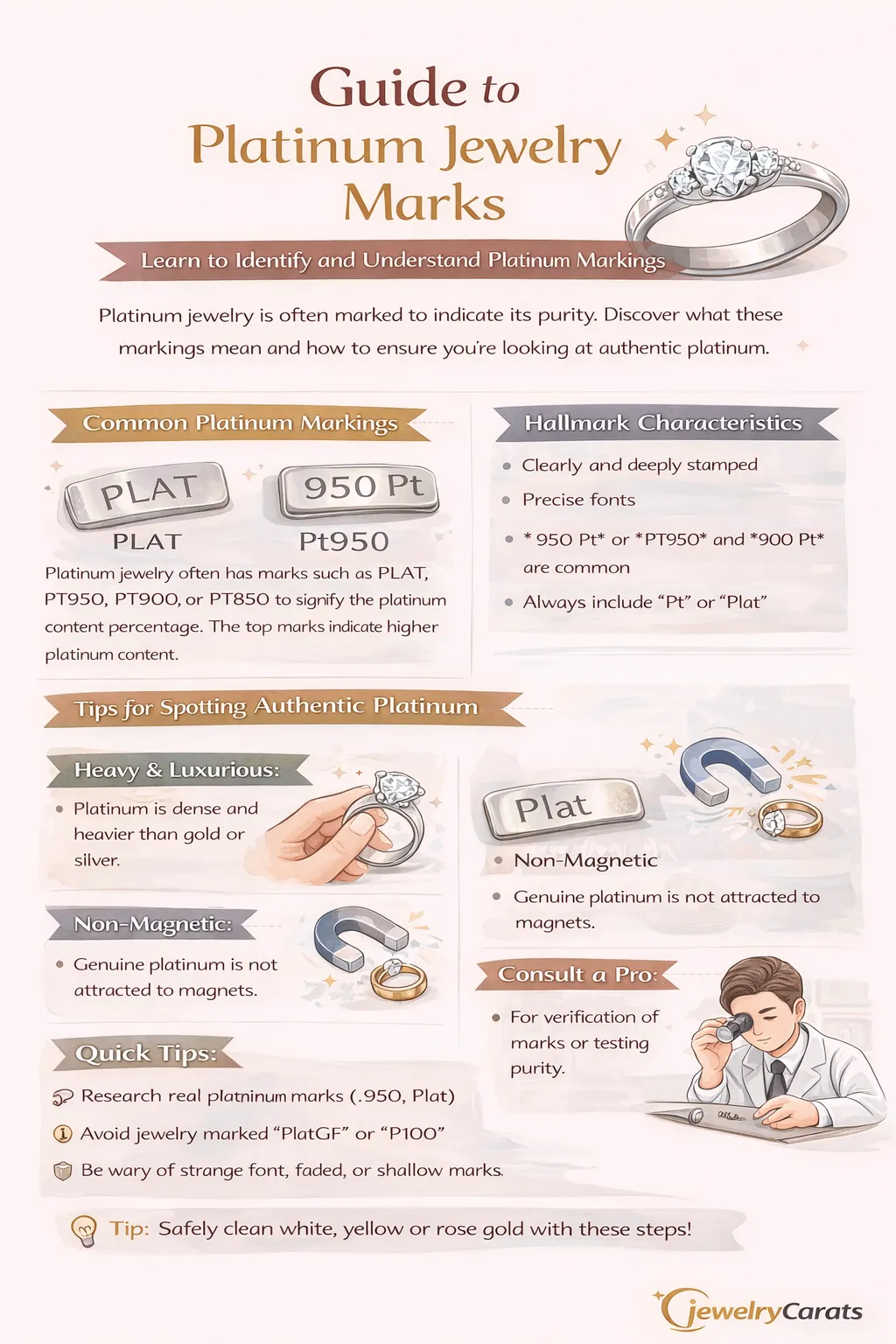
Platinum uses the millesimal fineness system—three-digit numbers representing parts per thousand of pure platinum.
950 Platinum (Most Common)
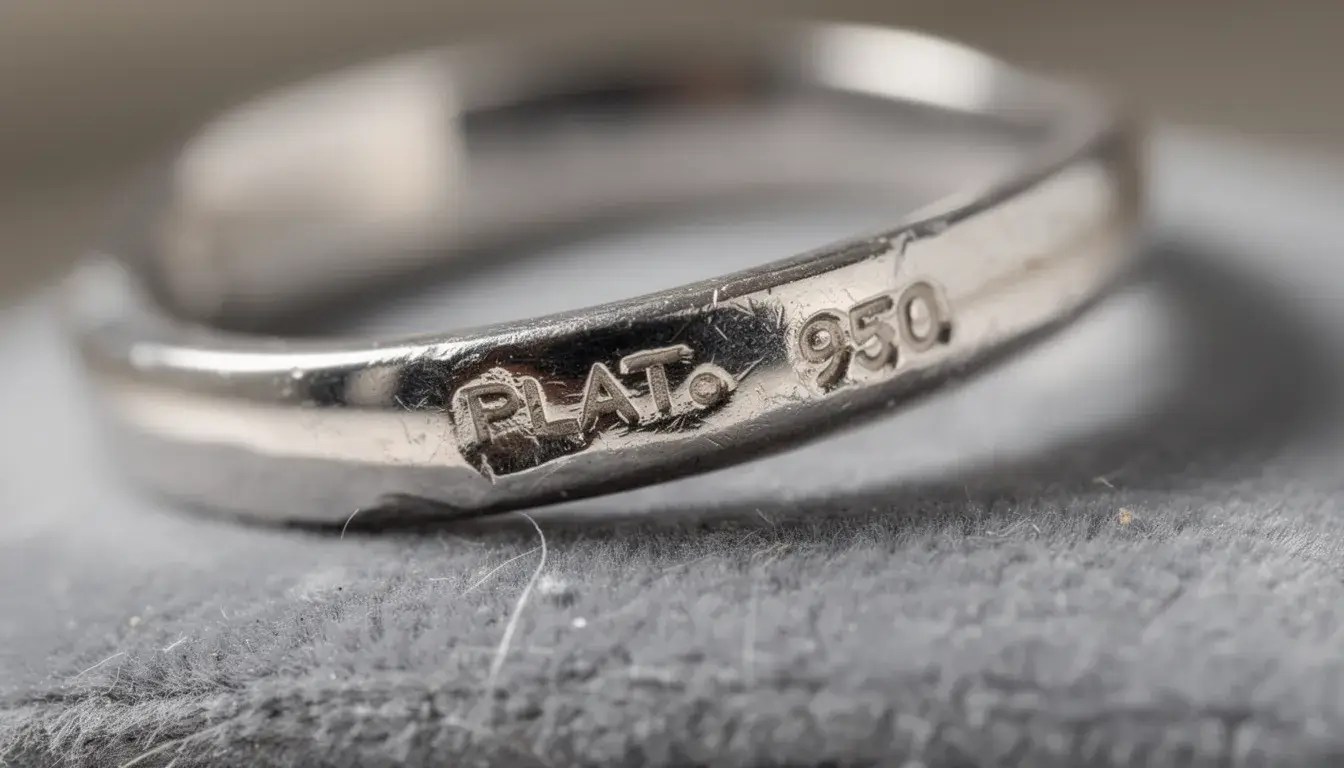
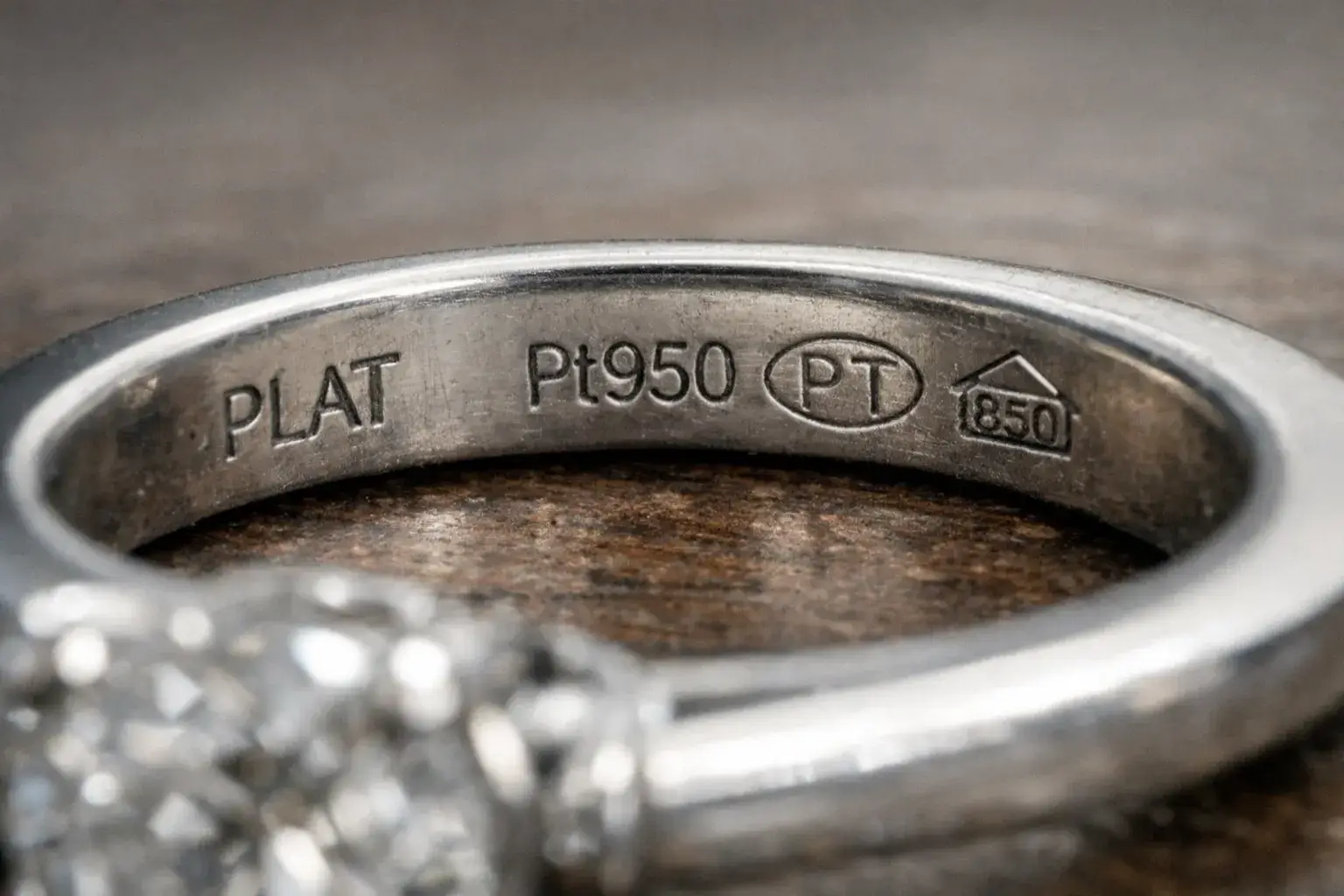
Mark variations: 950, PLAT950, PT950, or “950 PLAT”
Purity: 95% pure platinum, 5% alloy metals (usually ruthenium, iridium, or cobalt)
Standard: This is the international standard for platinum jewelry
Characteristics:
- Excellent balance of purity and durability
- Strong enough for daily wear
- Retains platinum’s natural properties
- Used for engagement rings, wedding bands, fine jewelry
Why 950? The 5% alloy content provides just enough hardness for jewelry use while maintaining 95% precious metal purity—much higher than gold jewelry standards (14K = 58.5%, 18K = 75%).
900 Platinum
Mark variations: 900, PT900, PLAT900
Purity: 90% pure platinum, 10% alloy metals
Use: Less common, primarily in some European and Asian markets
Characteristics:
- Slightly harder than 950 platinum
- Still considered high purity
- Less expensive than 950 due to lower platinum content
850 Platinum (Rare)
Mark variations: 850, PT850
Purity: 85% pure platinum, 15% alloy metals
Use: Uncommon, mainly vintage pieces or specific applications
Note: Some countries require minimum 90% or 95% to be marked “platinum,” making 850 rare or non-compliant in those markets.
Word Marks
In addition to numbers, platinum jewelry may be marked with words:
- PLATINUM: Indicates platinum metal, typically 95% purity
- PLAT: Abbreviated form, usually 95% purity
- PT: Chemical symbol for platinum
- PLATINIUM: Misspelling—be cautious, may indicate fake
Important: In the United States, items marked “Platinum,” “PLAT,” or “PT” without a number must be at least 95% pure platinum (950). Lower purities must include the number (e.g., “900 PLAT”).
Platinum Mark Reference Table
| Mark | Purity | Common Use | Notes |
|---|---|---|---|
| 950, PLAT950, PT950 | 95% | Standard jewelry | Most common |
| 900, PT900 | 90% | Some jewelry | Less common |
| 850, PT850 | 85% | Vintage pieces | Rare |
| PLATINUM, PLAT, PT | 95% (US) | Word marks | Minimum 950 in US |
Platinum vs. White Gold: Critical Differences
Platinum and white gold look similar but are completely different metals. Understanding the differences prevents confusion and overpaying.
Appearance Comparison
| Feature | Platinum | White Gold |
|---|---|---|
| Natural color | Naturally white | Yellowish-gray (gold mixed with white metals) |
| Surface treatment | None needed | Rhodium-plated for whiteness |
| Color stability | Permanent white | Plating wears off, needs re-plating every 1-3 years |
| Brightness | Softer white-gray | Bright white (when freshly plated) |
Physical Properties
| Property | Platinum | White Gold |
|---|---|---|
| Weight | Very heavy (dense) | Lighter |
| Density | 21.45 g/cm³ | 15-16 g/cm³ (varies by karat) |
| Durability | Extremely durable, displaces when scratched | Durable, but metal wears away over time |
| Allergies | Hypoallergenic | May cause reactions (nickel in some alloys) |
Marks: How to Tell Them Apart
Platinum marks:
- 950, 900, 850
- PLAT, PT, PLATINUM
- No “K” or karat marks
White gold marks:
- 10K, 14K, 18K (US)
- 417, 585, 750 (Europe)
- May include “WG” (white gold)
- Never says “PLAT” or “PT”
Key identifier: If it says “14K” or “18K,” it’s white gold, NOT platinum. If it says “950” or “PLAT,” it’s platinum, NOT white gold.
Price Comparison
Example: Engagement ring, same design
- Platinum 950: $2,000-$3,000 for setting
- 18K White Gold: $1,200-$1,800 for setting
- 14K White Gold: $900-$1,400 for setting
Platinum typically costs 40-60% more than white gold for the same piece due to rarity, density (more metal needed), and higher purity.
When to Choose Platinum vs. White Gold
Choose Platinum if:
- You want the best and most durable option
- You have metal allergies or sensitive skin
- You want natural white color without maintenance
- You prefer weight and heft in jewelry
- Budget allows for premium metal
- You want maximum security for valuable stones
Choose White Gold if:
- Budget is a primary consideration
- You prefer lighter-weight jewelry
- You don’t mind periodic rhodium re-plating
- You like the bright white appearance of fresh plating
- You want matching jewelry to existing gold pieces
🧪 Metal testing: Electronic Metal Tester – Instantly distinguishes platinum from white gold non-destructively. Essential for authenticating unmarked pieces. (~$100-150)
Where to Find Platinum Marks on Jewelry
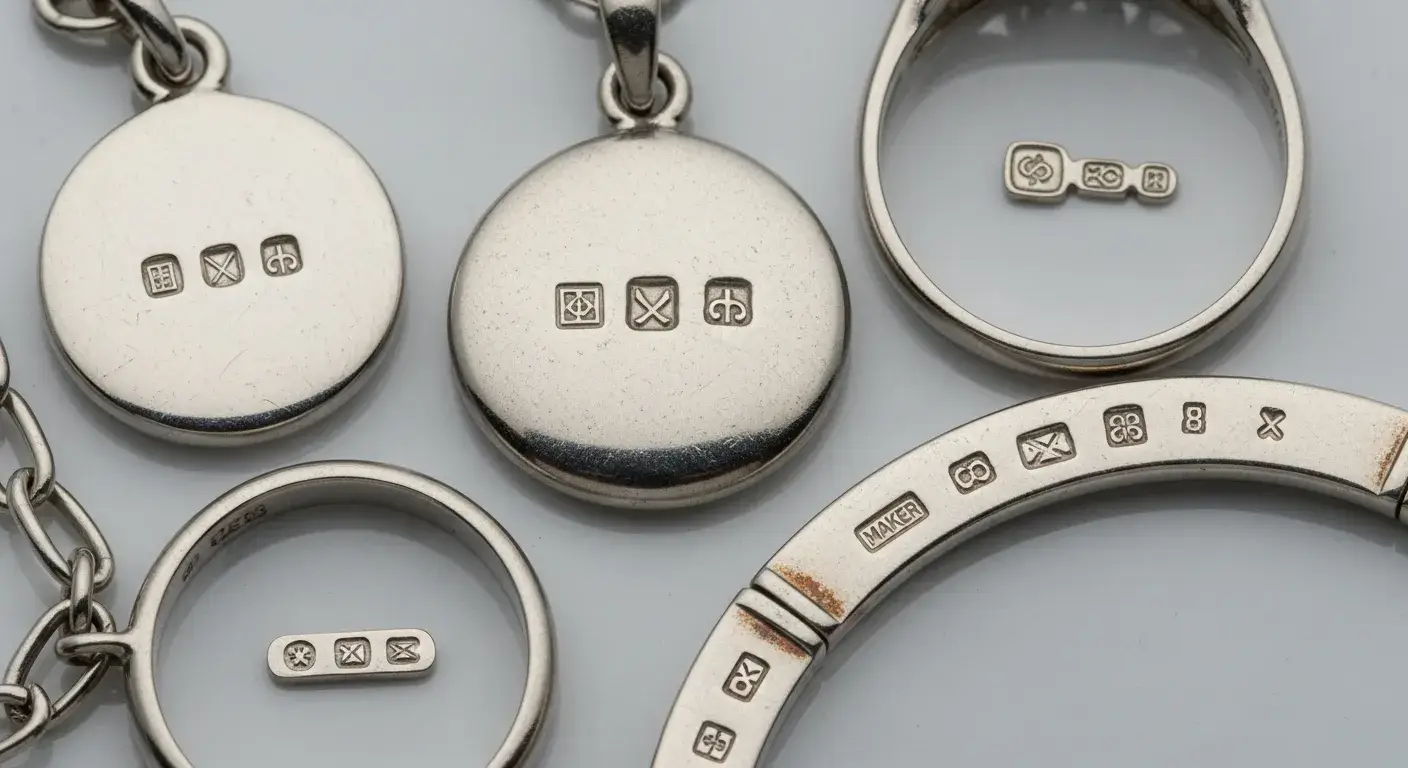
Platinum marks appear in the same locations as other jewelry marks—discreet areas that don’t affect appearance.
Rings
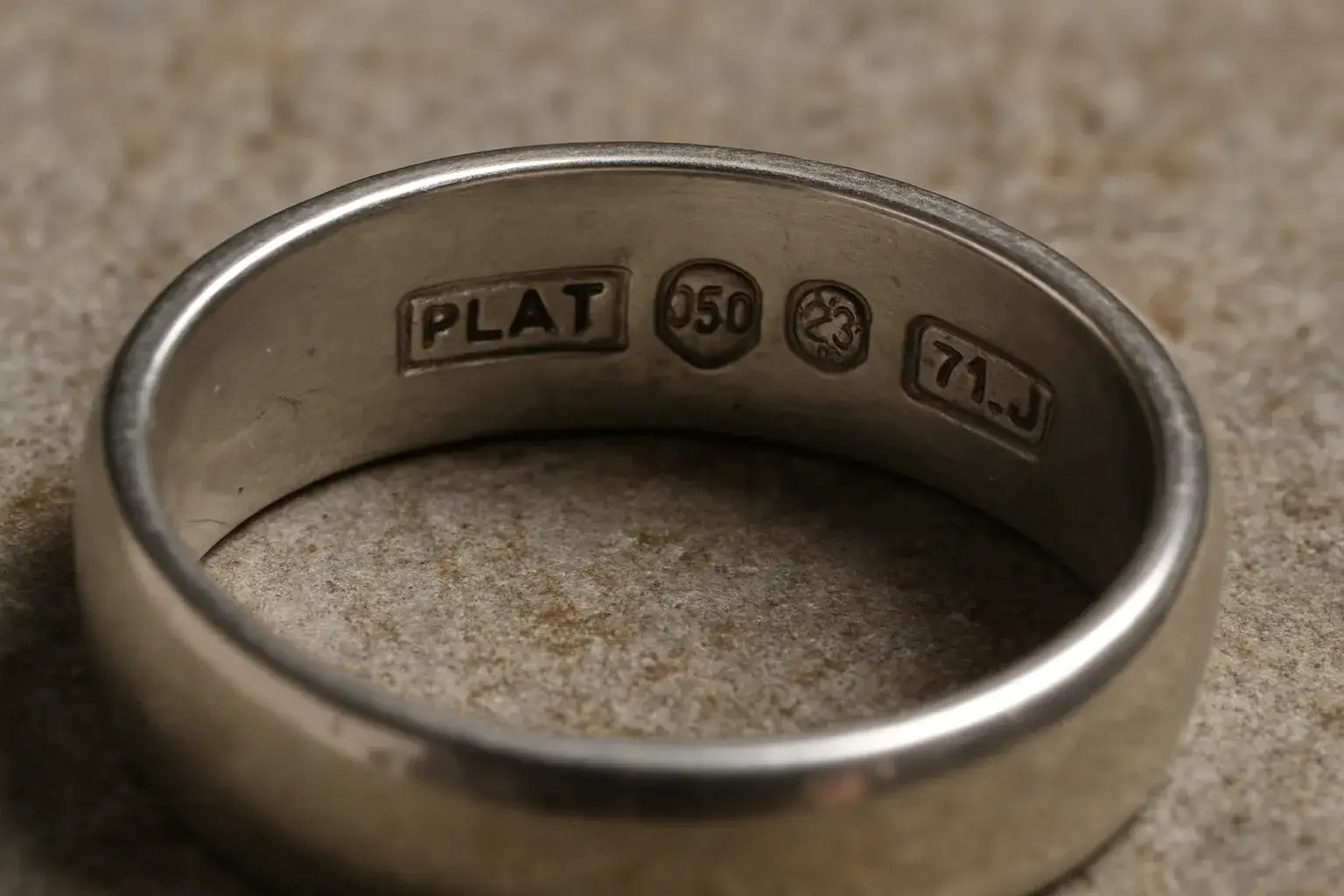
Location: Inside the band, usually near the bottom
What to look for: “950 PLAT,” “PT950,” or “PLATINUM”
Tip: Platinum marks are often clearer and deeper than gold marks due to the metal’s hardness
Necklaces and Chains
Location: Near the clasp or on a small tag
Chain links: Some substantial platinum chains mark multiple links
Bracelets
Location: Near clasp, on a link, or inside bangles
Note: Due to platinum’s value, marks are usually present even on small pieces
Earrings
Location: Post, back, or clip mechanism
Magnification: May need loupe for tiny marks
Watches
Location: Case back or lugs
Note: High-end watches often mark both case and bracelet if both are platinum
🔍 Reading platinum marks: 10x Jeweler’s Loupe with LED – Platinum marks are often clearer than gold marks, but magnification still essential for small items. (~$15-20)
How to Verify Real Platinum
Platinum marks can be faked on white gold or silver. These tests confirm authenticity.
1. Weight Test (Most Reliable Home Test)
How it works: Platinum is significantly heavier than gold or silver
Test: Hold the piece—platinum has distinctive heft. Compare to similar-sized white gold if possible.
Specific density: Platinum is 21.45 g/cm³. White gold is 15-16 g/cm³. Silver is 10.5 g/cm³.
Example: A platinum wedding band weighing 8 grams would weigh only 5-6 grams in white gold. The difference is noticeable.
⚖️ Precision scale essential: Digital Jewelry Scale 0.01g – Accurate weight measurement is THE most reliable home test for platinum. Platinum’s density makes weight verification critical. (~$15-20)
2. Magnet Test
How it works: Platinum is not magnetic
Test: Hold a strong magnet near the piece. If attracted, it’s not platinum.
Limitation: White gold and silver also aren’t magnetic, so passing doesn’t prove platinum—but failing proves it’s fake.
3. Scratch Test (Careful!)
How it works: Platinum is very hard and doesn’t scratch easily
Test: Gently scratch an inconspicuous area with something hard. Platinum resists scratching more than gold.
Warning: This can damage the piece. Only use on items you’re willing to mark.
4. Acid Test (Professional)
How it works: Platinum reacts differently to acids than other metals
Performed by: Jewelers with proper equipment
Note: Creates a small mark on the jewelry
5. XRF Analysis (Best Professional Test)
How it works: X-ray fluorescence reads exact metal composition
Advantages: Non-destructive, extremely accurate, identifies exact purity
Cost: Typically $50-$100 per piece at professional appraisers
💎 For valuable pieces: Professional Jeweler’s Loupe 30x – Higher magnification for detailed examination of platinum marks and settings on high-value engagement rings. (~$20-30)
6. Patina Observation
Platinum patina: Over time, platinum develops a soft, frosted appearance (patina) from microscopic scratches
White gold: Wears differently—rhodium plating wears off revealing yellowish gold underneath
What to check: Does worn jewelry show yellowish tint (gold) or stay uniform gray-white (platinum)?
7. Professional Appraisal
For expensive pieces, professional authentication is worth the cost:
- Cost: $75-$150 per piece
- What you get: Written certification of metal type, purity, and value
- When needed: High-value purchases, inherited jewelry, insurance documentation
Platinum Alloys: What’s in the Other 5-10%?
Platinum jewelry isn’t pure platinum. The alloy metals affect properties and sometimes appear in marks.
Common Platinum Alloys
Ruthenium (Most Common in 950 Platinum)
Properties: Increases hardness without affecting color
Amount: Typically 5% in 950 platinum
Benefits: Creates durable jewelry while maintaining purity
Mark: Sometimes shown as “950 Ru” or “950 PLAT Ru”
Iridium
Properties: Hardens platinum significantly
Amount: Usually 5-10%
Benefits: Makes platinum easier to work and more durable
Mark: May show as “PLAT IRID” or “950 Ir”
Cobalt
Properties: Hardens platinum, slightly magnetic
Amount: Up to 5%
Note: Less common, some jewelers avoid due to slight magnetic properties
Palladium
Properties: Also a platinum-group metal, white color
Amount: Variable
Note: Creates platinum-palladium alloys, sometimes marked separately
Why Alloys Matter
Pure platinum (99.9%) is too soft for jewelry—it would bend and deform easily. The 5-10% alloy content provides:
- Hardness for daily wear
- Easier manufacturing (casting, forming, setting stones)
- Better stone security
- Minimal impact on platinum’s natural properties
Compare to gold: While 18K gold is only 75% pure, 950 platinum is 95% pure—significantly higher precious metal content.
Why Platinum Commands Premium Prices
Extreme Rarity
Production comparison:
- Annual gold production: ~3,000 tons
- Annual platinum production: ~200 tons
Platinum is 30 times rarer than gold, and mining it is more difficult and expensive.
Limited Sources
Over 80% of platinum comes from two countries: South Africa and Russia. Limited geographic sources increase rarity and price volatility.
Density & Weight
Because platinum is denser, more metal is needed to create the same piece. A platinum ring requires more raw material than a gold ring of identical size.
Higher Purity Standard
Platinum jewelry is typically 95% pure (950), compared to 58.5% (14K) or 75% (18K) for gold. You’re buying significantly more precious metal.
Industrial Demand
Platinum has critical industrial uses (catalytic converters, electronics, medical devices), creating competition for the limited supply beyond jewelry.
Durability = Long-Term Value
Platinum doesn’t wear away—it displaces. Over decades, gold rings lose metal through wear. Platinum rings maintain their original weight, preserving value.
Prestige Factor
Platinum has become associated with luxury, exclusivity, and high-end jewelry. This psychological value adds to market price.
Platinum Jewelry Marks FAQ
What does 950 platinum mean?
950 platinum means 95% pure platinum, with 5% alloy metals (usually ruthenium or iridium). This is the standard purity for platinum jewelry worldwide. It’s marked as “950,” “PT950,” “PLAT950,” or simply “PLATINUM” in the US.
Is platinum better than white gold?
Platinum is superior in durability, purity (95% vs. 58-75%), natural white color, and hypoallergenic properties. However, it costs 40-60% more. White gold offers excellent value for those on a budget and provides a similar appearance with proper maintenance.
How can I tell if my jewelry is platinum or white gold?
Check the marks: Platinum shows “950,” “PLAT,” or “PT.” White gold shows “14K,” “18K,” or numbers like “585” or “750.” Test the weight—platinum feels significantly heavier. Check for rhodium plating wear—white gold shows yellowish undertones when plating wears off; platinum stays uniform white.
Does platinum tarnish?
No, platinum does not tarnish. It’s highly resistant to corrosion and oxidation. It develops a natural patina (soft, frosted appearance) over time from microscopic scratches, but this is not tarnish and many people prefer the vintage look. Patina can be polished off if desired.
Why is platinum jewelry so expensive?
Platinum is 30 times rarer than gold, harder to mine and refine, denser (requiring more metal per piece), and typically 95% pure (higher than gold jewelry). Combined with industrial demand and limited geographic sources, these factors create premium pricing.
Can platinum be marked 900 or 850?
Yes, though less common. 900 platinum (90% pure) and 850 platinum (85% pure) exist but are rarer than 950. Some countries require minimum purities to use the “platinum” designation. Always check the number—lower numbers mean less platinum and lower value.
Is PT the same as PLAT?
Yes, “PT” and “PLAT” both indicate platinum. PT is the chemical symbol, PLAT is the abbreviation. In the US, both indicate minimum 95% purity unless accompanied by a lower number (e.g., “900 PLAT”).
How much is platinum worth per gram?
Platinum prices fluctuate daily based on global markets. As of late 2025, platinum trades around $30-35 per gram. A 5-gram platinum ring contains roughly $150-175 in metal value, before craftsmanship, stones, and retail markup.
Does platinum scratch easily?
Platinum is scratch-resistant but not scratch-proof. It’s harder than gold but softer than stainless steel. When scratched, platinum displaces rather than wearing away—the metal moves but doesn’t disappear, maintaining the ring’s weight. Scratches can be buffed out by jewelers.
Is platinum hypoallergenic?
Yes, platinum is highly hypoallergenic and rarely causes skin reactions. It’s ideal for people with metal sensitivities. Even the alloy metals used (ruthenium, iridium) are typically hypoallergenic. This makes platinum excellent for people who react to nickel in white gold.
Can platinum be resized?
Yes, but it’s more difficult and expensive than resizing gold. Platinum’s high melting point and density require specialized equipment and expertise. Expect to pay 50-100% more for platinum resizing compared to gold. Always use a jeweler experienced with platinum.
What is the difference between platinum and palladium?
Both are platinum-group metals with similar appearance, but platinum is denser (heavier), more durable, more rare, and more expensive. Palladium is lighter and more affordable. Palladium is marked “PD” or “500 PD,” never “PLAT” or “PT.”
Key Takeaways: Platinum Jewelry Marks
- 950 = Standard: 95% pure platinum, marked as 950, PLAT950, or PT950
- Naturally white: Unlike white gold, needs no plating or maintenance
- Distinctive weight: Noticeably heavier than gold—best home test
- Don’t confuse with white gold: Check marks—”K” means gold, “PLAT” means platinum
- Premium value: Costs 40-60% more than white gold due to rarity and purity
- Hypoallergenic: Ideal for sensitive skin
- No tarnish: Develops patina but doesn’t corrode or tarnish
When buying platinum, always verify marks, test weight if possible, and purchase from reputable jewelers. For valuable pieces, professional authentication provides peace of mind and proper documentation.
Continue learning about jewelry marks:
- Complete Guide to Jewelry Marks & Identification
- Understanding Gold Hallmarks
- Sterling Silver Marks Guide
- How to Date Antique Jewelry