
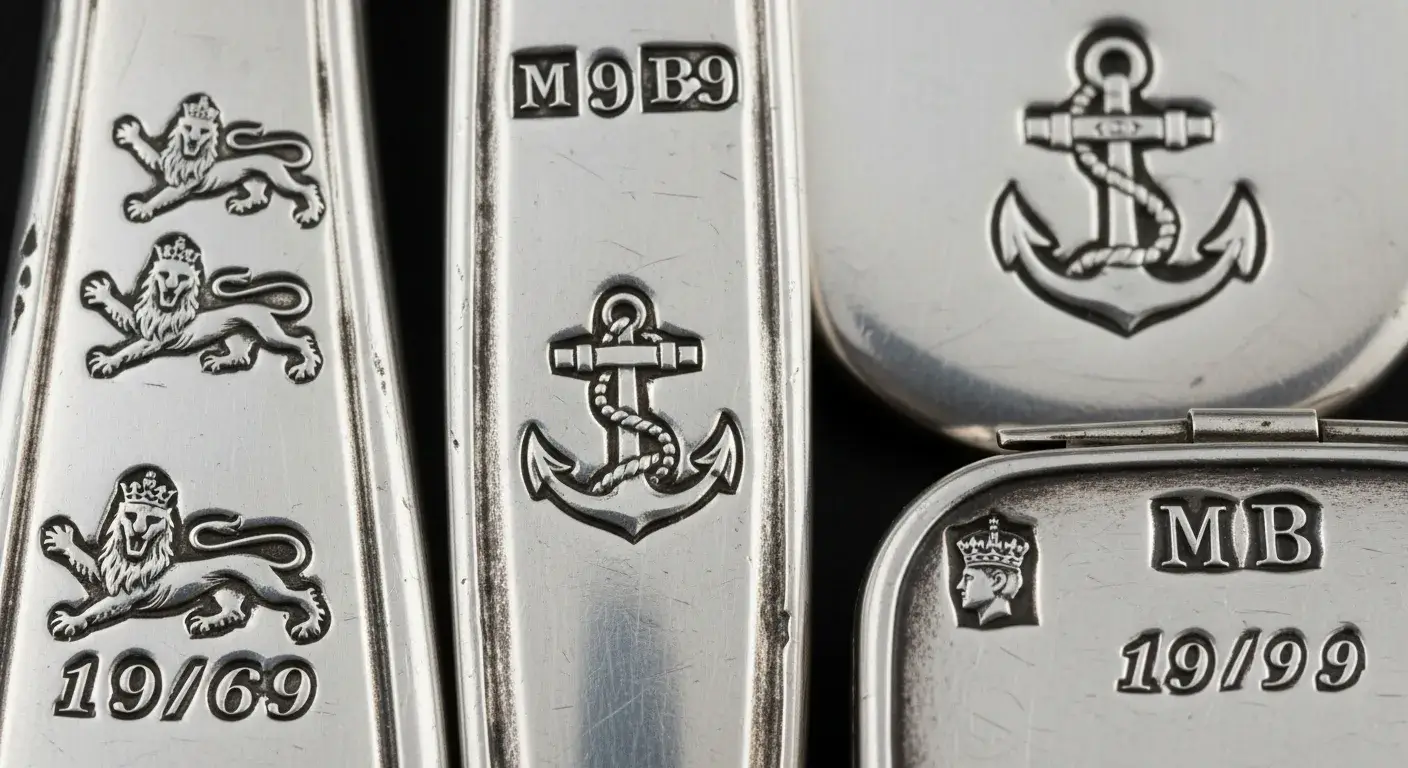
That “925” stamp on your silver jewelry isn’t just a random number—it’s your guarantee of authentic sterling silver worth. Understanding silver marks protects you from buying silver-plated brass at sterling prices and helps you identify valuable antique pieces worth far more than their silver weight. Whether you’re buying your first silver bracelet, inherited a collection, or want to verify what you own, this complete guide teaches you everything about sterling silver marks. You’ll learn to read marks like a professional silversmith and never overpay for plated silver again.This guide builds on our Complete Guide to Jewelry Marks, focusing specifically on sterling silver identification.
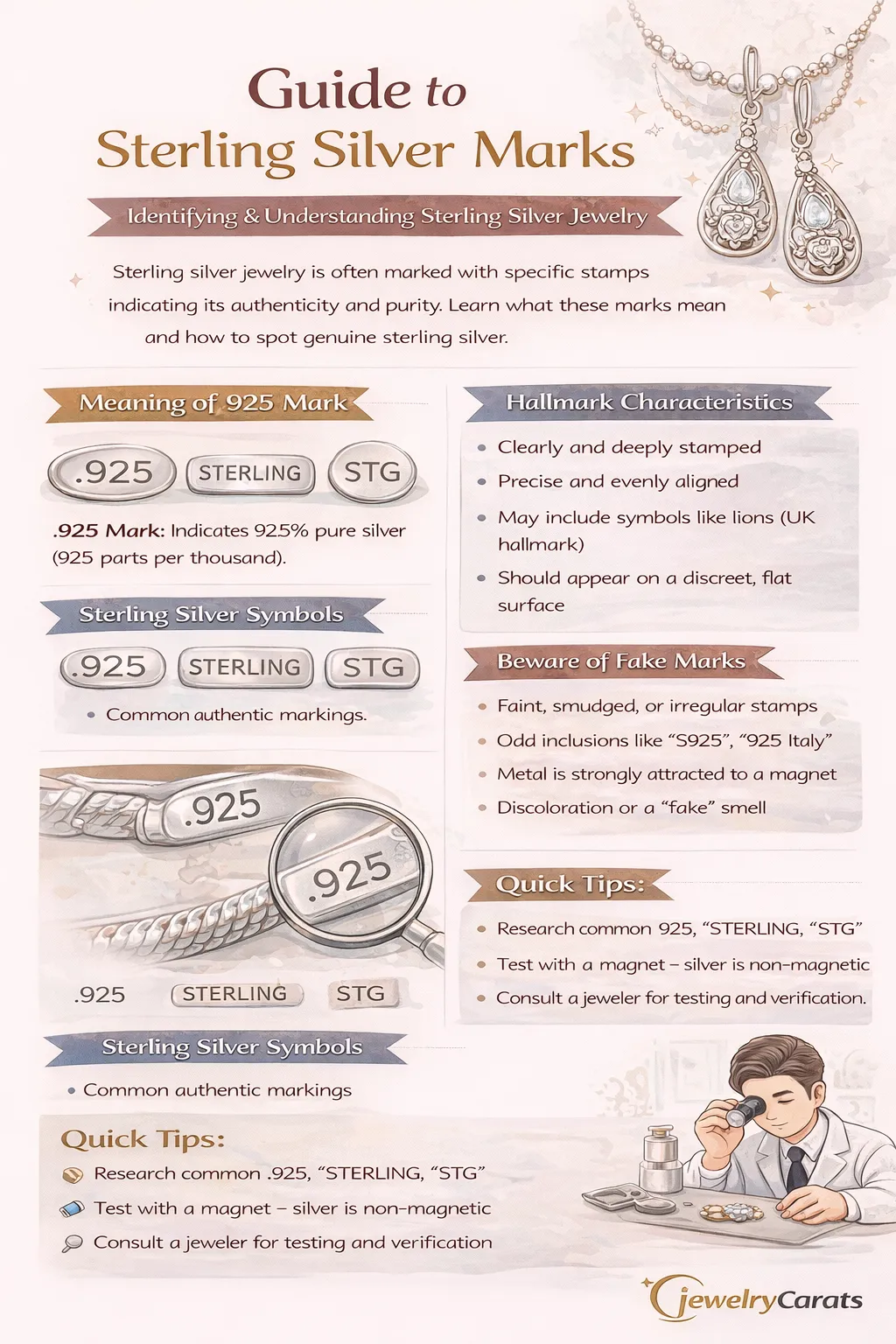
What Is Sterling Silver? The 92.5% Standard
Sterling silver is not pure silver. It’s a precisely formulated alloy of 92.5% pure silver mixed with 7.5% other metals—almost always copper.
Why Not Pure Silver?
Pure silver (99.9% silver, also called “fine silver”) is too soft for jewelry and tableware. It scratches easily, bends under pressure, and dents with normal use. By adding 7.5% copper, sterling silver becomes:
- Durable enough for daily wear
- Hard enough to hold intricate designs and details
- Strong enough for functional items like spoons and platters
- Beautiful while maintaining silver’s signature luster
The Sterling Standard: Why 92.5%?
The 92.5% standard dates back centuries. In 1300, King Edward I of England established this ratio as the official standard for silver sold in the realm. The proportion proved ideal—enough silver for beauty and value, enough copper for strength.
Today, “sterling silver” is universally understood to mean 92.5% silver worldwide. When you see “sterling” marked on jewelry, you know exactly what you’re getting: this time-tested 92.5/7.5 formula.
Sterling Silver vs. Fine Silver
| Type | Purity | Common Marks | Uses | Durability |
|---|---|---|---|---|
| Fine Silver | 99.9% | 999, .999, FS | Coins, bullion, some artisan jewelry | Very soft, scratches easily |
| Sterling Silver | 92.5% | 925, Sterling, STER | Jewelry, flatware, hollowware | Durable for daily wear |
The 925 Mark Explained: Your Sterling Silver Guarantee
The “925” stamp is the international standard mark for sterling silver. It means 925 parts pure silver out of 1,000 total parts—exactly 92.5% pure silver.
Common 925 Mark Variations
All of these marks mean the same thing—sterling silver (92.5% pure):
- 925: Most common, international standard
- .925: With decimal point, same meaning
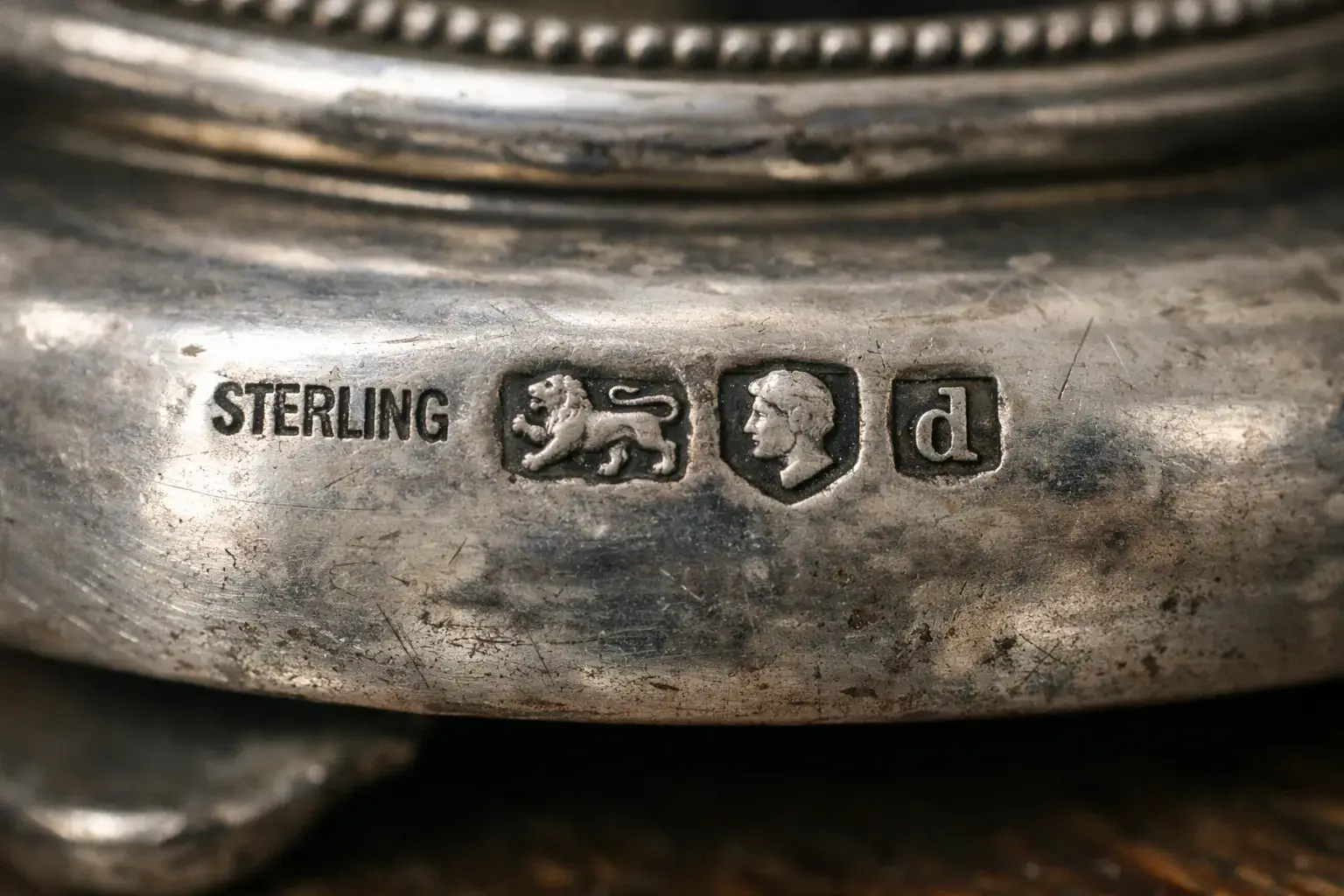
- STERLING: Word mark, US and UK common
- STER: Abbreviated version
- STG: Another abbreviation
- 925/1000: Fraction format, explicit ratio
All of these confirm authentic sterling silver. If you see any of these marks, your piece is genuine sterling, not plated.
What 925 Looks Like
Sterling marks are typically:
- Small—often just 2-3 millimeters
- Stamped (impressed into the metal)
- Located in discreet areas
- Sometimes accompanied by maker’s marks
- May appear worn on antique pieces
Tool needed: A jeweler’s loupe (10x magnification) makes reading marks much easier, especially on delicate items or worn antiques.
Why 925 Matters for Value
Silver value fluctuates daily based on the global silver market. A sterling silver bracelet has intrinsic metal value based on its weight:
Example calculation (simplified):
- Silver spot price: $0.80/gram (approximate)
- Bracelet weight: 30 grams
- Sterling content: 30g × 92.5% = 27.75g pure silver
- Metal value: 27.75g × $0.80 = $22.20
The 925 mark confirms this calculation is valid. Without it, you can’t prove the piece is sterling—making it much harder to sell and essentially worthless as silver.
UK Sterling Silver Hallmarks: The Lion Passant and More
British silver has the most comprehensive hallmarking system in the world, providing detailed information beyond just purity.
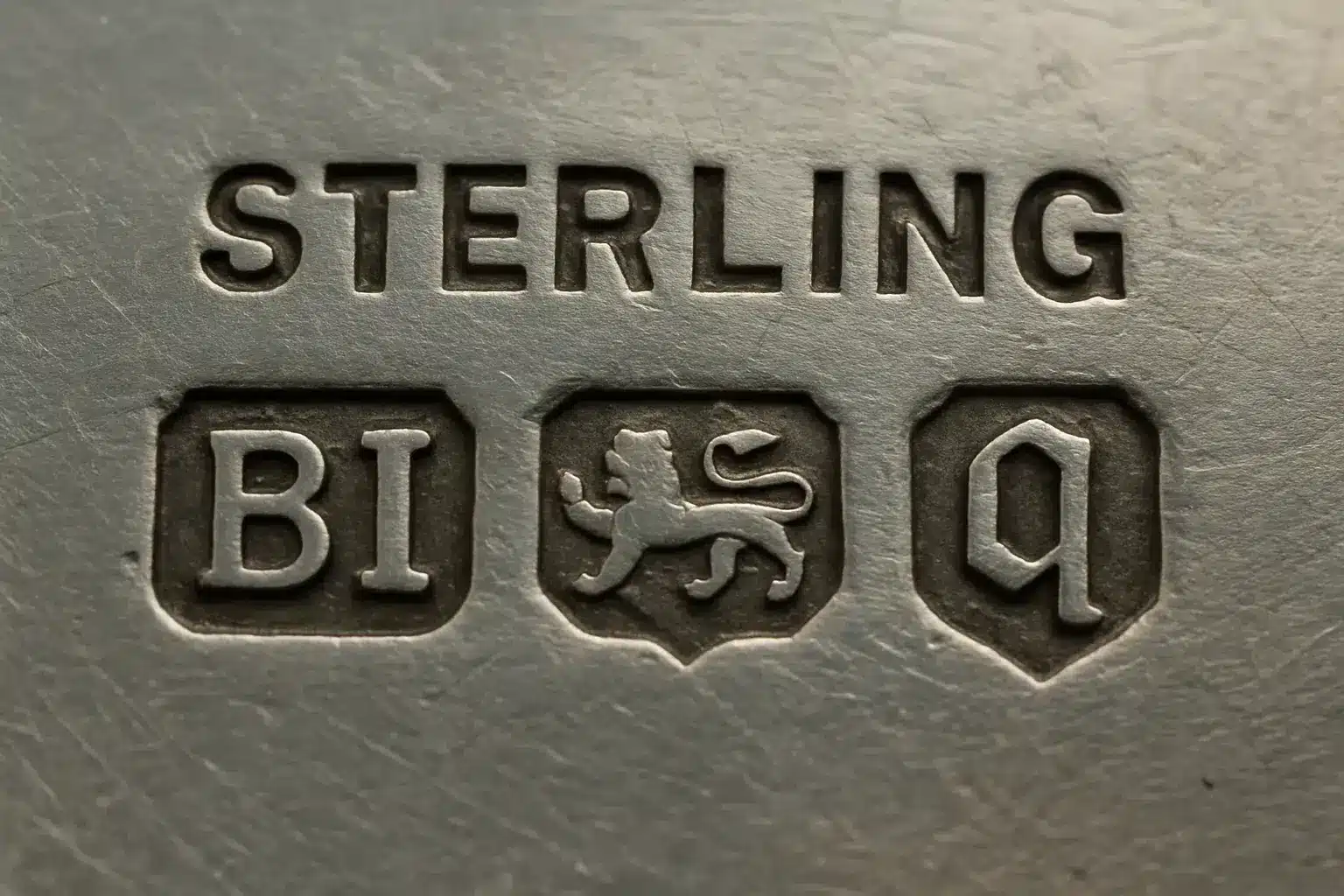
The Lion Passant: England’s Sterling Mark
What it looks like: A lion walking (passant means “walking” in heraldic terms), facing left, with right front paw raised
What it certifies: 92.5% sterling silver standard
History: Used since 1544, making it one of the oldest continuously used hallmarks in the world
Current status: Still the official UK sterling silver mark today
When you see the Lion Passant on silver, you’re looking at centuries of British silversmithing tradition guaranteeing authentic sterling.
Scottish Silver: Lion Rampant
What it looks like: A lion standing upright on hind legs (rampant), facing left
What it certifies: 92.5% sterling silver, Scottish origin
Distinguishing feature: Different from England’s walking lion—Scottish lion is vertical and more aggressive in stance
Irish Silver: Hibernia
What it looks like: A crowned harp symbol
What it certifies: Irish sterling silver (pre-1923 for Dublin)
Historical note: After Irish independence, hallmarking laws changed. Modern Irish silver uses different marks.
Complete UK Hallmark Set
British sterling silver typically shows four to five marks together:
- Maker’s Mark: Identifies the silversmith or company
- Standard Mark: Lion Passant (sterling standard)
- Assay Office Mark: Shows where tested
- Leopard’s head (crowned until 1821): London
- Anchor: Birmingham
- Rose: Sheffield
- Castle: Edinburgh
- Thistle: Glasgow (historical)
- Date Letter: Indicates year of assay
- Duty Mark (older pieces): Monarch’s head, indicating tax paid (used 1784-1890)
Example: An 1890 London piece might show: maker’s initials + walking lion + leopard’s head + date letter “p” + Queen Victoria’s head
Britannia Silver (Higher Standard)
Mark: Figure of Britannia (seated female figure) or 958
Purity: 95.8% pure silver (higher than sterling)
When used: Mandatory in UK from 1697-1720, now optional for higher-quality pieces
Value: More valuable than sterling due to higher silver content
International Silver Marks: Country-Specific Hallmarks
Different countries use distinct silver marking systems. Understanding these helps identify origin and authenticity.
French Silver Hallmarks
France uses pictorial hallmarks rather than numbers:
Minerva Head (Tête de Minerve)
What it looks like: Profile of a woman’s head (Minerva, Roman goddess of wisdom)
What it certifies: 950/1000 silver (95% pure)—higher than sterling
Used for: Domestic French silver since 1838
Note: Higher purity than sterling (95% vs 92.5%)
Crab Mark
What it looks like: A crab symbol
What it certifies: 800/1000 silver (80% pure)—lower than sterling
Used for: Lower-grade French silver and imported silver
Boar’s Head
What it certifies: Imported silver (not made in France)
May appear with: Purity marks
German Silver Marks
Crescent Moon and Crown
What it looks like: A crescent moon symbol, often with a crown
What it certifies: German silver, typically 800/1000 (80% pure)
Common in: Antique German silver—800 was the German standard before adopting 925
Modern German Marks
Current standard: 925 or “Sterling” now standard in Germany
Older pieces: May show 800 or regional marks
Italian Silver Marks
Common marks: Numbers (800, 925) often with province codes or maker’s marks
Format examples:
- 925 AR (Arezzo)
- 925 VI (Vicenza)
- 800 with shield symbol
Russian Silver Marks
Pre-1900: Various regional marks, often with kokoshnik (woman’s head in traditional headdress)
Soviet era (1927-1958): Hammer and sickle with numbers (875, 916, 960)
Post-Soviet: Numbers (925, 875) with assay marks
American Silver Marks
System: No mandatory hallmarking—voluntary marking only
Common marks:
- STERLING or 925: Most common American mark
- COIN or COIN SILVER: 90% pure (old US coin standard)
- Company names: Tiffany & Co., Gorham, Reed & Barton, etc.
Note: Unmarked American silver isn’t necessarily fake—small pieces, antiques, or handmade items often lack marks. Testing required for unmarked pieces.
Other Silver Purity Standards
| Mark | Purity | Common In | Notes |
|---|---|---|---|
| 999 or .999 | 99.9% | Coins, bullion | Fine silver, too soft for jewelry |
| 958 | 95.8% | UK Britannia | Higher than sterling |
| 950 | 95% | France | Minerva mark, higher than sterling |
| 925 | 92.5% | Worldwide | Sterling standard |
| 900 | 90% | US coin silver | Old American standard |
| 835 | 83.5% | Germany, Europe | Lower grade |
| 800 | 80% | Germany, Italy | Older European standard |
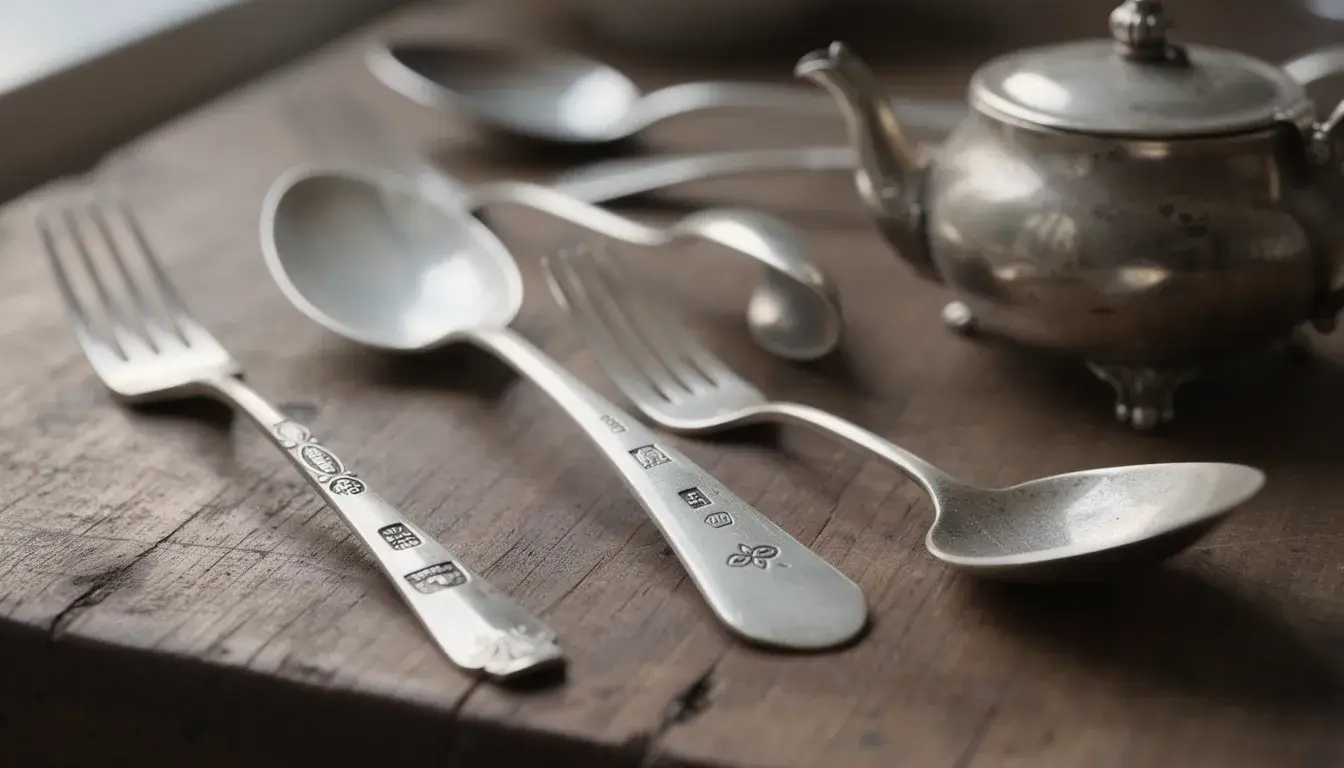
Silver Plating Marks: Critical Warning Signs
These marks indicate silver plating over base metal—NOT solid silver. Understanding them prevents costly mistakes.
What Silver Plating Means
Silver plating applies a microscopic layer of silver over cheaper metal (brass, copper, nickel-silver). The piece looks like silver but contains almost no silver by weight.
Value comparison: A silver-plated bracelet contains perhaps 50 cents worth of silver. An identical-looking sterling silver bracelet might contain $20-40 worth of silver plus craftsmanship value.
EPNS – Electroplated Nickel Silver
What it means: Silver plated over nickel-silver (a copper-nickel-zinc alloy with NO silver)
Common on: Victorian-era and vintage tableware, tea sets, serving pieces
Value: Essentially worthless as silver—valued only as antiques or decorative items
Important: Despite the name “nickel silver,” the base metal contains zero silver. It’s called that because it resembles silver in color.
EP, EPC, or Electroplate
What it means: Electroplated with silver over base metal
Thickness: Extremely thin—often less than 1 micron
Lifespan: Silver wears off quickly with use, revealing base metal
Silver Plate or SP
What it means: Silver coating over base metal (generic term)
Quality varies: Could be thick or thin plating
Not sterling: Any mark with “plate” or “plated” means NOT solid silver
A1, EPBM, or Quadruple Plate
What they mean: Quality grades of silver plating
- A1: First-quality plating (marketing term)
- EPBM: Electroplated Britannia Metal
- Quadruple plate: Four layers of plating (still very thin total)
Key point: These are quality grades of plating, not solid silver. Even “quadruple plate” is just plating.
“German Silver” or “Nickel Silver”
CRITICAL WARNING: Contains ZERO silver despite the misleading name!
What it is: A copper-nickel-zinc alloy that looks silver-colored
Also called: Alpaca silver, paktong, new silver
Why it exists: Cheap silver-colored metal for costume jewelry and low-end items
Value: Scrap metal value only—no silver content
How to Spot Plating Marks
Look for these telltale signs:
- The word “PLATE,” “PLATED,” or “EP” anywhere in the marks
- “EPNS” on older serving pieces
- “A1” or similar quality grades
- “German Silver” or “Nickel Silver”
- Absence of 925, Sterling, or Lion marks
If you see ANY plating indicator, the piece is NOT solid silver.
Where to Find Silver Marks on Jewelry and Silverware
Silver marks hide in discreet locations. Knowing where to look is essential.
Jewelry
Rings
Location: Inside the band
Note: Thin bands may not be marked due to lack of space
Necklaces and Chains
Location: Near or on the clasp, or on a small tag near the clasp
Look for: Flat areas on clasp mechanism
Bracelets
Location: Near clasp, on a flat link, or inside bangles
Bangle bracelets: Check inside surface near the clasp
Earrings
Location: Post, clip-back, or earring back
Magnification essential: Marks are tiny on earrings
Brooches/Pins
Location: Pin stem, catch mechanism, or back of brooch
Flatware (Spoons, Forks, Knives)
Location: Back of handle, near the widest part
Look carefully: Marks may be worn from years of polishing
Knife blades: Usually stainless steel even if handle is sterling—mark appears on handle only
Hollowware (Bowls, Pitchers, Tea Sets)
Location: Underside of base, inside rim, or on underside of lids
Large pieces: May have multiple marks in different locations
Tea/coffee pots: Check bottom of pot and underside of lid
Candlesticks and Decorative Items
Location: Bottom, base rim, or inside hollow pieces
Weighted bases: Some candlesticks have filled/weighted bases—mark appears on silver portion, not the fill
🔍 Reading tiny marks: 10x Jeweler’s Loupe with LED Light – Essential for examining 925 stamps on small items. Clear optics, pocket-size. (~$15-20)
How to Verify Real Silver Beyond Marks
Marks can be faked or worn off. Additional testing confirms authenticity.
1. Magnet Test (Quick Home Test)
How it works: Silver is not magnetic. Use a strong magnet (neodymium works best).
Test: Hold magnet near the piece. If it’s attracted to the magnet, it’s not silver (or only plated).
Limitation: Passing the magnet test doesn’t prove it’s silver—many non-magnetic metals exist. But failing proves it’s not silver.
2. Ice Test
How it works: Silver has the highest thermal conductivity of any metal. It melts ice extremely fast.
Test: Place an ice cube on the silver. It should melt noticeably faster than on other surfaces.
Best for: Flat items like coins or bars—difficult with jewelry
3. Sound Test (Ring Test)
How it works: Silver produces a distinct high-pitched ringing sound when struck.
Test: Gently tap or strike the piece. Real silver rings for 1-2 seconds with a bell-like tone.
Best for: Coins, bars, or substantial pieces—less reliable for delicate jewelry
4. Check for Wear Spots
Examine: High-wear areas like bracelet clasps, ring interiors, chain links
Real silver: Same silver color all the way through, even where worn
Plated silver: Different colored base metal (copper, brass, yellowish tint) shows through worn spots
5. Tarnish Test
How it works: Real silver tarnishes (turns dark/black) when exposed to air and sulfur compounds
What to look for: Dark tarnish, especially in crevices and details
Note: Tarnish alone doesn’t prove silver (some plated items tarnish), but if it NEVER tarnishes, suspect fake silver
6. Bleach Test (Destructive—Use Cautiously)
How it works: Real silver oxidizes rapidly when exposed to bleach
Test: Place one drop of bleach on an inconspicuous spot. Real silver darkens immediately.
Warning: This damages the piece slightly—only use on scrap or items you’re willing to mark
7. Professional Testing
Acid Test
How it works: Silver reacts distinctively to specific acids
Performed by: Jewelers and pawn shops
Drawback: Leaves a small mark on the piece
🧪 Silver test kit: Sterling Silver Test Solution – Instantly identifies real silver vs. plated. Safe, accurate, includes testing stone. Essential for verification. (~$10-15)
XRF Analysis
How it works: X-ray fluorescence reads exact metal composition
Advantages: Completely non-destructive, extremely accurate
Performed by: Professional appraisers, high-end jewelers
Silver Tarnish: What It Means and What It Doesn’t
Many people worry tarnish means their silver is fake or damaged. Understanding tarnish clears up confusion.
What Causes Tarnish?
Silver reacts with sulfur compounds in the air, forming silver sulfide—the dark coating we call tarnish. Sources of sulfur include:
- Air pollution
- Natural gas (if you have gas appliances)
- Eggs, onions, and rubber (storage near these accelerates tarnish)
- Wool and certain fabrics
- Body chemistry (some people’s skin chemistry speeds tarnishing)
✨ Recommended cleaner: Wright’s Silver Cream – Professional-grade polish removes tarnish safely without scratching. Used by jewelers worldwide. (~$8-12)
Tarnish is Normal and Reversible
Good news: Tarnish is a surface reaction only. It doesn’t damage the silver underneath and is completely reversible.
How to remove: Silver polishing cloth, silver cleaner, or baking soda paste
Myth: “My silver tarnished, so it must be fake.” Actually, tarnishing proves it’s real silver! Fake silver doesn’t tarnish.
Does 925 Silver Tarnish?
Yes, absolutely. Sterling silver (925) tarnishes just like fine silver (999). The 7.5% copper may even slightly accelerate tarnishing.
This is normal and expected. Tarnishing doesn’t mean poor quality—it means authentic silver.
Preventing Tarnish
- Store in anti-tarnish bags or cloth
- Keep away from humidity
- Wear regularly (body oils slow tarnish)
- Store with anti-tarnish strips
- Keep away from rubber and wool
🛡️ Protect your silver: Anti-Tarnish Storage Bags with strips – Prevents tarnishing during storage. Pack of 100 bags in multiple sizes. (~$12-18)
Sterling Silver Marks FAQ
Is 925 silver real silver?
Yes, 925 silver is real sterling silver—92.5% pure silver mixed with 7.5% other metals (usually copper). This is the authentic sterling silver standard worldwide. Any piece marked 925 is genuine silver, not plated.
What’s the difference between sterling silver and 925 silver?
There’s no difference—they’re the same thing. “925” is the numerical purity mark, while “Sterling” is the word mark. Both indicate 92.5% pure silver. Jewelry might be marked “925,” “Sterling,” or both.
How can I tell if my silver is real or plated?
Check marks for plating indicators (EPNS, EP, “Plate,” “German Silver”). Examine wear spots for different colored metal underneath. Test with a magnet (silver isn’t magnetic). Look for tarnish in crevices (real silver tarnishes, most fakes don’t). When in doubt, have it professionally tested.
What does EPNS mean on silver?
EPNS means “Electroplated Nickel Silver”—silver plated over a base metal alloy containing no silver. This is NOT solid silver. EPNS items are essentially worthless for silver value—they’re valued only as antiques or decorative pieces. Common on Victorian-era tea sets and serving pieces.
Is 800 silver real silver?
Yes, 800 silver is real silver—80% pure. It’s lower purity than sterling (92.5%), but still genuine silver. Common in older German, Italian, and European silver. Less valuable per gram than sterling due to lower silver content, but still real silver.
Does real sterling silver tarnish?
Yes, real sterling silver definitely tarnishes. Tarnishing is actually proof of authentic silver—it’s a chemical reaction between silver and sulfur in the air. Tarnish doesn’t damage silver and is completely reversible with polishing. If silver never tarnishes, it’s probably fake or plated.
What does a lion mark mean on silver?
A walking lion (Lion Passant) is the UK hallmark for sterling silver (92.5% pure). It’s been used since 1544 and guarantees British sterling standard. A standing lion (Lion Rampant) indicates Scottish silver. These are official assay office marks certifying purity.
Can sterling silver marks be fake?
Yes, counterfeiters stamp fake 925 marks on plated jewelry. Verify authenticity by checking mark quality (genuine marks are sharp and clean), testing with a magnet, examining wear spots, and confirming appropriate weight (real silver is heavy). Buy from reputable sellers and test expensive pieces professionally.
Is “German Silver” real silver?
No! Despite the misleading name, German Silver contains ZERO silver. It’s a copper-nickel-zinc alloy that looks silver-colored but has no silver content. Also called nickel silver, alpaca, or paktong. Worth only scrap metal value. Always avoid items marked “German Silver” if you want real silver.
What’s the difference between silver and sterling silver?
“Silver” alone could mean pure fine silver (99.9%) or be vague marketing language. “Sterling silver” specifically means 92.5% silver—the standard for jewelry and silverware. When buying, always look for “Sterling” or “925” marks. Unmarked “silver” items require verification.
How much is sterling silver worth per gram?
Sterling silver value fluctuates with the silver market. As of late 2025, silver spot price is roughly $0.75-$0.85 per gram. Since sterling is 92.5% pure, sterling silver is worth about $0.70-$0.80 per gram for melt value. Finished jewelry commands premiums above melt value for craftsmanship.
Why does my sterling silver turn my skin green?
The copper in sterling silver (7.5%) can react with sweat, lotions, or body chemistry, leaving a green residue on skin. This doesn’t mean the silver is fake—it’s a normal reaction with the copper alloy. More common in humid conditions or with acidic skin chemistry. Higher purity silver (Britannia 958) reduces this issue.
What does 925 China mean on jewelry?
“925 China” or “China 925” indicates sterling silver manufactured in China. The 925 confirms it’s sterling silver purity, while “China” indicates country of origin. Chinese sterling silver is genuine 92.5% silver, though quality and craftsmanship vary by manufacturer.
Is antique silver more valuable than new sterling?
Antique silver can be more valuable due to historical significance, maker’s marks, craftsmanship, and collectability—not necessarily higher purity. A piece by famous silversmiths (Tiffany, Georg Jensen, Paul Revere) or with rare hallmarks commands premiums well above melt value. However, plain antique silver with no special provenance may only be worth melt value.
Can I clean sterling silver myself?
Yes, sterling silver is safe to clean at home. Use a silver polishing cloth for light tarnish, warm water with mild dish soap for general cleaning, or commercial silver cleaner for heavy tarnish. Avoid abrasive scrubbing. For valuable antique pieces, consult a professional. Never clean silver-plated items aggressively—you’ll wear through the thin silver layer.
Key Takeaways: Reading Sterling Silver Marks
Understanding silver marks protects you and reveals hidden value:
- 925 = Sterling Silver: The international standard for 92.5% pure silver
- Lion Passant: UK hallmark confirming sterling silver since 1544
- EPNS and “Plate” marks: Indicate plating, NOT solid silver
- German Silver: Contains zero silver despite misleading name
- Tarnish is normal: Real silver tarnishes—it’s proof of authenticity
Quick verification checklist:
- ✓ Look for 925, Sterling, or Lion marks
- ✓ Check for plating indicators (EPNS, EP, “Plate”)
- ✓ Test with magnet (silver isn’t magnetic)
- ✓ Examine wear spots (same color throughout = real)
- ✓ Verify appropriate weight (silver is heavy)
When investing in silver jewelry, always verify marks and test when value is significant. A few minutes of careful examination can save hundreds of dollars.
Continue learning about jewelry identification:
- Complete Guide to Jewelry Marks & Identification – Master guide to all jewelry marks
- Understanding Gold Hallmarks – Complete gold marks guide
- Platinum Jewelry Marks Guide – Platinum identification