
Affiliate Disclosure: As an Amazon Associate I earn from qualifying purchases at no additional cost to you.
⚠️ CRITICAL SAFETY WARNING
Melting gold involves extreme temperatures (1,000°C+), serious fire hazards, and potential toxic fumes. This article is for educational purposes only.
Requirements before attempting: Proper ventilation, fire safety equipment, heat-resistant protective gear, knowledge of emergency procedures, and compliance with all local regulations.
The author and website assume NO LIABILITY for injuries, property damage, fire, toxic exposure, or legal issues resulting from attempting these procedures. When in doubt, consult professional refiners.
How to Melt Gold Jewelry: Complete Safety Guide & Equipment Setup
Introduction: Understanding Gold Melting
Melting gold jewelry transforms worn, broken, or outdated pieces into pure, refinable gold or custom castings. Whether consolidating multiple small items into a single bar, recovering gold value from damaged jewelry, preparing scrap for sale to refiners, or creating custom pieces through casting, home gold melting offers practical solutions for gold owners.
This comprehensive guide explains the complete gold melting process: understanding melting points by karat, selecting appropriate equipment, establishing safe workspace conditions, executing proper melting techniques, and knowing when professional refining services are better choices. We emphasize safety throughout – melting gold involves temperatures exceeding 1,000°C (1,832°F), serious fire risks, and potential exposure to toxic fumes from jewelry alloys.
Unlike vague tutorials minimizing dangers, this guide provides realistic safety assessments, equipment requirements, legal considerations, and practical limitations. You’ll learn both torch melting methods (portable, lower cost) and electric furnace techniques (safer, better control). We explain what can realistically be accomplished at home versus what requires professional services.
By article’s end, you’ll understand complete requirements for safely melting gold, possess knowledge to evaluate whether home melting suits your needs, and know how to execute the process safely if you proceed. Your informed decision-making about gold melting begins now.
Understanding Gold Melting Points
Pure Gold vs. Alloyed Gold
24K Pure Gold: Melts at precisely 1,064°C (1,947°F)
This temperature represents gold in its pure form (99.9%+ purity). Pure gold melting point serves as the international standard reference in metallurgy and refining. However, pure gold jewelry is extremely rare due to gold’s softness – it scratches, dents, and deforms easily under normal wear.
Why Jewelry Uses Alloys:
Jewelers alloy pure gold with harder metals (copper, silver, zinc, nickel, palladium) creating durable jewelry withstanding daily wear. These alloy additions fundamentally change gold’s melting characteristics. Different metals affect melting points differently:
- Copper, silver, zinc: Lower melting point significantly
- Nickel: Slightly lowers melting point
- Palladium, platinum: Can actually increase melting point (white gold)
Melting Points by Karat
22K Gold (91.7% pure): 1,020-1,040°C (1,868-1,904°F)
- Minimal alloy content, melts close to pure gold temperature
- Common in Asian/Middle Eastern jewelry markets
- Still quite soft, limited durability
18K Gold (75% pure): 900-950°C (1,652-1,742°F)
- Popular in European luxury jewelry
- Good balance purity/durability
- Melting point varies based on specific alloy composition
- Yellow 18K typically melts lower than white 18K (palladium content)
14K Gold (58.3% pure): 879-927°C (1,615-1,700°F)
- Most common in United States jewelry
- Excellent durability for daily wear
- 41.7% alloy content significantly lowers melting point
- Color variations (yellow, white, rose) affect exact temperature
10K Gold (41.7% pure): 850-900°C (1,562-1,652°F)
- Minimum gold content legally sold as “gold” in USA
- Maximum durability, lowest purity
- 58.3% alloy metals create lowest melting point
- Most economical gold jewelry option
Critical Identification Before Melting
Always verify karat before melting:
- Check jewelry stamps (10K, 14K, 18K, 24K markings)
- Use acid testing kit if stamps missing/unclear
- Separate pieces by karat – don’t mix different purities
- Remove all non-gold components (stones, clasps, solder)
Warning: Gold-plated jewelry contains minimal gold (microscopically thin layer). Melting gold plate releases toxic fumes from base metals while yielding essentially no recoverable gold. Only melt solid gold, gold-filled, or heavy gold electroplate.
Legal and Safety Considerations
Legal Requirements
Ownership Verification:
Only melt gold you legally own. Melting stolen jewelry constitutes receiving stolen property (criminal offense). Keep purchase receipts, inheritance documentation, or proof of ownership for valuable items.
Local Regulations:
- Fire codes: Some municipalities prohibit home smelting operations due to fire hazard
- Environmental regulations: Proper disposal of crucibles, flux, and contaminated materials may be regulated
- Zoning laws: Residential zoning may prohibit certain industrial processes
- HOA/rental restrictions: Homeowners associations and landlords may ban smelting activities
Selling Refined Gold:
- Precious metals dealer licensing may be required (varies by state/country)
- Tax implications – capital gains may apply to gold sales
- Record-keeping requirements for transactions
Insurance Considerations:
Standard homeowners/renters insurance typically excludes damages from home smelting operations. Verify coverage before proceeding. Consider commercial liability insurance if melting regularly or for others.
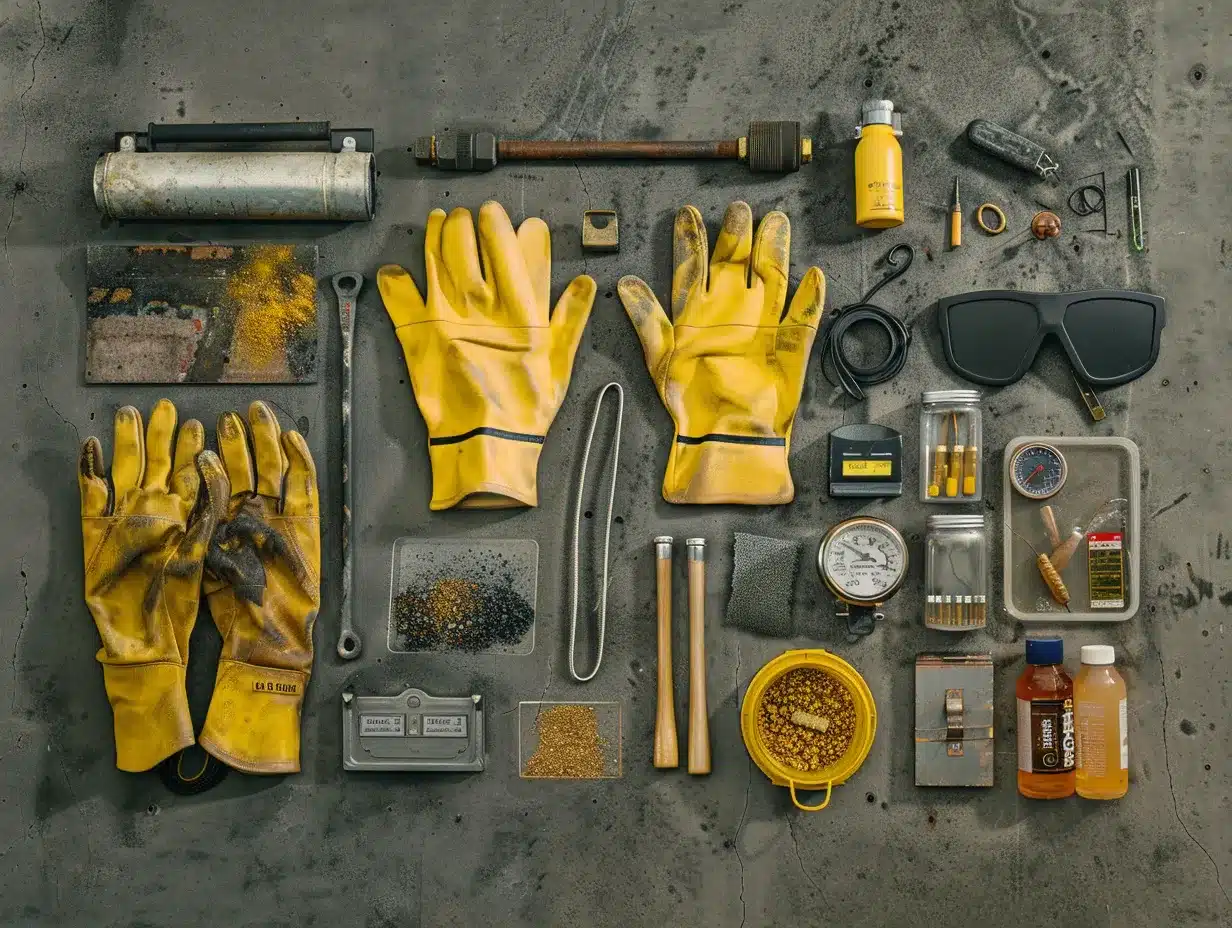
Essential Safety Requirements
NEVER ATTEMPT GOLD MELTING WITHOUT:
- Adequate Ventilation:
- Outdoor operation strongly recommended
- If indoor: professional exhaust ventilation system required
- Gold alloys release potentially toxic fumes (zinc oxide, copper oxide)
- Never melt in enclosed spaces without industrial ventilation
- Fire Safety Equipment:
- Class D fire extinguisher (rated for metal fires) – mandatory
- Water makes metal fires worse – never use water on burning gold/crucible
- Sand bucket as backup suppression method
- Clear 10-foot radius around melting area – no flammable materials
- Personal Protective Equipment:
- Welding goggles or face shield (UV/infrared protection) – molten gold emits intense light
- Heat-resistant gloves rated minimum 1,400°F (760°C)
- Long-sleeved cotton clothing (not synthetic – melts/burns)
- Closed-toe leather shoes
- Respirator if ventilation inadequate
- Proper Work Surface:
- Concrete, metal table, or firebrick base
- Never wood, plastic, or flammable surfaces
- Stable, level surface preventing crucible tip-over
- Heat-resistant mat under work area
- Emergency Preparedness:
- Know emergency contact numbers
- Have burn first aid kit accessible
- Never melt gold alone – have someone nearby
- Understand what to do if molten gold spills
Substances NEVER to Melt:
- Gold-plated jewelry (toxic base metal fumes, minimal gold)
- Jewelry with stones still attached (gems crack/burn, create hazards)
- Jewelry with unknown composition (potential toxic alloys)
- Gold-colored costume jewelry (not real gold)
Equipment Requirements
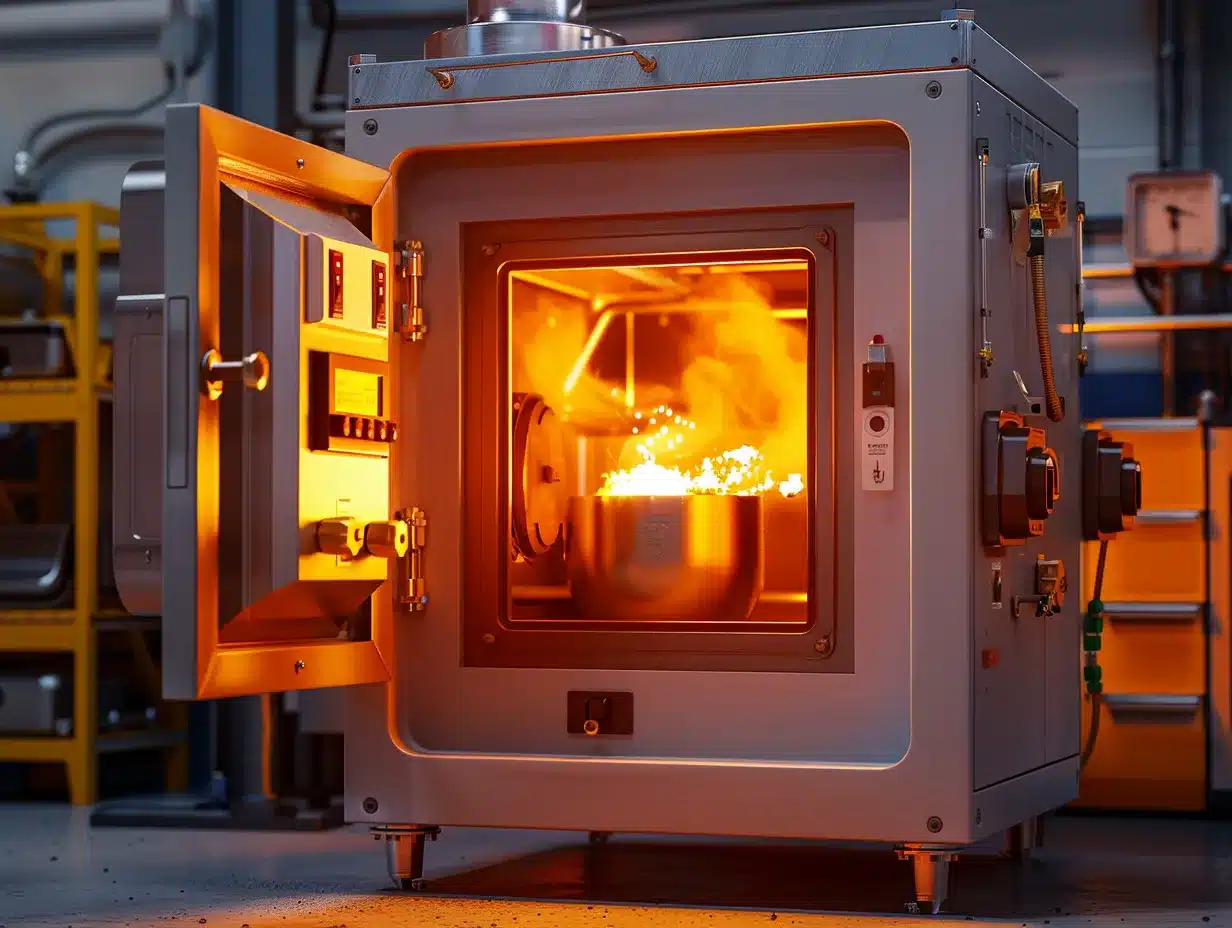
Method 1: Electric Melting Furnace (Recommended for Beginners)
🔥 Professional Electric Melting Furnaces
Option 1: MMasters 3KG Electric Melting Furnace
- ✓ 1,400W power – reaches 2,102°F (1,150°C)
- ✓ Digital PID temperature control (precise)
- ✓ Includes graphite crucible + ingot molds
- ✓ Melts 3kg (6.6 lbs) capacity
- ✓ Automatic temperature maintenance
- ✓ Safe enclosed design – no open flame
- ✓ Perfect for beginners – set temperature and wait
Option 2: GIZMIT 2KG Gold Melting Furnace
- ✓ 1,750W higher power – faster melting
- ✓ 2,100°F maximum temperature
- ✓ Complete kit: crucible, tongs, gloves included
- ✓ 2kg capacity – ideal for smaller batches
- ✓ Digital display with precise control
Why electric furnace: Safest method, consistent temperature, hands-free operation, no open flame. Best for beginners and regular use. Higher upfront cost ($250-400) justified by safety and ease of use.
Electric Furnace Advantages:
- Precise digital temperature control
- Consistent heating – no manual adjustment needed
- Enclosed chamber – safer than open torch
- Hands-free operation once temperature set
- Less skill required than torch methods
- Can melt multiple small pieces simultaneously
Electric Furnace Disadvantages:
- Higher initial investment ($250-600)
- Requires 110V electrical outlet
- Less portable than torch
- Takes 30-45 minutes to reach temperature
- Maximum capacity limited by furnace size
Method 2: Propane/MAPP Gas Torch
🔧 Torch Melting Equipment
Tabletop Pro Propane Melting Kiln
- ✓ Portable design – take anywhere
- ✓ Melts 2-10 troy ounces gold
- ✓ Uses standard propane bottles (not included)
- ✓ Ceramic insulated chamber
- ✓ Lower cost than electric ($100-200)
- ✓ Faster melting for small quantities
Alternative: High-Temperature Torch + Crucible
- MAPP gas torch (burns hotter than propane)
- Separate graphite crucible required
- Most economical method ($50-100 total)
- Requires manual skill and steady hand
- Best for very small quantities (under 10 grams)
Torch Method Advantages:
- Lower initial cost ($50-200)
- Highly portable
- Fast heating for small amounts
- Visible process – watch gold melt
- No electricity required
Torch Method Disadvantages:
- Requires manual skill – torch positioning critical
- Open flame increases fire hazard
- Difficult to maintain consistent temperature
- Hand fatigue during longer melting sessions
- Less safe for beginners
- Outdoor use strongly recommended
Essential Accessories (Both Methods)
🔨 Required Accessories
1. Graphite Crucibles (if not included)
- High-Purity Graphite Crucible Set
- ✓ Multiple sizes for different quantities
- ✓ Withstands 3,000°F+ temperatures
- ✓ Reusable 50-100+ melts with proper care
- ✓ Better heat transfer than ceramic
2. Crucible Tongs
- Professional Crucible Tongs
- ✓ Long-handled (12-18 inches) for safe distance
- ✓ Spring-loaded or locking design
- ✓ Secure grip prevents drops
3. Ingot Molds
- Graphite Ingot Mold Set
- ✓ Various sizes: 1oz, 5oz, 10oz bars
- ✓ Graphite or cast iron construction
- ✓ Preheat molds before pouring (prevents cracks)
4. Borax Flux
- Pure Borax Powder
- ✓ Prevents gold oxidation during melting
- ✓ Creates protective layer on molten gold
- ✓ Helps separate impurities into slag
Safety Equipment
🛡️ MANDATORY Safety Equipment
1. Welding Safety Goggles – Shade 5
- ✓ UV and infrared protection
- ✓ Molten gold emits intense light
- ✓ Prevents eye damage from glare
- ✓ NON-NEGOTIABLE – always wear
2. Heat-Resistant Gloves (1,400°F Rated)
- ✓ Kevlar or leather construction
- ✓ Long cuffs protect forearms
- ✓ Maintains dexterity for tool handling
- ✓ Never touch hot crucibles bare-handed
- ✓ Specifically rated for metal fires
- ✓ Standard ABC extinguishers ineffective on molten metal
- ✓ Keep within arm’s reach during melting
- ✓ Know how to operate BEFORE emergency
4. Face Shield (Additional Protection)
- Full-face shield used WITH goggles (not instead of)
- Protects from splatter if pouring goes wrong
- Essential for torch melting
Testing and Measurement Equipment
🔬 Testing Equipment
1. Gold Testing Kit (Acid Test)
- ✓ Verify karat before melting
- ✓ Includes testing acids for 10K-24K
- ✓ Test stone (touchstone) included
- ✓ Essential if stamps unclear/missing
- ✓ 0.001 troy ounce precision
- ✓ Measure gold before/after melting
- ✓ Calculate expected yield
- ✓ Track losses during process
3. Temperature Gauge (For Torch Method)
- Infrared thermometer or pyrometer
- Verify crucible reaches proper temperature
- Prevent overheating (increases losses)
Preparation Steps
Step 1: Verify and Sort Gold
- Identify karat markings: Look for stamps (10K, 14K, 18K, etc.)
- Test unmarked pieces: Use acid testing kit if stamps missing
- Separate by karat: Never melt different purities together
- Remove all non-gold components:
- Gemstones (will crack/burn – damage crucible)
- Clasps/findings (often base metal)
- Springs (steel – won’t melt with gold)
- Solder joints (different melting point)
- Clean gold thoroughly: Remove dirt, oils, residues
- Weigh gold precisely: Record starting weight for loss calculation
Step 2: Calculate Expected Yield
Example Calculation:
If melting 20 grams of 14K gold jewelry:
- 14K = 58.3% pure gold
- 20 grams × 0.583 = 11.66 grams pure gold content
- Typical melting loss: 1-2% = 0.12-0.23 grams
- Expected recovered gold: 11.43-11.54 grams
This calculation helps verify results – significant deviation indicates problems (incomplete melting, excessive oxidation, measurement errors).
Step 3: Workspace Setup
Ideal Workspace:
- Location: Outdoor strongly preferred; if indoor, professional ventilation mandatory
- Surface: Concrete, metal table, or multiple firebricks
- Clearance: 10-foot radius free of flammable materials
- Lighting: Good visibility (but will wear goggles blocking some light)
- Weather: Dry conditions – never melt in rain/high winds
- Fire safety: Extinguisher and sand bucket immediately accessible
- First aid: Burn treatment supplies nearby
- Communication: Phone accessible for emergencies
- Assistant: Have someone aware you’re melting (never alone)
Melting Process – Electric Furnace Method
Step-by-Step Electric Furnace Process
- Equipment Inspection:
- Verify furnace in good condition – no cracks/damage
- Check electrical cord and connections
- Inspect graphite crucible for cracks
- Have all safety equipment ready
- Load Crucible:
- Place clean, sorted gold pieces in crucible
- Add approximately 1 teaspoon borax flux per 10 grams gold
- Don’t overfill – leave 30% empty space at top
- Larger pieces on bottom, smaller on top
- Position Crucible in Furnace:
- Center crucible carefully – must sit level
- Ensure stable positioning – won’t tip during heating
- Close furnace lid securely
- Set Temperature:
- For 10K-14K gold: Set 900-950°C (1,652-1,742°F)
- For 18K gold: Set 950-1,000°C (1,742-1,832°F)
- For 22K-24K gold: Set 1,070-1,100°C (1,958-2,012°F)
- Set 50-100°C above melting point for complete liquification
- Heating Phase:
- Turn on furnace – heating begins automatically
- Initial heating: 30-45 minutes to reach temperature
- Monitor temperature display – verify reaching set point
- Don’t open furnace during heating (heat loss)
- Wear goggles when checking through viewing window
- Melting Complete:
- Gold fully liquified appears shiny, mirror-like
- Slag (impurities) floats on surface as dark layer
- Hold at temperature 5-10 minutes ensuring complete melt
- Prepare ingot mold (preheat if cold)
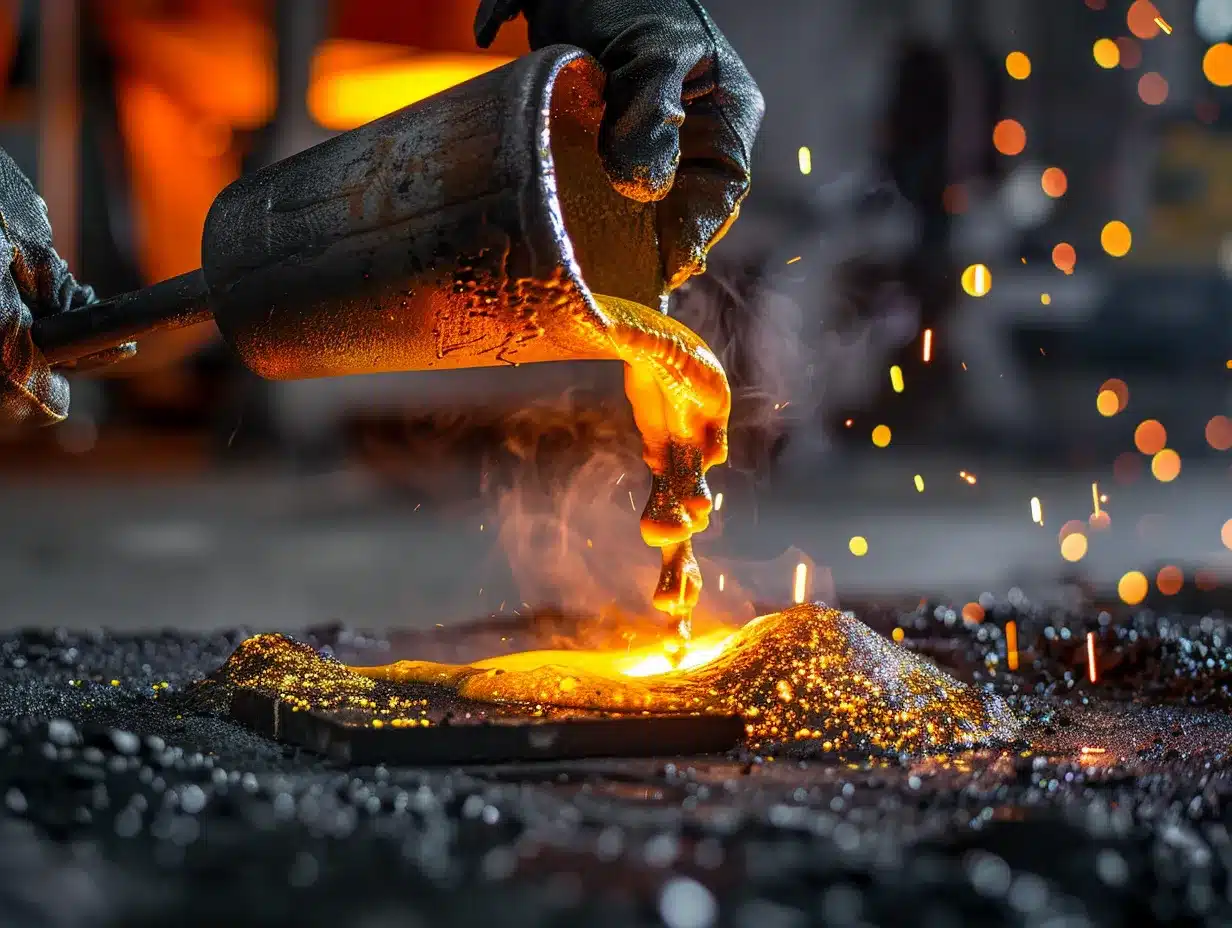
- Pouring:
- Put on all safety equipment (goggles, gloves, face shield)
- Use crucible tongs to grip hot crucible firmly
- Lift crucible from furnace slowly and steadily
- Position over preheated ingot mold
- Pour in single smooth motion – don’t hesitate
- Slight circular motion helps slag stay in crucible
- Return empty crucible to furnace or heat-resistant surface
- Cooling:
- Allow ingot to cool naturally – don’t quench in water
- Rapid cooling can crack gold or mold
- Gold solidifies quickly (2-3 minutes) but remains extremely hot
- Wait 15-20 minutes before touching even with gloves
- Remove from mold once completely cool
- Cleanup:
- Turn off furnace, allow complete cool-down
- Clean crucible when cool (warm water, scrub gently)
- Collect slag – contains trace gold (can be refined professionally)
- Weigh finished ingot, calculate loss percentage
- Store equipment properly for next use
Melting Process – Torch Method
Step-by-Step Torch Process
- Setup:
- Work outdoors on concrete or firebrick surface
- Position graphite crucible on stable heat-resistant base
- Have ingot mold, tongs, and safety equipment ready
- Check torch connections – no leaks
- Load and Flux:
- Place sorted gold in crucible
- Add borax flux (1 teaspoon per 10 grams)
- Larger pieces on bottom
- Ignite Torch:
- Light torch according to manufacturer instructions
- Adjust flame to blue cone (hottest point)
- Position flame tip 2-3 inches from crucible
- Heating Process:
- Direct flame at gold pieces in circular motion
- Maintain steady distance – too close wastes gas, too far ineffective
- Watch gold color changes: dull red → bright red → orange → white hot
- When white hot, gold begins melting
- Continue heating until completely liquid (shiny pool)
- Heating time: 5-15 minutes depending on quantity
- Complete Melting:
- Fully molten gold appears mirror-like, flows smoothly
- May see slight swirling motion from heat
- Slag floats as dark crust on top
- Continue heating 2-3 minutes ensuring full liquification
- Pouring:
- Turn off torch or set aside safely
- Immediately use tongs to lift crucible
- Pour into preheated mold in smooth motion
- Work quickly – gold begins solidifying within seconds
- Safety Notes:
- Torch melting requires practice – start with small quantities
- Hand fatigue is real – take breaks if melting multiple batches
- Always have clear exit path in case of emergency
- Never lean over crucible – molten metal can splatter
After Melting: Finishing and Refining
Ingot Finishing
- Remove from Mold: Tap gently once completely cool
- Clean Surface: Wire brush removes flux residue and oxidation
- File Rough Edges: Smooth any sharp corners
- Stamp if Desired: Some melters stamp weight and karat
- Polish (Optional): Polishing cloth brings out shine
Verifying Results
Weight Comparison:
- Weigh finished ingot on troy ounce scale
- Compare to expected yield calculation
- Typical loss: 0.5-2% (acceptable range)
- Loss over 3% indicates problems (poor technique, impure gold, measurement error)
Testing Purity:
- Home melting doesn’t increase purity – only consolidates existing gold
- 14K jewelry melted = 14K ingot (still 58.3% pure)
- Increasing purity requires professional refining (chemical/electrolytic processes)
- Test ingot with acid kit confirming same karat as starting material
Slag Recovery
Dark slag coating crucible after melting contains trace gold amounts (typically 0.1-0.5% of total). Options:
- Save for professional refining: Collect slag from multiple melts, send to refinery
- Remelt with fresh batch: Include old slag with new gold (recovered gold melts with new batch)
- Discard (small quantities): If gold value minimal, dispose per local hazardous waste guidelines
When to Choose Professional Refining
Situations Requiring Professional Services
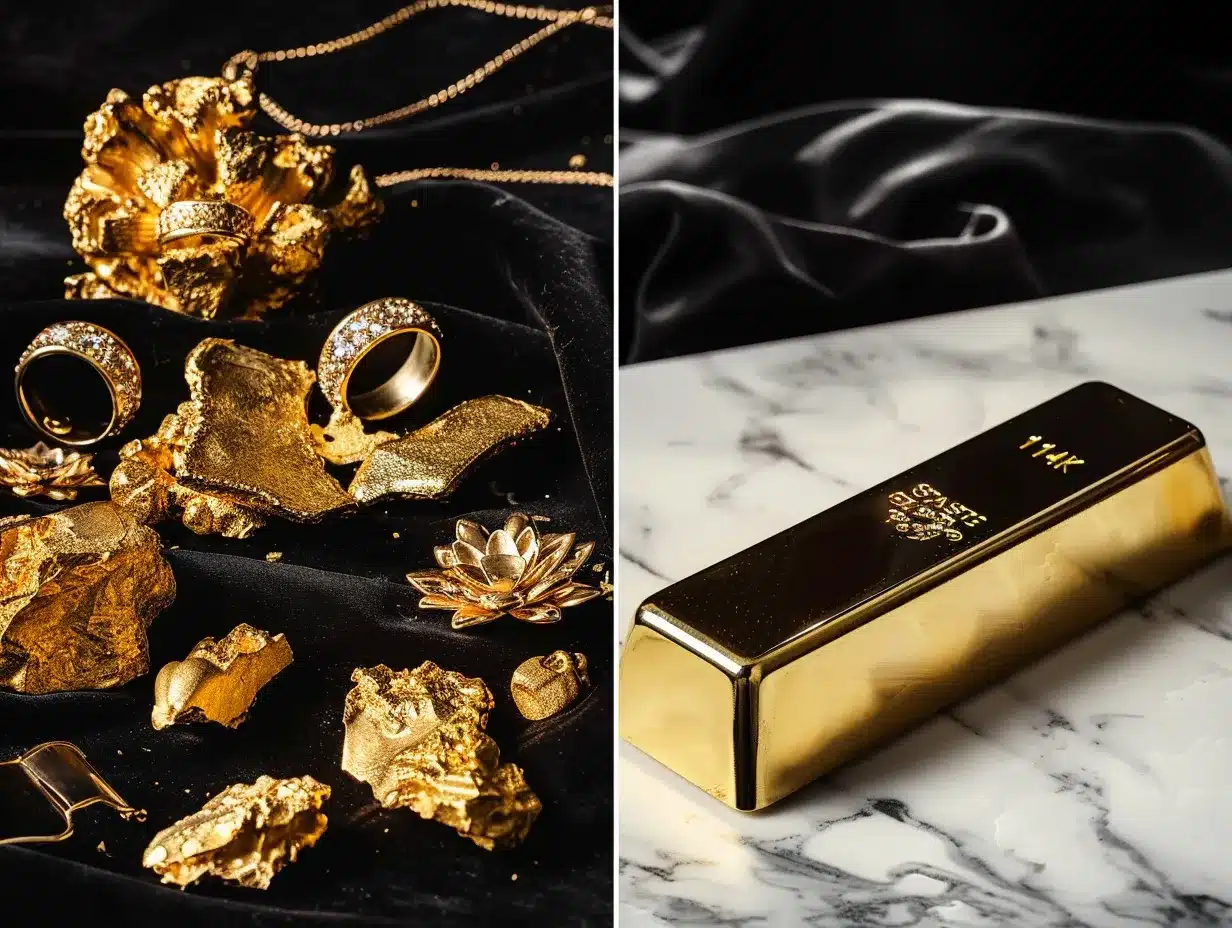
1. Increasing Purity:
Home melting consolidates gold but doesn’t increase purity. Converting 14K into higher purity (18K, 22K, .999 fine) requires professional refining through chemical processes (aqua regia) or electrolytic refining unavailable to home melters.
2. Large Quantities:
Melting 50+ grams repeatedly at home becomes inefficient. Professional refiners handle large batches efficiently, provide accurate assays, and guarantee specific purities. Insurance and liability concerns also favor professional processing for valuable quantities.
3. Mixed Metals:
Jewelry containing gold plus significant silver, platinum, or other precious metals requires professional separation. Home melting creates alloy ingot – doesn’t separate metals.
4. Preparing for Sale:
Reputable gold buyers prefer professionally refined gold with assay certificates. Home-melted ingots sell at lower rates due to uncertain purity. Professional refining provides documented purity (99.9%+) commanding higher prices.
5. Complex Jewelry:
Intricate pieces with multiple components, difficult-to-remove stones, or unknown compositions better handled by professionals with specialized equipment and expertise.
6. Liability Concerns:
If melting gold belonging to others (estate liquidation, jewelry business), professional services provide documentation, insurance, and legal protection home melting cannot.
Professional Refining Process
Reputable refiners typically:
- Provide insured shipping for sending gold
- Assay (test) gold accurately determining exact content
- Refine to specified purity (typically 99.9%)
- Return as ingots, grain, or cash payment
- Charge 5-15% processing fee depending on quantity and services
- Provide certificates of assay and purity
For quantities over 20-30 grams or when guaranteed purity required, professional refining often worth the cost.
Frequently Asked Questions
What temperature does gold melt at?
Pure 24K gold melts at exactly 1,064°C (1,947°F). However, most jewelry is not pure gold – it contains alloys that lower the melting point. 18K gold (75% pure) melts at approximately 900-950°C (1,652-1,742°F), 14K gold (58.3% pure) melts at 879-927°C (1,615-1,700°F), and 10K gold (41.7% pure) melts at approximately 850-900°C (1,562-1,652°F). The specific melting point depends on which metals are alloyed with the gold – copper, silver, zinc, and nickel all affect the temperature differently. Always verify your gold’s karat before melting to determine the required temperature.
Can I melt gold jewelry at home safely?
Yes, you can melt gold at home safely with proper equipment, workspace setup, and safety precautions. However, it involves extreme temperatures (1,000°C+), serious fire hazards, and potential toxic fumes from alloys. Essential safety requirements include: adequate ventilation (outdoor or professional exhaust system), fire extinguisher rated for metal fires, heat-resistant work surface (concrete, metal, firebrick), eye protection (welding goggles or face shield rated for UV), heat-resistant gloves rated to 1,400°F+, no flammable materials within 10 feet, and knowledge of emergency procedures. Never melt gold-plated jewelry (minimal gold content, toxic base metal fumes), gold with stones still attached (gemstones will crack or burn), or indoors without proper ventilation. Many people successfully melt gold at home, but it requires respect for the dangers and proper preparation.
What equipment do I need to melt gold?
Essential equipment for melting gold includes: (1) Heat source – either electric melting furnace (easiest, most controlled, $200-600) or propane/MAPP gas torch ($50-150 for torch, requires manual skill); (2) Crucible – graphite or ceramic container rated for gold’s melting point, size depends on gold quantity; (3) Crucible tongs – long-handled tongs for safely moving hot crucible; (4) Ingot molds – metal or graphite molds for casting melted gold into bars; (5) Flux – borax powder prevents oxidation during melting; (6) Safety equipment – welding goggles, heat-resistant gloves, face shield, fire extinguisher; (7) Testing equipment – gold testing kit to verify purity before and after melting; (8) Digital scale – troy ounce scale for precise measurements. Total investment ranges from $300-800 depending on method chosen. Electric furnaces provide better temperature control and are safer for beginners than torch methods.
Is it legal to melt down gold jewelry?
In most countries including the United States, it is legal to melt your own gold jewelry for personal use. However, several legal considerations apply: (1) You can only melt gold you legally own – melting stolen jewelry is illegal; (2) Some jurisdictions require permits or licenses for operating smelting equipment at home due to fire safety and environmental regulations – check local codes; (3) Selling refined gold may require precious metals dealer licensing depending on your location and transaction volume; (4) Tax implications exist – selling refined gold may be taxable as capital gains; (5) Environmental regulations govern disposal of crucibles and contaminated materials; (6) Homeowners insurance may not cover damages from home smelting operations – verify coverage; (7) Some HOAs and rental agreements prohibit home smelting. Always verify local, state, and federal regulations before beginning. When in doubt, consult a professional refiner who operates with all necessary permits and insurance.
How much gold is lost during the melting process?
With proper technique, gold loss during melting is minimal – typically 0.5-2% of total weight. This small loss occurs from: (1) Oxidation – despite flux protection, trace amounts oxidize and are absorbed by crucible; (2) Vaporization – at extreme temperatures, microscopic gold amounts vaporize; (3) Slag formation – impurities combine with flux creating slag that traps tiny gold particles; (4) Spillage – pouring molten gold can result in small droplets lost; (5) Crucible absorption – porous crucibles absorb trace amounts. To minimize losses: use high-quality graphite crucibles (less absorption), apply adequate borax flux (prevents oxidation), maintain steady temperature without overheating (reduces vaporization), pour carefully into preheated molds (prevents splatter), and collect slag for professional refining (recovers trapped gold). Professional refineries achieve 99%+ recovery through specialized equipment and chemical processes unavailable to home melters. For small quantities (under 10 grams), losses are barely noticeable. Larger quantities justify professional refining services.
Conclusion
Melting gold jewelry transforms damaged, outdated, or unwanted pieces into consolidated ingots or prepares material for custom casting projects. While the process involves extreme temperatures and serious safety considerations, proper equipment and careful technique enable successful home melting for appropriate quantities.
This guide covered complete requirements: understanding melting points by karat, legal and safety considerations, equipment selection (electric furnace versus torch methods), detailed melting procedures, and realistic assessment of when professional refining services offer better solutions. The recurring emphasis on safety reflects genuine dangers – melting gold demands respect for extreme temperatures, fire hazards, and potential toxic exposures.
Key takeaways: Verify gold purity before melting, separate by karat, invest in proper equipment (don’t improvise safety gear), establish adequate workspace with ventilation and fire protection, practice technique with small quantities before attempting valuable batches, and recognize professional refining’s advantages for large quantities or purity increases.
Home gold melting suits hobbyists, jewelry makers consolidating scrap, and individuals with modest quantities seeking hands-on control of their gold. However, professional refiners provide superior results for large-scale operations, guaranteed purity requirements, and situations where documentation and insurance matter. Evaluate your specific needs, available equipment, skill level, and safety capabilities before proceeding.
If you choose home melting after reviewing these comprehensive requirements, proceed methodically with appropriate caution. If uncertainties remain or safety requirements seem beyond your capabilities, professional refining services offer risk-free alternatives with guaranteed results. Your gold’s value and your personal safety justify choosing the method best suited to your situation.
Last Updated: December 2024 | This article contains affiliate links. As an Amazon Associate, I earn from qualifying purchases at no additional cost to you. This content is for educational purposes only. Always follow safety guidelines and local regulations.

Hi, I’m Sara Hein, a passionate jewelry researcher and educator. I created Jewelry Carats to share well-researched insights on gemstones, precious metals, and jewelry care. My goal is making expert jewelry knowledge accessible to everyone.