
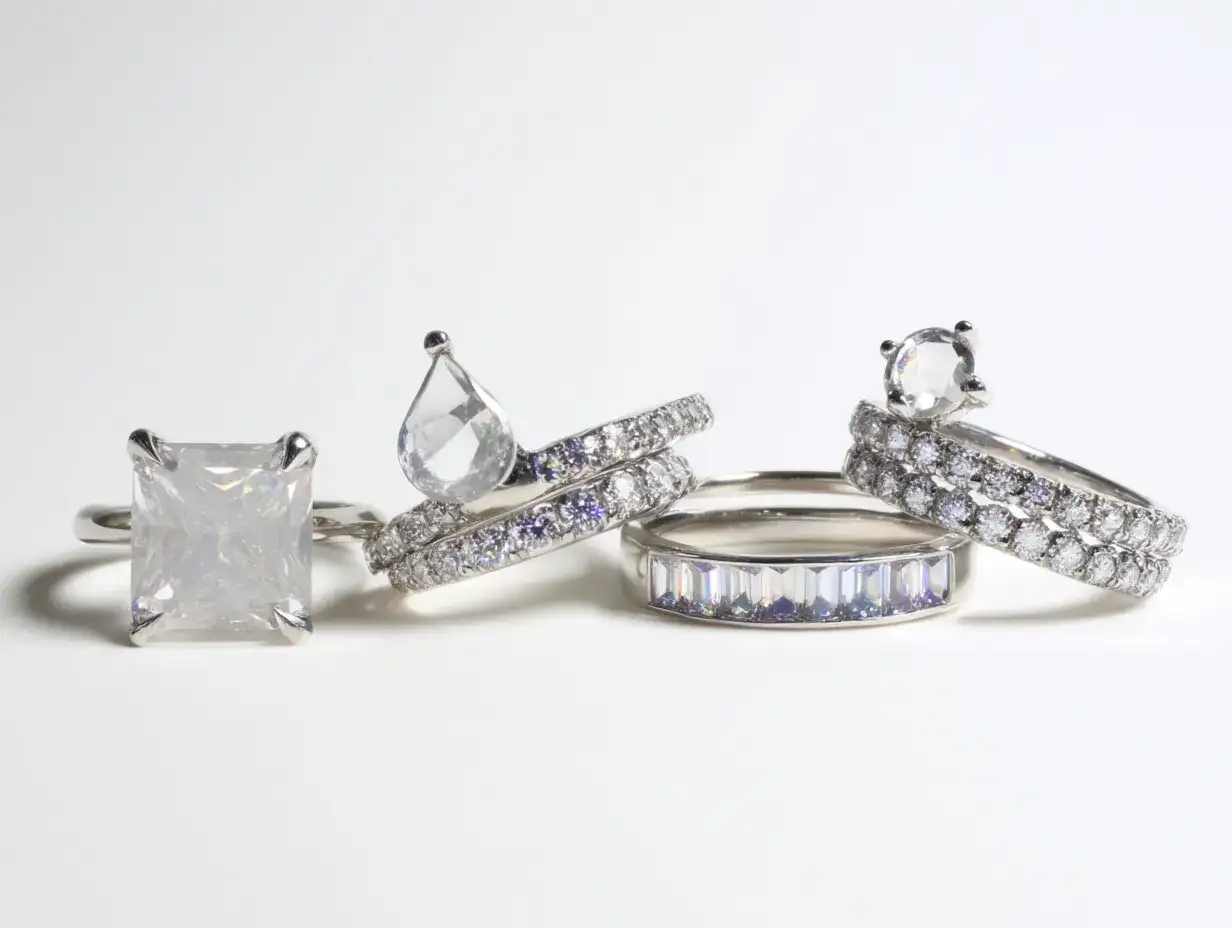
Complete DIY & Professional Guide
Removing gemstones from jewelry is a delicate task that requires careful planning, the right tools, and knowledge of when to attempt it yourself versus seeking professional help. Whether you’re looking to repair a damaged piece, redesign an heirloom, harvest stones for a new creation, or prepare jewelry for resale, understanding proper gemstone removal techniques can save you from costly mistakes and irreversible damage.
This comprehensive guide covers everything from identifying jewelry settings and selecting appropriate tools to mastering safe removal techniques for different gemstone types. You’ll learn which removal projects are suitable for DIY enthusiasts and which absolutely require a professional jeweler’s expertise. Most importantly, you’ll discover how to protect both your gemstones and their settings throughout the removal process, avoiding the common mistakes that lead to chipped stones, bent prongs, or damaged metal.
Before attempting any gemstone removal, it’s essential to understand that not all jewelry is suitable for at-home work. Valuable pieces, complex settings, heat-sensitive gemstones, and items still under warranty should always be entrusted to certified jewelers. However, with proper precautions and technique, many straightforward gemstone removal projects can be accomplished successfully at home.
Should You Remove Gemstones Yourself or Hire a Professional?
The decision between DIY gemstone removal and professional service hinges on several critical factors including the jewelry’s value, setting complexity, your skill level, and the gemstone’s fragility. Making the right choice protects both your investment and your peace of mind.
When DIY removal is generally safe: You can typically attempt at-home removal for costume jewelry, pieces with simple prong settings containing durable stones like diamonds or sapphires, glued stones on inexpensive items, and jewelry you’re comfortable risking minor damage to while learning. The key requirement is having proper tools, adequate lighting, a steady workspace, and realistic expectations about potential outcomes.
When professional help is absolutely required: Always consult a certified jeweler for engagement rings or wedding bands, jewelry valued over $500, pieces with pavé or channel settings, tension-set gemstones, items containing heat-sensitive stones like opals or emeralds, antique or heirloom pieces, jewelry still under warranty or with certificates, and any piece where stone damage would be devastating emotionally or financially. According to data from major jewelry repair services, professional stone removal typically costs between $25-$80, with many jewelers offering the service free when you’re having stones reset in their shop.
The cost-benefit analysis often favors professional removal. A PriceScope community discussion revealed that most reputable jewelers complete simple stone removal in under five minutes and charge minimally or nothing at all. Compare this to the potential cost of replacing a chipped diamond (potentially thousands of dollars) or repairing a bent platinum setting ($100-$300), and professional service becomes remarkably cost-effective for valuable pieces.
Insurance and warranty considerations also matter significantly. Many jewelry warranties explicitly void coverage if owners attempt their own repairs or modifications. Before touching any valuable piece, review your insurance policy and any manufacturer warranties. Some homeowners insurance policies cover jewelry damage during professional service but not DIY attempts. Document your jewelry’s condition with photos before any work begins, regardless of who performs it.
Understanding Different Jewelry Settings
Jewelry settings vary dramatically in complexity, and understanding the type you’re working with is essential before attempting gemstone removal. Each setting style requires different techniques, tools, and skill levels.
Prong or Claw Settings are the most common and generally the easiest for DIY removal. These settings use small metal claws (typically 4-6) that grip the gemstone’s girdle. With proper tools like a prong lifter, these can be carefully bent back to release the stone. Difficulty rating: Beginner to Intermediate. The International Gem Society notes that prong settings account for approximately 60% of all diamond engagement rings, making them the setting type most people will encounter.
Bezel Settings feature a metal rim that wraps completely or partially around the gemstone’s perimeter. Removal requires either carefully cutting the bezel with a jeweler’s saw or using specialized bezel pushers to lift the metal away from the stone. These settings offer excellent stone protection but can be challenging to remove without damaging the setting for future reuse. Difficulty rating: Intermediate to Advanced.
Channel Settings secure multiple stones in a row within a metal channel with no metal between the stones. The stones are held by a groove in the channel walls. Removing stones from channel settings almost always requires professional equipment and expertise, as the process often involves cutting metal or using specialized extraction tools. Difficulty rating: Professional Recommended.
Pavé Settings feature numerous small stones set very close together, held by tiny beads or prongs. The dense stone placement and delicate metalwork make DIY removal extremely risky. Even experienced jewelers approach pavé work with caution. A single mistake can damage multiple surrounding stones. Difficulty rating: Professional Only.
Tension Settings hold gemstones in place through pressure from the metal band alone, with no prongs or bezels. According to GIA research, these settings require precise engineering and removing stones from them typically means altering or destroying the setting’s carefully calibrated tension. Difficulty rating: Professional Only.
Flush or Gypsy Settings embed the stone directly into the metal, sitting level with or slightly below the metal surface. Removal typically requires drilling or cutting the surrounding metal, making it impossible to remove stones without significantly altering the setting. Difficulty rating: Professional Recommended.
Glued Settings are common in costume jewelry and fashion pieces. The gemstone is simply adhered to the metal base with strong adhesive. These are often the easiest to remove using heat or solvents like acetone, though care must be taken not to damage the gemstone itself during the process. Difficulty rating: Beginner.
Invisible Settings create the illusion of floating gemstones with no visible metal holding them. The stones are actually grooved on their pavilions and slide onto metal tracks. This complex engineering requires professional tools and expertise to disassemble safely. Difficulty rating: Professional Only.
Essential Tools for Gemstone Removal
Having the right tools transforms gemstone removal from a risky gamble into a controlled process. While professional jewelers have access to specialized equipment costing thousands of dollars, home enthusiasts can assemble an effective toolkit for under $50.
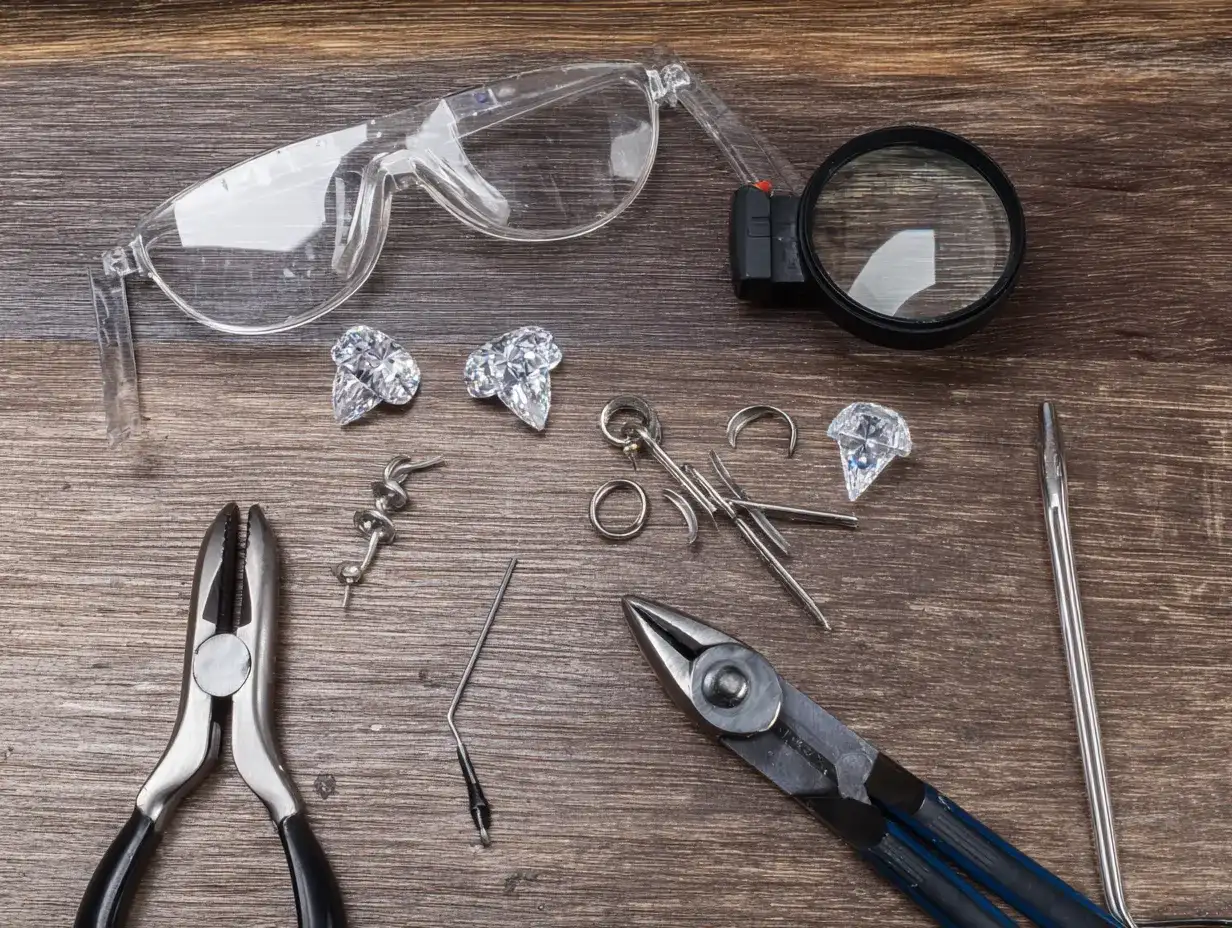
Basic essential tools include a jeweler’s loupe (10x magnification minimum) for close inspection, chain-nose pliers for gripping and manipulating metal, tweezers with fine tips for handling small stones, a soft work mat to prevent stones from rolling away, and safety glasses to protect your eyes from flying debris or metal fragments. These basics handle most simple prong-set stone removal projects.
🔧 Recommended Prong Lifter Tool
SFC Tools Prong Lifter Stone Removal Tool
- ✓ Features 7 different prong slot sizes (0.58mm to 2.34mm)
- ✓ Professional-grade carbon steel construction
- ✓ Designed specifically for gentle prong manipulation
- ✓ Prevents scratching stones during removal

Prong Lifter Stone Removal Tool - SFC Tools - 53-144
Professional-grade tools significantly improve success rates and include a prong lifter with multiple slot sizes for accessing different prong thicknesses, bezel pushers for working with bezel settings, a ring clamp to securely hold jewelry during work, a bench pin for support during precise work, and a jeweler’s saw with fine blades for cutting metal when necessary. These tools are available individually or in sets from jewelry supply retailers.
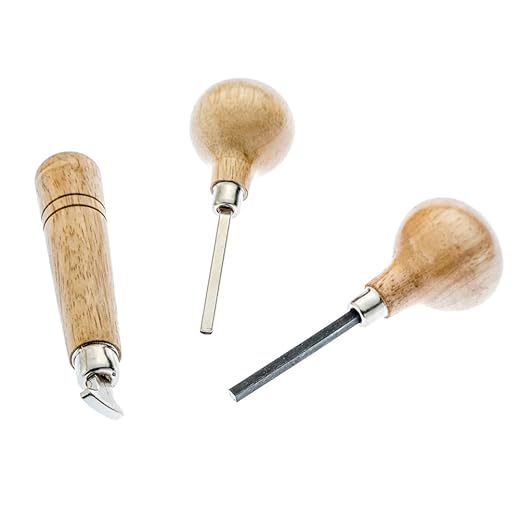
🛠️ Recommended Stone Setting Tool Set
Professional 3-Piece Stone Setting Tool Set
- ✓ Includes prong pusher, bezel pusher, and bezel roller
- ✓ Ergonomic hardwood handles for comfortable grip
- ✓ Can be used for both stone setting and careful removal
- ✓ Budget-friendly complete starter set
Safety equipment cannot be skipped. According to occupational safety guidelines compiled by jewelry industry organizations, protective eyewear prevents approximately 90% of eye injuries during jewelry work. You’ll also need a well-lit workspace with a task lamp providing at least 1000 lumens, a small container for catching removed stones, and chemical-resistant gloves if working with solvents. For glued stone removal specifically, ensure adequate ventilation or work outdoors when using acetone or similar solvents.
Budget alternatives exist for those hesitant to invest in professional tools. Nail clippers can substitute for wire cutters in emergencies (though less precise), regular tweezers work if fine-tipped professional ones are unavailable, and a magnifying glass can replace a loupe for initial inspection. However, for anything beyond practice pieces or costume jewelry, investing in proper tools pays dividends in success rate and safety.
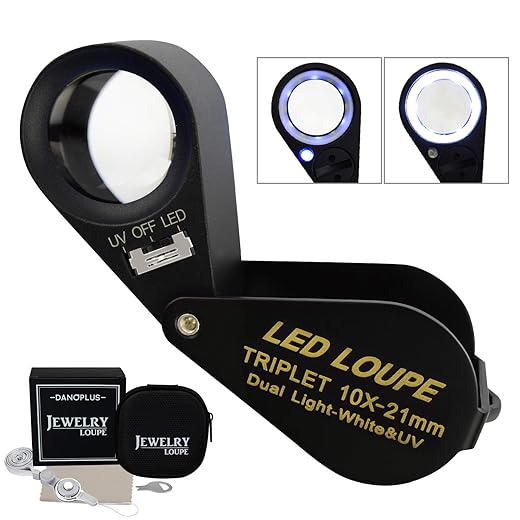
👓 Recommended Jeweler’s Magnification
10x Jeweler’s Loupe with LED Light
- ✓ Crystal-clear 10x magnification for detailed inspection
- ✓ Built-in LED lighting for better visibility
- ✓ Essential for identifying setting type and assessing condition
- ✓ Portable and easy to use for beginners
Safety Precautions Before You Begin
Safety must be your first priority when removing gemstones from jewelry. The combination of small, sharp metal components, potentially valuable gemstones, and the physical forces required for removal creates multiple hazard points.
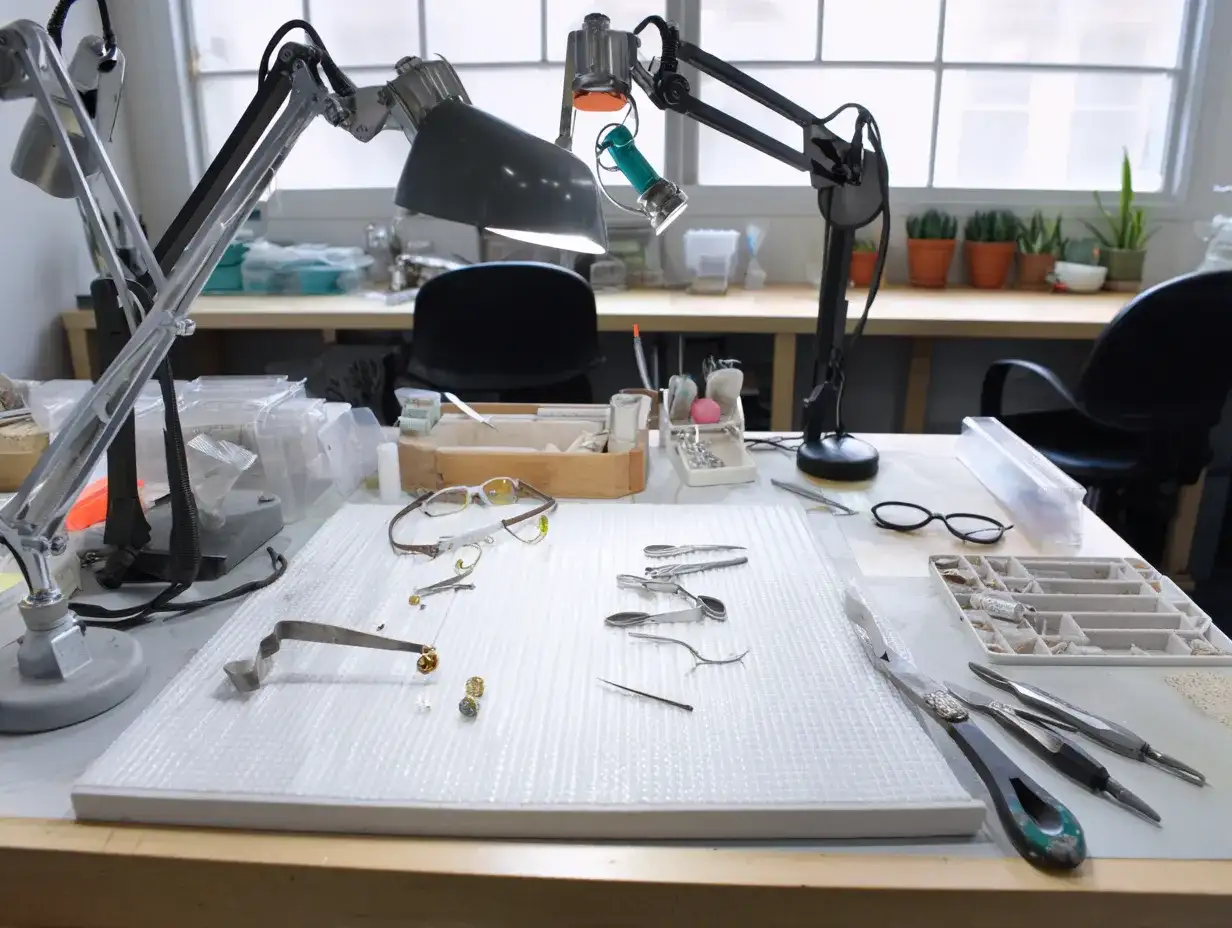
Workspace setup begins with choosing a stable, well-lit surface at comfortable working height. Cover your work area with a light-colored cloth or felt mat that prevents stones from bouncing or rolling if dropped. Position a small container or tray within easy reach to immediately secure removed stones. Eliminate distractions and ensure you won’t be bumped or startled during delicate work. Professional jewelers typically work in controlled environments with specialized benches, but a kitchen table with good overhead lighting can work for home projects if properly prepared.
Eye protection is absolutely non-negotiable. Small metal fragments, stone chips, or sprung prongs can cause serious eye injuries. Safety glasses should wrap around the sides of your face and have clear, impact-resistant lenses. Regular prescription glasses are not adequate protection. The Occupational Safety and Health Administration recommends Z87+ rated safety glasses for tasks involving small projectiles and sharp materials.
Proper lighting prevents mistakes and reduces eye strain. Position a task light to illuminate your work from above at approximately a 45-degree angle, avoiding shadows and glare. Natural daylight spectrum bulbs (5000-6500K) provide the most accurate color rendering for gemstone inspection. Many jewelers use specialized ring lights or surgical-style lamps providing 1000+ lumens of focused illumination.
Ventilation considerations become critical when working with chemical solvents like acetone for removing glued stones. These solvents release fumes that can cause headaches, dizziness, and respiratory irritation with prolonged exposure. Always work in a well-ventilated area or outdoors, keep solvent containers closed when not actively in use, and never smoke or have open flames nearby as most jewelry solvents are highly flammable.
Heat-sensitive gemstone awareness prevents irreversible damage. Before applying any heat-based removal technique, verify that your gemstone can tolerate temperature changes. Many common gemstones including opals, emeralds, pearls, and tanzanite are extremely heat-sensitive and can crack, cloud, or change color when exposed to even moderate temperature fluctuation.
Heat-Sensitive Gemstones: What You Need to Know
Understanding gemstone heat sensitivity is crucial for safe removal, as applying even moderate heat to the wrong stone can cause permanent damage worth hundreds or thousands of dollars. Heat sensitivity varies based on gemstone type, treatment history, and internal characteristics like inclusions or fractures.
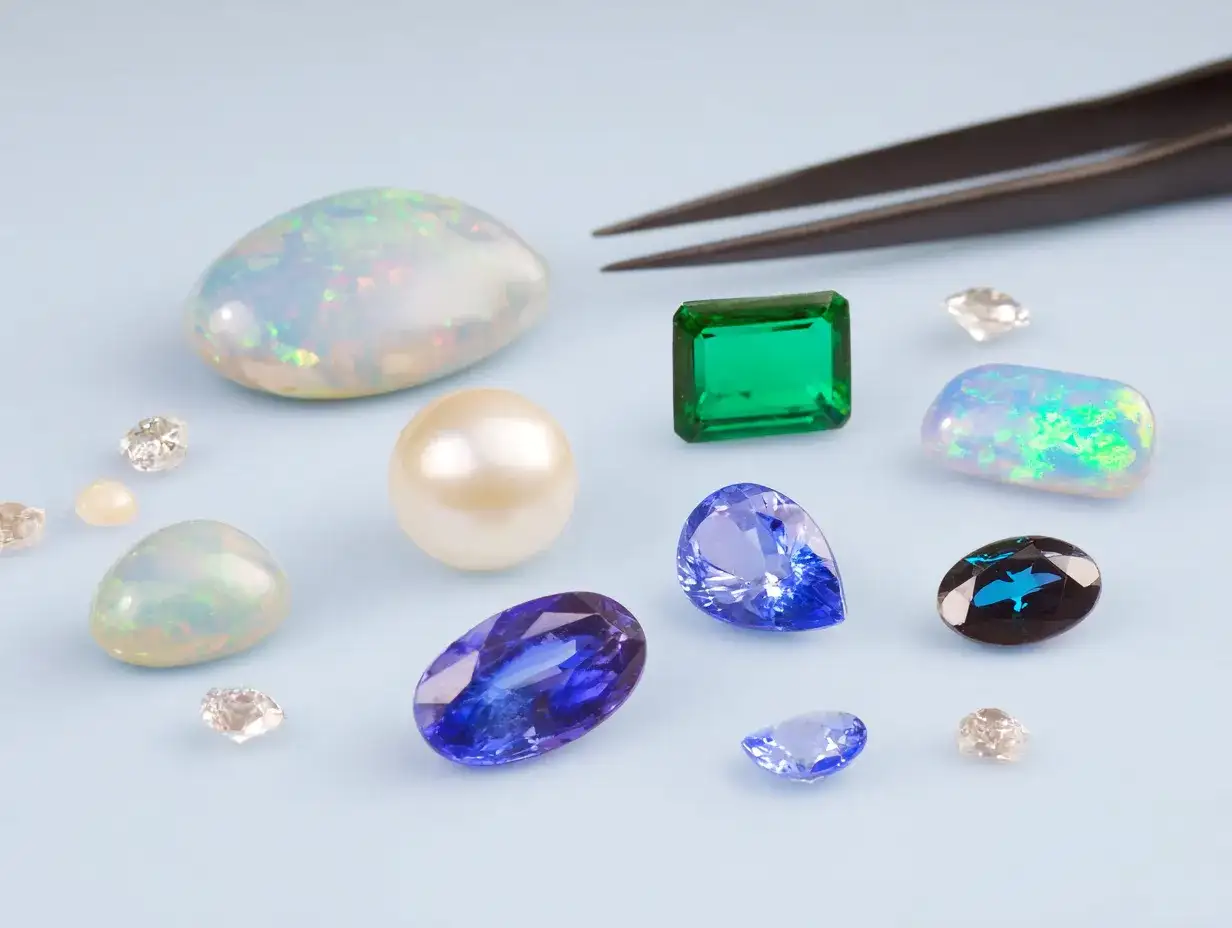
Opals top the list of heat-sensitive gemstones. These hydrated silica stones contain 3-21% water content, and rapid temperature changes can cause the water to expand or contract, creating cracks called “crazing.” Even brief exposure to a jeweler’s torch or hot water can irreversibly damage opals. According to International Gem Society guidelines, opals should only be cleaned with room-temperature water and never exposed to heat during jewelry repair.
Emeralds commonly receive clarity enhancement treatments using oils or resins to fill tiny fissures. Heat causes these filling materials to expand, leak out, or change appearance, drastically reducing the emerald’s visual appeal. Additionally, emeralds have a crystalline structure that makes them prone to thermal shock. The Gemological Institute of America estimates that 90% or more of emeralds on the market have received some form of treatment that makes them heat-sensitive.
Pearls are organic gems composed primarily of calcium carbonate layered with conchiolin protein. Heat damages both the nacre surface and internal structure, causing yellowing, cracking, or loss of luster. Pearl necklaces being repaired should never be exposed to hot water, steam cleaning, or any heat-producing equipment. Even prolonged exposure to strong sunlight can damage pearls over time.
Tanzanite, while relatively hard at 6.5-7 on the Mohs scale, is extremely sensitive to temperature change and can develop cleavages or fractures from thermal shock. Interestingly, natural tanzanite rough is typically brownish and achieves its famous blue-violet color through controlled heat treatment during initial processing. However, once faceted and set, tanzanite should not be exposed to heat again as it can cause color changes or structural damage.
Turquoise is a porous gemstone that readily absorbs oils, chemicals, and water. Heat dries out the stone and can cause color changes from the desirable blue to an unattractive greenish or brownish tone. Turquoise set in jewelry should never be heated, and even warm soapy water should be avoided during cleaning. Many turquoise specimens receive resin or wax treatments that heat would melt or alter.
Other heat-sensitive gemstones include amber (can develop fractures and change color), kunzite (can fade rapidly when heated), topaz (irradiated blue topaz can lose color), malachite (releases toxic fumes and can fracture), coral (organic material that bleaches and cracks), and lapis lazuli (calcite components can react badly to heat). Amethyst and aquamarine, while more stable, can show color changes if heated excessively, and garnets with liquid inclusions can crack if heat causes the liquid to expand.
Safe handling procedures for heat-sensitive stones include using only room-temperature water for cleaning, protecting stones with thermal barriers like wet paper clay or commercial heat shields during nearby soldering work, working quickly to minimize heat exposure if any heat application is unavoidable, and testing heat sensitivity on less visible areas first when possible. Professional jewelers often remove heat-sensitive stones before performing any hot work on the jewelry, then reset them afterward.
How to Remove Prong-Set Gemstones (Step-by-Step)
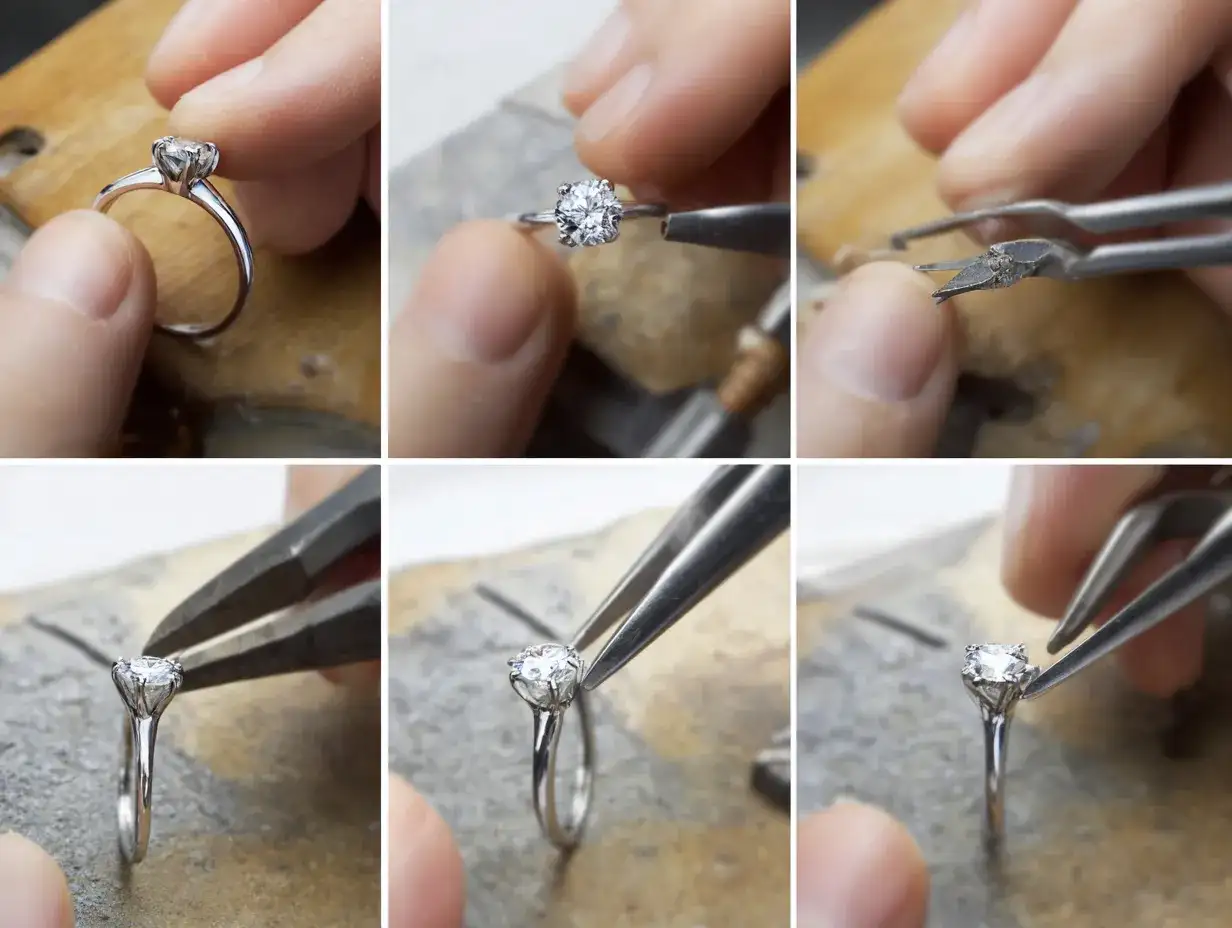
Prong-set gemstones represent the most straightforward setting type for DIY removal, but success requires patience, proper tools, and systematic technique. Rushing this process or using excessive force commonly results in bent prongs, scratched stones, or damaged settings.
Step 1: Inspect the setting thoroughly using a jeweler’s loupe or magnifying glass. Count the number of prongs (typically 4-6), check for any bent, worn, or previously damaged prongs, examine the stone for chips or cracks that might worsen during removal, and look for dirt or debris that might obscure prongs. Take photos documenting the setting’s condition before beginning work.
Step 2: Secure the jewelry piece in a ring clamp, bench vise with protective jaws, or firmly against a stable surface. The jewelry must not move during the removal process. Position your work so the prongs are clearly visible and accessible from above. Ensure adequate lighting illuminates all prongs clearly.
Step 3: Work on one prong at a time using a prong lifter tool or needle-nose pliers. Insert the tool under the prong tip and gently pry it up and away from the stone. Bend each prong only enough to clear the stone’s edge—typically 20-30 degrees. Avoid bending prongs more than 45 degrees as this makes them difficult to reset and risks breaking the metal. Work slowly and pause if you feel significant resistance.
Step 4: Proceed around the setting systematically, lifting one prong, then moving to the prong directly opposite, then working around the setting. This balanced approach prevents putting uneven pressure on the stone which could cause cracking. For 4-prong settings, work in an X pattern. For 6-prong settings, work every other prong, completing a full circle before returning to lift each prong the rest of the way.
Step 5: Lift the stone out gently once all prongs are sufficiently bent back. Use tweezers or your fingers to grasp the stone carefully by its crown (top) or girdle (widest part). Never force the stone. If it doesn’t lift easily, check whether any prong tips remain caught underneath. Some stones may need a gentle wiggling motion to free them from the setting. Have your collection container ready to immediately secure the stone.
According to professional bench jewelers surveyed by jeweler training organizations, the most common mistake in prong-set stone removal is impatience. Working too quickly accounts for 60% of DIY removal problems, while using improper tools causes another 25% of issues.
Removing Bezel-Set Gemstones
Bezel settings present more challenges than prong settings because the continuous metal rim surrounding the stone must be carefully manipulated or cut away without damaging the gemstone or destroying the setting’s reusability.
The bezel pushback method works when you want to preserve the setting for future use. Using a bezel pusher or flat-ended tool, carefully work around the bezel’s interior edge, gently pushing the metal rim away from the stone. Start at one point and work methodically around the entire circumference. This technique requires patience and light pressure, as forcing the metal can scratch the stone or crack the bezel. Full bezels are particularly challenging because there’s no natural starting point for leverage.
The cutting method becomes necessary when the bezel is too tight or you don’t need to preserve the setting. Mark a section of the bezel to cut (usually on the back or least visible side), use a jeweler’s saw with a fine blade to carefully cut through the bezel metal, taking extreme care not to touch the gemstone with the blade. Once cut, the bezel can be pried open and bent back to release the stone. This method destroys the setting but is sometimes the only viable option, particularly for stones in very tight bezels or settings where the metal has work-hardened over time.
Partial bezels (also called half bezels or three-quarter bezels) are somewhat easier to remove because you can work from the open sections. These settings typically have bezel walls only on two or three sides, with prongs or open space on the remaining sides. Focus your efforts on the bezel sections, working the metal back gently before lifting the stone from the open side.
Safely Removing Glued Gemstones
Glued settings are common in costume jewelry, fashion jewelry, and some mass-produced pieces. While often the simplest to remove, the process still requires care to avoid damaging gemstones, particularly heat-sensitive or porous stones that might absorb chemicals.
The acetone method works reliably for most glued gemstones. Apply acetone (pure nail polish remover) to the glue line using a cotton swab or small brush, allow 5-10 minutes for the acetone to penetrate and soften the adhesive, gently wiggle the stone with tweezers to test if it’s loosening, and repeat application if needed. Never use acetone on pearls, opals, organic materials, or painted/finished jewelry as it can damage these materials irreversibly. Work in a well-ventilated area as acetone fumes are strong. The jewelry making community reports success rates above 90% with the acetone method for most glued costume jewelry.
The heat method can work for non-heat-sensitive stones but carries risks. Gently warm the jewelry using a hair dryer on low heat (never use a torch or direct flame), heat the metal setting rather than the stone directly, warm for 30-60 seconds to soften the adhesive, and attempt to lift the stone with tweezers. This method absolutely cannot be used with opals, emeralds, pearls, amber, or any heat-sensitive gemstone. Even stones normally considered heat-stable can crack if subjected to rapid temperature changes.
Solvents to avoid include harsh chemicals like paint thinner or mineral spirits which can discolor stones or damage metal finishes, bleach which can damage both stones and settings, and WD-40 or similar products which leave residues requiring extensive cleaning. Isopropyl alcohol (rubbing alcohol) can work as a gentler alternative to acetone for some adhesives, though it’s less effective.
Time requirements vary significantly. Some glued stones release within minutes, while others may require multiple solvent applications over hours. If you’ve tried acetone applications for 30 minutes without success, the adhesive may be industrial-grade epoxy requiring professional removal equipment.
Common Mistakes to Avoid When Removing Gemstones
Understanding what not to do often proves as valuable as knowing proper technique. These common mistakes account for the majority of damage during DIY gemstone removal attempts.
Mistake #1: Using excessive force ranks as the most frequent error. When a stone doesn’t release easily, the natural impulse is to pull, pry, or twist harder. This approach commonly results in chipped stones, bent prongs beyond repair, or completely broken settings. If a stone resists removal after proper technique application, stop and reassess rather than forcing it. Professional jewelers emphasize that gemstone removal should never require significant force.
Mistake #2: Working without proper lighting makes it impossible to see what you’re doing accurately. Inadequate illumination causes jewelers to miss bent prong tips still gripping the stone, fail to notice cracks developing in the gemstone, and use tools imprecisely. Investing in proper task lighting costs far less than replacing damaged gemstones.
Mistake #3: Skipping safety equipment puts both you and your jewelry at risk. Working without safety glasses means any sprung prong or stone chip can cause eye injury. Foregoing a proper work mat means dropped stones can roll away, chip on hard floors, or disappear down drains. The few dollars saved on safety equipment pales compared to potential consequences.
Mistake #4: Attempting removal on valuable pieces without proper training risks catastrophic losses. That family heirloom ring or $5,000 engagement ring is not the place to practice gemstone removal techniques. Master the skills on inexpensive costume jewelry first, or simply pay the $30-$80 for professional removal of irreplaceable pieces.
Mistake #5: Using wrong tools or improvising increases damage risk exponentially. Household pliers can mar metal, scissors can’t provide the control needed for precise work, and makeshift tools lack the proper angles and edges for jewelry work. Professional jeweler’s tools exist for good reasons and represent a worthwhile investment for anyone planning multiple projects.
Mistake #6: Ignoring heat sensitivity can permanently damage valuable gemstones in seconds. Applying heat to remove a glued opal can cause irreversible crazing (internal cracking). Using a torch near an emerald can cause the clarity-enhancing oils to leak out, dramatically reducing the stone’s value. Always research your specific gemstone’s heat tolerance before applying any heat-based technique.
Mistake #7: Working too quickly eliminates the patience necessary for delicate jewelry work. Rushing through the prong-lifting process leads to uneven pressure, forgotten steps, and careless tool handling. Professional jewelers work slowly and methodically, often taking 10-15 minutes on a simple prong-set stone removal to ensure perfection.
Mistake #8: Failing to secure the jewelry piece allows it to shift during work, causing tools to slip and potentially damage the stone or setting. A ring spinning in your hand as you work on it prevents precise tool control. Use ring clamps, bench vises with protective jaws, or other securing methods to eliminate movement.
Mistake #9: Not documenting condition before starting leaves you without proof of pre-existing damage if problems arise. Take clear photos of the jewelry from multiple angles before beginning work. This documentation protects you if the jewelry was already damaged and provides a reference for reassembly.
Mistake #10: Attempting removal on pieces under warranty voids coverage and eliminates your options if something goes wrong. Many jewelry manufacturers and retailers explicitly state that customer modification or repair attempts void all warranties. Check warranty terms before touching any jewelry, and consider whether the warranty protection is worth more than the cost of professional service.
Professional Gemstone Removal: Costs and Services
Understanding professional gemstone removal services helps you make informed decisions about when to DIY versus when to hire expertise. Professional costs often surprise people with their affordability, particularly when compared to the risk of DIY damage.
Professional stone removal pricing typically falls into several tiers based on complexity and stone value. Simple prong-set stone removal runs $25-$80 at most jewelry stores, with many jewelers offering this service free when you’re having stones reset in their shop. Bezel-set stone removal costs slightly more at $40-$100 due to increased complexity and time requirements. Complex settings like pavé, channel, or tension settings command $75-$250 because they require specialized tools and expertise. According to pricing data from Jewelers of America, the national average for professional stone removal is $55.
Many situations qualify for free professional stone removal. Jewelry still under manufacturer warranty often includes free servicing including stone removal and resetting. Jewelry purchased from the retailer where you’re seeking service frequently receives complimentary stone removal as a customer service gesture. Some jewelers offer free removal when you’re purchasing a new setting from them. High-value customers with purchase histories often receive complimentary services. Always ask about free service options—many jewelers provide them but don’t actively advertise them.
What’s included in professional service extends beyond just removing the stone. Reputable jewelers inspect the stone for damage before and after removal, providing documentation of its condition. They clean both the stone and setting during the process. Professional removal preserves the setting’s integrity for potential reuse. Most importantly, jewelers carry insurance covering accidental damage during service, protecting your investment.
Finding reputable jewelers requires some research. Look for jewelers with Gemological Institute of America (GIA) trained staff, membership in professional organizations like the American Gem Society, positive reviews specifically mentioning repair work quality, willingness to provide written estimates before starting work, and appropriate business insurance. Avoid jewelers who pressure you to approve work immediately without providing written estimates or who dismiss your questions about their qualifications.
Questions to ask before hiring include: What’s your experience with this specific type of setting? Do you have insurance covering accidental damage? What’s your turnaround time? Will you document the stone’s condition before and after? Are there any scenarios where you’d recommend against removal? What tools and techniques will you use? Getting clear answers to these questions helps you select qualified professionals and avoid potential problems.
Troubleshooting Common Challenges
Even with proper technique and tools, gemstone removal sometimes presents unexpected challenges. Knowing how to troubleshoot common problems safely prevents escalation from minor issue to major damage.
Stuck stones that won’t budge despite proper prong manipulation often indicate hidden issues. Check for overlooked prongs or bezel sections still gripping the stone, examine whether adhesive was used in addition to mechanical setting (surprisingly common), inspect for metal burrs or rough spots catching the stone’s pavilion, and consider whether the setting has been previously damaged and repaired creating unusual obstacles. Gentle penetrating oil applied to the setting and allowed to soak for hours sometimes helps. If the stone remains stuck after careful troubleshooting, stop and consult a professional before causing damage.
Damaged stones discovered during removal present difficult decisions. Minor edge chips visible only under magnification may have existed before removal, making documentation photos crucial. Significant new damage requires immediate assessment of cause to prevent further problems. Stone damage during removal typically indicates excessive force, improper tool use, or pre-existing fractures that failed during handling. Learning from the mistake prevents repeating it, but damaged stones often cannot be repaired and may require replacement.
Broken prong scenarios happen occasionally, particularly with older jewelry where metal fatigue has weakened prongs. One broken prong doesn’t necessarily doom the setting—jewelers routinely repair or replace individual prongs. However, if a second prong breaks during your removal attempt, stop immediately. Multiple broken prongs indicate the metal is too brittle for amateur handling and requires professional restoration. Document what happened with photos and consult a jeweler about comprehensive prong replacement.
Bent settings requiring straightening can sometimes be salvaged. Gently reshape bent prongs using smooth-jaw pliers, working gradually to avoid metal fatigue. If the setting is significantly misshapen, professional jewelers have mandrels, hammers, and specialized tools for restoration. Settings bent during removal attempts may need annealing (controlled heating and cooling) to restore workability—definitely a professional job.
When to seek help immediately includes scenarios where you’ve broken two or more prongs, the stone is stuck and you’re tempted to force it, you discover the setting is more complex than initially thought, the stone shows signs of cracking or damage during your attempt, you’ve bent the setting severely out of shape, or you simply feel overwhelmed and uncertain. Professional jewelers routinely handle these challenges and calling for help protects your investment.
After Removal: Storing and Preserving Your Gemstones
Once you’ve successfully removed gemstones from their settings, proper storage ensures they remain in pristine condition for future use. Gemstones removed from jewelry face risks including scratching from contact with harder materials, chipping from drops or impacts, loss if stored carelessly, and damage from extreme temperatures or humidity.
Individual storage prevents gemstone-on-gemstone contact, which is particularly important because gemstone hardness varies dramatically. Diamond (hardness 10 on Mohs scale) easily scratches sapphire (hardness 9), which scratches everything softer. Store each removed stone in its own small container, padded envelope, or jewelry pouch. Gem dealers use small zip-lock bags or paper envelopes labeled with stone details. The GIA recommends using acid-free tissue paper or cotton batting as cushioning for valuable stones.
Labeling each stored gemstone proves essential, particularly when building a collection or planning to use stones in future projects. Note the gemstone type, approximate carat weight, dimensions, color description, and any treatments or certifications. Include information about where the stone came from and when it was removed. This documentation becomes invaluable when selecting stones for new settings or if you need insurance coverage for your gemstone collection.
Climate control matters for certain gemstone types. Opals require special attention as they can dry out and craze in low humidity—some experts recommend storing valuable opals in sealed containers with damp cotton. Pearls need moderate humidity to prevent nacre from drying and cracking. Most gemstones prefer stable temperature and humidity without dramatic fluctuations. Avoid storing jewelry boxes in attics (temperature extremes) or basements (humidity problems). A temperature-controlled room with stable humidity offers ideal conditions.
Security considerations apply to valuable gemstones removed from jewelry. Loose stones are easier to misplace or steal than complete jewelry pieces. Consider storing valuable removed gemstones in a home safe, safety deposit box, or with a professional vault service. Insurance may require specific storage methods for coverage to apply. Document your gemstone collection with photographs and appraisals for insurance purposes.
Frequently Asked Questions About Removing Gemstones
How much does professional gemstone removal cost?
Professional gemstone removal typically costs between $25 and $80 for standard services, though prices vary based on setting complexity and stone value. Simple prong-set stones in precious metal settings usually fall at the lower end of this range, with many jewelers completing the work in under ten minutes. Complex settings like pavé or channel settings command higher fees ranging from $75 to $250 due to the specialized tools and expertise required. Several scenarios may qualify you for free professional removal. If your jewelry is still under the manufacturer’s warranty, stone removal often comes at no charge. Additionally, many jewelers offer complimentary stone removal when you purchase a new setting from them or if you’re a repeat customer with a purchase history. It’s always worth asking about these options. When comparing DIY versus professional removal, consider the risk-to-cost ratio. The $50-$80 you might save by attempting removal yourself pales in comparison to the potential thousands of dollars in damage if something goes wrong with a valuable stone or setting.
Can I remove gemstones myself from an engagement ring?
The decision to remove stones from an engagement ring yourself should be approached with extreme caution. While it’s technically possible to remove stones from simple prong settings using proper tools and technique, the high financial and sentimental value of engagement rings generally argues against DIY removal. Most engagement rings feature valuable center stones worth thousands of dollars where even minor damage significantly reduces value. Professional jewelers carry insurance covering accidental damage during service, while you bear full financial risk for DIY attempts. Many engagement rings remain under manufacturer warranty, and customer modification attempts void this coverage entirely. That said, if you have significant jewelry working experience, proper professional tools, and understand the risks, you might consider attempting removal on less valuable pieces first to develop skills. Most experienced jewelers and gemologists strongly recommend professional service for engagement rings regardless of your skill level. The modest professional fee provides peace of mind and protects both your financial investment and the ring’s sentimental value. Many jewelers will remove and inspect stones during routine maintenance at no charge, making professional service even more attractive.
What gemstones are too fragile to remove at home safely?
Several gemstone types should never be subjected to DIY removal attempts due to their fragility or special characteristics. Opals rank as the most heat-sensitive gemstones and can craze (develop internal cracks) from even minor temperature fluctuations during removal. Emeralds commonly receive clarity enhancements with oils or resins that heat or solvents can damage, dramatically reducing the stone’s value. Pearls are organic gems that heat, chemicals, and rough handling easily damage. Tanzanite is extremely vulnerable to thermal shock and can fracture from sudden temperature changes. Coral, amber, and other organic materials are porous and can absorb chemicals or suffer damage from minimal force. Additionally, any gemstone with visible cracks, fractures, or inclusions faces increased breaking risk during removal, regardless of its normal durability. Treated gemstones present special challenges as well. Stones that have undergone irradiation treatments can lose color when exposed to heat. Fracture-filled gemstones may leak their filling material if heated. Coated gemstones can have their surface treatment damaged by chemicals or abrasion during removal attempts. When in doubt about your gemstone’s durability or treatment status, professional identification and removal is always the safer choice. The Gemological Institute of America provides gemstone identification services that can determine if your stone is suitable for DIY removal.
Do I need special insurance to remove gemstones myself?
Insurance considerations play an important role in deciding whether to attempt DIY gemstone removal. Standard homeowners or renters insurance policies typically cover jewelry under personal property protection, but coverage often comes with important limitations. Many policies only cover jewelry up to $1,000-$2,000 total without additional scheduled coverage. More significantly, coverage typically excludes damage resulting from intentional modification or repair attempts by the policyholder. This means if you damage your jewelry while attempting stone removal, your insurance may refuse to cover the loss. To properly protect valuable jewelry during DIY removal attempts, you’d need to purchase scheduled personal property coverage or a jewelry rider that specifically covers damage during owner maintenance or modification. These policies cost approximately one to two percent of the jewelry’s appraised value annually and may still exclude intentional modification damage. Professional jewelers carry commercial insurance specifically covering jewelry repair and modification work, including accidental damage during stone removal. This insurance automatically protects your jewelry while in their care at no additional cost to you. Before attempting any DIY removal on valuable pieces, review your insurance policy carefully or contact your insurance agent to understand exactly what’s covered. Many people discover that the potential insurance complications make professional service the wiser financial choice even when DIY appears technically feasible.
How long should gemstone removal take?
The time required for gemstone removal varies dramatically based on setting complexity, stone type, and the worker’s skill level. Professional jewelers typically complete simple prong-set stone removal in five to fifteen minutes when the setting is in good condition with accessible prongs. This includes time for inspection, tool selection, the removal process itself, and final verification. More complex settings require significantly more time. Bezel-set stones can take twenty to forty-five minutes depending on bezel thickness and whether cutting is required. Channel-set or pavé settings might require one to two hours as jewelers work carefully to avoid disturbing surrounding stones. For DIY attempts, beginners should allocate considerably more time to ensure careful, methodical work without rushing. Your first simple prong-set stone removal might take thirty to sixty minutes as you familiarize yourself with tools and techniques. With practice, you’ll develop speed and confidence, but rushing remains the leading cause of DIY removal problems. Glued stone removal presents its own timeline. The solvent application method typically requires fifteen to thirty minutes of actual work time, though you may need to wait hours or overnight for acetone to fully penetrate stubborn adhesives. Heat-based removal of glued stones takes ten to twenty minutes but cannot be used with heat-sensitive gemstones. If you find yourself working on a removal project for more than an hour without progress, that’s often a sign that professional intervention is needed. Continuing to struggle with a stuck stone rarely improves outcomes and increases damage risk.
Can removed gemstones be reset in new jewelry?
Yes, removed gemstones can absolutely be reset in new jewelry, and this practice forms the basis of many custom jewelry projects and heirloom redesigns. The key is ensuring the stone remains undamaged during removal and selecting an appropriate new setting that complements the stone’s size, shape, and characteristics. Jewelers regularly reset diamonds and colored gemstones removed from outdated or damaged jewelry into contemporary designs. Before resetting a removed stone, have a jeweler inspect it thoroughly for damage that might have occurred during removal or that existed previously. Minor edge chips can often be hidden by the new setting, but significant damage may require the stone to be recut before resetting. Professional recutting reduces carat weight but can restore beauty to damaged stones. The new setting style should be chosen based on the stone’s proportions and condition. A stone with chips along the girdle might be better suited to a bezel setting that provides edge protection rather than prongs that leave edges exposed. The stone’s dimensions also matter because modern settings are cut to standard sizes, and stones with unusual proportions may require custom metalwork. Cost considerations for resetting vary widely. Simple prong setting in gold starts around $150-$300 depending on metal type and market prices. Bezel settings cost $200-$500. Complex custom settings begin around $500 and can reach several thousand dollars for elaborate designs. If you’re resetting valuable or sentimental stones, work with jewelers who can show examples of previous resetting projects and who carry proper insurance.
Conclusion
Successfully removing gemstones from jewelry requires careful planning, appropriate tools, proper technique, and above all, honest assessment of when professional help is necessary. While many gemstone removal projects can be accomplished safely at home with patience and care, valuable pieces, complex settings, and heat-sensitive stones should always be entrusted to certified jewelers who carry professional insurance and have years of specialized training.
The key principles we’ve covered include understanding your jewelry setting type before beginning work, investing in proper tools and safety equipment rather than improvising with household items, recognizing heat-sensitive gemstones that require special handling, working slowly and methodically rather than forcing stubborn stones, and documenting your jewelry’s condition before starting any removal attempt. Following these principles dramatically increases your success rate while minimizing damage risk to both gemstones and settings.
Remember that professional gemstone removal typically costs just $25-$80 for standard work, with many jewelers offering the service free in certain circumstances. When weighed against the potential thousands of dollars in damage from DIY mistakes, professional service represents excellent value for irreplaceable or high-value pieces. Save your DIY efforts for learning on inexpensive costume jewelry, and don’t hesitate to seek professional help when uncertainty arises.
For more jewelry care and maintenance guidance, explore our comprehensive articles on proper jewelry cleaning techniques, optimal jewelry storage methods, and professional jewelry repair and maintenance. These resources will help you keep your jewelry collection in pristine condition for years to come.

Hi, I’m Sara Hein, a passionate jewelry researcher and educator. I created Jewelry Carats to share well-researched insights on gemstones, precious metals, and jewelry care. My goal is making expert jewelry knowledge accessible to everyone.